• Skip to primary navigation
  • Skip to main content

International Salsa Magazine

  • HOME
  • Previous editions
    • 2026
      • ISM / March 2026
      • ISM / February 2026
      • ISM / January 2026
    • 2025
      • ISM / December 2025
      • ISM / November 2025
      • ISM / October 2025
      • ISM / September 2025
      • ISM / August 2025
      • ISM / July 2025
      • ISM / June 2025
      • ISM / May2025
      • ISM / April 2025
      • ISM / March 2025
      • ISM / February 2025
      • ISM / January 2025
    • 2024
      • ISM / December 2024
      • ISM / November 2024
      • ISM / October 2024
      • ISM / September 2024
      • ISM / August 2024
      • ISM / July 2024
      • ISM / June 2024
      • ISM / May 2024
      • ISM / April 2024
      • ISM / March 2024
      • ISM / February 2024
      • ISM / January 2024
    • 2023
      • ISM / December 2023
      • ISM / November 2023
      • ISM / October 2023
      • ISM – September 2023
      • ISM – August 2023
      • ISM July 2023
      • ISM Edition June 2023
      • ISM – May 2023
      • ISM April 2023
      • ISM March 2023
      • ISM February 2023
      • ISM January 2023
    • 2022
      • ISM December 2022
      • ISM November 2022
      • ISM October 2022
      • ISM September 2022
      • ISM August 2022
      • ISM July 2022
      • ISM June 2022
      • ISM May 2022
      • ISM February 2022
      • ISM January 2022
    • 2021
      • ISM December 2021
      • ISM November 2021
      • ISM October – 2021
      • ISM September 2021
      • ISM August 2021
      • ISM July 2021
      • ISM May 2021
      • ISM April 2021
      • ISM June 2021
      • ISM March 2021
      • ISM February 2021
      • ISM January 2021
    • 2020
      • ISM December 2020
      • ISM November 2020
      • ISM October 2020
      • ISM September 2020
      • ISM August 2020
      • ISM July 2020
      • ISM June 2020
      • ISM May 2020
      • ISM April 2020
      • ISM March 2020
      • ISM February 2020
      • ISM January 2020
    • 2019
      • ISM December 2019
      • ISM November 2019
      • ISM October 2019
      • ISM Septembre 2019
      • ISM August 2019
      • ISM July 2019
      • ISM June 2019
  • Spanish
  • Download Salsa App
    • Android
    • Apple

Search Results for: Festival

February, the month where the Carnival begins worldwide.

Did you know that … Carnival is a party that is celebrated all over the world:

Carnival has many characteristics and with slight variations in the type of celebrations that depends a lot on the character of each region. Where people celebrated it with costumes, groups that sing songs, parades and street parties.

For many centuries, its origins vary according to historians, such as: pagan festivals, such as those held in honor of Bacchus, the Roman god of wine, Saturnalia and Roman Lupercals, or those held in honor of the Apis bull in Egypt more than 5000 years ago, the pre-Hispanic Andean festivals and African-American cultures.

Currently, the carnival is celebrated in different ways in each country either by culture, religion or holiday and / or recreational activity, where it is represented with a parade in which the participants wear costumes and wear masks. However, the custom was transforming the celebration to its current form.

There are different ways to celebrate carnival in the world, this time we will mention some of them:

The carnival that takes place in Brazil, Rio de Janeiro: especially in the Sambadrome known for being one of the largest open-air spaces in the city where one can hold large events, where Brazilians and tourists gather to dance and see the great festivals offered by the different dance academies and / or samba studios where the evaluation of each one depends on the rhythm, participation, costumes and originality of the parade, it already takes place outdoors, which makes the visitor have a more active participation at a lower cost and you can dance and enjoy the shows and / or shows that are in the marches carried out by the academies with their dancers wearing their best costumes and Samba steps as well as the floats and also the The public can enjoy and see the electric trios (they are musical groups that travel the city in equipped trucks playing music) in the street parties of Rio; and not only in “Rio” it is celebrated but it can be found in Recife and Olinda, in Salvador de Bahía, the city where Samba was born – Florianópolis, among others.

The Carnival parade in Brazil
Carnival dancer dancing Samba

Samba is the national music of Brazil, having Afro-Brazilian origin of 2 by 4 times but the beginning was specifically in Angola before arriving in Brazil; Currently he has a style that has received many mergers and is very varied; It is one of the rhythms that is used to celebrate carnival for the most part, the rest would be Latin rhythms (Salsa, Merengue, etc).

Carnival of Venice (Italy): it is unique in the world and its tradition dates back to the 11th century, although it was not declared a public holiday until two centuries later, it is totally different from the Spanish image, and much more from the Brazilian one. During the 10 days it lasts, people dress up and go out to walk and take photos, either in organized parades, or improvised (as if they were fresh out of a Canaletto painting).

Photo of a Carnival in Venice
Carnival with tradition dates back to the eleventh century

Carnival in Barranquilla (Colombia): takes place in a space in which differences are overcome and diversity is expressed without limits in each mask, costume, dance and dance. The happy notes of a cumbiamba or band music make you feel that social classes, regions and the whole world come together to enjoy the riches that the ancestors left as a cultural and historical legacy in Colombia.

One of the famous carnivals in Venezuela is “El Callao”: where the Venezuelan celebrates and shows his public the history and culture that transcends the carnival in Venezuela for more than a century; where at the beginning they were family reunions who did not have in their hands the necessary resources to temporarily move to their native towns and enjoy the colorful festivals, in these they pointed out their concerns acquired from generation to generation of the family and whose most outstanding manifestations were general art culinary, homemade drinks, varied music, dance, dance, theater, stories about their tales and legends, and perhaps the practice of magical and / or religious beliefs; Some of the best known characters are: La Madama, Medio Pinto, miners, fantasy, the sun and the star of the last moon, although they always vary in each carnival.

Photo - Carnaval Callao
Dancing in the Carnaval Callao

That is to say, the “El Callao” carnival is the result of the history of the city’s inhabitants and their diversity by exalting the Afro-Caribbean cultural legacy and the influences of other communities, causing a strong strength of the identity of the people of Callao, fostering unity among them and encourages the younger generations to discover their cultural heritage, passing from generation to generation among families by composing melodies, playing musical instruments, singing, dancing and making masks.

Cologne Carnival (Germany) also known as “the fifth season of the year”: it is one of the most important cultural events in Germany. They are especially popular for the parades on Carnival Monday (Rosenmontag).

There is a great variety of carnivals around the world with their culture and / or customs, in conclusion, it is an event or holiday that people release stress as it is dynamic, theatrical and sporty (due to the dance of different rhythms, most of them Latin especially in Latin America), in such a way that it helps the body to release tension resulting in fun and relaxation.

Home

Anacaona The Cuban Female Orchestra

It was founded on February 19th, 1932 by Concepción Castro Zaldarriaga and her sisters, being the first son female Sextet and expanded to the jazz band and typical charanga format in 1934 and projected onto the world from the famous “Aires libres of the Hotel Saratoga” at the Prado of Havana.

These talented women toured the entire length of America from north to south, the Caribbean and France between the 1940s and 1960s.

In Mexico, one of the most visited countries by the Orchestra at this stage, their images and sounds were recorded in some Mexican films, such as: “La noche es nuestra”, “No niego mi pasado” and “Mujeres de teatro” that they alternated with film and music artists from that country. At the same time, they recorded for the record label RCA Victor.

Anacaona The Cuban Female Orchestra It was founded on February 19th, 1932 by Concepción Castro Zaldarriaga and her sisters
Anacaona The Cuban Female Orchestra

THE AGUIRRE

 Sisters Georgia and Dora Aguirre, who have a strong background playing contrabass and saxophone and were new graduates from the “Amadeo Roldan” Conservatory, joined the Anacaona Orchestra with its founders from the 1983 under the direction of Alicia Castro, with whom they learned the most genuine genres of Cuban popular music, rigor and discipline in this profession.

3rd GENERATION

 With the Castro sisters’ retirement in December 1987, Georgia Aguirre asumed the direction of the orchestra and continued the work of its founders with her sister and other young women graduates in music schools, consolidating a style that combines tradition with modernity in order to preserve and enlarge the history of Anacaona.

Sisters Georgia and Dora Aguirre, with a solid musical training in the specialties of double bass and saxophone, recently graduated from the "Amadeo Roldán" Conservatory of Music.
Anacaona La Orquesta Femenina de CUBA Between the 1940s and 1960s, these talented women toured all of North and South America, the Caribbean and France.

TOURS

At international level, they have traveled to more than 30 countries in Europe, Asia, Africa, America and the Caribbean to perform at important festivals and multiple scenarios including: The 34-city tour in China; their participation in the theater play “The Tropical Bourgeois” under the direction of Gerome Sabarí and inspired by Moliere’s classic, “Le bourgeois gentilhomme”; the tour round some US cities in which they also had an emotional meeting with Graciela Pérez, singer and founder of Anacaona and the show “Sabor de la Habana” that opened the season of Cuban shows at the Cabaret of the Grand Casino Monte Carlo from the Principality of Monaco and other important jazz and summer festivals in Spain, Germany, Belgium, Sweden, Holland, Canada, Jamaica, Aruba, Curaçao, French Guiana, Guadeloupe, Martinique, St. Lucia, Peru, Honduras, Venezuela, Mexico, among others.

TRAYECTORY

The orchestra has also participated in several films such as “La Bella de la Alhambra” by director Enrique Pineda Barnett, “Vidas Paralelas” by Pastor Vega, the Cuban-Swiss co-production, “Barrio Negro”, as well as the documentaries “La ruta del ritmo” by director Harry Belafonte, “Anacaona, 70 Años después” by director Jorge Aguirre and produced by Cuban Television, and the documentary “El mundo cantan el mundo baila” about the history of Cuban music produced by NHK from Japan.

LATEST NEWS

 In recent years, they have recorded 8 albums with the labels PM Record, LUSAFRICA, BISMUSIC and COLIBRI and have been invited to productions from other labels such as DISMEDI-Spain in Volume ll of “Cuba le canta a Serrat” and with the English producer Kenny Young to perform two classic theme songs of Anglo-Saxon music set to Cuban rhythms.

Anacaona The Cuban Female Orchestra

In Cuba, it performs in popular dance music main stages, cultural events, national tours, festivals and Cuban radio and television programmes with a great gathering and the public and critical acceptance.

At present, it is integrated by 14 women who cultivate Cuban popular music, merging the most traditional rhythms with a contemporary sonorite. The musicians, also known as “Las Mulatísimas del Sabor”, have achieved a seal that distinguishes them and are appreciated by critics and dancers from all over Cuba and other countries.

ANACAONA, with more than 85 years of uninterrupted work, is among the top-level groups of Cuban popular music and considered “The Distinguised Cuban Female Orchestra”.


RAIDER  TECHNICAL

– YAMAHA or Peavy Drum

(’10, ’12, ’14, ’22) with stool.

-Timbal LP (’14 and ’15) with stand.

-LP Congas (’12 and ’13) with stand.

-Bongó LP with stand.

-ROLAND RD 700 or ROLAND RD 500 piano with stand.

-Korg Trinity keyboard.

-Baby Bass, AMPEG or similar with stand.

-Peavy, Tracy Elliot bass amp, or similar for Baby 400w (minimum) Bass and Electric Bass.

-Digital mixing console with 32 channels for living room with splitter and connectors (Yamaha).

-MCL7, CL5, LS9, Soundcraf Expression Si3 or similar).

-7 Music stands.

MICROPHONICS

-1 Shure Beta 52 AKG 112 (Bass Drum)

-6 Shure SM 57 or similar (Brass)

-8 Senheiser 421 or SM 98 H or similar (Percussion)

-3 Condenser SM 81 (Over)

-6 Shure SM 58 or SM 87 (Vocals)

-6 Direct Box (Piano, Bass, Keyboard, Tres)

Each microphone with its stand and corresponding lines.

MONITORING

-1 Mixing console with 32 reference channels with 8 sends and splitter.

-5 floor monitors for vocals.

-2 Brass monitors.

-1 Tres and guitar monitor.

-1 Piano monitor.

-2 Drum monitors.

-1 Drum Field.

* Kilos of Power and Monitoring will be adjustable according to the to the conditions of the place, depending on whether they are indoor or outdoor stages.

ANACAONA THE CUBAN FEMALE ORCHESTRA

Director: Georgia Aguirre

Email: [email protected]

FB/Orchestra Anacaona II

Recruitment agency: Artex’s Clave Cubana

Email: [email protected]

Manager: Leonardo Sintes

Email: [email protected]

FB/Orquesta Anacaona II

Cell phone number: 5 35 289 82 26

Email: [email protected]

ANACAONA, with more than 85 years of uninterrupted work, is one of the first level groups of Cuban popular music and is considered "The Insigne Female Orchestra of Cuba".
“Las Mulatísimas del Sabor”

ISM wants you to know a little about the Orchestra Oeste 11

Meet the Venezuelan Orchestra Oeste 11

Did you know that tropical music arises from the region surrounding the Caribbean Sea and the Antillean region of the American continent (Antigua and Barbuda Bahamas Barbados Cuba Dominica Grenada Haiti Jamaica Dominican Republic Saint Kitts and Nevis Saint Vincent and the Grenadines Saint Lucia Trinidad and Tobago) where, there is a mixture of rhythms from the African continent, fused with the folklore and rhythms of the different American countries such as merengue, bachata, salsa, reggaeton, samba, rumba, ranchera, bolero, bossa nova, cumbia, tango, tambourine, fado, milonga, latin rock.

In this edition we can say that many of music and dance lovers tend to choose Salsa and / or Tropical Music, since they are musical genres that people enjoy as a couple or in a group, whether at an event, party or festival, giving it essence, life and sharing among all the members, for that reason there are many singers and members of orchestras who specialize in these genres, today we have as a special guest the Orchestra Oeste 11 of Caracas, Venezuela.

It was made up of young musicians belonging to the Venezuelan Orchestral Movement, among them the Venezuelan percussionist Alejandro Alfonzo, who baptized it in 2007 with the name of ” Orchestra Oeste 11 ” for all the musical experiences they shared since childhood, because most of their members were formed together in said parish.

It is currently composed of 13 musicians, who specialize in the musical genre “Salsa”, giving life to 2 discographies, the first entitled “AL NATURAL” that came out in 2015, consists of 8 unreleased songs and a cover.

“With its themes I lie, Al natural, I forgot about you, Forget you, Medicine, You made fun of Me, I have decided to forget you, My sweet friend and Dancing”

Orchestra Oeste 11 on stage

Orchestra Oeste 11 (Venezuelan) on stage

And for month of May  2019 their second discography “Amor y gusto” will be available, which will be composed of 11 unreleased songs, and to give a preview of the new album they already presented us this March 31 their first single (theme), entitled ” I want you to feel Mine ”, which is accompanied by a music video that you can enjoy on its YouTube page https://www.youtube.com/watch?v=EpleKvxCg9Y.

And over the years they had the opportunity to share on the stage with various well-known artists and / or groups, such as the Latin Dimension, Rafael el Pollo Brito, Proyecto A, Los Saélites, Magia Caribeña, Grupo Mango, and other national artists. of different musical genres.

Among their achievements, they mention that in the National Festival of Salsa Orchestras Say no to the Payola of PDVSA La Estancia were the winners in 2014, they were also selected to honor Sonora Ponceña for their 60 years of artistic career and they were in the Festival Sounds Caracas.

If you want to listen to their discographies “Al Natural” and “I want you to feel mine”, they are available worldwide on the platforms Amazon, Itunes, Spotify, Tidal, Google Music, among others.

For more information the Orchestra Oeste 11 :

  • E-mail: [email protected]
  • Facebook: @Oeste11
  • Twitter: @oeste11
  • Instagram:@oeste11
  • YouTube: Orquesta Oeste11
  • Phones: +58 4242251360 / +58 4265161630 – manager Alejandro Alfonzo


Ángel “Cucco” Peña and a great legacy

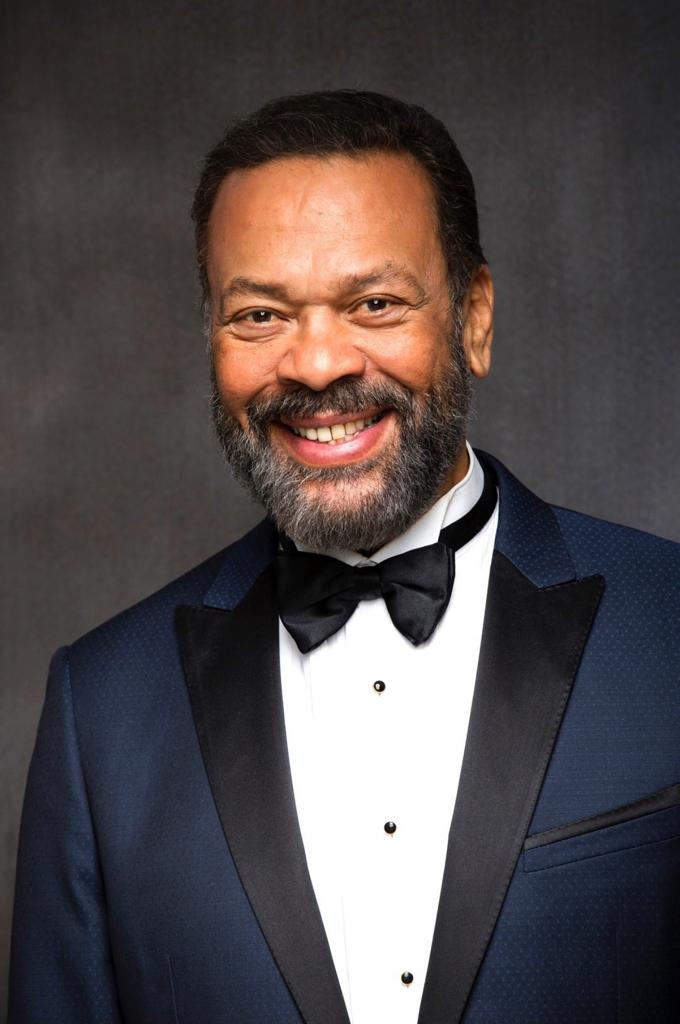
Cucco Peña has donated his emblematic tuxedo to the Spanish Harlem Salsa Gallery Museum

By Johnny Cruz

News from NY City

Who is Cucco Peña

The emblematic tuxedo
Ángel “Cucco” Peña

On September 1, 1948, Angel ‘Cucco’ Peña was born, someone who from elementary school showed his interest in music and as the years passed, showed that there were little flashes of that brilliant talent he had. His talent and passion were aligned, so he always spent his life surrounded by music. Today he could be considered an icon of Latin music thanks to his achievements as an artist and thanks to everything he offered to the industry; he has managed to trace a career full of successes, one that today continues to inspire many people.

Peña’s talent led him to interact in many music-related activities, not only did he graduate from the Puerto Rico Music Conservatory, but also, after graduation, he joined the Pan-American Orchestra, starting with what would be a career full of reached goals. In the orchestra, he would familiarize himself with many different styles that would help him as a musician, since in the orchestra he played a wide variety of music, from bolero, blues and jazz, to pop and even rock.

Cucco Peña’s path

Cucco Peña is a great artist

Cucco left the band and began to trace his own path with everything he learned, he didn’t just become a music director, but a producer, composer, and arranger for many internationally famous artists such as: Ricky Martin, Chayanne, Ricardo Arjona, Olga Tañon, Gilberto Santa Rosa, Luis Fonsi, Franco de Vita and many other artists; despite each artist’s very different styles, Peña’s talent has allowed him to understand perfectly what all of them needed. In his own words, “it is important to see that music has three perspectives: the artist perspective, the company’s perspective, and my own.” Finding a perfect harmony between these three perspectives, Peña has participated in the creation of great themes.

Achievements

The North American has not only managed to collaborate with a large number of renowned artists, but has also achieved a lot of recognition for his work, he is a two times Grammy winner, the first is the Grammy for the best tropical album contra la corriente, Marc Anthony’s album (1999), the second is Latin Grammy for best musical production, this thanks to Olga Tañón’s album, Yo por ti. Grammy is not the only award he has won, he also received a total of 60 Cuspide awards and 40 Addy awards, plus 20 awards from the New York Theater Festival and an “Agüeybaná de Oro” for Director of the Year.

The awards are not everything, he has been both the director and the composer of the Central American games’ opening and closing ceremonies, and the composer of two movie soundtracks (“La Gran Fiesta” and “Nicolás y Los Demás”); Plus, he has produced more than 100 compositions, not to mention that he also worked as a producer for important figures in the industry, such as Lunna, Jerry Rivera, Chayanne, and many others.

Without a doubt, Ángel “Cucco” Peña is a very important figure for the industry, and after a long career dedicated to music, he has shown that his talent is worthy of being recognized.

The new piece of Spanish Harlem Salsa Museum

The invitation to tune in to the new Fm / Internet radio station on Live365.com: Salsagallery continues. Great music, artist interviews and much more.

At the Spanish Harlem Salsa Gallery Museum we are happy to affirm that New York City is preparing to resume its activities little by little. We hope to have more news soon and that we can return to normal soon.

The Museum is open free to the public. We wait for you!

Professor MSc. Carlos Colmenárez and his “WRITTEN SALSA”

By: Professor MSc. Carlos Colmenárez (Venezuela)

Greetings, dear and consistent readers of Salsa Escrita, from this server, your longtime friend, Professor MSc. Carlos Colmenárez. It is a great satisfaction for me to be able to reach all of you through International Salsa Magazine, to whom I am very grateful for your trust and thus be able to make known the Venezuelan salsa talent and also from other countries, where Afro-Latin music continues and will continue to be projected and promoted with much professionalism in its prestigious pages.

Salsa Escrita, in charge of this server, your friend of always, professor MSc. Carlos Colmenárez
Professor MSc. Carlos Colmenárez (Venezuela)

In this issue of Salsa Escrita, we bring you four exponents of Afro-Caribbean music, born in Venezuela, who exalt the genre with great class and success, earning the respect and admiration of all its followers. So, ladies and gentlemen, we present to you in special reviews Hildemaro “El Sonero del Amor”, Mariana “La Sonera de Venezuela”, Édgar “Dolor” Quijada and Héctor “Malecón”. We hope you enjoy the written interaction between you and International Salsa Magazine.

Hildemaro “The Sonero of Love”

The Venezuelan singer-songwriter, born in Caripito, Monagas state, on November 10, 1957
Hildemaro The Sonero of Love

On this occasion we will mention a vocalist who has stood out for his excellent interpretive quality and professionalism during his long and successful career, both in Venezuela and abroad; we refer to José Hildemaro Hugas Amarista, better known as Hildemaro “El Sonero del Amor”.

The Venezuelan singer-songwriter, born in Caripito, Monagas state, on November 10, 1957, told us that his musical interests came from a very young age, participating in festivals in his home state and musical groups in that locality, until he was presented with the opportunity to go to Caracas in 1976 and join the orchestra “Los Satélites”; Then in 1979 he joined the “Orquesta Ideal”; later he worked with the “Súper Combo los Tropicales”, “Noche Caliente” and the “Orquesta de Porfi Jiménez”; and finally in 1985 he joined Renato Capriles’ orchestra “Los Melódicos”, which gave him the greatest and best experience.

The following year,” Hildemaro continued, “he decided to definitely make his way as a salsa performer, recording his first LP under the TH label, thanks to his music producer, José “El Flaco” Bermúdez, and since then he has remained in his project of a fruitful singing career.

In 1988 he recorded his album “Amanecí contigo”, propelling it into the international market, hitting his songs with great acceptance, both in Venezuela and abroad, showing his face in the country as a salsa performer before the world.

Peru was his first point of attack, as well as the United States, and with that goal he was always renewing his repertoire.

In 1989 he recorded the production “Sin Tabú”, winning a gold record and triumphing on stages in Panama, Mexico, Colombia and New York; In 1990 he recorded the acetate “Romántico y sensual”, with which he demonstrated once again that he has one of the best voices in Latin American and Caribbean salsa, qualities that were also captured in his 4th album entitled “Lo mejor de mi” in 1991, later in 1993 he released his 5th LP “Al natural”, two years later the long play “Lo que siento” in 1995 and in 1996 the album “La mejor salsa con Hildemaro”.

In 2002 and 2003, he burst again into the radio stations nationally and internationally with 2 singles: “Corazón loco” and “El celular”, with which he once again demonstrated his great vocal capacity.

Among his best known hits are: The first time, Hola, Amanecí contigo, Desde el fondo de mi corazón, Negra, Agua caliente, Sin tabú, Al natural, Apago la luz, Como nadie, Cabalgaremos, Lucero and many more.

At the present time it comes from succeeding in Peru, Colombia, Spain, Italy and Sweden. In Venezuela she works with her own orchestra “Caripito all Stars”.

Finally she told us “El Sonero del Amor” that she registered her foundation “Hildemaro Hugas”, a non-profit organization to help children, elderly and people who deserve it.

By 2020, with God’s favor, he returns to the United States, where he is acclaimed by romantic dancers, just like in Peru, his second homeland. Hildemaro’s social networks are: Instagram @sonerodelamor, Facebook: José Hildemaro Hugas, phone: +58 412 2934606 and +58 416 0580079 for bookings.

Edgar “Dolor” Quijada

Édgar José Quijada, from January 23, Caracas. The man of "Pain", a name given to him by his brothers
Edgar “Dolor” Quijada

Sonero from A to Z, it’s that simple. Not everyone can be graded that way and not everyone has the privilege of being so. It is a title that must be achieved “on the go”, working very hard day and night. The “Masters” in sounding were Benny Moré and Ismael Rivera, to name the most significant.

In this regard, we must mention other vocalists of the stature of Cheo Feliciano, Gilberto Santa Rosa, Pete “El Conde” Rodriguez, Chamaco Ramirez and others of renown who took the baton; in the courtyard, Oscar D’Leon, Orlando Watussi, Mariana Guevara, Marcial Isturiz, Charlie Guzman, Ronald Gomez, among others, each with his own style and particularity. The one we will talk about today, has already occupied that place for years, I am referring to Edgar José Quijada, from January 23rd, Caracas. The man of “Pain”, an appellation given to him by his brothers.

In all his life he has not stopped singing and that comes from his mother. The trajectory of Édgar “Dolor” Quijada, born on March 21, 1954, dates from more than 40 years ago, since he began with the Yacambú Orchestra and later he was called to accompany national and international singers and to integrate orchestras such as: Década, Federico y su Combo, Los Incorregibles, Repicao, Soledad Bravo, Naty y su Orquesta, Guajeo, Cheo Feliciano, Celia Cruz, Johnny Pacheco, Pete “El Conde” Rodríguez, Adalberto Santiago, Ismael Miranda, Ismael Rivera, Larry Harlow, Héctor Lavoe and Justo Betancourt.

Since the founding of Cheo Navarro’s Orquesta Bailatino 23 years ago, he has been one of its performers along with Rónald Gómez and Francisco Rojas. His hits include: Mi vecina, Tengo la piel cansada de la tarde, A donde está Margot, Loco en la vía and many more. He is also the vocalist of El Guajeo de Alfredo Naranjo, Orquesta Tributo, Los 12 Apóstoles; as well as his solo performances in shows at the national and international level.

Finally, Edgar “Dolor” Quijada told us that he is currently based in Bogota, Colombia, with new musical projects. Social networks: Instagram @edgardolor; Facebook: Édgar Quijada, telephone for bookings: +57 301 6593904.

Hector “Malecon”

Héctor Luis Montes González, artistically known as “Héctor Malecón”, born on April 3, 1988
Hector “Malecon”
of Barquisimeto

In Barquisimeto, a city known as the “Musical Capital of Venezuela”, there are musicians and vocalists of extraordinary quality, and on this occasion we will mention the singer, sonero and composer, Héctor Luis Montes González, known artistically as “Héctor Malecón”, born on April 3, 1988 and since his childhood he has lived in the El Malecón neighborhood of our twilight city; His musical beginnings were inspired by the composition of songs and by the mythical-religious influence, they motivated him to write and to interpret his first single titled “A la Reina”, in honor to María Lionza.

In April 2012, he decided to gather a group of young musicians from his neighborhood and formed a salsa group, calling it “Orquesta Malecón”, thus beginning his successful career with musical director César Salas and arranger Rubén Levy.

Some songs from their first recording production and authorship are A la Reina, Acepto mi error, Flor de mayo, Qué es lo que te pasa, Mejor plato, Castillo de arena y el Despojo; which you can enjoy on Youtube.

Likewise, he has shared the stage with the Lebrón Brothers, the Dimensión Latina, Bailatino, Orquesta La Salsa Mayor, Grupo Mango, Porfi Baloa y sus Adolescentes, Mariana La Sonera, Édgar “Dolor” Quijada, Hildemaro, Rónald Gómez, among others.

In 2016, he obtains the 1st place in the contest “Dile no a la Payola” of the PDVSA La Estancia Salsa Festival in Caracas and is later applauded by the Caracas salsa sovereign in the Diego Ibarra Square and El Poliedro.

Currently, Héctor Luis, becomes known with his project “Héctor Malecón” and from his own inspiration is promoted with his song “Quieres volver”, through @hectormalecon.

Finally, he declares that he was temporarily based in the city of El Callao, Peru, demonstrating his talent and affinity as lead vocalist of the orchestra “Son D’ Kalibre”, performing group songs and great salsa hits, under the direction of Rubén Medina and integrated by Venezuelan and Peruvian musicians.

At present, already in Barquisimeto, Venezuela, he has planned to structure his new orchestra, with new themes of his own inspiration, to put all salsa lovers to dance. His social networks are: Instagram @hectormalecon; Facebook: Héctor Malecón, for bookings by phone +58 412 7720290.

Mariana “La Sonera de Venezuela”

One of the most emblematic characters of Venezuelan salsa is Janett Guevara García, artistically known as Mariana "La Sonera de Venezuela" Born in Caracas and currently resides in La Guaira
Mariana “The Sonera of Venezuela”

One of the most emblematic characters of Venezuelan salsa is Janett Guevara García, known artistically as Mariana “La Sonera de Venezuela”; she was born in Caracas and currently lives in La Guaira. Since she was a child she showed her taste for music; activity that has been her eternal passion and has led her to make 12 record productions.

Mariana started with Naty Martínez’s Orchestra and has been supported by the Fania Stars, José Alberto “El Canario”, the Gran Combo of Puerto Rico and her great friend Oscar D’León, who has advised and helped her so that, throughout her career, the responsibility of being the sonera of Venezuela falls on her.

Mariana has had the opportunity to alternate with groups of the stature of the Orquesta de La Luz, Grupo Niche, Guayacán, El Canario, Gran Combo de Puerto Rico and la Sonora Ponceña. Among her songs are: Frases hechas and Eres más fuerte que yo.

It is worth mentioning that, among the numerous recognitions received, he was awarded directly from Miami and presented in Caracas by Richard Roman and Nohemy Chavez, the “Salsa Superior” prize, which among those who have it, are Luigi Texidor, Roberto Roena, La Dimensión Latina and Rubén Blades, among other salsa figures. The sonera is worthy of this plaque thanks to God and her public who have supported her during her 30 year artistic career.

The “Sonera” is part of the orchestra “Rumberos del Callejón”, “Los 12 Apóstoles” and also has its own group. Incidentally, she was honored in the city of Barquisimeto in 2018 with the unveiling of a mural in her honor on Oscar D’Leon Boulevard.

She will soon be making musical tours throughout the country and abroad. Among his latest works, he recorded the song “Mulata guerrera”, by Puerto Rican composer Eduardo Zayas, included in the production “Entre Titanes”, which featured the participation of figures such as Marcial Istúriz, Rodrigo Mendoza, Édgar “Dolor” Quijada, Efrén Avellaneda, Noel Machado, Choco Orta, Yomar Méndez “Caballo”, Leo Pacheco Jr.

For hiring Mariana “La Sonera de Venezuela”, you can do it by: +58 414 2921521 y +58 416 0580079. Her social networks are: Instagram @sonsonera1, Facebook: Mariana La Soner

Profesor MSc. Carlos Colmenárez

  • « Go to Previous Page
  • Page 1
  • Interim pages omitted …
  • Page 114
  • Page 115
  • Page 116
  • Page 117
  • Page 118
  • Interim pages omitted …
  • Page 120
  • Go to Next Page »

International Salsa Magazine (ISM) is a monthly publication about Salsa activities around the world, that has been publishing since 2007. It is a world network of volunteers coordinated by ISM Magazine. We are working to strengthen all the events by working together.