• Skip to primary navigation
  • Skip to main content

International Salsa Magazine

  • Home
  • Previous editions
    • 2025
      • ISM / November 2025
      • ISM / October 2025
      • ISM / September 2025
      • ISM / August 2025
      • ISM / July 2025
      • ISM / June 2025
      • ISM / May2025
      • ISM / April 2025
      • ISM / March 2025
      • ISM / February 2025
      • ISM / January 2025
    • 2024
      • ISM / December 2024
      • ISM / November 2024
      • ISM / October 2024
      • ISM / September 2024
      • ISM / August 2024
      • ISM / July 2024
      • ISM / June 2024
      • ISM / May 2024
      • ISM / April 2024
      • ISM / March 2024
      • ISM / February 2024
      • ISM / January 2024
    • 2023
      • ISM / December 2023
      • ISM / November 2023
      • ISM / October 2023
      • ISM – September 2023
      • ISM – August 2023
      • ISM July 2023
      • ISM Edition June 2023
      • ISM – May 2023
      • ISM April 2023
      • ISM March 2023
      • ISM February 2023
      • ISM January 2023
    • 2022
      • ISM December 2022
      • ISM November 2022
      • ISM October 2022
      • ISM September 2022
      • ISM August 2022
      • ISM July 2022
      • ISM June 2022
      • ISM May 2022
      • ISM February 2022
      • ISM January 2022
    • 2021
      • ISM December 2021
      • ISM November 2021
      • ISM October – 2021
      • ISM September 2021
      • ISM August 2021
      • ISM July 2021
      • ISM May 2021
      • ISM April 2021
      • ISM June 2021
      • ISM March 2021
      • ISM February 2021
      • ISM January 2021
    • 2020
      • ISM December 2020
      • ISM November 2020
      • ISM October 2020
      • ISM September 2020
      • ISM August 2020
      • ISM July 2020
      • ISM June 2020
      • ISM May 2020
      • ISM April 2020
      • ISM March 2020
      • ISM February 2020
      • ISM January 2020
    • 2019
      • ISM December 2019
      • ISM November 2019
      • ISM October 2019
      • ISM Septembre 2019
      • ISM August 2019
      • ISM July 2019
      • ISM June 2019
      • ISM May 2019
      • ISM April 2019
      • ISM March 2019
      • ISM February 2019
      • ISM January 2019
    • 2018
      • ISM December 2018
      • ISM November 2018
      • ISM October 2018
      • ISM September 2018
      • ISM August 2018
      • ISM July 2018
      • ISM June 2018
      • ISM May 2018
      • ISM April 2018
      • ISM March 2018
      • ISM February 2018
      • ISM January 2018
    • 2017
      • ISM December 2017
      • ISM November 2017
      • ISM October 2017
      • ISM September 2017
      • ISM August 2017
      • ISM July 2017
      • ISM June 2017
      • ISM May 2017
      • ISM April 2017
  • Download Salsa App
    • Android
    • Apple
  • Spanish

Search Results for: Festival

We continue working to enhance Salsa

This month I want to continue sharing good news for everyone in NY and in the Salsa world. On this occasion, Oscar Hernández and Spanish Harlem Orquesta join Spaha Salsa Gallery Museum. Oscar has donated an incredible piece that we will be exhibiting immediately.

Four times Grammy Award Winner, Oscar Hernández, has long been considered one of the most gifted and prominent pianist / arrangers on the contemporary Latin, Latin-jazz and salsa music scene. He has achieved legendary status for his prolific career spanning now over 40 years.

Hernández is the leader of the world renowned Spanish Harlem Orchestra. Won the Grammy for their second CD release, “Across 110th Street” and winning yet another Grammy with their 4th CD “Viva La Tradition” and won their 3rd Grammy with “Anniversary” in 2019. Oscar was the music producer as well as pianist / arranger on all CD’s.

Since the band’s inception in the year 2001, SHO has garnered numerous awards and world acclaim as one of the finest exponents of Salsa and Latin / Jazz music. Spanish Harlem Orchestra is generally considered one of the best Salsa & Latin Jazz Orchestras today and one of the finest music ensembles in the world.

The Bronx native has produced such artists as Ruben Blades, Paul Simon, Willie Colón “Carabali”, Daniel Ponce, Rafael Dejesus, Eddie Torres, Phil Hernandez, Steve Kroon, Juan Luis Guerra, etc.

In addition to being Rubén Blades pianist, arranger and musical director, Oscar Hernández has enjoyed a prolific musical career recording and performing with such world renown artists as Latin music king Tito Puente, Queen of Salsa Music Celia Cruz, Latin Pop Star Julio Iglesias, Juan Luis Guerra, Ray Barreto, Earl Klugh, Dave Valentin, Johnny Pacheco, Ismael Miranda, Pete “Conde” Rodríquez, Oscar De’ Leon, Luis “Perico” Ortiz, “Libre” “Grupo Folkorico Experimental “, Willie Colón, Kirsty MacColl, etc. Oscar’s musical exploits include working as Musical Director / Conductor, arranging and producing the music for “The Capeman,” pop-rock icon Paul Simon’s Broadway musical.

Oscar is also the music producer of “The Capeman” cast recording. Oscar was Musical Director / Arranger for the hit shows “Quén Mató a Hector Lavoe” and “La Lupe” at the 47th Street Theater. He was also, Music Supervisor / Arranger for the show “Four Guys named Jose & Una Mujer named María” Oscar also has released 2 CD’s as a solo artist, Oscar Hernández & Alma Libre, titled “The Art of Latin Jazz” and “Love The Moment ”on Origin Records. It is a true honor to have the donation of an incomparable musician like him in our museum. Thanks, Oscar!

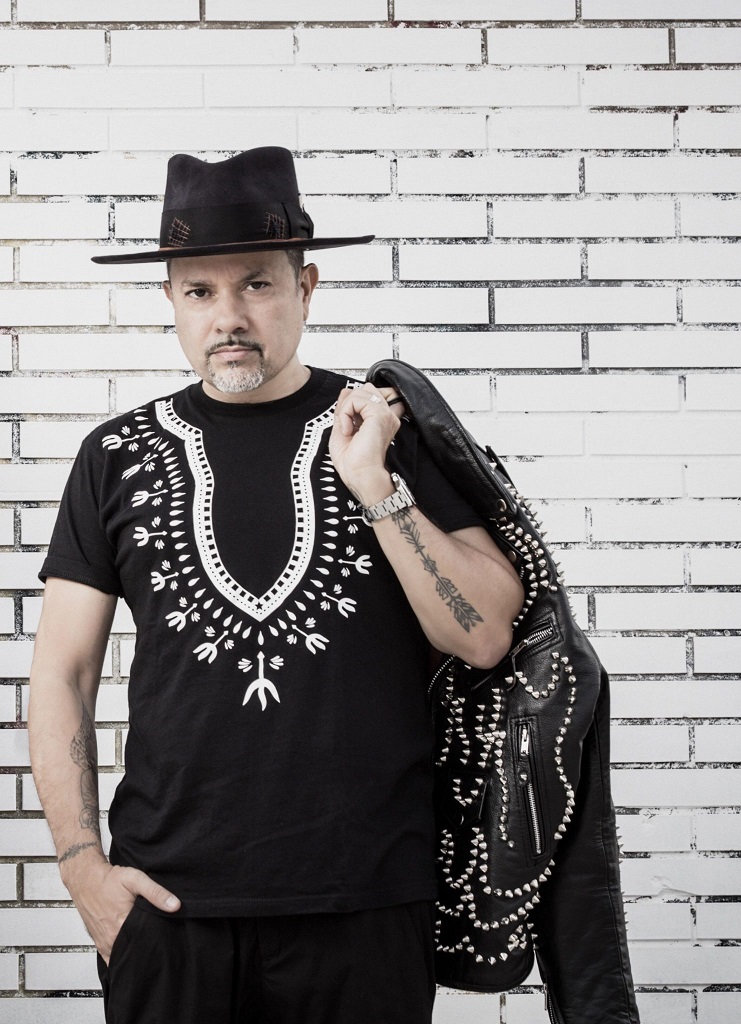
Another of the great figures of the Spanish Salsa Harlem Orchestra is Luisito Quintero, the timbalero from Venezuela. Luisito Quintero was born in Caracas, Venezuela where he had his first contact with music. Cultural influences of Afro-Venezuelan rhythms were always present at home. His father, a highly respected percussionist, taught and encouraged Luisito to play the timpani in his teens.
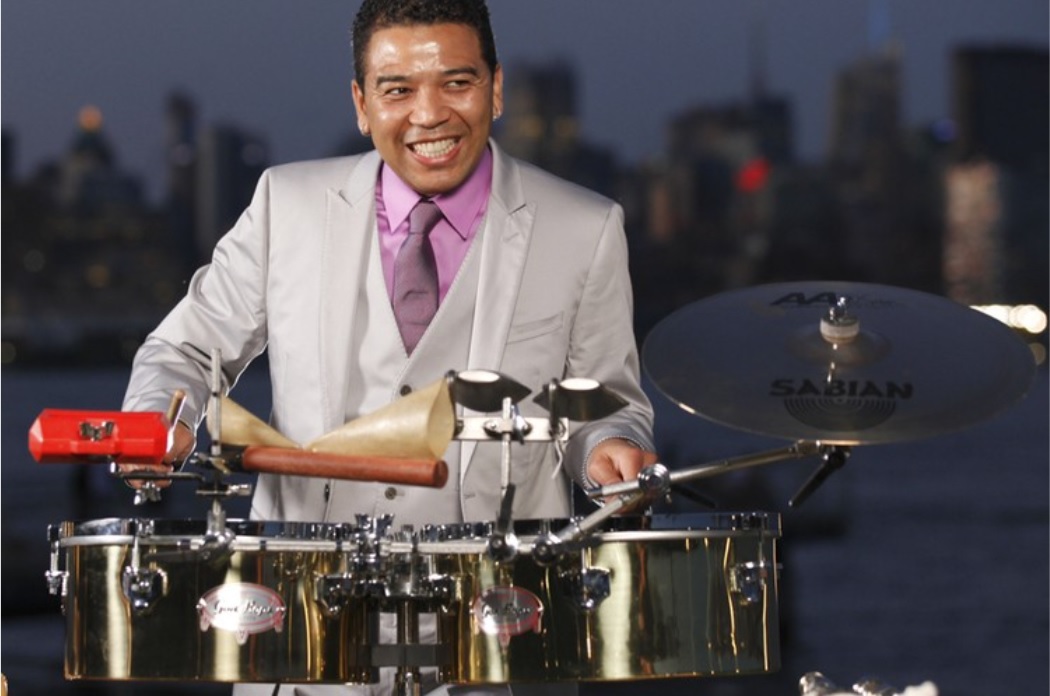
Luisito Quintero
Luisito Quintero

Quintero continued to refine his playing level with the Venezuela Symphony Orchestra, where his technique for playing the timpani soon caught the attention of his colleagues. Subsequently, he joined the popular music groups Guaco and the Trabuco Venezolano and traveled with Oscar D ‘León with whom he achievedan important international projection. The live performances, recordings and projects in which he has participated are countless.

He has made his mark as a percussionist with figures such as Tito Puente, Eddie Palmieri, Marc Anthony, Gloria Estefan, Richard Bona, Jack Dejonette, Willie Colón, George Benson, Natalie Cole, Herbie Hancock, Nuyorican Soul, Masters at Work, and of course, The Spanish Harlem Orchestra. Luisito is part of the group Elements of life, with whom he has toured for the last years.

The band has shared stages with major artists in the market such as Robert Plant, Lauryn Hill and Alicia Keys, performing at festivals such as Montreux Jazz Festival in Switzerland, North Sea Jazz Festival in Holland, Roskilde in Denmark, Blue Note in Japan, Jazz Cafe in London, England and the legendary New Morning Cafe in Paris, France. Without a doubt, an impressive and worth mentioning career.

And if we are talking about incredible careers in this edition, I can’t stop talking about Adalberto Santiago and the new projects of the 60th anniversary with great artists of the genre. This his time I can tell you about Cuco Peña’s string arrangements, the participation of Nelson Jaimes and, of course, the help of my friend Freddy Miranda. At 83 years old, he is still in the rumba. There is less and less to show the world this historical piece for the world of salsa.

Johnny Cruz and Adalberto Santiago - Salsa
Johnny Cruz and Adalberto Santiago – Salsa

I also want to remember Raphy Leavitt, on the fifth anniversary of her death on August 5. In 1970 Leavitt organized an orchestra that should have a different sound and style. He wanted to select the repertoire of songs of the orchestra with a particular, positive, social and even philosophical message; and founded “La Selecta”. Since its inception, La Selecta has featured Coamo-born Sammy Marrero as one of its singers.

Marrero, who has always been strongly influenced by the music of the Puerto Rican jíbaro, had an opportunity to teach his dramatic singing style in his first hits as the almost hymn “Jíbaro Soy”, a very patriotic and unusual Puerto Rican song, “Payaso”, and “The Good Shepherd”. However, it is in the band’s signature song, “La Cuna Blanca,” that Marrero’s voice is for the most part associated.

Raphy Leavitt
Raphy Leavitt

In 1978, Leavitt discovered a young singer named Tony Vega, who became a legend among salsa singers on his own merit. Raphy Leavitt and La Selecta were responsible for the introduction of salsa in many countries. In the 1980s, Leavitt became an independent producer and produced two albums for Bobby Valentine.

In the 1990s, he established his record recording company, R.L. Records. The company’s first production was the album titled “Provocame,” which became a hit in Puerto Rico, the United States, and South America.

In 1978, Leavitt discovered a young singer named Tony Vega, who became a legend among salsa singers on his own merit. Raphy Leavitt and La Selecta were responsible for the introduction of salsa in many countries. Raphy passed away in Miami as a result of an operation of the hip prosthesis that had been installed due to an accident in 1972, and that he had become infected. Leavitt passed away in his sleep. Raphy will always be endorsers of the Salsa Museum with the clown suit of its 25th anniversary.

I also want to thank the constant and significant support for the Museum, from my friend Sully Díaz, who as endorser of the museum, is always working to promote and make our work reach more people. Sully was born in New York, the daughter of Sephardic parents from Puerto Rico. She began her career as a model, and at the age of 17 she began acting in Spanish soap operas, making herself a well-known figure on television in Puerto Rico.

In 1983 she became popular throughout Latin America with the role of Coralito, in the telenovela of the same name. From that moment on, Sully was known as “the queen of Puerto Rican soap operas.” In the early 1990s, Sully moved to Hollywood and appeared on various television shows as a guest star and worked on a few movies.

Johnny Cruz and Sully Diaz

In the mid-1990s, Sully joined four other Latina women (Dyana Ortelli, Marilyn, Ludo Vika, and Lydia Nicole) in a comedy group called “The Hot & Spicey Mamitas”. They sold out at several Los Angeles comedy clubs. They recorded a CD live called simply The Hot & Spicey Mamitas.

In 2002 Sully appeared in the play La Lupe: My Life, My Destiny, in which she played the Cuban singer La Lupe. Shortly after the execution of this work, Sully made her own production of La Reina, La Lupe. This work toured all of Puerto Rico and was a great success in Florida. That same year, she starred in the Puerto Rican thriller “Cuéntame tu pena”, in which she plays Isadora, a radio host who receives a call from a woman who is killed while on the air.

In 2004 Sully toured with Gilberto Santa Rosa in a play called “The True Story of Pedro Navaja.” In 2009 Sully appeared in the movie Princess Protection Program as Reina Sofía, along with Selena Gómez and Demi Lovato.
Papo Rosario and Isidro Infante - Photo
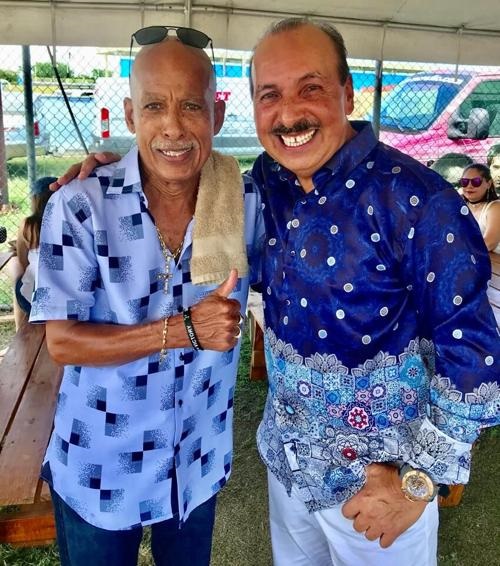
Papo Rosario and Isidro Infante

Recently, Papo Rosario released his new single “Gracias” produced by arranger and musician Isidro Infante. Rosario appreciates being alive and being able to walk after being bedridden as a result of a car accident. Papo Rosario is a world-class artist who has put the name of Puerto Rico on high. Rosario, who retired in 2019 from the group considered the “University of Salsa”, El Gran combo de Puerto Rico, after having an accident and presenting health problems, affirms that he already feels ready to resume his musical career with the Launch of his first solo production by producer Isidro Infante. I wish you success in this new beginning.
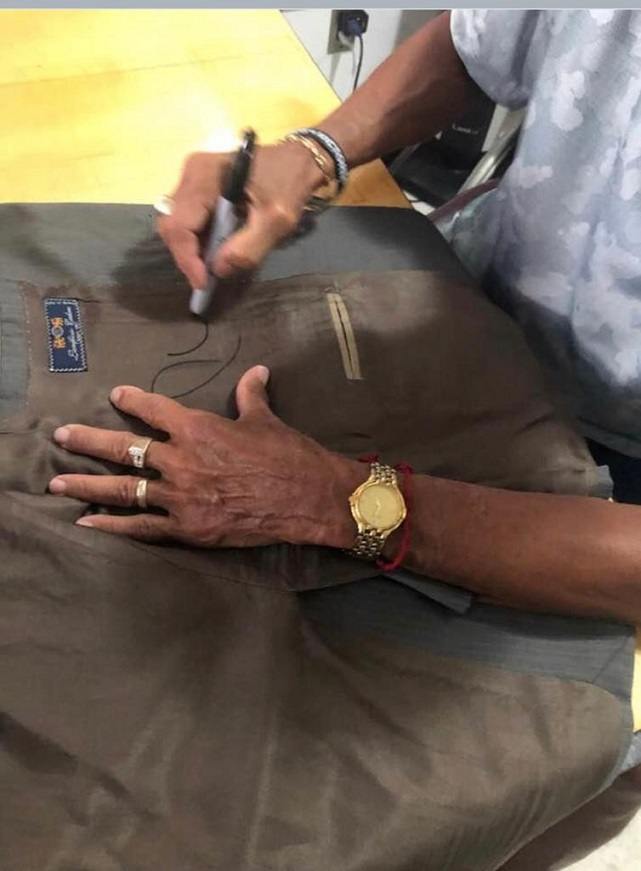
The invitation to tune in to the new Fm / Internet radio station on Live365.com: Salsagallery continues. Great music, artist interviews and much more.

Oscar Hernandez
Oscar Hernandez

At the Spanish Harlem Salsa Gallery Museum we are happy to affirm that New York City is preparing to resume its activities little by little. We hope to have more news soon and that we can return to normal soon.


By Johnny Cruz, ISM Correspondent, New York, New York City

The 5 most famous Latin music DJs in USA

Latin music is characterized by its incomparable rhythm. Those who have Latin blood vibrate when listening to songs that remind them of their roots. However, Latinos are not the only ones who enjoy them, audiences of all ages and nationalities end up trying to dance to the tune of salsa, merengue or bossa nova.

Its growth has been increasing over the years and more and more Latino artists are performing on large stages; Important events in the United States and become the favorites of non-Hispanic people.

For this reason, it is very common to listen to these types of songs in different bars and clubs. Some DJs based in the US have wanted to enhance their roots and, even when they dabble in other genres, they are still famous for their Latin mixes .

Famous DJs of Latin music

DJ Deorro

Erick Orrosquieta, is a DJ and music producer, born in California but to Mexican parents. It is characterized by its inclination towards electro house. However, it does not neglect the Latin music sets. To his credit he has pieces such as “Bailar” with Elvis Crespo, where he did not hesitate to place his personal stamp.

Dj Deorro
Dj Deorro

He is working on a new album where he plans to gather more Latin songs and songs in Spanish. Even when he tours different countries, he always plays in his native USA again.

“I want to grab the sounds we used to hear when we were little, cumbia, merengue, mariachi, everything, in order to give them new music”

DJ Louie Vega

Luis Ferdinand Vega Jr. is an American with Puerto Rican roots. His uncle was nothing more and nothing less than the famous singer Héctor Lavoe. Little Louie Vega, as he is also known, grew up surrounded by Latin music. For this reason, his training and his passion for music of this style have always been noticed.

Dj Louie Vega
Dj Louie Vega

He is one of those artists who enjoy each show and immerse themselves in what they do. Dj Louie had his beginnings at parties in the Bronx and has not neglected his Hispanic side. Making different Latin mixes that he does not stop taking advantage of in many of his presentations. One of his most requested songs is “My people by Héctor Lavoe”. He has also participated in songs with a tropical rhythm like “Starring” with Roberto Roena and performed live with the accompaniment of different percussionists.

“Music comes from our hearts and we try to express it. We don’t look at the others, we just follow what we think is our path, ”  he told ­estaybullshit.com.

DJ Buddha

Dj Buddha
Dj Buddha

Urals Vargas, born in the United States, is a renowned DJ, songwriter, producer and music publisher who has earned a good place in the industry. Recognized for including Latin music and dancehall among his mixes. He is one of the critics’ favorites and remains in constant innovation. DJ Buddha has an album called “Ultra Latino” that contains some of his most requested Latin tracks. In addition, it has countless tracks produced, remixed or written that today belong to renowned Latino artists.

“For me, success has been not putting myself alone in a genre because I make electronic music, … and yet, I have also made songs in the Latin market,” he said in an interview with Deyanira Martínez.

DJ Alex Sensation

Dj Alex Sensation
Dj Alex Sensation

He is a Colombian who grew up in the United States and from an early age began mixing at nightclubs. He also worked at the station La Mega 97.9 Fm, walking through different musical genres but not forgetting where he came from.

“I grew up listening to salsa and cumbia because of my roots. One of the fi­rst clubs where he played on the weekends was a Dominican club. There, I learned about the Dominican culture Bachata, Merengue, typical merengue when I was still very young. I made many Dominican friends and fell in love with their culture. I mix everything under that genre,” he commented for an interview.

He is considered a very valuable artist for music. In fact, he has participated in different festivals, parades in the Dominican Republic and Puerto Rico and has been awarded the ACE, an award from the Association of American Entertainment Critics.

DJ Cristhian Terán

Dj Cristhian Terán
Dj Cristhian Terán

This is a Venezuelan who has positioned herself in the city of the sun. Its proposal is based on Latin rhythms and is the favorite of most nightclubs. He has a history that has accompanied her since its inception in Venezuela. Caramelos de Cianuro, Chyno, Nacho and Guaco are some of the artists from her country with whom she has shared the stage. However, he has also managed to rub shoulders with singers such as Maluma, Alexis and Fido and Arcangel. Cristhian is one of the DJs who has managed to get the most out of the Latin genres and keep them present in the United States. His music is usually heard in the different clubs in Miami.

Itamar Doari

Europe/ Israel / Galilee

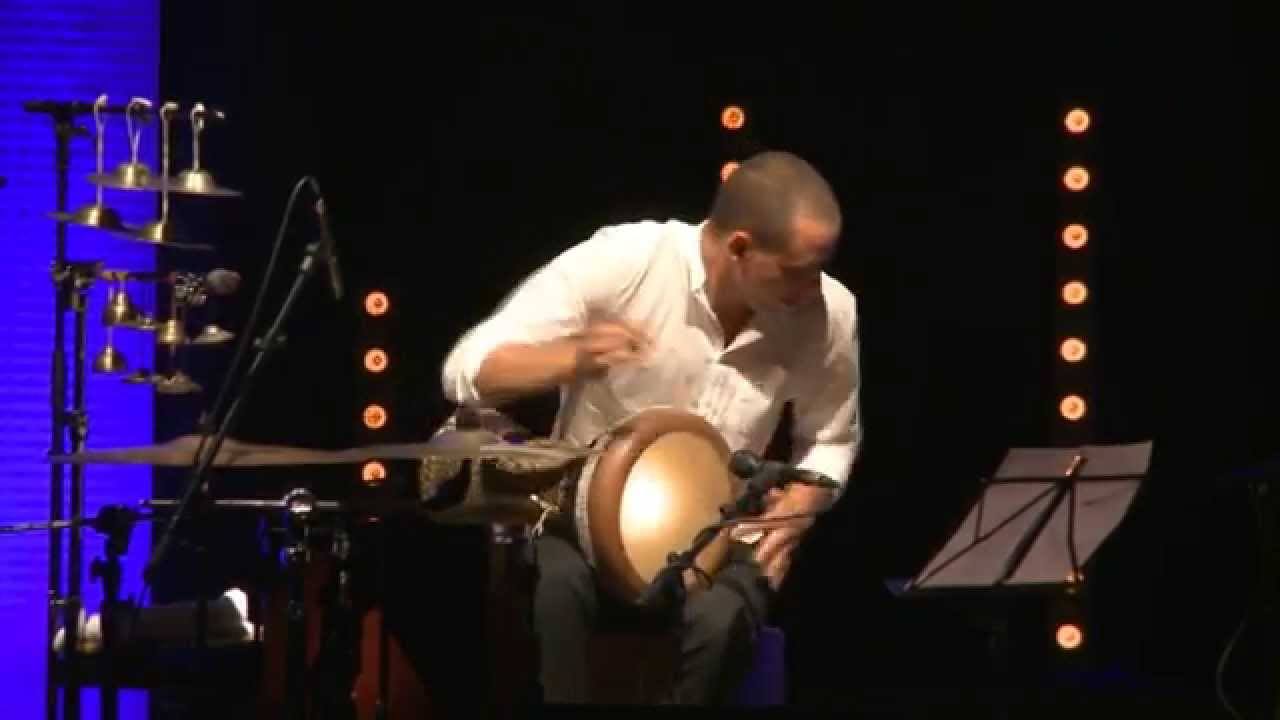
Itamar Doari, Born and raised in Galilee, grew up surrounded by a variety of musical traditions: Arabic, Sephardic, Turkish, Persian, Bedouin

Itamar Doari is an international percussion artist who has spent most of his adult life traveling around the world giving concerts, recording albums, appearing at music conferences and most importantly studying the ancient art of rhythm and drumming. He began his musical journey at the young age of six, when he played his first drum in the Israeli desert oasis of Wadi Farran.

Itamar Doari
Itamar Doari

Itamar, born and raised in Galilee, grew up surrounded by a variety of musical traditions: Arabic, Sephardic, Turkish, Persian, Bedouin and many others which had a huge influence on his musical persona. During his early years of playing, he had the privilege of learning from some of the most prestigious teachers in percussion and hand drum technique in the world, among them; Zohar Fresco, Glen Vallez, Sallem Darwish and Ahmed Taher. Doari plays a wide range of instruments, including the Darbuka, Dohola and a variety of frame drums such as Bandir, Tar, Riq, Udu, and Cajon alongside Cymbals, bells, shakers and many others.

Itamar Doari’s wide ranging techniques have led him to work with an eclectic mix of some of the world’s finest musicians. Including prominent Jazz musician Avishai Cohen, with whom Doari has performed and recorded three albums, both as a musician and as a musical producer.

He was at the forefront of the Idan Raichal Project, which gained international success due to the unique Ethiopian musical exploration.

He has a continuing musical association with mandolinist and Grammy nominee Avi Avital, with whom Doari has collaborated in several projects including the “Between Worlds” Trio and with orchestras around the world. The great Ladino singer Yasmin Levy, Israeli Rock legend Berry Sakharof, oud player Samir Mekhul,Esther Ofarim, Yoni Rechter, Eviatar Banai, Amal Murcus, Ahuva Ozeri, Shotei Hanevuah, Nitin Sawhney, Omer Faruk, Tekbilek and Radiohead guitarist and composer Johnny Greenwood.

Itamar Doari in concert

In 2010, Itamar became one of the founding members of the band Yemen Blues along with singer & composer Ravid Kahalani, the band explores music from a variety of different cultures from Yemen to West Africa inflected with contemporary grooves of funk, Arabic Music and the deep soul of old chants. A project particularly close to Itamar’s heart is one he created entitled WadiAtma.

In 2015, he put together a band of virtuoso musicians from the Flamenco and Middle Eastern traditions which created a musical melting pot of ancient art forms.

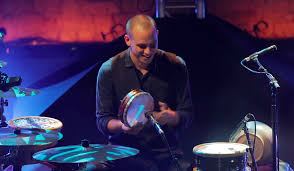
Itamar Doari in concert

The name of the project unites souls (Atma in Sanskrit) with the wadi (originally an Arabic word that found its way to Spain via Andalusia) in a way that describes, in the best possible way, the meeting on stage: The Valley of the Souls. His collaborations have seen him perform on some of the world’s most prestigious stages and Festivals.

Itamar has recorded with several notable record labels, such as; Universal, EMI, Deutsche Grammophone, Sony, Helicon, Blue Note, Decca

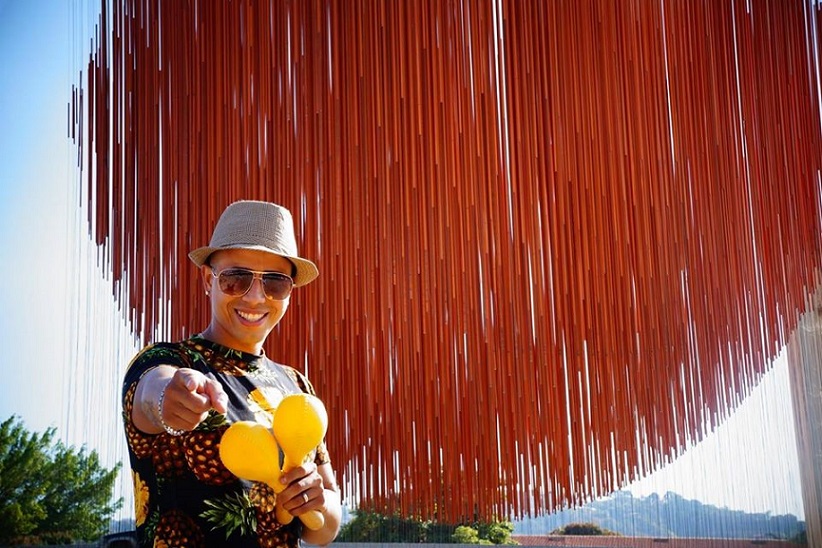
Itamar Doari
Itamar Doari
Itamar Doari
Itamar Doari

Meet Richard “Saoco” Rodríguez

Latin America / Venezuela / Caracas

Venezuelan Richard “Saoco” Rodríguez

There is a great variety of countries in Latin America that are incredible, but none as varied, dynamic and beautiful as Venezuela, a country that is known for having beautiful and varied landscapes, a great variety of climates and fauna, and Venezuelans are very pleasant, respectful and mostly partygoers. On this occasion we have the pleasure of meeting the young salsa singer, Richard “Saoco” Rodríguez who sees the light in the city of Guarenas, the neighboring town of the great city of Caracas, Venezuela.

Richard “Saoco” Rodríguez

Since he was very young, he has stood out as a vocalist in local salsa genre groups, he was driven by recommendations from family and friends, he decided to compose his own songs and make contact with two great and renowned musical arrangers such as José “Tuky” Torres and Héctor “Chispa Hurtado, the latter is the one who takes the reins as music producer and arranger of his orchestra.

Richard “Saoco” Rodríguez has the ability to compose songs in a very contagious way, he takes up the essence of Son, Mambo and Guaguancó.

He has received 4 important awards from the Music Industry such as the Popular Vote of the Singing Festival at the Teatro Principal in 2016, the Compas de Oro Award for International Salsa in 2017, Salsa Revelation Figure of the Year in 2017, Yara Awards The Best Salsa Singer with International Projection in 2018.

Richard “Saoco” Rodríguez

Today he presents a musical proposal with the launch of his new song titled “Soon you will return”, where he incorporates the Harp which is an emblematic instrument of Venezuela that resounds in the musical sound that maestro Héctor “Chispa” Hurtado gives it.

Consequently, Richard gets emotional when he tells us about this song, telling us that it all started one day watching the planes leave the Simón Bolívar Airport.

“I went to accompany a great friend who was going to Argentina and on the way home I thought about how hard it is to leave our land, leave our loved ones to undertake new challenges in another country. When I got home, the muse and nation came up with this beautiful song “Soon You Will Be Back” where I remind my Venezuelan brothers of our customs, the importance of sharing with the family, reminding them that we are a happy, pachanguero country.”

Richard “Saoco” Rodriguez.

Richard “Saoco” Rodríguez - Pronto Volveras
Richard “Saoco” Rodríguez – Pronto Volveras

Definitely Richard “Saoco” Rodríguez came with his talent, style and originality to be the difference, thus demonstrating that he is part of the relief generation in the Salsa Industry.

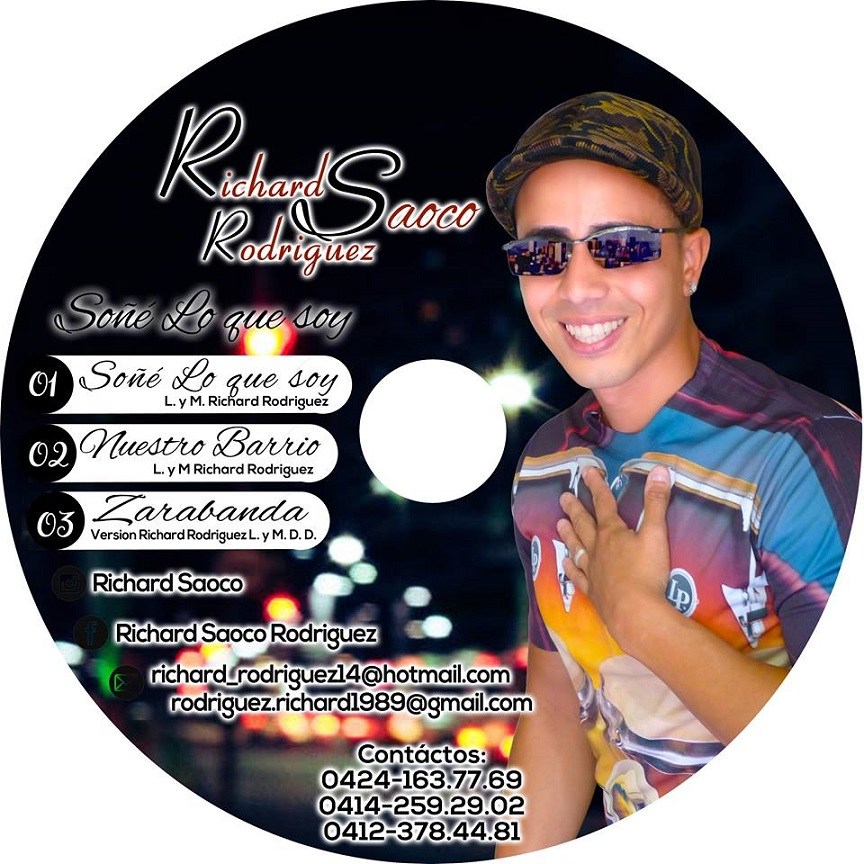
CD by Richard “Saoco” Rodríguez

For more information:

  • Facebook: https://www.facebook.com/people/Richard-Saoco-Rodriguez/100021840700541
  • Twitter: https://twitter.com/richardsaoco
  • Instagram: https://www.instagram.com/richardsaoco/?hl=es-la
  • YouTube: https://www.youtube.com/channel/UCI7Bt6vQsfKYEazwDNdty_Q

La Dimensión Latina is a Venezuelan salsa group founded in 1972 and still going strong today

The original members Oscar D’ León, César Monges “Albóndiga”, José Antonio Rojas “Rojitas” , José Rodríguez “Joseíto”, Elio Pacheco Jesús “Chuito” Narváez (R.I.P). And later Carlos Guerra.

César Monge, trombone player, after graduating from the Escuela de Bandas Militares, was part of the orchestras “La Tropicana de Eldy Tor” and “Los Mundiales” and “Swing Latino”.

Victor Cuica, a saxophone player, knew him from those musical steps.

Oscar León had just bought a car with which he used to be a cab driver, but with a great love for music.

León wanted to create a musical group and gave Cuica the task of recruiting musicians from the Escuela Superior de Música, where Cuica was studying.

La Dimensión Latina es una agrupación de salsa venezolana fundada en 1972 y sigue vigente

That orchestra was called “Oscar y sus estrellas”. César Monge played in that orchestra for a while, until musician Federico Betancourt, director of his group “Federico y su Combo”, hired him.

From there, Monges moved on to the orchestra “Los Dementes” of musician Ray Pérez and later to “Los Satélites” of “Cheché” Mendoza.

While playing with this orchestra, in the Caracas night club La Distinción in the urbanization El Rosal, a disagreement arose between the owner of the orchestra and the owner of the club.

León took advantage of the incident and decided, together with Cuica and Monge, to reestablish his group. Cuica, inspired by the name of the successful American group The 5th Dimension, suggested calling it Dimensión Latina.

La Dimensión Latina es una agrupación de salsa venezolana

Then León took a square and drew the logo with which the group was launched.

It was formally created on March 15, 1972 in a first rehearsal in La Guaira, at the home of the pianist Enrique (Culebra) Iriarte. It was formed by Iriarte on piano, César Monge (Albóndiga) and José Antonio Rojas (Rojitas) on trombones, José (Joseíto) Rodríguez on timbales and bongo, Elio Pacheco on tumbadoras and Oscar León, renamed Oscar D’León on bass and in the role of singer.

They made their debut as Dimensión Latina at the same venue La Distinción. The repertoire was based on songs by Mon Rivera, Eddie Palmieri and Willie Colón.

Several nights the establishment was frequented by Victor Mendoza, singer and musician founder of Trio Venezuela and by then hired as music producer by the Top Hits record label, who had a band called “El Clan de Victor”, which had to produce an album per year. Mendoza motivated the musicians and they did two musical auditions.

José Rodríguez, who had some money saved due to his work as a musician and motorcyclist, arranged for the recording at Estudios Fidelis with a song by Elio Pacheco and another by Oscar León. These tests were not to the liking of the label owner.

This discouraged Enrique Iriarte, who promptly left the group. His place was taken by pianist Jesús “Chuíto” Narváez. Despite the label’s refusals, Víctor Mendoza wanted to record them and decided to include them in his production of “El Clan de Víctor” in 1972.

Dimensión Latina Patrimonio Nacional

The sextet’s first hit was “Pensando en ti”. Mendoza then suggested Oscar León the artistic name of Oscar D’León.

During 1973 they recorded their second album, called “Dimensión Latina” where he gained recognition and participated in important events, such as tours of Curacao and the carnival of Maracaibo, launching their third album “Triunfadores” from which the second hit of the orchestra “Qué Bailen Tós” was released.

In 1974 the bolerista from Caracas Wladimir Lozano joined the orchestra, who had been working in night clubs in Caracas along with the harpist Ramón Hernández.

Wladimir gave the group more interpretative depth, achieving the duo Oscar and Wladimir, which gave birth to important interpretations and commercial successes that earned the band international recognition.

The highlight of Lozano’s entrance was “La Piragua”, a song that reached the top of the radio charts.

By 1975, La Dimensión Latina enjoyed the support of the public, who enjoyed their performances on television and being the image of commercial products.

A new album arrived, “Dimensión Latina ’75”, and with it came their consecration, for some critics the most successful and iconic. It included songs of extraordinary commercial success such as “Taboga”, “Parampampam”, “Mi Adorada”, “Cañonazo”, and a song by Oscar that was included as filler but would become the best-selling single in their history, “Llorarás”.

This album catapulted the orchestra’s career and gave it a place of recognition in the salsa world that, at that time, was almost reserved for the orchestras of the New York salsa boom.

Musician Carlos Guerra joined the orchestra on trombone, increasing the number of trombonists to three.

Subsequent productions included new commercial and interpretative achievements such as “Dolor cobarde”, “El frutero” and “Dormir contigo”. After their presentation in the United States, La Dimensión produced the album “La Dimensión Latina en Nueva York” (1976), which would be the seventh and last album of the orchestra with Oscar D’León, who would leave the group to start a successful solo career.

In the absence of Oscar, La Dimensión Latina calls, at the suggestion of Joseíto Rodríguez, the well-known guarachero and gaitero from Zulia Argenis Carruyo, who had been a member of Super Combo Los Tropicales and Guaco, for the recording of the album “La Dimensión Latina ’77 Internacional” and bassist Gustavo Carmona.

That same year, thinking of continuing to blaze trails abroad, they thought of a voice of international stature, and it was the Puerto Rican musician Roberto Roena who suggested the famous Puerto Rican singer Andy Montañez, lead singer of the Gran Combo de Puerto Rico.

Montañez was tempted by an extraordinary contract. Along with Montañez, the Zulian singer and sonero Rodrigo Mendoza joins the band and for the first time La Dimensión has three voices in its cast.

On November 11, 1977, La Dimensión Latina headlines the “Salsa International” festival at Madison Square Garden in New York, organized by Ralph Mercado and with the presence, among others, of Wilfrido Vargas and Cheo Feliciano.

Andy Montañez remained with the orchestra until 1980, recording eight albums, including hits such as “El Eco de un Tambor” by maestro Tite Curet Alonso, “Linda Minerva” sung as a duet with Argenis Carruyo, “Ave María Lola”, “Por el Camino”, “Mi Bombolaye”, and Puerto Rican contributions such as “Cantante Errante” by composer Johnny Ortiz and “Quisiera Saber”.

Rodrigo Mendoza managed to create hits such as “Fanfarrón”, “Córreme guardia” and “Suena el cuero”.

The orchestra also included Colombian pianist Samuel del Real, percussionists Carlos (Pacusso) Guillén and Luís Machado and the voices of Cheo Valenzuela, Alexis Martínez, Luis Arturo Guaramato and Alex “Mostaza” Vargas.

Cuatro décadas después y unidos por la salsa el Reencuentro del año Oscar D’ León y La Dimensión Latina

Four decades later and united by salsa, the reunion of the year Oscar D’ León and La Dimensión Latina.

Poliedro de Caracas

Only Invershow makes it possible

Venezuela this May 12, 2023 we will live something “HISTORIC”, and you can be present at this iconic reunion.

From seeing them together again to dancing and singing to the rhythm that only they can achieve.

It will be an unprecedented concert, don’t let them tell you about it and buy a ticket to live it YOU.

Será Un concierto sin precedentes, no dejes que te lo cuenten y compra una entrada para vivirlo TÚ

“The important thing is to maintain the style of the orchestra. The singer here has to adapt to the orchestra, not the orchestra to the singer. Whoever comes to sing has to adapt to the repertoire and to our way of doing salsa, which is very peculiar. We have a unique sonority”. 

César Monge, Albóndiga.

Visit: La Dimensión Latina S.R.L

Read also: Freddy de Jesús Ortega Ruiz “Coco & su Sabor Matancero”

  • « Go to Previous Page
  • Page 1
  • Interim pages omitted …
  • Page 67
  • Page 68
  • Page 69
  • Page 70
  • Page 71
  • Interim pages omitted …
  • Page 108
  • Go to Next Page »

International Salsa Magazine (ISM) is a monthly publication about Salsa activities around the world, that has been publishing since 2007. It is a world network of volunteers coordinated by ISM Magazine. We are working to strengthen all the events by working together.