• Skip to primary navigation
  • Skip to main content

International Salsa Magazine

  • HOME
  • Previous editions
    • 2026
      • ISM / April 2026
      • ISM / March 2026
      • ISM / February 2026
      • ISM / January 2026
    • 2025
      • ISM / December 2025
      • ISM / November 2025
      • ISM / October 2025
      • ISM / September 2025
      • ISM / August 2025
      • ISM / July 2025
      • ISM / June 2025
      • ISM / May2025
      • ISM / April 2025
      • ISM / March 2025
      • ISM / February 2025
      • ISM / January 2025
    • 2024
      • ISM / December 2024
      • ISM / November 2024
      • ISM / October 2024
      • ISM / September 2024
      • ISM / August 2024
      • ISM / July 2024
      • ISM / June 2024
      • ISM / May 2024
      • ISM / April 2024
      • ISM / March 2024
      • ISM / February 2024
      • ISM / January 2024
    • 2023
      • ISM / December 2023
      • ISM / November 2023
      • ISM / October 2023
      • ISM – September 2023
      • ISM – August 2023
      • ISM July 2023
      • ISM Edition June 2023
      • ISM – May 2023
      • ISM April 2023
      • ISM March 2023
      • ISM February 2023
      • ISM January 2023
    • 2022
      • ISM December 2022
      • ISM November 2022
      • ISM October 2022
      • ISM September 2022
      • ISM August 2022
      • ISM July 2022
      • ISM June 2022
      • ISM May 2022
      • ISM February 2022
      • ISM January 2022
    • 2021
      • ISM December 2021
      • ISM November 2021
      • ISM October – 2021
      • ISM September 2021
      • ISM August 2021
      • ISM July 2021
      • ISM May 2021
      • ISM April 2021
      • ISM June 2021
      • ISM March 2021
      • ISM February 2021
      • ISM January 2021
    • 2020
      • ISM December 2020
      • ISM November 2020
      • ISM October 2020
      • ISM September 2020
      • ISM August 2020
      • ISM July 2020
      • ISM June 2020
      • ISM May 2020
      • ISM April 2020
      • ISM March 2020
      • ISM February 2020
      • ISM January 2020
    • 2019
      • ISM December 2019
      • ISM November 2019
      • ISM October 2019
      • ISM Septembre 2019
      • ISM August 2019
      • ISM July 2019
      • ISM June 2019
  • Spanish
  • Download Salsa App
    • Android
    • Apple

Search Results for: Festival

Alfredo De La Fe, is responsible for transforming the violin for Latin Music

Latin America/ Colombia/ Cali

Alfredo de la Fe is a Cuban-American violinist based in New York, who also lives in Colombia.

He is responsible for transforming the violin into a sound much more suitable for Salsa and Latin music, as well as having manufactured and patented his own violin. De la Fe began studying the violin at the Amadeo Roldán Conservatory in Havana in 1962.

Two years later, he receives a scholarship to enter the Warsaw Conservatory, in Poland.

In 1965, he soloed compositions by Mendelssohn and Tchaikovsky with the Metropolitan Opera Orchestra at Carnegie Hall.
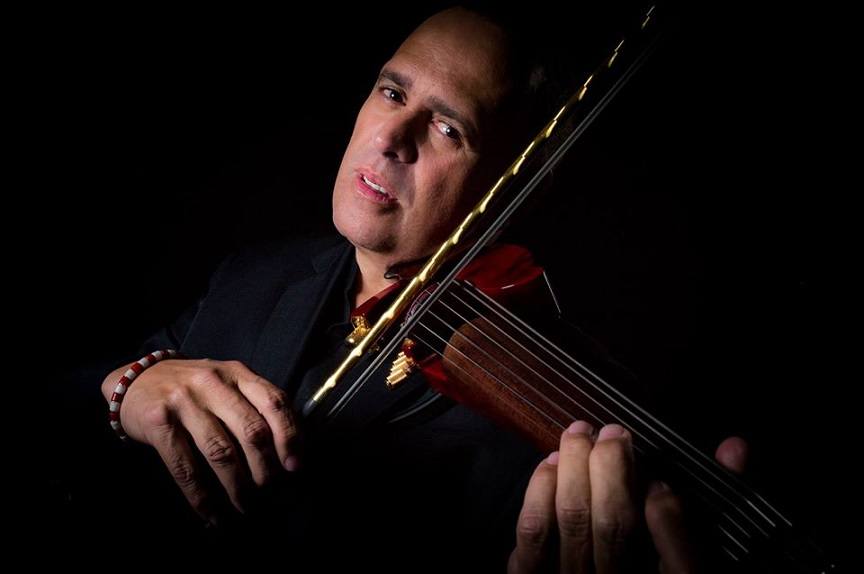
Alfredo De La Fe playing the violin

A scholarship at Juilliard opened new doors for him. De la Fe began his professional career, at the age of twelve, when he switched from classical music to Salsa, and accepted an invitation to join charanga legend José Fajardo’s Orchestra.

In 1972, he joined the Eddie Palmieri orchestra. He was a member of the group for a very short period, temporarily moving to San Francisco, where he met Santana. Returning to New York, De la Fe joined Típica ’73 in 1977. Two years later, he released his debut solo album, Alfredo.

In 1980, De la Fe signed with the Fania All-Stars, and produced thirty-two albums for Fania Records. His second solo album, Charanga ’80, was released in the same year.

In 1981, De la Fe became musical director of Tito Puente’s Latin Percussion Jazz Ensemble.

The following year, he confirmed his solo career, signing with Taboga, for whom he recorded the album Triunfo. He settled in Colombia in 1983, and signed with Philips; As a result of this, he released three albums: Made in Colombia, Dancing in the Tropics and Alfredo de la Fe Vallenato, at the end of the 80s.

In 1989, De la Fe signed with Discos Fuentes. Although he was one of the members of the Fania All-Stars for 1995, De la Fe continued his solo career.

He signed with Sony Music in 1997. Two years later, he toured with his own orchestra, appearing at festivals in Denmark, the Netherlands, France, Turkey, and Belgium, and reuniting with Eddie Palmieri and his orchestra for a European tour.

In 2002, after several years in Europe, Alfredo moved back to New York and visited the US with his New York band, led by pianist Israel Tanenbaum.

Alfredo De La Fe
Alfredo De La Fe

Other musicians including bassist Máximo Rodríguez, percussionists Tony Escapa and Johnny Pequeño Rivero, and autistic Andrea Brachfeld.

Discography Solo albums

  • 1979 : “Alfredo”
  • 1980 : “Alfredo de la Fe y la charanga 1980”
  • 1981 : “Para África con amor”
  • 1982 : “Triunfo”
  • 1984 : “Made in Colombia”
  • 1985 : “Alfredo de la Fe Vallenato”
  • 1990 : “Salsa”
  • 1990 : “Los violines de Alfredo de la Fe”
  • 1992: “Los violines de Alfredo de la Fe vol. 2: Sentir de Cuba”.
  • 1993 : “Con toda la salsa Alfredo de la Fe”
  • 1995 : “La salsa de los dioses”
  • 2000 : “Latitudes”
  • 2006 : “Alfredo de la Fe y Fruko (La Llave de Oro)”
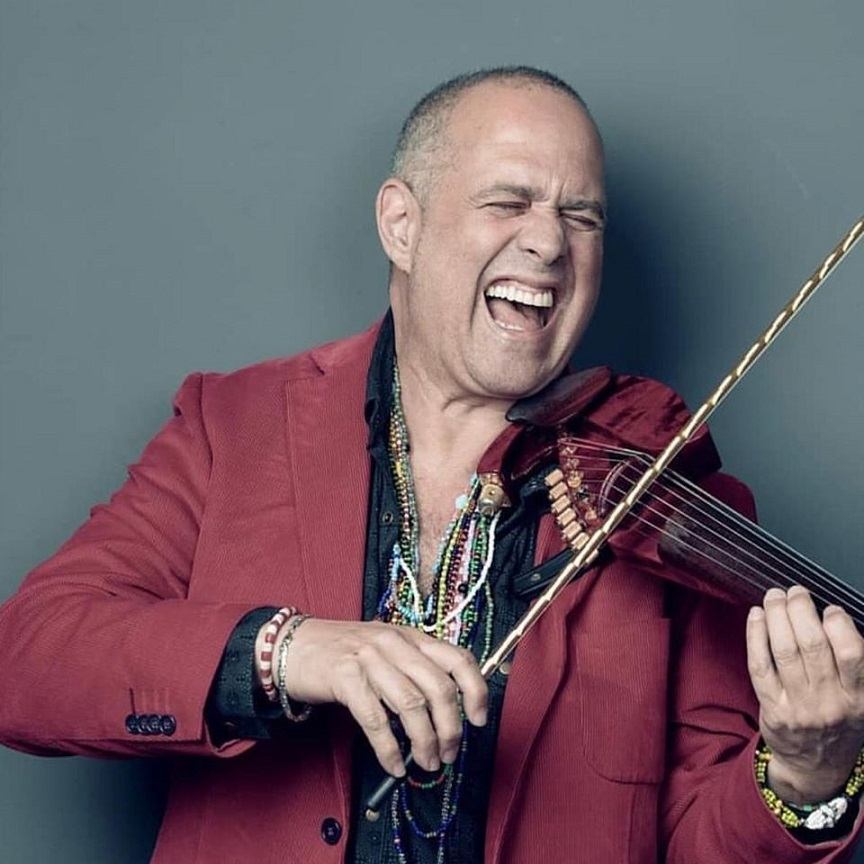
Alfredo De La Fe - Photo
Alfredo De La Fe – Photo

Session Artist and Collaborations:

    • 1973 : “The Sun de música latina” por Eddie Palmieri & Amigos Con Lalo Rodríguez
    • 1976 : “De ti depende” por Héctor Lavoe
    • 1977 : “Selecciones clásicas” por José Fajardo
    • 1977 : “El Baquine de Angelitos Negros” por Willie Colón
    • 1978 : “Comedia” por Héctor Lavoe
    • 1979 : “Típica 73 en Cuba – Intercambio cultural” por Típica 73
  • 1979 : ” Necesito tú” por Sylvester
  • 1980 : “Charangueando con la Típica 73” por Típica 73
  • 1980 : “Señor Charanga” por José Fajardo
  • 1982 : “Encima Broadway” por Tito Puento
  • 1997 : “Bravo” por Fania Todo-Estrellas
  • 2001 : “Diferente” por José Alberto (El Canario)
 

Melao
Melao

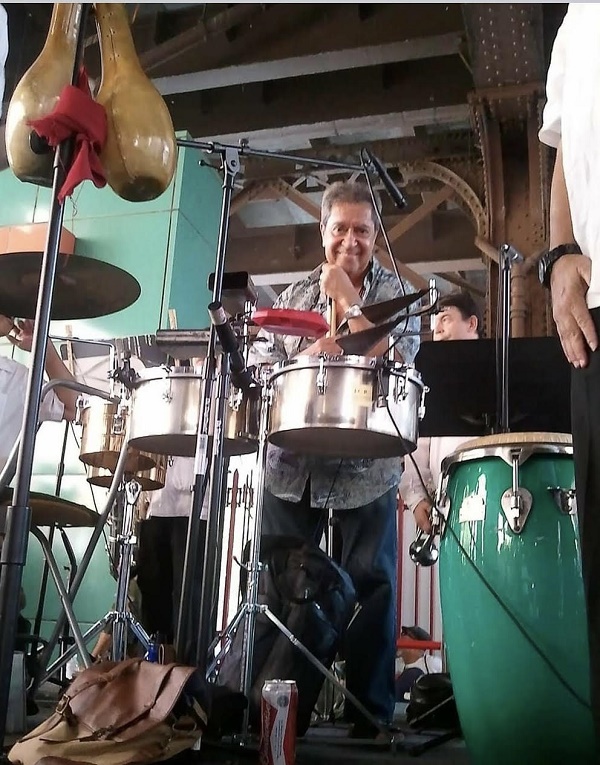
Nicky Marrero is an innovator, timbalero and bongo player, living legend of our Afro-Latin and Caribbean music.

Nicolás Marrero Jr. “Nicky Marrero” was born in the Bronx, New York, on June 17, 1950, to a Puerto Rican father and mother (born in San Germán and Corozal, respectively).

He had formal studies in drums during his adolescence, but more could the sounds of Tito Puente and Willie Bobo, his major influences.

Nicky Marrero is an innovator, timbalero and bongo player, living legend of our Afro-Latin and Caribbean music.

He debuted in music with a high school ensemble called Orquesta Caribe.

However, his first recording session was at the age of 15 with the original band of another teenager born in 1950: Willie Colón.

Curiously, at the time of these sessions, three pillars of the Alegre All-Stars, Charlie Palmieri, Louie Ramirez and Kako, were present in the studio, and young Nicky was invited to participate as a timbalero.

In 1968 he was recruited by Eddie Palmieri, who by then, as a consequence of internal problems, gradually disbanded his original orchestra: La Perfecta.

Nicky Marrero joins the orchestra shortly after recording the album “Champagne,” the album “Justicia” (1969), where, still under the powerful voice of Ismael Quintana, Nicky begins to explore his own sound (listen to his solo in the song “My Spiritual Indian”),

The decade of the 70’s opens for him with three important events: the classic album “Vámonos Pa’l Monte”, his participation with Patato in the album “Portrait Of Jennie” by Dizzy Gillespie and the beginning of his career as a percussion teacher, as a member of the faculty of the East Harlem Music School, the school of Johnny Colón, legendary pianist and one-time pioneer of boogaloo.

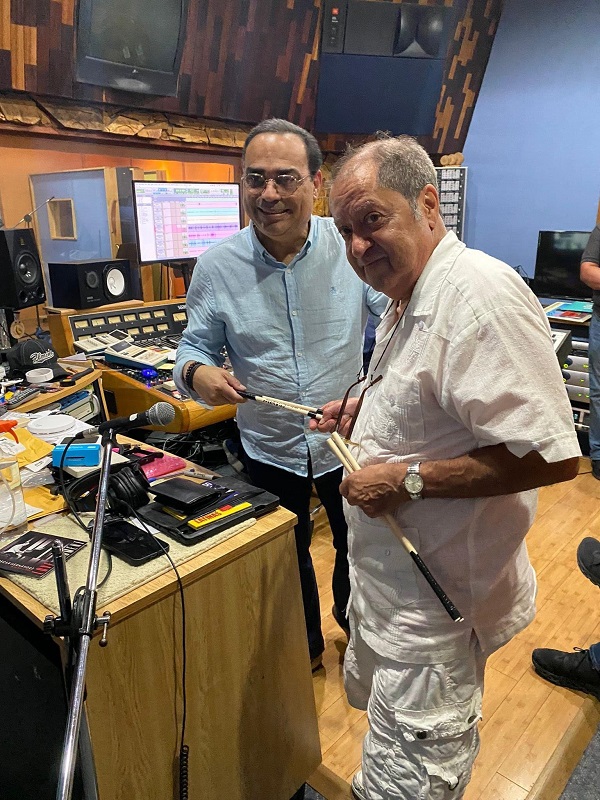
Ggilberto Santa Rosa y Nicky Marrero

At this institution Nicky gives his first lessons to a 13 year old boy named Jimmy Delgado.

In 1972 Nicky is invited to participate in the Afro-American Music Festival. 1975 he joins the troupe of the Wonderful Jew, Larry Harlow, then he is part of the Revelation Orchestra, two years with the Novel Orchestra.

In fact, thanks to his internship with Harlow’s band, Nicky was already part of Fania Records’ staff of musicians, recording as timbalero, bongos player and even drummer (and one of his first assignments for that label as a studio musician was the album “Pa’ Bravo Yo” by Justo Betancourt, produced by Harlow himself in 1972).

In 1973 he was included in the Fania All-Stars, replacing Orestes Vilató.

Marrero received an invitation from Pacheco to make his debut with them at Yankee Stadium in August of that year. Ironically, despite the events that separated Vilató from the stellar orchestra, he remained part of Fania’s studio staff. In fact, Vilató and Marrero crossed paths on countless sessions for various artists on the label between 1973 and 1980, in most cases with Marrero on timbales and Vilató serving as bongos player.

His multiple sessions for Fania (Ismael Miranda, Ismael Quintana, Héctor Lavoe’s first solo album (“La Voz”), Justo Betancourt and others), he also participates in “Sun Of Latin Music,” Eddie Palmieri’s classic par excellence and the first album to win a Grammy in the then debut category of “Best Latin Album.”

Roberto Roena y Nicky Marrero

He is also invited to participate in the first of several rock sessions, this one specifically as an all-around percussionist for the group Electric Flag: “The Band Kept Playing”.

He travels with Fania to the African continent, later Jerry Masucci gets a potentially lucrative contract for the Fania All-Stars with Columbia Records, for recording purposes the orchestra is reduced to a sextet: Pacheco, Barretto, Nicky, Roberto Roena, Bobby Valentin and debuting with the orchestra, Papo Lucca.

This is how Nicky, without being a band leader, not only became a star member of the Fania All-Stars, but also an “exclusive artist” of the Fania label. And as such, he appears on several albums that are not necessarily Latin and travels with Fania to Europe (the first of several subsequent visits) and Japan. Together with Harlow, Vilató on bongo, Eddie “Guagua” Rivera on bass, Frankie Rodríguez on congas, Harry Viggiano on guitar and Pablito Rosario on percussion, he recorded an album of downloads for the Japanese market under the curious group name of Belmonte (“Olé”). [This album is very difficult to obtain.

1977 he joins Tipica’73, an orchestra which he joins shortly after the release of the previous album: “Rumba Caliente,” ironically replacing Vilató once again. The album in question, for which Nicky alternated between his timbales set and the drums proper, is “The Two Sides Of Tipica’73,” the band’s most progressive album.

Nicky introduces drum toms to his rhythm kit (the only drum component Nicky overlooks in his regular timpani set is the hi-hats).

Nicky even recorded his first drum solo on the song “Yo Bailo De Todo” on that album. By this time, production at the Fania label and its subsidiaries was exhausting and the salsa boom in New York was in full swing.

Exhausting tours with the Fania All-Stars, he travels with Tipica’73 to Havana, Cuba, the first time in 20 years of economic blockade and open political friction that a New York Latin orchestra performs in the home of son, Nicky’s visit with La Tipica and Orestes Vilató’s own visit the following year, replacing him with the Fania All-Stars, helped to restore the timbal and bongo to the importance they should never have lost in Cuba.

Nicky Marrero Leyenda Fania

To this day, Nicky remains healthy and active in music.

Also Read: The legendary singer Guadalupe Victoria Yolí Raymond “La Lupe”

Australia and New Zealand – October 2023

Promo Visa

Promo Maracas

Australia flag

Australia

New Zealand Flag

New Zealand

OCTOBER 2023 FESTIVALS

Australian Bachata Championship
Oct 06 / 07 2023
The Australian Hall 150 Elizabeth Street, Sydney, Australia, 2000

Rio Beatz
Oct 06 / 08 2023
Brazilian Beatz Dance AcademyAddress: 407 Tuam Street, Christchurch, New Zealand, 8011

Sydney Salsa & Mambo Convention
Oct 27 / 29 2023
UNSW Round House Anzac Parade, Kensington, Australia, 2052 NSW

John Narváez and Elizabeth Rojas from Salsamania

John and Liz from Salsamania  

Between days 23 and 25 March, 2023, the San Francisco Salsa Festival took place, which brought together some of the cream of The Bay Area Latin music scene. One of those attending this great event was the main editor of International Salsa Magazine, Mr. Eduardo Guilarte.   

On site, he had the opportunity to share with other guests and some of the organizers such as Elizabeth Rojas, affectionately known as Liz, and John Narváez. We had the chance to talk with both dance professionals to know more about their beginnings, festivals and projects. Do not miss it!  

John and Elizabeth
Colombian dancers John Narváez and Elizabeth Rojas

Beginnings   

After several attempts to schedule a meeting with John and Liz, we finally managed to talk with these Colombian dancers and entrepreneurs, who began by thanking us for the contact and the opportunity to promote their passion for salsa and the community they represent.   

This love they have for the aforementioned musical genre has much to do with their roots. Both were born in Colombia and left the country when they were 12 years old (they are the same age) because of the violent situation caused by the guerrilla that existed in those years.   

Although those were hard times, John says these were very nice years from which he has fond memories. He remembers almost all his family members singing or playing an instrument, while he was the only dancer. All this influenced him in such a way that Latin music remains his north after so many years.  

Moving to the United States 

Since the social situation did not allow them to live in their country, they decided to move to the United States and apply for political asylum. At the beginning, it was not easy and the focus was on working hard to get ahead in this new country and to learn English. However, all that changed over time. 

With the arrival of economic and family stability, priorities changed. John comments that his interest in music and dance perked back up due to the family gatherings that his relatives celebrated such as birthdays, quinceañeras, weddings, among others. 

Although at the time dancing was not considered a serious profession, both John and Liz began to practice it at amateur level. Once they turned 21, they started going to the most popular salsa clubs, but it was all for recreational purposes. It was years later before they began to analyze all the technical and historical part of dancing to understand it better and take it more seriously.  

John, Liz, and Barbara
John and Liz with Barbara on Despierta América

Dancing as a profession 

John and Liz started to take dancing seriously in 1999. They both attended a three-day salsa event in Los Angeles, but what they did not know is that this was the first world salsa congress in America.   

This gave them the opportunity to share with the best salsa dancers in the world and they saw such impressive things that they were inspired to return next year with a well-established dance team with which they could participate fully in these activities. 

Being full of motivation, they decided to create Salsamania Dance Company and performed with their team at the festival. They started doing the same thing every year, which helped them gain experience and evolve their styles. 

After earning the trust of the festival organizers thanks to their talent and professionalism, they were given the opportunity to start teaching salsa workshops at the aforementioned congress. This is how little by little John and Liz began to build the reputation and credibility they have today.   

 In 2004, it got to a point where John took the important decision to quit his job to devote himself to dancing and Liz was quick to do the same. His resignation came with the opportunity to take a three-month trip to Hong Kong to teach salsa in a community where people did not dance it. 

They managed to build a community from nothing, since at that time, Hong Kong was not a place where people listened to salsa. However, everything went well and the dancers managed to seamlessly connect with the local audience. As John rightly said, ”salsa is a universal language and you don’t have to speak that language to feel the music”. 

On returning to the Bay Area, they began to practice dancing as a profession in the United States. 

On this point, Liz commented that her parents became very upset with her when she quit her job because of dancing, but today, they admit that it was the right decision and support her totally.  

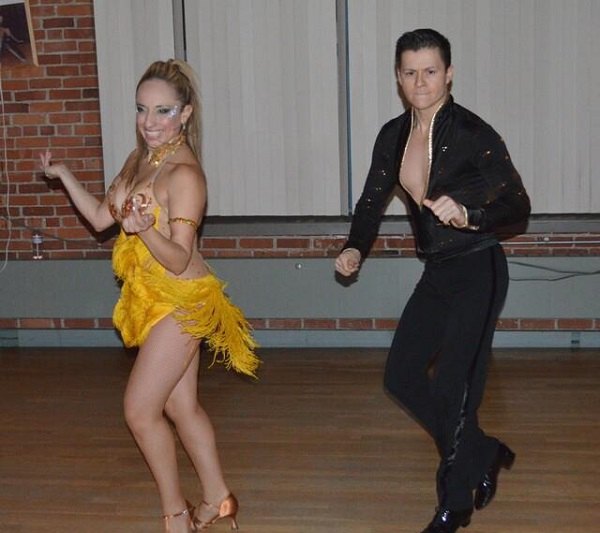
Liz and John dancing
Liz and John during a social dance in Boston

Salsamania Dance Company 

Liz told us that it was difficult to create Salsamania Dance Company because it requires a lot of discipline and healthy coexistance between different types of personalities to create a group like this and keep it together. Fortunately, John is an industrial psychologist, so he helped to prevent these aspects to be a problem. 

Basically, Liz is responsible for the company’s management and John is the one who takes care of the human part of all the staff. 

They started the whole process like any regular company and drew up the contracts for all those who were going to work with them, making Salsamania a much more established, structured and serious project in the eyes of everyone else. Today, it is one of the largest companies in the Bay Area.   

They also took it a step further and built a salsa academic program with a thoroughness and detail that has not been seen in other projects of this kind.   

San Francisco Salsa Festival  

San Francisco Salsa Festival is one of the biggest salsa events in California and the United States in general and we were fortunate to have representation there with our editor Eduardo Guilarte.  

It began to be celebrated in 2008 with the support of international salsa promoter Albert Torres, who was a fundamental piece in the development of the festival and talent recruitment for an event of this size, as there were many things John and Liz had to learn. That is why they are both incredibly grateful for what the congress organizer did for them back then.  

To recruit artists, the dancers only require candidates to be good teachers, to share with the salsa community and to put on a good show for the audience. 

They also often invite colleagues they have known for years and some recommended to whom they give them the opportunity to shine and make themselves known during those days. 

Every year, they look for dancers, dance instructors, DJs and live orchestras. For Liz and John, the thing about live bands is very important, as they are concerned that there are so many clubs and venues that no longer hire these talents. This year, they focused on local bands that play on Thursdays and Fridays in San Francisco and were very happy with the results.  

It is expected that the next San Francisco Salsa Festival is scheduled between days 22 and 24 March, 2024 at the same venue, which is the Marriott Waterfront Hotel.   

The orchestras hired to perform for next year are Cabanijazz, The Latin Rhythm Boys and Orquesta Boyacán. The dancing couples are Alex and Judy from Colombia, Colombians Felipe from Colombia and Kathe and Mauricio and Danny from Mexico.   

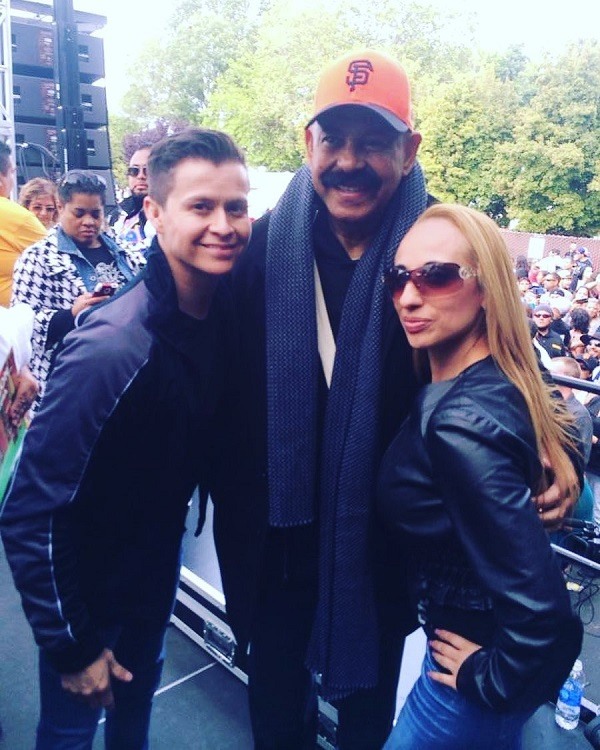
John, Liz, and Oscar D’ León
John and Liz with Venezuelan singer Oscar D’ León

Difficulties in the pandemic 

As dancing is an activity with a lot of physical contact and closeness, we were curious to know how they lived the pandemic and what they did to keep their project afloat in this situation. 

Though they admit that those months were not easy, they have always been very disciplined with their money and had enough to resist as long as possible without working.   

They tried to make up for lost time by teaching classes via Zoom as did most of their colleagues and designing new choreographies to apply when they went back to their usual activities. 

In addition to this, both had not spent time with their respective families in a long time, so they also took advantage of the absence of work to reunite with their loved ones and take up those important contacts that were lost due to stress and routine. 

Read also: Here we have Salseros With Attitude 

Asia – October 2023


DIRECTORY OF NIGHTCLUBS

Israel circular flag
Israel

Havana Music Club
Havana Music Club
Yigal Alon St 126, Tel Aviv-Yafo, Israel +972 3-562-3456

Salsa Carlos
Yegi’a Kapayim St 10, Tel Aviv-Yafo, Israel
+972 3-562-3456
OCTOBER 2023 FESTIVALS

Dubai - United Arab Emirates
Dubai

Korea
South Korea

Vietnam
Vietnam

Holiday Inn Dubai al-Maktoum AirportAviation City - Dubai South, Dubai, United Arab Emirates
Oct 12 / 16 2023
Holiday Inn Dubai al-Maktoum AirportAviation City – Dubai South, Dubai, United Arab Emirates

Busan Salsa Bachata Festival
Oct 13 / 15 2023
Haeundae-gu Marianne Hotel, Haeundae-gu, Busan, South Korea

Vietnam Latin Xperience
Oct 06 / 08 2023
Phuong Nguyen Building, 51/52 To Ngoc Van, Tay Ho, Hanoi, Hanoi, Vietnam

Phuong & Trang Zouk Vietnam
Oct 18 / 22 2023
Phuong Trang Zouk Dance Studio 5A Floor, No. 152 Pho Duc Chinh, Ba Dinh, Hanoi, Hanoi, Viet Nam, 100000

Oct 26 / 30 2023
Mercury Phu Quoc Resort & VillasDuong To Hamlet, Duong To Commune, Phu Quoc Island, Kien Giang, Viet Nam, 920000


  • « Go to Previous Page
  • Page 1
  • Interim pages omitted …
  • Page 67
  • Page 68
  • Page 69
  • Page 70
  • Page 71
  • Interim pages omitted …
  • Page 120
  • Go to Next Page »

International Salsa Magazine (ISM) is a monthly publication about Salsa activities around the world, that has been publishing since 2007. It is a world network of volunteers coordinated by ISM Magazine. We are working to strengthen all the events by working together.