• Skip to primary navigation
  • Skip to main content

International Salsa Magazine

  • HOME
  • Previous editions
    • 2026
      • ISM / April 2026
      • ISM / March 2026
      • ISM / February 2026
      • ISM / January 2026
    • 2025
      • ISM / December 2025
      • ISM / November 2025
      • ISM / October 2025
      • ISM / September 2025
      • ISM / August 2025
      • ISM / July 2025
      • ISM / June 2025
      • ISM / May2025
      • ISM / April 2025
      • ISM / March 2025
      • ISM / February 2025
      • ISM / January 2025
    • 2024
      • ISM / December 2024
      • ISM / November 2024
      • ISM / October 2024
      • ISM / September 2024
      • ISM / August 2024
      • ISM / July 2024
      • ISM / June 2024
      • ISM / May 2024
      • ISM / April 2024
      • ISM / March 2024
      • ISM / February 2024
      • ISM / January 2024
    • 2023
      • ISM / December 2023
      • ISM / November 2023
      • ISM / October 2023
      • ISM – September 2023
      • ISM – August 2023
      • ISM July 2023
      • ISM Edition June 2023
      • ISM – May 2023
      • ISM April 2023
      • ISM March 2023
      • ISM February 2023
      • ISM January 2023
    • 2022
      • ISM December 2022
      • ISM November 2022
      • ISM October 2022
      • ISM September 2022
      • ISM August 2022
      • ISM July 2022
      • ISM June 2022
      • ISM May 2022
      • ISM February 2022
      • ISM January 2022
    • 2021
      • ISM December 2021
      • ISM November 2021
      • ISM October – 2021
      • ISM September 2021
      • ISM August 2021
      • ISM July 2021
      • ISM May 2021
      • ISM April 2021
      • ISM June 2021
      • ISM March 2021
      • ISM February 2021
      • ISM January 2021
    • 2020
      • ISM December 2020
      • ISM November 2020
      • ISM October 2020
      • ISM September 2020
      • ISM August 2020
      • ISM July 2020
      • ISM June 2020
      • ISM May 2020
      • ISM April 2020
      • ISM March 2020
      • ISM February 2020
      • ISM January 2020
    • 2019
      • ISM December 2019
      • ISM November 2019
      • ISM October 2019
      • ISM Septembre 2019
      • ISM August 2019
      • ISM July 2019
      • ISM June 2019
  • Spanish
  • Download Salsa App
    • Android
    • Apple

Search Results for: Festival

Five Latin – Caribbean artists who triumph in Canada

Canada is another of the countries that has been influenced by the arrival of Latin music. Its beginnings are attributed to the immigration of Latin Americans to their lands.

Canada's map
Canada’s map

By sharing borders, the United States and Canada tend to have similarities in the musical field. In the 90s, Latin music was present in Canada. However, Spanish pop singers such as Julio Iglesias and Gloria Estefan, as well as Lydia Mendoza, an interpreter of Tejano music, were already known.

Having Latin Americans started a kind of Latino roots, allowing Latin music to gain more ground on Canadian soil. Singers like Celia Cruz, Willie Colón and Rubén González made their songs sound in Canada. However, the beginnings of Latin music in the country are attributed to Ferdinand Morton, known in the artistic field as Jelly Roll Morton, an American jazz pianist.

Starting in 1999, Latin music had a greater growth, beginning to be heard on radio stations, events, festivals and national television stations. By that time singers like Ricky Martin were already being heard in other parts of the world.

Selena, Buena Vista Social Club and Jennifer López. Arriving in Canadian lands was no exception. In fact, Buena Vista Social Club’s album broke a record by becoming the highest-selling Latin album in Canada.

Surprisingly, Canadian artists were also captivated by the benefits of Hispanic countries, by the Caribbean flavor and the warmth of its people. Nelly Furtado, singer, songwriter and producer born in Canada was inspired by the island of Cuba for her album “Mi Plan”. Furtado recorded what would be his fourth album entirely in Spanish. It featured the participation of renowned Latin artists such as Juan Luis Guerra, Alejandro Fernández and the Latin American Julieta Venegas.

“I think this album has several of my first true love songs. They are not complicated. They were not over-thought and I discovered that it is liberating to be able to sing in a Latin language and express my Latin soul,” he said.

Mi Plan obtained great merits and was positioned as the album in Spanish with the highest sales numbers recorded by a Canadian singer. Undoubtedly, a suitable place for many Latino musicians of birth or descent who have wanted to try their luck outside their borders. Some have succeeded and today are among the most loved in Canada.

Some representatives of Latin music in Canada

Hilario Durán, Cuba
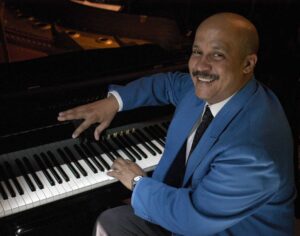
Photo by Hilario Duran

Hilario Durán

Hilario was born in Havana in 1953. He moved to Canada in the late 90’s, after touring the world with his band “Perspectiva”. He is a famous jazz pianist who fell in love with Canada and decided to live on its streets. He joined the Afro-Cuban jazz band “Spirit of Havana” belonging to Jane Bunnet, a Canadian lover of Cuban culture. In fact, Bunnet regularly travels to Havana to perform with Cuban musicians.

Hilario Durán has become known in Canada and other parts of the world thanks to his orchestra (Big Band), where together with his friend Roberto Occhipinti, a Canadian musician, they bring together Cuban and Canadian musicians. Leaving Latin jazz high. In 2007 he was nominated for a Grammy for his album “From the Heart”, along with Roberto D’Rivera. In addition, it obtained three Juno Awards and different awards in Canada.

Amanda Martínez, Mexico
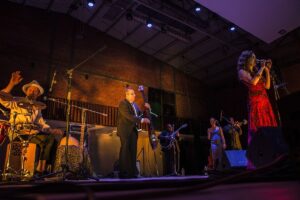
Photo - Amanda Martínez in concert

Amanda Martinez in concert

Amanda Martínez was born in Toronto, Canada with Latino blood. His father is Mexican. Martínez studied biology and business administration but decided to take a course in his life and dedicate himself to what he really loved: music. The artist was not wrong in her decision. He has left his roots high by venturing into Latin jazz.

In 2007 and then in 2009 she was nominated for the Latin Jazz Artist of the Year Award at the National Jazz Awards in Canada. He has three albums to his credit and his first album “Sola” won the Best World Music award, selling around 6,000 copies.

Martínez has performed on famous stages and renowned events; she sang at the Winter Garden Theater, at the Koerner Hall in Toronto, the Festival Centro Histórico de México, at the Montreal Jazz Festival

Ogguere, Cuba

Ogguere's photo

Ogguere

Aka Edrei Riveri, is a Cuban singer and songwriter who resides in Canada. It has become famous for its musical fusions. He walks through rap, hip hop, jazz and la chacuba. A mix of cha-cha and rap. It is registered as the first mix between both styles.

Ogguere has two solo albums, “Solar” released in 2011 which earned two nominations for a Cubadisco award and “Raíces”. He moved to Toronto in 2010 and has since become an immediate reference in jazz and hip hop.

Natasha Roldán, Colombia

Photo by Natasha Roldan
Natasha Roldán

Born in Colombia and based in Toronto, Canada, Natasha Roldán breaks stereotypes in the musical field. She walks between jazz and bossa.

The artist has a fair complexion and very light eyes. From what anyone would believe, she is a native Canadian singer. However, her Colombian roots run deep in her career.

For Natasha it is important that the musical boundaries collapse. It promotes pattern-free Latin music.

“I think that above all I break many stereotypes because people in Canada whenever they think of Latin music, identify it directly with salsa or bachata. Well, and now reggaeton (laughs). And everything is linked to a super sexy image of the Latin woman, who dresses spectacularly and clearly I am not like that.

Therefore, it is very gratifying to share another type of music that people do not know such as bambuco, cumbia, Argentine zamba, Brazilian music aside from bossa nova … and whenever I talk to someone and they discover that I am always Colombian They ask me why I don’t play such music or dance this.

Suddenly I break with the stereotype but not because it is a bad stereotype but because other things have to be shown as well ”, she expressed in an interview for the Hispano Phone portal.

Her music has allowed many Canadians to have access to the Latin culture and to experience sounds with different influences.

Henry Vivel, Colombia

Photo by Henry Vivel

Henry Vivel

Henry was born in Colombia but moved to New York and later to Toronto. In New York he had the opportunity to study music with Enrique Gil, musician and composer. After his arrival in Toronto, he worked in Sky’s Banda, a group that performed at weddings and different events. He sang Latin music.

In 2009 he became the leader of the Tropicanada Orquesta. Pioneer Latin Orchestra in Toronto. They have participated in different salsa festivals and radio stations. Henry and the band have also been a part of different charities in Canada and other countries. In the same way, Henry has joined social causes for the inclusion of immigrants, he has taught them English and part of Canadian culture.

In 2013 he was nominated for the Oye Awards and 10 Most Influential Latinos in Canada. The singer is very pleased with the affection of the Canadian public.

“The chemistry is so great, especially with those who don’t understand my songs in Spanish, which makes the language barriers dissolve into enjoying themselves, dancing and having a good time. With the orchestra I have been able to witness how people enjoy the beauty of Latin music and it makes me very happy to be a Colombian who sings to Canadians and who puts up our musical roots ”, he commented

Toronto has been a city with great Latin influence. Canada has received mixtures of different cultures and they have formed a variety of styles that locals and visitors enjoy. It has been one of the countries that receive the foreign musicians as part of a great family and give them the opportunity to present their work. They have a great affection for Caribbean music.

Historical events that gave birth to kizomba

History of kizomba

There are many musical genres and rhythms that we love and make us want to dance just by listening to them, but in most cases, we do not know their origin or how they became what they are today. Such is the case of kizomba, whose origins are both particular and fascinating, so we want to explore a bit about this interesting story for the knowledge of all those readers who still do not know it.

This dance modality that has become well known in Latin America and the United States in recent years has its origins in Angola in the 1960s as a fusion of ”semba” and other African rhythms, but it was not as simple as it sounds. In fact, many things happened before kizomba became what we know, some of which have to do with historical events that led to the creation of this musical genre indirectly.

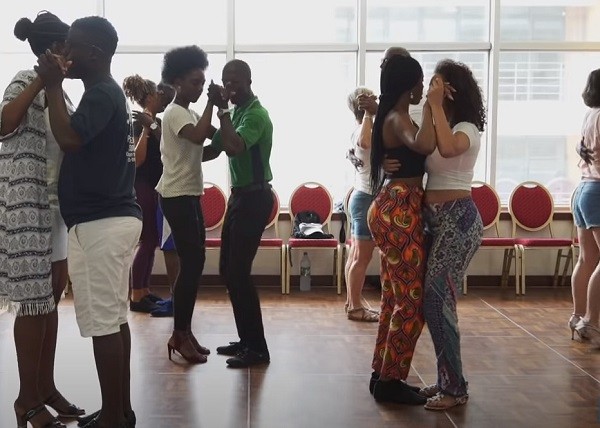
People dancing kizomba
People dancing kizomba in a dance studio in Angola

Historical context

Angola was colonized by Portugal in the 16th century, fact from which the European country began to impose its culture, language, religion and political system in the occupied territory. In the same way, the colonizers took advantage of the Angolans in every possible way, but the best known was the labor exploitation to which they were subjected to obtain resources and the suppression of their national identity.

The situation became so unbearable that there has been an emergence of numerous anti-colonialist movements throughout the country such as the National Front for the Liberation of Angola, the People’s Movement for the Liberation of Angola and the National Union for the Total Independence of Angola. This resulted in the Angolan population demanding the rights they had as inhabitants from their own country and which had been forcefully taken away from them. The following years were marked by intense armed conflict, a lot of political instability and international intervention.

Finally in 1975, Angola gained independence from Portugal to become a country free from the yoke which settled down on it for decades. However, the legacy of colonization in every area of national life was so profound that it could not be swept way from one moment to another, including traditional music and dances. Both Angolan music and dance ended up mixing with European and Portuguese rhythms in general, resulting in a colorful range of sounds that have been conquering the whole world.

Angolan women dancing
Angolan women dancing tradicional rhythms

Origin of kizomba and its name

Returning to semba that was mentioned at the beginning, it was its union with other African rhythms such as zouk that gave origin to kizomba as such. The word ”kizomba” comes from ”kimbundú” or ”quimbundú” which means ”party”. Kimbundú is a language spoken in some Angolan provinces and the Portuguese language incorporated some of its terms such as ”xinga” which means ”curse”.

On this subject there is much controversy, since lots of hypotheses are floated to explain the origin of kizomba and one of them states that this genre does not exist as such, but it is a version of the already existing zouk, but sung in Portuguese. There are also some studies indicating that kizomba comes from ”bèlè”, which is a dance inherited from African ancestors who came to the Island of Martinique as slaves to work in the sugarcane plantations.

By mixing bèlè and the European polka, Martinican musicians created something called ”beguine”, which was spreading in Parisian popular dances. When these rhythms were mixed with more commercial music in the 1970s, zouk originated and this term makes direct reference to the spontaneous parties in Martinique. ”Zouk” means ”party” in Creole, which is a language spoken by West Indians that emerged from the mix of French with other African languages. Coincidentally, it has the same meaning as ”kizomba” in Kimbundu.

Luanda Semba Festival
Some contestants at the Luanda Semba Festival 2019

After zouk spread to French Guiana and Brazil, it returned to Africa, especially to Angola and Cape Verde, where it merged with semba and finally gave birth to kizomba.

What how is kizomba is today

Kizomba tended to be slow-paced and static and not required many turns, but that changed with the passage of time. Today, it includes legs tangled and recreates much more visual moves than before.

Something that characterizes the genre is the circle dance with forward and back steps, which has been very appealing to dancers from all over the world despite their origin. Besides, it is very easy, sensual, different and exotic.

Read also: No man is a prophet in his own land

How Jacira Castro and Salsa Power changed the Latin music scene

How did Salsa Power start?

Latin culture, specifically the musical part, has had a large group of unconditional allies who have promoted it worldwide through their work and platforms, being Chilean-American Jacira Castro one of the best known. Jacira is a salsa casino-style salsa teacher and web designer who had the dream of spreading the typical rhythms of our countries, but she did not figure out how until she came up with a revolutionary idea: Salsa Power. 

Salsa Power was born in 1999 as part of an initiative created by Castro and graphic designer Julian Mejia, who practically became her partner until the moment when the page stopped working. From that year on that the dance instructor began to generate contacts and develop human networks with people inside and outside the world of music, especially from the salsa genre. A particularity of this system devised by Jacira was that it was fed by the information received from people from anyqhere in the world about everything related to concerts, festivals, press conferences, autograph signings and much more.

Jacira Castro - Salsa Power
Dance instructor and web designer Jacira Castro – Salsa Power

How did this project work?

Thanks to the technology that was advancing little by little in all this time, there were many more contact ways and social media came along to facilitate these activities. The website grew to such an extent that it came to have more than 300 correspondents in over 60 countries, many of whom did not even have professions or occupations related to music, but wanted to strive to make the initiative successful and Latin artists and orchestras have a dependable space to promote their work.

Contrary to what many readers may have thought, everyone involved in this project never received a single cent or publicity in return for all the work being done. In fact, it was Jacira herself who had to pay for all the expenses related to Salsa Power such as plane tickets, travel, lodging, food, wardrobe, among other things. Not to mention the website maintenance and other hosting costs for the domain to work properly.

Fortunately, all that effort and money were worth it because Salsa Power rose to become the largest salsa website on the internet and a true reference for any independent media planning to do anything remotely like that. Much of the fruits harvested by this beautiful project can still be found on the internet and consist of articles, interviews, event coverage, videos and many other things.

The name Salsa Power was so respected that you could not talk about the Latin salsa scene in the United States without mentioning it, especially in South Florida, a place where competition for the first places was at its higuest. This competition was not only between artists and musical groups, but also between media, associations and academies, triggering some inconvenience and regrettable situations like the one experienced by Jacira and Julián a few years ago.

Jacira paid for all the expenses related to Salsa Power

Controversies

Jacira has had run-ins with some important personalities of the Latin music community in Florida because of her political positions, which went against the current of a large number of Latin artists and dancers at that time, especially those who are part of the Cuban exile. Her attitudes towards the political situation in Cuba have been highly controversial, mainly those related to the U.S. economic embargo on the Caribbean country and the limitations on free cultural exchange between both nations. Both Castro and other leaders of the entertainment industry were opposed to the decades-old blockade, which has been maintained until today.

This caused the dance teacher to make some enemies in the Miami music scene, which led to the hacking of Salsa Power with the caption ”This is a communist website” in big red letters along with a message whose author calls Jacira ”communist” and ”pro-Fidel Castro”. Obviously, she got worried and immediately called Julian to bring down the page.

As they began to diagnose the issue and its possible causes, they concluded that those responsible were part of an association composed of a dozen dance schools in Miami and its sorroundings called Salsa United. Around the same time, this organization had just created its own website, which published content very similar to that of Salsa Power, so much so that its principal spokesperson Jolexy Hurtado and Jacira came to have some arguments and run-ins due to how much alike the interviews were in both websites. The conflict reached at such a level that Jacira states that Hurtado told her she was messing with the wrong guy.

Undoubtedly, this whole situation was a big headache for the web designer, but has never let any of this daunt her or make her feel inadequate. On the contrary, she has grown before adversities and has faced them with the gallantry that has always characterized her, since she knows what her work is worth in terms of quality and globality.

However, there comes a point when the effort and time invested are not enough, so it is time to be realistic and assume that everything has its end, as the great Héctor Lavoe would say.

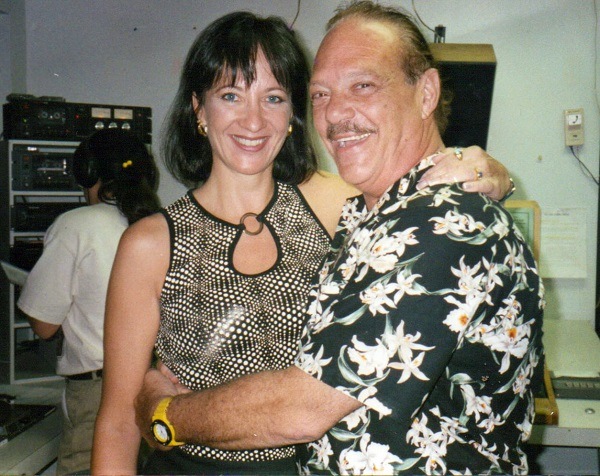
Jacira and Larry
Jacira Castro with producer, composer, and pianist Larry Harlow

Farewell to Salsa Power and Jacira’s current life

After 22 years of operation of the Salsa Power project, many of the correspondents who provided information for the page got married, had children, studied, moved and pursued other professional opportunities that did not allow them to continue their work. For the same reason, Jacira had no choice but to terminate the project that was her life for more than two decades and publish a farewell message thanking all her readers for their support over the years and assuring that she will continue to travel and enjoy salsa and dance.

In spite of abandoning her duties as administrator of Salsa Power, the great impact of the Chilean-American’s work on those who have come to know her and collaborate with her cannot be denied. On her LinkedIn profile, there plenty of favorable reviews about her professionalism and commitment in every activity she makes.

From International Salsa Magazine, we wish her the greatest success in every project she undertakes and that she enjoys all the stages that are to come.

Read also. Pacifica Radio, history, shows and controversy

ISM April 2023

International Salsa Magazine

Kizomba as a result of war and colonization

The fight for Angola’s independence was a long and difficult struggle that endured for several decades. The country was colonized by Portugal in the 16th century, and for centuries the Portuguese imposed their culture, language, and political system on the Angolan people. However, the Portuguese colonization also led to the exploitation of the country’s resources, the forced labor of its people, and the suppression of its cultural identity.

In the mid-20th century, there came a wave of anti-colonial movements across Africa and Angola was no exception. The Angolan people began to demand their right to self-determination and freedom from colonial rule. In 1961, the National Front for the Liberation of Angola (FNLA) conducted a guerrilla war against the Portuguese, followed by the People’s Movement for the Liberation of Angola (MPLA) and the National Union for the Total Independence of Angola (UNITA) in the following years. The struggle for independence was marked by heavy fighting, political instability, and international intervention, but in 1975, Angola finally got its independence, ending over four centuries of Portuguese colonial rule.

Kizomba Dancer

Angola, officially known as the Republic of Angola, is a country located in southwestern Africa. It is known for its rich culture, vibrant music, and stunning natural beauty. One of Angola’s most famous cultural exports is kizomba, a popular dance and music genre that originated in the country and has spread to other parts of the world.

Angola has a long and complex history, marked by centuries of colonization, slavery, and war. The country was colonized by Portugal in the 16th century and remained under Portuguese rule until 1975, when it got its independence. The legacy of colonialism and the struggle for independence have had a profound impact on Angola’s cultural identity, including its music and dance traditions.

Kizomba, which means “party” or “celebration” in Kimbundu, one of the Bantu languages spoken in Angola, emerged in the 1980s and 1990s as a fusion of Angolan semba music, Caribbean zouk, and other African rhythms. Semba is a traditional dance and music genre that originated in Angola and is characterized by its joyful tempo, complex rhythms, and energetic movements. Zouk is a popular dance and music genre that originated in the French Caribbean and is characterized by its slow and sensual tempo, soft melodies, and romantic lyrics.

Young woman dancing kizomba

Young woman dancing kizomba

Kizomba music, in contrast to semba, is characterized by its slow and sensual tempo, soft melodies, and rich harmonies. The lyrics of kizomba songs are often sang in Portuguese, the official language of Angola, and deal with themes of love, romance, and social issues. Kizomba dancing is characterized by its close embrace and smooth, flowing movements. It is often danced in pairs, with the leader guiding the follower in gentle steps and turns.

Kizomba became popular in Angola in the 1990s, especially in Luanda, the country’s capital. The dance quickly spread to other parts of the country and became an important part of Angola’s cultural heritage. Kizomba dance parties, known as “kizombadas,” were held in clubs, bars, and community centers, attracting people of all ages and backgrounds.

In recent years, kizomba has gained popularity in other parts of the world, particularly in Europe, where it has become a popular social dance. Kizomba festivals and workshops have been held in many countries around the world, attracting dancers and music lovers from different cultural backgrounds.

Kizomba is not only a dance and music genre but also a cultural expression that reflects the history and identity of Angola and its people. It is an important part of the country’s cultural heritage and a source of pride for Angolans around the world.

  • « Go to Previous Page
  • Page 1
  • Interim pages omitted …
  • Page 80
  • Page 81
  • Page 82
  • Page 83
  • Page 84
  • Interim pages omitted …
  • Page 120
  • Go to Next Page »

International Salsa Magazine (ISM) is a monthly publication about Salsa activities around the world, that has been publishing since 2007. It is a world network of volunteers coordinated by ISM Magazine. We are working to strengthen all the events by working together.