• Skip to primary navigation
  • Skip to main content

International Salsa Magazine

  • Home
  • Previous editions
    • 2026
      • ISM / January 2026
      • ISM / February 2026
    • 2025
      • ISM / December 2025
      • ISM / November 2025
      • ISM / October 2025
      • ISM / September 2025
      • ISM / August 2025
      • ISM / July 2025
      • ISM / June 2025
      • ISM / May2025
      • ISM / April 2025
      • ISM / March 2025
      • ISM / February 2025
      • ISM / January 2025
    • 2024
      • ISM / December 2024
      • ISM / November 2024
      • ISM / October 2024
      • ISM / September 2024
      • ISM / August 2024
      • ISM / July 2024
      • ISM / June 2024
      • ISM / May 2024
      • ISM / April 2024
      • ISM / March 2024
      • ISM / February 2024
      • ISM / January 2024
    • 2023
      • ISM / December 2023
      • ISM / November 2023
      • ISM / October 2023
      • ISM – September 2023
      • ISM – August 2023
      • ISM July 2023
      • ISM Edition June 2023
      • ISM – May 2023
      • ISM April 2023
      • ISM March 2023
      • ISM February 2023
      • ISM January 2023
    • 2022
      • ISM December 2022
      • ISM November 2022
      • ISM October 2022
      • ISM September 2022
      • ISM August 2022
      • ISM July 2022
      • ISM June 2022
      • ISM May 2022
      • ISM February 2022
      • ISM January 2022
    • 2021
      • ISM December 2021
      • ISM November 2021
      • ISM October – 2021
      • ISM September 2021
      • ISM August 2021
      • ISM July 2021
      • ISM May 2021
      • ISM April 2021
      • ISM June 2021
      • ISM March 2021
      • ISM February 2021
      • ISM January 2021
    • 2020
      • ISM December 2020
      • ISM November 2020
      • ISM October 2020
      • ISM September 2020
      • ISM August 2020
      • ISM July 2020
      • ISM June 2020
      • ISM May 2020
      • ISM April 2020
      • ISM March 2020
      • ISM February 2020
      • ISM January 2020
    • 2019
      • ISM December 2019
      • ISM November 2019
      • ISM October 2019
      • ISM Septembre 2019
      • ISM August 2019
      • ISM July 2019
      • ISM June 2019
      • ISM May 2019
      • ISM April 2019
      • ISM March 2019
      • ISM February 2019
      • ISM January 2019
    • 2018
      • ISM December 2018
      • ISM November 2018
      • ISM October 2018
      • ISM September 2018
      • ISM August 2018
      • ISM July 2018
      • ISM June 2018
      • ISM May 2018
      • ISM April 2018
      • ISM March 2018
      • ISM February 2018
      • ISM January 2018
    • 2017
      • ISM December 2017
      • ISM November 2017
      • ISM October 2017
      • ISM September 2017
      • ISM August 2017
      • ISM July 2017
      • ISM June 2017
      • ISM May 2017
      • ISM April 2017
      • ISM March 2017
      • ISM February 2017
  • Download Salsa App
    • Android
    • Apple
  • Spanish

Search Results for: Gilberto Santa Rosa

Singer and manager of Cambalache Pancho Chavez

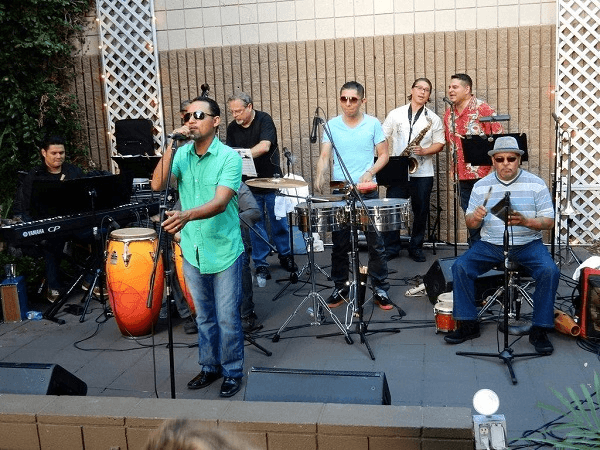
Peru continues to give much to talk about with regards to salsa and the guest we have this time is clear proof of that. We are talking about the talented singer and backup singer Francisco ”Pancho” Chávez, who has been kind enough to talk to us to reveal unpublished details of his life and career in his native country and, of course, in the United States. 

Pancho, who currently serves as vocalist and manager of the Orchestra Cambalache, has a very long career in the U.S. Latin music scene, to the point that his group has established itself as one of the top salsa bands in the northwestern United States. It is a great honor for us to have an artist of this stature in this January 2024 edition.  

Pancho from Cambalache
Francisco ”Pancho” Chavez, manager and lead singer of Cambalache

Pancho’s Musical beginnings 

Pancho’s first contact with music happened thanks to his mother’s family, many of whom were musicians. Although the young man never go into business in his country, he was able to see how to handle things thanks to his relatives until moving to the United States in 1997. 

One or two years later, someone gave him a double album by El Gran Combo de Puerto Rico that, he says, he played a million times because he really liked it. This material was one of his great inspirations to dedicate himself to salsa as a genre and nobody could change his mind.   

It was in Seattle that he started making music with college friends when he was already living in the United States, implying that he was not yet formally dedicated to music. In fact, Pancho was studying business at the time and was looking for a small musical group with other young college students he met around 1999.   

This group turned out to be Cambalache, which he founded along with Colombian musician Camilo Suarez. This would be the first and only group to which the Peruvian has belonged, so everything he knows about music and the industry was learned with this same project.   

He always stood out for his talent to sing and do vocals, but he also learned to play some instruments such as the congas, timbales, bongos, cowbells, among others. He also learned a bit of sound engineering and can work a little in this area, although he recognizes that he is not yet an expert.   

Pancho and Maelo
Puerto Rican salsa singer Maelo Ruiz and Pancho Chavez

Recruiting talent for Cambalache   

Pancho says that there were not many Latinos at the university back then, so he and Camilo forged a strong friendship and shared many common interests, especially music. 

At the time, both were facing the economic problems typical of a college student and saw music as an opportunity to make a little extra money during their summer vacation. Camilo knew other musicians, so he contacted them and proposed them to join the orchestra they were creating. 

Pancho and Camilo had thought of a group of five or six people, but there were so many interested in joining the orchestra that the first rehearsals included about 13 people. In the end, solely for economic reasons, they only accepted nine members, of which only he remains.   

All these members, including Camilo himself, ended up working with other artists and groups and obtaining new opportunities in the musical field.   

Clasiqueando 

Cambalache’s first album was ”Clasiqueando”, which was released almost 20 years ago. Pancho assures that the acceptance to the material was very nice, even though the details are not so refined and worked.   

The success they had was a surprise for Pancho and the rest of the group, since the scope they expected was local. “We were surprised that people called us from many countries saying they had heard the album and loved it. There were even companies in countries like Japan and Italy that wanted to buy us songs for distribution” Pancho said on the issue. 

It was a great start for everything that came next for the group in the years to come.   

Pancho and Porfi
Pancho Chavez and Venezuelan arranger, producer, and musician Porfi Baloa

Why choose Seattle 

Pancho and his musicians chose Seattle as their base of operations because he and all the members of Cambalache have lived there for many years. That is exactly the city the Peruvian chose to make his living there and he never left it. 

It is also in Seattle where they all have their jobs and occupations outside of music and where they meet to rehearse and deal with all the affairs related to the orchestra. 

In the beginning, it was very hard for them because the Latino audience was not very large when they created the project. However, that has been changing, and today, many Latinos live in the city and maintain their Latino customs, including music.   

Other tasks besides music 

In addition to being the vocalist and manager of the orchestra Cambalache, Pancho is also a business administrator and manages his own event company whose main element is, of course, music. In this company, Pancho and his staff are in charge of hiring artists and bands for private events. Of course, Cambalache is involved in the operation of this project. 

The event center managed by the Peruvian singer has a capacity for 500 people and has its own stage. He rents it to hold events there and has all types of clients waiting.   

They have hired artists such as Gilberto Santa Rosa, Tito Nieves, El Gran Combo de Puerto Rico, Willie González, Conjunto Bahía, Frecuencia Latina, among others. 

Read also: Producer and saxophonist Martin Franco talks about his passion for music 

Musical history of Roosevelt Cordova ”El Presidente de La Salsa”

Just as the case of Cuba and Puerto Rico, Peru has also given birth to many salsa exponents worthy of being highlighted and one of them is the talented Roosevelt Cordova, artistically known as ”El Presidente de La Salsa”. 

The sonero has a very interesting career behind him, so we decided to contact him and know a little more about his personal and professional life. Roosevelt responded by thanking us for the opportunity and finally, we were able to agree on a day and time to talk about issues of interest around his figure.  

Roosevelt El Presidente de La Salsa
This is Roosevelt Cordova ”El Presidente de La Salsa”

His taste in music since he was a child 

As has happened with many other salseros, Roosevelt also fell in love with music when still a child, but without knowing at the time that this is what he would dedicate his life to later. 

He always saw his family enjoying music at amateur level, which awakened in him a taste for this branch of art. However, his journey in this world did not begin with salsa, but with Peruvian waltzes and Creole music. It was not until he turned 17 that he became interested in salsa because an uncle of his signed him up for a contest called ”Buscando Un Sonero”, taking third place among 84 participants in total. 

Thanks to his performance in the contest, he was proposed to join the orchestra Camagüey, but his father refused because of all the excesses that an artist must face and he considered that his minor son was not ready for that. On the contrary, he preferred his son to be interested in other activities such as sports and leave music for later.  

In addition to this, the great references in which Roosevelt was inspired to follow his path have been El Gran Combo de Puerto Rico, Willie Rosario, Gilberto Santa Rosa, Héctor Lavoe, La Fania All Stars, among others.   

Roosevelt in Los Angeles 

It wasn’t until Roosevelt, at the age of 25, left for the United States that he could pursue his dreams and become the artist he dreamed he would be.   

He did not initially plan to devote himself to music, as he simply wanted to progress in life like any other immigrant, but it was not long before he decided to take the bully by the horns and return his great passion. It is then when he recorded an entire Peruvian Creole music album, but soon left this genre to return to recording salsa. 

This is how he began to seize every opportunity to participate in salsa orchestras to gain experience little by little.   

The first group he belonged to was La Sonora Santiaguera, which he joined in 1998, but from then on, there were many others with which Roosevelt learned much of what he knows today as an artist. 

Roosevelt in La Sonora and El Conjunto
Roosevelt Cordova belonged to La Sonora Santiaguera and Johnny Polanco Y Su Conjunto Amistad

One of the most important orchestras he belonged to was Johnny Polanco Y Su Conjunto Amistad. After all the experience gained so far, Roosevelt was encouraged to personally look for Johnny to talk to him at El Floridita, where El Conjunto Amistad performed weekly. 

The artist told the leader of the group he was a singer and wanted a chance in his group. After hearing him sing with his musicians that same night, Johnny invited him over to his home to give him a cassette with all the songs he had to learn to work formally with them. Two weeks later, he was already making his debut with Johnny and El Conjunto Amistad. His entry into the group coincided with the farewall of the lead singer, something that was just perfect for Roosevelt. 

Other groups 

After leaving El Conjunto Amistad, Roosevelt continued his career and joined Ángel Lebrón y Su Sabor Latino, with whom he recorded a full album. Some time later, he joined Guapacha Latin Jazz led by the Venezuelan Gil Tower, with whom the Peruvian has an excellent personal relationship, despite having separated professionally. 

In 2011, he became part of Conjunto Oye, which Roosevelt thinks is the best moment of his career because he was able to be himself within the orchestra and express his art with independence, something difficult in his previous groups. It was here that he had the growth he really needed to get ready and to take up greater challenges in the future.   

Solo career  

The information we found about his solo career revealed that Roosevelt went solo in 2019, but he corrected us by saying that, in reality, his first solo album ‘‘Un Nuevo Cantante” was recorded in 2018, which is when he really decided to open paths on his own. 

Although he says he is grateful to all the bands he has played in, he also adds that there comes a point in life where every artist wants to build his own path when he already fulfil the conditions for that. In his case, he already had experience in singing, composing and creating useful contacts, so he gave himself the opportunity to try. The best thing is that his wife supported him at all times and, today, she continues to be his rock in whatever he sets out to do.   

He also noted that he dreams of having his own orchestra someday and that it is important to have dreams in order to get where you want to be.  

Roosevelt singing
Roosevelt Cordova singing on stage


Roosevelt Cordova ”El Presidente de La Salsa”

When we wanted to know the origin of his artistic name, he laughingly told us that it is all abut his first name. Let us remember that Franklin Delano Roosevelt was President of the United States and his last name coincides with the singer’s first name. 

When someone approached him to ask for a picture and asked his name, he said he had the same name as former U.S. President Roosevelt. Since this situation constantly repeated, his wife proposed him to use this to create a stage name for himself. That is how ”El Presidente de La Salsa” was born. 

Llegó La Navidad 

Currently, Roosevelt is currently promoting his new Christmas song ”Llegó La Navidad” of his own authorship. The idea of composing the song came from his wife and daughter, who insisted that it was time for him to release music written by himself.   

So, he started the writing with the chorus and, from there, continued with the rest of the song. This is a technique he uses regularly when composing, as he ensures that people always remember the chorus more than the rest of the lyrics, so he always strives to have a catchy chorus that stands out in the public’s mind. 

Read also: We bring trombonist Félix O. Rodriguez from Santurce to ISM 

We bring trombonist Félix O. Rodriguez from Santurce to ISM

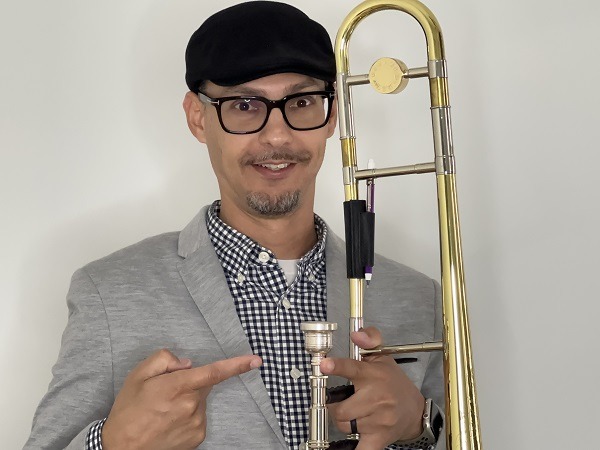
The beautiful island of enchantment Puerto Rico has always given birth to many of the best salsa exponents of all time and the source of talent that has come out of that place has been inexhaustible. It is always a pleasure to be able to talk with a boricua of those who continue to leave their Latin heritage on high and, this time, it was the turn of the arranger, composer, sound engineer and trombonist Félix O. Rodríguez from Santurce. 

It was very kind of the artist to give us a few minutes of his time to answer some questions for International Salsa Magazine and then we will be elaborating a bit on the topics we discussed with the salsa exponent.   

Félix from Santurce
Trombonist and sound enginer Félix O. Rodríguez from Santurce

Félix’s beginnings in the music world 

Félix’s first contact with music was at home, as his parents listened a lot to salsa, merengue, bachata and Latin music in general. While listening to this music, one of the things that attracted him the most was the sound of the trombone, especially in artists such as Willie Colón, Oscar D’ León, Gilberto Santa Rosa and many others. 

Once he reached the seventh grade in school, he decided to take music lessons and chose that instrument to start his training due to his fascination with it, something that today he does not complain about because he assures that he has done very well.   

In this learning process, noticing Félix’s interest in the trombone, his father, who was a professional orchestra musician, invited him to rehearsals so that he could soak up this whole atmosphere from an early age. It just so happened that the trombonist of this orchestra could not attend a rehearsal, so they gave the opportunity to the young boy to take his place for that night.   

After two or three shows, Félix was selected as house trombonist when he was only thirteen years old. Although he was not old enough to enter nightclubs, he was allowed to be present because he was part of the orchestra that would play there.  

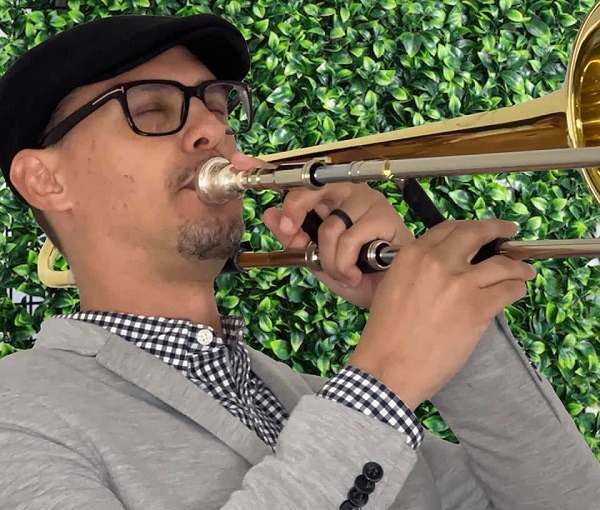
Félix playing
Félix playing the trombone

Orquesta Innovación and musical arrangements 

When he entered high school, Félix began to study a bit about music theory and related topics such as chords, writing for a specific instrument, percussion and other subjects. 

The young man worked so hard to train that, at only 15 years old, he was already perfectly capable of making musical arrangements, starting with transcriptions of music existing so far and copying notes from those songs. After several years on it, he finally started writing his own original music.  

In fact, he went on to record a couple of songs with Orquesta Innovación (the second orchestra he was in), a couple of original songs that unfortunately were never released, but served as experience for what would follow.   

University of South Carolina 

Félix acknowledged with laughter that this was the only university he applied to, so it was almost an obligation for him to be admitted. Fortunately for him, it was. 

He had to perform some tests with instruments and show examples of material of his own authorship to prove his musical skills. Everything he had learned so far was mostly based on salsa.   

Thanks to his effort and dedication in previous years, he was admitted to the University of South Carolina, where he studied music theory and trombone for five years. While there, the musician learned everything necessary about the historical aspects of all variants of classical music, jazz, marching band, orchestral symphony and many more. 

The formation obtained in his studies is still useful to Félix in the arrangements he makes today. However, he made it clear that his passion was and still is salsa and Latin music in general.   

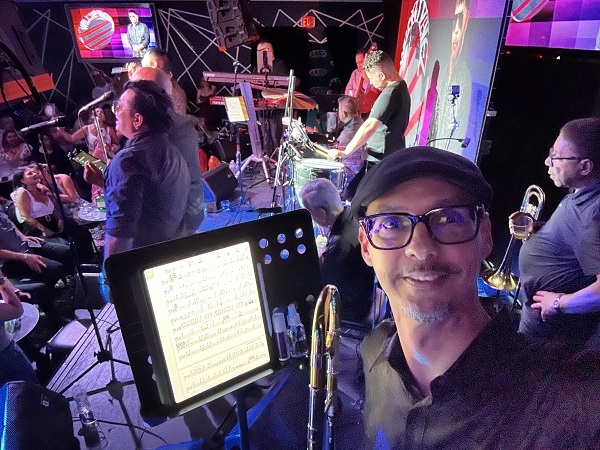
Félix during a performance
Félix during a live performance

Military life and musical activities during those years 

Upon graduating from the university, Félix was commissioned as an officer in the U.S. Army, following his father’s example, who was perfectly capable of meeting his obligations in the military and continuing to exercise his passion for music without having to give up either.   

As fate would have it, the artist met up with a former colleague from Orquesta Innovación, which led them to revive their passion for music and to create Orquesta Ideal, with which he spent eight years at Fort Bragg (U.S. military installation), North Carolina, his first stop as an officer.   

Over the years, he was assigned to units in Spain, Germany and Korea. It didn’t matter where he went because there were always Puerto Ricans and Latinos eager to get together to make music, which Felix took advantage of to be in touch with music, whether as a trombonist or a DJ. 

When asked if these events in which he was involved in were open to the public, he said yes in most cases, as military bases allowed entry to anyone, but unfortunately that changed with the Twin Tower Bombings on 9/11.  

Berklee College of Music 

During the last years of his military career, Felix studied production, mixing and remastering at Berklee College of Music in order to go preparing for his return to music once his retirement was official.   

In addition to playing the trombone and arranging, the musician also loved production, editing, mixing and mastering, so he wanted to learn much more about all of these areas and thus have more control over his own work.   

Given that the Covid-19 pandemic was starting at that time, his hours at the military base where he worked were significantly reduced, which he took full advantage of to dedicate more time to school and continue growing as a professional musician.  

Félix recording
Félix in a recording studio

‘‘Con La Música Por Dentro’’ 

In the year 2021, Felix released his first EP titled ”Con La Música Por Dentro”. In a world still hit by the pandemic, the artist found it very difficult to record and promote his first solo musical work. 

He wanted to record with live musicians, but because of this same situation, it was not possible, so there were endless backing vocals he had to do and instruments he had to play himself in order to make the EP happen, so his name is the one that predominates in almost all the credits of the material.   

Fortunately, he succeeded to establish a recording studio at home and was supported his friend and singer João José, who recorded voices, piano and bass for the three tracks that make up the EP.   

Atlanta 

When we wanted to know why he chose Atlanta as his final destination to settle permanently, he told us that he did it to support his wife, who has got a good job in that city. He remembered the time when he started in the army and his wife and daughter always followed him wherever he traveled for his military duties, so he considered that it is time to return everything his partner has done for him and decided to follow her this time. 

He had to look a little to meet musicians and re-weave those connections in the industry and the Latino community in Atlanta, so he had to start from scratch in that sense. The good thing is that everything worked out for him and, as soon as he arrived in Atlanta, he was contacted to play with Willie Gonzalez. The bandleader liked his skills as a musician and offered him to continue playing with them, and so it has been to this day. 

Read also: Four nationalities united in Ladama 

José Hildemaro Hugas Amarista “El Sonero del Amor” from Venezuela to the world

José Hildemaro Hugas Amarista, better known artistically as “Hildemaro, El Sonero Del Amor”, was born on November 10, 1957 in Caripito, a city in the eastern Venezuelan state of Monagas.

He is a Venezuelan singer-songwriter whose interest in music began at a very young age, participating in various children’s programs on the radio station in his hometown and in Maturin, the capital of the state of Monagas.

In 1970 he won the first “Festival De La Canción Inédita” held in Caripito.

Then he moved to Carúpano, where he began to sing with different musical groups of that city, such as “Los Bravos” and “Soles De Media Noche”.

"El Sonero del Amor" from Venezuela
“El Sonero del Amor” from Venezuela

Later he was called by the “Combo Melorítmico” of Maturín, where he stayed for a year. He always wanted to sing in the capital.

In 1976 his dream came true when he was called to be a part of the Front Train Orchestra “Los Satélites”, for seven (7) months, the proposed goals began to be different and began to work to achieve them. In 1979 he joined the “Orquesta Ideal”, with which the song “Contigo Besos Salvajes” was played all over the country and was successively imposed among the first places.

In 1981 he joined the “Supercombo Los Tropicales” of Maracaibo, then the “Noche Caliente” orchestra and later the “Porfi Jimenez” orchestra.

In 1985 he joined the orchestra of Renato Capriles: “Los Melódicos”, which gave him the greatest and best experience, given the popularity, prestige and discipline imposed by its director.

In 1986, as a soloist, he recorded his first LP of tropical music under the name “El Jr. de la música tropical” for the record label “Sur Americana del Disco”, , with the name “El Jr. de la música tropical.”

In December 1987 he received a wonderful offer from the record label “Top Hit (T.H.. ) and in 1988 he records his first LP, as a “sensual salsero” for Venezuela, titled “Amanecí Contigo” under the pen of José “El Flaco” Bermúdez, who is also the creator of the style that pushes him towards the international market, where all his songs hit with great acceptance and have his greatest impact in Peru (his second home as he usually calls it), starting his successful career as “Hildemaro, El Sonero Del Amor”.

José Hildemaro Hugas Amarista "El Sonero del Amor" from Venezuela to the World
José Hildemaro Hugas Amarista “El Sonero del Amor” from Venezuela to the World

In 1989 he recorded his second LP entitled “Sin Tabú”, which went gold a few weeks after its release, and this album took him back to Peru, where he is considered one of the main idols of Salsa Sensual. Panama, Mexico, Colombia, Ecuador, Argentina, Chile, Dominican Republic, Puerto Rico, Costa Rica, United States, Europe (Spain, Italy, France, Holland, Switzerland, among others), Asia (Japan), among many other countries, have joined his successful career.

In 1990 he recorded his third album called “Romantic and Sensual”, consolidating himself as one of the best voices of Latin American and Caribbean Salsa, qualities that were also reflected in his fourth production entitled “Lo Mejor De Mí” in 1991.

In 1993 he recorded his fifth album under the name “Al Natural”.

In 1994 he was invited to participate in the recording of the album “Con Ganas” by the Cuban Issac Delgado, where he performed a duet of a song composed by José L. Cortes called “Que Pasa Loco”, which quickly became an international success and took him to other latitudes.

In 1995 he released his sixth production with the title “Lo Que Siento”. One year later he signed a contract with the Mexican label “Balboa Records”, where he recorded the album “La Mejor Salsa Con Hildemaro”.

"El Sonero del Amor" from Venezuela and Viti Ruiz
“El Sonero del Amor” from Venezuela and Viti Ruiz

In 1999, he was invited by the Venezuelan group “Melody Gaita”, along with other artists, to record a tribute song to his friend and colleague Oscar D’ León.

In 2001, “Orquesta La Constelación” decided to record an album with several artists, in which he participated with two (2) songs (Peruvian waltzes), “Cuando Llora Mi Guitarra”, in duet with Andy Montañez, and “Jamás Impedirás”, which allowed him to sound nationally and internationally.

In 2002, he is called by another Venezuelan group “Pajarito Vola Show”, along with other artists, this time to participate in a well-deserved tribute to Betulio Medina. In 2002 and 2003 he burst in the national and international radio stations with two (2) singles “Corazón Loco” and “El Celular”.

In 2016, he begins to sound again in the radio stations with the song “Que Voy a Hacer Sin su Amor”.

In addition to his talent to sing Salsa Romántica, he is recognized for his interpretation of the Bolero. And on stage he has shared the stage with artists of the stature of: Oscar De León, Tito Rojas, Tito Gómez, Paquito Guzmán, Andy Montañez, Maelo Ruiz, Viti Ruiz, Gilberto Santa Rosa, David Pavón, Ismael Miranda, El Gran Combo de Puerto Rico, Tony Vega, Nino Segarra, José Alberto “El Canario”, among many others.

"El Sonero del Amor" from Venezuela and El Canario
“El Sonero del Amor” from Venezuela and El Canario

Among his many facets is his love for sports, especially volleyball, which he has practiced since he was very young. He is an honorary member of the FUCUFOCA Foundation, which has been responsible for the organization of the Festival de la Canción Inédita de Caripito for fifty-one (51) years. Faithful collaborator of the Friends of Palencia Foundation and sponsor of several institutions.

Through his foundation HH Productions, he has carried out social actions such as Collaboration in the construction of the Virgen del Rosario Church in Caripito;

Donations of medicines and food to the needy, assistance to sports teams with equipment and clothing, organization of charity concerts and support of the “Amigos de la Palencia” Foundation.

Through his foundation HH Productions, he has carried out social actions such as Collaboration in the construction of the church “Virgen del Rosario” in Caripito;

Donations of medicine and food to people in need, help to sports teams with equipment and clothing; Realization of benefit concerts and concerts of popular attraction in collaboration with the end of year festivities of his hometown.

He has always given value to new talents, helping them in their first steps with his advice and teachings, such as Angel “Tu Angel”, Hildemaro Jr. “La Continuación”, Gilberto Hugas, among others.

Between the years 2022 and 2023 he will celebrate his forty (40) uninterrupted years of artistic life, with a long international tour in countries such as: Colombia, Bolivia,

Peru, Panama, United States, Canada and Europe. He is now promoting the songs “Si Tú Te Vas” and “Amigos Especiales” from his new production, which he is preparing with his inseparable director and producer, José “El Flaco” Bermúdez.


Also Read: Carlos “Nene” Quintero comes from a family of musical prodigies

Metamorphosis: from music to photojournalism, a reinvention without limits

In the salsa scene, we are privileged to have the presence and companionship of Felix “Guayciba” Ayala.Guayciba is one of the greatest photojournalists Puerto Rico has ever produced.

He has moved from the musical notes that embrace our ears to now capturing visuals that awaken our five senses of unrepeatable moments.

I appreciate and share first hand the reference of how this idea begins, how the seed of wanting to be a photojournalist is planted, after having directed the Guayciba Group for 12 years.

“In the mid-’80s, a group of friends and I got together. We started playing and put together a Christmas repertoire. People liked it, and they told me, ‘Hey Felix, you should form a group, you sound great.'”

Félix “Guayciba” Ayala y Chucho Valdes

Encouraged by the public’s reception, they set about the task of banding together and formalizing a repertoire of Christmas music, which they later expanded to include popular music. In 1987, the group did not yet have a name, but the musicians were already rehearsing and playing in a bar in Santa Rosa (Bayamón, Puerto Rico).

In 1988 they started calling themselves Murciélago Sound Machine and got their first professional contract, for which they charged $200.00. During one of the rehearsals, Felix’s neighbor, who owned a movie and video rental store, offered to give him the name of his store: Guayciba; which he had already registered with the State Department.

The rest is history.

Felix liked the name, even though he still didn’t know what it meant. Guay-ciba means to take care of the stone.  It turns out that our Taino Indians communicated by carving messages on stones, which we now know as petroglyphs.

This form of communication of our Indians, the Tainos, was engraved on the stones that are part of our heritage.

Since 1989, Guayciba claims to have lost his last name – Ayala – to replace it with the name he is known by in the media, Guayciba.

On the salsa stage we have the privilege of having the presence of Felix "Guayciba"
On the salsa stage we have the privilege of having the presence of Felix “Guayciba”

This was the name of the musical group of which Félix Guayciba was the director, composer and singer.  As the main member and founder, he took on the task with commitment and in 1989 they released their first record production, entitled Nuestra música primero en LP, because CDs were not yet widespread in the market.

Felix remembers that the first singer of Grupo Guayciba was Gisela Ortiz.  Some time later, Gisela got thyroid cancer and when she lost her voice, she had to be replaced by Aidita Encarnación.

Guayciba recalls that Aidita made her debut with the group during the “Coffee Festival” in Maricao and remained with the group until it disbanded in 2000.

In 1991 they produced Echemos pa’lante, which opened the door to radio stations on the island. In 1992 they produced Por ti doblaré rodillas, and in 1993 they released what Felix considers their masterpiece under the title Borinquen, nido de amores.

Félix affirms that this production became the classic album that consolidated them in Salsoul, Z-93 and Estereotempo.  Later they released La revolución apoya lo nuestro. In 1999 they released their last album, Contra viento y marea.

In this last Guayciba production, Maestro Luis ‘Perico’ Ortiz made two arrangements: “Déjame Soñar” by Perín Vázquez, which Tito Puente had already recorded on the 100th album, backing the voice of Tony Vega (Antonio Vega Ayala), the cousin of Félix Guayciba Ayala. The six albums of the Grupo Guayciba were recorded in the studio of Maestro Pedro Rivera Toledo, and in Contra viento y marea Maestro Rivera Toledo recorded the saxophone.

Félix “Guayciba” Ayala

In his last album, the song “Por nada la cambiaré” was composed by Guayciba and dedicated to his homeland, Puerto Rico.

They never recorded Christmas music because their mission was to defend our music, the seis, the bomba, the plena and the guaracha, among other indigenous rhythms. The time came for the group to disband, but as Guayciba affirms: “We left a legacy for the musical history of our nation (…) Guayciba was, is and will be one of the best musical groups in the history of typical Puerto Rican music. I have retired, but at least we have left a legacy for history, we have left a mark”.

With the arrival of the new millennium, Guayciba’s musical stage ended to give way to the visual arts, making it clear that he had not retired from the humanistic arts, but had reinvented himself and now stood out in the visual arts.

The images captured by Guayciba’s photographic lens are full of life and movement. The viewer sees as if the artist, athlete or object in the photo comes to life.

Guayciba reflects while explaining how the image speaks or remains silent, depending on the adjustment made, the movement given, the position and the light.

He hastens to clarify: “I have used my musical career to distinguish myself in photography. I photograph artists the way I want them to photograph me.

I try to make the image I take of an artist or a show speak. In photojournalism, the photo has to speak.”

Guayciba made the decision to move from music to photojournalism as a result of a deep depression that he faced and fought with professional help.  Once the decision was made, he began training at the University of Puerto Rico.

He never forgot what one of the specialists who was part of the medical team that helped him recover told him: “I have faith in you.  If you are going to be a photojournalist, I want you to be the best photojournalist”.

Felix attended classes every Wednesday for three hours. He remembers his first photographic experiments.  One that comes to mind is Ricardo Arjona, who performed for an entire season at the Centro de Bellas Artes. Felix would leave his weekly class to go to the CBA, where he would stay until late.

On the salsa stage we have the privilege of having the presence of Felix "Guayciba"
On the salsa stage we have the privilege of having the presence of Felix “Guayciba”

The next day he would go to a megastore to develop the photos from the night before and bring them to the professor to evaluate the shots.  The professor would give him advice on what to do to improve the photos he had in hand.

Another moment he remembers with emotion was in 2002, when Fania played a concert at the Juan Ramón Loubriel stadium in Bayamón.

Guayciba already had a digital camera, and during that concert, he says he used 25 rolls of film with 36 exposures each.

He says this was his first international assignment. The first time he photographed an international artist was when he was still a photography student, practicing with Ricardo Arjona in the Fine Arts Department.

As a result of that coverage, he got in touch with the Guatemalan artist, who was thrilled with the photos Felix took, saying at the time that they were the best photos he had ever taken, adding that the Puerto Rican had captured his best side.

Felix has continued to evolve and has had the opportunity to cover concerts by Elton John, the Rolling Stones and Paul McCartney, among others.  He says: “The only thing I don’t do is pornography, weddings or quinceañeras”. His specialty is artistic shows and sporting events.

Guayciba is the longest serving photographer to cover the Coliseo de Puerto Rico since its inauguration in 2004, when Sonora Ponceña, Richie Ray & Bobby Cruz and Roberto Roena’s Apollo Sound performed in that memorable concert produced by Pepe Dueño.

One of the highlights of his career was a trip to Cuba in 2009, where Guayciba was the official photographer for the Puerto Rican delegation that went to the Cuba Disco Festival, which was dedicated to Puerto Rico in that edition.

He has taken more than 24,000 pictures of Cuba. The most memorable experience of his trips to Cuba was visiting the resting place of Che Guevara.

He continues to learn from all the images he has taken and published.  “At one point, during the performance of the 2013 musical Pedro Navaja, the Caballero de la Salsa, Gilberto Santa Rosa told me, “You have to let yourself be criticized and you have to accept criticism as long as it is constructive criticism.”

Felix added and still maintains: “It depends on who is criticizing you, because there are people who criticize you just to make fun of you; yes, you know, out of envy”. In fact, Felix understood that he had the best photos of Gilberto.

When he went to see him to show him, Santa Rosa told him: “They’re good, but these photos where I’m alone don’t say anything because it could be at the Fine Arts Center or it could be in some theater.  This concert is symphonic, where is the symphony orchestra?” Santa Rosa was right. “From that ear flattery I learned that you have to take the picture of the artist and the complements like stage, orchestra, etc..  It’s like writing a story.  You have to include the day, the historical setting, the characters, and make sure that the viewer can get a picture of what happened there in the moment. It’s more of a frozen in time effect.

Guayciba considers Conrado Pastrano her teacher and mentor. She expresses gratitude for all that she has learned in photography and acknowledges that there is still more to learn.

Conrado is an exceptional colleague who takes the time to explain ways to correct unwanted effects in images. Guayciba has developed her own unique style by studying the works of other colleagues and drawing inspiration from each of the photojournalists whom she admires.

Guayciba is highly regarded as one of the top photojournalists in Puerto Rico, although he is humble and has never claimed the title for himself.  He recognizes that there are others who may be more talented than him.  His motto is: “I may not be the best, but I am proficient in my craft and the photos I take convey a narrative.”

When he is at the ball park, he adeptly adjusts his lighting, shutter speed, and lens to capture the intricate details on a ball despite its velocity exceeding 100 miles per hour. When artists perform on stage, Guayciba faces the task of restoring their natural appearance despite the color filters and stage lighting often making them look unnatural or cartoonish.  Overcoming these challenges and bringing the images to life, imbues these artists with renewed enthusiasm for their craft, a pursuit they have devoted over two decades to.

At 68 years of age, he prays daily for longevity. He abstains from drugs and alcohol, including wine, champagne, and cider. His sole indulgence is tobacco and photography.

To view Félix Guayciba’s artistic works and keep in touch with this vital advocate of Puerto Rican culture, please visit the publication at www.guayciba.com. To email him, please use [email protected], or follow his IG account at https://www.instagram.com/guay54/.

To reach him by phone, please dial 787-637-8617. He is always available and eager to assist with his usual helpful demeanor.

Bella Martinez Puerto Rico

Also Read: Bella Martínez presents “Las memorias de Jimmie Morales: un conguero para la historia” [Read more…] about Metamorphosis: from music to photojournalism, a reinvention without limits

  • « Go to Previous Page
  • Page 1
  • Interim pages omitted …
  • Page 8
  • Page 9
  • Page 10
  • Page 11
  • Page 12
  • Interim pages omitted …
  • Page 25
  • Go to Next Page »

International Salsa Magazine (ISM) is a monthly publication about Salsa activities around the world, that has been publishing since 2007. It is a world network of volunteers coordinated by ISM Magazine. We are working to strengthen all the events by working together.