• Skip to primary navigation
  • Skip to main content

International Salsa Magazine

  • Home
  • Previous editions
    • 2025
      • ISM / November 2025
      • ISM / October 2025
      • ISM / September 2025
      • ISM / August 2025
      • ISM / July 2025
      • ISM / June 2025
      • ISM / May2025
      • ISM / April 2025
      • ISM / March 2025
      • ISM / February 2025
      • ISM / January 2025
    • 2024
      • ISM / December 2024
      • ISM / November 2024
      • ISM / October 2024
      • ISM / September 2024
      • ISM / August 2024
      • ISM / July 2024
      • ISM / June 2024
      • ISM / May 2024
      • ISM / April 2024
      • ISM / March 2024
      • ISM / February 2024
      • ISM / January 2024
    • 2023
      • ISM / December 2023
      • ISM / November 2023
      • ISM / October 2023
      • ISM – September 2023
      • ISM – August 2023
      • ISM July 2023
      • ISM Edition June 2023
      • ISM – May 2023
      • ISM April 2023
      • ISM March 2023
      • ISM February 2023
      • ISM January 2023
    • 2022
      • ISM December 2022
      • ISM November 2022
      • ISM October 2022
      • ISM September 2022
      • ISM August 2022
      • ISM July 2022
      • ISM June 2022
      • ISM May 2022
      • ISM February 2022
      • ISM January 2022
    • 2021
      • ISM December 2021
      • ISM November 2021
      • ISM October – 2021
      • ISM September 2021
      • ISM August 2021
      • ISM July 2021
      • ISM May 2021
      • ISM April 2021
      • ISM June 2021
      • ISM March 2021
      • ISM February 2021
      • ISM January 2021
    • 2020
      • ISM December 2020
      • ISM November 2020
      • ISM October 2020
      • ISM September 2020
      • ISM August 2020
      • ISM July 2020
      • ISM June 2020
      • ISM May 2020
      • ISM April 2020
      • ISM March 2020
      • ISM February 2020
      • ISM January 2020
    • 2019
      • ISM December 2019
      • ISM November 2019
      • ISM October 2019
      • ISM Septembre 2019
      • ISM August 2019
      • ISM July 2019
      • ISM June 2019
      • ISM May 2019
      • ISM April 2019
      • ISM March 2019
      • ISM February 2019
      • ISM January 2019
    • 2018
      • ISM December 2018
      • ISM November 2018
      • ISM October 2018
      • ISM September 2018
      • ISM August 2018
      • ISM July 2018
      • ISM June 2018
      • ISM May 2018
      • ISM April 2018
      • ISM March 2018
      • ISM February 2018
      • ISM January 2018
    • 2017
      • ISM December 2017
      • ISM November 2017
      • ISM October 2017
      • ISM September 2017
      • ISM August 2017
      • ISM July 2017
      • ISM June 2017
      • ISM May 2017
      • ISM April 2017
  • Download Salsa App
    • Android
    • Apple
  • Spanish

Search Results for: Grammy Award

Nestor Torres

North America / USA / New York

If a flute could talk and sing, it would certainly be in the voice of Nestor Torres

If a flute could talk and sing, it would certainly be in the voice of Nestor Torres, for he speaks through his instrument. Equally fluent in Jazz, Classical and Latin sounds, his fluid versatility sets him apart.

Nestor Torres
Nestor Torres

Nestor’s total command of his instrument allows him a freedom of expression that is at once captivating and liberating, powerful and genuine.

Born in Mayaguez, Puerto Rico, Nestor Torres has played music all his life. His parents (His father, a gifted musician himself, and his mother, an educator and business woman) gave him a set of drums at age 5, and later took up the flute (at age twelve).

He moved to NYC with his family in his teenage years and went on to study at Mannes School of Music and later at the New England Conservatory of Music in Boston.

At that time he was also able to learn to improvise in a style of Cuban Dance music called ‘Charanga’, which helped to shape and develop Nestor’s melodic and danceable sound.

In 1981, Nestor moved to Miami, where he continued to develop his unique sound – and a strong following. Since then he has – and continues to – tour all over the world.

He has also performed and recorded Ricky Martin, Tito Puente, Herbie Hancock, Gloria Estefan, and many more.

Nestor Torres has recorded 14 Cd’s to the date. His 5th & 7th records, Treasure of the Heart and My Latin Soul, were nominated for a Latin Grammy, and his production This Side Of Paradise won the Latin Grammy award in the Pop instrumental category on September 11, 2001.

“Of course it was a great honor and privilege to win the Grammy,” Torres reflects. “That being said, the fact that I was to receive it on 9/11 gave my work and my music a stronger sense of mission and purpose. Terrorism and violence come from ignorance, anger, and hopelessness.

Music inspires and empowers; it soothes the human heart and enlightens the spirit. I have made it my prime point to create music and live my life in a way that does just that.”

From that experience, together with a commission to compose and perform for the Dalai Lama, Nestor Torres produced Dances, Prayers & Meditations For Peace in 2005.

In his brand new CD, Nouveau Latino, Nestor Torres returns to his Latin roots with a fresh approach, impeccable musicianship, and irresistible improvisations. Featuring songs from stars like Celia Cruz and Ruben Blades, Torres’ interpretations of these great Latin hits appeal to those discovering the songs for the first time as much as those who remember them.

In addition to his achievements in the studio and on the stage, Torres is also recipient of two honorary doctorate degrees; one in 1994 from Barry University, and the other in 2000 from Carlos Albizu University, for his commitment to youth education and cultural exchanges.
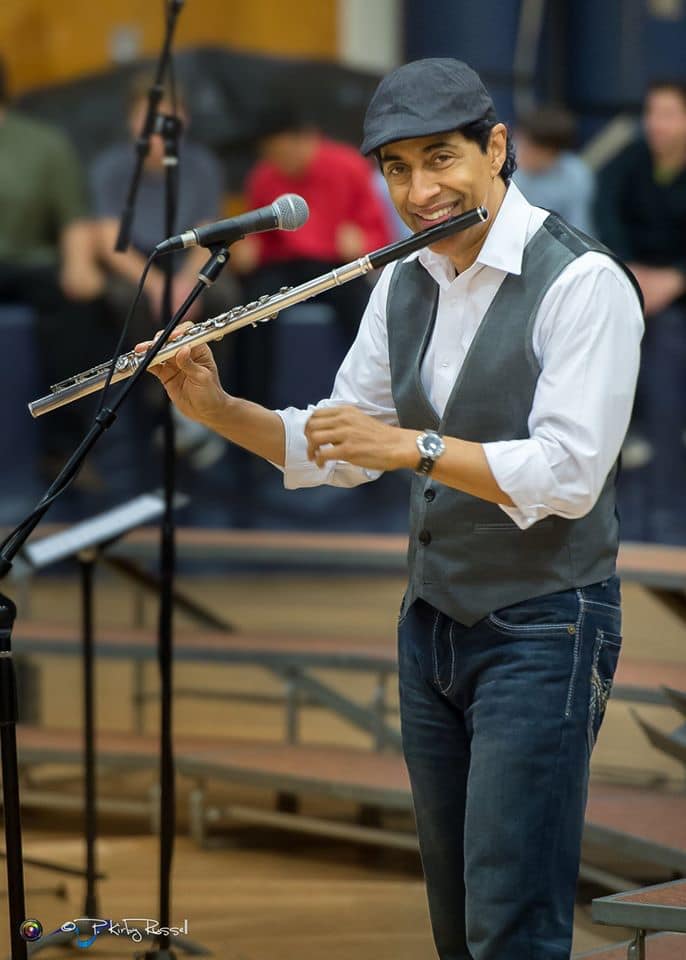
Nestor Torres
Nestor Torres

NESTOR TORRES: Facts & Career Highlights

• Classical and Jazz flute studies at Mannes School of Music, and New England Conservatory of Music.

• Early improvisational ‘on the job training’ playing in Cuban and Latin Dance bands including Ray Barretto, Eddie Palmieri, Celia Cruz and Tito Puente.

• Regular featured guest at the ‘Salsa Meets Jazz At The Village Gate’ series in NYC.

• Has toured Japan repeatedly, including collaborations with Herbie Hancock, and Wayne Shorter.

• Collaborations: with James Moody, Jon Faddis, Chris Botti, Larry Coryell, Hubert Laws, Arturo Sandoval, Michel Camilo, Paquito D’ Rivera, Danilo Perez, David Sanchez, Pablo Zigler, Makoto Ozone, Patrice Rushen, Bob James, George Duke, Wallace Roney, Peter Nero and Clare Fisher, among many, many others.

• Jazz Festivals: Capitol Jazz Festival, JVC Jazz Festivals; in Los Angeles and in NYC with Eddie Palmieri; Aspen Snowmass; Maui; Heineken in Puerto Rico and Dominican Republic; Sedona; Atlanta…. Among many others.

• Symphonic: Has performed with the New World, Singapore, Springfield Missouri, Charleston, Signature (Tulsa, OK), Puerto Rico, and Stanford Symphonies; Philly Pops Orchestra; and the Naples, Florida; Malaysia, and Florida Philharmonics.

• Recordings to date (14): ‘Colombia En Charanga’, ‘Afro Charanga Volume 2’, ‘No Me Provoques, ‘Morning Ride’, ‘Dance of the Phoenix’, ‘Burning Whispers’, ‘Talk To Me’, ‘Treasures Of The Heart’, ‘Canciones Primeras’, ‘This Side Of Paradise’, ‘My Latin Soul’, ‘Sin Palabras’ (Without Words),‘Dances, Prayers & Meditations For Peace’, and ‘Nouveau Latino’.

• Grammys: His Latin-jazz composition “ Luna Latina” (from Treasures of the Heart) was nominated in 2000 for a Latin Grammy as well as his CD ‘My Latin Soul’ in 2002. In 2001, he won a Latin Grammy for his CD ‘This Side of Paradise’.

• Two Honorary Doctorate degrees from Miami-based Universities – one in 1994 from Barry University and the other in 2000 from Carlos Albizu University – for his commitment to youth education and cultural exchange as an Ambassador of Peace and Culture.

Nestor Torres
Nestor Torres

Current location

Miami, FL USA

General Manager

Ivette Delgado/ [email protected]

Influences

My Father, Hubert Laws, Miles Davis,Tito Puente, Richard Egues & Orchestra Aragon

Contacto de prensa

Wanda Jimenez/ [email protected]

Representative

The Jazz Agency
[email protected]
818-813-5299

https://www.facebook.com/NestorTorresMusic/

Paquito D’Rivera supports the salsa museum

There have been many legends of whom we have spoken in this section of International Salsa Magazine and today it is the turn of the bandleader, composer, clarinetist, and saxophonist born in Havana, Cuba, Paquito D’Rivera.  

Today, we want to dedicate the following lines to one of the main references in Cuban music and everything he has contributed to the Latin music scene, which is growing every day in the United States.   

Paquito smiling
Paquito D’Rivera smiling for the camera

Paquito’s beginnings in music 

Francisco de Jesús Rivera Figueras, who is artistically known as Paquito D’Rivera, was born in the city of Havana, Cuba and is the son of orchestra director and saxophonist Tito D’Rivera, from whom he inherited his great artistic vein and love for music. 

At just five years old, Paquito began studying music formally and, two years later, he was already performing on stage in front of large audiences, which prepared him for what he would do as an adult. That same year, Selmer (a musical instrument company) hired him, which was a very important step in the boy’s path to becoming an artist. 

A few years later, he performed at the National Theater of La Habana, which was a very important moment for the young man, who shortly after began studying at the Havana Conservatory, where he specialized in areas of music such as clarinet, composition and harmony. 

His first media appearance was during his debut in the National Symphony Orchestra of Cuba, an event that was nationally televised so that the whole country could appreciate the talent of the young choir boys.  

A year later, when he was only 18 years old, Paquito and Chucho Valdés founded the Orquesta Cubana de Música Moderna, while working for the Orquesta Nacional and the Banda del Ejército Cubano. 

Paquito playing
Paquito D’Rivera playing the saxophone

Some time later, he founded the Orquesta de Música Moderna with some of his colleagues at the time, and then created the group Irakere, which integrated jazz, traditional Cuban music, classical music and rock in ways never seen before. Together with Irakere, he toured Europe and the United States and earned several Grammy Award nominations.   

Leaving Cuba 

Like so many Cubans, Paquito became tired of the situation experienced by the island and knew he had to make a final decision on the subject. He took advantage of a stop in Spain and sought asylum at the American embassy in the European country. Once in the United States, his process of adaptation to his new country of residence was not easy, but there were artists who gave him a lot of support such as Mario Bauza, Dizzy Gallespie, David Amram, among others. 

It did not take him too long before he earned the love and respect of many members of the jazz music community.  His place in the Latin music scene was consolidated thanks to his first two solo albums called ”Paquito Blowin” and ”Mariel”. His popularity was also benefited from a Time magazine article that talked about his great work and his appearance on the famous ”Sunday Morning” show.   

He also collaborated with artists such as Artur Sandoval, Michel Camilo, Bebo Valdés, Claudio Roditi, among others. He also participated in the founding of the United Nations Orchestra, Paquito D’Rivera Big Band, Paquito D’Rivera Quinquet and many other groups.  

More recently, in 2027, he was in Europe with the Orquesta de Valencia at the Palau de La Música promoting ”The Elephant and The Clown” of his own.   

Paquito and Johnny
President of the Spaha Harlem Salsa Museum Johnny Cruz and Paquito D’Rivera

Paquito and the Spaha Harlem Salsa Museum 

In December 2023, Paquito visited the Spaha Harlem Salsa Museum to see the huge collection of personal items belonging to world-renowned Latin artists and, once there, he expressed his surprise at the large number of items that both stars and their families have donated to the famous museum.   

In a post by Johnny Cruz, the museum’s president, on his Facebook account, Paquito said he was very impressed by all the items housed in the institution while supporting the work done by the museum’s staff and expressing his admiration for the effort devoted to the collection. 

Johnny Cru ISM corresponde in New York City


Read also: Poncho Sanchez visited us at the Salsa Museum 

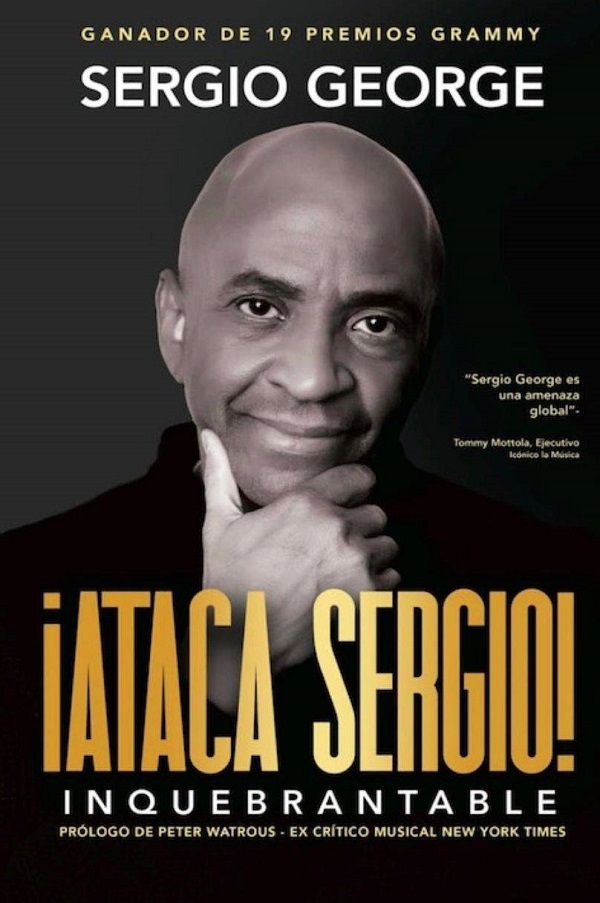
¡Attack Sergio! Unbreakable: A fun read because of the contradictory content

I placed the order online on October 25, 2023. By return email, I received confirmation of payment and a promise to receive my copy the following week.

However, after several days I received a delay notification from the supplier. It was understandable that an artist of Sergio George’s stature would trigger interest in acquiring the work that promised to tell his story, perspective and opinion on the music industry. Exactly on November 25, 2023, the order arrived.

¡Attack Sergio! Unbreakable: A fun read because of the contradictory content

As a reader, I was deeply disappointed with the content of the “book”. Attack Sergio! Unbreakable falls short of being an autobiography. I would classify it as a self-help book with little depth, no substance.

Writing a book requires literary knowledge, basing the content on rigorous research and stating the data with mathematical precision.

The cover of the text is appropriate for the trajectory of the artist who is the subject of the text. However, the data on the cover that assures that he is the winner of 19 Grammy awards contradicts the text.  Specifically, on the third page of the introduction it says that he is the winner of 18 or 19. Evidently, the recently launched book should not be taken as a reference for a subject of such seriousness.

From the legal page it is clear that Sergio George is the author and that Janice Rodriguez was in charge of editing. Sadly, the work lacked editorial care, which detracts from the literary value of what is presented. There are many expressions that seem to be literal translations from English and that do not necessarily maintain the idiomatic integrity of what the author wants to express.  Now, if that were the case, you should stop counting the missing and extra accents.

Having said that, I am going to manage my criticism, since space is limited and the idea is not to write another book about the “book”.  Certainly, in the world of the versed salsero, of which I am one, the most awarded producer in Latin music has a great story to tell. But his literary delivery fell short. I understand the intention to approach his complaint as a self-help book. But that grand intention also failed.

I read in each of the 128 pages discontent, loathing, complaint, frustration, resentment and wounded self-esteem. Objectively, you have to read carefully to see that what he claims to do is the opposite of what has brought him so much controversy.

In his usual combative style Sergio George launches harsh criticisms of salsa artists. Resentment has won out over objectivity. Each blow takes away the value of his exposition, until it becomes the outlet that we all need to have at given moments.

Sergio George
Sergio George

Of course, emotional maturity is what prevents one from publishing matters that should remain in the privacy of conversations between the affected parties.

With a high sense of arrogance, characteristic of narcissistic personalities, the author accuses the “great salseros” of having murdered salsa because of their ego, pointing them out as the culprits of the death of the “musical genre”.

This becomes another of the great contradictions of the text. At times he claims that salsa is not a genre, but on multiple occasions he refers to salsa as a musical genre. On the other hand, he says that salsa is in danger of extinction shortly before assuring that it is dead.  His point of view in that sense is not clear either, although he does state near the end that there is a legacy that does not die.

This is the contradictory nature of the reading, whose common thread is the attack. That may be the origin of the idea of the title, although at first glance one might think that “Attack Sergio!” is the repetition of the battle cry that invites him to attack the piano, while he prolifically produces music.

Marc Anthony y Sergio George

I believe in the evolution of the species and I see that the adaptations through which salsa has gone through are similar to the genetic modifications necessary so that, within each species, the fittest survive.

The text has several anecdotes. However, due to the lack of details, these do not add value to the construction of the history of salsa. In some of them, the names of certain characters are not mentioned. I guess the author did not want to enter into a request for relays or preferred not to risk dealing with legal controversies.

With so much that Sergio George has contributed to the history of Latin music, it is a mistake that the book has not been given more structure and objectivity.

Sergio George has been a cornerstone in the history of Afro-Latin rhythms and is the owner of a brilliant musical career that has made many shine. But to that exposure, the text does not do justice either.

Bella Martinez Puerto Rico


Also Read: Metamorphosis: from music to photojournalism, a reinvention without limits

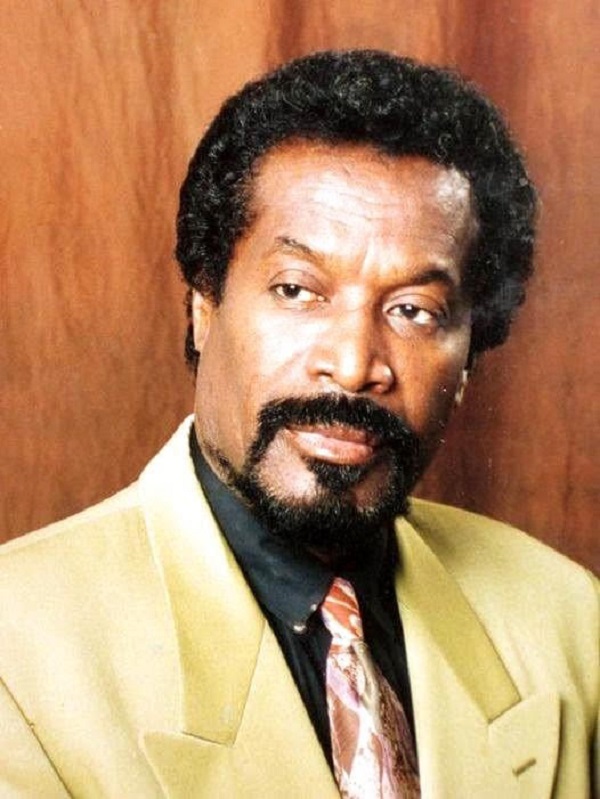
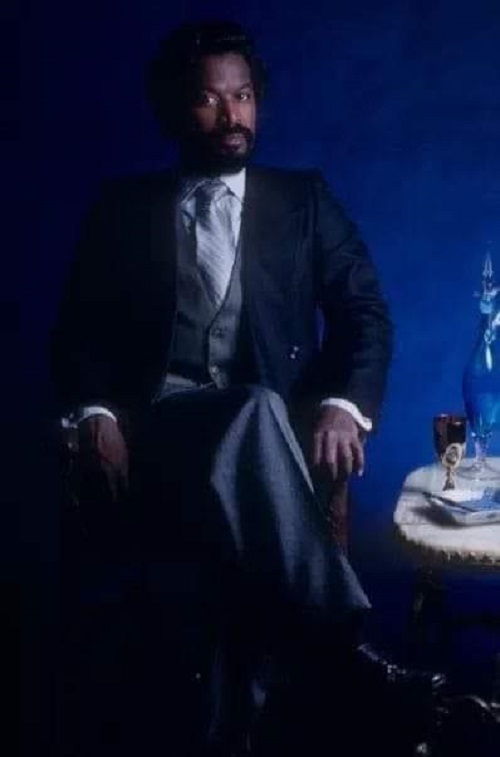
The Royalty of our Latin Music Pete “El Conde” Rodríguez first singer signed by Fania Records label

Pedro Juan Rodríguez, Pete “El Conde” Rodríguez “La Realeza de la Salsa” (Born in Ponce, Puerto Rico on January 31, 1933).

First singer signed to the Fania Records label in conjunction with the Johnny Pacheco Orchestra and of outstanding participation with the Fania All Stars and his own orchestra.

Pete “El Conde” Rodríguez

His father, who made his living as a musician playing in a string quartet that entertained parties and social gatherings, guided him during his first steps as a musician.

By the age of 6, little Pedro was very skilled with the bongo and singing popular Puerto Rican songs of the time.

Things became difficult after the death of his father and as a teenager Pete had to emigrate to the United States (1946) to live with his aunt in New York.

Once in New York, Pete managed to establish himself as a percussionist in the Orquesta Oriental Cubana. Before, long before joining the great Pacheco, Pete had to go through several orchestras among which stand out: Las Jóvenes Estrellas de Cuba (57), the Típica Novel and the Broadway from which he left for personal reasons.

In May 1962 Pete Rodriguez (he was not yet called El Conde), joined Pacheco in a Charanguero orchestra (flute, violin, rhythm and chorus). The first album with Pacheco was Suavito in 1963.

By 64 Jhonny Pacheco and Jerry Massucci founded Fania Records and created the internationally recognized Fania All Stars.

Pete was the first singer that Fania had, and on his shoulders was the responsibility of taking that project forward. On Fania’s first album Cañonazo (1964) Pete performs the song Fania, a composition by Josualdo Bolanos, with which the orchestra was inaugurated.

The Realiza of our Latin Music Pete "El Conde" Rodriguez
The Realiza of our Latin Music Pete “El Conde” Rodriguez

Rodriguez’s first appearance with Fania was at the Greenwich Village Red Garter Club in 1968.

For reasons of life Pete had to leave Jhonny Pacheco’s group; the concrete reasons for this separation will remain a mystery, but it seems that his departure was due to personal disagreements with other members of the group.

After Pacheco, Pete packed up his motets and moved with Rey Roig and the Sensación group (1964-1968). From his time with this group w For the years 66-67, Pete returned to the ranks with Pacheco. This was a more mature stage where the marvelous duo achieved their greatest hits: Azuquita Mami, Convergencia, La Esencia del Guaguanco, Sonero, Viralo al Reves and others.

The turmoil of the time, the world events, the new way of dressing and people’s way of thinking made Pete change his appearance; he let his beard grow and changed his hairstyle a little. This change gave him a new image and a new name “EL CONDE”.

The Pacheco-Rodriguez duo lasted approximately 8 years, since in 74 El Conde decided to go solo.

That same year El Conde released his best selling and Grammy award winning album El Conde (1974). Two years later (1976) El Conde became part of the Salsa Hall of Fame immortalizing himself with Catalina la O.

With the appearance of Salsa Romántica and the onslaught of Dominican merengue in the markets, salsa entered a crisis which was reflected in the musical work of El Conde. So between 1983 and 1990 El Conde managed to record only 5 albums of which Salsobita (1987) stands out.

In 1993 El Conde made way for his son Pete Emilio and his daughter Cita Rodriguez who joined the group as second voice and backing vocalist.

The family was already complete because Francis Rodriguez, his wife, was in charge of the administrative and financial part of the group.ere the following songs Salsa, Bailando Conmigo and his hit El Rincón.

El Conde made his last recording on the Masterpiece Album (1999) with Tito Puente (1923-2000) and Eddie Palmieri. This album is considered posthumous because in that same year (2000) Tito and El Conde passed away.

Cepelio de Pete El Conde Jhonny Pachoco, Cheo Feliciano, Ismael Miranda y Papo Lucca

El Conde had suffered from heart problems for many years, but was always reluctant to have open heart surgery. Pete “El Conde” Rodriguez passed away of a heart attack on Saturday, December 2, 2000.

His remains were taken to his native Puerto Rico. He is survived by his wife Francis, his two sons Cita and Pedro Emilio, and his grandchildren.

Remains of Pete “El Conde” Rodríguez finally rest on the island. December 7, 2023 – After his death in 2000, the remains of Ponceño singer Pete “El Conde” Rodríguez were transferred from New York to the National Cemetery for veterans in Bayamón.

Ashes of Pete El Conde Rodriguez

Source: El Pozo de la Salsa

Also Read: Héctor Martignon has been one of the most sought-after pianists on the Latin jazz scene in New York

Poncho Sanchez visited us at the Salsa Museum

Like every month, we are going to dedicate this edition to a very special name in the Latin music scene and it is about the extraordinary percussionist and conguero Poncho Sanchez, who has given us the honor of donating some of his congas and the suit he wore during the Grammy Awards to the Spaha Salsa Gallery Museum.   

In gratitude to such a generous act, we want to dedicate the following lines to his brilliant career and everything he has contributed to Latin music with his work and talent.    

Poncho playing the congas
Poncho Sánchez playing the congas live

Poncho’s beginnings in music 

Pablo Sanchez, better known as Poncho Sanchez, is currently a percussionist and salsa singer who leads a renowned Latin jazz and Cuban music band. He became such a talented artist after a long journey in the difficult and competitive music industry. 

Poncho is the son of two Mexicans from different cities who had eleven children, the musician being the youngest of them all. From a very young age, he developed an intense love for music, which led him to learn to play instruments on his own.   

Although Poncho was born in Laredo, Texas, he spent all his childhood in Los Angeles with his family. In that place, he began to have a lot of contact with American jazz, Latin jazz and soul. During his adolescent years, his musical tastes were dominated by artists such as Mongo Santamaría, James Brown, John Coltraine, Miles Davis, among many others.   

Poncho at Catalina Bar
Poncho Sánchez performing at Catalina Bar and Grill in Hollywood

When he decided he wanted to take music up professionally, he began to teach himself to play the congas, guitar, drums, timbales and flute. This is how he was preparing for what was to come in his professional life later on.   

When he reached adulthood in his twenties, he was playing in various dance clubs for a while, until finally he got Cal Tjader and his group to notice his talent and invite him to join them.   

Today, Poncho is very grateful to Cal and said that he learned a lot from him during the time he was in the group. In fact, he even recalled in an interview that he gave him some lessons just as he was a teacher and Poncho was a student. This, in order to be on par with his bandmates and be able to put on a good show to the public.   

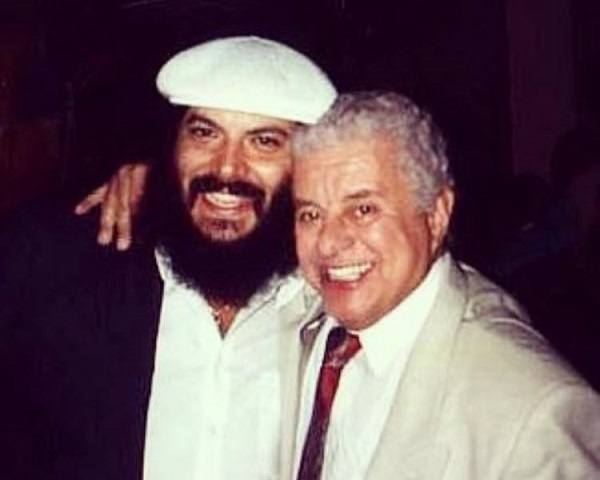
Poncho and Tito Puente
Poncho Sánchez and Tito Puente ”The King of Timbales”

Poncho as a soloist  

In 1980, Poncho finally managed to form his own group with which he began to carry out certain projects, although he had not completely departed from Cal’s band. In fact, the conguero worked with the musical director till the end of his days in 1982.   

Just a few months later, he signed with the Concord Records label to release his first official solo album, which he titled ”Sonando”, marking the beginning of a partnership that remains intact to this day. So far, Poncho has some two dozen recordings with Concord.  

Following decades of starting his career, Poncho saw his dreams become a reality when he won a Grammy for ”Best Latin Album” in 1999 thanks to the Latin soul album he had recorded at the time. That’s when the artist finally felt that everything he had worked for in the previous years had paid off.   

As for his latest album called ”Trane’s Delight”, Poncho seeks to pay homage to the artists who have inspired him and helped him develop his own art, as he considers that these personalities have been a fundamental basis for his growth as a music professional. 

Johnny Cru ISM corresponde in New York City

Read also: The Great Pichie Pérez and his brilliant career 

  • « Go to Previous Page
  • Page 1
  • Interim pages omitted …
  • Page 5
  • Page 6
  • Page 7
  • Page 8
  • Page 9
  • Interim pages omitted …
  • Page 36
  • Go to Next Page »

International Salsa Magazine (ISM) is a monthly publication about Salsa activities around the world, that has been publishing since 2007. It is a world network of volunteers coordinated by ISM Magazine. We are working to strengthen all the events by working together.