• Skip to primary navigation
  • Skip to main content

International Salsa Magazine

  • Home
  • Previous editions
    • 2025
      • ISM / November 2025
      • ISM / October 2025
      • ISM / September 2025
      • ISM / August 2025
      • ISM / July 2025
      • ISM / June 2025
      • ISM / May2025
      • ISM / April 2025
      • ISM / March 2025
      • ISM / February 2025
      • ISM / January 2025
    • 2024
      • ISM / December 2024
      • ISM / November 2024
      • ISM / October 2024
      • ISM / September 2024
      • ISM / August 2024
      • ISM / July 2024
      • ISM / June 2024
      • ISM / May 2024
      • ISM / April 2024
      • ISM / March 2024
      • ISM / February 2024
      • ISM / January 2024
    • 2023
      • ISM / December 2023
      • ISM / November 2023
      • ISM / October 2023
      • ISM – September 2023
      • ISM – August 2023
      • ISM July 2023
      • ISM Edition June 2023
      • ISM – May 2023
      • ISM April 2023
      • ISM March 2023
      • ISM February 2023
      • ISM January 2023
    • 2022
      • ISM December 2022
      • ISM November 2022
      • ISM October 2022
      • ISM September 2022
      • ISM August 2022
      • ISM July 2022
      • ISM June 2022
      • ISM May 2022
      • ISM February 2022
      • ISM January 2022
    • 2021
      • ISM December 2021
      • ISM November 2021
      • ISM October – 2021
      • ISM September 2021
      • ISM August 2021
      • ISM July 2021
      • ISM May 2021
      • ISM April 2021
      • ISM June 2021
      • ISM March 2021
      • ISM February 2021
      • ISM January 2021
    • 2020
      • ISM December 2020
      • ISM November 2020
      • ISM October 2020
      • ISM September 2020
      • ISM August 2020
      • ISM July 2020
      • ISM June 2020
      • ISM May 2020
      • ISM April 2020
      • ISM March 2020
      • ISM February 2020
      • ISM January 2020
    • 2019
      • ISM December 2019
      • ISM November 2019
      • ISM October 2019
      • ISM Septembre 2019
      • ISM August 2019
      • ISM July 2019
      • ISM June 2019
      • ISM May 2019
      • ISM April 2019
      • ISM March 2019
      • ISM February 2019
      • ISM January 2019
    • 2018
      • ISM December 2018
      • ISM November 2018
      • ISM October 2018
      • ISM September 2018
      • ISM August 2018
      • ISM July 2018
      • ISM June 2018
      • ISM May 2018
      • ISM April 2018
      • ISM March 2018
      • ISM February 2018
      • ISM January 2018
    • 2017
      • ISM December 2017
      • ISM November 2017
      • ISM October 2017
      • ISM September 2017
      • ISM August 2017
      • ISM July 2017
      • ISM June 2017
      • ISM May 2017
      • ISM April 2017
  • Download Salsa App
    • Android
    • Apple
  • Spanish

Search Results for: Grammy

Producer, composer, and singer D’ William tells his story

Who is D’ William?

William Pagán Díaz, artistically known as D’ William, is a talented producer, composer and singer with extensive experience in various tropical genres. He was part of the Oro Negro Orchestra and the Tañón Band before starting his solo career. We were fortunate to talk to him and learn a little more about his history and career.

Producer, composer, and singer William Pagán Díaz

How his career began

The Oro Negro Orchestra represented his first musical experience and he was about 17 years old at the time. In fact, his mother had to sign a contract for him to be part of the group because he was underage. He stayed there for a year until he got asked to audition for the Tañón Band, a group that Olga Tañón was creating at the time.

After auditioning with 300 or 400 candidates, I was chosen as the last missing member for the group because it required four and there were only three. D’ William told us that he felt he had the world in his hands due to work with Olga Tañón, but unfortunately she decided to broke up the band because she had other plans. At that time, Pagan did not know what to do with his life because he thought he had already pursued the ultimate in his career, so he decided to turn his life around, enlist in the army and forget all music.

These years of his life contributed a lot to strengthen his discipline, but he also realized that he did not want to dedicate himself to military life forever. After he retired, he moved to Japan and lived there for about seven years, during that time he was introduced to Puerto Rican salsa thanks to some friends. He started singing salsa, but always saw music as sort of a hobby and not as something he wanted to do professionally.

He toured all over Japan with the Conquistando Orchestra and composed for other artists and various franchises, but nothing for himself. In 2010, he decided that he wanted to change that situation and recorded six salsa songs with the idea of moving to Puerto Rico thinking he was going to find the same country in the musical field. Then, all the songs recorded by him stayed on the hard drive of his computer and he could not do anything with them.
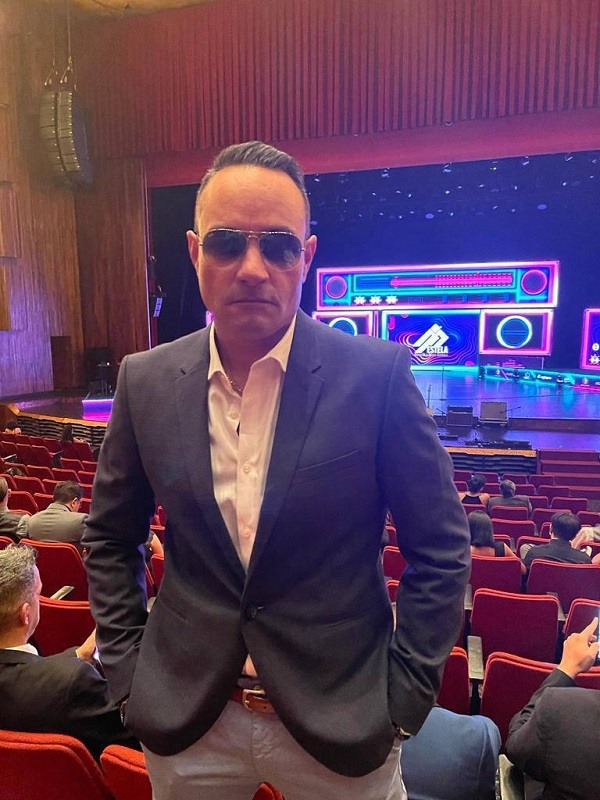
D' William at the Estela Awards
D’ William at the Estela Awards

Unable to get a job, he decides to use his veteran’s benefits to complete his education, which leads him to study criminal justice and law. In 2018, a job opportunity as a lawyer for the federal government in Washington DC arose, so he moves there and meets some people who reconnect him with music thanks to his career in Japan.

When the COVID-19 pandemic arrived, he finally made the decision to start his solo career and choose a stage name that referred to his real name, which led him to use D’ William. In September 2020, he recorded his first song titled “24 horas enteras” giving start to his solo career.

Why use merengue as a base for his music?

Although merengue has not had such a boom in recent years, D’ William is passionate about this genre that he never wanted to leave aside and even said that “a party without merengue is not a party”. The artist wanted to do something that included a tropical genre handled very well by him and he knows he was right about deciding on merengue, since he has observed a renaissance in the popularity of this set of rhythms with the help of artists such as Elvis Crespo, who was again seen in awards recently.

Music for millennial ears

D’ William points out that the most important elements of merengue will always be present in his work, but in his own words, ”the years and generations make the music evolve”. Since the performer did not want to stignate in the same thing, he tries to experiment with a new style of singing merengue and writes some of his lyrics with other genres in mind, such as dembow. He also incorporates kicks, snares, synthesizers and other sounds to reach millenial ears.

This combination of the above elements has made the reception to the artist’s music great.

D' William performing on stage
D’ William performing on stage

Experience in Guatemala

D’ William also told us about the Estela Awards in Guatemala, which he did not knew nothing about until he was invited to attend. Once there, he noticed the importance of these awards for Central America, as they recognize the talent of Guatemala, El Salvador, Costa Rica, Nicaragua, Mexico and many more.

He had the honor of being in its sixth edition and seeing how artists who did not have the opportunity to be in bigger events such as Billboard, Tu Música, Latin Grammy, among others, were awarded. Something very special about this year was the participation of a Puerto Rican delegation of for the first time in its history, in which D’ William was with several of his compatriots.

The reception of the public and press towards this group was great and they really enjoyed the show. They were so well received that they plan to return soon in December to continue delighting Guatemalans with their talent.

What did D’ William do during the pandemic?

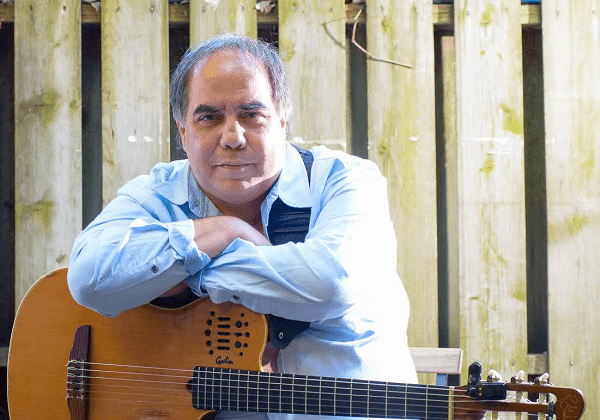
D’ William told us that he did a lot of things for himself and other colleagues during the pandemic. He did a great collaboration on a track with Dominique Patrick Noel, a French percussionist with whom we had the pleasure to talk beforehand. They have done several songs together in which the Puerto Rican sings and does some arrangements with Noel.

He also sang with Eduardo Padua, who is a very famous Puerto Rican conguero in Virginia and Peruvian Andy Caseda.

D' William did interesting collaborations during the pandemic
D’ William did interesting collaborations during the pandemic

Read Also: The interesting story of French percussionist Dominique Patrick Noel
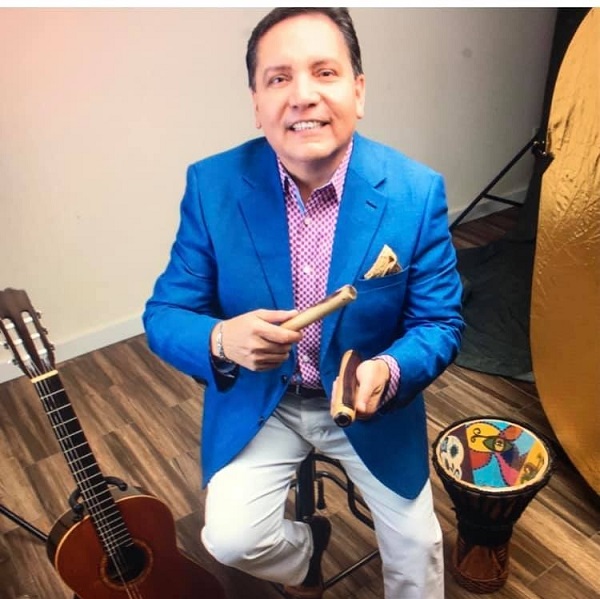
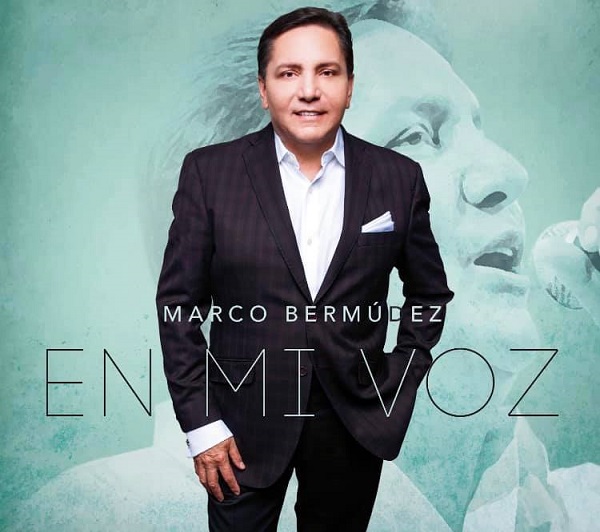
Marco Bermúdez extraordinary Musician, Percussionist, Singer, Composer

On october 19, 1961 in Portoviejo, Ecuador, Marco Bermudez Brito was born. Extraordinary Musician, Percussionist, Singer, Composer.

Nobody is a prophet in his own land. At the age of 23 he traveled to the United States as a singer. And in 2004, being a member of the Spanish Harlem Orchestra (SHO), he won the Grammy in the category Best Salsa Album for the album Across 110th street.

On a day like today, October 20, Marco Bermudez was born in Portoviejo, Ecuador. He is an excellent performer, composer and studio musician in all styles of Latin music.

Marco Bermúdez
Marco Bermúdez

He was born into a family with a rich musical heritage and has resided in New York for the past thirty-four years. Marco has toured the world with Latin music greats: Tito Puente, Celia Cruz, Cheo Feliciano, Oscar D’ Leon, Tito Nieves, Domingo Quiñones, Jose Alberto and all the artists on the RMM Records label.

Marco’s discography includes: RMM All Stars 10th Anniversary CD/DVD Live at the Continental Arena New Jersey; Recorded a Selena (RMM) and Tropical Tribute to the Beatles CD/DVD recorded live at Radio City Music Hall in New York.

Marco is currently one of the singers of the Spanish Harlem Orchestra. As a performer and composer, Bermudez has collaborated in the record productions of the SHO, writing the lyrics of the songs Son de Corazón, Regalo de Dios, Qué Bonito, La Fiesta began.

(One more year of life for this Ecuadorian performer, composer and musician who has performed in different variations of Latin music.

Marco Berudesz en Mi Voz

Experiences with Isidro Infante y La Élite, Conjunto Clásico, Tito Puente, Celia Cruz, Cheo Feliciano, Oscar D’León, Tito Nieves, Domingo Quiñones, José Alberto “El canario”, and Ralph Mercado’s RMM Records family in which he participated in productions such as “RMM All Stars 10th Anniversary – Live in Continental Arena of New Jersey”, “Recorded a Selena”, “Recorded a Selena”, “Recorded a Selena”, “Recorded a Selena”, “Recorded a Selena”, “Recorded a Selena”, “Recorded a Selena”, “Recorded a Selena”, and “Recorded a Selena”; the album “Recorded a Selena” (RMM) and “Tropical Tribute to the Beatles”, a CD/DVD recorded live at Radio City Music Hall in New York.

The pinnacle of his career came when he became part of the Spanish Harlem Orchestra’s line-up of singers, collaborating in different record productions and strengthening his facet as a composer through titles such as “Son de corazón”, “Qué bonito”, “Regalo de Dios” and “La fiesta empezó”.

He has also been part of The Mambo Legends project sharing microphones with Frankie Vázquez and Jorge Maldonado.His story is told to us when he was in Ecuador on vacation with his wife.

“From a very young age, I was always surrounded by music,” she says proudly. He refers to his parents, siblings and most of all to his uncle, the great singer Eduardo Brito.

Eddie Palmieri y Marco Bermudez

Marco, at the age of 9, together with his brother Eduardo formed the duo Hermanos Bermúdez Brito, being the first to record the pasillo Romance de la tejedora manabita, lyrics by Paco del Casty and music by Filemón Macías, Marco’s uncle: “Con horma de esperanzas/y encajes de clavellina/ va tejiendo su sombrero/ la manabita más linda” (With a last of hopes/and lace of carnation/ she weaves her hat/ the prettiest manabita).

In the early eighties, brothers Mariano and Venancio Larrea invited him to join the Marfil group, from Guayaquil. That was when the group turned to salsa music, which was just becoming popular in these parts.

But his life and stage changed in 1984, when he and his brother joined the Manabita orchestra Los Profetas, which would perform in Los Angeles, Miami and Chicago.

With the illusion of succeeding in the north, Bermúdez stayed and formed El Combo de Nueva York, which was the staff orchestra of a chain of nightclubs in Queens.

Roberto Roena y Marco Bermudez

At that time, Marco was concerned about his musical training, besides being a singer and composer, he was also a percussionist. His entry into the big leagues of salsa came when he was part of La Élite, led by maestro Isidro Infante, for 6 years.

There he achieved fame as the interpreter of the songs Santo, Militar and Montuno and for the album Tributo Tropical a Los Beatles.

He was also part of La Charanga de Johnny Almendra and Los Jóvenes del Barrio, and was one of the singers of the legendary Conjunto Clásico orchestra. “Even when there is a tour they call me because I know the repertoire and I know the routine”.

At the beginning of 2003 he made a great leap when he joined the SHO, an orchestra that besides winning the Grammy and achieving nominations for two of its albums, is considered “the best salsa orchestra in the world”, according to the Puerto Rican critic Jaime Torres Torres, who in referring to Bermúdez affirms: “He is the only recognized Ecuadorian salsa singer who dominates the difficult art of soneo and clave”.

Spanish Harlem Orchestra

About the renowned SHO, Bermúdez says that in reality this orchestra “is the sound of the Harlem neighborhood, where urban salsa was born.

We are inspired by masters like Tito Puente and Mario Bauza, who left us that legacy”. And although every salsa singer is mistakenly called a sonero, very few are.

The soneo is an improvisation by the singer when the percussionist solos on the drums, he explains.

The next SHO album will feature three songs by Bermúdez: Son de corazón, Regalo de Dios and La fiesta empezó. “I like to write everything, romantic, jocular, nature and rumba songs,” says Marco who is currently selecting songs for his solo album which he hopes will be released this year. It will include a recording with Las Leyendas del Mambo, Tito Puente’s legendary orchestra.

These are his plans. His dream: “to come to Ecuador as a soloist or with SHO because I have had recognition abroad, but it must be nice to be recognized in your country”. Although they say that no one is a prophet in his own land, Bermúdez, the sonero, will surely be.

At the age of 9, together with his brother Eduardo, he formed the duo Hermanos Bermúdez Brito, being the first to record the pasillo Romance de la tejedora manabita.

In the early eighties, the brothers Mariano and Venancio Larrea invited him to join the Marfil group, from Guayaquil.

In 1984, together with his brother, he joined the Manabita orchestra Los Profetas, which would perform in the United States. He stayed in New York and formed El Combo de Nueva York, which was the staff orchestra of a chain of nightclubs in Queens.

Later he was part of La Élite, led by maestro Isidro Infante, for 6 years.

He was also part of La Charanga de Johnny Almendra and Los Jóvenes del Barrio, and was one of the singers of the Conjunto Clásico orchestra.

At the beginning of 2003 he joined the “Spanish Harlem Orquestra” of Maestro Oscar Hernandez. He has collaborated, among others, with the band of “Mister Moña” Jimmy Bosch and “La Mambo Legends.

You can read: Héctor “Bomberito” Zarzuela Calidad y Tuning en la Maquinaria Fania All-Star

Marco Bermudez

EFG London Jazz Festival

Commemorates 30 Years With A Display Of International Latin Jazz Artists

The first seasons of the EFG London Jazz Festival took place in May

EFG London Jazz Festival celebrates its 30th birthday with the innovation and musical freedom that has always characterized the London Jazz scene.

This festival, the largest and in constant transition in North London, opens its space from Friday, November 11th to Sunday, November 20th to present a program of live and digital presentations with world-class artists, emerging talents, collaborations specials, avant-garde sounds, and the latest music for a massive audience that has established the EFG London Jazz Festival https://efglondonjazzfestival.org.uk/ as one of the main international Jazz events in Europe.

This emblematic event in the United Kingdom has three outstanding aspects that have characterized it over the years, they are Character, Impulse, and Wealth. The Character is evidenced in each edition with the contribution of special collaborations, discoveries, and exclusive commissions. The second aspect of this festival is the Impulse, being this event the highlight of the Jazz calendar in the capital. Finally, the third aspect is the Wealth that can be easily found in a club or concert hall packed with spectators to enjoy 300 live shows in more than 70 places attracting around 100,000 people daily.

In this 2022 edition, the star lineup is represented by nine international Latin Jazz artists such as Fiona Ross (Friday, November 11th), Katriona Taylor Quintet presenting “La Reina de la Bossa Nova” (Saturday, November 12th), Yuri Hernández (Sunday, November 13th), Colectiva (Thursday, November 17th), Mexico’s Woman of the Year for Arts and Culture, Migdalia Van Der Hoven (Thursday, November 17th), the Jazz/Latin group led by Steve Rubie from the 606 Club, Samara (Friday, November 18th), Trombonist Laura Impallomeni (Saturday, November 19th), Osvaldo Chacón (Sunday, November 20th) and Chucho Valdés (Sunday, November 20th).

L I V E   B A N D S

Fiona Ross

 “Voices celebrate the power, connection, and expression of song, beauty, and aptitude…”

At fourteen she lied about her age to play weekend Jazz clubs in London. Photo: Alexander Barnes-Ross

Vocalist, pianist, songwriter, and producer, Fiona Ross, has become known for having an authentic contemporary Jazz sound obtained by mixing the fast rhythm of Latin Jazz, a brief flirtation with vintage Jazz, a bit of Neo Soul, and a touch of melancholy ballads.

Multi-award-winning Jazz artist, editor-in-chief, journalist, and founder of the award-winning organization Women in Jazz Media Fiona Ross was Director of the British Academy of New Music in London for nearly a decade, where she was responsible for the formation of Ed Sheeran, Rita Ora, among many others. Fiona’s date will be on November 11th at 8:30 PM at the London Polish Jazz Café Posk (238-246 Kings St. W6 0RF), and the ticket is £15.

Yuri Hernández + DJ Flecha

 “…Celebrating unity with the power of music.”

Many describe her album Loco Soñador as “a wild and sensual masterpiece.”

This multifaceted 10-day event brings to its lineup the established singer within the Latin music industry for the last two decades, Yuri Hernández. The establishment that will host it will be Juju’s Bar & Stage (Ely’s Yard, 15 Hanbury St, London E1 6QR) on Sunday, November 13th from 6 PM, and the cost of the ticket doesn’t exceed £9.

Hernández is one of the most sought-after musicians in northern Spain and is introduced to the UK Latin Jazz scene through Loco Soñador, his second studio album released in 2020. Joining this musical genius will be DJ Flecha (Joel Verdecia) with his supporting act promoting Cuban music. This veteran DJ (25 years of career) has been nominated three times as Best Latin Tropical DJ in a European country for his technique and originality when mixing.

Colectiva & Osvaldo Chacón

“Beyond the margins, some of the most innovative artists at the forefront of Jazz are pushing its limits and expanding the definition of the genre while drawing influences from a wide range of other languages.”

Osvaldo Chacón and his band have played at the Royal Festival Hall, among many others.

This Afro-Latin and Jazz music band, Colectiva, reflects on themes of sisterhood and female empowerment. They are rooted in the sounds of Africa, Latin America, and the diaspora, creating a genre that the group has dubbed Jazz Tropicaliente (Hot/Tropical/Jazz). Their debut single is Under The, written in collaboration with pianist María Grapsa and released in April 2021. This track received great support from global radio stations and famous DJs in the music industry.

Colectiva will be presented on November 17th at 8:30 PM at the London Kings Place-Hall Two-(90 York Way, N1 9AG), and tickets have a permanent price of £15.

On the other hand, Osvaldo Chacón’s band is the leading Timba orchestra in the UK and has been nominated multiple times for the prestigious LUKAS awards. Osvaldo Chacón, composer, producer, and singer-songwriter, has shared the stage with great Salsa figures such as Adalberto Santiago, Azuquita, Tito Allen (Fania All Stars), Salsaceltica, Eddie Palmieri, as well as the greatest world-famous stars such as Celia Cruz, Oscar D’León, Rubén Blades, and Alberto “El Canario”. Supporting Osvaldo Chacón will be DJ Javier La Rosa mixing Salsa, Cuban Timba, Reggaeton, Latin Hip-Hop, and R&B. Sunday, November 20th is the date when you can enjoy these presentations. Time: 8 PM. Venue: Juju’s Bar & Stage. Ticket: £10.

Chucho Valdés

 “The Icons are the living legends of Jazz and the leading heroes of the genre who paved the way and continue to create, inspiring artists, and audiences alike.

Valdés, with his valuable contribution, has given direction to Afro-Cuban Jazz

The EFG London Jazz Festival brings the Cuban pianist, composer, and arranger Chucho Valdés, who celebrates his 80th birthday with his extraordinary work La Creación with the Yoruban Orchestra and Hilario Durán & John Beasley.

The winner of six Grammy Awards and three Latin Grammy Awards is the most influential figure in Afro-Cuban Jazz of the 20th and 21st centuries. In an extensive career spanning six decades, Valdés has pushed the boundaries of new expressions in Afro-Cuban music. His influence and inspiration in the genre are immeasurable to the point that his work sets the standard by which new generations are governed and drives their careers. To see Chucho Valdés head to the London Southbank Center (Royal Festival Hall, Belvedere Road SE1 8XX) at 7:30 PM. and tickets range from £30 – £45.

Along with Chucho will be the cellist, vocalist, composer, and niece Ana Carla Maza. Within her discography is the album La Flor (2020) which incorporates Latin rhythms, Pop melodies and Jazz harmonies along with classical techniques. Bahía (June 26, 2022) is her most recent production inspired by Cuban Son, Samba, Bossa Nova, Tango, Jazz, and Chanson with a rich mix of classical cello and voice.

International Salsa Magazine presents Alexander Abreu and his Habana de Primera

International Salsa Magazine presents a Cuban musician today considered by critics as one of the best trumpet players of the moment in Cuba and probably in the whole world.

He is Alexander Abreu Manresa, born on September 6, 1976 in Cienfuegos.

Owner of innate conditions and a unique talent to play the trumpet in a wonderful way.

Alexander Abreu, in spite of his youth, equals greats of the instrument such as El Guajiro Mirabal, Arturo Sandoval or Dizzy Gillespie, without ignoring that as a singer he has a melodious voice and, as if that were not enough, he also works as a composer and musical director.

He began playing trumpet at the age of ten, he studied music at the conservatory of music in his hometown Cienfuegos and at the National School of Art where he graduated in 1994 and in that same institution has served as a teacher, the impeccable way of playing his instrument allowed him to reach the top in Cuban music with only twenty years of age; he was part of the Cuban jazz group Irakere, worked with exponents of Cuban Timba Paulo FG and Issac Delgado and his Orchestra.

On the other hand, he has made recordings in other genres with musicians, composers and singers such as:

Armando Anthony Corea, known as Chick Corea, is an American jazz pianist, keyboardist and composer.

Arnaldo Rodríguez, young talented arranger, composer, singer and director of the Cuban Musical Group Arnaldo y su talismán, born in Ciego de Avila, Cuba.

Baby Lores, musician, singer and arranger from the city of Cienfuegos, the Pearl of the South.

Hugh Ramopolo Masekela, trumpeter, flugelhornist, cornetist, composer and South African jazz singer from South Africa.

James Morrison Catchpole, English soul and pop rock singer, songwriter and guitarist.

Luís Represas, Portuguese singer and composer.

Ron Sexsmith, Canadian singer-songwriter.

Alexander Abreu created, in 2007, his own group, which he called Havana D’ Primera, with several of the most talented Cuban musicians, the first presentation of the band took place on October 4, 2008 at the Cabaret Turquino of the Habana Libre Hotel in Havana.

With Havana D’ Primera, he has made three albums, they are: Haciendo Historia in 2011, Pasaporte in 2013 and La Vuelta al Mundo in 2015.

He has also released the singles: Rosa la Peligrosa, Me Dicen Cuba and Prohibido. Alexander Abreu Manresa is trumpet and lead vocalist of Havana D’ Primera, as well as composer, arranger and musical director of the group.

This work aims to highlight the enormous and excellent musical career of one of the best musicians of the island of Cuba in the new generation, with just thirty-eight years of age, the music of Alexander Abreu has transcended borders, his recordings exceed one hundred albums in different countries and in multiple musical genres.

From our website, we want to highlight the magnificent musical career of Alexander Abreu Manresa.

Despite his youth, Alexander Abreu’s musical gifts and excellence have allowed him to play and record with a great number of musicians and groups, not only in his native Cuba, but also in other countries of the world, to mention a few, we have then, as far as our music is concerned: Adalberto Álvarez, Amaury Pérez, Andy Montañez, Irakere, Juan Manuel Ceruto, Klimax, Mayito Rivera, Orquesta Sinfónica Nacional, Pablo Milanés, Pachito Alonso, Team Cuba, Teresa García Cataurla, Van Van and Yurumí y sus Hermanos.

Havana D’Primera nominated to the Latin Grammy Awards 2022

“We are nominated once again for the Latin Grammy Awards, this time with the album Será que se Acabó. But it’s not just me. Cuban music is nominated, which is reflected in this album with all the energy. I think it’s the most powerful album I’m going to make in the history of my life.” This is how Alexander Abreu announced the magnificent news.

Será que se Acabó, Havana D’Primera’s latest album, was nominated for the 2022 Latin Grammy Awards in the category of Best Salsa Album.

“At The Latin Recording Academy, we continually strive to support and encourage Latin music creators, and these nominees epitomize musical excellence and represent the great moment our music is going through,” said Manuel Abud, CEO of The Latin Recording Academy.

Alexander Abreu & Habana de Primera

You can read: Yissy García Calzadilla, former member of the Anacaona Orchestra, plays drums, timbal and bongo

AQUILES BÁEZ

Swing And Tradition Of A Distinguished Venezuelan Artist

Chapter I: Aquiles’ Farewell

Aquiles Báez
Aquiles Báez began to flow within the Jazz and Latin American rhythm during his stay in New York (USA).

“With all the pain in my soul, I must publicly communicate that my friend, my brother, my accomplice Aquiles Báez passed away this morning at 5 in the morning in the city of Aachen, Germany. Aquiles was in the middle of a concert tour here in Europe. He flies high gordito.” Ramón Arturo Aular (Báez’s friend, musician, and professor at the Aachen Conservatory of Music) informed the community through his Twitter account the Monday, September 12th.

The virtuoso musician, noble guitarist, arranger, and excellent composer died of a sudden heart attack at the residence of his friend Ramón Aular. His last concert was held in the city of Cologne located in western Germany as part of his 2022 European tour, the first he did after the cessation of activities due to the Covid-19 pandemic.

The noble 58-year-old artist had already performed in Spain and was preparing to present his music in some German cities such as Berlin, Tubingen, and Hamburg, before finishing his tour in France and Portugal.

“I think it is important to project the work that one has been developing in other latitudes. This is very interesting because I realize that the music I make is universal, it is not limited only to playing for the Venezuelan diaspora, which of course also provides an audience”. Báez expressed this to an international media.

During his artistic career, he recorded 17 albums and collaborated on more than 150 recordings with other artists. Báez was a professor at the Berklee College of Music (Boston, Massachusetts) and was recognized for his mastery of the guitar with “elements of mixed Caribbean and Afro-Venezuelan cultures with classical music and Jazz.” Fragment extracted from his biography.

In life, he shared stages with artists such as Paquito D´ Rivera, John Patitucci, Romero Lubambo, C4 Trío, Ilan Chester, Simón Díaz, Huáscar Barradas, Worlds of Guitars, Aquiles Machado, Serenata Guayanesa, Iván Pérez Rossi, Fareed Haque, Dawn Upshaw, Richard Bona, Luisito Quintero, Solo Razaf, Marco Pereira, Oscar Stagnaro, and Ensamble Gurrufío.

Before passed away, Aquiles Báez was preparing the publication of two studio albums and the creation of five more. He was also in charge of making the music for the Venezuelan play Mi último delirio, which premiered on September 2nd with the lead role of his friend Héctor Manrique and with great reception from the public and specialized critics.

Chapter II: Getting to know the musicians’ Master to the rhythm of the compass

Julio, was the one who instilled in him a love for music by giving him his first instrument, the Cuatro.
His older brother, Julio, was the one who instilled in him a love for music by giving him his first instrument, the Cuatro.

Aquiles Báez was always an irreverent musician who made the type of music that he felt. “It is important to make music from what one feels it is, from that forceful energy that is the act of creating…Lately, I have been respected. It was hard to get that position. They have not always respected me, perhaps because of my way of being, irreverent. The people who manage cultural spaces have always taken me as an anarchist… I consider myself someone accessible, the teacher thing hasn’t gotten to me, seeing everyone below me, that seems pathetic to me…” Aquiles expressed this to a Venezuelan media.

“Throughout his career, Aquiles has received various awards and recognitions. These include Pepsi music awards and the William Leavitt award given by the Berklee College of Music; In addition, he has stood out with more than a dozen awards as a composer of music for film, theater, and dance. Extracted from his biography.

In 1996, at the age of 32, Aquiles decided to move to the United States to study at the Berklee College of Music in Boston. After two semesters he dropped out, considering that he was “learning the same thing but in another language.” And that was not only his thinking, but also what he demonstrated during his stay as a student at the academic campus, so shortly after he entered the Berklee College of Music again, but this time as a professor.

On this academic campus, he gave “clinics, workshops, and seminars at different universities and musical institutions such as Indiana University, Temple University, Queen College, Krems Summer camp, Curitiba Music Office, The Jazz School in San Francisco, among others, in Europe and the United States”, according to his biography.

Shortly after, he participated as a guest musician on the albums of Panamanian artist Danilo Pérez: Central Avenue (1998) and Motherland (2000), both albums nominated for Grammys.

Aquiles Báez was a founder and member of the board of directors of Guataca productions. In this space, they continue to support emerging Venezuelan artists. Báez’s methodology for finding new talent was to research, listen to them live and contact them. “Why not support those guys who come after you? Why not make life more pleasant for them? Or a lighter path than one had. This road is not easy at all, it has been very hard, and it continues to be hard. And one continues and believes that he has acquired a certain reputation…” Báez expressed this in an interview conducted by a Venezuelan media outlet.

Chapter III: Anecdotes of a famous life

Last night sharing with the beloved Maestro Carlos Cruz Diez (Panama. October 29, 2016)

Countless artists expressed their affection and grief for Aquiles’ departure, expressing testimonies of a life full of joy, love, and passion for musical colors.

“One of the artists who has inspired me the most and a great human being. He made it possible for us to make our first album, the tour of the United States and opened the doors of his home for us. We made a lot of beautiful friends with Aquiles. D.E.P, Maestro,  compaíto Aquiles Báez”. Jorge Glem (Cuatrista and member of the group C4 Trio).

“The wonderful Aquiles Báez was a musician capable of playing all Venezuelan music of all genres“. Alfredo Naranjo (Vibraphonist)

“Dismayed by the sudden death of my dear friend Aquiles Báez, one of the great musicians of our country, guitar teacher, and eternal officiant of humor and simplicity”. Leonardo Padron (Writer)

“Today we are less. I have just been informed that our admired and beloved musician and my dear friend, Aquiles Baez, has passed away. This news is heartbreaking and unfair. Aquiles is one of the most creative and generous people I have ever met”. Héctor Manrique (Director and theater actor)

“Thank you for being an inspiration in music and a big brother in life. Without your unconditional support, I would not have even reached the corner”. Álvaro Paiva Bimbo (Guitarist and 2022 Oscar nominee for the soundtrack of the Disney movie “Encanto”)

“How can we forget this great friend and fellow adventurer”. Claudio Nazoa (Comedian)

“I was left with the desire to carry out the project we had to record an album together. What profound sadness!” Miguel Delgado Estévez (Musician, arranger, and producer)

Finally, the Venezuelan percussionist Omar Ledezma Jr. expressed his sorrow for the death of Báez.

LENTEJAS. That’s what the gordo called me. 7 years of my life I played and toured the world with Aquiles Báez. We met at one of his concerts at the Bellas Artes thanks to my dear Carlos Reyes, another great guitarist from our country, at the time I worked at the MACCSI. Years later, arriving in Boston, he called me to be in his group and I couldn’t believe it. The gordo was my musical hero thanks to his Platabanda and the number of times I saw him accompanying great singers. He was the one who told me to grab El Cajón and start putting in the merengue and the gaitas. I knew his bad jokes by heart: “Vamos a tocar la canción de DC: Di si encontraste…”, with him, I learned to be a person first, then a musician, I learned not to make ugly faces if I made a mistake, with him, I had to press on reading, to be punctual, to put my batteries.

Anyway… with the gordo I learned to be a professional musician, because with his virtues and defects, for me, he was the best.

I love you my gordo, wherever you are. Thanks. #aquilesbaez”.

You can continue reading the article about Omar Ledezma Jr. From The Venezuelan Melody To The Caribbean Rhythm.

Here is a small excerpt from this interview of 2021:

Years later, and with experience acquired in presentations, and groups, Omar Jr. met his first mentor, Aquiles Baez, a famous Venezuelan artist, guitar virtuoso. Together with Aquiles, he made his first international tour of the United States. “With Aquiles, I had the pleasure of playing Venezuelan music. We play with many artists in the United States… Thanks to him I developed percussion (Non-autochthonous element) in Venezuelan music”. Ledezma Jr. commented.

“Fall in NY. How beautiful are the colors of Autumn in NYC. Enjoying that watercolor of nature”. Aquiles Baez (November 8, 2018)
  • « Go to Previous Page
  • Page 1
  • Interim pages omitted …
  • Page 26
  • Page 27
  • Page 28
  • Page 29
  • Page 30
  • Interim pages omitted …
  • Page 50
  • Go to Next Page »

International Salsa Magazine (ISM) is a monthly publication about Salsa activities around the world, that has been publishing since 2007. It is a world network of volunteers coordinated by ISM Magazine. We are working to strengthen all the events by working together.