• Skip to primary navigation
  • Skip to main content

International Salsa Magazine

  • Home
  • Previous editions
    • 2025
      • ISM / November 2025
      • ISM / October 2025
      • ISM / September 2025
      • ISM / August 2025
      • ISM / July 2025
      • ISM / June 2025
      • ISM / May2025
      • ISM / April 2025
      • ISM / March 2025
      • ISM / February 2025
      • ISM / January 2025
    • 2024
      • ISM / December 2024
      • ISM / November 2024
      • ISM / October 2024
      • ISM / September 2024
      • ISM / August 2024
      • ISM / July 2024
      • ISM / June 2024
      • ISM / May 2024
      • ISM / April 2024
      • ISM / March 2024
      • ISM / February 2024
      • ISM / January 2024
    • 2023
      • ISM / December 2023
      • ISM / November 2023
      • ISM / October 2023
      • ISM – September 2023
      • ISM – August 2023
      • ISM July 2023
      • ISM Edition June 2023
      • ISM – May 2023
      • ISM April 2023
      • ISM March 2023
      • ISM February 2023
      • ISM January 2023
    • 2022
      • ISM December 2022
      • ISM November 2022
      • ISM October 2022
      • ISM September 2022
      • ISM August 2022
      • ISM July 2022
      • ISM June 2022
      • ISM May 2022
      • ISM February 2022
      • ISM January 2022
    • 2021
      • ISM December 2021
      • ISM November 2021
      • ISM October – 2021
      • ISM September 2021
      • ISM August 2021
      • ISM July 2021
      • ISM May 2021
      • ISM April 2021
      • ISM June 2021
      • ISM March 2021
      • ISM February 2021
      • ISM January 2021
    • 2020
      • ISM December 2020
      • ISM November 2020
      • ISM October 2020
      • ISM September 2020
      • ISM August 2020
      • ISM July 2020
      • ISM June 2020
      • ISM May 2020
      • ISM April 2020
      • ISM March 2020
      • ISM February 2020
      • ISM January 2020
    • 2019
      • ISM December 2019
      • ISM November 2019
      • ISM October 2019
      • ISM Septembre 2019
      • ISM August 2019
      • ISM July 2019
      • ISM June 2019
      • ISM May 2019
      • ISM April 2019
      • ISM March 2019
      • ISM February 2019
      • ISM January 2019
    • 2018
      • ISM December 2018
      • ISM November 2018
      • ISM October 2018
      • ISM September 2018
      • ISM August 2018
      • ISM July 2018
      • ISM June 2018
      • ISM May 2018
      • ISM April 2018
      • ISM March 2018
      • ISM February 2018
      • ISM January 2018
    • 2017
      • ISM December 2017
      • ISM November 2017
      • ISM October 2017
      • ISM September 2017
      • ISM August 2017
      • ISM July 2017
      • ISM June 2017
      • ISM May 2017
      • ISM April 2017
  • Download Salsa App
    • Android
    • Apple
  • Spanish

Search Results for: Grammy

Melissa Aldana Will Headline The Wellington Jazz Festival

The Most Acclaimed Latin Saxophonist On The International Jazz Scene

Melissa Aldana started playing the alto saxophone at the age of 6

Melissa Aldana is a Chilean saxophonist and composer nominated for the Grammy Awards (2020) for her skills with this wind instrument, she has six studio albums, and her fame has spread to all Jazz circuits around the world.

Aldana with his quartet will headline the Wellington Jazz Festival 2022 to present to the fans the debut album with the company Blue Note Records titled 12 Stars, and you cannot miss the opportunity to experience this exceptional live performance with flowing harmonic notes seasoned with feeling in the Wellington Opera House (111 – 113 Manners Street, Wellington, New Zealand) on Sunday, October 23rd from 7PM to 8:30PM, and the ticket price is $69.

The Wellington Jazz Festival is an entry point into the Jazz music calendar for fans and the curious. This event will offer more than 100 magical concerts in bars, restaurants, and live music venues in the capital. This year the splendid festival will take place in mid-spring in Aotearoa (New Zealand’s Maori name), featuring some of the best international Grammy Award-winning and nominated artists, as well as renowned talent from this Oceanian country and the world.

On the other hand, Melissa Aldana was the first South American woman and instrumentalist to win the Thelonious Monk International Jazz Contest (Washington -USA) in 2013. This artist born in Santiago de Chile in 1988 is a graduate of the prestigious Berklee College of Music with a full music scholarship in 2009, moreover, she also comes from a musical family where her father and paternal grandfather played this instrument.

The discography of this tenor saxophonist goes back 12 years when, at only 22 years old, she came out on the music market with her debut album Free Fall (2010). It is followed by Second Cycle in 2012, Melissa Aldana & Crash Trio (2014), and Back Home in 2016. Her fifth studio album was Visions (2019), an album that earned her first Grammy nomination for Best Solo by Improvised Jazz in recognition of her impressive tenor solo on her composition Elsewhere.

12 Stars was composed in Harlem (New York - USA) in 2020
12 Stars was composed in Harlem (New York – USA) in 2020

Most recently her record production is 12 Stars, an anecdotal album that she wrote during the Covid-19 pandemic and the product of the struggles she went through due to the breakup of a long relationship. “This is a very important album for me. I felt like I had a lot to say because of all the experiences I had during 2020. After the personal process that I went through, I feel more connected to myself and my imperfections… Embrace everything I hear, everything I touch, including mistakes, is more significant than perfection”. Aldana exposed in her biography

12 Stars was recorded under the Blue Note label and released on the music market on March 4th. “I feel super privileged, but I had a feeling that this had to happen at some point. I’ve been very consistent with my band and my projects for a long time. I am very motivated for what comes next”. Aldana expressed to an international digital medium.

Melissa will end her presentations in Europe this year with a tour during November that will take her to the capital of Spain on Friday, November 11th (Teatro Fernán Gómez) and on Saturday 12th, she will be in Badajoz (Teatro López De Ayala). While on Monday, November 14th, she will perform at the Zig Zag Jazz Club (Berlin-Germany), and on Wednesday, November 16th, she will have the same but this time at the Porgy & Bess in Vienna, Austria.

The Padova Jazz Club (Padua- Italy) will be handed over to Melissa Aldana on Friday, November 18th, and a day later she will do so at the Teatro Lauro Rossi in Macerata, Italy.

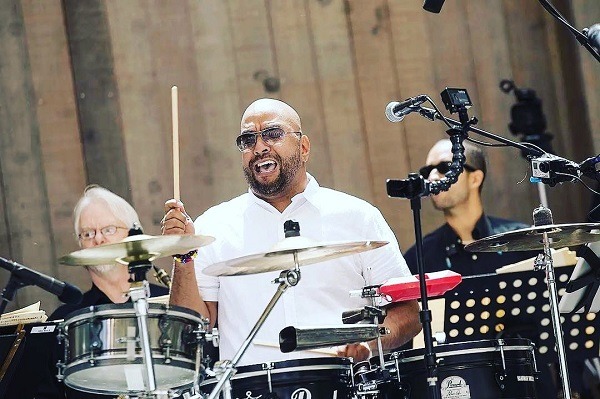
Omar Ledezma Jr talks about his experience at the Tempo Latino Festival

His reaction to the scholarship

We are here with Venezuelan percussionist and musician Omar Ledezma Jr. Good afternoon, Mr. Ledezma, how are you? Nice to meet you.

Same to you, Karina. It’s great to be participating again in the activities of International Salsa Magazine, a magazine that I have much appreciation and I’m find of it. Here we are always at your service.

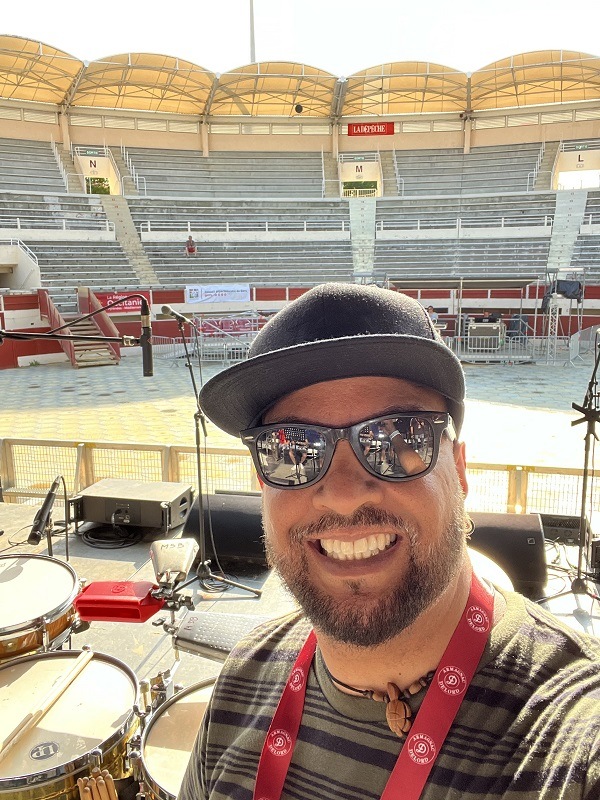
man with glass
Venezuelan Grammy Award–winning singer and percussionist Omar Ledezma Jr

According to your website, you received a scholarship to study at Berkeley College of Music. How did you receive the news that you were selected?

That was interesting because when I arrived in the United States, I applied for the scholarship, so I had to extend my stay here in order to attend the audition in a December. In January, I got a letter that said I passed the audition and awarded the scholarship to study at the school. That was one of the most important news in my life.

So you were in the United States at the time you received the scholarship.

Yes, because there was no way I could have done that in Caracas, where I am from. So, I had the opportunity to travel to Boston to apply for the scholarship. Thank goodness, I had the opportunity to come and everything worked out fine.

Regarding technical and musical issues, what differences between your native country and the United States did you notice?

The first thing I noticed was that there were many opportunities. Really, I can say that I didn’t face the same constraints as in Caracas. When I started playing, I had many opportunities to go abroad to take my art. I already had the experience of having done it in my country with many other artists.

I think It would’ve been no different if I was in Caracas because I would have taken all the opportunities, played with many people and made my career there. However, I was able to go to Boston and took that opportunity. A few months later, I was already playing with school teachers, classmates, graduates and new people I met in a very interesting way. Despite my constraints related to the language, you can establish such interaction with all of them.

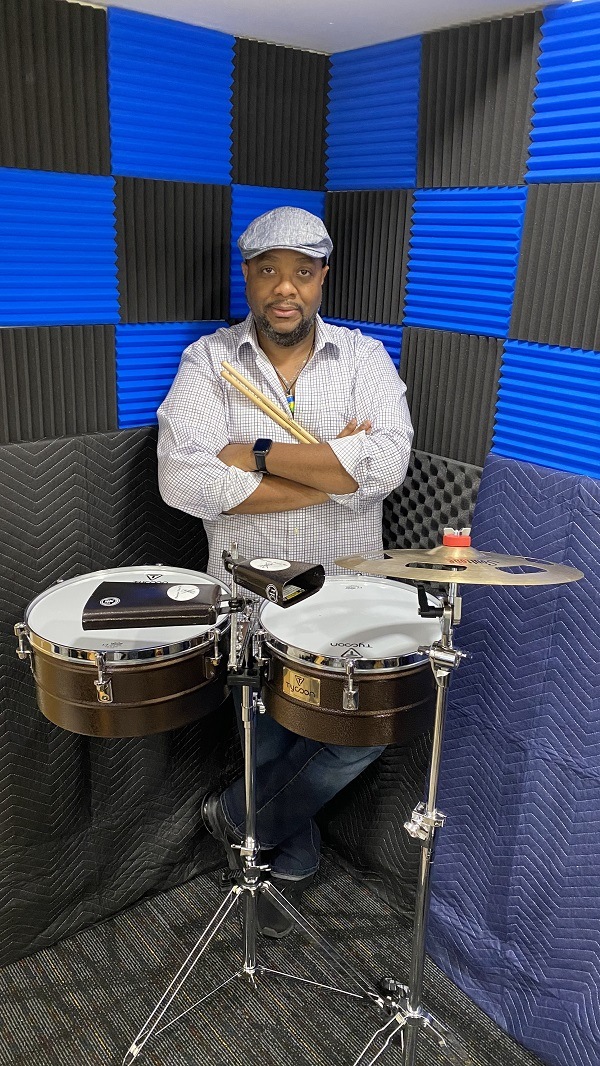
man playing the timbales
Omar Ledezma Jr playing the timbales

We understand that you are teaching at the SF Community Music Center and work hand in hand with other academic institutions, what made you dedicate yourself to teaching and training young talent?

I think it is important to lay the groundwork for the future. The present is lived now and the past provides us with experience, but we should always open the road forward for the future and new generations. I think that legacy for musicians is very important. We have to pass those teachings on to new generations.

Do you feel that the language shut doors on you at the beginning?

Not really. I have always thought that language should not be a limitation to fulfill your dreams. You have to respect the language of the country you are moving to, but without forgetting the mother tongue with which you were born, which is why I am a big supporter of bilingualism. You have to learn English, but without forgetting Spanish. It is a very important tool for young people whose parents were born outside the United States and moved here, but they should not forget their roots.

His experience at the Tempo Latino Festival

You have already told us that you have had the opportunity to tour the world. Could you tell us a little about your experience with Tempo Latino?

It was a very important experience for me and the group that I’m in, Pacific Mambo. It was an incredible experience with a massive attendance and it was surprising that we were able to meet that many people after the pandemic. We were playing in an arena full of people where we were warmly received.

It was very nice to feel the warmth of the live audience again and massively.

Omar Ledezma Jr in the arena at the Tempo Latino Festival

How was the flight, the arrival, the reception and everything that happened before the show?

It’s interesting because when I lived on the Northeast United States coastline, it was very easy for me to travel to Europe, Latin America, the Caribbean and other parts of the United States. Moving to California makes it more difficult because the trip is longer. It takes me about 11 hours to get to any port in Europe, and then being there, you have to make connection to get somewhere else. In our case, it was a full day of travel, as we arrived through Portugal. It was there that we waited for our connection to get to France. There were many people entering through the port of Lisbon, but there was no problem at all.

Already in France, the welcome the Tempo Latino staff was absolutely incredible. The audience was already waiting for our show. Then, we arrived to the village where the festival takes place and traveled a very beautiful route with spectacular scenery. Despite the fatigue, we fully enjoyed the trip.

When you played in the arena, how many people were there?

It is difficult to count the amount of people people there. I don’t have the exact numbers, but I can tell you that the arena was packed at the time of getting to the stage. We had the responsibility of opening for other well-known groups such as Los Van Van, so the arena was already full of people at the time of performing our show.

How was the audience reception towards you?

The audience reception was very warm and touching. People did not expect the band to have that contact and respect for the public like every time we perform. Many people enjoyed the hits we have had throughout our career such as OverJoyed by Stevie Wonder, Pink Panther Mambo, among other songs. When I did my solo with the timbales and the drums, I achieved a sound very much like We will rock you by Queen and I had to keep playing it because people were singing the song. An amazing thing that had never happened to me in my career.

Pacific Mambo performing at the Tempo Latino Festival

I heard that when you left France, you turned out to be infected with Covid-19, could you tell us what it went?

Yes, it came a surprise for me because I had not been infected since I went back to work on the street after the pandemic. I returned to my activities in the schools where I work and started providing shows again, but I had never tested positive for Covid-19 despite having been exposed. In fact, I have traveled to play in many places and even went on vacation to Venezuela, but I never contracted the virus.

When I return from my travel at the Tempo Latino festival, I was feeling a little sick and thought it was the fatigue of travel, but it turned out to be Covid-19. Fortunately, symptoms were very mild and I followed the treatment prescribed by the doctors. It took a little while for the virus to go away, but it all worked out. It was a period of forced vacation, as I had to wait about 20 days for the tests to be all negative.

Are you planning other international tours to Europe or Latin America?

We are negotiating to go to the East Coast and Canada in November. We are also making preparations for another small tour in the fall.

Today, the San Francisco Jazz Organization is going to broadcast our concert for subscribers, which makes us very happy.

What projects do you have on hand?

With regard to the band is concerned, we have talked about the possibility of making a new album and the way we want to do it. We are already looking for the music, the composers and the songs for the pre-production of this new musical work.

Pacific Mambo performing at the Tempo Latino Festival

The interesting story of French percussionist Dominique Patrick Noel

How his career started

All right, so we are here with French percussionist, composer and musician Dominique Patrick Noel. How are you doing, Mr. Noel? A pleasure to have you here.

Well, thank you. First of all, I want to thank you for taking the time to interview me and to greet all those who is going to read it. Thank goodness, I am in good health and it is all good.

Dominique Patrick Noel tells us about his story and beginnings

You are a self-taught musician who started playing by age seven. Did you learn everything by yourself or did you receive some kind of training?

Since I come from a family of musicians such as my father and my two grandfathers, I can say that music has always been a part of my life. I started playing the drums by listening to a lot of jazz and fell in love with this genre. That’s how I started to develop the movements and patterns of jazz and the drums.

In school, I started playing and learned solfège, percussion, drumming, among other things. When I turned 15 years old, I started playing music at a pro level because I have always had the pleasure of learning by watching musicians, who had much more experience. Thank goodness, I had my mind fresh to grasp and remember what I had seen, which helped me a lot to continue developing in percussion, different instruments, rhythms, among other things.

When I started playing Latin music, my first instrument was the bongo. I had a mentor named Alfredo Mujica Jr.,m who knew my dad and learned by playing with him. When it was my turn, he was giving the task of helping me understand the patterns and other things. He told me that the best instrument I could choose to start with was the bongo because it would help me understand a little more about how salsa works and that helped me a lot. He showed me the basic pattern and how to imitate the sounds I heard until they were similar.

After that, I also learned to play the conga, the Dominican tambora, the güira, the batá, the cajon and the timbales.

His career started at the age of 15 and his first instrument was the bongo

When you played the bongo for the first time, did you know you wanted to dedicate yourself to the Latin genres permanently?

When I was nine years old, I moved to Martinique and lived there for about four years. There I was fortunate to learn its folklore, its rhythms, its typical instruments and its dances. I also learned to perform all those genres with the drums and tried to absorb all I saw. Concurrently, the zouk era was beginning and I fell in love with the genre since I heard it for the first time.

Sometime later, my dad and I went to the United States to be with my dad, who was living in Washington at the time. It was there where I started to accompany him in several of his activities and shows with his orchestras. Then, I began listening more to salsa, cumbia and merengue, something I liked very much. Then, I told him that I would like to learn what he knew and play with him, to which he replied that it looked good, but that it was a profession that I had to take very seriously. Therefore, he advised me to listen to everything, even if it wasn’t Latin music because all genres nurture the musician in one way or another.

With whom he has worked?

You have worked with Tito Puente Jr, Tito Rojas, Izis La Enfermera de La Salsa, Frankie Vasquez, Lalo Rodriguez, among others. What have you learned from them?

I have had the opportunity to play with maestro Tito Rojas and his musical director, Celso Clemente, gave me some advice. When rehearsing, I approached him to thank him for allowing me to play the bongo with them and ask him for advice for my career, to which he replied that he liked my work very much and that I was very good for someone who was not born in this Latin music environment.

He also advised me that I had to move forward, never play down my goals, accept constructive criticism and always stay humble. I will never forget his words.

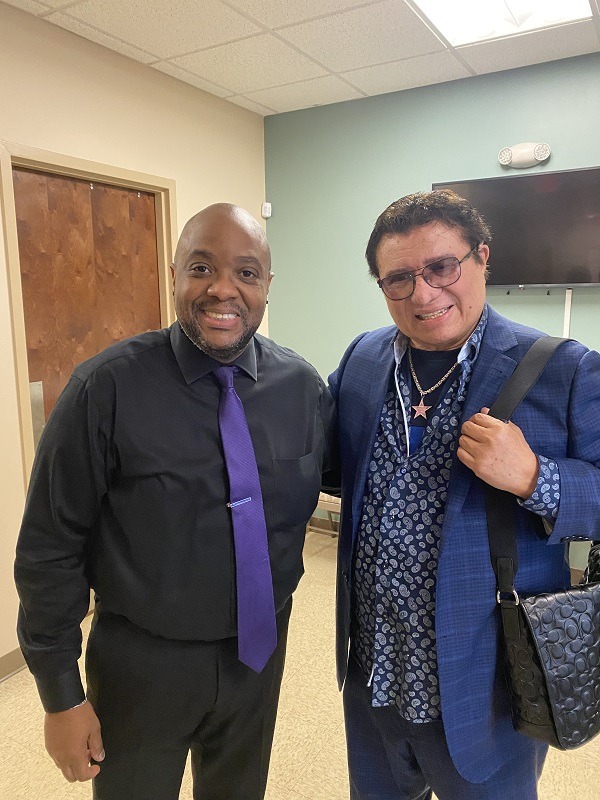
Dominique Patrick Noel next to Gloria Estefan and Emilio Estefan

We know that you are a voting member of the National Academy of Recording Arts and Sciences, which is well known for giving the Grammy Awards. What do you base to vote for a nominated candidate for an award?

There are several processes for artists to be nominated. For us the voters, it is a long process because we have the task of listening to much music and analyzing many details such as recording quality, lyrics, musicality and much more. There are many important elements to consider when choosing the person. I want to get to the point of saying that someone really deserves my vote for this or that category.

Voting takes time. It’s not something that you do in an hour or two, it takes a long time. The day of the awards ceremony, we already know who will the winners. At that point, we can say that all of them have managed to win via an arduous selection process.

Tell us about your song Mi Secreto with D’ William.

The skeleton of the song was my idea and I got together D’ William, to whom I offered to join the song. He wanted to collaborate with me in a merengue song for some time and I sent him the skeleton, which he liked and told me that something could be done with it. When he asked me if I already had the lyrics, I said no, but I wanted to base the song on an experience of mine, so I told him what it was about and the lyrics were written about that fact. Later, we made some additional arrangements and that’s how Mi Secreto was born.

Dominique Patrick Noel next to Bobby Cruz

Read also: Earl Miranda and Ric Feliciano talk about the Latin Rhythm Boys and its history

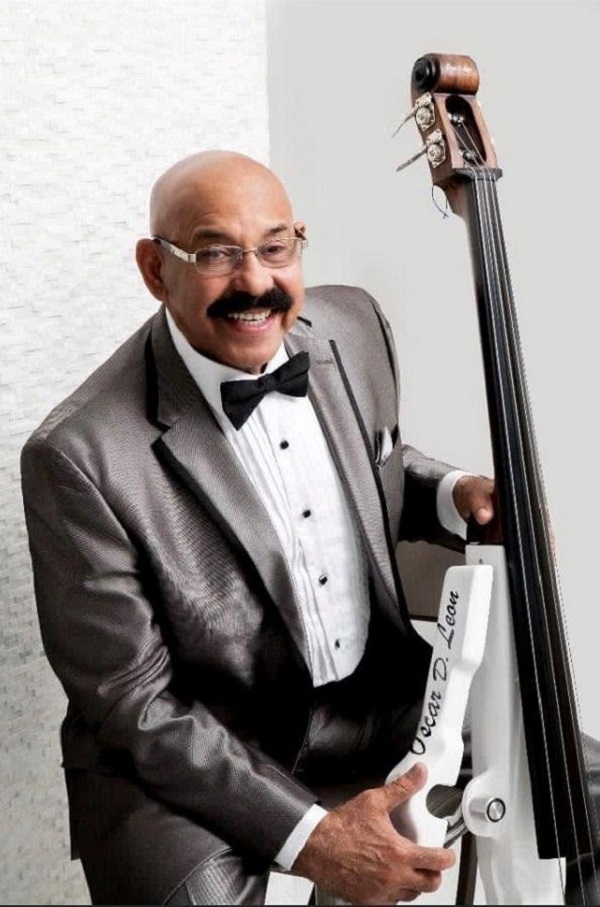
Oscar D’León celebrates 50 years of career in Caracas “International Salsa Magazine says present”

In September, the greatest exponent of Venezuelan salsa in the world will celebrate five decades of brilliant artistic career with an international tour that will have as its main event, an impressive and awaited symphonic gala at the Teresa Carreño Theater. And for september 22 at the Forum in Valencia.

Miami, May 19, 2022. Undisputed legend of Caribbean music, Oscar D’León, the Sonero of the World, celebrates 50 years of successful artistic career with an international tour that will take him to different locations in the Americas and Europe this summer.

This tour, which will begin on June 20 in Mexico City, will continue in July with the “50th Anniversary Europa Tour 2022”, culminating in a spectacular symphonic gala at the iconic Teresa Carreño Theater, which, during two performances on September 16 and 17, will give his audience the opportunity to sing and dance to the music that has made him the most recognized and admired Venezuelan artist in the world over the course of five decades.

Acapulco, Arequipa, Santiago de Chile, Miami, Frankfurt, Munich, Berlin, Paris, Amsterdam, Madrid, Tenerife, London, Istanbul are some of the cities that will live the energizing experience of seeing him on stage, a real party for music lovers.

Deserving of hundreds of awards and recognitions, including five Latin Grammys, D’León has been nominated nine times for the U.S. Grammy, being the first Venezuelan to obtain such a statuette. He did it in 2001 thanks to the song “Cielito Lindo, La Negra Mariachi Medley” Featuring-Oscar D’Leon, included in a collection album: “Masterpiece/Obra Maestra de Tito Puente y Eddie Palmieri”.

In 2013, he received the Award for Musical Excellence, a special recognition granted by vote of the Board of Trustees of the Latin Recording Academy to artists who have made creative contributions of exceptional artistic importance in the field of recording during their careers.

A true prophet in his own land, this global artist who began writing his formidable musical history in 1972, at the age of 28, when he formed the Dimensión Latina Orchestra, promises to celebrate his half-century of career with an unforgettable show at the Teresa Carreño Theater, the most important in Caracas, organized by the Venezuelan companies Imagen Producciones and Oz Show, in alliance with the National Orchestra System of that country.

Important Notes

Venezuelan musician who is among the most outstanding authors and performers of salsa and Caribbean music in general. Oscar D’León’s professional career began late: legend has it that one night, while visiting a nightclub in 1973, he heard that the band playing there had been fired. Oscar seized the opportunity and offered his own band to replace the one that had left.

The owner accepted and hired him to start playing a few days later. There was only one problem: the band at that time consisted only of D’León himself. He quickly got in touch with trombonist César Monge, told him what had happened and both got down to work to put together a line-up.

The band was finally formed by Oscar (vocals and bass, an instrument he had taught himself to play), César Monge (trombone), José Rodríguez (percussion), Enrique Iriarte (piano) and José Antonio Rojas (trombone).

Thus was formed La Dimensión Latina, Oscar D’León’s first orchestra. “Pensando en ti” was the first of the orchestra’s long list of hits. Four years later, Óscar left the band and was replaced by Puerto Rican Andy Montáñez, a vocalist who sang with the Gran Combo de Puerto Rico. Óscar returned with his own orchestra, La Salsa Mayor, with which he recorded his first album, titled after the group’s name: La Salsa Mayor (1977). The work was a great success in his country, and little by little his name began to be heard on an international scale. The following year he recorded the album El Más Grande, which contained the songs “El baile del suavecito” and “Mi bajo y yo”, and shortly afterwards he made his first visit to New York to offer live performances.

Aside from being a great sonero, Oscar D’León is also an extraordinary showman. Almost always accompanied by his bass, with which he plays and dances as if they were a couple, Óscar moves around the stage with great skill. In Venezuela, Óscar D’León is an idol, not only as a singer and musician, but also as a model of a self-made man who, from a very humble position, achieves fame and success on an international scale.

He is considered one of the best interpreters of Afro-Latin music of all times and is undoubtedly among the Venezuelan artists with more projection abroad.

Despite having gone through several stages in the development of Latin music, Oscar D’León’s style, always unmistakable, has maintained some constants that have allowed him to ensure the loyalty of his wide audience. D’León has recorded with the most outstanding salsa stars; among his collaborations, which can be traced in more than fifty albums, stands out his participation in The Mambo King, the hundredth full-length album by the legendary Tito Puente.

Corresponsal: Lida. María Fernanda León

www.Sanjuanproducciones24.blogspot.com

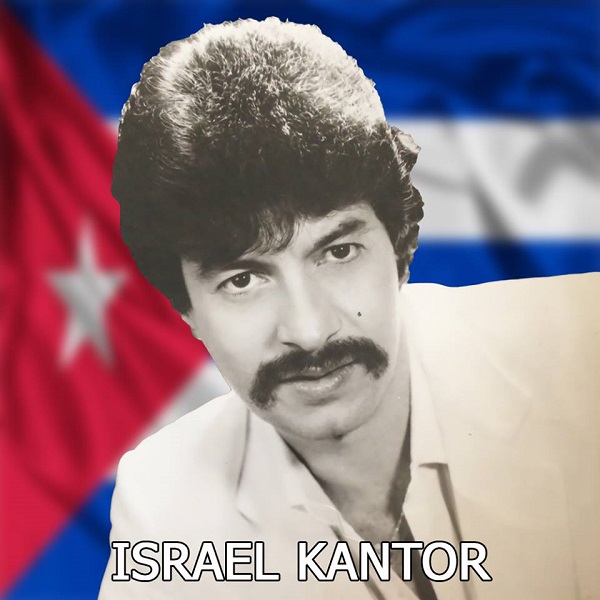
Israel Kantor was an excellent bassist, arranger and composer who achieved great popularity in Cuba for his vocal technique and original “Sonear” style.

His real name was Wilfredo Israel Sardiñas Domínguez. 

He was born on October 16, 1949 in Alturas de Canasí, a town in western Cuba between Havana and Matanzas, and his parents registered him a couple of years later in Bacuranao (birth date October 16, 1954).  A bassist, arranger and composer, he achieved great popularity in Cuba for his technique and original “sonear” style.

Although he was not very well publicized or acclaimed as a sonero, he managed to make a good name for himself in exile.

His mother played the tres and seven of his nine siblings formed a group with guitar, tres and lute; he played both sones and punto guajiro.

They used as bass a box called marímbula, which consisted of a box with four straps to produce the bass sound.  He began to sing with his brothers at the age of eight.

Later he went to Havana to study at the Conservatory of Guanabacoa, where he started playing trova sonera.

israel kantor
HE BECOMES A PROFESSIONAL

Israel Sardiñas improvised on the sonos with astonishing ease, and he is not exactly what you would call an interpreter “by ear”, or empirical. 

In fact, he played the bass before singing, and it was precisely his condition of bassist and arranger that made Meme Solis discover him in 1975 and took him and his group to work in the shows he was then directing in tourist centers on the beaches east of Havana.

“One night, at the dance show they were doing at the Hotel Atlántico, in Santa María del Mar, Israel took the microphone, I think because the group’s singer was not there,” Meme Solís recalls now.  “I saw him and told him: ‘But how well you sing!’ When I put on another show I gave him two numbers, and from then on people began to follow him”.

“I began to study Carlos Embale, Miguelito Cuní, Raúl Planas, Roberto Faz and Beny Moré,” he said, referring to the time when he stopped playing bass to devote himself to singing.  “There is everything that is Cuban music: guaracha, son, rumba. What I did was to listen to them and transfer them to the staff to understand how they moved their voices.

The one I liked the most was Raúl Planas; he was the one who rubateaba the most, the one who broke the syncopation the most.

Cuní had a good timbre, but always in time. Planas had a deeper timbre, and the sonero’s timbre must be metallic”.

That was the beginning of his professional career, which in Cuba would take him to the groups Ireson, Neoson, Los Yakos and Los Reyes 73. In 1979, he joined the Cuban group Los Van Van, founded and directed by bassist and composer Juan Formell (Juan Clímaco Formell Cortina was born on August 2, 1942 in Havana, Cuba).  As vocalist of the famous group, Israel became popular in Cuba for his vocal technique and his “sonear” style, which aroused great interest in the musical media, especially in popular music.  With the Los Van Van Orchestra he participated in the recording of the albums “Juan Formell y Los Van Van” in 1981 and “El Baile Del Buey Cansa’o” in 1982, both in the Egrem label of Cuba.  It was with this group that the artist became known, and left his stamp on the interpretation of the song “Seis Semanas”.

From that time on, he began to make musical arrangements.

After several international tours with Los Van Van he decided to leave them in Mexico in 1983, in search of greater freedom and possibilities for his career.

A month later he was already in Miami after crossing the border.  “I wanted to go to Grupo Afrocuba, but the bureaucracy wouldn’t let me,” he said on one occasion. “Van Van is very good, but Afrocuba came with a very strong force. I also wrote, I made arrangements, I had other ideas, and Afrocuba suited me better, because it was more jazzy”.  In an interview for a news agency years ago, he said: “I had a great school before being with Los Van Van. After traveling a lot with them, I was very anxious to see the world and the third time we were in Mexico, I decided not to return to Cuba”.

SUCCESS IN EXILE

When he arrived in New York in April 1984, he was still Israel Sardiñas, but when Johny Pacheco, the legendary director of the Fania All Stars, took him to an anniversary party of the group at the Cheetah two months later, the late “singer of singers”, Héctor Lavoe, heard him improvising and stopped the orchestra: “I want to baptize him right now as Israel Cantor”, said Lavoe.  The only thing left to do was to change the c for the k, spend two months with Lavoe’s band, and in October create his own, which he called La Verdad.

Thus, in 1984, he released the album “Israel La Verdad” with the production of Larry Harlow, on the Bacán Records, Inc. label. All the numbers were written and composed by Israel Kantor.

As its name indicates, La Verdad was a constellation of excellent musicians: Sonny Bravo on piano, Salvador “Sal” Cuevas on bass, Tony Barrero and Pedro “Pouchi” Boulong on trumpets, Barry Rogers on trombone, Mario Rivera on saxophone, Karen Joseph on flute, Frankie Malabé on congas and Nicolás “Nicky” Marrero on bongo among others.  Justo Betancourt and Adalberto Santiago collaborated on backing vocals, with Justo doing a duet track: “Rumberos De Nueva York”.  Other numbers on the album that deserve attention are: “La Verdad”, “Tu Lindo Pasado”, “María Antonia” and “A Mis Idolos”.

That same year he is invited to sing on the album by Ñico Rojas y su Orquesta entitled “Paso La Vida Pensando: ‘En Tí'”, on the Kanayón Records label, three songs: “Juan Ramón (El Chichón)”, which was popularized by José “Cheo” Feliciano when he was part of Joe Cuba’s group, “Por Encima Del Nivel”, which had the arrangements and piano of Luis Quevedo, in which he performs a superb piano solo, and in “Lo Voy A Matar”, composition by Tony Pabón and arrangements by maestro Kenny Gómez.

In 1986, he is the lead vocalist of the group Salsa Latina in the album “De Aquí . . Pa’ Lante!”, on the Coa Records label, which was produced by Isidro Infante and Israel Kantor himself and in which he composed half of the eight songs that make up the album.  The most outstanding numbers are: “En Honor A La Verdad”, “Se Acabó El Material”, “Saca Aserrín, Mete Madera”, “A La Mitad Del Camino” and “El Palo De China” (Composition by Raúl Marrero).

He temporarily left Miami to try his luck in Puerto Rico, Mexico and Italy until 1996, when he settled permanently in Miami.  He performed on various stages of the music scene: he inaugurated the Mamá Rumba Club in the Mexican capital, made arrangements for the orchestra of the Sábado Gigante program on Channel 23 in Miami, participated in a Cuban Jam Session at the Lincoln Center in New York, among others.

For more than two decades Kantor was the protagonist of important musical projects both in Latin America and Europe.  He recorded eight solo albums and six guest albums with orchestras such as those of Johnny Pacheco and Juan Pablo Torres.  Among his recordings are “Un Señor Kantor” for the BMG record label; a tribute album to Los Van Van for Sony Music and “Llegó La Música Cubana”, an album that took him on tour in Europe.

In 2003 he collaborated in the solo work of arranger and composer Jesús “El Niño” Pérez with Orquesta Sensación (not to be confused with the former group of Cuban Abelardo Barroso) entitled “Cuba y Puerto Rico Son De Un Pájaro Las Dos Alas”, in which Israel Kantor’s voice stands out over those of the other two singers: Danny Rojo and Rogelio Rente, as well as demonstrating his abilities to improvise on the soneo, in the number “Pa’ Puerto Rico” (which Jesus “El Niño” Perez composed for the album, “La Amistad” by Johnny Polanco).

His last great work, in 2003, was a tribute to Benny Moré his permanent artistic inspiration- entitled “To ‘El Bárbaro Del Ritmo'”, a live recording with the Tropicana All Stars orchestra, produced by Regu Records, owned by Recaredo Gutiérrez. 

The orchestra, made up of 22 musicians, mostly Cubans living in Miami, led by Israel Kantor, was nominated for a Latin Grammy Award in the traditional music category in 2004, and two other nominations for an Anglo-American Grammy.

The project, which consisted of a live show, recorded on DVD and seven albums, led them to share the stage with legendary figures such as Paquito D’Rivera, Marco Antonio Muñiz and Generoso “El Tojo” Jiménez, among other glories.

The Tropicana All Stars orchestra was made up of a large number of extraordinary musicians, all of them renowned and of the highest quality: Paquito Echevarría on piano, Cuban musician who has collaborated for a number of important singers such as Gloria Estefan, Rey Ruiz among others; Venezuelan Ramses Colón on bass, a virtuoso musician and desired in any band, Adalberto “Trompetica” Lara on first trumpet, possessor of a very Cuban technique when playing and improvising, he has been a musician of Irakere, Super Cuban All Stars, NG La Banda among others; Kiwzo Fumero on the second trumpet, comes from the conservatory “Alejandro García Caturla” of Cuba, since his beginnings he expressed his great interest in the instrument to which he has dedicated part of his life, he dominates the high notes with mastery for which he has been recognized by great masters of the genre; Lenny Timor on the third trumpet, participated with Los Sobrinos Del Juez for 14 years; Mario Del Monte on fourth trumpet, has been a member of prestigious orchestras such as Roberto Faz, Pacho Alonso, Tito Gómez among others; Alfredo Salvador on baritone sax, has been present in recordings for Celia Cruz, Paquito D’Rivera and Arturo Sandoval; José “Pepe” Vera on tenor sax, his resume includes recordings with the Tropicana Orchestra, Benny Moré, among others, Manuel Valera on alto sax; Juan Carlos Ledón on tenor sax, he has played with Orquestas Cubanas, Roberto Torres, Willy Chirino, Andy Montañéz, among others; Bayron Ramos on trombone, he has been a musician with Albita Rodríguez’s band and Fania All Stars; Braily Ramos on trombone, he has recorded with Gloria Estefan and Miami Sound Machine, Alejandro Sanz and others; Leonardo Timor Sr. on trombone; Leonardo García on timbales, has accompanied Luis Enrique, José Luis Rodríguez “El Puma”, Alexandre Pires, among others; Michael Gerald on percussion; Edwin Bonilla on congas, one of the best percussionists today who needs no further introduction; Juanito Márquez on arrangements, production and musical direction; Germán Piferrer is the musical director and arranger, and as very special guests Juan Pablo Torres, Roberto Torres, Generoso “Tojo” Jiménez, Carlos “Patato” Valdéz, Alfredo “Chocolate” Armenteros and Cándido Camero.

The vocal responsibility fell on Israel Kantor, who was emerging as one of the contemporary Cuban singers with the greatest international projection.  His voice can be heard in the twelve songs that made up the first musical volume: “Santa Isabel De Las Lajas”, “Oh! Vida”, “Maracaibo Oriental”, “Fiebre De Ti”, “Mata Siguaraya”, “Amor Fugaz”, “Bonito y Sabroso”, “Camarera Del Amor”, “Mucho Corazón”, “Yiri Yiri Bon”, “Perdón” and “Francisco Guayabal”, the cover was made by Cuban painter Andrés Puig.

Kantor’s love for his homeland turned his career into a constant homage to Cuban music.

“Over time, one assimilates growing up far from your homeland, not being able to return to stay connected to your roots, but time heals the wounds,” he said a short time ago.

“Inspiration is like a spring,” Kantor said, referring to the improvisations he made as a sonero singer.  “It’s born from the heart; ideas are constantly flowing to you. That’s why a sonero always sings the same song differently.

Cuban music is the continuity of what the singer generates: although the first thing is the vocal conditions, what you have to have is, above all, the clave; knowing how to play with the phrasing so as not to go against the clave”.

Kantor said, “You can train a vocalist to become a sonero, but if his relationship with the genre is not natural, from the heart, he will always end up giving clichés in his inspirations”.

He had no shortage of job offers, even though he was rarely heard on the radio in Miami.  When he was not performing with the Tropicana All Stars, he was performing with his group Havana Son -violin, flute, piano, bass, timbal and conga- in different stages both in the United States and internationally: at the Tropicana Hotel in Las Vegas; the Lincoln Center in New York (in 2003); at the Casa Cuba in Ponce, Puerto Rico, and on tours to the cities of Nicaragua, Lisbon, Oporto and Vigo, in Portugal and Spain, where he shared with other Cuban exiled stars like Willy Chirino and Albita Rodriguez.

Israel Kantor passed away on Saturday, July 1, 2006 at 11:00 p.m. at his residence in southwest Miami, victim of cancer, at the age of 57.  The artist, who had been suffering from liver problems for some time, had already undergone surgery in 2001 for colon cancer.  He is survived by his wife Rosalia Perez, aunts, uncles and cousins.  His body was laid to rest on Wednesday, July 5 at Caballero Rivero Funeral Home, 3344 SW 8th Street, in Miami, and buried the following day at Woodland Park Cemetery, located at 3260 SW 8th Street, in Miami.

“He always worked as if it was the first day,'” recounted his wife Rosalìa as she recalled the artist’s musical enthusiasm.  “He was never satisfied. He had a great hunger to play, to sing and to give people everything he had.”

REACCIONES POR SU MUERTE

 “Israel se hizo en Los Van Van. Tuvo una etapa muy brillante”, señaló Juan Formell, fundador de Los Van Van, ayer desde La Habana a El Nuevo Herald. “Está entre los cantantes más importantes con los que he trabajado. Para nosotros es una pena la pérdida de Israel”.

“Fue una de las voces más representativas de la música cubana de los últimos años”, dijo Adolfo Fernández, amigo personal y publicista de Kantor.  A su juicio, con la muerte del famoso sonero desaparece “una personalidad única y una manera de cantar irrepetible”. “El color de voz de Kantor era único”, destacó.

“Ha muerto uno de los mejores soneros que ha dado Cuba, y uno de los soneros auténticos, de los cuales no quedan muchos. Tenía una voz privilegiada, un ritmo y un sabor muy auténticos”, anotó la cantante Albita Rodríguez tras conocer la noticia de su deceso.

Fuente: herencialatina.com

  • « Go to Previous Page
  • Page 1
  • Interim pages omitted …
  • Page 27
  • Page 28
  • Page 29
  • Page 30
  • Page 31
  • Interim pages omitted …
  • Page 50
  • Go to Next Page »

International Salsa Magazine (ISM) is a monthly publication about Salsa activities around the world, that has been publishing since 2007. It is a world network of volunteers coordinated by ISM Magazine. We are working to strengthen all the events by working together.