• Skip to primary navigation
  • Skip to main content

International Salsa Magazine

  • Home
  • Previous editions
    • 2025
      • ISM / November 2025
      • ISM / October 2025
      • ISM / September 2025
      • ISM / August 2025
      • ISM / July 2025
      • ISM / June 2025
      • ISM / May2025
      • ISM / April 2025
      • ISM / March 2025
      • ISM / February 2025
      • ISM / January 2025
    • 2024
      • ISM / December 2024
      • ISM / November 2024
      • ISM / October 2024
      • ISM / September 2024
      • ISM / August 2024
      • ISM / July 2024
      • ISM / June 2024
      • ISM / May 2024
      • ISM / April 2024
      • ISM / March 2024
      • ISM / February 2024
      • ISM / January 2024
    • 2023
      • ISM / December 2023
      • ISM / November 2023
      • ISM / October 2023
      • ISM – September 2023
      • ISM – August 2023
      • ISM July 2023
      • ISM Edition June 2023
      • ISM – May 2023
      • ISM April 2023
      • ISM March 2023
      • ISM February 2023
      • ISM January 2023
    • 2022
      • ISM December 2022
      • ISM November 2022
      • ISM October 2022
      • ISM September 2022
      • ISM August 2022
      • ISM July 2022
      • ISM June 2022
      • ISM May 2022
      • ISM February 2022
      • ISM January 2022
    • 2021
      • ISM December 2021
      • ISM November 2021
      • ISM October – 2021
      • ISM September 2021
      • ISM August 2021
      • ISM July 2021
      • ISM May 2021
      • ISM April 2021
      • ISM June 2021
      • ISM March 2021
      • ISM February 2021
      • ISM January 2021
    • 2020
      • ISM December 2020
      • ISM November 2020
      • ISM October 2020
      • ISM September 2020
      • ISM August 2020
      • ISM July 2020
      • ISM June 2020
      • ISM May 2020
      • ISM April 2020
      • ISM March 2020
      • ISM February 2020
      • ISM January 2020
    • 2019
      • ISM December 2019
      • ISM November 2019
      • ISM October 2019
      • ISM Septembre 2019
      • ISM August 2019
      • ISM July 2019
      • ISM June 2019
      • ISM May 2019
      • ISM April 2019
      • ISM March 2019
      • ISM February 2019
      • ISM January 2019
    • 2018
      • ISM December 2018
      • ISM November 2018
      • ISM October 2018
      • ISM September 2018
      • ISM August 2018
      • ISM July 2018
      • ISM June 2018
      • ISM May 2018
      • ISM April 2018
      • ISM March 2018
      • ISM February 2018
      • ISM January 2018
    • 2017
      • ISM December 2017
      • ISM November 2017
      • ISM October 2017
      • ISM September 2017
      • ISM August 2017
      • ISM July 2017
      • ISM June 2017
      • ISM May 2017
      • ISM April 2017
  • Download Salsa App
    • Android
    • Apple
  • Spanish

Search Results for: Grammy

Spain is reborn in new Cuban music by Yalil Guerra

The immense Hispanic legacy is usually relegated to the background, while being a key part of our sound identity.

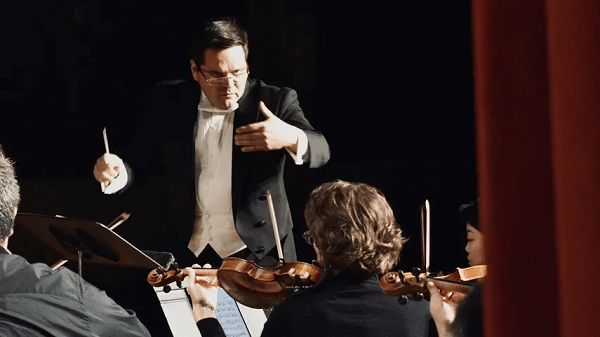
Reference Image about Spain
Reference Image
Yalil talking about Spain
Composer, bandleader, and Latin GRAMMY winner Yalil Guerra.
Image courtesy of RYCY Productions

By YALIL GUERRA

The birth of the Cuban nation, after gaining its independence from its former colonizer, Spain, marked a break that transcended political concerns and entered strongly in the cultural aspect. Cubans were “denaturalized” after the Treaty of Paris in 1898, leading to a profound metamorphosis of identity that was inevitably reflected in our music. Out of that process a fresh and powerful sound expression emerged: a vibrant fusion between European, African, and North American influences, something that had already begun in the 19th century but was driven by a growth music industry and the cultural magnet of its northern neighbor, the United States.

For years I have listened to, studied, and enjoyed Cuban popular music — both the old and contemporary— and what I notice is that most productions tend to highlight the folklore—especially the Afro-descendant roots and the imprint of jazz — while the immense Hispanic legacy is usually relegated to the background, while being a key part of our musical identity.

In Cuban music today, both on and off the island, the record business is committed to a modern and bold sound. Compositions explore contemporary harmonies, bitonality, and extended chords — resources that come from both classical music and jazz — entwined with surprising and refreshing harmonic cycles. In wind instruments, melodic lines and musical motifs reveal the virtuosity and creativity of a new generation of musicians and arrangers, who are raised in solid academic traditions but open to global influences. The percussion stands out for its polyrhythm and the number of sophisticated tutti that require a unique expertise, but the Spanish influence is quite absent or just present in the language.

In contrast, What caught my attention was the newest music of singer, composer, and multi-instrumentalist Alain Pérez on his new album Bingo, where Spain resonates powerfully and recognizably. I find this gesture very special, as it vindicates a Spanish legacy in Cuban music that is often forgotten or minimized. I also highlight the case of pianist and composer José (Pepe) Rivero and his new album Estampas y Raíces where he pays tribute to classical Spanish composers, mixing their works with his unique interpretive style, bringing it closer to the language of Cuban jazz that is so familiar to him.

What about the large mass of Cuban artists and musicians who do not pay homage to the mother country? It is that we lost our historical memory or has it been erased? Is the omission of certain elements of our Spanish traditions a symptom of what some call the “Spanish Black Legend,” a myth that has seeped into our musical history and present?

I remember when Juan Perón said:

“And through the figure and work of Cervantes, Argentina pays tribute to the mother country, fruitful, civilizing, eternal, and to all peoples who have emerged from its maternal womb.” “And through the figure and work of Cervantes, Argentina pays tribute to the mother country, fruitful, civilizing, eternal, and to all peoples who have emerged from her maternal womb.”

Cuba is no exception.

Over the years, in response to the previously exposed, I have tried to make Spain present in my work: incorporating harmonious colors, Andalusian cadences, and the Phrygian mode—so tied to the Iberian sound—creating compositions devoted specifically to Spanish culture, especially my new string quartet entitled “Noches de España”, following the line of our great composer Ernesto Lecuona, who knew how to bring to life both African and Spanish things. As for me, I seek to keep alive that heritage and project it onto 21st-century Cuban music, without forgetting our important African legacy.

Today, rescuing the Spanish heritage in Cuban music is not just an act of memory: it is also an opportunity to rediscover the richness of crossbreeding that continues to define who we are and how our history sounds. Contemporary Cuban music not only looks to the future: it sings to its African roots, but it also needs to reconnect with that other essential part of our identity. After all, we think, love, and communicate in Spanish. Every note, every guitar or lute that sounds, will evoke that heritage and bring us near to the fullness of what we are.

It does not matter the color our skin is, or whether our grandfather was from Asturias or the Congo: cultural fusion is what forged our identity and will remain the essence of Hispanic America. Mexican writer, philosopher, and politician José Vasconcelos said: “I am Hispanic, and nothing about Hispanic is alien to me.”

At this crucial time, Cuban music has the challenge—and the opportunity—to sing its entirety. And in doing so, it shows us that, beyond styles or labels, what unites us is the sound of a common history.

DMA Yalil Guerra

Read also: Yalil Guerra and the musical roots of his talent

Yerba Buena Gardens Festival 2017 in San Francisco

North America / USA / San Francisco

2017 Yerba Buena Gardens Festival (YBG Festival) proudly announces the lineup for its:

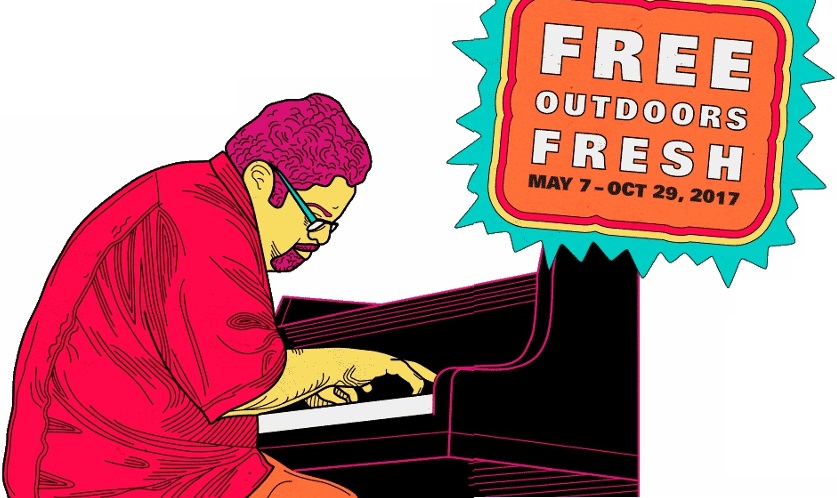
2017 Yerba Buena Gardens Festival - Free out doors fresh
2017 Yerba Buena Gardens Festival – Free out doors fresh

17th Season, which continues its tradition of bringing entertainment to downtown in San Francisco. May 7 – Oct 29, 2017, 760 Howard St. San Francisco, CA 94103

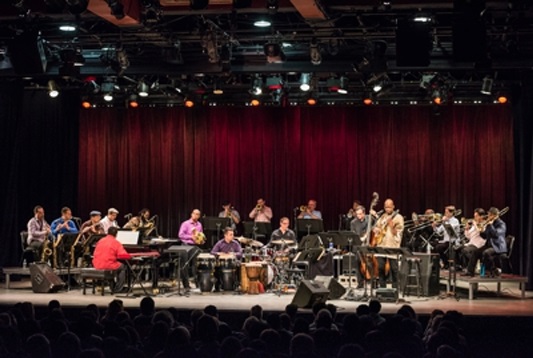
To kick off the new season, the Grammy-winning Arturo O’Farrill & the Afro Latin Jazz Orchestra + VNote Ensemble will open the Festival on Sunday, May 7, the first of this year’s 100 admission-free events. The very popular series Let’s Go Salsa@Jessie also will be present with the best artists. YGB Festival offers you free music, theater, circus, dance, poetry, and children’s programs with artists from the Bay Area and around the world.

Named one of the Best Urban Green Spaces in North America by USA Today, Yerba Buena Gardens is a world-renowned cultural destination for Bay Area residents, families, workers, and tourists alike. Yerba Buena Gardens is located between Mission Street and Howard Street and 3rd and 4th Streets in downtown San Francisco. Visit www.ybgfestival.org or call (415) 543-1718 for more information and complete 17th Season schedule.

Yerba Buena Festival’s exciting 17th Season promises an exceptional array of talent to please all audiences.

YBG Festival Executive/Artistic Director Linda Lucero says, “Everyone needs the spiritual sustenance, inspiration, and communal experience that only live performance offers. This summer, you’ll find your joy at Yerba Buena Gardens Festival!”

2017 Yerba Buena Gardens Festival

The Grammy-award winning Afro Latin Jazz Orchestra (ALJO), led by pianist, composer, and director Arturo O’Farrill, kicks off the Festival on Sunday, May 7 at 1:00pm. The ALJO brings together the drama of big band jazz, the culture of Latin music, and the virtuosity of eighteen of the world’s most accomplished solo musicians. Twelve years of critically acclaimed performances internationally have firmly established the ALJO as the standard-bearer for creative interpretation of Latin jazz greats such as Tito Puente, Frank “Machito” Grillo, and Chico O’Farrill, as well as the driving force behind new commissions from Latin music’s most talented composers and arrangers.

Arturo O’Farrill & the Afro Latin Jazz Orchestra + VNote Ensemble

Yerba Buena Gardens Festival includes the very popular Let’s Go Salsa@Jessie dance series, the family-friendly Children’s Series, Poetic Tuesdays with Litquake, and Thursday Lunchtime Concerts. Each and every week and weekend, the Festival has curated a lineup of musicians, dancers, poets, and actors from around the world including the Bay Area’s Kitka Women’s Vocal Ensemble on May 13, Brass Convergence II: Protest Brass on May 20, Richard Howell & Sudden Changes on May 27, NEA Heritage Fellows Michael Doucet and Tom Rigney with Flambeau on June 3, Festival-commissioned YBG ChoreoFest, a three-day site-

specific dance festival featuring 9 contemporary dance companies on June 9–11, NYC’s own M.A.K.U. Soundsystem on June 17, Circus Bella on June 23–24, AXIS Dance Company’s The Garden Project on July 1–2, Festival-commissioned Theatre Rhinoceros’ Lear! on July 7–9, Ensemble Mik Nawooj‘s premiere of Death Become Love on July 15, San Francisco Mime Troupe on July 23, SF Uke Jam Summer Uke-splosion! with Ukulenny and Cynthia Lin on July 29, Daymé Arocena + Latin Jazz Youth Ensemble on August 19, Paula West on August 26, Kugelplex with special guest Linda Tillery on September 2, Alsarah & the Nubatones on September 9, and Brooklyn Raga Massive with Classical Revolution performing Terry Riley’s In C on September 16.

Yerba Buena Gardens concert

The Festival closes with the 17th Annual Halloween Hoopla Sunday, October 29.

The popular series Let’s Go Salsa@Jessie, the open-air salsa dance party in Jessie Square (near the Contemporary Jewish Museum), takes place on the third Thursday of each month from May to September from 6:00 pm – 7:30 pm. Performers are Changuí Majadero on May 18, La Mixta Criolla on June 15, Somos el Son on July 20, Bobi Céspedes on August 17, and the Festival return of Ricardo Lemvo & Makina Loca on September 21.

The Festival offers the delightful Children’s Series, interactive performances specially designed for kids and families every Friday from June to August in Yerba Buena Gardens. The series presents performances by kid favorites: Caterpillar Puppets, Ka-Hon, Red Panda Acrobats, Pi Clowns, Venezuelan Music Project, Crosspulse, Unique Derique, and Non Stop Bhangra. The series ends with the wildly popular 17th Annual Halloween Hoopla on Sunday, October 29.

Yerba Buena Gardens Festival Commissions and Special Projects have commissioned the following projects to celebrate in June: Yerba Buena Gardens ChoreoFest, a brand new 3-day dance festival, June 9-11. Playwright/director/actor John Fisher writes and directs Lear!, a site-specific satirical musical based on Shakespeare’s King Lear for Theatre Rhinoceros, the nation’s, and likely the world’s, first queer theater on July 7-9 and Circus Bella on June 23 and 24. Conceived and directed by Abigail Munn and Joel Baker for Circus Bella, the show will feature high level, local and guest circus artists and includes static trapeze, rope walking, juggling, contortion, unicycle, original clowning, acrobatics, and more.

2017 Yerba Buena Gardens Festival - Photo
2017 Yerba Buena Gardens Festival – Photo

The Yerba Buena Gardens Festival also co-presents a series of admission-free outdoor programs with Union Square Live to be announced in April.

Gabrielito Y La Verdad giving everything in Los Angeles and beyond

Gabriel González from the group Gabrielito Y La Verdad has been kind enough to speak exclusively with International Salsa Magazine and me, Karina García, about his beginnings, bands, and current career. The composer, actor, and musician gave us some of his time to address the most important issues concerning his successful career and everything that surrounds it, for which we are extremely grateful.

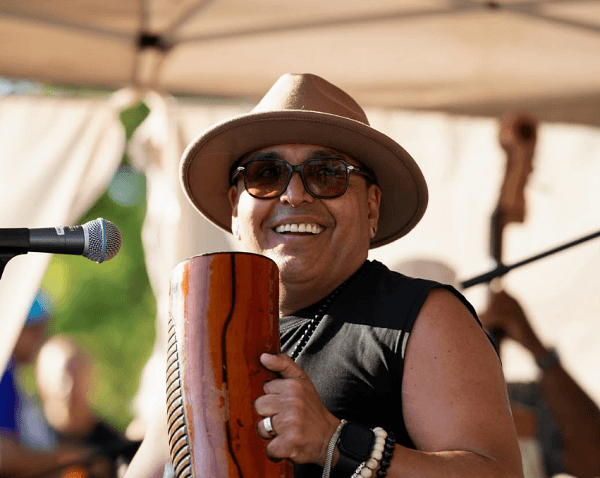
Gabriel performing at the museum
Composer, percussionist, singer, and actor Gabriel Gonzalez playing live at the Los Angeles County Museum of Art

How Gabriel started to become interested in music 

Gabriel was born and raised in Los Angeles, where he took his first steps towards what would become his lifelong vocation. Since his parents were Mexican immigrants, it was not uncommon for him to listen to rancheras, huapango, boleros, son jalisciense, and other genres typical of that country.

He liked music so much that he began participating in contests at “El Mercadito,” a place located east of Los Angeles, where amateur concerts and all kinds of musical events were held. After his father sang there several times, he told him he wanted to do the same, and that is how he began entertaining wider audiences with his voice.

Years later, after his passion for music was being shaped and getting more serious, he contacted his uncle, who was a promoter, and took him with him to Mexico to get some acting work in movies. This means that his artistic career was not just limited to singing but also to acting, but at some point, both areas would end up mixing. 

It should be noted that his work as an actor made him stay in Mexico for several years, so he shared with many great actors of the time who were also singers, such as Yolanda del Río, Federico Villa, David Reynoso, Lucha Villa, and many more. 

Upon returning to California, he experienced a significant culture impact. He realized that he was not Mexican enough for Mexicans nor American enough for Americans. This double identity made it much easier for him to cross cultural and musical boundaries, so from playing ranchera, huapango, and son jalisciense, he was given a chance to play other styles such as son montuno, which for Gabriel is the basis of salsa and much of Latin music. 

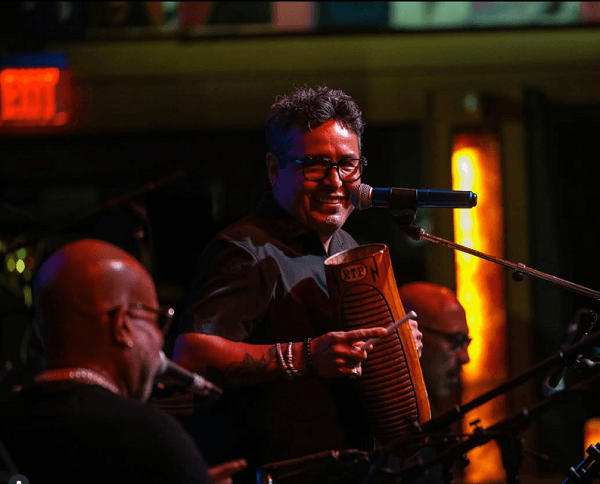
Gabrielito at the Vibrato Grill And Jazz
Gabrielito Y La Verdad performing at the Vibrato Grill And Jazz

Gabriel’s professional beginnings in music

Gabriel tells us that, during a huge part of his career, he worked as a solo artist, but he went on to collaborate with several groups and one of them was the Mexican band Quetzal, which specializes in playing Chicano rock and son jarocho. His sister Martha González was the lead singer, so he was able to work with them on and off for about 20 years. He describes his time with Quetzal as a very nice period in which he learned a lot and was even blessed to win a Grammy, but everything has an end, so he went ahead and worked with many other bands in the Los Angeles salsa scene.

In fact, today he is a member of Boogaloo Assassins and has been playing with them since 2015, while also having his own project, which he named Gabrielito Y La Verdad.

Gabrielito Y La Verdad

After all experience gained so far, Gabriel decided to form his own group Gabrielito Y La Verdad, with which he had his first big hit “Oye Muñeca,” released around 2019. Since the project began, the artist has had the same keyboardist and pianist, but the rest of the musicians have come and gone over the years, as it is not easy to maintain a cohesive musical group for a long time.

In fact, he usually has a list of musicians he can call, and their presence at an event depends almost entirely on their availability and ability to read sheet music. Gabriel often works with the same musicians Jimmy Bosch uses, so when the Puerto Rican travels to Los Angeles, Gabriel knows he can count on them if an event comes up. He also often uses some of Jerry Rivera’s musicians and those of many other exponents of the genre.

Gabriel with Oscar Hernandez
Gabriel Gonzalez and bandleader and pianist Oscar Hernandez

Facets additional to singing

In addition to being a singer and film actor, Gabriel has also participated in commercials and done a little musical theater, since the condition of being an artist forces you to learn a little about everything. Being still very young, he participated in the film ”Mojado de Nacimiento” alongside La Sonora Santanera.

One of those memorable experiences was his participation in the second national tour of the musical ”In The Heights” with Lin-Manuel Miranda. It was during this tour that Gabriel learned that he had won a Grammy with the band Quetzal. The news came during a bus trip, making it clear that he experienced several of these facets at the same time without any problems.

More recently, he has served as composer of several of Gabrielito Y La Verdad’s songs in collaboration with pianist Matt Amper, who is also actively involved in the creation of the group’s original songs. 

Collaborations with other artists

Gabriel has shared the stage and collaborated with big names in the industry like Bruno Mars, “El Divo de Juarez” Juan Gabriel, Los Van Van, Silk Sonic, and many others. Similarly, during his acting career, Gabriel also met many great actors of the time with whom he shot scenes during the day, and at night, did voice-overs at the studios, and went out singing.

All this led him to share the stage with Aida Cuevas, Rosenda Bernal, Los Lobos, and Lalo Guerrero. While still with Quetzal, he opened for Aerosmith, Taj Mahal, and others. 

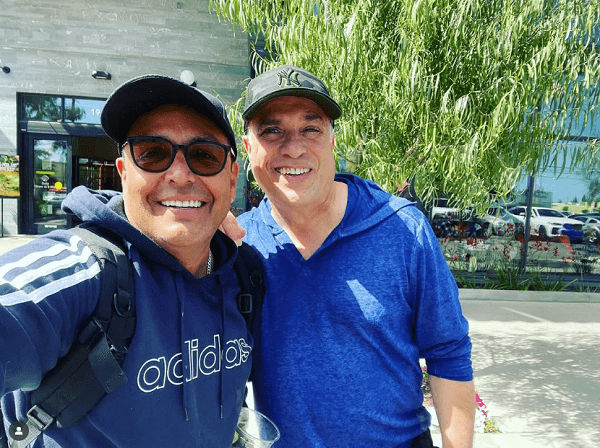
Gabriel Gonzalez and Richie Perez
New York’s singer Hector ”Pichie” Perez and Gabriel Gonzalez

Read also: Creator of Afro-Rican Jazz William Cepeda talks about this subgenre

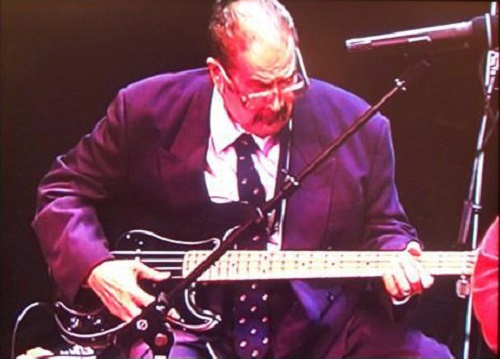
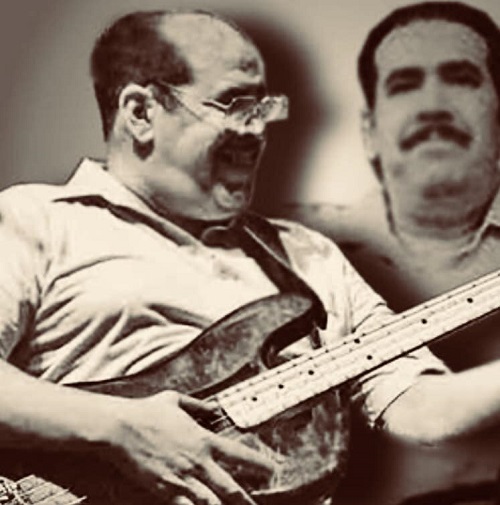
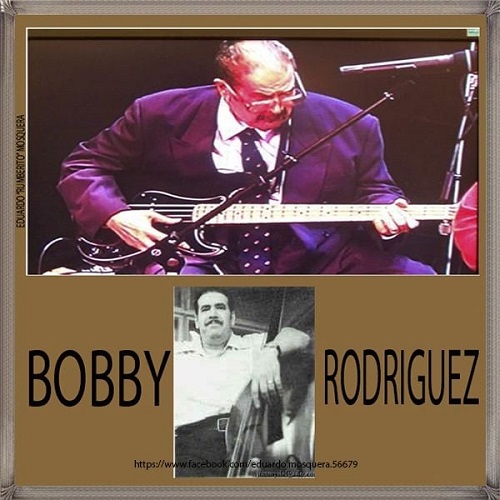
Roberto “Bobby” Rodríguez was a master of the Baby Bass and was instrumental in its popularization within Latin music

Roberto “Bobby” Rodríguez “Big Daddy” (1927-2002) was a renowned bassist and a key figure in Latin jazz and salsa. He was known for playing both the upright bass and electric bass.

Roberto Bobby Rodriguez was a master of Baby Bass and played a decisive role in its popularization within Latin music

He worked with legendary artists and bands such as Charlie Parker, Dizzy Gillespie, Machito, Tito Puente, and The Alegre All Stars. Born in Tampa, Florida, to Cuban parents, he is often associated with the Baby Bass, a type of electric upright bass.

The Baby Bass is a specific type of electric upright bass developed by the Ampeg company. It has a distinctive sound and is very popular in Latin music, especially salsa.

Many famous bassists in the genre, including Roberto “Bobby” Rodríguez “Big Daddy,” are known for playing this instrument. With its deep, percussive tone, the Baby Bass helped define the sound of salsa music.

In summary, the connection between Roberto “Bobby” Rodríguez and the Baby Bass is that the famous bassist, Roberto “Bobby” Rodríguez “Big Daddy,” was a master of the instrument and was instrumental in its popularization within Latin music.

“Big Daddy’s” Career and Legacy.

The son of Cuban and Puerto Rican parents, Roberto “Bobby” Rodríguez “Big Daddy” was born in Tampa, Florida, on May 2, 1927. His talent left a lasting mark on the performance of both the upright bass and the electric bass.

He began his career in New York at the age of 17 with Machito and His Afro-Cubans, where he replaced Julio Andino. He participated in recordings with Chico O’Farrill, Dizzy Gillespie, Cal Tjader, Eddie Palmieri, Willie Bobo, Mongo Santamaría, Joe Cuba, Eric Dolphy, the Alegre All Stars, and Tito Rodríguez. His most important and enduring collaboration, however, was with Tito Puente.

Rodríguez’s involvement with Puente’s band resulted in a catalog of countless tumbao basslines. He occasionally had the opportunity to lead the band with a solo, loaded with highly creative melodic improvisations.

On the 1990 album, Goza mi Timbal, the track “Ode to Cachao” features a large number of Bobby Rodríguez’s solos. In addition to being a tribute to Israel López, this track is a showcase of “Big Daddy’s” immense virtues and is considered one of the most unforgettable solos in Latin jazz. This partnership remained active from the 1950s to the 1990s.

Roberto Bobby Rodriguez Big Daddy was born in Tampa, Florida, on May 2, 1927

The nickname “Dedo Gordo” (Fat Finger) was given to him for his way of playing the electric bass, with a thick sound—something that in American musical circles is called a “groove.” According to experts, his technique was meant to emulate the sound of the Ampeg Baby Bass.

One characteristic he was always recognized for was his unique ability to play the clave rhythm with his foot while performing on the bass. His musical experience always made him seem like a contributor with a jazzy style.

On July 29, 2002, after a life full of resounding successes and an impressive legacy, Bobby Rodríguez passed away in New York.

Ambiguities with the Name Roberto “Bobby” Rodríguez.

The name “Bobby Rodríguez” has been used by several artists within the universe of Caribbean music.

One common source of confusion is the flutist, clarinetist, and saxophonist from Manhattan, Robert “Bobby” Rodríguez, who founded the group “La Compañía.” His date of birth has not been confirmed.

Another point of confusion is the common misconception that “Big Daddy” began his career with the Marcano Quartet. The truth is that the quartet featured Félix Manuel Rodríguez, who, in the early stages of his career at age 17, also went by the name “Bobby Rodríguez.” He would later adopt his famous stage name, Bobby Capó.

A third artistic namesake is Dr. Bobby Rodríguez, a trumpet player born in Los Angeles, California, who is also a teacher and author of the book, ABC’s of Brass Warm-Up. He has been nominated for a Grammy and has received awards as an educator.

Roberto Bobby Rodríguez Big Daddy (1927-2002)

The list of names similar to Roberto “Bobby” Rodríguez becomes much longer if you search for homonyms of his given name. For example, there is Roberto (Reimundo) Rodríguez, a trumpet player from Cienfuegos, Cuba. He co-founded the orchestra Los Jóvenes Estrellas de Cuba and became a member of the Fania All Stars. He also appears in the documentary Nuestra Cosa Latina. In 1982, he founded the group Los Rodríguez with his sons, Roberto Jr. and Willie.

His son, Roberto Rodríguez Jr., is another homonym we encounter in these musical paths.

Continuing with more homonyms, there’s the Cuban trumpet player Roberto Luis Rodríguez, who is the father of the currently famous trumpet player Roberto Juan Rodríguez, also Cuban, but who moved with his Jewish family to Miami at the age of nine. He has played with top artists such as Joe Jackson, Julio Iglesias, and Paul Simon.

 By: Diego Aranda (Audiokat)

Dj. Augusto Felibertt

Los Mejores Salseros del Mundo

Also Read: Bobby Valentín, the King of the Bass in the Fania All-Stars Machine – The Mind of a Master

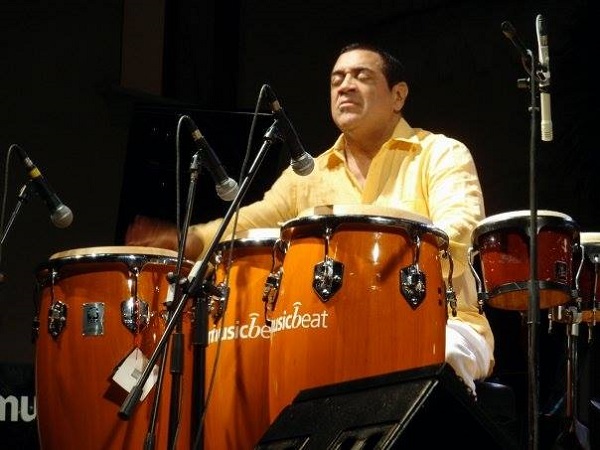
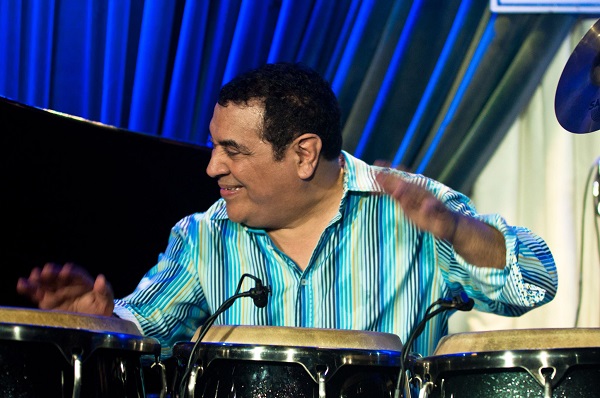
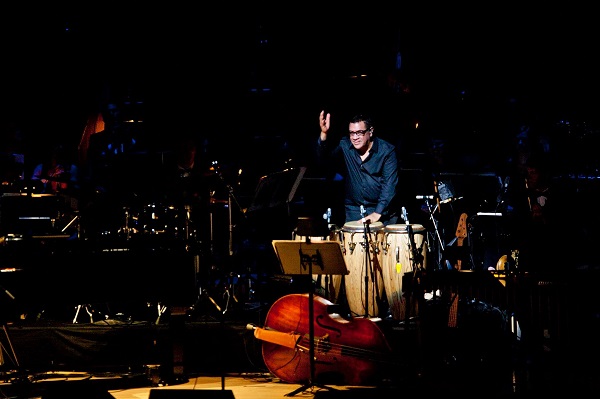
Sammy Figueroa is an exceptional percussionist known for his versatility and for playing in a multitude of musical styles

Sammy Figueroa, a percussionist with an excellent career.

Sammy Figueroa was born in the Bronx, New York, in 1948. He is the son of bolero singer Charlie Figueroa, whom he never knew, as his father passed away at the age of 32.

Sammy moved to Puerto Rico as a child to live with his grandparents and escape the Bronx’s gang violence.

Sammy Figueroa is an excellent percussionist who has stood out for his versatility, playing in a multitude of musical styles

At 18, he started his professional career with bassist Bobby Valentín’s band. Throughout his career, he has stood out for his versatility, playing in a multitude of musical styles and contributing to nearly 400 albums, ten of which are platinum.

He has collaborated with major pop artists like David Bowie, Chaka Khan, and Mariah Carey, as well as with distinguished jazz musicians such as Miles Davis, Sonny Rollins, Quincy Jones, and George Benson. In 1977, he became a founding member of the Latin rock fusion group Raíces.

In 2001, Sammy Figueroa moved to South Florida and formed his own group, Sammy Figueroa and His Latin Jazz Explosion. His albums And Sammy Walked In and The Magician were nominated for a Grammy for Best Latin Jazz Album.

Sammy Figueroa, a percussionist with an excellent career

Sammy Figueroa, a percussionist with an excellent career

His 2023 album, Searching for a Memory / Busco Tu Recuerdo, is a tribute to his father. The project, produced by his wife, Rachel Faro, with whom he has also co-produced other albums, allowed Sammy to reconcile with his father’s legacy. On this album,

Sammy sings on a record for the first time and transforms his father’s classic boleros into modern Latin jazz arrangements. The album was nominated for a Latin Grammy in the “Best Jazz/Latin Jazz Album” category.

Sammy Figueroa has received numerous awards, including two Percussionist of the Year awards from the National Academy of Recording Arts and Sciences (NARAS), two Drummie Awards for Best Hand Percussion, and a Best Percussionist award from the Jazz Journalists Association.

Discovered by jazz flutist Herbie Mann, Figueroa became a well-known session and studio musician, touring and recording with The Brecker Brothers, Average White Band, Morrissey – Mullen, The Mahavishnu Orchestra John McLaughlin, and Miles Davis.

He has also appeared with Blondie, Sonny Rollins, David Sanborn, Quincy Jones, Dave Grusin, George Benson, Chet Baker, Stanley Clarke, Grover Washington Jr., Al Jarreau, Lena Horne, Joe Williams, Mark Murphy, Mike Mainieri, Néstor Torres, Chico O’Farrill, Mike Stern, Chuck Loeb, Bobby Watson, Dave Valentin, Arturo Sandoval, Paquito D’Rivera, Rubén Blades, Eddie Palmieri, Bobby Valentín, Tania Maria, Mariah Carey, James Taylor, Dr. John, Mick Jagger, David Bowie, Celine Dion, Blues Traveler, Natalie Merchant, David Lee Roth, Hall & Oates, Joe Cocker, Rickie Lee Jones, Annie Lennox, Whitney Houston, Anita Baker, Grace Jones, James Ingram, Diana Ross, Roberta Flack, Aretha Franklin, and many others.

Some of the R&B hits he is featured on include Sister Sledge’s “We Are Family,” Luther Vandross’s “The Night I Fell In Love,” and Ashford & Simpson’s “Solid (as a rock),” as well as most of Nile Rodgers and Bernard Edwards’ hits on the Chic and Sister Sledge record labels.

Michel Camilo wrote the song “And Sammy Walked In” in his honor, and it was also recorded by Giovanni Hidalgo. Two of his CDs, And Sammy Walked In and The Magician, have been nominated for Grammy Awards in the “Best Latin Jazz Album” category. Figueroa hosts a Latin jazz show on WDNA-FM in Miami, Florida.

Sammy Figueroa was born in the Bronx, New York, in 1948

If you’re not very familiar with Sammy Figueroa’s work, you can try an experiment with this album: listen closely to see if you can guess what his instrument is. In a medium-sized combo, what instrument seems to take center stage? The answer: it’s impossible to guess, which says something about Figueroa’s maturity as a leader.

It’s also surprising to see how pared down his forces really are this sextet sounds like a big band. (Spoiler alert: he’s a percussionist.) It also says something about him that the term “Explosion” is a misnomer for his band. There are no pyrotechnics, no crazy tempos, and no wildly layered rhythms here.

But there are some very impressive horn arrangements (check out “Cha Cha Pa’ Ti” and the lovely “Cuco y Olga”), along with some of the sweetest, most tender ballads to appear on a jazz album of any genre in recent years (“Queen from the South” and “Zuliana” are the best examples).

For a percussionist acting as a bandleader, giving this kind of sustained, loving attention to compositions that only make a tenuous use of his talent is further proof of Figueroa’s taste and maturity. Let’s hope Figueroa keeps going in this vein. Rick Anderson.

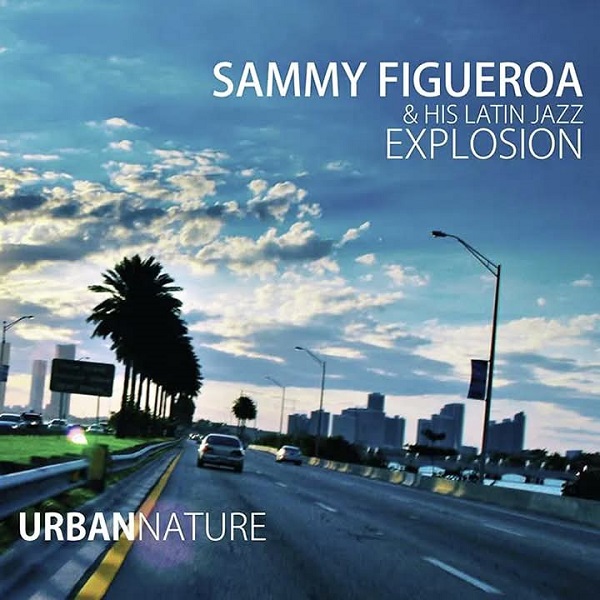
Sammy Figueroa & His Latin Jazz Explosion – Urban Nature (2011).

Sammy Figueroa & His Latin Jazz Explosion - Urban Nature (2011)
Sammy Figueroa & His Latin Jazz Explosion – Urban Nature (2011)

Tracks:

  1. Gufillo (Silvano Monasterios)
  2. Urban Nature (Gabriel Vivas)
  3. Latin What? (Michael Orta)
  4. Zuliana (Silvano Monasterios)
  5. 7th Door From The Left (Silvano Monasterios)
  6. Cuco y Olga (Nicholas Martines)
  7. Cha Cha Pa’ Ti (Gabriel Vivas)
  8. Queen From The South (Silvano Monasterios)
  9. Funny Talk (Gabriel Vivas)

Musicians:

  • Sammy Figueroa (Percussion)
  • Silvano Monasterios (Piano)
  • Gabriel Vivas (Acoustic bass)
  • John Michalak (Sax)
  • Alexander Pope Norris (Trumpet)
  • Nomar Negroni (Drums)

Guest Musicians:

  • Ed Calle (Sax)
  • Mike Orta (Piano)
  • José Gregorio Hernández (Percussion)

Website: Sammy Figueroa

By:

Dj. Augusto Felibertt

L’Òstia Latin Jazz

Also Read: Carlos “Nene” Quintero comes from a family of musical prodigie

  • « Go to Previous Page
  • Page 1
  • Page 2
  • Page 3
  • Page 4
  • Page 5
  • Interim pages omitted …
  • Page 50
  • Go to Next Page »

International Salsa Magazine (ISM) is a monthly publication about Salsa activities around the world, that has been publishing since 2007. It is a world network of volunteers coordinated by ISM Magazine. We are working to strengthen all the events by working together.