• Skip to primary navigation
  • Skip to main content

International Salsa Magazine

  • Home
  • Previous editions
    • 2025
      • ISM / November 2025
      • ISM / October 2025
      • ISM / September 2025
      • ISM / August 2025
      • ISM / July 2025
      • ISM / June 2025
      • ISM / May2025
      • ISM / April 2025
      • ISM / March 2025
      • ISM / February 2025
      • ISM / January 2025
    • 2024
      • ISM / December 2024
      • ISM / November 2024
      • ISM / October 2024
      • ISM / September 2024
      • ISM / August 2024
      • ISM / July 2024
      • ISM / June 2024
      • ISM / May 2024
      • ISM / April 2024
      • ISM / March 2024
      • ISM / February 2024
      • ISM / January 2024
    • 2023
      • ISM / December 2023
      • ISM / November 2023
      • ISM / October 2023
      • ISM – September 2023
      • ISM – August 2023
      • ISM July 2023
      • ISM Edition June 2023
      • ISM – May 2023
      • ISM April 2023
      • ISM March 2023
      • ISM February 2023
      • ISM January 2023
    • 2022
      • ISM December 2022
      • ISM November 2022
      • ISM October 2022
      • ISM September 2022
      • ISM August 2022
      • ISM July 2022
      • ISM June 2022
      • ISM May 2022
      • ISM February 2022
      • ISM January 2022
    • 2021
      • ISM December 2021
      • ISM November 2021
      • ISM October – 2021
      • ISM September 2021
      • ISM August 2021
      • ISM July 2021
      • ISM May 2021
      • ISM April 2021
      • ISM June 2021
      • ISM March 2021
      • ISM February 2021
      • ISM January 2021
    • 2020
      • ISM December 2020
      • ISM November 2020
      • ISM October 2020
      • ISM September 2020
      • ISM August 2020
      • ISM July 2020
      • ISM June 2020
      • ISM May 2020
      • ISM April 2020
      • ISM March 2020
      • ISM February 2020
      • ISM January 2020
    • 2019
      • ISM December 2019
      • ISM November 2019
      • ISM October 2019
      • ISM Septembre 2019
      • ISM August 2019
      • ISM July 2019
      • ISM June 2019
      • ISM May 2019
      • ISM April 2019
      • ISM March 2019
      • ISM February 2019
      • ISM January 2019
    • 2018
      • ISM December 2018
      • ISM November 2018
      • ISM October 2018
      • ISM September 2018
      • ISM August 2018
      • ISM July 2018
      • ISM June 2018
      • ISM May 2018
      • ISM April 2018
      • ISM March 2018
      • ISM February 2018
      • ISM January 2018
    • 2017
      • ISM December 2017
      • ISM November 2017
      • ISM October 2017
      • ISM September 2017
      • ISM August 2017
      • ISM July 2017
      • ISM June 2017
      • ISM May 2017
      • ISM April 2017
  • Download Salsa App
    • Android
    • Apple
  • Spanish

Search Results for: Jazz Festival

Sigo entre amigos de Luis “Perico” Ortiz

Ortiz features Tony Vega, Milly Quezada, Johnny Rivera, Gerardo Rivas, Henry Santiago, Yturvides Vílchez, Néstor Torres, Charlie Sepúlveda and Antonio Luis Orta.

The new production of the Puerto Rican trumpeter Luis “Perico” Ortiz, Sigo entre amigos comes to us with the same energy as always.  We trust this is a foretaste of what is to come because as the genius of musical production, Julio Gunda Merced, says: “We must continue to create”.

Ortiz features Tony Vega, Milly Quezada, Johnny Rivera, Gerardo Rivas, Henry Santiago, Yturvides Vílchez, Néstor Torres, Charlie Sepúlveda and Antonio Luis Orta.
Bella Martinez “The Irreverent Salsa Writer” presents to: Sigo entre amigos de Luis “Perico”

Sigo entre amigos begins by modernizing what would otherwise keep us in the nostalgia of the unforgettable production, Entre amigos.  The also masterful 1983 production featured Rafael Ithier, Rubén Blades, and Roberto Lugo, as well as the same Conjunto Quisqueya that for years dominated the danceable musical genre known as merengue.  In this new arrival, Sigo entre amigos, “Perico” continues with his trumpet and the rumba is back to form. In this renewed Sigo entre amigos, cut that gives title to this impeccable production, we find the voices of: Tony Vega, Milly Quezada, Johnny Rivera, and Gerardo Rivas. The legendary backing vocalist Henry Santiago also stands out, with the vocal power to which we are accustomed.

Beginning in the third minute of what has become the promotional cut, the unmistakable trumpet of the usual Luis “Perico” Ortiz stars in the notes of the arrangement until he joins in calm and saucy harmony the melodic wind collective formed by Yturvides Vilchez, Antonio Luis Orta, Jesus Rafael “Rafy” Torres, Eliut Cintrón, Randy Román, Miguel Rivera and Danny Fuentes in a masterful closing.

The second cut of this production, De mi para ti, features the crystalline voice of Johnny Rivera.  The song is a composition and arrangement by “Perico”.

Sigo entre amigos begins by modernizing what would otherwise keep us in the nostalgia of the unforgettable production, Entre amigos.
Sigo entre amigos de Luis “Perico”

The chorus that says: “Mi tributo es para ti, gracias al salón de baile” (My tribute is for you, thanks to the dance hall) enters in a tune that my ear associates to the style that stands out in the Orquesta Puertorriqueña del maestro Don Perignon.  I’m not saying that’s the way it is, I just think that’s what my ear appreciates.  I love it, by the way.

Johnny’s soneos bring nostalgia to the affair without abandoning the innovative touch of the arrangement.  This dichotomy of keeping the foundation constantly evolving has been very well achieved, highlighting New York as “the supreme soul of the art”.  Somewhat later in the song, the touting style that Johnny adds to “si tú quieres que yo cante, canto; y si tú quieres que yo baile, bailo” shows the malleability and mastery with which “Perico” manages to weave the classic with avant-garde expertise. Bravo!

After Johnny’s characteristic war cry in the fourth minute of the song, I recommend listening to what follows the “¡Vayaaa!” anticipating the forcefulness of Gadwin Vargas’ tumbadora. That, for the sake of highlighting my favorite special effect.

How can I say no, if it is a song inspired by the affection and respect that this avant-garde school obviously expresses for women.  It is about a gentleman who “sees lights” for a lady who approaches him cautiously and without haste.  Finally, the gentleman succeeds in making the lady fall in love and confesses to her that the wait was worth it, even though at first he did not even dare to ask her for a kiss.  In short, this composition by “Perico” himself is far from the lyrics that some fire-eating feminists condemned as misogynistic, in that past that this team of artists led by “Perico” were never part of.  In a way, this song repairs the damage caused by others.

In the vocal part, it distinguishes the duet between Gerardo Rivas, guest of this production, and “Perico” himself, who also interprets through the trumpet.

Luis "Perico" Ortiz
Luis “Perico” Ortiz

Musically, the arrangement of this song is easy to listen to, although I imagine that the arranger processed all the complication to make it simple for our inexperienced ears. The rhythmic changes within the salsa sound of this song have interesting transitions, the kind that make the dancer get active even if his dancing shoes are not well tied.

In the vocal part of Detente, the duet between Tony Vega, guest of this production, and “Perico” shines.  Detente lightens the speed compared to the rest of the songs in the production, so the dancer must be in good shape before trying to dance to it.  This fact shows us the versatility in the interpretative ability of Tony Vega whom we are used to hearing singing romantic and slower songs.  It is, without a doubt, refreshing to see how the performer’s horizons can be expanded by way of these artistic combinations of seemingly simple variations. Of course, a pioneer of these effects is “Perico” and this invention that I attribute to “Perico” is due to him having the necessary experience to achieve exceptional results with the usual performers.  At the 2 minutes and a half mark, the correspondence between the bass played by Jorge Rivera and the piano played by Carlos García; they reach a rhythmic transition, which makes this arrangement a remarkable one within the list of songs that compile this production.  Almost entering the fourth minute, we reach the social message that the song delivers to the listener as a chorus: “Persigue lo bueno…”.  The chorus and the pregones are framed within the tastiness of a trombone full of positivism.  The fifth minute gives way to the conversation between the trumpet of “Perico” and the voice of Tony Vega, affirming a message of love and truth.

Days after listening to the track, I can still hear Henry Santiago’s voice echoing, “chase the good…”

 Luis “Perico” Ortiz,  El Astro
Luis “Perico” Ortiz, El Astro

The intro of the track Solo tuya seré features “Perico’s” trumpet playing what appears to be a fragment of the Puerto Rican national anthem.  “Perico” demonstrates masterful mastery in the harmony of the aforementioned notes conjugating them with the vocal entrance of Milly Quezada.  The song’s lyrics are sweet and romantic with lots of melody and rhyme.  However, this does not limit the arrangement to a simple one.  On the contrary, it is one of those arrangements that conquers by its complexity and fluidity.

Before reaching the 2 minute mark, the leather beats come in, anticipating Milly’s proclamation, confirming in multiple ways the chorus that says: “solo tuyo siempre yo seré” (only yours I will always be).  The mambo goes on, while Milly continues to splash the feeling summarized in the confession she makes while singing in her characteristic color: “eres mi mejor canción, eres tú mi melodía” (you are my best song, you are my melody).  By 3:33, the arrangement returns to the undisputed sound of “Perico”.  This composition, also by “Perico” pays homage to patient love, good love that swears: “te amaré toda la vida” (I will love you all my life).  As you can see, it is possible to coordinate romance with a musical arrangement that is at once melodic, danceable and heavy.  Now, the question I have to ask myself is: Did “Perico”‘s return to his homeland after living in New York for about two decades inspire his pen? Is that the reason for the intro with the overlapping resemblance to the national anthem?  That is the question that leads me to: “Eres tú lo que soñé, eras tú mi fantasía” (You are what I dreamed of, you were my fantasy).

On Señores que se sepa, Henry Santiago’s unmistakable voice stands out again in the coros, backing up “Perico’s” vocal performance.  Shortly after 2:30 minutes, the trumpet leads the melodic development of the winds.  Well into the third minute, the association of bass and piano precede Jorge David Marcano’s timbal until the trombone and tumbadora begin to dominate by the fourth minute.  In the fifth minute, a trumpet-led mozambique takes over.  When the mozambique goes down, the piano seems to embrace the trumpet.  As can be seen, the development of the theme is one with modern overtones of undeniable Afro-descendence, without departing from the classic fundamental sound.

On Tres grandes amigos, Henry Santiago sings with his usual strength.  The melody benefits from a sound that I imagine was inspired by Puente, Rodríguez and Machito, since the saxophones stand out in that typical playfulness of the three Palladium greats.  It would seem that the composition and arrangement -both by “Perico”- are in tune with the upcoming reunion of those whom I affectionately call “Los herederos del Mambo” (The heirs of the Mambo).  I associate it, since on March 5, 2022 begins the reunion tour of Tito Rodriguez, Jr., Mario Grillo (Machito, Jr.) and Tito Puente, Jr. in the concert: The Big 3 Palladium Orchestra.  The reunion will be held at the Lehman Center for the Performing Arts in New York, under the concept called “The Big 3”; this time titled Palladium in the New Millennium.  On the other hand, on June 19, 2022, Tito Rodríguez, Jr. will be at the Centro de Bellas Artes de Puerto Rico performing as a tribute to “El Inolvidable”: his father, Tito Rodríguez.

Luis "Perico" Ortiz
Luis “Perico” Ortiz

Without wanting to compete with the theme performed live with the three timbaleros heirs of the Mambo: Tito Rodriguez, Jr., Mario Grillo (Machito, Jr.) and Tito Puente, Jr. backing the voices of Gilberto Santa Rosa, Cheo Feliciano, Henry Santiago and Osvaldo Román, I invite us to take a closer look at the presentation I am referring to, within the 6th Jazz Festival in Carolina, Puerto Rico.  The performance of this song closed the aforementioned festival and is on YouTube for the delight of those who could not make it there.  Click on the link, https://youtu.be/4jZLEnpaRCo you won’t regret it.  It gave me a more complete perspective of the song and its interpretation.  The arrangement of the song performed that night in Carolina is by Luis “Perico” Ortiz himself.  Highlights of the August 2010 performance included: Carolina Mayor José Carlos Aponte Dalmau, Mario Grillo, Tito Rodríguez, Jr., Tito Puente, Jr. and Luis “Perico” Ortiz.  On the vocal front, Gilberto Santa Rosa, Cheo Feliciano, Henry Santiago and Osvaldo Román stood out.  Of course, I can’t leave out Sammy Velez on baritone saxophone.

It is true that: “We are fortunate to have had three great teachers, three great friends…” and it is also true that Henry Santiago ate it. What a hurricane, that voice that sweeps!  Now what we have left is the appetite to enjoy this year’s concerts.  It’s coming, we are waiting for it.

In Yturvides & Perico, the characteristic speed of the other songs contained in the production is changed and the tempo of classic Jazz with the Latin touch that characterizes the master Luis “Perico” Ortiz stands out.  At minute 3:30, the arrangement is skipped for approximately thirty seconds to return to a soft minute of the undisputed Soñando con Puerto Rico.  The slow tempo is skipped again until the end of the song.  This arrangement is for connoisseurs only.  You know, those who know, know, and those who don’t, learn.  The last minute is pure trumpet accompanied by an orchestra that does not get in the way.  The percussion is complementary and sends the children to school.

As promised on the compact disc’s laminated cover, this song is a fusion of Osvaldo Farrés’ Tres palabras and Bobby Capó’s Soñando con Puerto Rico in a masterful arrangement by “Perico” that accommodates an exceptional performance by Yturvides Vílchez.  Simply exceptional.

In the song Warming Up, which closes this production, stand out:  Charlie Sepúlveda, Néstor Torres and Antonio Luis Orta.  The instrumental segment sounds like a big band, as it is.  The piano dominates and seems to direct the saxophones from the first minute, besides conversing in constant playfulness with the bongo played by Richard Carrasco.  The trumpets have a leading role entering and leaving in orderly shifts with the coros.  Distinguished among the coros is one of my favorite voices; not only for his vocal power but also because he can subtly balance that power with his unequaled melodic command.  That’s Henry Santiago, but that’s my preference.

Anyway, I love this production.  If you don’t have it, get it.  If you do, enjoy it.

Facebook: Luis Perico Ortiz

Article of Interest: Ray Barretto Giant Force y A Conguero’s Conguero

By: Bella Martinez “The Irreverent Salsa Writer”

Puerto Rico

From Zurich-Switzerland MERCADONEGRO Orchestra presents its latest song titled “Que Ironia”

Since Friday, January 21, 2022, is available on Youtube the new video clip from the Mercadonegro.

Mercadonegro was Created at the end of 2000 with influences from Salsa Dura thanks to their experiences working with artists such as Celia Cruz, Alfredo de la Fe, Cheo Feliciano, Tito Nieves, and many more.

Orquesta Mercadonegro titled “Que Ironia” song that is part of the production SOMOS DEL BARRIO, returning to the radio waves and digital platforms, a song that had been on hold, but now takes off from this group of Latinos based in Europe.

Mercadonegro Created at the end of 2000 with influences from Salsa Dura thanks to their experiences working with artists such as Celia Cruz, Alfredo de la Fe, Cheo Feliciano, Tito Nieves, and many more
Orquesta Mercadonegro de Suiza

SOMOS DEL BARRIO is the 4th production, of which stand out songs like: Triste y Solo, Quien a Hierro Mata, Rumba Negrito and also this current song “Que Ironía”, as always the boys of Mercadonegro highlight their work by the mixture of different cultures and Latin roots that enrich their musical style.

“Que Ironía” was born from the inspiration and ideas of Rodrigo Rodriguez Puerta & Eddie Villanueva Chininin, which relates the daily experiences of human beings, in their day to day nonconformity, and as the same lyrics say

“Nobody knows what he has until he loses it”.

This time it is Oscar “Chucky” Cordero who is in charge of the musical arrangements and even participates in the trumpet solo.

Mercadonegro, based in Switzerland, was founded on November 15, 2002, since then they have participated in the biggest Latin/Salsa and Jazz Festivals in Europe, and they have toured China (Asia), Colombia and Mexico (Latin America).

Its Directors : Armando Miranda ” El Moro ” was born in Havana – Cuba, with studies in the conservatory and participation with different Cuban artists. He is the lead singer of the orchestra and composer of some songs.

Rodrigo Rodriguez Puerta, born in Cartagena, Colombia, since he was a child he awakened his interest in music, percussionist, chorister, singer, composer and music producer.

In this most recent title “Que Ironía” participate the following musicians: Authors: Rodrigo Rodriguez Puerta / Eddie Villanueva Chininin

Arranger: Oscar ” Chucky ” Cordero

Piano: Oscar Ivan Lozano ((Oilo)) Bass: Dimitris Christopoulos

Full Percussion: Rodrigo Rodriguez Trombones: Johan Escalante Trumpets: Oscar ” Chucky ” Cordero Baritone Sax : Gills Grivola

Backing Vocals : Roberto Marcano ” El Chamo ” & Rodrigo Rodríguez Vocals : Rodrigo Rodríguez Puerta

Sound and Mix Engineer : Jose Mendoza

Pasterization : Fernando Álvarez at 440 Mastering, Madrid-Spain Recorded at GO STUDIO Zurich-Switzerland.

Site: Mercadonegro

Article of Interest: Mercadonegro Orchestra of Switzerland

“International Salsa Magazine is SalsaGoogle.com“.

We are an organization that from the hand of its Founder, Director and Editor Eduardo Guillarte, in force since 2007 that has been working non-profit helping to promote: Orchestras, Singers, DJs, Clubs, Plastic Artists in North America, Europe and Latin America and Asia and with the contribution of volunteers in various parts of the world, which at the same time invite and recommend all lovers, dancers of our Latin music to follow La Orquesta MercadoNegro from Zurich-Switzerland.

Long live music and its only and great protagonist, La Salsa.

What’s Happening in London?

Five Salsa & Latin Jazz Events To Be Held In The UK Capital That You Can’t-Miss

The United Kingdom has removed essential restrictions against Covid-19 and its Omicron variant after battling weeks with the new wave of infections in the country since the end of last year.

The British executive has provided the relaxation of the restrictive measures due to the low numbers of infected people and deaths. This relaxation seeks to initiate the return to complete normality.

The new measures that are no longer mandatory are the use of masks (it will be at personal discretion, however, they must wear them if the site is crowded with unknown people or it is a closed space), and Covid passports are no longer a legal requirement to enter to the establishment.

For these reasons, we bring you a range of options in the Salsa & Latin Jazz genres in the country this month that you will be excited to see, and that you will not want to miss any detail. Here, we go…

latin woman with orange dress dancing in gabeto restaurant / bar
Gabeto offers Cuban, Colombian, and Puerto Rican Salsa style, classes

We open this poster of options with the Gabeto Camden Restaurant/Bar. This Cuban gem north of the city has two floors, a Latin atmosphere, and an outdoor terrace. They serve genuine Latin dishes, modern British drinks with Afro-Caribbean twists, and have a wide variety of nightly events throughout the week.

On Tuesdays, Wednesdays, Fridays, and Sundays you will live the Salsa experience with the instructor Ramiro Zapata (from Bolivia) with more than 20 years of experience in Salsa. Ramiro teaches his Cross Body style with a mix of Cuban, Colombian, and Puerto Rican Salsa, as well as a strong focus on Cali (Colombia) style footwork, male body movement, and female style. The cost of the lessons varies depending on the length of instruction; one hour is £10 while two hours cost £12. Lessons start at 7:30 PM and end at 9:30 PM except on Sundays with Rumba Pa’ Ti classes which are from 6:30 PM to 8:30 PM. The Cuban spirit is found in Gabeto, located at Camden Market, The Stables Market, Chalk Farm Road, a few minutes from Camden Town and Chalk Farm stations. Only people over 18 can attend and for more details, visit their website.

pink flyer with the event of San valentine in Salsa Temple Bar
Sundays at the Salsa Temple Bar are 9 continuous hours of Salsa

We continue with the Salsa Temple Bar. Every Sunday they are explosively Salseros. DJs Jorge Andre & DJ Jlatino mix the most recognized songs of yesterday and today from Timba, Salsa, Cubaton, and Bachata. Beginner Salsa Classes start at 6 PM, Bachata lessons at 7 PM, and Cuban Salsa instruction is at 8 PM. The cost for admission is £5 and on February 14th, they will offer the Valentine’s Night Fuego event.

Starting this month Salsa Temple Bar with Rhythm & Vibes Dance Co and The Latin Collective will make Monday nights the biggest Afro-Latin party in the country appearing in the Latin Room (Second Room) Salsa, Bachata, and Reggaeton. In addition to this, there will be Salsa and Bachata classes for one session (1 hour) for £7 and two sessions (2 hours) for £10.

Bar Salsa Temple is located at Temple Station WC2R 2PH. Join and experience the Sabor in detail on its official website.

Roberto Plas playing the Timbal
Roberto Pla is the Colombian percussionist known as the “Father of Latin Music” in the UK

As a third option, we bring you the concert of Roberto Pla’s Latino ensemble on Friday, February 4th at Pizza Express – Holborn. This Latin Jazz concert led by Colombian percussionist Roberto Pla is made up of a 12-piece band of saxophones, trumpets, trombones plus a powerful layered percussion section with Roberto on timbales and the powerful voice of Graciela Rodríguez.

The most recent presentations of the Latin Ensemble orchestra have been the Brecon Jazz Festival, Expo Festival Lisbon, Canada Square Festival, Under the Stars Festival, among many others.

Admission to enjoy this live performance is £25 and starts at 8:00 PM. The venue is Pizza Express Jazz Club located at 99 High Holborn since 2017. This Jazz Club is considered one of the best clubs of its kind in Britain with an international reputation. Performances by Grammy winners such as Gregory Porter and Amy Winehouse have been seen here.

Trumpeter with beige suit on Ronnie Scott's Jazz Club
The Ronnie Scott’s Jazz Club presents every Friday of the month “Viva Cuba Live”

We continue with the most important and historic jazz club in the world founded in 1959, Ronnie Scott’s. In addition to the main club, there is the bar known as Upstairs @ Ronnie’s, it is highly regarded as an elegant and luxurious venue recreating the atmosphere of the ’50s, ideal for spending the night in style.

As part of the new Jazz club policy, they are expanding their program of Latin events at Upstairs @ Ronnie’s. Below I detail the events that will be held on Fridays from 6 PM during this month.

Jesús Cutiño Band + DJ Gavin (February 4th). Jesús Cutiño is a Cuban singer-songwriter recognized as one of the best Tres players in Europe (the Tres is the Cuban guitar that forms one of the pillars of the Cuban Son sound).

Sarabanda + DJ Rico (February 11th). With this band, you will listen to arrangements of classic and contemporary Cuban songs.

Son Yambu + DJ Jim (February 18th). This group plays the authentic Cuban Son that originated in the streets of eastern Cuba at the beginning of the last century and later gave rise to modern Salsa. Most of the members come from Cuba and have the experience of a lifetime playing the genre, as well as being passionate about maintaining the traditions of Cuban Son.

Havana Latin Fun + DJ Alex (February 25th). This five-piece band led by piano/vocals René Álvarez presents Cuban melodies with amazing rhythms.

Ronnie Scott’s Jazz Club is located at 47 Frith St, London W1D 4HT, and you can find out more by clicking here.

Bishopsgate institute with green flag
The Latin and Ballroom Dance course for beginners will be held in person

We close this list of Latin events in London with the Latin and ballroom dance lessons for beginners next Saturday, February 12th. With this one-day course, you will learn how to perform the basic steps, footwork and move around the floor with the correct dance line. The hours will be between 11 AM and 4 PM, and the price is £25. The maximum limit is 30 students. The venue is the Bishopsgate Institute located at 230 Bishopsgate EC2M 4QH. An institution was erected for the benefit of the public in 1894 with the motto “I never stop learning”.

  • You Can Also Read: 6 Clubs To Dance Salsa In London

Jorge Luis Suárez is a singer, musician and multifaceted artist and a bastion of Afro-Caribbean music

In Venezuela, the musical talent is undoubtedly first line and proven quality on any stage nationally and worldwide.

Specifically in the state of Lara and in the city of Barquisimeto, a great number of artists with category and hierarchy have emerged and been born, exalting our Latin rhythms.

For this edition of “Salsa Escrita”, we are honored to have as a special guest vocalist Jorge Luis Suarez, pride and bastion of Afro-Caribbean music and various genres, who, for years, demonstrates his class and professionalism.

Jorge Luis is a singer, musician and multifaceted artist; born on August 7 in the city of Maracaibo, son of parents from the city of Carora, where he spent part of his childhood in that state and began to lean towards music, having as main influence his father, who played the guitar and sang romantic music.

In the early 80’s, he moved to Barquisimeto to attend university and was discovered as a singer and player of the bass, cuatro and guitar. Welcome Jorge Luis Suarez to “Salsa Escrita”, through International Salsa Magazine, www.salsagoogle.com.

Vocalist Jorge Luis Suárez, pride and stalwart of Afro-Caribbean music

To begin this pleasant, enjoyable and long awaited meeting, because we wanted to have you as one of our interviewees and tell us about your experiences about your artistic career, which has been very successful nationally and worldwide for the pride of all who know you.

Thank you Professor Carlos Colmenárez, for inviting me to your well read and recognized salsa column, unique in the center-west of the country and in which you project Venezuelan musicians worldwide.

Jorge Luis, with which groups did you begin your journey through this wonderful art, in which you have demonstrated versatility, perseverance, discipline and quality?

Jorge Luis is a singer, musician and multifaceted artist

Well, let me tell you that I started my musical activity professionally, being part of groups of regional renown, among them: “Las Estrellas del Momento”, “Orquesta Alegría” and then “Venezuela en Gaitas”, “Sazón Latino” and in the late 80’s and early 90’s, I became part of the staff of the orchestra “La Banda Actual”, a salsa icon in the state of Lara.

By the way Jorge, we remember your beginnings with “La Banda Actual” and it was an obligatory reference to be hired in private parties, night clubs and of course to share the stage with great artists and luminaries of the Latin-Caribbean music genre.

In which billboards did you have the joy and privilege of singing, alternating with national and international stars?

Indeed professor, with Banda Actual we performed with Héctor Lavoe, Wilfrido Vargas, Las Chicas del Can, Porfi Jiménez, Guaco, Los Melódicos, Hermanos Carruyo, Billos Caracas Boys, Orquesta La Crítica and many more, in their visits to Barquisimeto, having as locations the Domo Bolivariano, Complejo Ferial, among others.

In fact, Jorge Luis and due to your outstanding and outstanding vocal ability, the son of the maestro Billo Frómeta, Luis Frómeta, called you to join the ranks of the Billo Caracas Boys, how was that experience?

With Billo I learned to have more artistic discipline and gain experience for 4 years, recording three albums touring Latin America, the United States and Europe; precisely in the carnivals of Tenerife we starred in the Güines Record in public attendance at a bailanta, sharing the stage with Celia Cruz and Oscar D’León.

Jorge, tell us about your entrance to the orchestra of the world’s sonero Oscar D’León.

Professor Carlos, precisely because of that event in the Canary Islands, maestro Oscar called me and told me that he needed a vocalist with my characteristics to accompany him in his shows and international tours and honestly it was a difficult decision because with Billo Caracas Boys I was well established along with other Barquisimetans: Ely Méndez and Wolfang Perdomo, integrating the line of vocalists at that time, pure “guaros”.

But maestro Oscar’s offer seemed interesting to me and I finally said yes. With the Sonero del Mundo, to whom I owe a lot, because thanks to him I established myself even more as a performer and especially in salsa, taking his recommendations to the letter and of course it was an unforgettable experience, because with his orchestra we toured many countries and performed in venues such as: Carnegie Hall, Madison Square Garden, House off Blue in Los Angeles, Orange Ball, jazz festivals in Europe, sharing with renowned artists.

Professor, I wanted to tell you that at the same time working with Oscar’s orchestra, I recorded my production “Una Tercera Persona”, in the middle of 1992, which included the hit “Niégalo Todo”, obtaining the first places in the hit parade.

In that production I was accompanied in the recording by renowned musicians such as: Luisito Quintero, Roberto Quintero, Robert Vilera, Raul Agraz, Yorman Leon and the Nicaraguan Luis Enrique.

Jorge Luis is a singer, musician and multifaceted artist, born on August 7 in the city of Maracaibo, son of parents from the city of Carora, Venezuela.

Jorge, how many years did you stay with Oscar and why did you decide to leave his orchestra?

I was with Oscar for about four years and I decided to leave the group due to major reasons, as a result of business and commercial commitments that I had and still have in Barquisimeto.

For those who do not know, Jorge Luis is a multifaceted artist and has managed to venture as a vocalist in different musical genres, from salsa, gaitas, tropical danceable, guaracha, merengue, Venezuelan and boleros; achieving in this last aspect, being the arranger and musical producer of the trio Carora International at the end of 2014.

At the same time, he produced and performed 19 songs of Venezuelan music with arrangements by Jean Piero Gonzalez, which will be released soon.

Jorge Luis, having settled again in the musical capital of Venezuela, with whom have you recorded? Professor, in Barquisimeto I have been invited to record with the following groups: Venezuela Somos Gaita, Nikitao, Amantes de la Gaita, Venezuela en Gaitas, Unión Gaitera, Rafa y sus Diamantes, Grupo Colorama, Con Klase, Orquesta Variación, Orquesta la Mayor, Orquesta la Gran Premiere, Venezuela Rumba, La Orquesta Raza Caribe, recording with the latter 8 songs in the production that is about to be released. I was also invited to record with the Orquesta Son Colón de Maracay and with the Latin Grammy nominees, our Grupo Santoral de Barquisimeto, participating with them as a special guest in the show “El Amor se Canta”, in celebration of the Day of Love and Friendship, touring, starting at the Teatro Juares and other cities in the country, as well as private presentations.

As for current projects, what can you tell the readers of Salsa Escrita? Currently my second solo production in the salsa genre is about to be released, with arrangements by multi-instrumentalist Taylor Aranguren from Barquisimeto and myself.

We are launching the record label, precisely this June with the promotional track “No lo beses”, a song that was interpreted by Alejandro Fernandez, by the Mexican composer Jose Luis Roma.

The production is called “José Luis Suárez Covers”, which includes songs that have been hits around the world, such as: Cobarde cobarde, Escándalo, La bomba, Cuatro rosas, Darte un beso, El amor más grande del planeta, Bailando, No lo beses, among others. In this production, I am accompanied by my nephew Taylor Aranguren, the musicians: Carlos Giménez, Rómulo Paiva, Jeison Marchán, Wílner Navas, Freddy Adrián, in the master and mixes: Latín Récods Digital. Sound engineer: René Zerpa and in the general production: Jorge Luis Suárez. Jorge Luis, what are your social networks or digital platforms to interact with your followers? My contacts are, Instagram: @jorgeluissuarezoficial, Youtube: Jorge Luis Suárez Oficial, [email protected]. Jorge Luis, to finish, we want to congratulate you for your perseverance in music and wish you to continue harvesting triumphs, because you have quality and to spare.

Salsa Escrita “La Columna Salsera de Barquisimeto”, will be at your disposal to support you in your present and future projects, good luck… Thank you professor and personal friend, Carlos Colmenárez, for giving me your support in your salsa column, unique in the west of the country and thus allowing you to reach your regular readers around the world; again a thousand thanks, blessings and long live Venezuela!

Article of Interest:  Gerson Aranda “La Tabla de Caracas”

Carlos Colmenárez

Correspondent in Venezuela for International Salsa Magazine

Orquesta La Moderna Tradición frontman Tregar Otton talked to us

What Orquesta La Moderna Tradición is

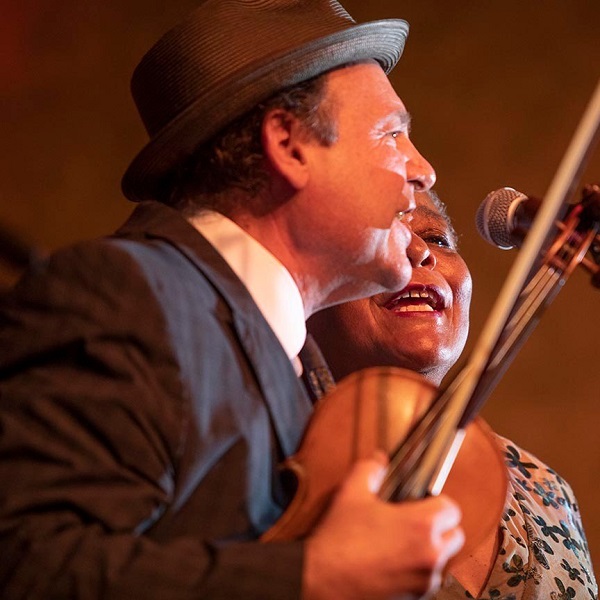
Tregar Otton playing
Tregar Otton, founder of the orchestra, playing the violin

Orquesta La Moderna Tradición has been one of the most legendary groups of Cuban music in its entire history. It is a group whose members are based in San Francisco, California, and consists of 11 members who play different genres such as danzón, timba, guaguancó, cha cha chá, son, rumba, charanga, among others. They also mix in elements from American jazz, violins, and Afro-Cuban rhythms.    

The beginning of this orchestra’s story goes back to 1996, since they started to perform throughout the United States to bring the best of traditional Cuban music to every corner of the country and transport Cuban immigrants back to the Havana’s streets and clubs during the 50’s. All the success accumulated allowed them to perform at the San Francisco Jazz Festival, the Smithsonian Institution, the Lincoln Certer and many other venues of high prestige.    

Recently, Orquesta La Moderna Tradición once again displayed their talent at Yoshi’s, a jazz club and restaurant located in Oakland, California, whose reputation in the San Francisco Bay Area is not up for discussion. Our editor Eduardo Guilarte was present at the show to cover the details of the event, which left all those present in awe.  

Conversation with Tregar Otton, founding director of the orchestra 

Tregar Otton and Maru Pérez
Tregar Otton and Maru Pérez-Viana, his wife and an important part of the orchestra

Based on the above, we talked with Tregar Otton, founder, director, composer, and violinist of the group. This talented musician, born in the Marshall Islands and raised in Texas, started to learn about classical music from an early age and joined the Berkeley Symphony while he still was a teenager. By the 1990s, this musical promise worked as a regular part of Virgilio Mart Y Sus Majaderos, La Tipica Novel and the Charanga Orquesta Broadway. 

By the year 1995, Otton founded Orquesta La Moderna Tradición with Roberto Borrell. At the beginning, the group started to become well-known for its soft sounds of Afro-Cuban charanga, which are accompanied by a set of wind instruments and violins that give a unique touch to this group’s music. 

Today, we have the welcome presence of the musician to talk about each and every one of the issues raised in this brief review and anything he wants to reveal to our dear readers. It is such a pleasure to have you here today, Tregar. How are you feeling?  

I am fine here near San Francisco. Good to see you today.

Very good, Tregar. You got started in the world of music at a young age. Could you tell us a bit about your beginnings? 

I started playing violin when I was four years old and my family had a violin teacher as a neighbor. My parents did the laundry for all our neighbors, so we met her and she ended up giving me classes every day. After that, I studied a lot of classical music, bought music when I was about 20 and fell in love with it because it used the violins differently from classical music. I really enjoyed playing dance music because the connection with the public is quite different from that of classical music. In the case of classical music, many people get bored, but Cuban music and salsa music make a much more direct connection to the audience. There is nothing like playing for a floor with dancers. 

We understand that you were born in the Marshall Islands, but grew up in Texas, is that correct? 

Yes. After my dad married my mom, they both moved to Micronesia, the Marshall Islands, in the middle of the Pacific. After that, I grew up in Corpus Christi, Texas, till I was 13 or 14 about when I moved to California.   

I asked because it is very interesting how you set your eyes on Cuban music despite your origins. Where does this interest in Cuban music and the rhythms you play come from? 

For the same reasons I play dance music. It caught my attention when I heard Charanga de La 4 or one of these New York bands. I was impressed that violins were part of the percussion and were making repetitive sounds with the refrain and the son montuno. We are more part of the rhythm section than the melodic section in many of our songs. We can dance while we are on stage. I was also impressed by the improvisations of Cuqui and Alfredo de la Fé. I had many Latin friends I met in college while learning Spanish because no one in my family spoke it. 

How did Orquesta La Moderna Tradición come about and who joined you in its foundation? 

I was working with a group. I was in New York, where I was playing with the Broadway Orchestra and the Orquesta Tipica Novel. I was very lucky to have been in that city because I got to know many veteran musicians in the 80’s like Renato Valdés, Virgilio Martí, and Adalberto Santiago. I visited a Cuban friend from San Francisco named Fito Reinoso, who had a group called Ritmo Y Armonía and he visited us here in New York. I was tired of the cold in New York, so I decided to go to San Francisco, where Tito and I had the idea of creating a group. It was there that I met a great drum instructor and dance teacher Roberto Borrell, who joined us to found Ritmo y Armonía. After two years, we had to be apart, but Roberto and I still wanted to play danzón. At least here in the Bay Area, it is very difficult to get singers. The ones we have are good, but there are not so many. So, we planned to make a danzonera or danzón group. When the orchestra began to work, we only played danzón songs, rehearsed every week and did many tours with this musical genre because there was a boom with swing dancing and dance music during the 40’s. So, we were surfing that wave. So, we were surfing that wave and doing collaborations with swing groups because it was older music. Danzón is a very rich genre, but it is no of interest to many people because they do not know how to dance it, so we started expanding our repertoire to include more modern and dance music. We still play danzones, but only two per set. There are still musicians from the original group in the orchestra including Michael Spiro. Roberto went to Peru about a decade ago, so Michael and I stayed with the group and invited Eduardo Herrera, who is a singer born in Caracas, Venezuela, to perform with us. We expanded the repertoire by doing the best we could with my own creations. Let’s remember I am the arranger of the group, so I do some songs and we have one that is included in the new recording in which I wrote the music and maestro Carlos Caro from Cuba added the lyrics. 

Orquesta La Moderna Tradición performing
Orquesta La moderna Tradición at one of its shows

Although rhythms like danzón are not so popular, did you feel the acceptance of the public? 

There were many people who knew danzón who began to notice that it was a very interesting genre due to the presence of the violins. As Roberto Borrell is a dance teacher, he teaches many of his students how to dance danzón, which is not easy because they should be affixed on each turn they have to make according to the sounds of the instruments.   

Can you go from one genre to another in the same song? 

Yes, we do that a lot. On our new album, we have rhythms with batá drums from music of Santería, which we use for our danzón songs. It sounds complicated when I explain it, but it is easy at the time of listening to it. 

What makes Orquesta La Moderna Tradición different from other Latin music groups in the United States? 

Well, I know no other group that plays danzón or charanga. There are two genres of popular dance music in Cuba that come from son montuno, which uses violins and flutes. In the case of charanga, the musicians use violins and flutes. Since the 70’s and 80’s, charanga is now no longer heard in the United States. In Cuba, neither do you hear danzón much. We are a group that has so many danzones in the repertoire. There are not too many groups that play cha cha chá. Me being an arranger, I try to create cha cha chá songs that are not copies of what was played by Orquesta Aragón and other bands in the 40’s and 50’s.   

Given that music has evolved so much, what reaction do you perceive from the young public when you play charanga, cha cha chá, danzón and other rhythms? 

Interesting question. For young people who do not know and are not salsa fans, our music sounds like salsa because it is difficult to distinguish the genres without knowing them well. However, I work as a music teacher and I have many groups of children, in which there are many salsa fans. They listen to Ray Barreto, Willie Colón, and Hector Lavoe. They also like charanga and understand it well. However, I think danzón is more difficult because it has to be a reflection of what people are feeling in their culture. Cha cha chá is simpler and innocent, but danzón is finer and refined. I think music can influence people and play its part in changing the direction of their culture. 

Can you tell us a little bit about your performance at Yoshi’s? 

Because of COVID-19, for a year and a half, we could not do anything. We could not even rehearse until the vaccine came on the market. We got this date with Yoshi’s because we have played there many times before as well as Yoshi’s in San Francisco. So, they gave us a date and we had the support of local DJs like Luis Medina, Chuy Varela and Jose Ruiz. We also made use of social media to promote us, sell our CDs and attract people to our shows. The staff of Yoshi’s was impressed because it is rare that a local band has been able to sell so many tickets. We were very excited to see so many people loving us and showing how much they love music. We have a large audience that is very loyal to us and has been going wherever we perform for over 20 years.  

Orquesta La Moderna Tradición at Yoshi's
Orquesta La Moderna Tradición performing at Yoshi’s

What are your future projects? 

We get everything ready for the repertoire of the new album. When I was in New York, I was working with Juan Carlos Formell, Juan Formell’s son, who is the bass player and took over his father’s position in Los Van Van. I was one of the first people he met here in the United States and we became very good friends. Then he told me that I could arrange any of his songs without any problem, so I have about four or five of his songs ready and some others that I have not finished yet. We have enough material to make at least two albums, but it is very expensive. One could only cost us about $15 to start with. 

cover art work for the new album El Encantado
Cover art work for the Orquesta La Moderna Tradición new album El Encantado

Your social networks or websites  

Official website: www.danzon.com  

Facebook: https://www.facebook.com/OrquestaLaModernaTradicion  

Bandcamp: https://orquestalamodernatradicin.bandcamp.com/album/encantado-2 

  • « Go to Previous Page
  • Page 1
  • Interim pages omitted …
  • Page 13
  • Page 14
  • Page 15
  • Page 16
  • Page 17
  • Interim pages omitted …
  • Page 38
  • Go to Next Page »

International Salsa Magazine (ISM) is a monthly publication about Salsa activities around the world, that has been publishing since 2007. It is a world network of volunteers coordinated by ISM Magazine. We are working to strengthen all the events by working together.