• Skip to primary navigation
  • Skip to main content

International Salsa Magazine

  • Home
  • Previous editions
    • 2026
      • ISM / January 2026
      • ISM / February 2026
    • 2025
      • ISM / December 2025
      • ISM / November 2025
      • ISM / October 2025
      • ISM / September 2025
      • ISM / August 2025
      • ISM / July 2025
      • ISM / June 2025
      • ISM / May2025
      • ISM / April 2025
      • ISM / March 2025
      • ISM / February 2025
      • ISM / January 2025
    • 2024
      • ISM / December 2024
      • ISM / November 2024
      • ISM / October 2024
      • ISM / September 2024
      • ISM / August 2024
      • ISM / July 2024
      • ISM / June 2024
      • ISM / May 2024
      • ISM / April 2024
      • ISM / March 2024
      • ISM / February 2024
      • ISM / January 2024
    • 2023
      • ISM / December 2023
      • ISM / November 2023
      • ISM / October 2023
      • ISM – September 2023
      • ISM – August 2023
      • ISM July 2023
      • ISM Edition June 2023
      • ISM – May 2023
      • ISM April 2023
      • ISM March 2023
      • ISM February 2023
      • ISM January 2023
    • 2022
      • ISM December 2022
      • ISM November 2022
      • ISM October 2022
      • ISM September 2022
      • ISM August 2022
      • ISM July 2022
      • ISM June 2022
      • ISM May 2022
      • ISM February 2022
      • ISM January 2022
    • 2021
      • ISM December 2021
      • ISM November 2021
      • ISM October – 2021
      • ISM September 2021
      • ISM August 2021
      • ISM July 2021
      • ISM May 2021
      • ISM April 2021
      • ISM June 2021
      • ISM March 2021
      • ISM February 2021
      • ISM January 2021
    • 2020
      • ISM December 2020
      • ISM November 2020
      • ISM October 2020
      • ISM September 2020
      • ISM August 2020
      • ISM July 2020
      • ISM June 2020
      • ISM May 2020
      • ISM April 2020
      • ISM March 2020
      • ISM February 2020
      • ISM January 2020
    • 2019
      • ISM December 2019
      • ISM November 2019
      • ISM October 2019
      • ISM Septembre 2019
      • ISM August 2019
      • ISM July 2019
      • ISM June 2019
      • ISM May 2019
      • ISM April 2019
      • ISM March 2019
      • ISM February 2019
      • ISM January 2019
    • 2018
      • ISM December 2018
      • ISM November 2018
      • ISM October 2018
      • ISM September 2018
      • ISM August 2018
      • ISM July 2018
      • ISM June 2018
      • ISM May 2018
      • ISM April 2018
      • ISM March 2018
      • ISM February 2018
      • ISM January 2018
    • 2017
      • ISM December 2017
      • ISM November 2017
      • ISM October 2017
      • ISM September 2017
      • ISM August 2017
      • ISM July 2017
      • ISM June 2017
      • ISM May 2017
      • ISM April 2017
      • ISM March 2017
      • ISM February 2017
  • Download Salsa App
    • Android
    • Apple
  • Spanish

Search Results for: Jazz Festivals

La Muñeca de La Salsa is here with us again

La Muñeca de La Salsa or La Chica del Bling

For the second time, we have here Puerto Rican artist Almodovar. She is a salsa singer and other genres, composer and dancer. Pleasure to meet you, Melina, how are you doing? Glad to have you here.

Thank you, Karina. Thank you for the time and I’m super pumped to be here with you for international salsa magazine (laughs).

Melina Almodóvar is a salsa singer, composer, and dancer

Why do they call you La Muñeca de la Salsa or La Chica del Bling?

La Chica del Bling comes from maestro Bobby Cruz, who did a song with me in 2016. We made a recording that was called Salsa Factory Bunch. He wrote that song specifically for me, which was called El Bling. That’s how he starts calling me La Chica del Bling and, as there are so many people who know the trajectory of Mr. Bobby Cruz, those who know that he wrote the song for me identify me as La Chica del Bling. That is something very special for me, since he is one of my salsa icons from day one.

In the case of La Muñeca de La Salsa, when I moved here to Miami, I was looking for a nickname similar to El Caballero de La Salsa or El Niño Bonito de La Salsa. Seeing how my name is like that of another renowned singer in Puerto Rico Melina Leon, I wanted to find another name that would identify me and noticed that many Latino men called me muñeca (doll in English). That’s how I came up with the name La Muñeca de La Salsa.

Your family has always been closely related to arts. Your father was a singer, your mother was a dancer and your grandmother was an artisan. What did you get from each of them?

That’s an excellent question. I’m often asked that, but not that way. My dad was a bolero singer and like ballads and old music like Camilo Sesto, and it was thanks to one of his songs that I was named Melina. He also liked Marco Antonio Muñiz and all the singers from that era. He would go to bars to sing until five in the morning and he used to take me to these gatherings in Puerto Rico. He always had his guitar in his car and was invited to parties to sing because he did it for free.

My mom was a flamenco dancer, she studied dance all her life and wanted me to dance too. So, she put me in jazz ballet classes since I was little. I studied with a lady whose name was Sophy Sanfiorenzo, who was also Chayanne, Ricky Martin, and Los Menudo’s teacher of that time. She was very well known in the city of Bayamón, Puerto Rico. Dancing was something secondary for me, but my mom wanted me to take it more seriously. At the end, we made a deal and agreed that I would study salsa and Caribbean dancing.

My grandmother always wanted me to be an artist and pushed me to be what I am today. She does a lot of crafts such as sculptures and paintings. I didn’t inherit those skills (laughs). My aunt is an architect and also paints very well, while another aunt is also very good with crafts. My family is very artistic and I followed that road.
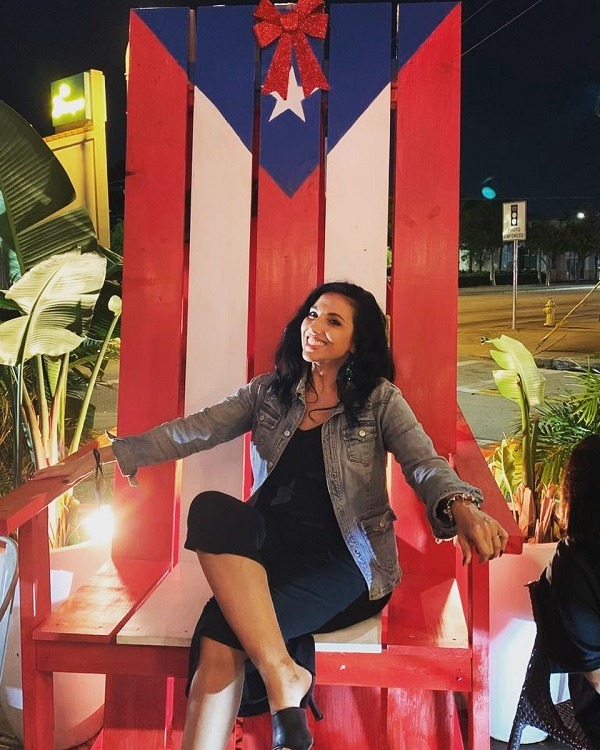
Melina Almodóvar is very proud to be boricua

Her referents

I understand that your grandmother gave you some cassettes with songs by Celia Cruz and Rubén Blades, did these artists influence you or were there others?

My grandmother gave me a Rubén Blades CD and my aunt was the one who introduced me to salsa music thanks to her taste for this genre. Most of the family liked bohemian songs made by Pedro Flores, Rafael Hernández, Bobby Capó, Sylvia Rexach, among others. My grandmother and the rest of my relatives liked bolero a lot. In my case, I like bolero very much and I have done concerts dedicated to this genre, but what moves and motivates me is salsa.

You always listened to tropical music as a kid in Puerto Rico, but I understood that I was cut out to sing salsa when started studying it and understand it deeply. In high school, I came to sing pop, jazz, country, merengue, bachata and many other genres. However, salsa is what I like the most.

You described your move from Puerto Rico to Memphis as a culture shock. What was the most shocking thing about that time?

It’s one thing to move from Puerto Rico to Los Angeles or New York or Florida where there are a lot of Latinos. When I moved, I was very young and went to live in the southern United States, where they listen to country and blues. For me, the most shocking thing was the culture. In Puerto Rico, everyone talks on the front doors and there was a lot of closeness. When we moved to Tennessee, we didn’t know anyone, so we had to start creating a new life and finding our way in this new city.

Melina Almodóvar performing at North Beach Bandshell

You were part of Orquesta Caliente. According to many, that was the first successful Latin salsa orchestra in Memphis. What do you think was the formula for success of this orchestra?

It was a combination of many things because I have been part of many groups and tried to organize orchestras in different places. After that experience, I tried to start an orchestra in Nashville, Tennessee, for a while and tried to start another one in Atlanta, Georgia.

When I was 17 years old, I was called and asked if I knew how to sing salsa, to which I replied yes. That’s when i was given a cassette tape with several songs made by Tito Puente, Ruben Blades, Celia Cruz, among others. I went home and started writing the songs down letter by letter to learn them by heart and audition for the orchestra. That day, I realized that all the musicians were American and extremely talented. I was 17 years old at the time and had no idea who I was playing with, which led me to look up their histories and they were really well trained and talented. Almost all of them were professors at the University of Memphis at the time, but they wanted to form a salsa orchestra.

So, we started playing in different places. Given that there was no internet and no social media, we had to create our own flyers by hand, make copies, go to the houses and put up them there. The first day we played, not a lot of people showed up, but it was a good start for us. After three months, not one more body fitted there.

For me, it was a beautiful experience because we started playing everywhere and were at plenty of festivals in South Florida. We were so into what we were doing and all the members wanted the music to work out spectacularly, so we were united in a common objective. I think that was the key to our success.

Tell me about the Hollywood Salsa Fest

We have been doing this festival for about seven years now and it was a dream come true because I never thought there would be more than 10,000 people there for throughout the day. It is a culmination of all the work we have done since I came to Miami. It was a great achievement.

This Hollywood Salsa Fest of this year included Maestro Charlie Aponte, Timba Live, Salsa Ballet de Cali, Maestro Bobby Cruz, Tito Puente Junior and many others.

Melina Almodóvar next to Oscar D’ León
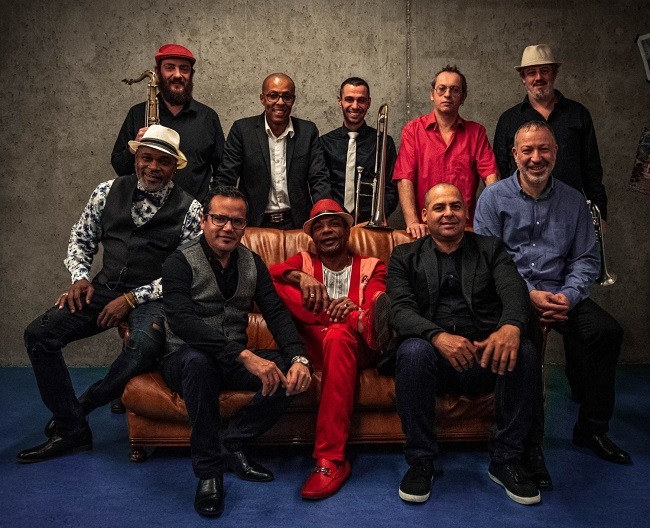
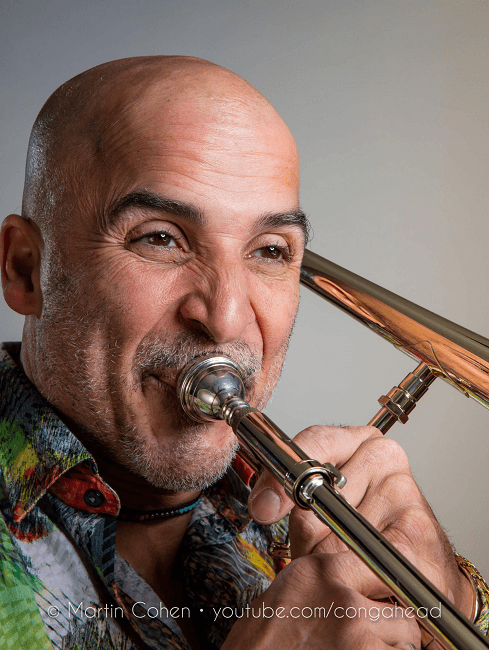
In Concert: Hacenoba Salsa & Jimmy Bosch In Saint-Étienne

They will be together in an exceptional concert at Le Fil this May 14th

Adiel Castillo (Musical Direction – Piano), Aymel Gómez (Voice), Wilbert Valera (Voice), Nadir Slimani (Bass), Miguel Río Puntilla (Bongo), Philippe Fougerouse (Timbales), Hamid Benabella (Art Direction – Congas), Guillaume Monier (Saxophone), Laurent Sedent (Trumpet), Romain Bourlhonne (Trombone)

The Hacenoba Salsa group and the world-renowned Trombonist Jimmy Bosch will present a unique salsa show in which lovers of this Latin rhythm will sing and dance from the first notes. This concert will be preceded by a Salsa lesson by the couple (Aurélie and Rémi) belonging to the Barrio Latino humanitarian association under the best salsa mixes of the DJ from the city of Callao (Peru), Oscar D Lyon.

This show will take place on the second Saturday of May at Le Fil, an artistic platform for contemporary independent music and cultural life developed in the city located in southeast France, Saint-Étienne. Its address is 20 bd Thiers 42000 Saint-Étienne, France, and the cost of pre-sale tickets is €20 and the Box Office €22.

The Cuban Salsa orchestra, Hacenoba, brings to this concert the essential rediscovery of the island’s music (Mambo, Salsa, Cha-Cha, and Timba) accompanied by brushstrokes inspired by internationally famous composers and artists of the genre such as Oscar D’ León, Héctor Lavoe, and others.

This ten-member band with its explosive music combines percussion with piano, saxophone, and bass for a frenetic and bewitching rhythm that has led them to participate in different festivals, cultural events, parties dedicated to Cuban music (or Latin music ), and private parties in the region.

Jimmy Bosch has collaborated with Rubén Blades, Ray Barretto, and Celia Cruz, among many others.

Likewise, the master Jimmy Bosch is acclaimed in more than 70 countries as an exceptional Latin music Trombonist, has 11 Grammy Awards, and more than 100 recordings in the Salsa and Latin Jazz genres. He also has a great career as an orchestra leader and is coveted by his audience due to his extraordinary performances on stage.

The creator of hits like Otra Oportunidad (1998), La Cacharra (1999) Qué Bonito es Soñar (2004), La Noticia (2004), El Avión de la Salsa (2004) y Ay Mamacita-Boogaloo (2018) among many others, also will be dictating a Masterclass for professional musicians where he will explain and demonstrate the variations in Salsa. The lessons will be oriented towards practice and active participation with the instrument during the clinic. This masterclass will be held on May 24th -25th at Kafésynk located at Øvingshotellet, Trondheimsveien 2, Bygg H, 0560 Oslo, Norway from 5 PM to 8 PM, and tickets cost NOK 1,600 approximately $174.26.

The trombone master has worked with FANIA All-stars, Eddie Palmieri, Ruben Blades, Ray Barretto, Machito, Cachao, and many more. He has participated in Salsa conventions, Latin and Jazz music festivals around the world, as well as performed in clubs in Asia, Europe, America, and Oceania.

Jimmy Bosch’s record productions include Soneando Trombón (1998), Salsa Dura (1999), El Avión de la Salsa (2004) ,and A Millón (2009).

Oscar D Lyon was born in Callao, known as the capital of Salsa in Peru.

The perfect DJ for this magnificent evening at Le Fil will be Oscar D Lyon, who has more than 30 years of career in the music scene. He started in Lyon in the ‘90s, continued at Latino 1, and pursues his rise at Casa Latina for ten years. His likes and musical inclination from South America have made him stand out in the Latin environment of the region. Currently, Oscar D Lyon mixes the rhythms of Salsa and Bachata in various clubs in Saint-Étienne, such as Cabana Café, the Fox, and recently, Barrio Club.


To speak of Leonardo Ortiz Chacón is to speak of a musical institution of Mexico

Performer of the tres, composer, arranger, music and radio producer, director and founder of Combo Ninguno since 1983.

He studied at the Faculty of Music of the UV, in JAZZUV, in Musinetwork in Boston MA and with teachers Luis Martinez, Carlos Tercero and Edgar Dorantes, he is a teacher of Musical Education in the Ministry of Education of Veracruz and since January 2019 participates in the direction of the Papakilistli Orchestra of the same Secretariat.

He has collaborated in television as musical director of the program “Cómo suena la clave” in TV Más. He is currently producer and host of the program “Cadencia Caribe”.

Since 1983 in Xalapa, the members of Combo perform dance music from the Antilles, integrating a repertoire with their own creations and original arrangements to themes of other authors in different musical genres such as son, guaracha, mambo, merengue, danzón, bolero, etc, achieving in their thematic diversity, a unique sound full of references to their native state of Veracruz.

He has taught workshops of appreciation and execution of Caribbean music and has participated as a lecturer and speaker on this subject in countless events, have been presented in Spain, Cuba, United States and Canada.

Accessing different forums from the small and improvised street space to large venues with capacity for tens of thousands of spectators such as the Azteca stadium or the Salsa Fest in Boca del Rio.

He has performed at prestigious cultural festivals such as the Cervantino, the Quimera, the Afro-Caribbean of Veracruz, the Vancouver Folk Festival and the International of Houston, at Fairs such as the San Marcos and the Expo Sevilla, Carnivals such as the one of Veracruz, Havana and the Mardi Gras in New Orleans and Galveston Texas.

Maestro Leo, how can you define yourself in the music scene?

Leonardo Ortiz Chacón is to speak of a musical institution in Mexico.
Leonardo Ortiz Chacón Tres player, composer, arranger, music and radio producer

I see myself as someone captivated by this music since I heard it for the first time, thanks to it I have been able to enjoy unforgettable moments and for many years I have not had a day in my life without doing something related to music. Be it as a performer, manager, broadcaster, props man, audio manager, producer, etc.

I understand that you have had many presentations abroad?

For me there have been many and I would like to have more. I think I have been fortunate to take advantage of the opportunities that have presented themselves with Combo Ninguno. I must say that personally I would never have been able to be in the places where music has taken me.

As part of your presentations you toured the U.S. How pleasant was the experience?

At one time we participated in a project to promote tourism in the State of Veracruz and we continually visited the State of Texas and then extended to Louisiana and Colorado, thanks to this an American promoter invited us to tour from coast to coast presenting a show of music and dance that began in New Hampshire and continued in New York, Pennsylvania, Illinois and other states to conclude in California after performing in New Mexico and Arizona. The program of the presentations was with original repertoire and Mexican authors.

What did it mean to you to perform for the first time in such a musical country where many great exponents of the island of Cuba came from?tional in 1989 at the Na Theater of Cuba

For me this was one of the memorable moments that I thank to music, the fact of participating with Combo Ninguno in a Gala dedicated to Mexico, in such an important place in Cuba, the country where this music was born.

I tell you that my emotion was so great that at the beginning of our performance, I could not complete the first verse of the song with which we opened, it was El jarocho by Lino Carrillo, I had to sing: Jarocho yo soy señores and I only said Jarocho, the rest was a sort of incomprehensible sounds that I could emit with a lump in my throat.

Have you had an endless number of participations in Cultural Festivals, which is the one that leaves a mark on you in your own country?

I can’t say one in particular, I remember presentations at anti-nuclear rallies where there were children, young people, adults and elderly people that were not festivals strictly speaking, a Cervantino festival where in the middle of a downpour people danced in the Alhóndiga de Granaditas under an impressive downpour, the Festival de la Nueva Canción Mexicana where we performed for the first time in 1983. And I could go on mentioning many more.

How did the Como Suena La Clave Festival come about?

 Combo Ninguno
Combo Ninguno

This festival arises with the intention of being a showcase where to make visible and position the Mexican orchestras with original proposal. Trying to promote, preserve and spread salsa music made in Mexico.

At first the orchestras were invited to play original arrangements of songs by other composers, then they were asked to play music by national composers and nowadays they are asked to play original music complemented of course with songs by national composers.

You don’t stop, you continue harvesting and now the project Coloquio Musical Afroantillano is born, why make this new proposal?

I think that in Mexico little is reflected and little is written about this genre. It seems that when we take the music out of the dance floor, we lose the rhythm and also the step.

For some time now, most of the debates on this subject have taken place backstage and in the places where musicians and some dancers gather to refresh themselves after the events. Recently, social networks have continued with this exercise, I must point out that for decades the main topic to be discussed has been: Does salsa exist or not? Should it be called salsa or son? And I believe that among other issues, we have left aside fundamental matters such as the creative part, the economic aspect and the diffusion.

Based on this consideration and thanks to the support of Rafael Figueroa, the Festival Como suena la clave, the Centro de Estudios de la Cultura y la Comunicación of the Universidad Veracruzana and the Red de estudios de la Música Afroantillana en México convened the Colloquium La música afroantillana en México: confluencias y divergencias where the participants in a framework of cordiality and respect have made valuable contributions that will be included in a report that will be released as a digital multimedia document for free distribution.

Do you think that the music called salsa is evolving worldwide?

I don’t have the slightest doubt about it, just as I don’t hesitate to mention that due to diffusion factors we only know a small part of the new salsa music that is being made in many places and that perhaps most of the music that is more accessible to us on digital platforms is not the best.

Have you experienced the best times in music today, and what do you think is missing?

Among other things, today and always it will be necessary to contribute new music that increases the cultural heritage of this genre. We need to talk about our present without forgetting the past, about our environment and our daily life in a globalized world. We need to speak our own language and disseminate these productions in the best possible way, trying to overcome the reluctance of many towards what is new and what does not come from the places where this music has traditionally been produced.

Already with seventeen record productions, now that you have worked on them, which is the production that has marked the history of Combo Ninguno? What has been the one that has left the greatest mark on you?

Undoubtedly the most significant record production is the first one, in it, as in each of the subsequent ones, our desires and also our possibilities and limitations are recorded musically. The most present record you have now is the one you are making or that you intend to make. Each record becomes a part of your musical history and your own life.

Have I heard salsa with the jalapeño touch mentioned because of that phrase?

In our case it is an advertising phrase that alludes to the hot sauce.  Salsa with jalapeño flavor. Initially it was used for our presentations in the United States where the chili peppers are called jalapeños. Today we use it by writing jalapeños with an x.

Combo None other cultural heritage that we have while we are still alive that you feel after 39 years in the music industry?

I’m looking forward to at least as many more. Looking back I realize that Combo Ninguno became a life project that has filled my days with music, so there will always be little I can do for music.

What do you expect from Leonardo Ortiz Combo Ninguno?

I have two record productions pending with Combo Ninguno, one of them is already quite advanced and I hope to finish both this year. I hope to give continuity to the Festival Como suena la clave and continue participating and enjoying everything that has to do with salsa made in Mexico.

Maestro, what would you like to say goodbye with and what message would you like to leave to the new generations?

I would invite them, besides the musical study, to try to make their contribution and leave their name in the salsa made in Mexico, to document their creativity in our reality and then communicate it in their creations, I would also ask them to debate and collaborate with their colleagues.

DISCOGRAPHY

 In their discographic work we can see a style that can be projected without problems towards the universal, but that does not cease to feed on their own Veracruz identity by offering us a combination of traditional and original pieces that exude Veracruz and Afro-Hispanic Caribbean flavor.

 To date they have made seventeen recordings, seven exclusively of combo none:

– Tumba Verde (1987)

– Traigo este son (1990)

– Son de amor (1994)

– Carnaval Veracruzano (2001)

– Con Sabor a Veracruz (2005)

– La Bruja recorded at the 17th Afro-Caribbean Festival Veracruz 2011 (2012)

– Inventario- Combo Ninguno, of which the singles Descarga de las flores, Calaveritas de Azúcar and Alambre, cuero y madera have been presented.

 And ten productions in which they intervene with other groups:

– Son 13 rolas antinucleares (1989).

– Somos indios (1995)

– Homenaje a Luis Martínez, recorded live at Barlovento de Xalapa in the 1st.

Festival Como Suena la Clave 1997 (1998)

– Tribute to Carlos Pitalúa, recorded live at Barlovento de Xalapa in the 2nd Festival Como Suena la Clave 1998 (1998).

Festival Como Suena la Clave 1998 (1999)

– From Son to Danzón (2000)

– Tribute to Emilio Domínguez, recorded live at Barlovento de Xalapa in the 3rd Festival Como Suena la Clave 1998 (2000)

3rd Festival Como Suena la Clave 2004 (2010)

– Con sabor a Veracruz-RTV music (2012)

– Tribute to Toña la Negra, a recording that records the V Festival Como Suena la Clave

Clave Festival held in Veracruz, Veracruz, Ver (2013)

– Salsa a la veracruzana, recording of the VI Festival Como Suena la Clave held in Veracruz, Veracruz, Veracruz, Veracruz (2015).

Veracruz, Ver (2015)

– Al Son del Covid, record of the VII Festival Como Suena la Clave held in Veracruz, Veracruz, Veracruz (2015).

virtual way in December 2020.

Erika Muñoz (La Mulata Rumbera)

Article of Interest: Maestro Jorge Anselmo Barrientos Silva, conductor, arranger and composer

Papo Vázquez and his extraordinary career

His beginnings

As we all know, the United States has been the birthplace of a large number of Latin music stars who are dedicated to this group of musical genres in order to stay true to their roots. Such is the case of Angel Papo Vazquez, who was born in Philadelphia, Pennsylvania, but much of his training occurred in Puerto Rico, so he has always had a very special connection with the Island of Enchantment. 

As a 14-year-old teenager, it was his uncle who recommended him to the first band in which he participated. It was around this time that he met famed trumpet player Jimmy Purvis, who would be his biggest inspiration to focus on jazz and start to show interest in trombone. The following year, the boy had already acquired enough experience to perform with local orchestras and accompany renowned artists such as Eddie Palmieri. 

A few years later, he decided to move to New York, where he would rack up most of his musical accomplishments to date. It was there that he performed and recorded along with some of the greatest Latin musicians such as Héctor Lavoe, Willie Colón, Ray Barreto, Larry Harlow and many others. He was hardly 20 years old when he had already toured the world and showed his talent to all types of audiences he could find on the way. 

This is Ángel Vásquez
Papo Vázquez playing his trombone

His groups and orchestras

Another reason why he is so well known is for being one of the founding members of Ford Apache and Conjunto Libre de Jerry Gonzalez, but these are just some of the groups of which he was part. He was also in Tito Puente’s Latin Jazz Ensemble. It was with the King of Timbales with whom he achieved recognition as a lead trombonist and experimented a lot with jazz, a genre for which he was already fascinated at a very young age. 

After all the experience gained so far, Vasquez was able to start merging certain Afro-Caribbean rhythms that allowed him to innovate in jazz and Latin music in general. He was based on many of the things he learned and heard in Puerto for this. 

As early as the 1980s, Papo was mixing bomba jazz, which is basically a mix of jazz and traditional Puerto Rican bomba. In the 90’s, he recorded his first album as a bandleader and collaborated with a lot of Latin jazz artists who greatly appreciated his talent, resulting in great discographic works that are still remembered to this day. One of them was the one he made with certain New York personalities, which is a live recording that included the participation of recognized figures such as American saxophonist Michael Brecker, New York bassist Andy Gonzalez and many more. 

This project was called Pirates & Trobadours – At the point Volume 1 and evolved as such that it include more musicians who had no trouble joining the trombonist in this adventure. The group that made the album did many tours and performed at music festivals all over the world. They were so successful that they continued to make new editions throughout the years. In fact, one of Vasquez’s latest albums was Papo Vázquez Mighty Pirates Troubadours – Chapter 10: Breaking Cover, which was released in 2020. 

Ángel Vásquez performing
Papo Vázquez paying trombone in one of his performances

By: Johnny Cruz correspondent of International Salsa Magazine in New York City, New York

Maestro Jorge Anselmo Barrientos Silva, conductor, arranger and composer

He is one of Mexico’s most important musicians and cultural heritage, recuerdos del Son with Jorge Anselmo Barrientos Silva.

Jorge Barrientos was born on November 14, 1953 in Mexico City. He studied music at the Escuela del Sindicato Único de Trabajadores de la Música del Distrito Federal. Groups and orchestras in which he has worked: Mocambo, Horóscopo Tropical, Jorge y su Boogaloo, Sonora Brasilia, Sonora Mayoral, Yímbola Combo, La Justicia, Sonora.

In 1980 he founded Recuerdos del Son (director, arranger, and composer), whose group is already part of our cultural heritage of Afro-Caribbean music in Mexico. This group has participated in festivals, conferences, concerts, and courses, in the most important auditoriums and theaters of the CDMX and the interior of the country. It is worth mentioning that it has been the only Mexican group invited to Nicaragua.

Within his musical career he has been a commentator on radio stations such as Radio D, Radio Educación, La Tropi Q and XEB. He has published several works on Afro-Antillean music and especially on Cuban Son -among others- El Son Raíz y evolución, La Clave en el Son cubano, Método de Tres and a didactic disc on the variants of Son.

 Jorge Anselmo Barrientos Silva y Erika Muñoz

Jorge Anselmo Barrientos Silva y Erika Muñoz

Regarding pre-Hispanic music, he published the research: ANALOGÍA ENTRE LOS INSTRUMENTOS DE PERCUSIÓN PREHISPÁNICOS Y LOS DEL SON CUBANO (ANALOGY BETWEEN PRE-HISPANIC PERCUSSION INSTRUMENTS AND CUBAN SON). He has given conferences, concerts and workshops in several cultural spaces such as Faculties of the Universidad Autónoma de México, Cultural Centers in Mexico City, as well as in the interior of the Republic.

He has participated in the Cervantino Festival twice, the Caribbean Festival in Managua, Nicaragua in 1984, Festival de las Artes in Monterrey, Nuevo León, Tabasco, Querétaro, San Luis Potosí, etc, etc. Jorge A. Barrientos Silva was an advisor in the Chamber of Deputies, and commissioner of the Musicians Union.

He has been Secretary of Political Action and in charge of the Legal Department. In the Musicians Union, he was a founder of the Afro-Antillean music workshop, besides having given countless lectures on the Cuban Son and its variants.

Jorge, how many productions have you recorded?

FIRST PRODUCTION OF MR. GENARO ÁLVAREZ (R.I.P.D.)

Jorge Anselmo Barrientos Silva
First production of Mr. Genaro Álvarez (Q.E.P.D.)

He is one of Mexico's most important musicians and cultural heritage

INDEPENDENT PRODUCTION, OWN BRAND, EL SON RECORDS

Record pressed in Pentagrama brand, production Jorge Barrientos
Independent production for the company's own brand, discs Son
Independent production for the company’s own brand, discs Son
Record pressed at the pentagram brand, production Jorge Barrientos

Among those productions, which is the one that has left a mark in your musical history?

All of them have been important and, for example, the album HOIMENAJE PEREGRINO, is a product that record collectors look for and has a special value.

The album, recorded live at the Teatro de la Ciudad, is a document that contains compositions and arrangements by the members, including music and piano solos by Mexican jazzman Héctor Infanzón.

We know that you participated in a festival in Nicaragua, can you share with us about that great experience?

It was something special, since several groups from all over the world participated, among them, Italians, Venezuelans, Cubans, etc. and when playing “al tocar al tú por tú”, the Mexican musicians did not shrink.

You participated in several recordings of your musical partners, to mention a few Tony Camargo, Linda Vera, Wuelfo Gutiérrez, (former member of the legendary Sonora Matancera), what did these great musicians leave you as a musician?

Participating with great music legends is an unforgettable experience since they ask you to interpret the scores, according to the recordings that have left their mark.

Were you in the golden age of Afro-Antillean music, how did Afro-Antillean music develop in those years?

Without underestimating the work of today’s musicians, the era I lived in was very special, because each group tried to put its “stamp” on each performance, nowadays, regularly and with honorable exceptions, most of them “sound the same”.

In the present time, do you consider that Afro-Antillean music has transcended?

Yes, it has transcended, but, with the globalization of culture, sometimes there are few novelties.

Jorge, which show do you remember that alternated with the salseros from abroad?

In the fever of the ’80s, fortunately, the businessmen looked at us to alternate with the great figures, among these I can mention: Irakere, Orquesta Aragón, Gran Combo, Sonora Matancera, Sonora Ponceña, Son 14, Adalberto y su Son, etc.

In the fever of the 80's, fortunately, businessmen looked at us to alternate with the great figures
In the fever of the 80’s, fortunately, businessmen looked at us to alternate with the great figures

¿Recuerdos del Son is already a cultural heritage of the CDMX did you imagine that someday it would happen?

The work in the cultural area has been the goal of our efforts. How nice to receive the affection and recognition of the people, who are ultimately the ones who make our career.

As director and musician of your own orchestra, has it been difficult to get to where you are?

Music and being in the show business is a daily battle, and if it has been difficult, of course, no one has the formula for success, we will continue in the daily struggle, preparing ourselves and presenting our new productions,

How did your love for the guitar, the bass and the Cuban tres come about?

First, I am a descendant of a bohemian family, where the guitar was never missing, then with time my love for the bass and then the Cuban tres began.

Are you still performing?

I’ve been performing on Saturdays at the Salón Caribe and other dance halls for 4 years. The cultural activities have been suspended for some time now (by covid) but, hopefully, the presentations in festivals and theaters will be reactivated.

Do you still feel the same adrenaline rush when you step on a stage?

Fortunately, it’s the same emotion, you never know if the public is receptive or ignores your efforts.

In your musical career, have you been honored or received recognition?

Yes, I have received countless recognitions, both for the trajectory of RECUERDOS DEL SON and for the research work I have done.

Jorge before saying goodbye we want to thank you for being and existing as the cultural heritage of the CDMX.

Would you like to close this talk with a few words?

Some say that Son is dead, Don Ignacio Piñeiro used to say: “Son is the most sublime thing for the soul to have fun, it should die, who for good does not judge it.

MAY THE SON NOT DIE, WITH CLAVE AND BONGO, MEMORIES OF THE SON.

Facebook: Jorge Anselmo Barrientos Silva

Article of Interest: Fabián Rosales Araos Chilean singer-songwriter, native of the city of Valparaíso

  • « Go to Previous Page
  • Page 1
  • Interim pages omitted …
  • Page 16
  • Page 17
  • Page 18
  • Page 19
  • Page 20
  • Page 21
  • Go to Next Page »

International Salsa Magazine (ISM) is a monthly publication about Salsa activities around the world, that has been publishing since 2007. It is a world network of volunteers coordinated by ISM Magazine. We are working to strengthen all the events by working together.