




| February 2026 – FESTIVALS |
||
|
|
 |
Festival de la Salsa 2026Feb 26 / Mar 01, 2026 Club 500 – Palmares € 110 |




| DIRECTORY OF NIGHTCLUBS | ||
|
|
|
|
|
|
|
|
|
|
|
|
|
|
|
|
|
|
|
|
|
|
|
|



| February 2026 – FESTIVALS |
||
|
|
|
Festival de la Salsa 2026Feb 26 / Mar 01, 2026 Club 500 – Palmares € 110 |
| DIRECTORY OF NIGHTCLUBS | ||
|
|
|
|
|
|
|
|
|
|
|
|
|
|
|
|
|
|
|
|
|
|
|
|
We are very happy because this beginning of the year has brought us a very friendly conversation with brilliant bandleader, composer, vocalist, and flutist Carlos Jiménez, who kindly answered the questions we had for him.
The New Yorker has many interesting things to tell, so we hope that everyone will enjoy the material below.
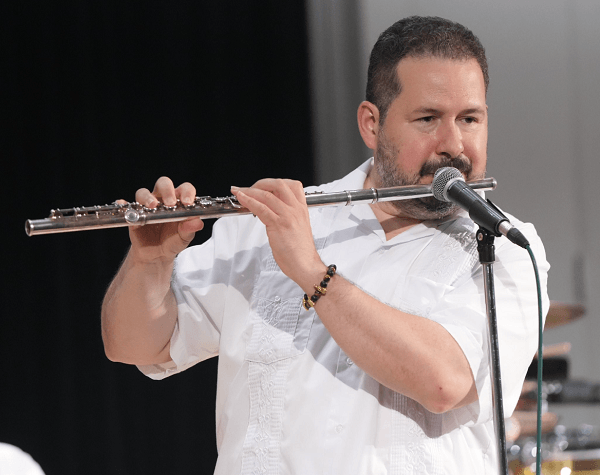
Carlos was born in New York City, but moved to Puerto Rico with his family when he was six years old. It was on the Island of Enchantment that he discovered his inclination toward music thanks to his trumpeter father William, and his cuatrista grandfather Cruz, who encouraged him to take music lessons. Therefore, he also began to receive musical training and built competence for playing percussion instruments such as the timbales, bongos, and congas.
His first lyrical instrument was the trumpet, which he learned to play under the tutelage of Professor Pablo León at Francisco Zayas Santana High School. However, inspired by Mongo Santamaría and his musical arrangements for his song “Song For You,” he decided to switch instruments and start playing the flute, which he has continued to do.
As a young man, he decided to return to his hometown highly motivated by the vibrant Latin music scene there, which he describes as “the city where all our dreams come true.” While there, he enrolled at the Music Conservatory of Westchester to study classical flute, but his training have not been completed.
He also studied jazz harmony and voicing with piano teacher Michael Longo, who he describes as a good friend and teacher to the point of making a recording together. Unfortunately, Longo was one of the many victims of the COVID-19 pandemic, which was an immense sadness for Carlos and those who had the privilege of knowing him.

After more than 20 years of successful career, Carlos has built a great reputation in the industry at the point of passion and hard work. He himself says that his good name comes as a result of his responsibility, reliability, and, most importantly, his ability to play good music.
His great skills as a professional and musician have led him to play at corporate events for companies such as Victoria’s Secret, Nike, ScotiaBank, Regeneron, and many others. In addition to that, he has also been able to play and lead orchestras in performances for universities and cultural institutions such as Lehman College, Sarah Lawrence College, New York Botanical Garden, Columbia University, and many more.
Likewise, Carlos’ band has performed in so many festivals such as West Harlem Jazz Festival, Harbour Jazz Festival, Fall Harvest Fishkill Farm Festival, Lake George Festival, Summer Sound Festival, and many others.
In addition to the above, Carlos has also earned the respect of his colleagues thanks to the numerous galas, charity events, and community activities the artist has been involved in recent years, which has made him worthy of numerous awards for his community service. This shows that the flutist is not only passionate about his craft, which is music, but also uses it to do good to those in need. We can also add that he has headlined numerous shows at well-known restaurants and hotels such as Casa Cipriani Hotel, The Marriott, Ritz Carlton, The Lexington Hotel, among others.
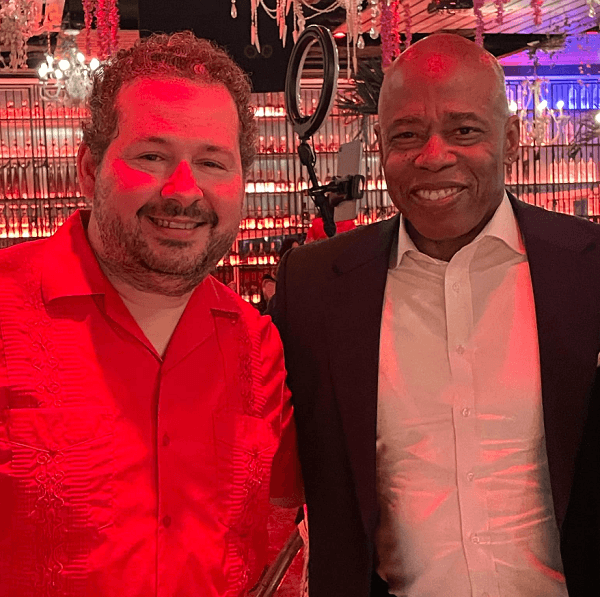
Together with his orchestra, Carlos has released several albums, including “Red Tailed Hawk Vol. 1,” “Red Tailed Hawk Vol. 2,” and “Despierta Boricua,” among others. The artist closed the conversation by saying that his group continues to be formed and has more than 100 musicians and all are are wonderful.
Read also: La Nota Band showcases the best of Venezuelan talent
Latinoamerica / Venezuela / Caracas
Part 1
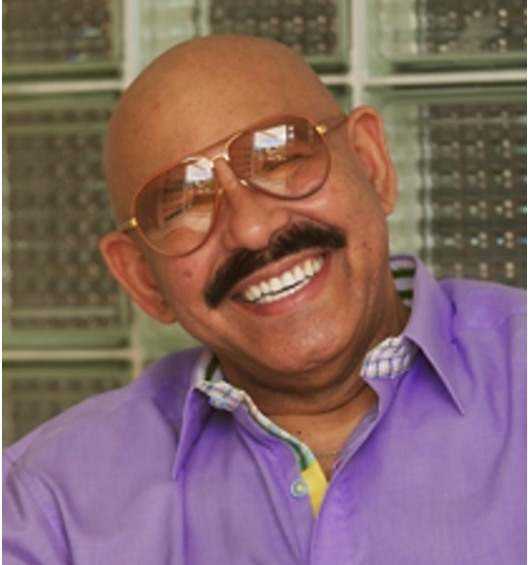
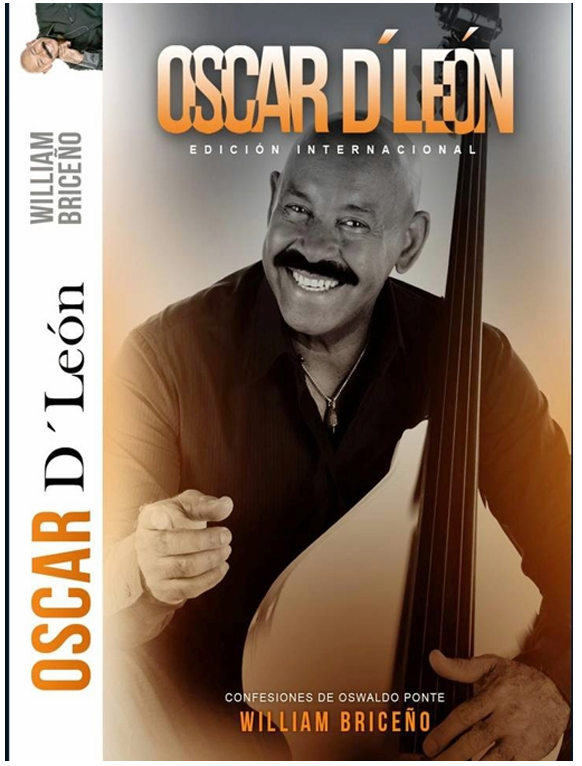
This book narrates the story of the famous singer Oscar D’ León from his birth and his life’s progress to who he is today; it also mentions how the era evolved, not only at a musical level but also regarding the situation of the country, both in Venezuela and other nations.
Before beginning to comment on the biography written by his manager, Oswaldo Ponte: biographies do not only try to remember great men who extend beyond their era. In this way, through this biography, the goal is to spread an idea about the work of the well-known artist “Oscar D’ León,” who has brought greatness to the country, crossing the line of his horizon and extending it toward other latitudes. One could say it is like a novel that not only speaks of successes or already known events, but also tells us about the reality of his life and not just what acquaintances or representatives of the artist think.

The biography begins with the birth of Oscar Emilio León Simosa on July 11, 1943, in Caracas, Venezuela; where not only his family but other friends were present, one of whom ironically mentioned that in the future “he would be a great singer” since his crying was like a symphony. According to his mother, “Carmen Dionisia,” the midwife told her that he was born “enmantillado” (born with a caul), which meant the baby could have a multitude of gifts that he could take advantage of in the future.
It is worth mentioning that at an early age, he had more passion for music than for his studies, and he came to the conclusion that studies were not the best thing for his future; therefore, he dedicated himself to helping at his parents’ business to contribute to the household.
Since he was very young, he enjoyed listening to “Sonora Matancera” in a corner at night, which was the musical group of the era, and he would follow the percussion with his throat. He also listened to jazz orchestras, which led him to the conclusion that music would be his vocation; he was fascinated by listening to his mother hum the hits of 1953 by the Orquesta Aragón and Dámaso Pérez Prado.
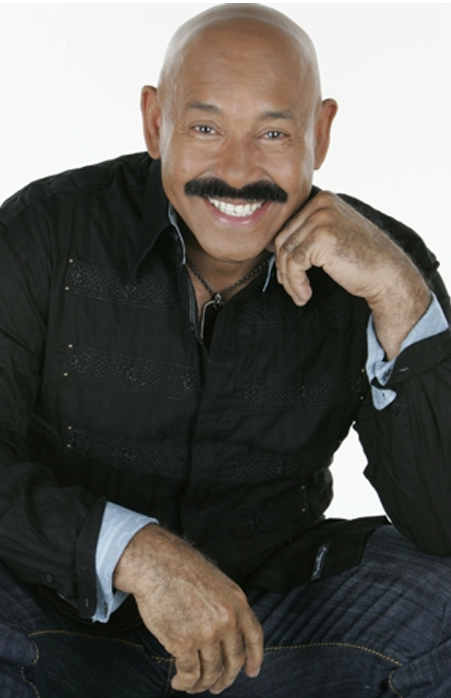
Fortunately for the future singer, his family was passionate about music and had close relationships with musicians, singers, and players of all types of instruments even if they were not professionals. This warm, joyful, and above all, musical atmosphere embraced Oscar from the moment he was born. It was even shown that at an early age he had a certain interest in any object that emitted a musical sound, and he longed to learn how to use musical instruments. Despite having a humble family, Oscar himself managed to use various objects to create something that generated a musical sound and to discover his own rhythm, which he enjoyed at that time.

Simosa, which was on July 11, 1943, in Caracas, Venezuela; where not only his family but other friends were present, and ironically one of them mentioned that in the future “he would be a great singer” because his crying was like a symphony. According to his mother, “Carmen Dionisia,” the midwife told her that at birth he was “born with a veil” (enmantillado), which meant the baby could have a multitude of gifts that he could take advantage of in the future.
During his adolescence in Venezuela, many significant political changes were occurring for the population; however, they did not stop celebrating festive seasons with his family even in difficult times. Many “parrandas” (parties) were held, something that Oscar enjoyed very much.
In 1958, he mentions that a phenomenon was occurring with the musical style of “Dámaso Pérez Prado’s Mambo”; also, at the Club Las Fuentes, the Sonora Matancera resonated with “Celia Cruz” alternating with the “Caracas Swing Boys”. A movement of orchestras influenced by foreign rhythms that thrilled Venezuelans began to be observed on a national level, such as Billo’s, which won the precious title of the most popular orchestra in Venezuela. Oscar was not interested in societal events, except for events in Cuba, since Cuban music was what fascinated him.

Starting in 1962, he became a father, and marveled by his new life and his firstborn, he dedicated himself to his role as a father, keeping his family supported by working; this caused him to step away from music, and his maturity can be witnessed despite his age.
By the age of 23, he already knew how to sing and play the bass; over time, he met friends who would influence great changes in his future life. In 1966, he met Kiko Pacheco, who invited him to the group “Los Junior,” where he would begin his professional career. During that same year, salsa was taking off in Venezuela, as it was heard on all the country’s radio stations.
During that era, life was expensive, so he worked hard both in clubs and discotheques or as a taxi driver. On one occasion, Kiko Pacheco asked Oscar to sing in the “Quinteto Los Junior” because their vocalist had to leave; this allowed Oscar to demonstrate his talent, and from that moment on, everyone was enchanted upon hearing him, and his musical profession began. Later, “La Dimensión Latina” was created, which at that time was known as “Dimensión Seis,” founded by Oscar D’ León and Cesar Monge.
The members who formed “La Dimensión Latina” were Oscar de León, Cesar Monge “Albóndiga,” and José Rojas “Rojita” on trombones; José Rodríguez “Joseíto” and Elio Pacheco on percussion; and Enrique “Culebra” Iriarte on piano. A significant event for Oscar was that, during their first rehearsals, he had a premonition of his success when they found the rhythm he wanted to hear and share with the rest of the musical world. This was proven during their first performance, which was a total success, leaving everyone who heard them stunned.
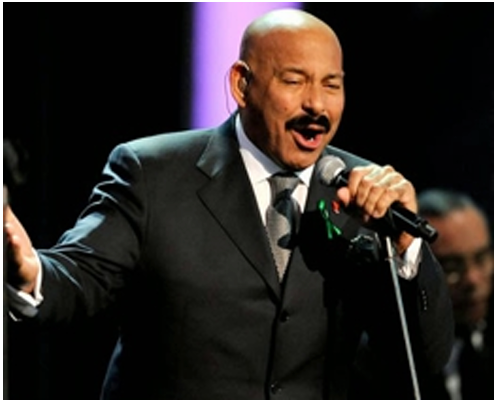
From that moment on, with the debut of La Dimensión Latina, a new concept emerged that would change the landscape of popular Venezuelan music and make history both nationally and internationally with the rise of the legend Oscar D’ León. They began playing for five months at “La Distinción” from Friday to Saturday. On Sundays, after finishing there, they would go to El Junquito to continue the party, gaining so much popularity that some felt they should launch an international career. During that time, singer-songwriter Mireya Delgado hired them after being impressed by seeing them perform on stage.
They played on a cruise ship during a one-week tour through different Caribbean islands and achieved great success despite the inconveniences they faced. They paid these no mind, as they dedicated themselves wholeheartedly to playing for their audience. This caused venues to become packed, captivating their fans who idolized them. From that point forward, many people began wanting to hire them for various events.
Here is the translation of the text into American English:
In that same year, 1972, a dizzying and unstoppable recording career began. This was based on the fact that executive representatives from the TH label heard two tracks: one was “Oye mi canto,” which was a hit for Gran Combo de Puerto Rico, and the other was “Te voy a cortar las patas” by Oscar D’ León. Because this made a great impact and created absolute conviction among the executives that they were witnessing a success, the promoter Mesone, upon hearing them, agreed to carry out a recording. This recording was shared with the Víctor Mendoza Orchestra, one of the TH producers in Venezuela: El Clan de Víctor.

The album featured three tracks by Oscar; he recorded two of them with Dimensión Latina and the other with El Clan de Víctor. However, he does not appear as the author in the credits. The same thing happened with an album in 1991 when recording the album Auténtico. Among the 80 tracks that Oscar wrote, two of them are his immortal classics and of his authorship: “Llorarás” and “Detalles”.
For the first time in Venezuela, Salsa festivals were held that moved everyone. From that moment on, a true proliferation of salsa was witnessed in the country, all thanks to “Pensando en ti,” which had a major impact on the history of Venezuelan popular music.
After the success of his new discography—which contains “La comprita,” “Barranquilla,” and “Barranquilla y Quiéreme,” among others—three important international contracts were signed. Oscar and Dimensión Latina would go to Curaçao, Aruba, and Bonaire; that same year, they would also go to Colombia and Santo Domingo. However, it is worth noting that the period from “Pensando en ti” to “Que bailen to’s” covered the stage that catapulted him internationally.
Here is the translation of the text into American English:
The production of Dimensión Latina’s 1975 discography was the one that left an eternal mark, whose immortality was glimpsed from the very moment of its appearance. Its tracks focused on themes of romantic heartbreak. However, the rhythmic conception of “Llorarás” was the most important conception and structure of Oscar D’ León and Dimensión Latina; in fact, the song “Llorarás” marked the rupture of the old dance empire represented by Billo’s, and Dimensión came to be considered the “Billo’s of Salsa”.
An important subject in the world of music tells us in this book that: “salsa singers used phrases worn out by the use of previous generations who popularized them; in contrast, Oscar projected original modifications created by him”.
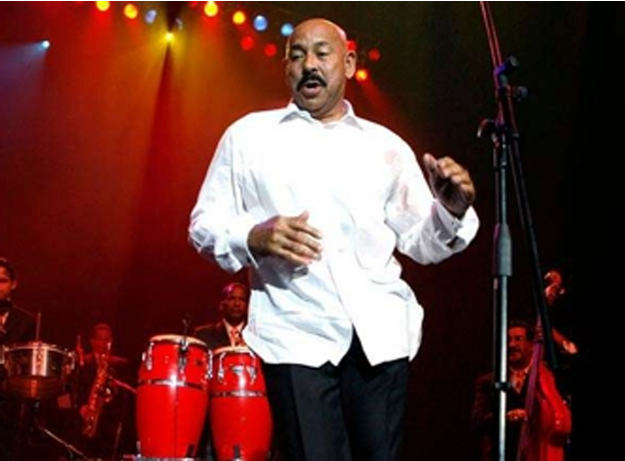
When they traveled to New York, Oscar was very excited by the different stories he had experienced in the music world, and they were even happier to perform for the first time in the impressive metropolis. It was there where that musical genre that transformed them into idols, “Salsa,” was projected.
As time passes, Oscar manages to establish his own style and never changed it while climbing the steps of popularity and fame; the same happened with Dimensión Latina, though without achieving the countless triumphs Oscar D’ León obtained until his departure.
If you wish to know more about the history of Oscar D’ León, we recommend reading “Oscar D’ León: Confessions of Oswaldo Ponte by William Briceño, Editorial Fundación Simón Bolívar” to learn about the continuation, as it is a very broad topic to describe in this first part; likewise, in our next edition, we will conclude our final thoughts on this interesting and extensive biography.
North America / USA / Boston

Vinny Rivera ‘s new single “Mientes” coming off of his album “La Torre” takes Kizomba to the next level. Good friend Guelo Star who is currently writing for the likes of Don Omar, Ivy Queen, Jowell y Randy, De La Ghetto just to name a few originally wrote this song with the spirit of Kizomba and Vinny Rivera was the perfect voice to compliment the writing. This love song is sure to bring The #1 Latin Kizomba singer and songwriter towards new heights of world music.
Sound off the bongos & kick in the bass, Vinny Rivera is ready to hit the stage. One of the hardest working singer/songwriters, Victor “Vinny” Rivera, continues to shine in the music entertainment scene. Surrounded by great mentors and industry leaders such as world renowned international producers M&N Pro, Jorgie Milliano, Grammy award winning producer Richy Peña (Niña Bonita), and Universal Latino’s recording artist Yunel Cruz, Vinny’s sound has captured audiences all around.
The music of Vinny Rivera is refreshing and lends a sweet tuned voice to the likes of urban bachata Superstar Prince Royce mixed in with Latin Pop Superstars Luis Fonsi & Enrique Iglesias. Genres of music are no different. His voice as well as being multilingual lends itself to Salsa, Bachata, Kizomba, Mambo, Pop, R&B and many more musical genres.

On the other hand and recognizing musical legend “Jerry Rivera”, Vinny Rivera alongside longtime friend and producer Jorgie Milliano pay tribute to a tropical classic “Amores Como El Nuestro” by giving it a tasteful Kizomba twist that audiences everywhere are sure to enjoy.
Vinny Rivera is currently working on a new Latin Kizomba album that will continue to capture the hearts and ears of all Kizomba lovers.
Besides, Vinny’s talent for capturing audiences has exponentially increased his passion for performing and entertaining. Performing in festivals and special events, the demand has been genuine and stage performances continue to impact his listeners.
Victor Rivera, known artistically as Vinny Rivera, was born in Boston, Massachusetts, United States. Of Puerto Rican parents under the tutelage of his Dominican stepfather, he is one of the most hard working singers / composers to shine in the musical entertainment scene. Being influenced by the Boston city melting pot, he was exposed to a variety of musical genres including Reggae, Jazz, Soca, R & B and pop and the sounds of his native island and the neighboring Dominican Republic sounds the Salsa, Merengue, Bachata.
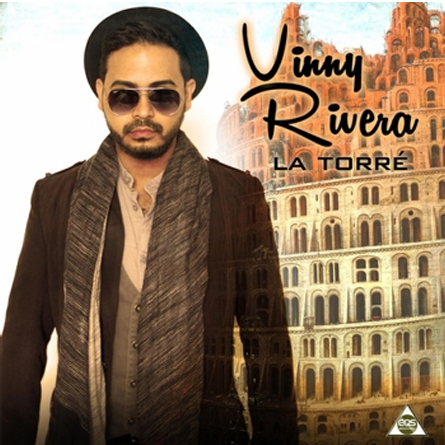
Completely addicted and forced by music and the desire to share his energy and healing skills, at the age of 16 he bought his first DJ set with his best friend Okland López and began playing music of all kinds of events. In that period he realized that he wanted to take the next step, to make music. He then began to study all kinds of music and finally was able to be comfortable enough to sing.
His friends encouraged him to record music and were associated as a trio together Loco Jow to pursue a career within the music industry. Although not signed with any record label they achieved a network of relationships around the world that got them heard everywhere, which allowed them to rank No.3 in a company of radio and distribution of popular music in South America.
Vinny continued to work with the group opening shows for world-renowned acts such as Don Omar, Wisin & Yandel, Zion & Lennox, Ivy Queen, Rakim & Ken-Y, Tony Dize, Alexis & Fido.
The group split because of four years of Vinny’s enlistment in the United States Air Force. Now a veteran of the Air Force from June 2004 to December 2014 Vinny learned that “Life is too short and you have to give everything you have.”
He started working and learning with Grammy-winning Producers such as Richy Peña who produced the hit “Niña Bonita” by Chino & Nacho and Lenny Santos recognized by the Bachata group “Aventura”. To then sing and write with Universal Billboard and Cuban artist Yunel Cruz. He also wrote a final hit for Jowell and Randy “Lo Que Quiero”, which reached # 11 on the charts, being remixed with Reggaeton Super Stars Arcangel, Farruko and Divino produced by his great friend Jorgie Milliano.

His work and vocal skills have captured the respect and attention of the public around the world. The formula for Vinny Rivera’s latest plan is to use his music as a tool to address problems in the world. Until then he will continue to work diligently on making good music to enjoy.
European Union

This summer, Buika continues her journey of storytelling across Europe and South America in support of her latest album, fittingly named Vivir Sin Miedo (To Live Without Fear). Her eighth album and one with the most English lyrics, Vivir Sin Miedo, co-produced by Grammy Award-winning Swedish producer, Martin Terefe (Mary J. Blige, Mutya Buena, Coldplay) features Grammy-winning singer-songwriter Jason Mraz, German neo-soul artist Meshell Ndegeocello, and Spanish underground flamenco legend Potito.

Born María Concepción Balboa Buika in Palma de Mallorca, Spain, Buika grew up immersed in Spanish culture with her African-born parents. Surrounded by multiple cultures throughout her life, Buika had a variety of musical influences, from jazz and flamenco to pop, soul and African polyrhythm. This eclectic upbringing shaped Buika’s ability to make music without limitations. During her 15-year recording career, her albums flow seamlessly between pop, jazz, soul, reggae, afro beat, R&B and flamenco. Equally diverse are her collaborators, which include Pat Metheny, Anoushka Shankar, Chick Corea, Niño Josele, Bebo and Chucho Valdés, Seal and Nelly Furtado.

“Filmmaker and longtime fan, Pedro Almodóvar, remarked about Buika, ‘Seeing her draw from such different genres…mix them all together with such grace and spontaneity, one cannot help but think that there is a brighter future as long as one can witness the boundless evolution of this infinite performer.'”
A brighter future did arrive for Buika with each new album. Her 2006 album, Mi Niña Lola (My Little Girl Lola), won Buika high praise from the US media, including The New York Times, The New Yorker, Miami Herald and NPR. She received two Latin Grammys, one for her 2009 album, El Ultimo Trago (The Last Drink) and for her 2013 album, La Noche Más Larga (The Longest Night), which also won a Grammy nomination for Best Latin Jazz album.
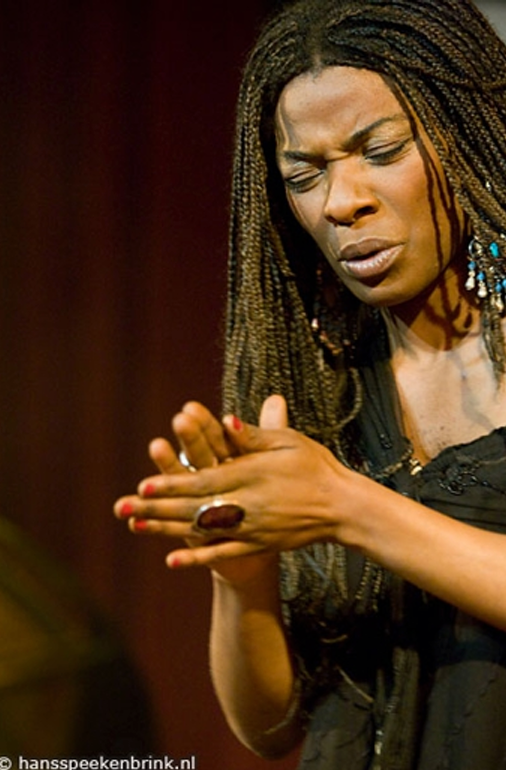
Other Latin Grammy nominations included Best Album and Best Production for Niña de Fuego (Girl of Fire, special 2-CD Edition, which included her first collection of poems – 2008), Record of the Year for her albums, Se Me Hizo Facil (2010) and La Nave del Olvido (2013) as well as the new Record of the Year nomination for Vivir sin Miedo for the song “Si volveré” (2016)
Buika knows no boundaries when it comes to language or geography. She has collaborated with musicians and singers in Spanish, Catalan, English, French, Portuguese, Iranian and Armenian. Her touring has spanned the globe, covering Europe, Latin America, the Caribbean Islands, Asia, Africa and the US.
A great music ambassador, she reaches any small or large crowd..i.e performed at the US Embassy in Madrid, Spain, on a great 4th of July or a year ago at the Spanish Embassy in DC, for a larger audiences at different music festivals, such as “La Notte della Taranta” Italy over or “Jazz al parque” Bogotá just a month ago.

She has no barriers in terms of artistic expression and rejects any kind of self-limitation, a business owner, singer / songwriter, producer and poet, whom on her time off immerses herself in the world of photography, some of her best portraits and self-portraits can be seen on any of her books, Niña de fuego (Girl of fire) “special edition” and -A los que amaron a mujeres difíciles y acabaron por soltarse (To those who loved difficult women and ended up letting go)

For Buika, her music is more than a career. She says, “I am music (…)!”