• Skip to primary navigation
  • Skip to main content

International Salsa Magazine

  • HOME
  • Previous editions
    • 2026
      • ISM / March 2026
      • ISM / February 2026
      • ISM / January 2026
    • 2025
      • ISM / December 2025
      • ISM / November 2025
      • ISM / October 2025
      • ISM / September 2025
      • ISM / August 2025
      • ISM / July 2025
      • ISM / June 2025
      • ISM / May2025
      • ISM / April 2025
      • ISM / March 2025
      • ISM / February 2025
      • ISM / January 2025
    • 2024
      • ISM / December 2024
      • ISM / November 2024
      • ISM / October 2024
      • ISM / September 2024
      • ISM / August 2024
      • ISM / July 2024
      • ISM / June 2024
      • ISM / May 2024
      • ISM / April 2024
      • ISM / March 2024
      • ISM / February 2024
      • ISM / January 2024
    • 2023
      • ISM / December 2023
      • ISM / November 2023
      • ISM / October 2023
      • ISM – September 2023
      • ISM – August 2023
      • ISM July 2023
      • ISM Edition June 2023
      • ISM – May 2023
      • ISM April 2023
      • ISM March 2023
      • ISM February 2023
      • ISM January 2023
    • 2022
      • ISM December 2022
      • ISM November 2022
      • ISM October 2022
      • ISM September 2022
      • ISM August 2022
      • ISM July 2022
      • ISM June 2022
      • ISM May 2022
      • ISM February 2022
      • ISM January 2022
    • 2021
      • ISM December 2021
      • ISM November 2021
      • ISM October – 2021
      • ISM September 2021
      • ISM August 2021
      • ISM July 2021
      • ISM May 2021
      • ISM April 2021
      • ISM June 2021
      • ISM March 2021
      • ISM February 2021
      • ISM January 2021
    • 2020
      • ISM December 2020
      • ISM November 2020
      • ISM October 2020
      • ISM September 2020
      • ISM August 2020
      • ISM July 2020
      • ISM June 2020
      • ISM May 2020
      • ISM April 2020
      • ISM March 2020
      • ISM February 2020
      • ISM January 2020
    • 2019
      • ISM December 2019
      • ISM November 2019
      • ISM October 2019
      • ISM Septembre 2019
      • ISM August 2019
      • ISM July 2019
      • ISM June 2019
  • Download Salsa App
    • Android
    • Apple
  • Spanish

Search Results for: Johnny Cru

Learn all about salsa at the Spanish Harlem Salsa Gallery

What the Spanish Harlem Salsa Gallery is


Latino culture has found a large number of icons and places that have shown how wonderful it is and how proud we must be of being born in this land full of colors and talent for export. One of those incredible places is the Spanish Harlem Salsa Gallery, which is a cultural institution in which the inhabitants of East Harlem, New York, have the opportunity to learn all about salsa and its unusual roots. To that end, visitors can enjoy a great deal of material, information, resources, and many learning initiatives that will blow everyone’s mind.

The purpose of this wonderful space is to gather as much knowledge as possible about salsa and all the artists who have been responsible for bringing this musical genre to every corner of the planet. That is why its owners have been in charge of offering the most inclusive and diverse gallery to prove everything Hispanic talent has to offer. The institution provides a wide range of possibilities for those who want to learn more about the most well-known Latin music genre in history, and art is the tool used for this purpose.

Here we hacve some of the objects in the gallery
Some of the valuable objects at the Spanish Harlem Salsa Gallery

What the Spanish Harlem Salsa Gallery is looking for

One of the major aims of the Spanish Harlem Salsa Gallery is awakening the interest of the inhabitants of Harlem and the surrounding neighborhoods towards the musical styles that have inspired the five continents to dance. This is how this space became a valuable resource for many other public and private institutions, which have used the museum to foster greater interest in their own activities. This is because many of the tourists visiting New York know that it was in that city in which the biggest salsa movement in history took place, so they are particularly interested in going to places where they can learn about how salsa came about and what its roots are. That is when institutions such as the Spanish Harlem Salsa Gallery make an appearance and offer to answer any question on the matter.

Johnny Cruz, a noted musician and record producer, has made this place a true sanctuary for Latin music lovers and all what emerges from it. The museum, which was once a hardware store owned by his father, contains some of the most valuable objects in the history of salsa and that have a very special relationship with some of the greatest figures of the genre, such as Héctor Lavoe’s favorite guitar or José Mangual Jr’s bongos. This collection of objects has been made in order to preserve the legacy of the greatest exponents of the salsa genre in New York for people to remember who they were and what they contributed to Latino culture in spite of the years. Something very interesting to relate is that many of these instruments have been donated by artists, family members, or institutions that want the names of their owners to continue to sound as loud as possible.

Undoubtedly, Cruz and his greatest contributors in this noble work have ensured that locals and foreigners see the gallery as a space for recreation and learning in which they can learn about the origins of salsa and go back to the glory days with many of the greatest musicians in history.

Some instruments donated by artists
Some of the instruments donated by artists and institutions

Link to its official website spahasalsagallery.com.

By: Johnny Cruz correspondent of International Salsa magazine in New York city, New York

Home

Tribute to Adalberto Santiago for his musical career

Well-deserved tribute


After many years of musical career, singer and co-founder of FANIA, Adalberto Santiago has been honored with an official recognition given by Mayor of Ciales, Puerto Rico, something which was revealed on social media and various means of communication that followed the big news. Such recognition was manifested with the renaming of the Municipal Theater, which is going to be called as the artist in his honor.

This event was made known thanks to his great friend and director of the Abran Paso orchestra, Luisito Figueroa, who was in charge of carrying out all the necessary steps for Santiago to receive this great tribute. By 2019, Figueroa was working on the recognition through a group of visits he carried out to the Municipal Legislature, an entity in which he would submit the formal request that would finally be applied this year. After a comprehensive analysis of the evidence provided by the artist, this request was unanimously approved in recognition of the working years and the intense artistic life of Santiago. The glorification of Ciales around the world had its effect.

This event will take place in the theater which will bear the name of the artist in June, the month in which the festivities of Ciales will take place and people will be able to enjoy such an amazing event.

Adalberto Santiago and his tribute for his musical career
Adalberto Santiago will be honored for his musical career

Who is Adalberto Santiago?

In case you do not know who he is or the reason for so much admiration and tributes, he is a successful Puerto Rican singer whose trajectory speaks for itself. Alberto Santiago Berrios was born on April 23, 1937 in Ciales, a place we have already mentioned as the main stage of the recognition the artist will receive.

One of the biggest attractions of the interpreter is his prodigious lyric voice, which classifies him as one of the greatest names in Afro-Caribbean music and similar rhythms, even being compared to stars such as Benny Moré, Miguelito Cuní, and so many others that have left the Latin rhythms in a high position in the world. Among the many achievements of his extensive musical career, we cannot fail to mention his involvement with the world-renowned Cuban group La Sonora Matancera, with whom he recorded the album entitled De Nuevo, which was recorded in Mexico.


It should be noted that Santiago has written a great variety of songs for many albums where he has played a leading role, both as a soloist or a conductor. Likewise, he has written songs for many other artists, who have put their trust in the talent of the singer as a composer.

The interpreter has experimented with a wide range of musical genres that have allowed him to become known in much of the world, such as pachanga, Guaracha, cumbia, Bolero, Merengue, and so on. This versatility with regard to musical rhythms and vocal technique has allowed him to gain a respectable space in the industry and in the hearts of his large and loyal fan base. Even today, he is still considered one of the greatest exponents of Latin music and its derivatives.

By: Johnny Cruz correspondent of International Salsa Magazine in New York City, New York

Home

The Latest on New York’s situation

There’s a lot going on in New York in relation to the musical world, specifically the world of salsa. The pandemic caused by COVID-19 has impacted particularly on our city, but fortunately, we are gradually returning to the normality that we desire so much.

A few weeks ago, Governor Andrew Cuomo announced the opening of bars and restaurants at 35% of capacity to avoid contagions as much as possible. Then, another 35% would be announced depending on how things progress in the localities. Similarly, there have been plenty of owners of all kinds of music venues, restaurants and bars that declared themself ready to serve 35% of their usual clientele without risk to any of those involved.

It was also known that theaters will begin opening their doors from 5 March and musical groups can already begin to make their performances the length and breadth of the city, but the lifting of restrictions will continue depending on the evolution of the pandemic in each locality.

In addition to the reopening of stablishments, we cannot fail to mention certain events that have occurred in New York City in the previous days.

Donation of Cocco Peña’s tuxedo to the Spanish Harlem Salsa Gallery Museum

Cocco Peña donates his iconic tuxedo to the Spanish Harlem Salsa Gallery Museum. For all of you who don’t know him, Peña is a well-regarded figure in the music world and has worked as a musical director, producer, composer and arranger. This important musician has worked with artists such as Olga Tañon, Gilberto Santa Rosa, Chayanne, Ricky Martin, Luis Fonsi, among others. Despite the differences in style between all the artists, Peña always knows what they need to achieve stunning results.

Johnny Rivero and the cover of his new album
Johnny Rivero – Golpe Duro

His work has earned him a colossal acknowlodgement at national and international level and has made him a very important figure to the music industry inside and outside New York. That is why the donation of such an iconic garment has made those charged with the museum very happy, which is now ready to resume its activities little by little. They are only waiting for government instructions to do so. The establishment will reopen for free and is waiting for its visitors.

The newest release from Johnny Rivero

In other news, the famous percussionist Johnny Rivero and his group El Cartel de Nueva York released their third album entitled Golpe Duro, in which they are accompanied by vocalist Anthony Colmenares.

The first song of the album entitled Quien te ha dicho, which was released in digital format on October 9 last year, benefits from the talent of violinists Raúl Roa and Laura Pérez. Likewise, the song includes a conga solo featuring Johnny himself, which provides a very interesting contrast of rhythms and sounds.

The music video for this same song was released in November and here you can see the musicians involved playing this incredible song thanks to the technology that has made it possible to create a lot of projects without the artists having to share the same physical space.

And just as we talk about themusicians who are doing their best to get ahear despite the current health crisis, we cannot fail to remember those who are no longer with us. Of course, we are talking about the great Johnny Pacheco, who left us on February 15 this year.

Remembering the Great Maestro 

In The Johnny Cruz Show, we remember the life and work of one of the most transcendental figures of the salsa world, Johnny Pacheco, who passed away two weeks ago.

In memory of Johnny Pacheco
The Jhonny Cruz Show

During the program, we remembered the most important achievements of the acclaimed musician and details about his private and professional life. Undoubtedly, this glory of Latin music leaves an awful hole both in the music industry and in the hearts of his fans.

Home

Ángel “Cucco” Peña and a great legacy

Cucco Peña has donated his emblematic tuxedo to the Spanish Harlem Salsa Gallery Museum

By Johnny Cruz

News from NY City

Who is Cucco Peña

The emblematic tuxedo
Ángel “Cucco” Peña

On September 1, 1948, Angel ‘Cucco’ Peña was born, someone who from elementary school showed his interest in music and as the years passed, showed that there were little flashes of that brilliant talent he had. His talent and passion were aligned, so he always spent his life surrounded by music. Today he could be considered an icon of Latin music thanks to his achievements as an artist and thanks to everything he offered to the industry; he has managed to trace a career full of successes, one that today continues to inspire many people.

Peña’s talent led him to interact in many music-related activities, not only did he graduate from the Puerto Rico Music Conservatory, but also, after graduation, he joined the Pan-American Orchestra, starting with what would be a career full of reached goals. In the orchestra, he would familiarize himself with many different styles that would help him as a musician, since in the orchestra he played a wide variety of music, from bolero, blues and jazz, to pop and even rock.

Cucco Peña’s path

Cucco Peña is a great artist

Cucco left the band and began to trace his own path with everything he learned, he didn’t just become a music director, but a producer, composer, and arranger for many internationally famous artists such as: Ricky Martin, Chayanne, Ricardo Arjona, Olga Tañon, Gilberto Santa Rosa, Luis Fonsi, Franco de Vita and many other artists; despite each artist’s very different styles, Peña’s talent has allowed him to understand perfectly what all of them needed. In his own words, “it is important to see that music has three perspectives: the artist perspective, the company’s perspective, and my own.” Finding a perfect harmony between these three perspectives, Peña has participated in the creation of great themes.

Achievements

The North American has not only managed to collaborate with a large number of renowned artists, but has also achieved a lot of recognition for his work, he is a two times Grammy winner, the first is the Grammy for the best tropical album contra la corriente, Marc Anthony’s album (1999), the second is Latin Grammy for best musical production, this thanks to Olga Tañón’s album, Yo por ti. Grammy is not the only award he has won, he also received a total of 60 Cuspide awards and 40 Addy awards, plus 20 awards from the New York Theater Festival and an “Agüeybaná de Oro” for Director of the Year.

The awards are not everything, he has been both the director and the composer of the Central American games’ opening and closing ceremonies, and the composer of two movie soundtracks (“La Gran Fiesta” and “Nicolás y Los Demás”); Plus, he has produced more than 100 compositions, not to mention that he also worked as a producer for important figures in the industry, such as Lunna, Jerry Rivera, Chayanne, and many others.

Without a doubt, Ángel “Cucco” Peña is a very important figure for the industry, and after a long career dedicated to music, he has shown that his talent is worthy of being recognized.

The new piece of Spanish Harlem Salsa Museum

The invitation to tune in to the new Fm / Internet radio station on Live365.com: Salsagallery continues. Great music, artist interviews and much more.

At the Spanish Harlem Salsa Gallery Museum we are happy to affirm that New York City is preparing to resume its activities little by little. We hope to have more news soon and that we can return to normal soon.

The Museum is open free to the public. We wait for you!

Actress, comedian, and singer Carmen Nydia Velázquez tells us about the best of her career

Through a very kind friend of our editor Eduardo Guilarte, María del Carmen, we have been fortunate to make contact with the extremely talented Puerto Rican actress, comedian, and singer Carmen Nydia Velázquez, with whom we had the opportunity to talk with for our report on Bad Bunny’s Super Bowl halftime show.

It turns out that her career is so fascinating that we obviously had to talk to her and know much more about her artistic journey, both in her native Puerto Rico and abroad. Without further ado, these are the highlights of our conversation.

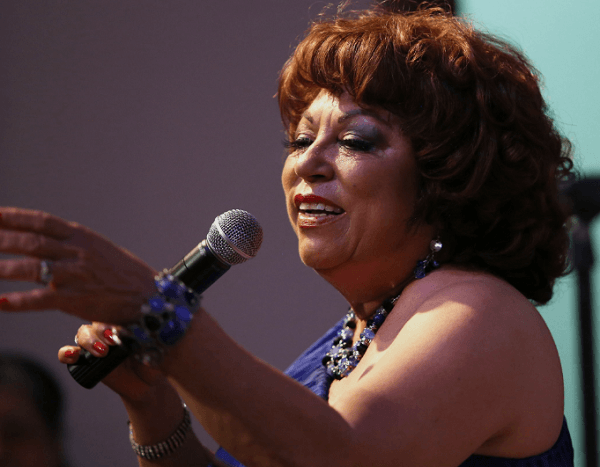
Carmen Nydia cantando
Carmen Nydia Velázquez singing live

Carmen’s education and start in acting

When it came to her academic background, theater always caught her attention, but she also loved to sing. These tastes led her to study drama at the University of Puerto Rico, where she brought out her histrionic talent and showed just how good she would be at doing comedy in the future.

Even before graduating, she already worked in theater and appeared in Francisco Arrivi’s play *Vejigantes*. At that time, she was in her last academic year, and the play was a tribute to the great Puerto Rican actress Lucy Boscana, who had died back then. For many years, Boscana played the character of Toña, and Carmen did the same when it was her turn in this new version, which had so much impact that it led to a film based about the same story.

Then, in the 1970s, she joined the musical group Moliendo Vidrio, led by Gary Núñez, and was there for about 11 years, while doing theater and television. The group took up a lot of Carmen’s time and was part of the New Song movement in those days.

Kiosko Budweiser and Susa Cruz

In 1983, Carmen first portrayed who is still considered one of her most iconic characters to this day, Susa Cruz. Channel 7, known at the time as Teleluz, first aired the comedy segment Kiosko Budweiser, featuring the beloved Susa alongside other iconic characters such as Epifanio, Johnny El Men, Humberto, and El Negrito.

Carmen Nydia and Victor
Carmen Nydia Velázquez (Susa) and Víctor Alicea (Epifanio)

When Teleluz ceased to exist, Carmen took a break from the character to continue her theatrical activities and start singing professionally. However, later, Channel 4, Guapa Televisión, called the actors back to do the segment again, which is when it became a media phenomenon and gave immense fame to the characters, especially Susa and Epifanio.

The high popularity of the show and its stars made them appear on TeleOnce, which continues to air today, and Telemundo, where they are recurrent figures during the regular programming.

People enjoyed Susa and Epifanio so much that they have even hosted a radio show, and both Carmen and Víctor Alicea (Epifanio) will soon celebrate their 38th anniversary as an artistic couple, though they have not yet decided what to do for that day. 

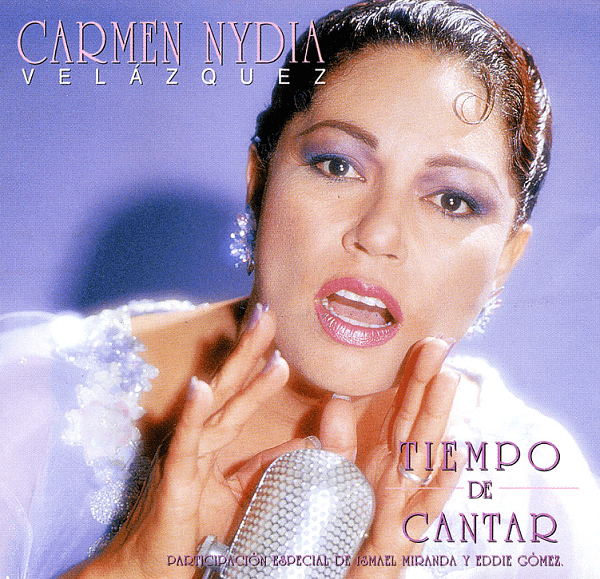
Tiempo de Cantar

By the late 1990s, she released an album of boleros titled “Tiempo de Cantar,” which was her first solo production. It all started with a show by Susa and Epifanio in the south of Puerto Rico, where they met a musician friend of hers named Cacho Montalvo. 

He has spent many years urging her to go back to singing, but she ws not entirely sure due to all the professional commitments she already had, added to the fact that she did not have very fond memories from the time in which she had to promote her own music of the New Song movement which, being so traditional, did not receive the media coverage it deserved. This killed Carmen’s enthusiasm, as she took for granted that she would never sing professionally again.

However, Montalvo and Carmen’s husband “conspired” to some extent to convince her, and they succeeded. On the album, the artist pays tribute to the songs she grew up with and used to hear on the radio as a child, achieving a result she loved. 

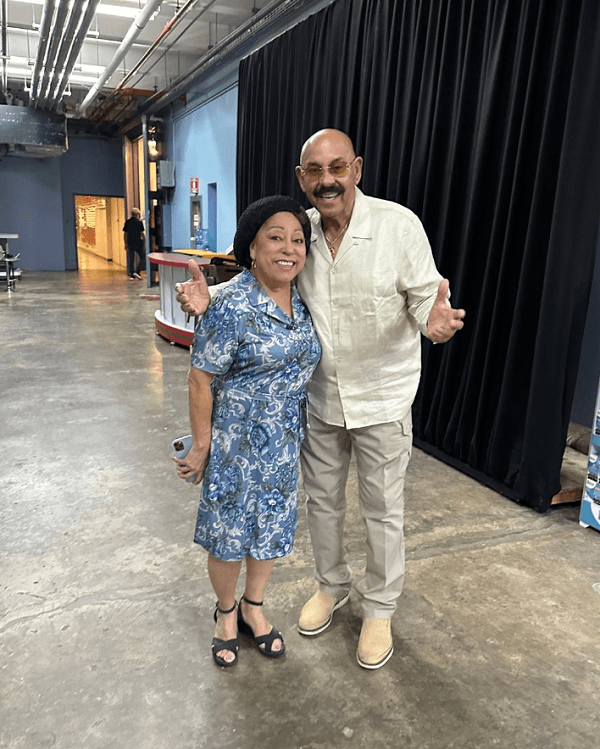
Carmen Nydia and Oscar
Carmen Nydia Velázquez y Oscar D’ León

Her solid background in theater gave her the ability to convey her feelings through her voice and expressions, which made her have a wide acceptance. In fact, she is now a member of the Music Hall of Fame in Puerto Rico, a venue dedicated to romantic and bohemian music that hosts live events featuring artists associated with those genres. 

Hacienda Susa

Among the many projects she was involved in, Carmen also ran a restaurant and activity center called “Hacienda Susa.” She describes this stage of her life as interesting, yet exhausting and demanding at the same time.

Due to the success she had on television, the project did very well, so she and her team were there doing shows for visitors from all over the island practically every day. The problem was that it was too much work for her at the time, and she told us that sometimes, she had to leave the hacienda to perform a show outside, return to meet her commitments there and then close the venue. 

The above, added to the fact that everyday fewer people were coming to the venue and the extremely high rent Carmen had to pay, made her ask herself if it was really worth continuing with the project in exchange for those dividends. That was when she finally got tired of it and decided to close the venue indefinitely to focus on what she was truly passionate about: acting.

Album by Carmen Nydia
Cover of the album ”Tiempo de Cantar” by Carmen Nydia Velázquez

Read also: Background and reactions to Bad Bunny’s halftime show in The Super Bowl

  • « Go to Previous Page
  • Page 1
  • Interim pages omitted …
  • Page 20
  • Page 21
  • Page 22
  • Page 23
  • Page 24
  • Interim pages omitted …
  • Page 42
  • Go to Next Page »

International Salsa Magazine (ISM) is a monthly publication about Salsa activities around the world, that has been publishing since 2007. It is a world network of volunteers coordinated by ISM Magazine. We are working to strengthen all the events by working together.