• Skip to primary navigation
  • Skip to main content

International Salsa Magazine

  • HOME
  • Previous editions
    • 2026
      • ISM / April 2026
      • ISM / March 2026
      • ISM / February 2026
      • ISM / January 2026
    • 2025
      • ISM / December 2025
      • ISM / November 2025
      • ISM / October 2025
      • ISM / September 2025
      • ISM / August 2025
      • ISM / July 2025
      • ISM / June 2025
      • ISM / May2025
      • ISM / April 2025
      • ISM / March 2025
      • ISM / February 2025
      • ISM / January 2025
    • 2024
      • ISM / December 2024
      • ISM / November 2024
      • ISM / October 2024
      • ISM / September 2024
      • ISM / August 2024
      • ISM / July 2024
      • ISM / June 2024
      • ISM / May 2024
      • ISM / April 2024
      • ISM / March 2024
      • ISM / February 2024
      • ISM / January 2024
    • 2023
      • ISM / December 2023
      • ISM / November 2023
      • ISM / October 2023
      • ISM – September 2023
      • ISM – August 2023
      • ISM July 2023
      • ISM Edition June 2023
      • ISM – May 2023
      • ISM April 2023
      • ISM March 2023
      • ISM February 2023
      • ISM January 2023
    • 2022
      • ISM December 2022
      • ISM November 2022
      • ISM October 2022
      • ISM September 2022
      • ISM August 2022
      • ISM July 2022
      • ISM June 2022
      • ISM May 2022
      • ISM February 2022
      • ISM January 2022
    • 2021
      • ISM December 2021
      • ISM November 2021
      • ISM October – 2021
      • ISM September 2021
      • ISM August 2021
      • ISM July 2021
      • ISM May 2021
      • ISM April 2021
      • ISM June 2021
      • ISM March 2021
      • ISM February 2021
      • ISM January 2021
    • 2020
      • ISM December 2020
      • ISM November 2020
      • ISM October 2020
      • ISM September 2020
      • ISM August 2020
      • ISM July 2020
      • ISM June 2020
      • ISM May 2020
      • ISM April 2020
      • ISM March 2020
      • ISM February 2020
      • ISM January 2020
    • 2019
      • ISM December 2019
      • ISM November 2019
      • ISM October 2019
      • ISM Septembre 2019
      • ISM August 2019
      • ISM July 2019
      • ISM June 2019
  • Spanish
  • Download Salsa App
    • Android
    • Apple

Search Results for: Johnny Cruz

Isidro Infante is one of the most successful producers and arrangers in the history of Salsa

Born August 12, 1952, San Juan, Puerto Rico) is a professional pianist, arranger, composer and music producer, working in genres such as Classical Music, Rock, Pop Rock, Latin Ballad, Rock in Spanish, Salsa, Latin Jazz etc.

Isidro Infante is one of the most successful producers and arrangers in the history of Salsa

In addition, he has 5 awards and 47 Grammy nominations and several Billboard projects, Lo Nuestro Awards and Ace & Paoli Awards.

His parents were Dr. Isidoro Infante and Carmen Santiago.

From a young age Isidro was influenced by listening to his father play the violin, getting involved with music at age 14 when he participated in a band that played songs by Santana and Chicago.

At the age of 15 he formed his band “Carpe Diem” (Live Life), a Rock/Salsa group that played Rock’n’Roll, Pop, Salsa and included Tommy Villarini on trumpet, Cuto Soto on trombone and guitarist Manolo Sastre.

With this band Isidro wrote his first arrangement “Tiempo De Ti”.

Two years later, Infante was in charge of the background music for Myrta Silva’s television show.

After taking private piano lessons with the famous pianist Carmen Socorro Duclerc, he studied at the Conservatory of Music of Puerto Rico and at the University of Puerto Rico, obtaining bachelor’s degrees in music and chemistry.

Although he was inclined towards medicine because it was his father’s profession, he decided to delve into music and graduated in composition and arrangements at Temple University in Philadelphia in the late 1970s.

In 1995, Isidro Infante and ‘La Élite’ signed a contract with RMM Records as an exclusive artist. Isidro also signed as A&R director for RMM records.

With him he gained experience, quality and evident success in his productions for the label. His work with La India earned him double platinum sales and a Grammy nomination for their album “Sobre El Fuego.”

Within just four years of its founding, La Élite became a dominant force in the Salsa music industry. The band’s first release earned a gold record as well as awards from AS, Paoli and Diplo.

Isidro Infante He also has 5 Grammy awards and 47 nominations and several Billboard projects, Lo Nuestro Awards and Ace & Paoli Awards.

The hit songs “Que Tengo de Ti,” “Nave de Papel,” “Ganas” and “Has Quedado Retratada” all topped the Tropical Salsa charts.

On Isidro Infante y La Élite II, the group’s second production, Isidro added vocalist Maggie Ramos. This helped him create an album with an exceptional variety of music.

Songs like “Quítame ese Hombre” and “Santo Militar y Montuno” made Isidro Infante a favorite of many.

Along with Louie Ramírez, Infante was credited as one of the creators and pioneers in the Salsa movement. Romantic Salsa.

In 1998, his production “Licencia Para Engañar” was released, which was the result of his creativity and flexibility as a musician. In his orchestra, Isidro Infante y La Élite, Jennifer Jiménez and Guillermo Duval participate as vocalists.

In his first album “Secretos”, Kevin Ceballo made his debut as a soloist in “Licencia Para Engañar”, produced by Isidro Infante.

His work as a producer earned his album “India’s Sola” a Grammy nomination. Venezuelan Oscar D’León also received a nomination for “La Fórmula Original” which Isidro also produced.

Isidro’s commitment to everything related to the Latin community prompted him to produce the event “Canto Para La Guaira”.

The concert was held with the purpose of raising funds for the victims of the disaster that affected thousands in Venezuela and thus “Poliedro de Caracas” has been filled to full capacity.

Among the RMM artists who performed were Kevin Ceballo, Ray Sepúlveda, Cheo Feliciano, Tito Nieves, Roberto Avellanet, Michael Stuart and Tony Vega.

In 1981, Ramírez and Infante were approached with the idea of ​​producing an album of famous ballads with Salsa arrangements.

Both found the project interesting and ambitious, so they accepted the challenge. Isidro added his experience in the field of ballads, acquired through his work with José Luis Rodríguez, Camilo Sesto and Yolandita Monge, to Ramírez’s knowledge of Latin jazz.

The result was “Noche Caliente”, the first album in the genre to sell over a million copies.
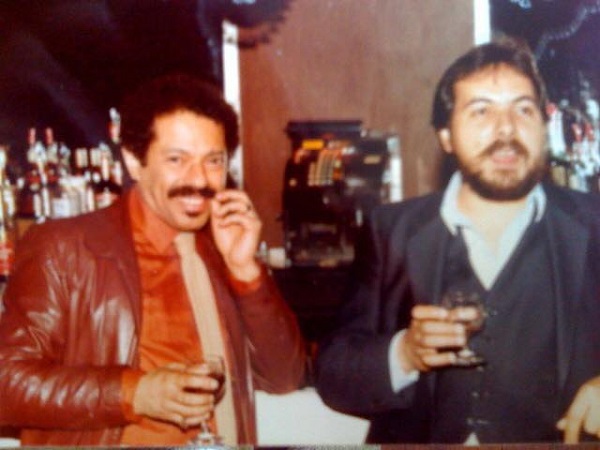
Memories at El Corso Night Club in New York City with my friend and mentor, Master Louie Ramirez, producer, arranger, vibraphonist, timpanist, marimba player

Isidro Infante is one of the most sought-after arrangers in Salsa.

Venturing into a genre other than salsa, he also participated in Willennium, Will Smith’s most recent recording where Isidro played piano and keyboards.

Isidro Infante was working with artists such as Stevie Wonder, Herb Alpert, Gloria Estefan, Dizzy Gillespie, Dionne Warwick, Patty La Belle, Will Smith, Wyclef Jean, Clark Terry, Jon Anderson & Yes, Vangellis, Sheila E., Tito Puente, Celia Cruz, Machito, Marc Anthony, La India, Fania All-Stars, Oscar D’Leon, Hector Lavoe, Willie Colon, Larry Harlow, Roberto Roena, Johnny Pacheco, Pete El Conde Rodriguez, Louie Ramirez, Ray De La Paz, Jose Alberto “El Canario”, Adalberto Santiago, Eddie Santiago, Lalo Rodriguez, Paquito Guzman, Marvin Santiago, Domingo Quinones, Camilo Azuquita, Kako, Rafael Cortijo, Ismael Rivera, Manny Manuel, Raul Marrero, Vitin Aviles, Papaito, Tony Vega, Puerto Rico All Stars, Ralphy Leavitt & La Selecta, The Latin Corporation, Jose Mangual Jr,Jr. Gonzalez, Ramon Rodriguez,Orquesta La Terrifica, German Olivera, Wichy Camacho, Johnny Ventura, Sergio Vargas, Cuco Valoy, Ramon Orlando, Los Hermanos Rosario, Los Niches, Los Fabulosos Cadillacs, Little Louie Vega, Robert Avellanet, Michael Stuart, Yanko, Kevin Ceballo Danny Rivera, Sophy, Mirta Silva, Ivy Queen, Tego Calderon, Mickey Perfecto, TNT and many more.

Among his compositions are “Viejo Pachanguero”, “Vicio de Quererte”, “Esa Niña” etc.

With more than 2,500 arrangements in his resume, Isidro is one of the most successful producers and arrangers in the history of Salsa.

Isidro Infante has been working for major record labels such as Sony BMG (Epic, Sony Discos, Sony International, etc.), Universal EMI Capitol TH Records Salsa International Velvet (Venezuela), Co Discos (Colombia), J&N Records, Univision Poligram, Luna Records Fonovisa, Sono Tone, Caiman Records, Faisán Records, GB Records, Ibero- Records, Salsoul Records and many more.

Isidro Infante produced the Special for Banco Popular 2010: Truibuto Al Gran Combo on CD & DVD which achieved platinum sales.

The project included the participation of El Gran Combo, Ismael Miranda, La India, José Alberto, Isaac Delgado, Michael Stuart, Domingo Quiñones, NG2, Luisito Carrión, Sammy García and El Sabor de Puerto Rico.

He was sharing the Fania All-Stars as musical director with maestro Johnny Pacheco in several concerts throughout Latin America and was involved in musical projects with the Mexican singer-songwriter Juan Gabriel.

In 2010, Isidro Infante and Iván Joy established the new company Artist System Inc. which is in collaboration with Diamond Music and has gained important positions in the market of digital production and promotion and also has a lot of experience in the creation and management of digital content.

Con India y La Cantante cubana, Laritza Bacallao

The company is working with such artists as Isidro Infante, Lucecita Benítez “La Voz Nacional De Puerto Rico”, Lunna, Lourdes Robles, Conjunto Canayón, Сorporación Latina, Manolo Lezcano, Lou Briel, Jowell & Randy, Arcángel, Tego Calderón, Jadiel, Endo, Guelo Star, Kastrofobia, Los Metalicoz and many more.

Awards

5-time Grammy winner

47 Grammy nominations and several Billboard projects

Premios Lo Nuestro and Ace & Paoli Awards.

Also Read: Ezequiel Lino Frías Gómez was an excellent musician, pianist, arranger and composer.

Source and Collaboration: Marino de Jesus (1588) from Salsa History of the Dominican Republic

Nanette Hernández promotes the bomba and plena in New Jersey

We know that the most of our Latin countries have historically become known for genres such as salsa, merengue, bachata and more recently reggaeton and trap. However, the popularity of the aforementioned genres made us leave aside other more local rhythms that also deserve exposure.    

On this occasion, we wanted to talk about the bomba and plena, so we resolved to interview Nanette Hernandez, who is one of its main proponents here in the United States, more specifically in New Jersey.   

This is Nanette
This is Nanette Hernández, who is a great promoter of the bomba and plena


How Nanette became interested in the bomba and the plena 

Nanette began by telling us that her interest in music was born thanks to her parents, who are Puerto Rican and moved to the United States, Pennsylvania, during the 1950s to continue their life in this new country. However, his home was built based on Puerto Rican culture and, of course, that included language and music. Her father had an ensemble that played jibaro music and Nanette grew up watching this, so this musical environment was always very familiar to her.   

As she grew up, Nanette also became very interested in dancing and discovered that she really liked salsa when she was just a teenager. She remembers listening to Celia Cruz, Johnny Pacheco, El Combo de Puerto Rico and many of the most popular groups and musicians of the time, who also inspired her to keep dancing. She felt that she was encouraged just by dancing, so she continued to do so over the years, but not professionally.   

After marrying Juan Cartagena and seeing that she and her husband shared a taste for Latin music, they began to frequent places where Puerto Rican music groups performed. That is how they were in a show of the dance and drum ensemble ”Los Pleneros de la 21”. They were so fascinated by what they saw and heard that both Nanette and Juan began to study the plena and bomba because they wanted to know everything about these rhythms. Their interest was such that they were even in contact and consistently et with the Cepeda family, which is a cultural institution with many years of experience in everything to do with the bomba and plena.   

She also mentions that Roberto Cepeda, part of the aforementioned family, was very important in her decision to devote herself to promoting the bomba and plena and feels that he saw something in her that even herself was not able to see, so she decided to search for expert teachers in these genres to become more professional in the dancing and instrumental part in order to be able to teach them to others.   

Nanette dancing
Nanette dancing bomba and plena

Differences between the bomba and plena  

When we asked Nanette about the differences between the bomba and plena, she made it very clear that people often think that they are almost the same, but they are not. They are extremely different and have many differences from each other.   

In the case of the bomba, it has re than 400 years of existence and originated in Africa. The genre arrived in America along with the slaves who were brought to the New Continent and the new inhabitants of these lands brought their improvised instruments with them such as the so-called ”barrels”, which have a great resemblance to drums. They are often accompanied by maracas.    

In the case of the plena, this rhythm uses the pandero, the güiro and other smaller hand instruments with which they make a completely different sound from the bomba. To complement what Nanette told us, we can also say that the plena is believed to originate in Ponce, Puerto Rico, and its lyrics are very focused on comedy, activism and denunciation. In addition, it is also seen as a very peculiar mix between African and European music. 

Another difference between the bomba and plena is that, in the bomba, it is the dancer who leads and guides the musicians, while in plena the opposite happens. These genres are very different from each other, but that does not change the fact that both complement each other perfectly well in any show or class.   

Nanette next to her husband Juan Cartagena, Segunda Quimbamba's founder 
Nanette next to her husband Juan Cartagena, Segunda Quimbamba’s founder

How Segunda Quimbamba came about    

Segunda Quimbamba is a project initiated in 1989 by Juan Cartagena, Nanette’s husband, which was born as a result of the couple’s interest in promoting two of the most important ancestral rhythms from Puerto Rico and preserving the most important musical traditions on the Island of Enchantent, such as the ”parrandas”. A few years later, they began introducing the bomba and plena until they became the center of the project. 

In 1997, Nanette and Juan founded the Segunda Quimbamba Folkloric Center, which is a non-profit arts organization that seeks to promote the bomba and plena in New Jersey and the rest of the United States so that those interested can learn more about Puerto Rican music and culture in general. The organization also seeks to offer music and dance workshops at solidarity prices and even for free at times.   

Nanette and Juan have been invited to participate in numerous events and have been recognized for the role they have played in promoting Latin music, especially that of Puerto Rico. For example, in 2023, The New Jersey State Council of The Arts recognized the couple with the New Jersey Heritage Fellowship Award in honor of what they have accomplished with this wonderful and ambitious musical project. 

Read also: Edwin Ortiz y La Mafía del Guaguancó is present in ISM 

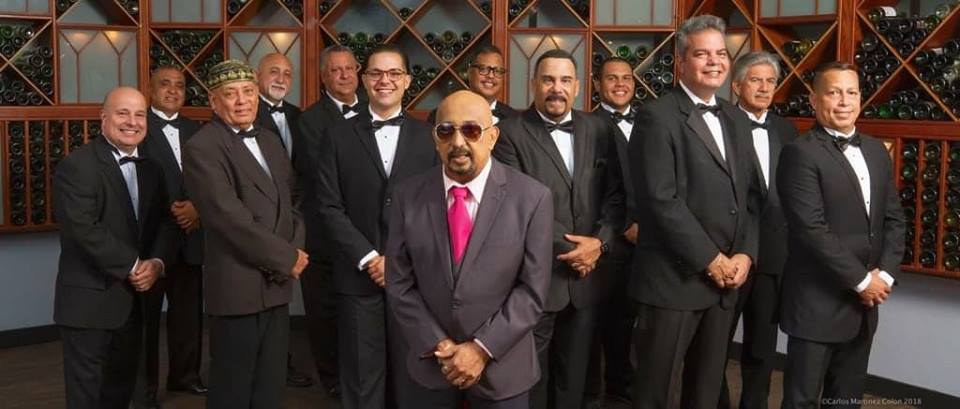
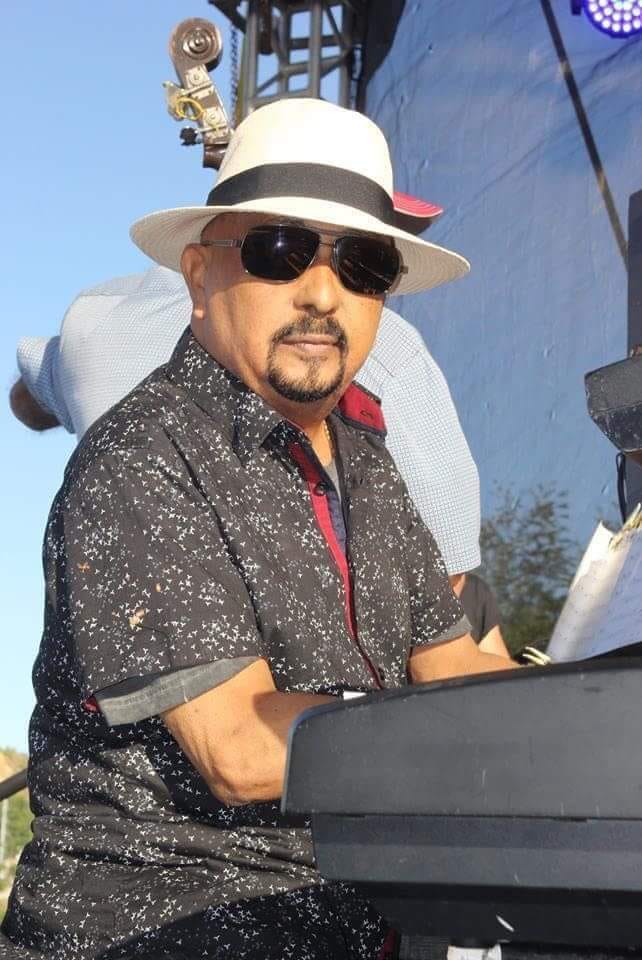
Papo Lucca. The Giant of the South

Latin America / Puerto Rico

Papo Lucca born in Ponce, Puerto Rico on April 2, 1946, Enrique ‘Papo’ Lucca began playing the piano at age 11 with his father’s orchestra. Initially, La Ponceña played versions of tropical hits of the moment by bands like Cortijo y su Combo and La Sonora Matancera.

Papo Lucca. The Giant of the South

In the late 1960s, Papo became the orchestra’s musical director, beginning a profound transformation that would eventually establish la Ponceña as one of the most progressive groups in the history of Afro-Caribbean music. Papo’s orchestrations were bold, experimenting with elements of jazz, rock, and Brazilian music. Representing the authentic spirit of Puerto Rican salsa, his piano solos were velvety, displaying elegance, restraint, and infinite swing.

During the mid-’70s, La Ponceña began to enjoy unprecedented success with critics and the public. The band recorded for the Inca label, which eventually became part of the Fania empire. Papo was invited to arrange and play on sessions for the company’s biggest artists, including Johnny Pacheco, Celia Cruz and Cheo Feliciano. He also recorded and toured with the Fania All Stars.

This compilation pays tribute to the art of Papo Lucca through 14 classic songs recorded between 1967 and 1981. Although Lucca has recorded as a solo artist and also collaborated with a multitude of salsa stars, it is his work with La Ponceña that best expresses the clarity of his vision.

The music we make has to make people happy, as well as make them dance. That’s what it’s all about, says Lucca from her home in Puerto Rico. When the public can dance, no matter how complicated the music is. The first theme that this genre had was to divulge the things that happened in the different communities, as if it were a newspaper.

Our journey begins with two fiery songs from the beginnings of La Ponceña: “Hachero Pa’Un Palo” and “Fuego En El 23” are versions of songs by Cuban Arsenio Rodríguez. La Ponceña always had a soft spot for Puerto Rican folklore, but she also found inspiration in the golden age of Cuban music.

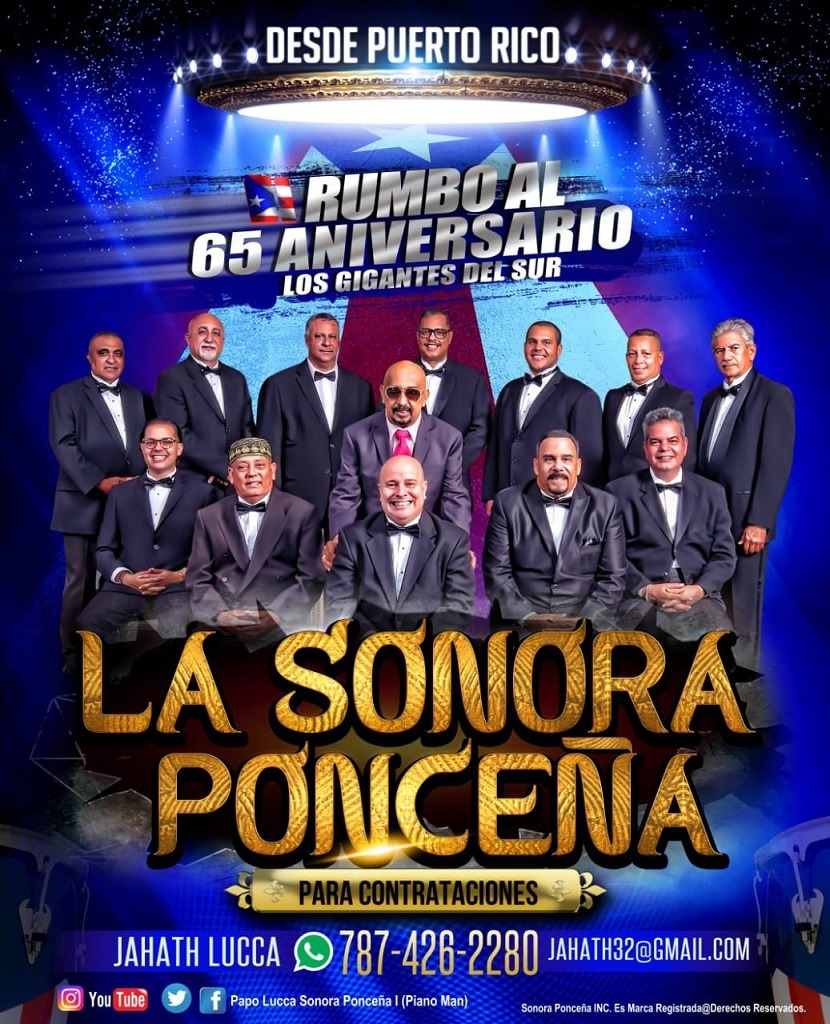
La Sonora Ponceña
La Sonora Ponceña

The precise moment in which La Ponceña becomes a mature orchestra in total control of its aesthetics can be found in the six songs from the Musical Conquest/Conquista Musical and El Gigante Del Sur albums. Launched on the market in 1976 and 1977 respectively, they represent the pinnacle of the salsa movement.

These songs combine a musical skill that approaches virtuosity with deep lyrics and a generous sense of humor. “Ñáñara Caí” is a hilarious narrative of pure magical realism, describing a world where everything is turned upside down (my favorite phrase: I saw a cow/Hit with Pacheco). Also included in Musical Conquest, “El Pío Pío” achieves the perfect cross between Afro-Cuban rhythm and contagious pop. This hit is a mandatory part of all La Ponceña concerts.

The opening theme of the El Gigante Del Sur album, “Boranda” seems to offer a salsa version of progressive rock. Its lyrics contain an important sociopolitical message, and the sophistication of its arrangement is a slap in the face for all those who believe that this music is only for dancing. “Soy Tan Feliz” combines bolero climates with an electric piano solo that recalls the psychedelic sound of jazz-rock from the ’70s. “Noche Como Boca ‘E Lobo” creates a tasty collision between salsa fever and Brazilian rhythms.

Lucca was not alone in his mission to reinvent the rules of Puerto Rican dance music. It was also benefited by the prowess of some of the best instrumentalists on the island. Furthermore, his instinct for choosing singers was always irreproachable.

Some of the vocalists of la Ponceña that appear here are Tito Gómez, who would later find fame with the Grupo Niche de Colombia; the inimitable Luigi Texidor, who gave a sense of placidity to all the songs he performed; and Yolanda Rivera, who added variety to the band’s sound with her unique timbre.

One of Rivera’s happiest moments is included here: Coming from 1980’s Unchained Force, Johnny Ortiz’s “Borinquen” is a soulful anthem to Puerto Rico, blessed with a sinuous melody and subtle instrumental arrangement–one of Rivera’s happiest moments. transcendental within the Ponceña canon.

The golden days of salsa are a distant memory in the new millennium, but Papo Lucca hasn’t stopped shining. Perhaps precisely because he continues to record new music, he refuses to idealize the past when I ask him what his favorite album with “La Ponceña.”

The last one, the most recent, he explained in his characteristically introverted tone. All the albums are very important in the career of the orchestra. They all fulfilled their mission at the time, which was to reaffirm the previous one. That’s the way to maintain a pool after 50 years.

Papo Lucca
Papo Lucca

The teacher was a little more direct when I asked him about his favorite concert of all time.

It was my first concert with the Fania All Stars at Madison Square Garden, back in 1974, he said. All the stars of the Fania were still alive. A few years later we played in front of 47,000 people in Cali. My knees always shake before I go on stage, but this time they shook a little more.

North America – October 2018

Spanish Harlem Salsa Gallery thubnails North America - October 2018

Brisa Tropical Thubnails ingles North America - October 2018

Ralph Rivera’s rol in the promotion of Latin Culture

Just as we have talked about musicians and singers who have left to the Puerto Rican culture in the highest in the rest of the world, it is also time to highlight the role of other figures who have contributed immensely to the way in which the Island of Enchantment is perceived by others: the cradle of several of the best artistic exponents from Latin America. One of them is Ralph Rivera.

From the Spaha Salsa Harlem Museum, we have always sought to promote Latin culture by giving space to figures who do their part in making sure we are respected on an artistic level. Such is the case of writer, producer and financial executive Rafael J. Rivera-Viruet, better known as Ralph Rivera, to whom we will dedicate the next lines of this article.   

Financial Executive Ralph Rivera
Puerto Rican financial executive and writer Ralph Rivera

Who is Ralph Rivera?   

Ralph Rivera was born in a coffee farm in the municipality of Utuado, the third largest municipality in Puerto Rico, which is located behind Ponce and Arecibo and is part of the mountainous region known as La Cordillera Central.   

Like many other Puerto Ricans of the time, his parents were seeking a better future for themselves and their child, so they made the decision to move to New York City, United States, thus becoming part of ”The Great Migration” in the 1940s, which consisted of a massive exodus of Puerto Ricans to Uncle Sam’s country as a result of its growing dominance over the island and the devastation caused by ”The Great Depression”, with which Puerto Rico was greatly affected.   

Once in the United States, the family settled in the South Bronx, where little Ralph spent his childhood and youth being part of New York’s public school system. It was full of children who wanted to get out of poverty through education and hard work. Ralph was certainly no exception, as he wanted the same thing and would do what he could to make it happen.   

Over the years, the young man acquired all the knowledge he could in the area he was most passionate about: business. Of course it was not an easy road, but Ralph managed to reach important positions in this field. When he worked for the auditing firm Price Waterhouse, he was hired by the talent agency Ashley Famous to handle the company’s financial affairs.  

Ralph’s beginnings were not easy
Ralph’s beginnings were not easy, but at the end he achieved all his goals

When he gained enough experience, he went for bigger challenges in his career. That was when he met his greatest mentor, fellow executive Marvin Josephson, with whom he created mergers and acquisitions in order to found International Creative Management (ICM) the Behemoth Talent Agency. 

Moving to Los Angeles 

At this point, Ralph had already fulfilled many of the dreams he had set out to achieve professionally, but he still has plenty to prove in the field. It turns out that, in the 1980s, he was given the opportunity to move to Los Angeles to work closely with Martin Starger, former president of ABC television, and Sir Lew Grade, who at the time was the head of Marble Arch Productions, a famous entertainment company in England. 

‘‘Sophie’s choice” and ”On Golden Pond” are among the projects the entrepreneur took on with the company, but his aspirations just kept growing and led him to work with Marvel Comics and Stan Lee himself on the television animation production side. Some of the Marvel titles Ralph worked on include ”Iron Man”, ”Spider Man”, ”The Fantastic Four” and many others.   

In the mid-1990s, he returned to his native island of Puerto Rico and settled in its capital, San Juan, to focus on producing documentaries about Hispanic American culture, including politics, cinema and, of course, music.   

Ralph’s book
Cover of the book ”HOLLYWOOD Se Habla Español

Ralph as a writer   

The multifaceted executive is not limited to the aforementioned facets, but is also a writer and author of the acclaimed book ”HOLLYWOOD: Se Habla Español”, which has won multiple awards since its release. 

In the text, Ralph describes some of the most important achievements of Hispanics in Hollywood films over the last century, stories that should make all of us Latinos who read them proud. They are proof that all the effort we have put into being recognized worldwide has finally paid off despite the obstacles.

Johnny Cru ISM corresponde in New York City


Read also: Pedro »Pacholo» Segundo apoya al Spaha Harlem Salsa Museum 

  • « Go to Previous Page
  • Page 1
  • Interim pages omitted …
  • Page 24
  • Page 25
  • Page 26
  • Page 27
  • Page 28
  • Interim pages omitted …
  • Page 40
  • Go to Next Page »

International Salsa Magazine (ISM) is a monthly publication about Salsa activities around the world, that has been publishing since 2007. It is a world network of volunteers coordinated by ISM Magazine. We are working to strengthen all the events by working together.