
Search Results for: King of Mambo
Tribute to Johnny “Dandy” Rodríguez Jr. His first recording was professionally with Tito Puente in 1964 and was titled “Exciting Rhythm of Tito Puente”
Johnny “Dandy” Rodriguez, (September 11, 1945, United States August 17, 2024) son of Johnny Rodriguez Sr. who was nicknamed “La Vaca”, remembered percussionist who was part of the orchestras of Tito Puente and Tito Rodriguez, among others; as we can deduce, music for Johnny Rodriguez is something clearly hereditary given that as a child he attended his father’s rehearsals and his mother was a dancer.

To get an idea of the musical family, let’s say that Johnny Rodriguez Sr. also took part in performances and recordings with musicians and singers of the stature of: Alfredito Levy, Joe Quijano, Jose Curbelo, Lou Perez Louie Ramirez, Machito, Miguelito Valdes, Noro Morales, Orlando Marin, Pete Terrace, Pupi Campo and Xavier Cugat.
The father’s enormous musical background was emulated in a great way with ample merits by the son.
Dandy Rodriguez grew up in Spanish Harlem in Manhattan, his home was very musical and when he was in high school he learned the details of percussion represented by the bongos, congas, timbales and drums. Influenced by his father he became interested in music and so in 1962 he joined the band of maestro Tito Puente.
His first professional recording was with Tito Puente and was titled Excitante Ritmo De Tito Puente; after this first album with Puente, “Dandy” Rodriguez began to deepen his musical studies listening and learning from leading musicians such as: José Mangual Senior bongosero from Machito, Rogelio “Yeyito” Iglesias bongosero from Cachao and Vitin Palacio bongosero from Johnny Segui.
He worked with the King of Timbales for more than three decades, initially in the sixties, more specifically from 1962 to 1972, then he rejoined Tito Puente’s band at the end of the seventies and was part of it practically until the death of the famous King of Timbales.
In the extensive career of our Johnny Rodriguez in music we must mention his internship with Joe Cuba’s orchestra, with whom “Dandy” Rodriguez himself says he participated in seven or eight albums since the mid-sixties; the first of them titled Joe Cuba Sextette – Comin’ At Yous; without forgetting to mention that in those albums the name of Johnny Rodriguez Jr. does not appear in the credits due to issues related to contracts with record companies.
His stay with Puente was not a limitation for him to be part of other musical groups, so he also worked for several years with another great of Latin music, the remembered Tito Rodríguez. He was also part of the band of the famous conguero Ray Barreto, replacing Tony Fuentes, and was one of the founders of the famous Típica 73 in 1972 and even took part in a couple of albums with Machito.
In the seventies, during the Salsa Boom, “Dandy” Rodriguez left his mark on recordings with: Jose “Cheo” Feliciano, Charlie Palmieri, Roberto Torres, Willie Rosario, Ismael Quintana, Celia Cruz & Johnny Pacheco, Louie Ramirez, Richie Ray & Bobby Cruz, Fania All Stars, Alfredo De La Fe, Conjunto Clásico, Henry Fiol and Tito Allen.
As we mentioned before, John Rodriguez returned to the band of maestro Tito Puente in 1978 and was part of the band until Ernesto Antonio Puente’s death in 2000 at the age of 77; he participated in this cycle in at least twenty musical works apart from a large number of concerts and performances on tours in different countries around the world.
During those two decades with Tito Puente he also worked with other musicians, singers and groups such as: Miguel Quintana, Roberto Torres, Charlie Rodriguez, Tito Allen, Alfredo De La Fe, Azuquita Y Su Melao, Charlie Palmieri, Celia Cruz & Johnny Pacheco, Paquito D’ Rivera, Raulin, The Bronx Horns and Angelo Vaillant.

During the first two decades of the new century, the musical work of maestro Johnny Rodriguez continued and his musical mark has remained in other publications with The Latin-Jazz Coalition, Frankie Morales, Eddie Palmieri, Gilberto Santa Rosa, George Delgado, Victor Manuelle, Rick Arroyo, Orestes Vilato, Mitch Frohman, Cita Rodriguez, Doug Beaver, Adalberto Santiago and Jeremy Bosch.
Also, special mention must be made of the participation of maestro Johnny Rodriguez with a group called The Latin Giants Of Jazz, in the best style of the classic Big Bands made up of great teachers, including some of the former members of maestro Tito Puente’s band; with this group they have published four albums; this project gave rise to another band called The Mambo Legends, who recorded the album entitled: Watch Out! Be careful!
John Rodriguez is without a doubt one of the most prolific percussionists in the world of Latin music called Salsa. The nickname “Dandy” dates back to his childhood when the car he was driven in was bought at a store or shop called “Dandy” and people said look how cute “Dandy” is and from there he stuck with that nickname. In music he is better known as Johnny instead of John.
In (the year 2022) the experienced Johnny Rodriguez had three or four groups with which he is playing, including Dandy Rodriguez and his Dream Team, while teaching percussion classes online.
He is one of the true legends of Latin music, not to mention that his talent has also been reflected in recordings for other musical genres such as: Electronic, Folk Rock, Folk, World & Country, Funk / Soul, Heavy Metal, Jazz, Stage & Screen, Jazz-Funk, Merengue and Pop.

In his very extensive artistic career, maestro Johnny Rodríguez was part of historic and iconic recordings of our musical culture, some of these albums have been worthy of awards such as the Grammy Award, among which are:
Tribute to Beny Moré – Year 1978
On Broadway – Year 1983
El Rey: Tito Puente & His Latin Ensemble – Year 1984
Mambo Diablo – Year 1985
Goza Mi Timbal – Year 1990
Mambo Birdland – Year 1999
Masterpiece / Obra Maestra Tito Puente & Eddie Palmieri – Year 2000.
“In 2008, Johny entrusted LP’s Research and Development Department with the design of the John “Dandy” Rodriguez Jr. Legends Series bongos. John is proud that these drums, which bear his name, feature such outstanding sound and visual characteristics.”

Also Read: Jerry Ferrao says in salsa key: “My life is a drum”

Collaboration: Marino de Jesus (1588) from Salsa History from the Dominican Republic
Thank you Rafael for all you have done for Salsa. Without you many of us would not be salseros
On August 29, 1926, Rafael Ithier was born in Rio Piedras, Puerto Rico. Brilliant and talented pianist, composer, arranger, producer and founding director of the University of Salsa “El Gran Combo de Puerto Rico”.

Former member of Cortijo y su Combo. Don Rafael Ithier is by his own merit an authentic living legend of salsa worldwide.
The Korean War was imminent. The young Puerto Rican soldier Rafael Ithier, in the service of the U.S. Army, feared being sent to the battlefield. Music was his thing.
He had been a pianist in several ensembles in his native San Juan before his military service.
His mission at that time (1950) was to organize an orchestra to liven up the parties at the military base.
But the group did not progress because the soldier with the soul of a musician did not hurry the coupling of the incipient band.
He wanted to buy time. “Sorry, sergeant, the band is not ready to perform,” Ithier would say every time he was called upon. In the end, his cunning saved him from war. Several of those musicians would later form the Borinqueña Mambo Boys band. From then on, Ithier would earn his living at the piano.
With that same astuteness, and after six glorious years and a painful separation from Combo de Cortijo, one of the most successful groups in West Indian music, this self-taught musician founded El Gran Combo de Puerto Rico.
He called several of the best musicians of the defunct Combo and two very young singers: Andy Montañez and Pellín Rodríguez.
May 26, 1962 marks the birth date of the orchestra, which today has become a living legend of the genre, with 48 years in the salsa music scene and 57 recordings.
Since its first presentation at the Rock and Roll saloon in Bayamón (Puerto Rico), the Gran Combo revolutionized West Indian music with an innovative clave rhythm for that time, which was aimed at the dancer’s ear.
The jocular lyrics of their songs with Andy Montañez’s and Pellín Rodríguez’s strong voices made an immediate impact.
In addition, the band’s fresh image and colorful choreography soon gave the band its own identity, at a time when orchestras were proliferating.
For its founder, “fidelity to an original style, but at the same time adaptation to musical evolution and group discipline have allowed us to get to where we are today,” says the 84-year-old bandleader. With this formula they survived the difficult times of the industry, the genre and the passing of the years and fashions.

One of the difficult moments that Ithier remembers was when the two flagship voices of the group left in the seventies. According to the musician, “many decreed the death of the Gran Combo”.But once again, the director’s wisdom came to the fore when he found two voices that matched the band’s style.
The arrival of the new singers (Jerry Rivas and Charlie Aponte) reflected Ithier’s knowledge and leadership in managing his orchestra. When Rivas, white and blond, was introduced to replace the stellar Andy Montañez, the other musicians, most of them dark-haired, looked at him with suspicion. Ithier, with his traditional good humor, responded: “You can rest assured, he’s a black man painted white”.
On the cusp of success today few remember the vicissitudes to consolidate, after the disintegration of Cortijo y su Combo (due to indiscipline of the musicians, among them Ismael Rivera), from where the base of musicians of the Gran Combo came from. Ithier recalls how they were branded as “traitors” by the public and the musical milieu.
“Several times we were hired in clubs and when we arrived to play and they saw us, they closed the doors. Those were difficult times, we didn’t even have a place to rehearse”. The orchestra was on the verge of disappearing, says its director, who, disillusioned, locked himself in his house, determined to give up music.

“The musicians came looking for me and after begging me to conduct for a while, I returned. The truth is that with so many problems I thought the group would last one or two years at most and look where we are now,” confesses Ithier.
But the constancy, the iron but friendly discipline and the virtuosity of the 14 members of the group paid off. In 2005 alone, they performed in 137 shows around the world.
Los Mulatos del Sabor, La Bandera Musical de Puerto Rico or La Universidad de la Salsa, nicknames by which the legendary group is known, are now in their 48th year.
The successful musical life of El Gran Combo de Puerto Rico is linked in every musical note to the style andpersonality of its director and founder Rafael Ithier. This pianist describes himself as a self-taught musician who never attended a conservatory.
His musical school was the street and his discipline to learn from the musicians of his time. Ithier, born in Rio Piedras, Puerto Rico, in 1926, has proven throughout his 63-year career to be a visionary of Latin music. In the 1960s, when he founded the group, he cemented his own style based on the rhythms that dominated the music scene of the time, such as bogaloo, jala-jala, bomba and plena. As for him, he was always a classical pianist.
In the seventies he understood the new direction that West Indian music was taking, already known as salsa, and he adapted to the changes.
He introduced the trombone to the brass section to give it a modern sound. Thirty years later, when the romantic salsa trend emerged, the Gran Combo knew how to stay current and worked in this line, without losing its style, but even so, the critics came.
“Music evolves like everything else and we adapt to the changes. Many orthodox of the genre do not accept it and criticized us, but for this reason many orchestras disappeared”. However, Ithier is one of the defenders of classic salsa and a critic of the so-called salsa monga (romantic), today in decline due to the resurgence of salsa dura.
“Those little guys missed the formula. They didn’t know what the clave was and they took away all the flavor of our music, they all did the same thing and that scared the dancer away. They even said that the clave was a delay in the music”.
In Latin music industry and genre circles, his influence is more than recognized.
It was Ithier who Gilberto Santa Rosa sought out for advice and support to become a soloist after having played with orchestras such as Willie Rosario’s. At present, Rafael Ithier continues in the direction of the Gran Combo and has no plans to retire, although he has not sat at the piano for three years due to hearing loss, according to himself, “due to an illness poorly cared for by not stopping traveling with the orchestra.”
Source: Alejandro-Gonzalez Teodoro (Dr Ted Alejandro Jr)
Also Read: The Royalty of our Latin Music Pete “El Conde” Rodríguez first singer signed by Fania Records label
Benny More
Latin America / Cuba
Benny More. The story of the biggest crowd idol that Cuba has given.
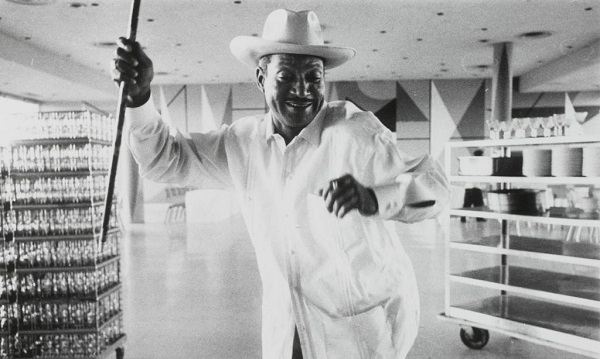
Benny More. He is not just another musician, he is unanimously the greatest popular artist that has ever existed in Cuba. It is the symbol, the myth, the legend, as the summary of Cuban popular music that is very rich and abundant. Benny symbolizes the peasant party, the sarao, the bohemia, the download, the coffee, the bar, the theater, the party, the carnivals, the show. El Bárbaro del Ritmo is the best of popular music.

Born on August 24, 1919 at 7:00 a.m. m. in the Pueblo Nuevo neighborhood of the town of Santa Isabel de las Lajas, belonging to the Cienfuegos province. His parents were named Virginia Moré and Silvestre Gutiérrez, and Benny was the oldest of 18 siblings. His surname Moré came from Ta Ramón Gundo Moré (a slave of Count Moré), who according to the tradition of the Congos, was their first king in Santa Isabel de las Lajas.
He was gifted with a flowing tenor voice that he colored and phrased with great expressiveness.
This context was definitive for his future career in music, he learned to play the insundi, the yuka drums, those of Makuta and Bembé, invokers of deities, with whom he sang and danced perfectly, but also to interpret the son, the guaracha and the rumba.
Since he was a child he manifested his great vocation for music, as he would spend all day humming a popular song or improvising and directing ensembles made up of machetes, bongos made from milk cans, guitars made from a board and nails made from strings of string. sew, two sticks as keys, etc. And when he was ten years old, he “grated” a “real” three that had been lent to him, with which he would escape from his mother to the parties near his house.

Moré was a master in all genres of Cuban music.
He could always be found standing on a table singing and reciting a son manigüero, surrounded by listeners. He spent his childhood and adolescence as Bartolomé, without the opportunity to study or get a permanent job. Like his brother Teodoro, Bartolomé was enrolled in the José de la Luz y Caballero School of Public Instruction, where he always stood out for his conduct and application.
He was gifted with a flowing tenor voice that he colored and phrased with great expressiveness.
This context was definitive for his future career in music, he learned to play the insundi, the yuka drums, those of Makuta and Bembé, invokers of deities, with whom he sang and danced perfectly, but also to interpret the son, the guaracha and the rumba.
Since he was a child he manifested his great vocation for music, since he would spend all day humming a popular song or improvising and directing ensembles made up of machetes, bongos made with milk cans, guitars made with a board and nails with strings of thread. cook, two sticks as keys, etc. And when he was ten years old, he “grated” a “real” three that had been lent to him, with which he would escape from his mother to the parties near his house.
Why is the Bacardi symbol a bat?
Moré was a master in all genres of Cuban music.

He could always be found standing on a table singing and reciting a son manigüero, surrounded by listeners. He spent his childhood and adolescence as Bartolomé, without the opportunity to study or get a permanent job. Like his brother Teodoro, Bartolomé was enrolled in the José de la Luz y Caballero School of Public Instruction, where he always stood out for his conduct and application.
His voice particularly stood out in the son montuno, the mambo, and the bolero.
Since he was a child, his aptitude for singing and improvisation stood out, which he demonstrated when, barely seven years old, he escaped to entertain Guateques and parties nearby and stayed singing notes with his mother to prevent him from sleeping while ironing until late at night. .
Benny went through a complicated life, but he was willing to do anything to achieve his dreams of success. With almost twenty years of age, in 1940 Bartolomé said goodbye to his mother at the Ritz Hotel in Central Vertientes, where she worked, and traveled hidden, indistinctly, on a train and in a truck, to the City of Havana. He was definitely coming to try his luck in the bustling city. Since then he would be seen in the famous neighborhood of Belén, with a guitar acquired in a pawnshop, wandering through cafes, bars, hotels, restaurants, and even brothels.
That same year he told his cousin, a fellow downloader: “I’ll stay in Havana, here I get up or I sink.” From then on the saga of the downloads began in the bars on the avenue of the port. Once, recalling those times, he confessed: “I went out into the street with a guitar on my shoulder to sing to the tourists. I am not ashamed of it; Carlos Gardel also did it in Argentina and he is the king of tango”
At that time, the Supreme Court of Art began to be broadcast on the CMQ station. Bartolomé Maximiliano Moré appeared on that program animated by Germán Pinelli and José Antonio Alonso. After presenting it and at the moment of starting his presentation, the bell rang for him. Later Bartolomé returned to Monte y Prado to the Supreme Court and on this second occasion he won the first prize. Possessor of a fresh voice, with a beautiful timbre, sensual and evocative, of a black peasant, despite his misery, Bartolo continued to sing with all the inner strength that Cuban rhythms demanded of him.
One of his escapades Siro Rodríguez, a member of the famous Trio Matamoros, heard him sing in the bar of El Templete restaurant, on Avenida del Puerto, and was very impressed by the boy’s voice and tuning. Bartolomé’s entry into the group led by Miguel Matamoros can be considered his true debut as a professional singer, since with said group he had a stable job for the first time as a musician and made his first recordings on 78 revolutions per minute records.
Benny knew he had a voice, an atche (luck), and a destiny. Perhaps he sensed it, intuited it, or simply trusted in his triumph. When he started with Miguel Matamoros and his group, he already wanted to make changes to the picket line. In Mexico, when Miguel got sick, he was able to direct the group, took command and made the friends enjoy themselves at the El Patio cabaret.
When the contract ended, the Matamoros group returned to Havana, but without Bartolomé, who decided to try his luck alone in Mexico. When communicating his decision to the famous author of the son El que sowing his corn, Miguel Matamoros would reply: “It’s very good, but you have to change your name from Bartolo, which is very ugly. You’re not going anywhere with him. You’re right, Bartolo replied, from today I’ll be called Benny, yes, Benny Moré.
The owner of the business was hypnotized by the tasty atmosphere that Benny created as a manager. After singing with several leading orchestras in Mexico, he stood up nicely with the most famous band of the 20th century: Pérez Prado and the Cuban mambo.
With this meeting, two geniuses came together: in Benny Moré there was talent and natural intuition; in Pérez Prado, in addition to all that, mastery of technique and an enormous facility for making music.

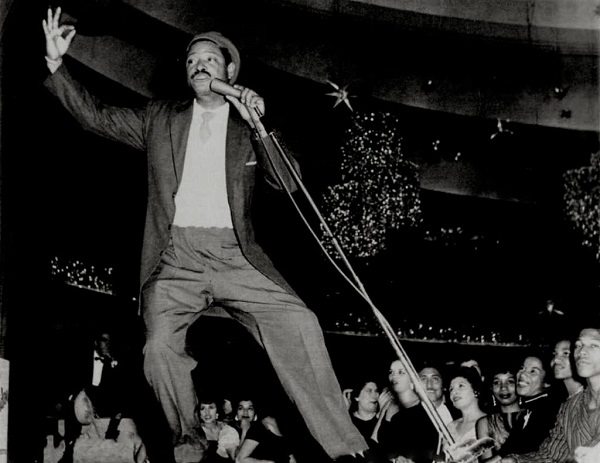
With Pérez Prado he conquered the noble Aztec people on tours of different states of that sister country. Due to the success achieved by Benny, the town awarded him the title of “Prince of the mambo” and Pérez Prado that of “King of the mambo”. He sang like no one else in the world and began his international rise.
By that time Benny’s voice was already known in Panama, Colombia, Brazil, Puerto Rico, Haiti, Venezuela, and of course, in his native Cuba. In the lively world of nightlife in Mexico City, the Cuban singer performed in countless theaters, among others the Margo, the Blanquita, the Folliers and the Cabaret Waikiki, alternating with renowned artists such as the legendary vedette Yolanda Montes (Tongolele ), the Mexican Toña la Negra, and the prominent Cuban pianist and composer Juan Bruno Tarraza, for whom Benny sang the bolero Ya son las doce. He participates in many films and upon his return to Cuba, he was already sure that he had to be counted on.
Nostalgia for his family, friends, for the Homeland, and the desire to obtain laurels on his Island, where he considered that he was not well known, made him return to his beloved Lajas at the end of 1950. The older sonero was definitely in Cuba, he had left behind comforts, material and spiritual satisfactions, friends and even the loves that winners usually do not lack.

For the next two years, he performed by contract for a program called “De fiesta con Bacardi”, which aired on the Cadena Oriental radio station with the Mariano Mercerón orchestra, and the singers Fernando Álvarez and Pacho Alonso.
As Benny Moré was an exclusive artist for RCA Víctor, this firm demanded his presence in Havana to make different recordings. To fulfill this commitment, he made alternate trips to Havana and thus maintained his commitment to the eastern radio network. After the engagement at Casa Bacardí and master Mercerón, in 1952 Benny Moré returned to Havana.
Certainly Benny concluded an era, closed a chapter of Cuban musical life, that stage of nightlife that was already declining. Benny’s life was related to a world that has already disappeared. Then everything became myths and legends. Benny kept singing, but now it would be on scratch records, which were digitized.
Today’s “oidores” (listeners) must travel back in time, abstract themselves, imagine those seedy bars in the Havana port full of curious tourists. Of Chinese inns that sold “complete” for poor people who passed the hat, after singing through the streets of Havana.

Son Cubano is one of the most popular musical styles in Cuba and Kiki Valera is one of its leading exponents
Over the last century, this style of traditional Cuban music has contributed to many other musical genres, including jazz, cha cha cha, mambo, salsa, songo and timba.

Cuban son is the music that made the Buena Vista Social Club worldwide stars in the late 1990s, but Kiki Valera comes from a family of musicians whose involvement with Cuban son predates BVSC by decades.
Kiki Valera is the eldest son of the famous septet La Familia Valera Miranda, a multi-generational traditional music group from Santiago de Cuba.
Since the 19th century, La Familia Valera Miranda has played an important role in Cuban culture by collecting and preserving the deep-rooted traditions of the legendary Sierra Maestra mountain region.
Their debut album, “Antología Integral Del Son”, released in 1982, helped initiate the explosion of interest in traditional Cuban music.
Kiki, like most of her family, is a virtuoso. A multi-instrumentalist, composer, arranger, sound engineer and producer, he is best known as one of the world’s best players of the Cuban cuatro, a medium-sized guitar with 8 strings grouped in sets of 2.

Kiki learned the Cuban tres under the guidance of his father Felix as a child.
He later attended one of Cuba’s most prestigious music schools, the Esteban Salas Conservatory, in Santiago de Cuba and by the age of 15 was touring internationally.
Kiki continues to conduct, compose, arrange and perform internationally. She also performs and teaches in Seattle, Washington, where she contributes to the vibrant Pacific Northwest music scene.
His current project features several other internationally renowned artists, including Coco Freeman (former singer for Adalberto Alvarez y su Son and NG La Banda), vocalist Carlos Cascante (three-time Grammy Award winning vocalist for the Spanish Harlem Orchestra), trumpeter Alexis Baró (Cubanismo and Omara Portuondo) and bongocero Pedro Vargas (Barbarito Torres’ band). (Kiki Valera)
“Vacilón Santiaguero” is Kiki Valera’s second solo release in the United States after many distinguished years as the director of La Familia Valera Miranda in Santiago de Cuba.
He goes beyond his core group to present collaborations with some Grammy® award winning musicians and features his favorite trumpet players, some born in Cuba, some born in the U.S., but all with reputations jus????ficadas for playing Cuban music for love, if not DNA.

“Vacilón” is one of those words that doesn’t have a perfect English equivalent to Cuban Spanish, but something that’s a really good time (a little rum or aguardiente always helps).
So what sets this project apart from the vast mountain of excellent traditional albums already out there? Not only is there Kiki’s custom-made Cuban cuatro, which brings a unique texture to the sound, rather than a tres, but, in his jazz-influenced hands, you’ll occasionally hear twists and turns in his improvisations that you probably weren’t expecting when you first glanced at the song titles, which are mostly Cuban evergreens.
Thanks to Kiki’s creative arrangements, this is no mere recycling of covers of these classic songs.
Kiki is as exacting with the recording, mixing and mastering work as he is with the arrangements.
Much of the recording and mixing was done in Kiki’s custom home studio, and Grammy® winner Michael Lazarus mastered the project.
The result will be an audiophile’s delight, a reason, I might add, to want the physical product for your collection (Kiki Valera).
Kiki Valera – Vacilón Santiaguero (2024).
Tracks:
- Este Vacilón (Felix Valera Miranda)
- El Ají de Cocina (Felix Valera Miranda)
- Sobre una Tumba una Rumba (Ignacio Piñeiro)
- El Penquito e’ Coleto (Francisco Repilado “Compay Segundo”)
- Funfuñando (Arsenio Rodriguez)
- La Guajira (Olga de Blanck)
- Mari-Juana (Juana María Casas)
- Muñequita Feliz (DR)
- El Empanadillero (Teodoro Benemelis)
- Pájaro Lindo (Felipe Neri Cabrera)
- Dos Gardenias (Isolina Carrillo)
- El Cuarto de Tula (Sergio Gonzales Siaba)
Musicians:
Kiki Valera (Cuban cuatro, guitar, bass, harpsichord, maracas and backing vocals).
Pedro Vargas (congas, bongos and backing vocals)
Steve Guasch (Backing vocals)
Carlos Cascante (Lead vocals on tracks #1,#4,#5,#7,#9,#10,#12)
Francisco “Coco” Freeman (Lead vocals on tracks #2,#11)
Joshuah de Jesus (Lead vocal on tracks #3,#8)
Raquel Zozaya (Lead vocals on track #6).
Special guests:
Alexis Baró (Trumpet on tracks #1, #3, #4, #6, #9, #11).
Steve Mostovoy (Trumpet on tracks #1, #3, #3, #6, #11)
Michael Rodríguez & Jonathan Powell (Trumpet on track #8)
Pete Nater & Dennis Hernández (Trumpet on tracks #2, #5, #7, #12)
Brian Lynch & Thomas Marriott (Trumpet on tracks #1#0)
Leon Q Allen (Trumpet on track #4)