• Skip to primary navigation
  • Skip to main content

International Salsa Magazine

  • Home
  • Previous editions
    • 2025
      • ISM / November 2025
      • ISM / October 2025
      • ISM / September 2025
      • ISM / August 2025
      • ISM / July 2025
      • ISM / June 2025
      • ISM / May2025
      • ISM / April 2025
      • ISM / March 2025
      • ISM / February 2025
      • ISM / January 2025
    • 2024
      • ISM / December 2024
      • ISM / November 2024
      • ISM / October 2024
      • ISM / September 2024
      • ISM / August 2024
      • ISM / July 2024
      • ISM / June 2024
      • ISM / May 2024
      • ISM / April 2024
      • ISM / March 2024
      • ISM / February 2024
      • ISM / January 2024
    • 2023
      • ISM / December 2023
      • ISM / November 2023
      • ISM / October 2023
      • ISM – September 2023
      • ISM – August 2023
      • ISM July 2023
      • ISM Edition June 2023
      • ISM – May 2023
      • ISM April 2023
      • ISM March 2023
      • ISM February 2023
      • ISM January 2023
    • 2022
      • ISM December 2022
      • ISM November 2022
      • ISM October 2022
      • ISM September 2022
      • ISM August 2022
      • ISM July 2022
      • ISM June 2022
      • ISM May 2022
      • ISM February 2022
      • ISM January 2022
    • 2021
      • ISM December 2021
      • ISM November 2021
      • ISM October – 2021
      • ISM September 2021
      • ISM August 2021
      • ISM July 2021
      • ISM May 2021
      • ISM April 2021
      • ISM June 2021
      • ISM March 2021
      • ISM February 2021
      • ISM January 2021
    • 2020
      • ISM December 2020
      • ISM November 2020
      • ISM October 2020
      • ISM September 2020
      • ISM August 2020
      • ISM July 2020
      • ISM June 2020
      • ISM May 2020
      • ISM April 2020
      • ISM March 2020
      • ISM February 2020
      • ISM January 2020
    • 2019
      • ISM December 2019
      • ISM November 2019
      • ISM October 2019
      • ISM Septembre 2019
      • ISM August 2019
      • ISM July 2019
      • ISM June 2019
      • ISM May 2019
      • ISM April 2019
      • ISM March 2019
      • ISM February 2019
      • ISM January 2019
    • 2018
      • ISM December 2018
      • ISM November 2018
      • ISM October 2018
      • ISM September 2018
      • ISM August 2018
      • ISM July 2018
      • ISM June 2018
      • ISM May 2018
      • ISM April 2018
      • ISM March 2018
      • ISM February 2018
      • ISM January 2018
    • 2017
      • ISM December 2017
      • ISM November 2017
      • ISM October 2017
      • ISM September 2017
      • ISM August 2017
      • ISM July 2017
      • ISM June 2017
      • ISM May 2017
      • ISM April 2017
  • Download Salsa App
    • Android
    • Apple
  • Spanish

Search Results for: King of Mambo

The King of Bass Mr. Bobby Valentin

North America / USA / Nueva York

One step away from the Latin Grammy. The King of Bass Mr. Bobby Valentin

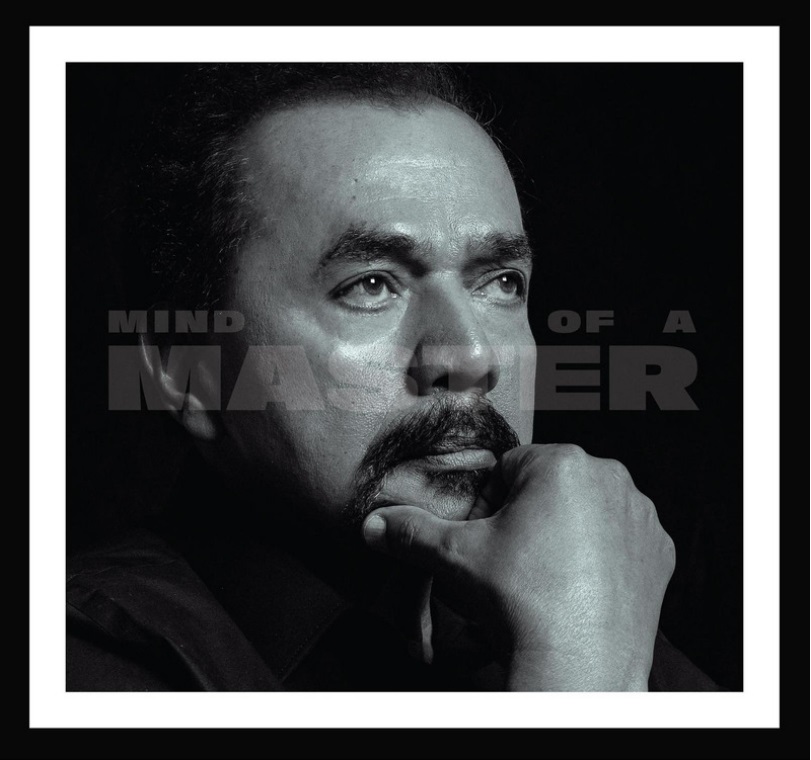
The Latin Grammy nomination of the experienced Bobby Valentin in the category of Latin jazz with the production “Mind of a Master” is another recognition of honor for his half-century musical career as an arranger and conductor.

“Mind of a Master” is the production with which Bobby Valentín enters the competition on the nineteenth day of the Latin Grammy. (Archive National Foundation for Popular Culture). Bobby, nominated last year in the category of salsa with “My rhythm is good”, is one of the five contenders for the Latin Grammy in the “Best Latin Jazz Album” section.

The other finalists are also Puerto Rican Néstor Torres (“Jazz Flute Traditions”), Adrian Laies (“The house of a jazz pianist”), Dafnis Prieto (“Back To The Sunset”) and Hermeto Pascoal (“Universal Nature”). . In a conversation with this medium, Bobby said that he will immediately capitalize on the nomination to promote the album at international festivals.

“We have sent to several festivals in the United States a report of what the album is and my career. We are waiting for answers. Right now I have a presentation at the Interamericana on Wednesday, October 17, which celebrates the 20th anniversary of the Music Department and there is a person interested in going to Costa Rica. It’s slow, but I have a lot of faith that little things will continue to appear. Latin jazz is another audience, although I know that many people who like salsa like it”.

Bobby Valentin
Bobby Valentin

The King of the Bass added that he feels as if he has won the precious golden phonograph. “The nomination of what is a salsa album is another style. This is another corner. What I’m saying is that after one is competing, even if you don’t win, the competition is good, as is being nominated among so many productions. For me the competition in Latin jazz is stronger than in salsa”. Bobby presents “Mind Of A Master” alongside The Latin Jazzists, who are mostly the musicians from his salsa orchestra, like Angie Machado and Eliud Cintrón. Bobby isn’t worried about purists arguing that they’re not jazz soloists.

“The musicians are happy. It is a genre that they like. Here they have been more concerned with projecting their styles and expressions”, Bobby reacts. A salsa musician can play jazz. This is how history supports it. Mongo, Puente, Machito, Mario Bauzá, Mario Rivera, Eddie Palmieri, Hilton Ruiz and Jerry González, among others, began in mambo and Afro-Caribbean dance music, prior to their foray into jazz.

“Like Ray Barretto, who was also linked to jazz. Finally, we all look for that corner. The same Néstor Torres, who started with Batacumbele. After one has done so many things in the tropical genre, one seeks satisfaction as a musician by looking for another corner”.

Jazz, however, is not new to Bobby Valentín. “Latín Gravy”, “Codazos”, “Shinny Stockins” and “Maiden Voyage” are several of the works recorded on his salsa albums. “It always caught my attention. When I was in New York, Latin jazz was mambo jazz. Later the name changed, but before it was done for the dancer, although there were solos. It’s no longer for the dancer. Now people sit down to listen to him. It was a good change.”

Bobby has not decided if he will travel to Las Vegas to be present at the awards ceremony, to be held in November. “I still don’t think so. It’s not because I’m going to win or not. To be competing even if I don’t win is reason for joy. I feel very happy. I have no plans yet”.

Next Wednesday the 17th he will perform with The Latin Jazzists at the INTER Metro Jazz Festival. That night he will perform the “Mind Of A Master” sequence. “I feel very happy. This record is like a baby to me. Although we have played tropical music, this is a new baby and that it is nominated for a Latin Grammy makes me feel very happy”.

“Tito Puente: When the drums are dreaming” A biography of the King of Latin Percussion by Josephine Powell

North America – USA –CaliTifornia

This month we are sure that you will have time to enjoy an excellent reading at home. So we recommend this book by Josephine Powell. An interesting biography about the legendary Tito Puente, that takes us on a journey through the more than 60 years in which he performed.

Further the life of Tito Puente, you can know his insight into the Latin music industry. With many anecdotes of his encounters, racial discrimination while touring and how that impacted his relationship with other band members. There are also numerous insights into his personality, his temperament, and the many obstacles he had to overcome to achieve legendary status.

Josephine Powell’s book on Tito Puente and his contributions to Latin music and dance is a treasure trove of people, places, facts and history. Because of the author’s place in the history of Latin dance, she takes the reader with her through that fascinating maze of how artists like Puente changed the exposure and tastes of the American public and the world.

The Latin Ballroom world today reflects how we adore – and then neglect and forgets – the people who made us who we are. She mentioned many fascinating dance-related characters in this story that takes place in New York, Los Angeles, Miami, the Catskills and Havana.

It is also a much-needed history of great nightclubs and ballrooms, which are only dim memories for the young – but in their time, were the breeding grounds of Latin music and dance. Tito Puente’s percussion and passion are finally brought to life in a fascinating book.

To remember Tito Puente’s career as accurately as Josephine Powell has done makes this biography a worthwhile read. Tito Puente the man and Tito Puente the musician are blended into the tempo of the times during which the musical man lived. For young musicians seeking success Josephine Powell’s well-written commentary provides a glimpse of what can lie ahead in one’s career; so do read Powell’s take on Tito Puente’s life and perhaps capture a taste of how you too can climb the charts with a dash of spice in your style.

With over 100 albums, several Grammy nominations, 7 Grammys and posthumously awarded The Grammy Lifetime Achievement Award in 2003, his footprint in the world of music will forever be the standard of excellence that others will look to emulate.

Josephine Powell took on the monumental task of writing about his life, the forward was written by Tito Puente 2 months before he died.

Because of their lifelong friendship of many decades, Josephine was the one person who could create this book. Her talent and passion will pulled this off to perfection. He was a man who brought his music to the world, and put the Mambo on the map.

This book never could have been written without her dedication and perseverance and the personal moments she shares. From the very first chapter, the quality of her writing can be seen as she starts with the moments leading up to his death and continues for 16 more, giving you the history of Latin music from its inception to the music of today. Throughout her many archives of pictures from her private collection, your eyes will wide with wonder.

Josie Powell traces the evolution of Afro-Cuban, Puerto Rican and jazz forms from their generally recognized origins through the end of the twentieth century, focusing on Puente’s interactions with professional allies and constant rivals.

Powell documents musical events as an aficionado of the Latin genres, almost religiously avoiding disclosure of Puente’s family life. Those not yet born during the Big Band decades or Mambo mania can imagine the atmosphere from descriptive passages of Manhattan ballrooms, Havana dance halls, LA nightclubs.

About Tito Puente

Ernesto “Tito” Puente was born in 1923 in Spanish Harlem and grew up with the advent of radio and American swing bands. At 10 years old he aspired to be a dancer, like Fred Astaire. An ankle injury gave him the opportunity to explore his talent as a musician. At fourteen he won the coveted Benny Goodman, Gene Krupa drum contest. Tito became a master percussionist. His instrument was the timbales, a pair of cylindrical drums beat upon with sticks. When he joined the dynamic Machito Orchestra at seventeen he saw a promising future, but the Japanese attack on Pearl Harbor December 7, 1941 took him off to war.

He led a makeshift orchestra delivering lovable American wartime tunes when he was not fighting. He returned home wounded, weary and jobless. Puente’s tale should have been the story of every returning American GI, who went off to war, came home to his sweetheart, attended college, raised a family and settled down in an adorable house. Things were not that way.

After the war his obsession for Cuban music drove him to Havana. He attended secret meetings of Santería, an Afro-Cuban religious cult with its roots steeped in mysticism often referred to as black magic. With the lure of the sacred batá drum he discovered a world of rhythms never heard by a white man’s ear. He found himself inside the beat, and thoroughly possessed. Soon Tito became a devotee of Santería and used those drum patterns and calls, which were the mainstay and backbone of his music. Today this hot hypnotic music is known worldwide as Salsa.

About Josephine Powell

Author Josephine Powell – a music historian, lecturer, and consultant on ballroom music and dancing and Latin American music – was a consultant (music, history, and dance) on the motion pictures Salsa, Havana, and The Mambo Kings, and their soundtracks; The Mambo Kings track received a Grammy Nomination. She also consulted on two Golden Eagle television shows; two television documentaries, one Presidential Inaugural Ball, and two Grammy-winning record albums by her mentor Tito Puente.

In 1990, she obtained a star for her mentor on Hollywood’s Walk of Fame, orchestrated his associated live concert on the Boulevard, and organized a gala event at the Hollywood Roosevelt Hotel, with music industry executives, film producers, and celebrities.

Powell’s dance career took her to the South Pacific, the Philippines, Guam, Hong Kong, Thailand – where she performed for the Royal Family – and Vietnam, where she introduced mambo to the troops in a revue she wrote herself. A Gold Medal ballroom dancer, Powell was Tito Puente’s West coast mambo dance partner, and a cast member of the Broadway show Sketchbook in Las Vegas.

Through touring the country for over a decade with stage and lounge shows, along with work in the recording, television, and movie industries, Powell learned wardrobe design, writing, comedy, and choreography. Appeared at the Tropicana, El Rancho Vegas, Flamingo, and Nevada Club in Las Vegas; The Golden Hotel and Mapes Hotel in Reno; The Wagon Wheel in Lake Tahoe, and The President Hotel in Atlantic City, among others.

After an injury forced her to retire from dance, Powell became a real estate agent in Beverly Hills, where she became actively involved in political work with celebrities and later joined Connie Stevens’s organization Les Girls. Powell’s work and charitable activities afforded many opportunities to work with Hollywood producers, directors, writers, and luminaries.

Powell studied the history of ballroom music and dance, ethnomusicology, journalism, and Spanish at UCLA. A regularly featured musicologist on radio stations KXLU and KPFK, Powell receives many requests for lectures and consultations. She has been a presenter and judge at numerous dance competitions, including the Feather Awards and the U.S. Open National Swing Dance Competition. The Mormon Temple Genealogical Library in Los Angeles has made her its expert lecturer on French Colonial Maritime records. Since 1986, she has conducted ten research and study trips to Havana, where she is a curatorial consultant for El Museo Nacional de la Música Cubana.

With information from: https://josephinepowell.com
You can buy this wonderful book in Amazon: https://www.amazon.com/Tito-Puente-When-Drums-Dreaming/dp/1425981585

“Mambo Fiesta” the new of Maelo y su Klan from Oslo Noriega

As of Thursday, November 4, 2022 it will be available for sale on all digital platforms worldwide.

A musical production of Café Records.

Miami, FL, November 4th, 2022. (Café Records) It already smells like the holidays, both the World Cup Qatar 2022 and Christmas and the native of Caracas, the Venezuelan Ysmael D’La O (Maelo), producer, composer and director of the European group “Maelo y su Klan”, brings us this new and catchy single from the album “Cultura Viva”, titled Mambo Fiesta.

Mambo Fiesta lo nuevo de Maelo y su Klan desde Oslo Noriega

In his musical biography, Maelo has the album “Ritmo y Sabor” 2018 and singles from his new production; “Son Kizomba”, “La reina de la Campana”, “Que Extraño es Eso”, which was his first Feat with the Venezuelan cultural heritage group “El Sondeo Clásico del Caribe” and last summer’s hit “Son Onomatopeya”.

It has been a spectacular year, full of nominations, recordings and successes of the mulatto from Carapita, in which we highlight the following: winner as the best Antillean Group of 2022 of the Cristo Rey Awards, which is awarded in Cali, Colombia, known for being the world capital of salsa.

He also received the “Honorable Mention” as producer of the year 2022, at the Golden Latin Awards in Tenerife, Spain, after more than 20 years in music production in the old continent.

Referring to the Mambo, today few groups are recording this type of rhythms, but Maelo, as a good visionary and knowledgeable of the emerging market, breaks with that scheme and presents us with a work of musical art for the dancer.

With the invitation of excellent and first class musicians as collaborators:

Composer: Ysmael D’La O (Maelo), Trumpets: Luis Ruiz, Trombone: Michael Palma, Voice: Luis González, Alto and Baritone Saxophones: Julio Estrada, Tumbadoras, Bongo, Campana, Maracas and Guiro: Yomar “Caballo” Méndez, Timbal: Hungría Rojas Jr, Bass: José “Mortadelo” Soto, Piano: Julio Estrada, Backing Vocals: Luis González, Alexis “El Chivo” Aguilar and Ysmael D’La O (Maelo). Arrangement and musical production: Julio Estrada, recorded at Estudio Requena and JE studio, mixing: Francisco Requena and Julio Estrada.

Mastering: Estudio Requena: Francisco Requena, all under the general and executive production of: Ysmael D’La O (Maelo).

“Mambo Fiesta” is here to stay in the public’s taste, and is already available on all digital platforms distributed by Café Records.

Maelo y su Klan

You can read: Live The Salsero Rhythm In Asia

Yma America “We have done a good job, making our Music and Latin Culture known”

“Every time I go out to play, to sing, I show my training and above all I put the name of Venezuela up high and without talking too much”.

She reaffirms that; We have done a good job, making our music and Latin culture known.

It is indisputable the mark that many Venezuelan artists who have decided to settle abroad leave on their way around the world, because they are distinguished by their achievements and place the name of Venezuela in great, making their fellow citizens feel proud of their successes, such is the case of Yma America Martinez, born in Caracas and based in Germany for almost 30 years.

With a musical vein that she inherited from her parents who, she points out, were the fundamental pillar in her formation and career, and why not, for having grown up in one of the most musical parishes of Caracas, the San Agustin del Sur neighborhood, Marin sector, from where great characters have emerged including her uncle, the choreographer and dancer Carlos Enrique Orta (+), who toured with his dance company Coreoarte great stages around the world.

His musical beginnings were with a group created by his father “Los Azulitos Juveniles” where he sang aguinaldos with his sisters and neighbors, to later join the San Agustin Choir at the Don Pedro School “Fe y Alegria”. She received her academic preparation at the “José Ángel Lamas” Music School and at the “Simón Bolívar” National and Youth Orchestra, to continue her cello studies in Paris at the “Ecole Normale de Musique de Paris” and singing and composition at the CODARTS of the World Conservatory of Music in Rotterdam.

It reaffirms that; We have done a good job, making our music and Latin culture known.
Yma America “Every time I go out to play, to sing, I show my training and above all I put the name of Venezuela up high and without talking too much.”

Yma America is a singer, musician, composer, arranger, plays the cello and the cuatro. Her clear and powerful voice makes her very sought after throughout Europe. She has worked with different groups; Kimbiza, Latin Sampling, Francisco Zumaqué, Conexión Latina, Mirta & The Goalgetters, Dúo Ymaya, Cubop City Big Band, among others. He has participated in major jazz and classical music festivals such as the Ruhr Guitar Festival, the North Sea Jazz Festival, the RuhrTriennale, the MusikTriennale Köln, and the Elblandfestspiele. In 2004 her perseverance made her the winner of the international competition “Voice and Guitar” in Saarbrücken-Germany, where she won the first prize together with the Colombian guitarist Andrés Mendoza Villamil.

Another relevant fact in the life of this artist can be seen in the song “Juégalo”, a song she composed and sang for the Bacardi company commercial, which became a hit in the summer of 1998 and 2000. He participated in the musical “King of The Lions”, with WDR Big Band in the main role of the Lilipuz children’s concert “Die schlaue Mama Sambona”; and has performed more than 30 times with the production “Adventure Weltumrundung” of the Fly & Help Foundation.

She has on her shoulders the responsibility of a great project that she is carrying in Germany and wishes to realize in her native country, making music with percussion for deaf people called “FEEL SOUNDS”, because of this proposal in 2010 she was awarded with the Disability Policy of the Innovation Prize of Cologne (KIB).

She assures us that; “The language of music is the same all over the planet”, with this phrase we enter to discover the virtues, dreams, and desires of the interviewee.

How does Yma America define herself?

“It is not easy to answer this, but I think I am a very patient and calm person, too much I would say. I don’t give myself a bad life, fortunately, I have done what I have wanted and desired, thanks to the support of my parents and family in general.” “I am a character to whom, thank the god’s things and opportunities have been offered to me, some I have taken advantage of, others not, there are some which I have not realized in time that they have been there waiting for me and I have lost them. But I can say that I have lived my life, with the ups and downs, good and bad, without involving anyone and that is how I have been leading it and learning”.

Yma America is a singer, musician, composer, arranger, plays the cello and the cuatro.
His musical beginnings were with a group created by his father “Los Azulitos Juveniles”.

Part of his training was obtained through the “José Ángel Lamas” Conservatory of Music and the “Simón Bolívar” National and Youth Orchestra. What do you thank them for and how do you give back your training with them?

“I thank them for part of my training as a musician than I am, because the other part I owe to my family and my people where I come from.” “-Give back-“, I think that every time I go out to play, to sing, I show my training and above all I put the name of Venezuela up high and without talking too much”.

What do you think of the phrase “No one is a prophet in his own land”?

“-I honestly don’t know what it means-“. “I don’t think I would have started singing professionally if I had stayed in Venezuela. I played cello in the National and Youth Orchestra of Venezuela, I played and substituted for the cellists in the Philharmonic Orchestra of Venezuela and in the Municipal Orchestra of Caracas, I sang solo at every party and family celebration, and in reality, I was very quiet at home”.

“I don’t think I am a “prophet” where I am, I always do the best I can and people value it and many times also criticize it, of course”.

Why did you choose Germany and not another Latin American country? How many years have you been living in Cologne?

“I left Caracas in 1986 for Paris-France, thanks to the fact that my grandmother worked for a wealthy family and they offered to help a relative to study abroad, specifically in France because they had relatives there. First, my uncle Carlos Enrique Orta, a choreographer-dancer with a long international career, went many years before, and then I wanted to “take him up on it” after a while”.

“Actually I wanted to study cello for 1 year in Paris and return to Venezuela, but when I finished my 1st year of study at the “Ècole Normale de Musique de Paris”, they offered me to stay and I didn’t refuse. The last year of studies in Paris I didn’t have much money to live and in Köln-Germany lived the musicians of COREOARTE (a Dance Company created by my uncle Carlos Enrique Orta with dancers and musicians from San Agustin), at that time I went every weekend, on Fridays after classes, from Paris to Köln and I returned on Mondays at 6 am and arrived directly to classes in the afternoon, I did that because we played; Renis Mendoza, Felipe “Mandingo” Rengifo, Charles Peñalver, Orlando “El Diablo” Blanco and me in the street to collect a little money and cheer up the streets and faces of the Germans, and with that I could buy food for the whole week in Paris until the following Friday when I returned to Köln. … and so on for many months until when I finished my studies, I decided to move to Köln and the first months I lived with Renis Mendoza who shared his apartment with another boy from Corporate and then I got my room sharing an apartment with a German girl”.

Part of his training was obtained through the "José Ángel Lamas" Conservatory of Music and the "Simón Bolívar" National and Youth Orchestra.
Part of his training was obtained through the “José Ángel Lamas” Conservatory of Music and the “Simón Bolívar” National and Youth Orchestra.

“I lived first in Paris from 1986 until 1990, 4 years and from 1990 until today in Köln, next year I will be 30 years based in Germany, I say “I have my bed in Köln”, because in reality I am almost never at home, thanks to music and life that has given me so much.”

“I never thought, nor have I ever imagined living in another Latin American country, I think that from here, I’m going home… To Venezuela!”.

How has the German public been receptive to Latin rhythms, has there been no resistance?

“At this moment there is a stagnation in the development of activities with Latin music, but in the same way there is more and more receptivity, I know we have done a good job, making known our music and Latin culture, there are several Salsa bands with German musicians, there are more and more dancers, more dance classes, many have understood the message and others interpret it to their wave but there is much atmosphere and places with Latin music, with Dj of Salsa-Merengue and the crap they call Reggaeton music”.

“I must say that some years ago there were more Salsa orchestras with German musicians and there were more Salsa Festivals that unfortunately has been reduced by the phenomenon “Salsa Dj” I think and I’m almost sure, because it is cheaper and people dance the same. That has done a lot of damage to live music”.

What memories do you have of being under the baton of these great maestros Abreu, Aldermaro Romero, Carlos Riazuelo and Yehudi Menuhin?

“I don’t really remember at the moment any particular experience or directly with them. Although I had more contact with maestro José Antonio Abreu, the experience was the same as with many of the members of the ONJV.   But of all of them I was always struck by the confidence with which they could dominate and control the number of musicians that an orchestra has and above all that in classical style and pieces the feeling that is transmitted is that of the conductor and not that of the musician or the performer. Of course, they were wonderful experiences”.

How many compositions have you made?

“Honestly, not many, approximately 12 but that have been arranged, played and recorded, only 4.”

Your parents have been promoters of your career, what do you thank them for?

-Chacha!

“My parents are the reason for my profession, it is from them that this Yma America that you are interviewing for my work has come out. Thanks to their way of being, to their offspring, to their education, I thank them for what I am and what I have done… My life”.

Are you still constantly growing, what anecdotes do you have from your time at the “Ecole Normale de Musique de Paris” and the “Conservatoire de Musique du Monde”?


“In Paris, I think, having to change the mentality of learning everything little by little and without haste in Venezuela, to the need to put my batteries because here they do not wait, you have to give it hard and meet daily, plus that prompted me to learn French faster”. “And in Holland to go from being a student to being the singer of the Cubop City Big Band of the conservatory Prof. Martin Verdonk (percussion), Leslie Lopez (bassist) and directed by Prof. Lucas van Merkwijk drums that was strong, especially at the beginning that was to understand how they interpreted Latin music that is something other than Latin Jazz, then we started with Mambo de una, and as Leslie Lopez was the bassist of Puerto Rico there was a balance and there we were learning and getting experiences all equally”.

Working with Lucas and with those wonderful musicians, people with an extraordinary musical level, is very relaxed, zero stress, we have all learned there, the failures and successes have gone hand in hand with everyone.
She works alongside Dutch percussionist and producer Lucas Van Merwijk and is the lead singer of the successful “Cubop City Bing Band”.

How does it feel to work alongside Dutch percussionist and producer Lucas Van Merwijk and to be the lead singer of the successful “Cubop City Bing Band”?

-It’s great!

“Working with Lucas and those wonderful musicians, people with an extraordinary musical level, is very relaxed, zero stress, we have all learned there, the failures and successes have gone hand in hand with everyone. Next year (2020), with CUBOP CITY Big Band we will celebrate 25 years together and for sure something good will be done, something wonderful is being cooked, with the maestro Edy Martinez -pianist, composer and Colombian arranger-, of course, also thanks to Lucas’ wife, Roosje who does a great job, she is the organizer/manager of that crowd and of all the tours”.

Have you surrounded yourself and trained with musicians that due to their quality and trajectory are considered the best, what do you think you have yet to do?

“I have done and learned many things in life, both personally and musically, I think and I know that I still have a lot to do and to learn”.

Hasn’t the language been an obstacle?

“No, musically speaking, no, the language of music is the same all over the planet.”  “The French language I had to learn quickly because I came from Venezuela directly to the Conservatory of music, in Holland the classes are in English and I did not have to learn Dutch and the German language has been strong in other daily situations or life in general.”

In which festivals have you participated both in Europe and Venezuela?

-I can’t tell you exactly how many, but in these 30 years living in Germany and making music professionally there have been many, in almost all of Europe”.

You have a project with deaf people in Germany, which we hope can also be realized in Venezuela. Tell us about this musical project and why did you decide to make this the theme?

“TO FEEL – SOUNDS, but as a proper name I named it “FEEL SOUNDS” in view of the fact that the sense of touch is much more developed in deaf people and my work is based on making music with percussion, so the vibration of the sound is what they feel.”

Gestern abend war sehr schön !!! Yma America and Marco Antonio Sanchez Ramirez

“It is a project that I have had in mind for many, many years, exactly 1980, when I was studying “Hotel and Tourism Administration” at the University College of Caracas and doing field work in San Jose de Rio Chico, at the end of my activity and visiting people, they made me a party, drums and fulias until dawn, they were 5 drummers, the father and 4 children and at the end the father tells me that one of them was deaf. And the young man played very well, I never imagined that he could be deaf, he played perfectly and we even danced salsa. And from there I had the idea of working and teaching percussion to the deaf.”

“After all that time, in one of those twists and turns of life, I had courage and started to study “German Sign Language” and planned my workshops, I went to the deaf schools in Köln, many percussionist friends helped me, Renis lent me his drums and plays with us every presentation at the end of the workshops, other friends lent me their rehearsal room to give the classes, my Sign Language teacher supported me looking for money to keep going. … and so, this year I celebrate 10 years of having developed it here in Germany and the experience has been wonderful, every day I learn more and more of this world that I can not imagine, but to see the face of everyone when they feel the vibration of the sound when playing a drum, even hearing people, people without hearing problems, that feeling is unique, fascinating!

Working with children and adults with special conditions is a great challenge, how does it feel to see this experience become a reality?

“I have already been invited to several cities in Germany, Holland and Poland and I want to continue doing it, take it to my country and fulfill my desire to develop it there, carry it out, execute it and make it known in my Venezuela. Although several years ago I attended a conference held by FEVENSOR Federation of the Deaf of Venezuela, with the assistance of several Latin American countries, Spain and Australia, I made an exhibition and presentation of several young deaf people who attended, with the participation and collaboration of Naifer Hernandez and Juan Carlos “El Indio” Betancourt percussionists of San Agustin / Marin, but everything stayed there. Of course I must always be present to be able to move forward, that’s how it is. I lack the economic support because the program, the project, the subjects, the desire, the yearning and the yearnings are already there, but I keep moving and insisting, searching and “curucuteando” until I find the proper support”.

What new projects are on the way?

“We recently started a new Latin American Music Trio project, let’s say from Mexico to Argentina, with Prof. Thomas Böttcher, German pianist, Renis Mendoza, Venezuelan percussionist, also from San Agustín/Marín and me singing and playing Violoncello, we are in the preparations, making videos, propaganda, looking for a program and composing, also in conversations and looking for an agency to sell it and take it forward. The 25th anniversary of Cubop City Big band next year, finish looking for the musical program for those celebration concerts.”

“Continue with my musical project “FEEL SOUNDS”, giving my classes and music workshops to groups of deaf children, youth and adults and from January I start to give talks about this new proposal to students of “Special Education and Pedagogy” to continue moving forward with this and take it forward until I get to Venezuela and the whole world.”

What does St. Augustine Parish mean to you?

“It is the neighborhood where I was born, there is all my childhood and adolescence, I love and respect its inhabitants very much, besides my family whom I love with all my being, there have always been many valuable people there and that multiplies more and more, thanks to the work that artists have been doing and all that educated and fighting generation that lives and has always maintained that contact of training and information with the new generations. San Agustín is the good people who live there, the rest is everywhere on the planet”.

 Venezuela in one word?

 “-MUSIC-” in capital letters.

Facebook: Yma América

By: Eiling Blanco Correspondent in Venezuela

Article of Interest: Renis Mendoza “San Agustín is like a continent and Marín is its capital”.

Willie Morales The Salsa Pilot Taking off with force… New, Tasty and Danceable Salsa!

The Salsa Pilot Willie Morales, “Vivencias mi Misión”

Is his second and most recent musical production after debuting with Desafiando la Gravedad, el Piloto returns with more power and an original sound that bets on the style of Salsa de la Vieja Guardia or Gorda in the same way of interpreting a Son Montuno, a Guaracha, a Bolero or El Mambo and surrounds us with a voice of the original Sonero.

The main theme and title track of the production “Vivencias mi Misión” features an excellent Congas solo by veteran Puerto Rican percussionist Paoli Mejías and the Vázquez brothers (Víctor and Toñito) on Trombones.

Willie Morales El Piloto de la Salsa ¡Despegando con fuerza... Salsa Nueva, Sabrosa y Bailable!
El Piloto de la Salsa Willie Morales, “Vivencias mi Misión”.

 William Morales Echeverría, better known as Willie Morales. Born in East Chicago, Indiana on December 1st. Son of Puerto Rican parents from the town of Añasco.

From a very young age, the inclination towards music was apparent, inspired by his brother Jose Rodolfo Morales (Rudy) who sang with various musical groups in the city of Chicago.

Willie developed in choirs of different schools in the city of Chicago where he demonstrated his vocal range where he performed all voices from soprano to baritone.

At the age of 13, after his parents’ retirement, he took up residence in Añasco, Puerto Rico on Nicolás Soto Ramos Street, better known as La Gallera.

Willie performed in choirs of different schools in the city of Chicago where he demonstrated his vocal range from soprano to baritone.
Taking off with force… New, Tasty and Danceable Salsa! The Salsa Pilot Willie Morales

It was here where his passion for Salsa grew and he had gatherings in the neighborhood with family and childhood friends where we spent hours in street rumbones.

He attended the Escuela Libre de Música de Mayagüez, where he took piano lessons with Luciano Quiñones, and also participated in the school’s band as a singer. He sang with several musical groups in the area such as Polanco, Nelson (Ruido), and La Dictadora, which belonged to Willie Sotelo, the current pianist of the Gran Combo.

His favorite singers are Cheo Feliciano, Marvin Santiago, Ismael Miranda, his relative among others. During this trajectory, he began another passion in his life, aviation.

His desire to be a pilot grew with the same intensity he felt to be a singer, as time went by, he took the path of aviation where he has been flying around the world for more than 30 years. He never stopped singing, bringing joy to co-workers, neighbors and the general public.

Bringing music and joy in every corner, in every place, dancing and singing even in the airplane.

Always with the hope that in the future he could realize his dream of making his own musical production. After such a long wait, he got the opportunity to do what he loves so much in life, taking both careers hand in hand, singing and defying gravity, two dreams come true.

Here is Willie Morales, El Piloto de la Salsa! As his friends called him.

Familia… ¡Recién salido del horno! Ya está disponible

Family…

Just out of the oven!

Now available for sale by PayPal, Zelle or money order. Bufete de Salsa, features 12 tracks, Pa’ Gozá!!!! Each unit has a cost of $16.00 includes shipping (USA) with tracking number. Autographed if you wish!

“YOUR SUPPORT IS VERY IMPORTANT TO CONTINUE MAKING MUSIC FOR THE SALSA PEOPLE”.

Contact: Willie Morales II or call 832-515-3522

Por: Erika Muñoz 

La Mulata Rumbera

Erika Muñoz 

“Se Armó la Rumba en México”

Corresponsal de International Salsa Magazine

Article of Interest: Fabián Rosales Araos Chilean singer-songwriter, native of the city of Valparaíso

Home

  • « Go to Previous Page
  • Page 1
  • Page 2
  • Page 3
  • Page 4
  • Interim pages omitted …
  • Page 29
  • Go to Next Page »

International Salsa Magazine (ISM) is a monthly publication about Salsa activities around the world, that has been publishing since 2007. It is a world network of volunteers coordinated by ISM Magazine. We are working to strengthen all the events by working together.