• Skip to primary navigation
  • Skip to main content

International Salsa Magazine

  • Home
  • Previous editions
    • 2025
      • ISM / November 2025
      • ISM / October 2025
      • ISM / September 2025
      • ISM / August 2025
      • ISM / July 2025
      • ISM / June 2025
      • ISM / May2025
      • ISM / April 2025
      • ISM / March 2025
      • ISM / February 2025
      • ISM / January 2025
    • 2024
      • ISM / December 2024
      • ISM / November 2024
      • ISM / October 2024
      • ISM / September 2024
      • ISM / August 2024
      • ISM / July 2024
      • ISM / June 2024
      • ISM / May 2024
      • ISM / April 2024
      • ISM / March 2024
      • ISM / February 2024
      • ISM / January 2024
    • 2023
      • ISM / December 2023
      • ISM / November 2023
      • ISM / October 2023
      • ISM – September 2023
      • ISM – August 2023
      • ISM July 2023
      • ISM Edition June 2023
      • ISM – May 2023
      • ISM April 2023
      • ISM March 2023
      • ISM February 2023
      • ISM January 2023
    • 2022
      • ISM December 2022
      • ISM November 2022
      • ISM October 2022
      • ISM September 2022
      • ISM August 2022
      • ISM July 2022
      • ISM June 2022
      • ISM May 2022
      • ISM February 2022
      • ISM January 2022
    • 2021
      • ISM December 2021
      • ISM November 2021
      • ISM October – 2021
      • ISM September 2021
      • ISM August 2021
      • ISM July 2021
      • ISM May 2021
      • ISM April 2021
      • ISM June 2021
      • ISM March 2021
      • ISM February 2021
      • ISM January 2021
    • 2020
      • ISM December 2020
      • ISM November 2020
      • ISM October 2020
      • ISM September 2020
      • ISM August 2020
      • ISM July 2020
      • ISM June 2020
      • ISM May 2020
      • ISM April 2020
      • ISM March 2020
      • ISM February 2020
      • ISM January 2020
    • 2019
      • ISM December 2019
      • ISM November 2019
      • ISM October 2019
      • ISM Septembre 2019
      • ISM August 2019
      • ISM July 2019
      • ISM June 2019
      • ISM May 2019
      • ISM April 2019
      • ISM March 2019
      • ISM February 2019
      • ISM January 2019
    • 2018
      • ISM December 2018
      • ISM November 2018
      • ISM October 2018
      • ISM September 2018
      • ISM August 2018
      • ISM July 2018
      • ISM June 2018
      • ISM May 2018
      • ISM April 2018
      • ISM March 2018
      • ISM February 2018
      • ISM January 2018
    • 2017
      • ISM December 2017
      • ISM November 2017
      • ISM October 2017
      • ISM September 2017
      • ISM August 2017
      • ISM July 2017
      • ISM June 2017
      • ISM May 2017
      • ISM April 2017
  • Download Salsa App
    • Android
    • Apple
  • Spanish

Search Results for: King of Mambo

Noticias con Sabor by Luis Medina

News about the live music scene in San Francisco

The Ruben Blades concert at Oakland’s Paramount Theatre on Saturday, November 20th was sensational!  The anticipation of the packed intergenerational crowd to his first visit In 18 years was at a high peak.  Blades wowed the audience with a stunning performance backed by bassist Roberto Delgado’s dynamic Big Band.  Ruben’s powerful voice was as crystal clear as when he started his career with Ray Barretto back in 1974.  His set list was a retrospective into his vast and deep repertoire that included his big hits, crowd favorites, esoteric song choices and selections from his Latin Grammy award winning album Salswing! The musicianship that accompanied Blades was top notch as Roberto Delgado’s crack band were tight, explosive and swinging!  The visuals projected on the huge screen above Ruben were imaginative displaying photo tributes to Hector Lavoe as well as to recently deceased Latin music giants and clever animation that was the backdrop for songs.  This was a triumphant return to the SF Bay Area for Blades who last played a concert here in 2003 at Roccapulco.  He performed for 2 hours and 40 minutes to the delight of the massive crowd.  What a show!!

Art for the Salswing Tour
Art for the Salswing Tour by Rubén Baldes

Speaking of big shows….Three time Grammy Award Winner Spanish Harlem Orchestra will play a special holiday dance/concert “Salsa Para El Bailador” on Saturday, December 11th, 8 pm at the Monterey Conference Center, 1 Portola Plaza in Monterey.   Yours truly, Luis Medina  will be your Master Of Ceremonies and DJ for the evening playing 100% Bailable in between the sets.  There are VIP seats and packages still available. There is also an auto caravan coming from San Francisco directly to the concert.  For more information on the concert, caravan and tickets, please visit www.montunoproductions.com or call 510-586-3215. 

I dropped by La Peña Cultural Center, 3105 Shattuck Avenue in Berkeley to catch the livestream of their couch concert starring Santana percussionist Karl Perazo live from their stage on Friday, Nov. 19th.  The web streamed concert was hosted by renowned Bay Area based flautist Miguelito Martinez (Candela) with an intro from La Peña’s Executive Director Natalia Neira Retamal. Perazo was in excellent form on congas, bongos and percussion leading a hot Latin Jazz descarga accompanied by Martinez, bassist Saul Sierra and pianist Julio De La Cruz.  This session was part of an on-going series that is coordinated by La Peña new creative staff Corey Raynor.  For more information, visit www.lapena.org. 

The Cigar Bar, 850 Montgomery in SF’s North Beach will be open to Salseros in December for part of December.  Their lineup includes Orquesta Timbalero Dec 4, Alberto Y La Differencia Dec. 5, Edgardo Cambon y Candela, Dec 10, Josh Jones Latin Jazz Ensemble Dec 11, Latin Rhythm Boys Dec 17 and the last night for Salsa this year will be featuring PMO all star vocalist/percussionist Braulio Barrera’s Somos El Son on Dec. 18.  Cigar Bar will reopen the Latin music nights in early January 2022.

The Seahorse is Sausalito will feature in their Sunday Salsa lineup the following acts: Julio Bravo & Salsabor Dec 5, Edgardo Cambon & Candela Dec. 12, Louie Romero & Mazacote Dec 19 and the Salsa Caliente All Stars with Karl Perazo (of Santana), Gary Flores and Carlitos Franco on Dec. 26.  The Seahorse will also be starting off their Salsa Saturdays with Rene Escovedo on Dec. 4th. For the rest of the Sat schedule, visit sausalitoseahorse.com.

Julio Bravo Y Su Orquesta Salsabor
Julio Bravo in one of his performances

More news

The Ramp, 855 Terry Francois in SF will continue Salsa under their weatherproof tent on Saturday afternoons beginning at 5 PM featuring Pepe Y Su Orquesta Dec. 4, trumpeter Julius Melendez All Stars Dec. 11, Eric Rangel and Orquesta America, Dec 18 and a special Thursday with Julio Bravo and Salsabor on Dec. 23rd

Space 550 at 550 Barneveld, SF has opened its doors again to Friday Salsa dancing featuring Somos El Son Dec 3, Orquesta Borinquen Dec. 10 and their last event for 2021 featuring N’Rumba on Dec. 17th.  The Friday Night happenings will resume on Friday, January 14, 2022 with Borinquen.  The Saturday nights have resumed with Bachata Takeover Saturdays featuring Bachata in the main room and the other rooms featuring Salsa and Bachata.

Kimbara 3380 19th Street at the site of the old big room of the former SF Bissap Baobab location is now featuring Suzy Q Wednesdays every 1st and 3rd Wednesdays of the month.  This night brought you by the Producers of I Heart Mambo and the SBK Congress feature Salsa Congress style DJ’s and live bands such as VibraSON on December 15th. 

Peninsula/South Bay’s long-running established Salsa Club Alberto’s, 736 West Dana St in Mountain View offers Salsa on Tuesday and Friday nights featuring dance lessons by Pantea with DJ and live entertainment.  Their weekly calendar includes Tango on Sunday, Bachata on Wednesdays and Rock En Español on Saturday nights….Cascal Restaurant  located nearby at 400 Castro Street, Mountain View offers live entertainment on Fridays through Sundays with great ambiance, tasty Spanish cuisine and the sounds of Edgardo Cambon and LaTiDo on December 3, 4 and 17th. 

Singer Edgardo Cambon
Uruguayan bandleader, percussionist, and singer Edgardo Cambon

Producer Adrian Goddard’s Jaffe Events continues to keep busy into the holidays.  They will celebrate with a Fiesta Navideña on Saturday, Dec. 11 from 3 to 7 pm. Featuring an afternoon of Salsa, Timba, Bachata, Reggaeton and more by DJ’s including Walt Digz, Tony O and Pablo at the Mars Bar, 798 Brannan SF.  Jaffe Events is also presenting Feliz Año Nuevo 2022 on New Years Eve with DJ’s spinning Reggaeton, Salsa, Latin Hits, Cumbia and more at the BEI Hotel, 50 Eighth Street in San Francisco.

On New Year’s Eve, the renowned Salsa orchestra Grupo Gale from Colombia will headline at the Hyatt Regency in Burlingame.  The event will also feature DJ Tony O, DJ Bosco and DJ Franklin.  The event will also feature International music in their second room. For more information, go to eventbrite.com, ticketsparaticom or call 415-424-8809.

The Marriott in San Mateo will feature 6 rooms featuring live music by Julio Bravo and Salsabor, Amor Do Samba with Brazilian Drummers, Orquesta N’Rumba, Orq Revelation and 10 DJ’s playing hits, Reggaeton, Bachata and Salsa.  Free beer offered from 8 to 11 pm. For ticket info, visit www.marriottliveparty.com.

There will be a New Years Eve Descarga 2021 featuring Salsa, Bachata and Kizomba music at 1824 Hillsdale Avenue in San Jose.  This bash will feature a tribute to the legendary all-star timbalero Louie Romero who will be performing with Orquesta Salson, Dance performance by John and Liz of Salsamania Dance Company,, DJ music will feature WorldSalsaRadio DJ’s El De La Clave SF and DJ Boricua, dancer Kathy Reyes will be hosting the bachata room and more!  For tickets, go to eventbrite.com

Be sure to check out my radio programs “Con Sabor” every Saturday evening 9 to 11 pm on KPFA 94.1 FM/kpfa.org and “Sabiduria Con Tumbao” every Wednesday evening 5 to 7 PM PST on WorldSalsaRadio.com.

Until next time, Ciao 4 now!!!

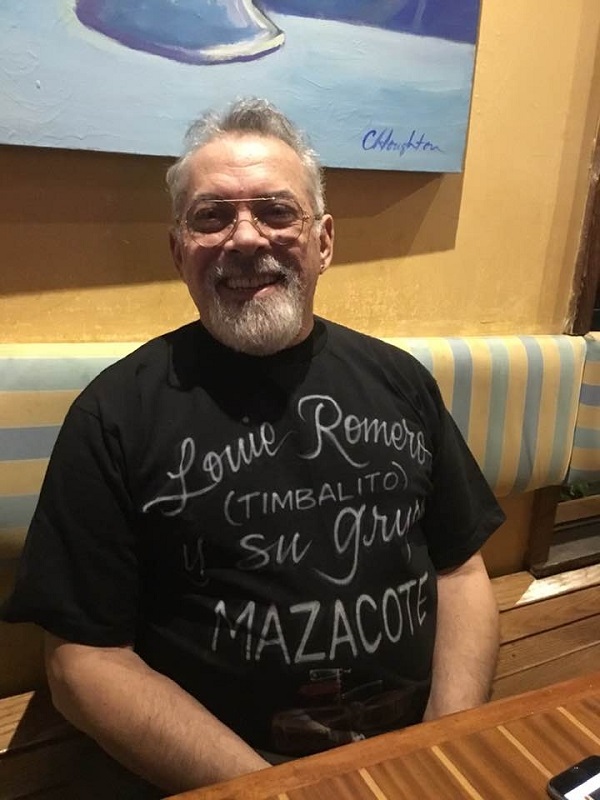
Louie Romero Y Su Grupo Mazacote
Bandleader and timbalero Luie Romero while performing

This is the report last month: NOTICIAS CON SABOR- SAN FRANCISCO BAY AREA/NORTHERN CALIFORNIA

BY LUIS MEDINA, PRODUCER AND HOST OF CON SABOR ON KPFA 94.1 FM AND SABIDURIA CON TUMBAO ON WORLD SALSA RADIO.COM

A bit of history about Latin soul and its relationship with salsa

How Latin soul was born

There are certain musical genres that, despite their short duration on the public stage, marked history to such an extent that they continue to be named and taken into account when analyzing the process experienced by Latin music in the United States. One of them is Latin soul, which is defined as a musical genre born and developed in the 1960s in New York City, such as in the case of many of the rhythms we have today. 

Latin soul was born of the mixing of Cuban mambo and some elements coming from the American version of soul and Latin jazz. Even though it was a set of rhythms that became relevant only in the aforementioned decade, it played a particularly valuable role in the salsa movement that was starting to take shape at that time. 

One of its most striking characteristics is that it places a lot of emphasis on its Afro-Cuban rhythms, but at the same time, most of its songs are in English, which reveals an extremely interesting mix of Cuban and American cultures. After to have acquired a little more specific style, it started to become popular among New York-based Latin artists, who used the emerging genre to win over communities of their respective countries and local media at the same time. 

Among the greatest exponents of Latin soul is Joe Bataan, an American of Filipino descent who is regarded as the most famous vocalist of the genre. Something that made him really different from the rest of the artists of his kind was the merger between American soul and salsa that was already sounded at that time. For this and many other reasons, Bataan is still seen as one of the greatest idols of those golden years of music. 

This is Joe Bataan
Joe Bataan “The King of Latin Soul”

Bataan, Willie Colón, and other performers represented the emergence of a generation of musicians whose formation was the street itself and the harsh experiences occurring it. At the same time, there were others who had an academic background and studies that made them play and behave otherwise. When the union between both groups took place, the result was a display of talent that is still turning heads. All those who were trained in academies and on the street joined the new oncoming wave of rhythms. 

An important detail about this is that the Latin audience in general was eager to look for artistic role models through which to reflect their daily lives. We must remember that many of these people lived in poor conditions in some of the poorest neighborhoods in the country, so many did not really identify with educated music that came from the music academies and schools. All that changed greatly after the emergence of a group of artists who wanted to have their own place in the Anglo-Saxon entertainment business. In some cases, these young people came from an origin very similar to the one that has been described. 

This led to the creation of groups and orchestras in which formal and sophisticated music training had to coexist with other styles emerging from the humblest alleys in certain Latin neighborhoods. Music had ceased to be an elitist thing and would go on to become a mixture of different flavors and colors that were gradually brought together as the decades of the ’60s and ’70s went by. 

Around this time, the figure of Monguito Santamaría (Cuban percussionist and bandleader Mongo Santamaría’s son) emerged, who would be his biggest inspiration to take the path of music. The boy studied piano and proved a great talent for leading bands, but he needed something to push his career, since the mere fact of being a legend’s son was not going to guarantee the success he longed for. This led him to be carried away by the current of Boogaloo, another nascent genre that had gained overwhelming popularity at the time. 

Here you can see Monguito Santamaría
Monguito Santamaría

From there, Monguito created his own orchestra and invites some of his schoolmates to join him, which resulted in a quite complete group in which these guys designed their own American R&B versions and sounds and an accent that made them much closer to the African-American community that loved soul and funk. This made them put aside the Latin community for a while, but that would change sooner than expected.   

Long after Monguito completed his musical studies, he and his band decided to audition for Johnny Pacheco and Jerry Masucci. Let us not forget that Santamaria and the rest of his orchestra had a typically American vision of music, but they did not put aside the Cuban heritage behind them, so they always included songs in genres from the Caribbean island. This pleased the Fania All-Stars so much that they agreed to work with the orchestra, which adapted to the exigencies of the record label without losing sight of their goal: making music for Latinos in New York. 

This is how Monguito and Bataan became the Fania artists whose repertoires were more inclined to Latin soul. In view of the great success that Mongo’s son had with his projects on the label, he continued to immerse himself in the aforementioned rhythm and to enter Boogaloo, whose popularity was at its peak at that time. 

The bad news is that there were a set of factors that did not help the musician to make history as he wanted. One of them was the birth of salsa orchestras that perfectly read the social moment that lived by the poor Latin neighborhoods of the United States, a point on which Monguito stayed in the past. He and his musicians may have been better than many other bands of their generation, but they did not know how to read the historical moment when they were in. This and his little promotion in much of Latin America made much of his legacy be buried and forgotten. 

Monguito and his musicians
Monguito Santamaría, Rene McLean (saxophone), Harvey Hargraves (trumpet), Glenn Walker (trombone), Sam Turner (congas), Ronnie Hill (timbales), José Mangual Jr. (bongos), and Andy González (bass)

Eddie Palmieri’s role in this process 

American bandleader and pianist of Puerto Rican descent Eddie Palmieri played a very important role in the process carried out by Latin music during its evolution into what we know today. The artist radically changed the way Latin music was perceived thanks to his spectacular mix of Afro-Cuban rhythms and certain touches typically of Latin jazz. 

During the heyday of Boogaloo and Latin soul, Palmieri did his best to mix the best aspects of soul and funk with these Cuban rhythms, which would in turn be united with a typical revolutionary message of those years. Thanks to all these messages captured in his lyrics, the musician’s repertoire became more and more present in acts promoted by leftist movements and his music was brought to several prisons, giving it a nuance of denunciation that was very difficult to ignore.  

In contrast to other talents of those years, the New Yorker cannot be classified as a salsa, Boogaloo or soul musician. This is because he knew how to handle all genres and combine them in a novel way for that time.   

This is Eddie
Eddie Palmieri

Saúl Delhom “Esta Salsa me gusta” one of the things I like the most is to learn, create and share

Saul Delhom this Salsa I like is one of the things I like the most is to learn, create and share.

Each DJ brings in his own way a vision of salsa and a very interesting sector contributing to the cultural richness.

Musical themes are like some smells, they are capriciously anchored to certain moments of our life and when you experience them again they are able to make you travel in time in an instant, have you experienced it? A salsa, a son, a mambo.

Just by listening to the first bars, for some reason your skin bristles, and memories cascade. That is the basis of this book, a very simple idea: What salsa do you like?

Within the salsa world, there is a group that rarely receives the recognition it deserves.

Each DJ. He brings in his own way a vision of salsa and a very interesting sector contributing to the cultural richness
Saúl Delhom “Esta Salsa me Gusta DJs Edition”

They are those who work with thousands of musical themes before their eyes and hands pass hundreds of albums, who select the ones you like and also the ones you still don’t know you like, for me they are salsa sommeliers, or more popularly: DJs.

I contacted DJs from different parts of the world and asked them variants of the initial question: What salsa do you like? What song do you have a memory associated with? What song attracts you musically? The result of their answers is this condensed book made up of all these wonderful stories and anecdotes from nearly one hundred DJs, whether for sentimental or purely musical reasons.

The format of the book is just right so as not to be distracted by frills, where the person and what he tells is the important thing. For that reason, it has a peculiar orientation, more common in calendars, since it opens from bottom to top, instead of right to left. I wanted to layout it with that orientation because that way, while you are reading the text, you have the photograph at the top, as if it were behind the book talking to you, always present, centered, and not on a displaced side. It is a detail that is perhaps too subtle but that I considered important.

Another feature, already common in many of my music-related books, is that on each page you can find a Spotify app code to scan and listen to the song. In addition to the stories, I have discovered many interesting topics with this book!

I felt really privileged to be the first person to read all the texts that have been sent to me.

Each DJ brings in his own way a very interesting vision of salsa and the industry, providing cultural richness.

I was also delighted to see the diversity in terms of the type of stories, from a song that fondly remembers a mother, to the technical analysis of composition and the reason for its enjoyment. And as for another type of diversity, I have tried to have as many women as possible, although it is true that we are already starting from a lower percentage.

Already at the beginning of the book, I apologize for leaving hundreds of women out of it, either for lack of time or lack of knowledge on my part and for that reason, in addition to the fantastic support from the collective, I have decided to start with another book that will be the continuation of this first volume. Stay tuned because it will soon be published!

“Esta salsa me gusta – DJs Edition”

Saúl Delhom "Esta Salsa me gusta" is one of the things I like the most: learning, creating and sharing
Saúl Delhom “Esta Salsa me gusta” is one of the things I like the most: learning, creating and sharing

Facebook: Saúl Delhom

Website: Bailo Pinto

IG: Bailo Pinto

Article of Interest: Bella Martinez, the irreverent Salsa writer

International Area – October 2021


Home


Pianist Fadi Gaziri Debuts In Salsa Music With Cuba Classic

A Studio Album That Reflects The Multicultural Sound Of Western Europe And Latin America

Cuba Classic album cover with colored houses and a red car
Cuba Classic was released in August 2021

The son of medical parents and the grandson of a passionate pianist, Fadi Gaziri ventures into the Salsa world with the album Cuba Classic, independent record production in collaboration with his German colleague and great friend Fritz Wengler.

Cuba Classic fuses the incredible universe of emotions that classical music transmits with the passion, conventional melodies of Jazz, and the rhythmic base of the Caribbean that characterizes Latin culture.

“Arranging classical pieces to fit a Salsa vibe was surprisingly easy… The melodies can be rhythmically changed to suit the Latin vibe while keeping authenticity…” Voiced by the talented British pianist.

This masterpiece with hybrid two-language titles strikes a perfect balance between the original title of a classic work and the sensation of the indicated awakening of a Latin melody. “I always liked Salsa for its quality to make people dance, so naturally and with such confidence.

As for the music itself, I love the colorful brass arrangements and Latin percussion. It’s a lot of fun to listen to and to play… ”. Fadi indicated.

The 13 songs on the album are El Capo (Zarathustra, R. Strauss), 5 Sinfonía De Salsa (Beethoven’s 5th Symphony). “I had a lot of fun with this one. …The Reorganization, the phrasing, using repetitions, increases, and the complete brass arrangement to make it sound like a proper Cuban track”. Fadi added recalling his experience with the production of this theme.

The next track on the album is Mambo Loco Nórdico (Grieg’s Piano Concerto in LA minor), resembling Havana at its turbulent peak and with great determination. Continues, the fourth track Mambo Austriaco (Mozart – Symphony No. 40 and Eine Kleine Nachtmusik), and the exquisite mix of Calipso Alemán (Beethoven’s Symphony 9).

In addition, you will also find in Mambo Classic: G-String Bossa (Air on a G string, JS Bach), Salsa Húngara (Brahms Hungarian Rhapsody) thought for the Latin ballroom dance competition tracks, due to the grace of the exuberant exposure of the horns.

Funeral De Che Guevara (Liszt, Hungarian Rhapsody in C sharp minor), Havanera (Carmen Bizet) is another of the themes that stand out on this album. “It was inspired by the character of Che Guevara and his revolutionary spirit. Along, with a trumpet blast from Mariachi… Fernando’s lyrics and voice also add to the overall feeling”. Gaziri commented to us.

Rumba Rusa (Swan Lake, Tchaikovsky), La Toccata Loca (Bach Toccata in D minor), Green Leaves (traditional Greensleeves), and finally the piece Lambada A La Luz De La Luna (Moonlight Sonata by Beethoven) beginning with the funeral march played with a trumpet solo intervened with a joyous lambada, ending in a Latin urban sound.

Fadi’s main idea with Mambo Classic is to simplify the music on this album for use in schools across the country and have children perform it by simply playing percussion with the backing tracks.

Similarly, Gazziri hopes to present this record production live in 2021 on the big stages of Berlin and the rest of Europe.

Why The Fusion Of Latin Rhythm With Classical Music?

Fadi Gaziri in black and white playing the piano
Fadi Gaziri can handle musical instruments alongside cinematographic elements, folk, and ambient electronic sounds

This talented artist since his return to Hamburg in 2017 has been involved in teaching music to children and teenagers in schools in this port city located in northern Germany.

Gaziri showed signs of concern every day as he observed his students’ reluctance to learn classical music, a feeling already developed as a famed behavior among young people today. But why don’t German students like to learn about their cultural heritage? The main reasons that Fadi realized were that his students were not motivated to continue with their studies due to the complexity of the music and the difficult handling of the instruments that did not allow them to master them quickly.

Realizing this, Gaziri began to devise the fusion of the Latin genre with classical music and thus seek to reverse the discouragement of his students. “I wanted children to learn classical music in a fun and interactive way. Something that would not take long to learn and that could involve all participants, regardless of their age, nationality, or musical ability. Most schools have Latin percussion that sits on the shelves and is rarely used.

So, I thought it would be a great idea to put in some classic melodies and accompany them with this Latin percussion. Wouldn’t it be fun and a good learning experience at the same time? Fadi told us.

Currently, this prodigious pianist is evaluating the possibility of continuing to teach in German schools full-time by 2022.

  • You Can Also Read: Mozart & Mambo

The Story Of Fadi Gaziri

Fadi Gaziri in his recording studio with pianos around
Fadi Gaziri played the piano first time at the North Pole in August 2021

Fadi Gaziri is a natural music producer and composer for audiovisual media, film, and theater. He was born in Moscow and began his musical studies of piano and violin at the famous Gnessin Music Academy.

At age 12, he moved to Sweden with his family and later to England (1998) where he continued his musical training.

This extraordinary producer studied Music Composition, Piano, and Languages ​​at Durham University in 2004 graduating with great honors and passing his ABRSM piano exams with distinction. Two years later he entered Bournemouth University to study for a Master’s in Film Composition.

That same year (2006) Fadi moved to Hamburg and started working on music for commercials, films, and sound branding. At the same time, he began touring the Netherlands, Sweden, Norway, and Germany accelerating his musical career.

In 2014 Fadi released his first solo album titled Northern Lights, a mix of cinematic and folk sounds that he combines with electronic texture. He used his technological knowledge to loop while playing piano, violin, and adding subtle voices that he performed himself.

Over the next three years, Gaziri released his second EP “The Jump”, founded a music supervision company, and has been dealing with song placement, and licensing for film and television ever since. He assumed a permanent position as an in-house music producer at TUi Cruises in Berlin and composed, and arranged music for more than ten theatrical productions performed on board the ships.

  • « Go to Previous Page
  • Page 1
  • Interim pages omitted …
  • Page 21
  • Page 22
  • Page 23
  • Page 24
  • Page 25
  • Interim pages omitted …
  • Page 29
  • Go to Next Page »

International Salsa Magazine (ISM) is a monthly publication about Salsa activities around the world, that has been publishing since 2007. It is a world network of volunteers coordinated by ISM Magazine. We are working to strengthen all the events by working together.