• Skip to primary navigation
  • Skip to main content

International Salsa Magazine

  • HOME
  • Previous editions
    • 2026
      • ISM / March 2026
      • ISM / February 2026
      • ISM / January 2026
    • 2025
      • ISM / December 2025
      • ISM / November 2025
      • ISM / October 2025
      • ISM / September 2025
      • ISM / August 2025
      • ISM / July 2025
      • ISM / June 2025
      • ISM / May2025
      • ISM / April 2025
      • ISM / March 2025
      • ISM / February 2025
      • ISM / January 2025
    • 2024
      • ISM / December 2024
      • ISM / November 2024
      • ISM / October 2024
      • ISM / September 2024
      • ISM / August 2024
      • ISM / July 2024
      • ISM / June 2024
      • ISM / May 2024
      • ISM / April 2024
      • ISM / March 2024
      • ISM / February 2024
      • ISM / January 2024
    • 2023
      • ISM / December 2023
      • ISM / November 2023
      • ISM / October 2023
      • ISM – September 2023
      • ISM – August 2023
      • ISM July 2023
      • ISM Edition June 2023
      • ISM – May 2023
      • ISM April 2023
      • ISM March 2023
      • ISM February 2023
      • ISM January 2023
    • 2022
      • ISM December 2022
      • ISM November 2022
      • ISM October 2022
      • ISM September 2022
      • ISM August 2022
      • ISM July 2022
      • ISM June 2022
      • ISM May 2022
      • ISM February 2022
      • ISM January 2022
    • 2021
      • ISM December 2021
      • ISM November 2021
      • ISM October – 2021
      • ISM September 2021
      • ISM August 2021
      • ISM July 2021
      • ISM May 2021
      • ISM April 2021
      • ISM June 2021
      • ISM March 2021
      • ISM February 2021
      • ISM January 2021
    • 2020
      • ISM December 2020
      • ISM November 2020
      • ISM October 2020
      • ISM September 2020
      • ISM August 2020
      • ISM July 2020
      • ISM June 2020
      • ISM May 2020
      • ISM April 2020
      • ISM March 2020
      • ISM February 2020
      • ISM January 2020
    • 2019
      • ISM December 2019
      • ISM November 2019
      • ISM October 2019
      • ISM Septembre 2019
      • ISM August 2019
      • ISM July 2019
      • ISM June 2019
  • Download Salsa App
    • Android
    • Apple
  • Spanish

Search Results for: King of Mambo

Benny Moré. The story of Cuba’s biggest crowd idol

Latin America / Cuba / La Habana

Who is Benny Moré? He is not just another musician, he is unanimously the most brilliant popular artist that has existed on the Afro-Cuban island. He is the symbol, the myth, the legend, it is undoubtedly the summary of the popular, rich and abundant music of Cuba.

Benny Moré symbolizes the peasant “Guateque”, the “Sarao”, the bohemian, the coffee, the bar, the theater, the party, carnivals, the show. “El Bárbaro del Ritmo” was the most popular in Afro-Cuban music.
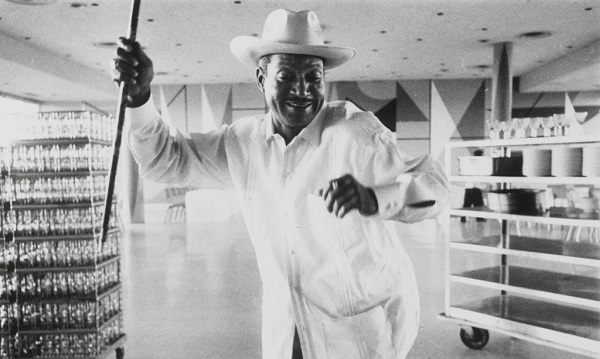
Benny Moré
Benny Moré

He was born on August 24, 1919 at seven in the morning in the Pueblo Nuevo neighborhood of the town of Santa Isabel de las Lajas, belonging to the Cienfuegos province. His parents were Virginia Moré and Silvestre Gutiérrez, and Benny was the oldest of 18 siblings. His last name Moré came from Ta Ramón Gundo Moré (slave of the Count Moré), who, according to the tradition of the Congos, was his first king in Santa Isabel de las Lajas.

Benny was gifted with a fluent tenor voice that gave life with great expressiveness and this context was definitive for his future career in music. He learned to play the insundi, the yuka drums, the Makuta and Bembé, invocators of deities, with whom he not only sang and danced to perfection, but also played the son, the guaracha and the rumba.

Since he was a child he expressed his great vocation for music, he would spend all day humming a song or improvising and directing ensembles composed of machetes, bongos made with milk cans, guitars made with a board and nails with strings of string sew, two sticks as keys, and so on.
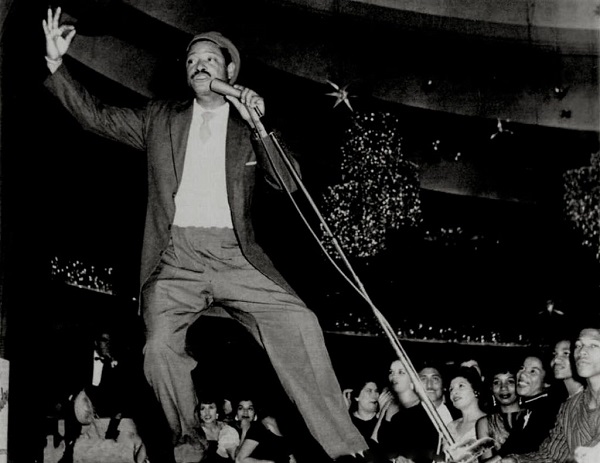
Benny Moré singing
Benny Moré singing

Moré was a teacher in all genres of Cuban music

The “Bárbaro del Ritmo” could always be found standing on a table singing and playing, surrounded by listeners. Bartolomé spent his childhood and adolescence, with no opportunity for study or permanent employment. Like his brother Teodoro, Bartolomé was enrolled in the School of Public Instruction “José de la Luz y Caballero”, where he always stood out for his conduct and application.

Why is the Bacardi symbol a bat?

Since he was a child, Moré had skills for singing and improvisation, which he demonstrated when he was barely seven years old, when he would run away for a few hours to entertain parties in the neighborhood and loved singing notes with his mother, to prevent her from sleeping while ironing late into the night.

His voice was particularly highlighted in the Son Montuno, the Mambo, and the Bolero
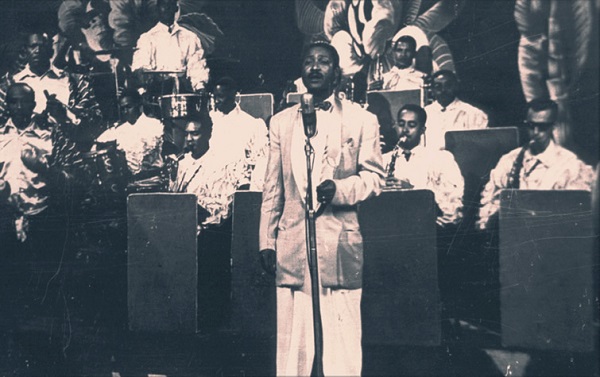
Benny Moré live
Benny Moré live

Benny went through a complicated life, but he was willing to do anything to achieve his dreams of triumph. With almost 20 years of age, in 1940 Bartolomé said goodbye to his mother at the Hotel Ritz in the Central Vertientes, where she worked, and traveled hidden, indistinctly, by train and truck to the City of Havana. He was definitely in the mission to try his luck in the bustling city!

Since then, he was seen by the famous neighborhood of Belen, with a guitar acquired in a pawnshop, wandering through cafes, bars, hotels, restaurants, and even brothels. That same year he told his cousin: “I stay in Havana, I rise up here or I sink”. From that moment began the saga of concerts at the bars of the port avenue … Once remembering those times, he confessed: “I threw myself into the street with a guitar on my shoulder to sing to tourists. I am not ashamed of it; Carlos Gardel also did it in Argentina and is the king of tango. ”

At that time, the CMQ station began broadcasting the Supreme Court of Art. Bartolomé Maximiliano Moré appeared in that program that Germán Pinelli and José Antonio Alonso encouraged. After presenting it and at the moment of beginning his presentation, they rang the bell.

Later Bartolomé returned to Monte and Prado to the Supreme Court and on this second occasion he won the first prize. Possessing a fresh voice, beautiful timbre, sensual and evocative. Bartolo sang with all the inner strength that claimed the Cuban rhythms.

In one of his raids, Siro Rodríguez, member of the famous Matamoros Trio, heard him sing in the bar of El Templete restaurant, on Avenida del Puerto, and was very impressed by the boy’s voice and tuning.

The entry of Bartolomé to the group of Miguel Matamoros was a fact and can be considered as his real debut as a professional singer, because with this group he had for the first time a steady job as a musician and made his first recordings on 78 revolutions per minute discs.

Benny knew he had a voice, the luck and a destiny. Perhaps he sensed it, intuited it, or simply trusted his triumph. When he started with Miguel Matamoros and his group, I already wanted to make changes in the picket line.

In Mexico, when Miguel became ill, he was able to direct the group, took control and enjoyed the “Cuates” in El Patio cabaret. When the contract ended, the Matamoros group returned to Havana, but without Bartolomé, who decided to try his luck by himself in Mexico.

When he communicated his decision to the famous author of El Son Siembra Su Maíz, Miguel Matamoros said: “It’s very good, but you have to change the name of Bartolo, which is very ugly. With that name you will not go anywhere”, You are right, Bartolo replied, from today I will call myself Benny, yes, Benny Moré. ”

The owner of the business was hypnotized by the very tasty atmosphere that Benny led as director. After singing with several push orchestras in Mexico, he planted himself beautifully with the most famous band of the 20th century: Pérez Prado and the Cuban mambo.

With this meeting two geniuses joined: Benny Moré had talent and natural intuition; in Pérez Prado, in addition to all that, the mastery of technique and an enormous facility to make music. With Perez Prado he conquered the noble Aztec people on tours of different states of that sister country.
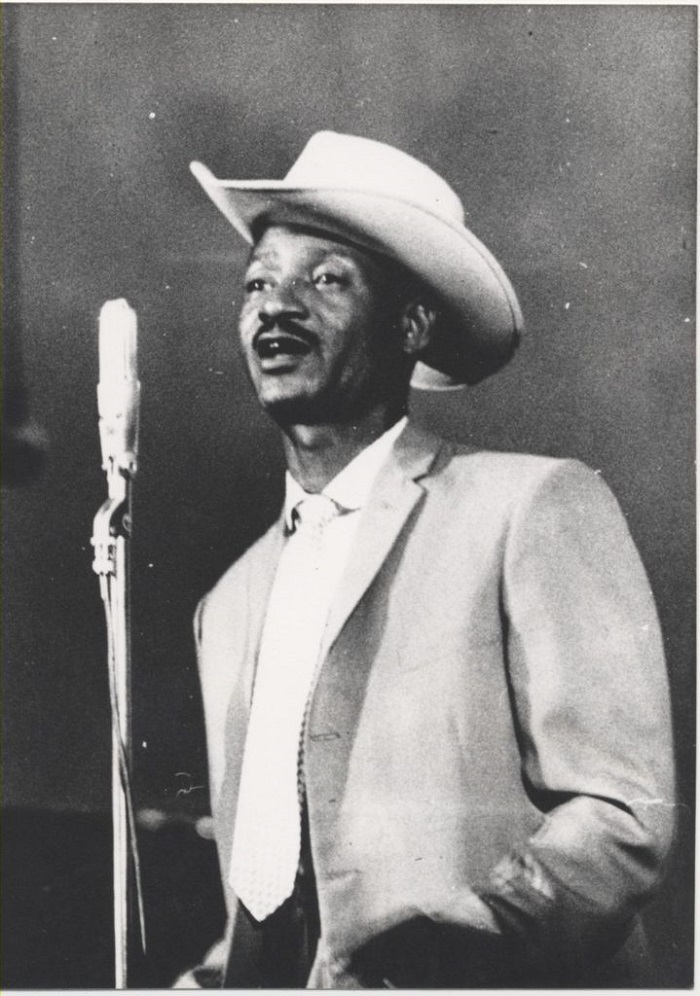
Benny Moré
Benny Moré

Due to the success achieved by Benny, the town gave him the title of “Prince of Mambo” and Pérez Prado, “King of Mambo“. He sang like nobody else in the world and began his international promotion.

By that time, Benny’s voice was known in Panama, Colombia, Brazil, Puerto Rico, Haiti, Venezuela, and of course, in his native Cuba.

In the joyful world of nightlife in Mexico City, the Cuban singer performed in many theaters, including Margo, Blanquita, Folliers and Cabaret Waikiki, alternating with renowned artists such as the legendary star Yolanda Montes (Tongolele), the Mexican Toña la Negra, and the outstanding cuban pianist and composer, Juan Bruno Tarraza, of whom Benny sang the bolero “It’s already twelve o’clock”.

Benny participates in many films and upon his return to Cuba, he was already certain that he had to be counted on.

The nostalgia for his family, friends, for the Homeland, and the desire to obtain laurels on his Island, where he considered that he was not known enough, made him return to his beloved Lajas at the end of the year 50. The ‘sonero mayor’ was definitely in Cuba, where he had left behind comforts, material and spiritual satisfactions, friends and even the loves that the successful do not usually lack.

During the following two years he acted by contract for a program called “De fiesta con Bacardí”, which was aired by the Eastern radio station with the orchestra of Mariano Mercerón, and the singers Fernando Álvarez Pacho Alonso.
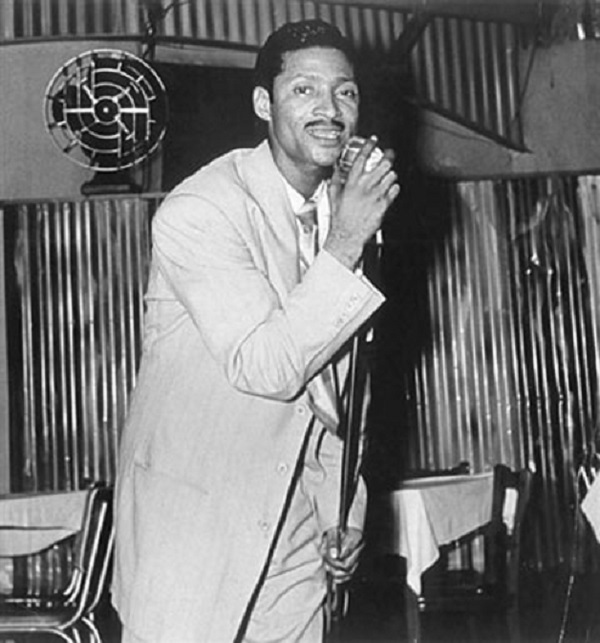
Benny Moré
Benny Moré

As Benny Moré was an exclusive artist of RCA Víctor, this firm claimed his presence in Havana to make different recordings. In order to fulfill this commitment he gave alternative trips to Havana and thus maintained his responsibility with the eastern radio station.

After the commitment at Casa Bacardí and maestro Mercerón, in 1952 Benny Moré returned to Havana.

Certainly, Benny concluded an era, closed a chapter of Cuban musical life, that stage of nightlife that was already declining.

Benny’s life was related to a world that has already disappeared. Then everything became myths and legends … Benny kept on singing, but now it would be on scratch discs, which were digitized.

The “oidores” (listeners) will be transported in time, imagine the bars of the Havana port full of curious tourists. From Chinese restaurants selling “complete” to poor people who passed their hats, after singing through the streets of Havana – Cuba.
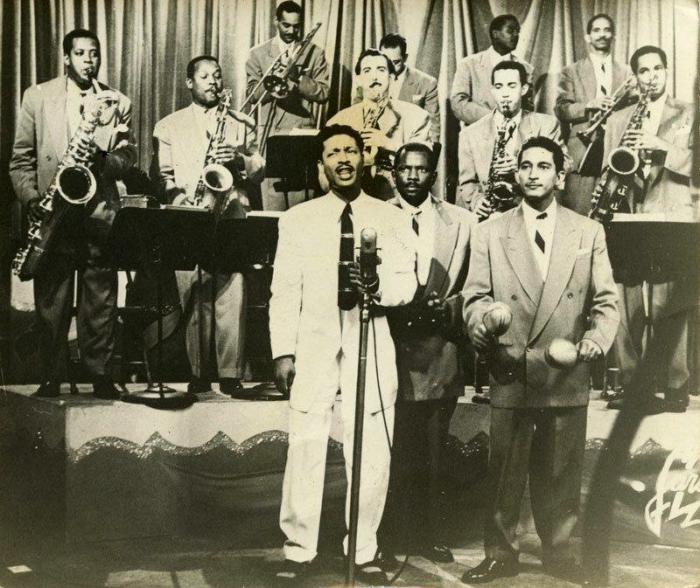

Benny Moré in concert

Puerto Rican bandleader and musician Diana Sosa talks about her many projects in Nashville, Tennessee

We had a wonderful and very nice conversation with Puerto Rican percussionist, timbalera, conga player, and cuatro player Diana Sosa, who kindly told us about all the projects she has in the pipeline. Her husband and bandmate, guitarist and vocalist Chuck Nelson, put us in touch with her so we could learn more about both the project they share and the one she has undertaken on her own.

Then these are the things the talented Puerto Rican shared with us on this warm Sunday before Easter.

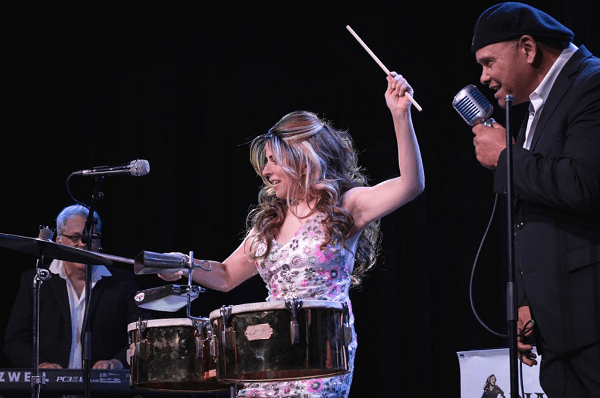
Diana Sosa is playing
Diana Sosa is posing for the camera while playing the timbales

How Diana got into the world of music

Diana was born and raised in Puerto Rico, where she began to love music and play, but not professionally yet. She was just experimenting with some traditional instruments of her homeland, such as the Puerto Rican cuatro, which she even studied with a private teacher. 

At the age of 39, she moved to Nashville, Tennessee, where she finally got her first big opportunities in music, and the background she brought for years helped her a lot. It all started with a short rehearsal she was invited to, and from there, she has done nothing but prove what she is really made of. 

Of course, she keeps studying and preparing to improve every day. When she is not learning to play with fellow musicians like John Santos, she is taking online courses to solve any doubts she may have.

Diana’s first opportunity with The Bicho Brothers

The first serious group that gave Diana the opportunity to develop professionally—and with which she keeps to playing to this day is The Bicho Brothers, a classic rock band whose members really appreciated the contribution provided by Diana. For this reason, it is she who brings that Latin flavor, the product of her heritage and years of training in these genres.

Something that really attracted the audience was that she was the only woman in the group and, incidentally, she played the timbales, which was uncommon back then. In addition, she added atypical sounds to certain well-known songs, which was also remarkable.

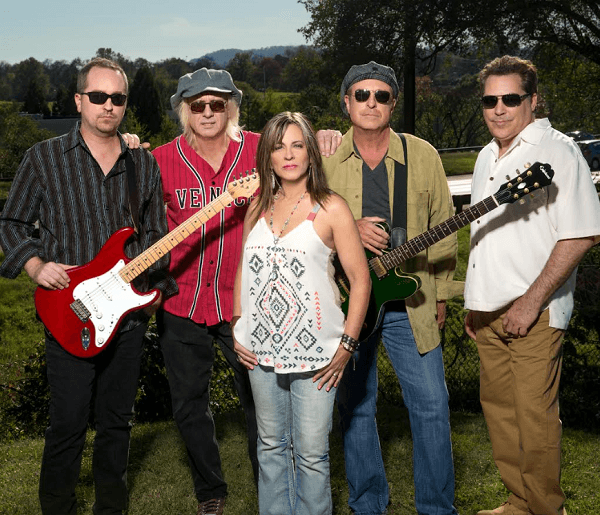
Diana Sosa and the rest of the Bicho Brothers
The Bicho Brothers from left to right: Jeff Krinks (guitar and vocals), Ron Krasinski (drums), Diana Sosa (timbales, congas, percussion, and Puerto Rican cuatro), Chuck Nelson (guitar and vocals), and Kenny Zarider (keyboards and vocals)

Another important personality who encouraged her to follow this route was the great producer Bill Cuomo, who told her she was very good at playing but needed to improve her technique. Twenty years later, it can be said that she took him at his Word seeing all she has achieved since then. From that point on, there have been many other projects and opportunities that make her very happy and keep her fulfilled.

Soul Sacrifice

Soul Sacrifice is a Santana tribute band founded in 1969 that has won a high reputation in Nashville by becoming one of the best tributes to Santana to date. The mix of familiar melodies and infectious rhythms they play at every show transports audiences to the biggest classics of the legendary Latin rock group created by Carlos Santana.

The band also includes some of the same members of The Bicho Brothers, such as the cases of Diana and Chuck due to all the years they have spent playing together, but including Cuban musician John Santos. He plays a fundamental role in making people feel they are listening to the original Santana rather than an imitation, which is why both he and Diana are key to the band’s performance.

Diana Sosa with Diana's Mambo Maniacs
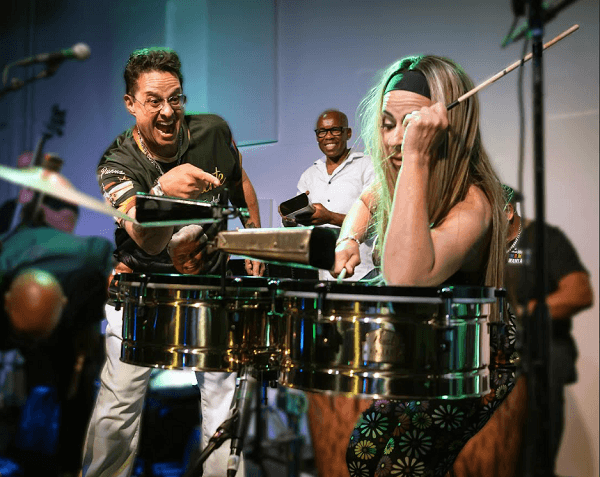
Diana Sosa playing with Diana’s Mambo Maniacs

Diana’s Mambo Maniacs

Diana also has her own project, which she decided to call Diana’s Mambo Manics. This Latin music group was founded in the early summer of 2025 as part of Hispanic Heritage Month. In that time of year, there are always many festivals dedicated to Hispanic and Latin music in the United States and around the world, so Diana and a group of musicians she had been in contact with for some time took the opportunity to play wherever they were able to make themselves known.

Among some of the musicians in the band we can mention John Santos as singer and timbalero, whose presence is essential at every show. The group also includes conga player Josvany Cordero, bassist Isoel Villareal, pianist Kenny Zarider, trumpeter Joe Mercado, and trombonist Huge Lindsay.

The main difference between this band, The Bicho Brothers and Soul Sacrifice is that it plays exclusively Latin music, but of the great artists in the 1950s and 1960s who performed at the Palladium Ballroom, the Copacabana, El Corso, Chez José & 3 and 1, among many others. Diana feels that, to a certain extent, she pays tribute to her parents, who used to go dancing and enjoying these rhythms to some of these places in their youth.

However, not all are covers. She is about to release an original song featuring Puerto Rican cuatro player Prodigio Claudio, but she did not have the details to share with us yet.

Diana and Tito Puente Jr.
Diana Sosa Playing with Tito Puente Jr.

Read also: Bandleader and bongosero Ray Degaldo is here to talk about his life and career

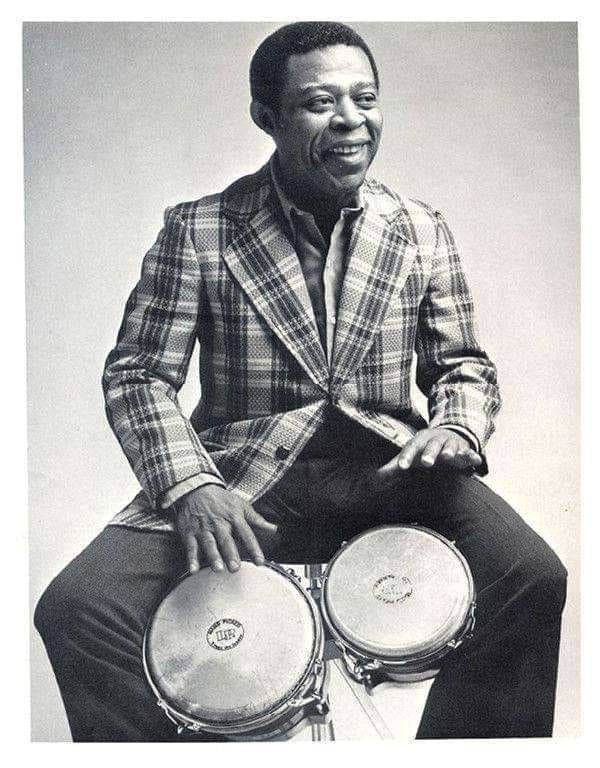
José Mangual Sr. “Buyú”: The Architect of Bongo Sound Defining the Rules of How it Should Sound

In the history of Afro-Latin music, there are names that didn’t just play an instrument they defined the rules of how it should sound. José Mangual Sr., known universally as “Buyú,” is one of those pillars.

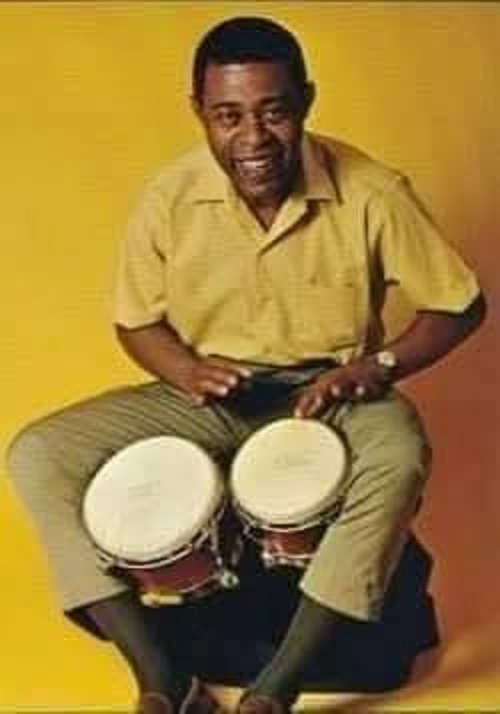
José Mangual Sr., known universally as Buyú, is one of those pillars

An extraordinary and legendary percussionist, José Mangual Sr. was the founder of the prestigious percussive lineage that carries his surname.

Since his childhood in Juana Díaz, he professed a deep love for music; by age ten, he was already playing professionally, and during his youth, he even enjoyed crafting his own bongos.

Over time, he became the musician who endowed the instrument with an extraordinary sonority. He was the father of the equally prominent percussionists José Mangual Jr. and Luis Mangual.

The Architect of Sound on the Bongos defining the rules of how it should sound

The Architect of Sound on the Bongos defining the rules of how it should sound

Considered by experts as one of the greatest bongo players of all time, his legacy remains the gold standard for meter and tuning in Latin Jazz and Salsa.

From Juana Díaz to the Heart of Spanish Harlem

Born on March 18, 1924, in Juana Díaz, Puerto Rico, Mangual discovered his vocation at age 10. However, his musical destiny was sealed in 1938 when he migrated to New York at the age of 14.

Settling in Spanish Harlem (“El Barrio”), he found himself at the epicenter of a cultural explosion that was about to change world music forever.

The Consecration: Machito and his Afro-Cubans

Although he began by filling the timbales position, it was with the Machito and his Afro-Cubans orchestra where “Buyú” made history. Under the direction of Mario Bauzá (who is said to have given him his nickname), Mangual remained with the group for nearly 17 years.

The Legacy and the Patriarch of a Dynasty
  • Rhythmic Innovation: He was part of the “perfect percussion trio” alongside Carlos Vidal (congas) and Machito (maracas).
  • Historic Fusion: His performance was key to blending the complexity of Afro-Cuban rhythms with the harmonies of New York Jazz in the 1940s and 50s.

An Unrivaled Session Musician

His technique was so clean and his sound so bright that he became the preferred collaborator for the biggest stars. Throughout his career, he contributed his mastery to projects led by:

  • Tito Puente: The “King of the Timbales.”
  • Israel López “Cachao”: Participating in historic Afro-Cuban Jazz “descargas” (jam sessions).
  • Jazz Greats: His versatility allowed him to navigate fluidly between the world of Big Bands and traditional Salsa ensembles.

Pedagogical Legacy and Solo Career

In the 70s and 80s, Mangual recorded music not only for enjoyment but also for instruction:

The Patriarch of a Dynasty
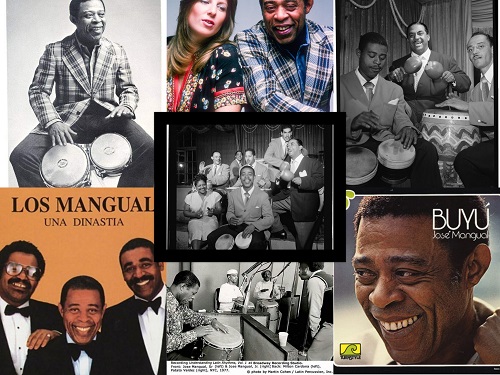
  • Album “Buyú” (1977): A Latin Jazz gem on the Turnstyle label, featuring tracks like “Black & Brown Boogie.”
  • Musical Education: Alongside conguero Carlos “Patato” Valdés, he recorded the volumes of Understanding Latin Rhythms. These LPs became the auditory manual for thousands of percussionists around the globe.
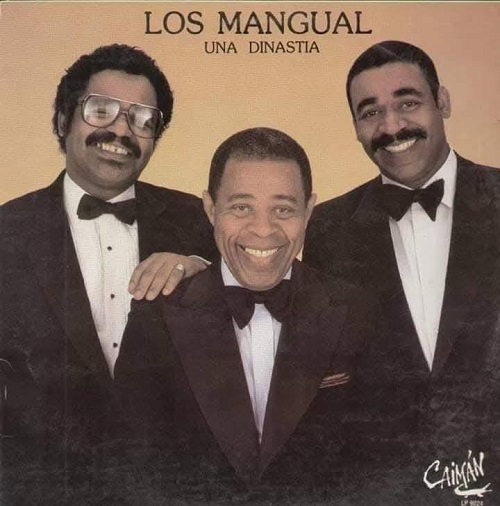
  • The Mangual Dynasty: In 1986, he consolidated his family heritage with the album Los Mangual: Una Dinastía, recording alongside his talented sons.

“The sound of his cowbell and his bongo didn’t just mark time; they cemented the foundations of the music we dance to today.”

The Patriarch of a Dynasty

The impact of José Mangual Sr. extends through his sons, who inherited his musical excellence:

  • José Mangual Jr. (“El Milamores”): Famous bongo player and singer, a key figure in the orchestras of Willie Colón and Héctor Lavoe.
  • Luis Mangual: Renowned percussionist and musical director.

Passing and Recognition: Buyú passed away in 1998, leaving an irreplaceable void. In 2001, he was posthumously inducted into the International Latin Music Hall of Fame  a fitting tribute to the man who gave the bongo unprecedented brilliance and elegance.

Also Read: Israel “Cachao” López, a Cuban musician and composer, has been hailed as “the Inventor of Mambo”

Salsa Viva & Tango Vivo

Latin America / Colombia /Cali

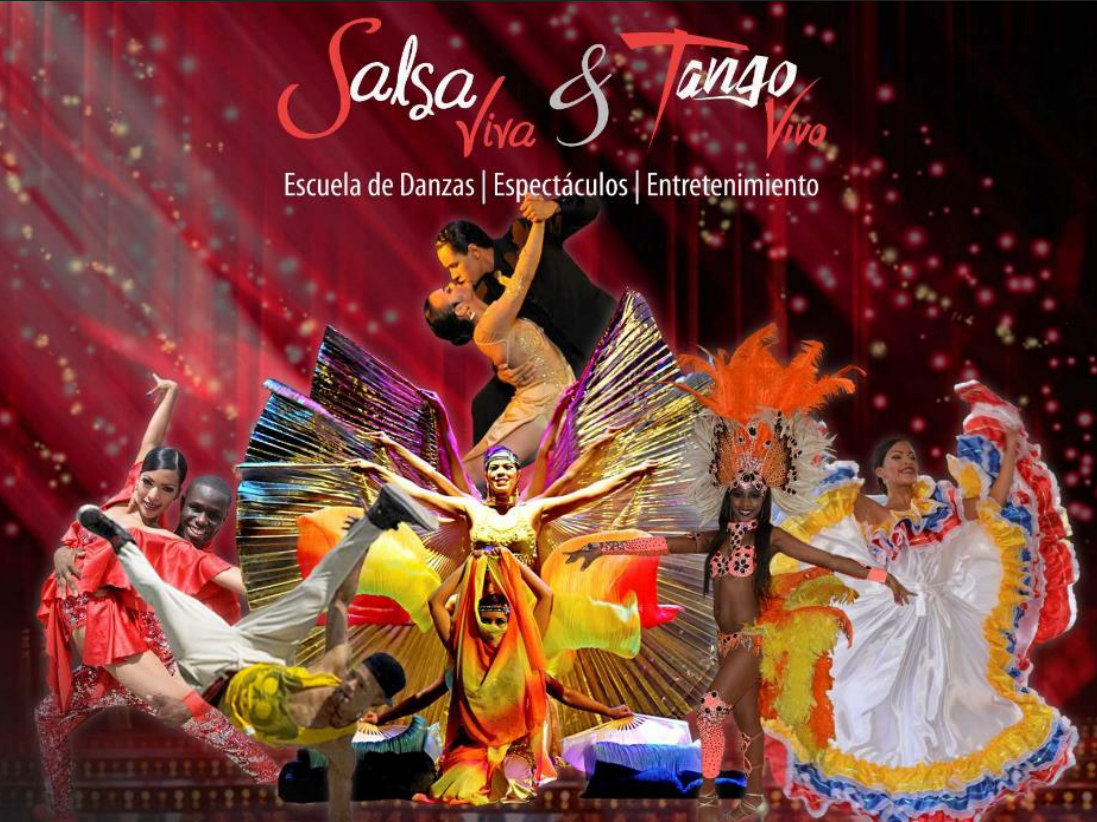
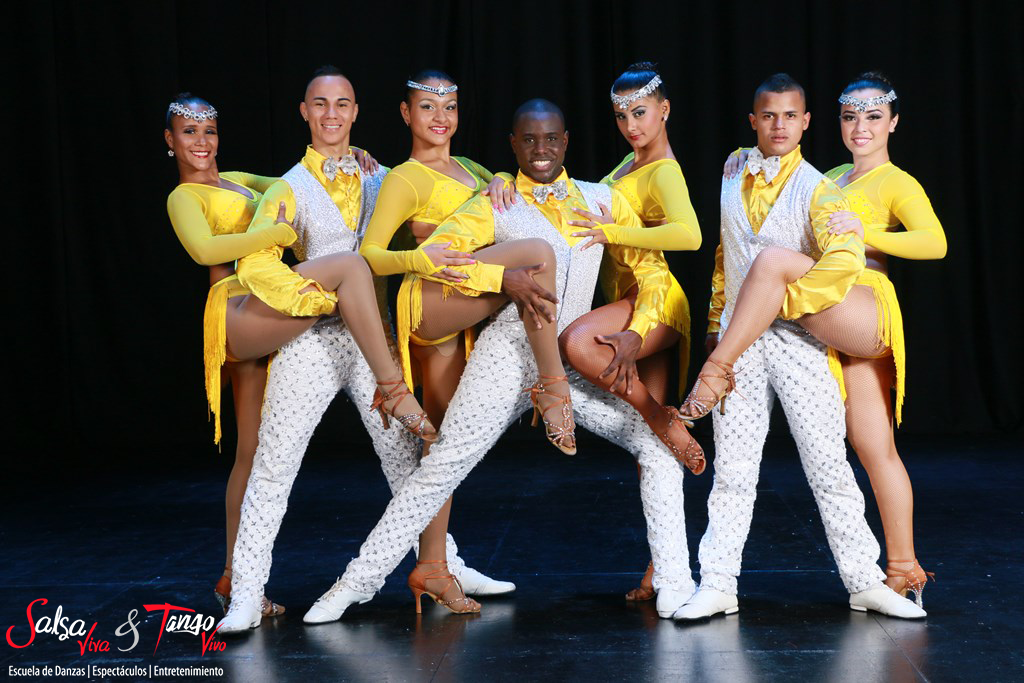
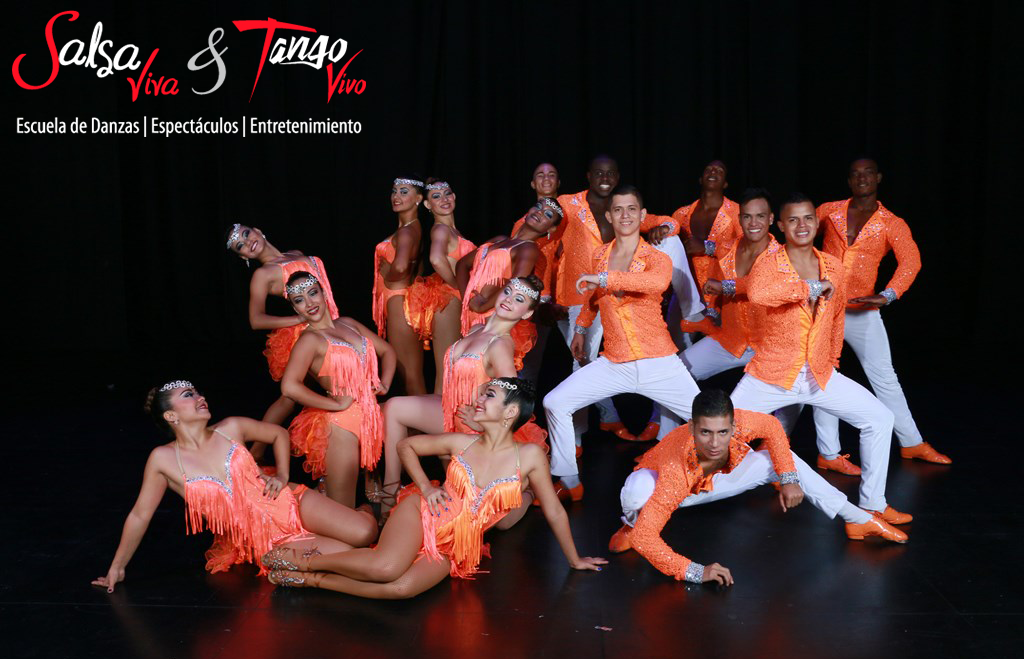
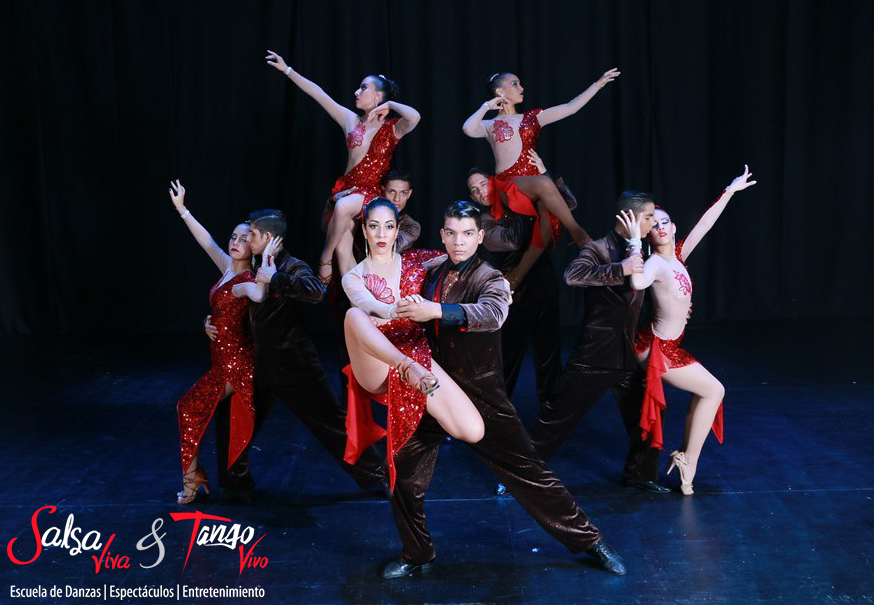
Located in Cali, Colombia, the artistic company “Salsa Viva & Tango Vivo” has been in business for 12 years. They are dedicated to teaching, presenting, and producing dance shows, boasting a distinguished cast of artists, instructors, and professional dancers in all styles.

Salsa Viva & Tango Vivo

The company’s services offer a wide variety of high-quality options, ranging from personalized dance classes to shows featuring over 80 artists on stage.

Photo 1: Salsa Viva & Tango Vivo

Shows and Performances

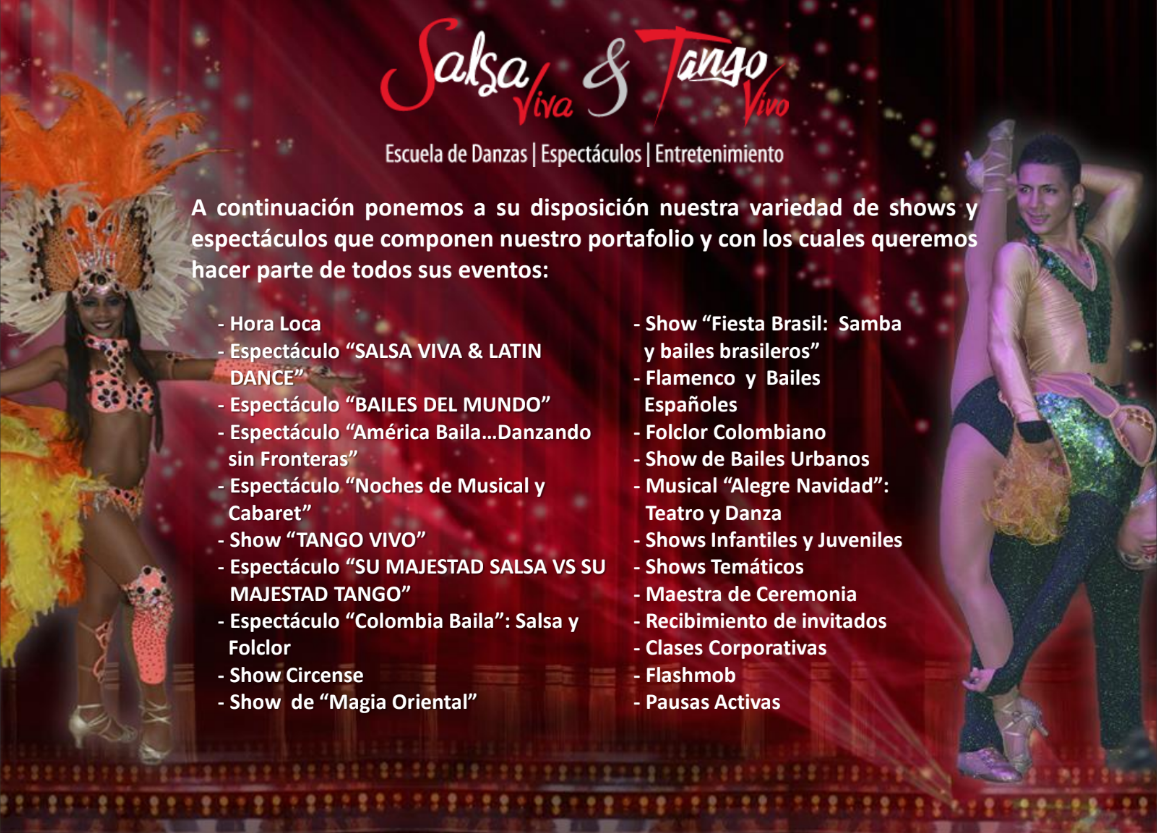
Among the most captivating “Salsa and Latin” shows are:

Salsa Viva and Latin Dance: This show includes dances such as Salsa, Mambo, Cha Cha Cha, Boogaloo, Bolero, Pachanga, Bachata, and Merengue.

“The Majesty of Salsa vs. The Majesty of Tango”:

Here, you can witness the fusion of the joy, energy, and acrobatics of Salsa with the passion and elegance of Tango.

Photo 2: Salsa Viva & Tango Vivo

Colombia Dances: Here, traditional and joyful Colombian folk dances come together with a fusion of Salsa and Latin dances. You can appreciate the beautiful and colorful typical costumes that bring to life the diverse cultures and dances of Colombia’s regions, taking you on a journey through dances such as cumbia, bambuco, sanjuanero, mapalé, currulao, and others.

Children’s Salsa: This show features children in the learning process who have grown into professional dancers, showcasing their trajectory and international recognition.

Photo 3: Salsa Viva & Tango Vivo

It’s worth mentioning that the venue doesn’t just offer Salsa and Latin dances; it also features Tango, Milonga, and Arabic dance shows, Samba, Capoeira, Spanish dances (Pasodoble, Sevillanas, Flamenco Rumba, and a banderilla show), Colombian dances (Cumbia, Bambuco, Sanjuanero, Mapalé, Currulao, among others), and urban shows (Hip Hop, showcasing different styles such as breakdancing, sexy style, popping, locking, dancehall, kromp, and others).

The Dance School offers the opportunity to learn one or more rhythms. You can even combine Salsa and Latin dance classes, Zumba Fitness, Tango, or any other rhythm you desire, whether with a group of friends, family, children of all ages, and there’s even a special program for babies where parents and their little ones share the dance experience and learn the baby’s first steps.

Zumba Fitness and Zumba Toning: This is a fun way to practice Latin rhythms, exercise to stay in shape, learn, and have fun. The team is trained and certified to lead both Zumba classes.

  • Crazy Hour
  • Children’s Entertainment
  • Quinceañera and Wedding Preparations
  • Flash Mob
Photo 4: Salsa Viva & Tango Vivo

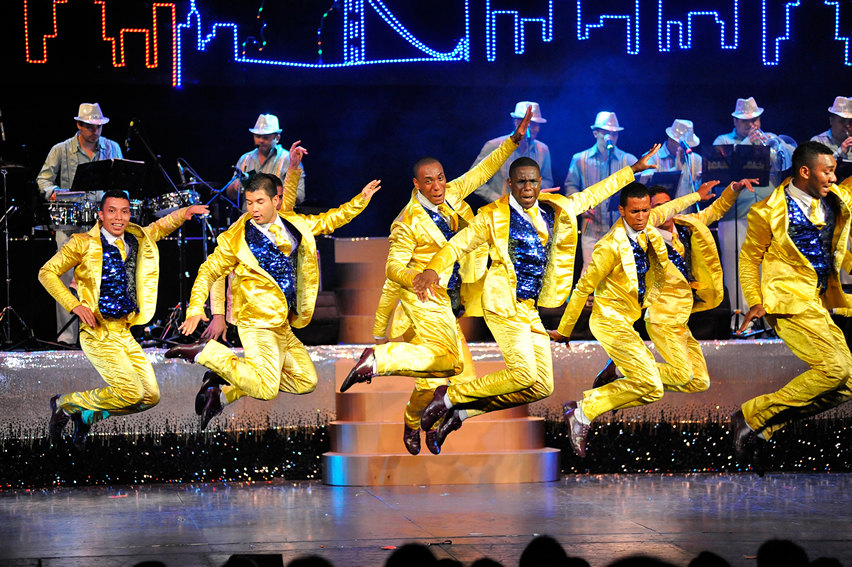
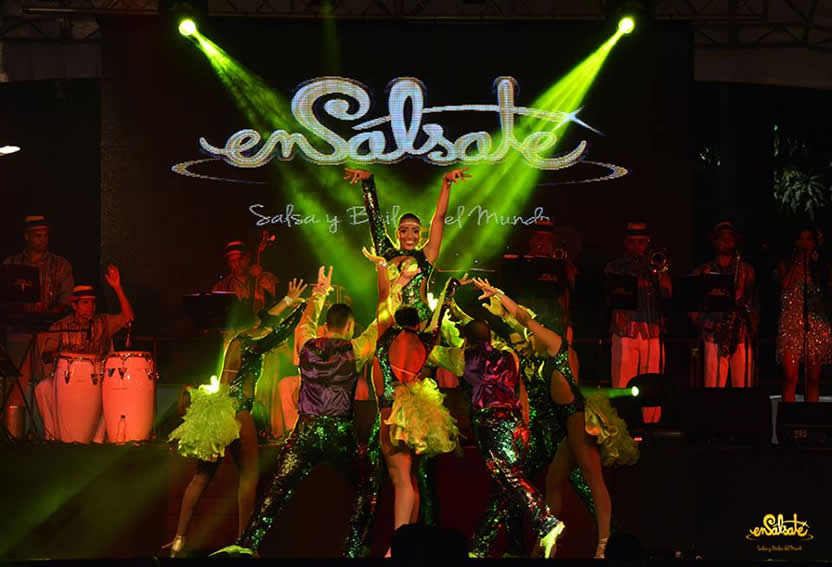
The Salsa Viva & Tango Vivo Artistic Company is part of the main cast of the Ensálsate Show. They are World Tango Champions, International Champions in choreographic groups, World Salsa Runners-Up, and finalists on the Caracol Television reality show LA PISTA. They have delighted thousands of spectators in Colombia and around the world with performances on seven international cruise ships and tours in countries such as Panama, Cuba, Venezuela, Brazil, Argentina, Chile, Ecuador, Uruguay, Trinidad and Tobago, Curaçao, Aruba, Korea, Japan, Turkey, Dubai, Cyprus, France, Italy, and Spain.

  • Crazy Hour
  • Children’s Entertainment
  • Quinceañera and Wedding Preparations

Flash Mob Dance schools in Colombia have two specially equipped locations in San Fernando and Ciudad Jardín, with programs for children, youth, adults, foreigners, business groups, family groups, home classes and summer courses.

Photo 5: Salsa Viva & Tango Vivo

Productions, Works, and Shows

  • “Dance Christmas” Show (2016)
  • “America Dances…Dancing Without Borders” Show (2016)
  • 2nd Comfenalco Valle de la Gente Salsa Encounter (2016)
  • “Colombia Dances” Show (2016)
  • Comfenalco Valle de la Gente International Tango Festival (2014 and 2015)
  • 1st Comfenalco Valle de la Gente Salsa Encounter (2015)
  • “Dances of the World” Show (2011, 2012, 2013, 2014, and 2015)
  • “Salsa Viva & Latin Dance” Show (2014)
  • “Tango Vivo – Tango Forever” Show (2013, 2014, and 2015) 2015)
  • Show “Her Majesty Salsa vs. Her Majesty Tango” (2014)
  • Show “Oriental Magic” (2015)
  • Show “Merry Christmas” (2014 and 2015).
  • Show “Merry Christmas” (2014 and 2015).
Photo 6: Salsa Viva & Tango Vivo

Awards and Recognitions

  • World Salsa Championship Runners-Up, Ensemble Category – Santiago de Cali (2016)
  • World Salsa Championship Champions, Cabaret Couples Category – Santiago de Cali (2016)
  • Fourth Place – World Salsa Championship, Ensemble Category – Santiago de Cali (2016)
  • Champions, Cabaret Salsa Team – 7th Ecuador Salsa Congress (2016)
  • Runners-Up, Salsa Team (No Acrobatic) – 7th Ecuador Salsa Congress (2016)
  • Runners-Up, Tango Show Dance – 7th Ecuador Salsa Congress (2016)
  • Champions, Amateur Salsa Couples – 7th Ecuador Salsa Congress (2016)
  • Champions, Cabaret Salsa Couples – 7th Ecuador Salsa Congress (2016)
  • Champions, Stage Tango – 7th Ecuador Salsa Congress (2016)
  • Third Place, Stage Tango – 7th Ecuador Salsa Congress (2016)
  • Professional Solo Champions – 7th Ecuador Salsa Congress (2016)
  • Professional Same Gender Couple Runners-Up – 7th Ecuador Salsa Congress (2016)
  • International Salsa Champions and Runners-Up at the II Pan American Dance Championship
  • Sports: III Open “Al Ritmo del Cielo” – Santiago de Cali (2016)
  • World Salsa Runners-Up – Santiago de Cali (2014)
  • World Salsa Runners-Up – Quito (2013)
  • World Tango Champions – World Tango Championship (2012)
  • International Choreographic Group Champions (2011)
  • Fourth Place in the World Tango Championship at the Trex Games Busan, Korea (2008)
  • Don Juan del Corral Order of Merit – Gold Category – Mayor’s Office of Medellín (2006). For all these details, we recommend visiting, Participate, learn, and enjoy the services offered by this successful company.
Salsa Viva & Tango Vivo shows

If you would like more information, you can contact them at:

  • Web: http://www.tangovivoysalsaviva.com/quienes-somos.php
  • Facebook: https://www.facebook.com/salsavivatangovivo
  • Twitter: https://twitter.com/salsavtangov
  • Instagram: https://www.instagram.com/salsavivatangovivo/
  • Youtube: https://www.youtube.com/c/salsavivatangovivo
Salsa Viva & Tango Vivo social media

Miguel & Mayana

Europe / England / London
Miguel & Mayana
Miguel & Mayana

Miguel & Mayana. Salsa & Bachata Classes in London

Miguel Rico

Corona Salsa Champion 2001, Scala Latina Salsa Champion 2003 and UKA Salsa Champion 2006 are some of his rewards and achievements since he started this amazing journey 17 years ago.

Miguel’s music interpretation is a gift from his both musician parents, this knowledge & experience makes him stand out in his performances and freestyle.

His personality and smile is simply contagious.

Miguel & Mayana - event
Miguel & Mayana – event

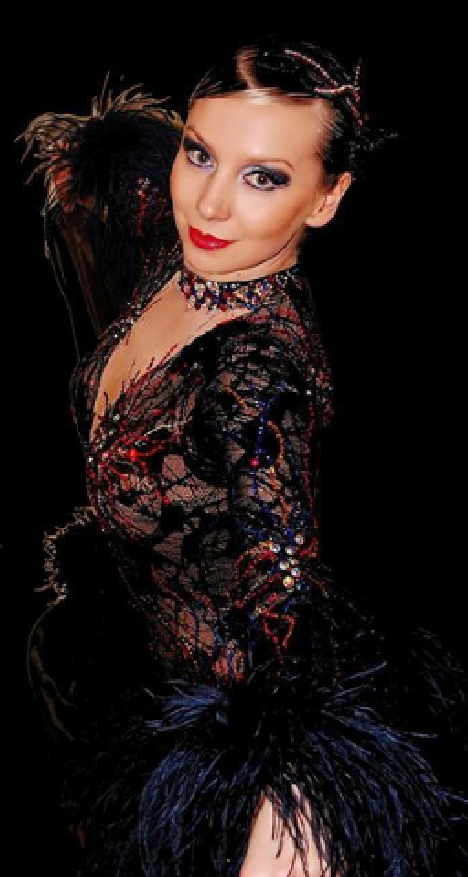
Mayana

Mayana’s love for dance started at an early age, she followed her heart and went to one of the best Russian Dance Academy where she studied from traditional dances to ballet & contemporary.

She continued teaching various dance styles until she found Salsa.

Mayana

What really makes her unique its her dance style where she combines all the knowledge she has of various dances, creating her own signature which portraying her as an elegant and stylish dancer.

  • 2007-2008 UK Professional Salsa Champions.
  • 2009 & 2011 Top Salsa UK Teachers Award
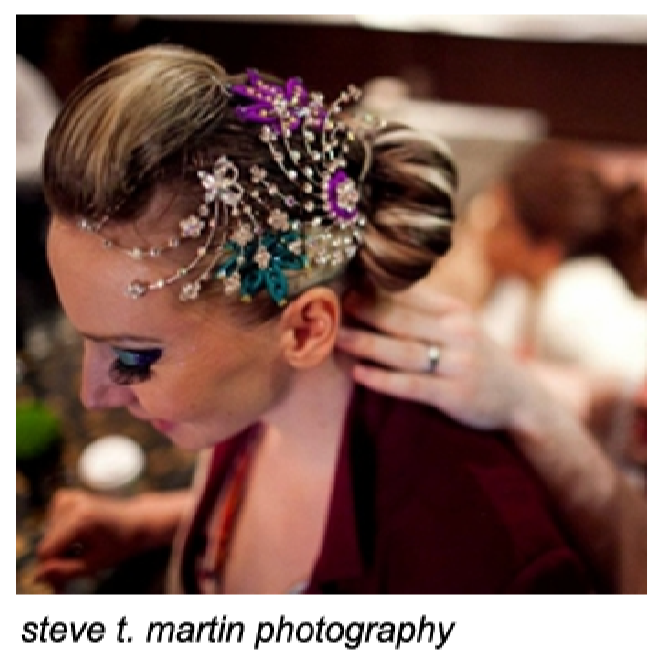
Photo: Mayana
Photo: Mayana

Salsa & Bachata Classes In London

Regular weekly Salsa classes in London

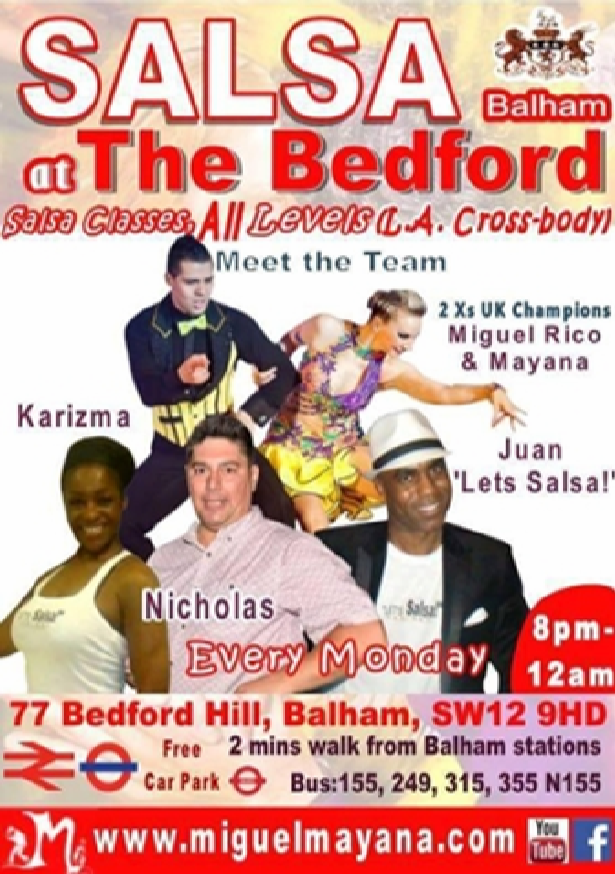
Salsa Classes & Club every Monday night at The Bedford in Balham, 77 Bedford Hill, SW12 9HD

All levels classes cross body New York Style with Miguel Rico, Karizma, Juan & Nicholas.

  • Doors open from 8pm
  • Free cha cha intro from 8:00pm – 8:30pm
  • Classes from 8:30pm – 9:30pm
  • Club after till midnight
  • Absolute beginners are welcome.
  • No partner required.
  • Loads of fun and a very friendly atmosphere!
Salsa Bachata Classs in London flyers - Miguel & Mayana
Salsa Bachata Classs in London flyers – Miguel & Mayana

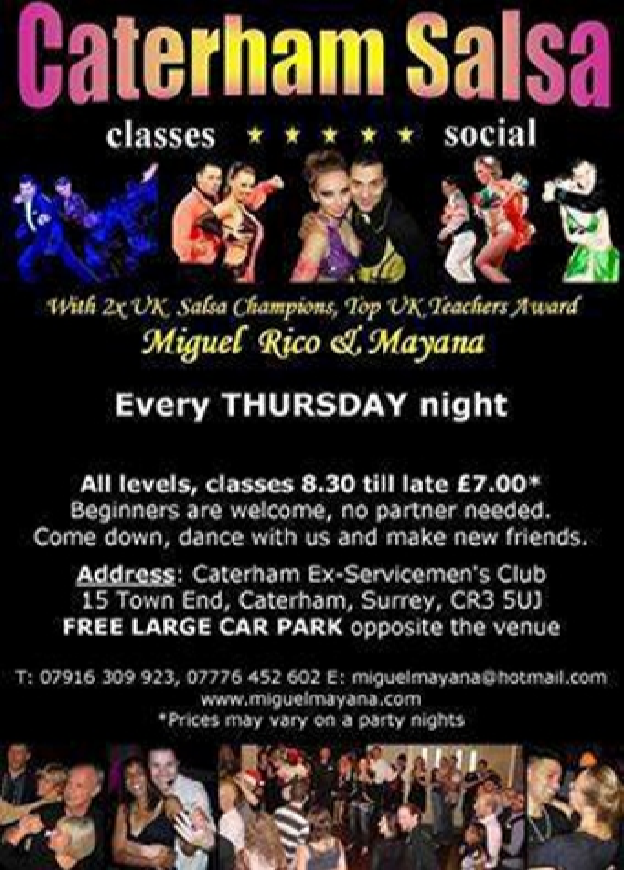
Salsa Class & Club every Thursday at The Ex-Servicemen’s Club in Caterham on The Hill CR3 5 UJ

The Classes are being held in the evenings from 8:30pm – 9:30 pm followed by Club until late.

Salsa Classes from absolute beginners to improver and Int/Adv Level.

Caterham Salsa Flyers

Always there will be a Club after where you can freestyle, socialise and dance with each other.

The admission is a drop in basis, no partner is required and no advance booking is necessary.

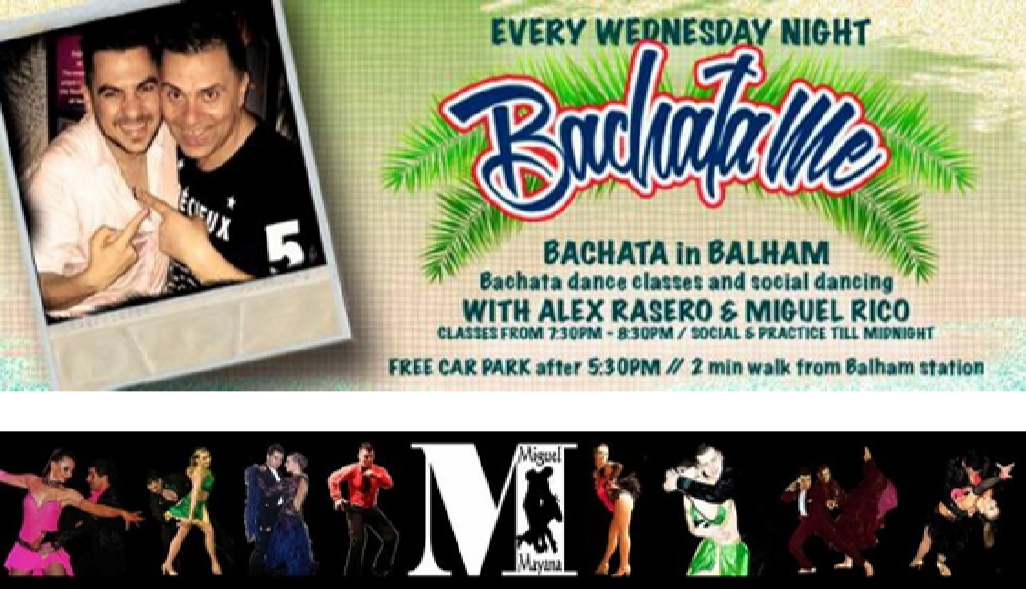
Bachata Class & Club, every Wednesday night at The Bedford in Balham, 77 Bedford Hill, SW12 9HD

Since 9th November 2016 Miguel Rico of Miguel Mayana London & Alex Rasero are running a regular weekly Bachata class & club, every wednesday at The Bedford in Balham.

Times: Doors open from 7pm. Classes from 7:30pm-8:30pm.

Follow by strictly Bachata social dancing till midnight.

Absolute beginners welcome

Class with Miguel & Improvers & above-class with Alex.

Social dancing after classes is from 8:30pm until midnight.

It’s time for Bachatame Nights!!! and have fun with two of the most charismatic dancers/instructors in the UK.

Bachata Me Flyers - Miguel & Mayana
Bachata Me Flyers – Miguel & Mayana

10 week Salsa Training & Student Performance Course Miguel Mayana Mambonito

10 week intensive Salsa training & performance course with UK Salsa Champions Miguel Rico & Mayana.

On2 Intermediate/Advance Mambonito Student Performance Team

Starting 15th January 2017

Places available on request

  • Email: [email protected] for your free info pack.
  • Miguel Rico & Mayana http://www.miguelmayana.co.uk
  • https://www.facebook.com/profile.php?id=100006814576565
  • https://www.facebook.com/miguel.mayana/
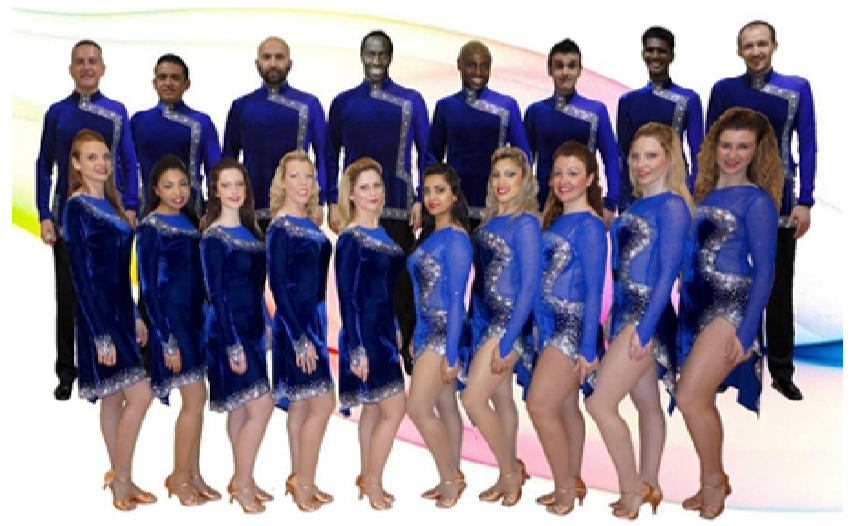
Miguel & Mayana and their colleagues
  • « Go to Previous Page
  • Page 1
  • Page 2
  • Page 3
  • Page 4
  • Page 5
  • Page 6
  • Interim pages omitted …
  • Page 32
  • Go to Next Page »

International Salsa Magazine (ISM) is a monthly publication about Salsa activities around the world, that has been publishing since 2007. It is a world network of volunteers coordinated by ISM Magazine. We are working to strengthen all the events by working together.