• Skip to primary navigation
  • Skip to main content

International Salsa Magazine

  • HOME
  • Previous editions
    • 2026
      • ISM / March 2026
      • ISM / February 2026
      • ISM / January 2026
    • 2025
      • ISM / December 2025
      • ISM / November 2025
      • ISM / October 2025
      • ISM / September 2025
      • ISM / August 2025
      • ISM / July 2025
      • ISM / June 2025
      • ISM / May2025
      • ISM / April 2025
      • ISM / March 2025
      • ISM / February 2025
      • ISM / January 2025
    • 2024
      • ISM / December 2024
      • ISM / November 2024
      • ISM / October 2024
      • ISM / September 2024
      • ISM / August 2024
      • ISM / July 2024
      • ISM / June 2024
      • ISM / May 2024
      • ISM / April 2024
      • ISM / March 2024
      • ISM / February 2024
      • ISM / January 2024
    • 2023
      • ISM / December 2023
      • ISM / November 2023
      • ISM / October 2023
      • ISM – September 2023
      • ISM – August 2023
      • ISM July 2023
      • ISM Edition June 2023
      • ISM – May 2023
      • ISM April 2023
      • ISM March 2023
      • ISM February 2023
      • ISM January 2023
    • 2022
      • ISM December 2022
      • ISM November 2022
      • ISM October 2022
      • ISM September 2022
      • ISM August 2022
      • ISM July 2022
      • ISM June 2022
      • ISM May 2022
      • ISM February 2022
      • ISM January 2022
    • 2021
      • ISM December 2021
      • ISM November 2021
      • ISM October – 2021
      • ISM September 2021
      • ISM August 2021
      • ISM July 2021
      • ISM May 2021
      • ISM April 2021
      • ISM June 2021
      • ISM March 2021
      • ISM February 2021
      • ISM January 2021
    • 2020
      • ISM December 2020
      • ISM November 2020
      • ISM October 2020
      • ISM September 2020
      • ISM August 2020
      • ISM July 2020
      • ISM June 2020
      • ISM May 2020
      • ISM April 2020
      • ISM March 2020
      • ISM February 2020
      • ISM January 2020
    • 2019
      • ISM December 2019
      • ISM November 2019
      • ISM October 2019
      • ISM Septembre 2019
      • ISM August 2019
      • ISM July 2019
      • ISM June 2019
  • Download Salsa App
    • Android
    • Apple
  • Spanish

Search Results for: Latin Dance

The recently released single “Cómo te quiero yo” is the preview of what will be the album, Sabrosura y Tradición, soon to be released also in acetate.

With a fifty-year career in music, the leader of the Salsa 220 Orchestra, Colombian trombonist Oscar “El Gato” Urueta releases the second song of the musical concept he now directs.

“El Gato” delivers his latest single “Cómo te quiero yo”, composition and arrangement by Venezuelan pianist Alberto Crespo; this time with Rodrigo Mendoza, remembered for his time with Dimensión Latina de Venezuela, on vocals. Urueta got in touch with Alberto Crespo after seeing his work in social networks.
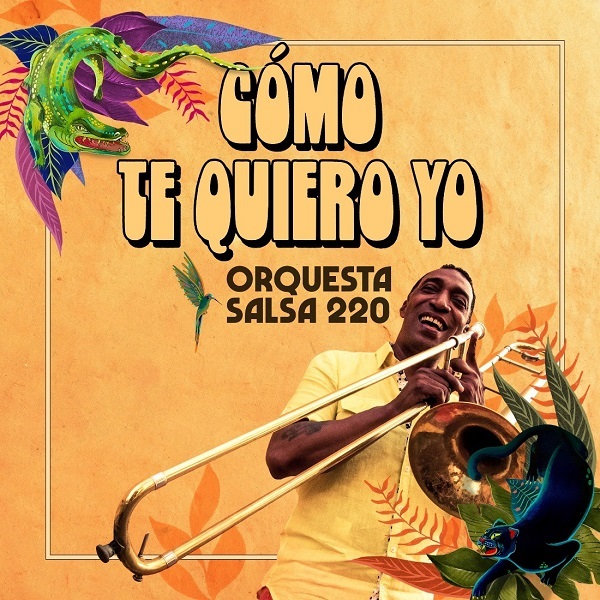
This single, in my opinion, deserves international diffusion because of the Afro-Caribbean interpretation in this concept described by Urueta himself as high-voltage salsa.  I listened to the track and I feel obliged to highlight it for bringing us a classic salsa concept, without being more of the same; so let’s go to the mambo, here is what you hear:

During the first 10 seconds, Rodrigo Mendoza leads the vocal part opening the theme as if opening a door; inviting the listener to go on a musical journey that merges various cultural influences.

At the first minute mark it is already known that the trombones of Oscar “El Gato” Urueta and Eliel Rivero are in charge of the musicalization.  At minute 1:45, Alberto Crespo’s piano solo delights us without making it dense.

This piano solo, from which the salsa dancer who dances in tune can benefit, seems to embrace in perfect synchrony the sound of José Soto “Mortadelo”‘s bass.

At minute 2:30 the trombones take over the song, and melodically give way to the tumbadora, in the hands of Carlos Padrón; meeting with the sound of the same in a tasty instrumental correspondence full of cadence and Caribbean flavor.
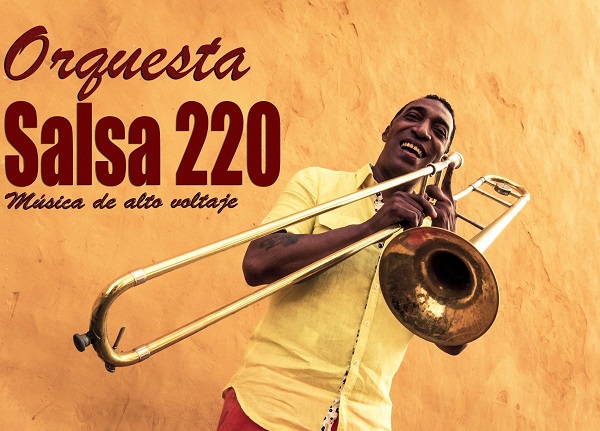
At minute 2:36, the bass of José Soto embraces again the sound of the tumbadora.

At minute 2:40 the tumbadora turns on the mambo. At minute 2:42 the tumbadora leads the percussion, opening the way for a bell that plays with the coros of Luisito Cabrera, Rodrigo Mendoza and Edgar “Dolor” Quijada, as well as interweaving with the trombones.

The trombones persist and sustain a mambo of those that bring “more salsa than pesca’o”, as we say in Puerto Rico; until around minute 2:55 the conga, the timbal and the bell execute a forceful cut and in unison, to return the arrangement to the trombones.

At minute 4:00, the leader’s trombone seems to be in sync with the percussion and vocalist to close the track; shortly after the trombones enter into a brief correspondence with the tumbadora, just before Padrón’s campaneo concludes the track at minute 4:25.

Urueta has a healthy musical trajectory, surrounded by the greats of the salsa sound.  “El Gato” was part of the Colombian orchestra La Protesta, when Joe Arroyo was the group’s vocalist. Urueta was also part of the now world renowned Grupo Niche, replacing Alexis Lozano on trombone. Urueta traveled to New York City with Grupo Niche as part of the first international tour of the group founded by the late Jairo Varela. He later settled in Miami where he was part of the orchestras that accompanied stars such as Frankie Ruiz, Hansel y Raúl and Santos Colón, to name a few.

Coincidentally, “El Gato” Urueta joined Hansel y Raul’s orchestra when the song ‘Maria Teresa y Danilo’ had become a hit throughout Latin America. Urueta shared the stage with musicians of the stature of Israel López “Cachao”.

In the 1990s, Urueta was a musician with Joe Arroyo’s Orquesta La Verdad, with whom he traveled around the world.

After participating in several concerts accompanying Richie Ray and Bobby Cruz, about five years ago, Urueta took on the task of forming the Orquesta Salsa 220 with which he presented the single “Guaguancó sabroso”, which featured Puerto Rican Rico Walker as guest artist on vocals.

“Cómo te quiero yo” is the preview of what will be the album: Sabrosura y Tradición, soon to be released also on acetate.

Bella Martínez

You can read: Sigo entre amigos de Luis “Perico” Ortiz


By Bella Martinez, ISM Correspondents, San Juan, Puerto Rico

Sundays Are Salseros In London

5 Clubs to not stop dancing Salsa even on the last day of the week

Salsa parties don’t stop in London, its fusion of Caribbean rhythms with a subtle swing and a few drops of Latin folklore make this genre one of the most contagious and fun to dance as a couple or with friends.

For that, here we make a list of the best places to dance Salsa on the last day of the week and if you do it regularly you will obtain health benefits such as muscle toning, improvement of cognitive functions (memory and coordination), the release of stress, increased self-esteem through a positive and confident attitude, in addition to improving circulation and the physical appearance of the legs. Let’s start now!

Room 1 alternates Salsa & Bachata, while in Room 2, they present Kizomba starting at 8 PM

We started with Medbar in Southampton. It’s the perfect place to drink, dine, and dance, as well as being one of the hottest hotspots in the heart of Oxford Street (50 Oxford St, Southampton SO14 3DP). Every Sunday from 6 PM is about Salsa, Bachata, and Kizomba. Beginner classes start at 6 PM, and advanced level lessons start at 6:45 PM. The value of each lesson is £8.

End the week with Medbar’s famous Latin nights and take advantage of the S.B.K social parties on Sundays from 7:30 PM until 2 AM.

Government-issued photo identification is required to access the bar.

A totally Latin atmosphere in London is the Salsa Soho Bar, Restaurant, and Nightclub, cataloged by many as one of the most authentic Latin music venues in the United Kingdom. Here you can enjoy the free Latin warm-up with Crossbody (LA) style Salsa classes for 45 minutes from 7:15 PM and continue with Salsa and Reggaeton lessons at all levels starting at 8 PM, you can also enjoy excellent South American dishes and 50 types of cocktails in this bar open seven days a week and located at 96 Charing Cross Rd since 1997. So live the experience of visiting Salsa Soho every Sunday and enjoy the Sundays X–perience until 2 AM with DJ José Luis. Admission is £5 after 8 PM. For more information visit their website. https://www.bar-salsa.com/soho

You can get there by train within 8 minutes of travel from Victoria

We continue with the Off The Cuff Live Music Bar located in the heart of Herne Hill (Arch 645, 301-303 Railton Road, Herne Hill, London SE24 0JN, UK). Voted by Mr. Hide magazine as one of the top five independent music venues in London, this bar offers one-hour Salsa Sessions every Sunday of the month from 6:15 PM to 7:15 PM, and the cost of admission is £10. Get fun the Sunday afternoon in the excellent company of Salsa.

During the weekly events there is a rotation with the best DJs in East London

We now walk through Juju’s Bar and Stage open six days a week. This place with a wide variety of events brings Latin parties every Sunday night for seven hours with DJ Javier “La Maquina De Cuba” and the Sambroso Sambroso dance academy.

Admission is free and starts from 4 PM to 11:30 PM. Juju’s Bar and Stage  is located at Ely’s Yard, 15 Hanbury Street, London, E1 6QR.

And in November! This prestigious space will play host to the EFG London Jazz Festival, London’s largest annual event, acclaimed for showcasing talent from around the world. This year the constellation of established and emerging stars will be intoxicating starting on Sunday, November 13th with the presentation of Cuban artist Yuri Hernández, who organically entered Latin Jazz in 2020 with the single Loco Soñador. DJ Flecha (Joel Verdecia) will also perform in this presentation. The ticket costs £8.50 and the sets will be distributed as follows 6 PM – 8 PM and 9:30 PM – 11:30 PM. Get your tickets and don’t miss out on the EFG London Jazz Festival from November 11th to November 20th.

Bar Salsa Temple is located on Victoria Embankment, Temple, London WC2R 2PH, United Kingdom

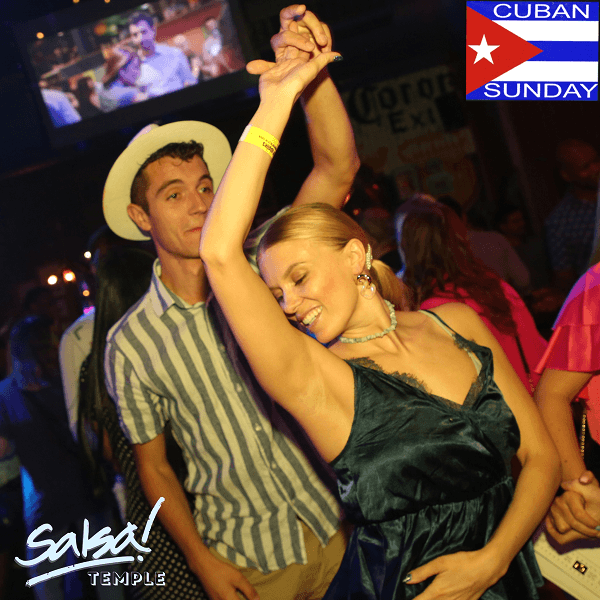
We end this tour at Bar Salsa Temple. Every Sunday is Cuban hits night. Relive the Havana of Puros by the River Thames! DJs Jorge Andre & DJ JJ Latin mixes the most recognized songs of yesterday and today from Timba, Salsa Cubana, Cubatón, and Bachata. Free Beginner Salsa Classes start at 6 PM, one-hour Sensual Bachata lessons start at 7 PM (£7), and Intermediate Cuban Salsa (Salsa Rueda) instruction is at 8 PM (£7).

Bar Salsa Temple is one of the largest Latin clubs in the country and is located on the Embankment, London. Join and experience the flavor of Cuban Sundays until 2 AM.

AQUILES BÁEZ

Swing And Tradition Of A Distinguished Venezuelan Artist

Chapter I: Aquiles’ Farewell

Aquiles Báez
Aquiles Báez began to flow within the Jazz and Latin American rhythm during his stay in New York (USA).

“With all the pain in my soul, I must publicly communicate that my friend, my brother, my accomplice Aquiles Báez passed away this morning at 5 in the morning in the city of Aachen, Germany. Aquiles was in the middle of a concert tour here in Europe. He flies high gordito.” Ramón Arturo Aular (Báez’s friend, musician, and professor at the Aachen Conservatory of Music) informed the community through his Twitter account the Monday, September 12th.

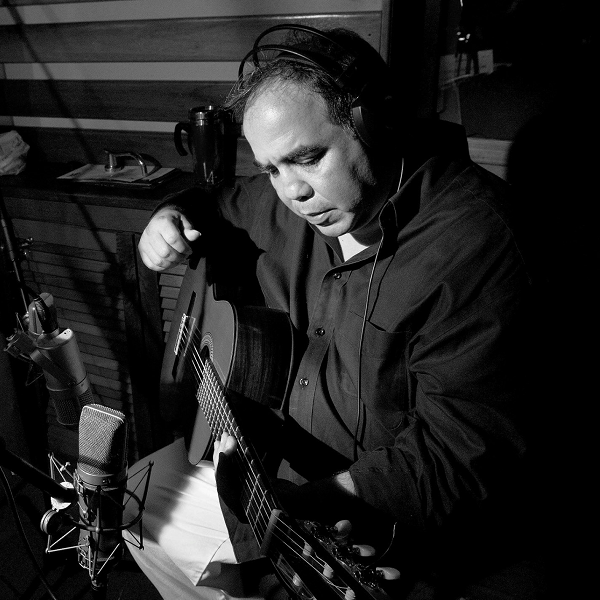
The virtuoso musician, noble guitarist, arranger, and excellent composer died of a sudden heart attack at the residence of his friend Ramón Aular. His last concert was held in the city of Cologne located in western Germany as part of his 2022 European tour, the first he did after the cessation of activities due to the Covid-19 pandemic.

The noble 58-year-old artist had already performed in Spain and was preparing to present his music in some German cities such as Berlin, Tubingen, and Hamburg, before finishing his tour in France and Portugal.

“I think it is important to project the work that one has been developing in other latitudes. This is very interesting because I realize that the music I make is universal, it is not limited only to playing for the Venezuelan diaspora, which of course also provides an audience”. Báez expressed this to an international media.

During his artistic career, he recorded 17 albums and collaborated on more than 150 recordings with other artists. Báez was a professor at the Berklee College of Music (Boston, Massachusetts) and was recognized for his mastery of the guitar with “elements of mixed Caribbean and Afro-Venezuelan cultures with classical music and Jazz.” Fragment extracted from his biography.

In life, he shared stages with artists such as Paquito D´ Rivera, John Patitucci, Romero Lubambo, C4 Trío, Ilan Chester, Simón Díaz, Huáscar Barradas, Worlds of Guitars, Aquiles Machado, Serenata Guayanesa, Iván Pérez Rossi, Fareed Haque, Dawn Upshaw, Richard Bona, Luisito Quintero, Solo Razaf, Marco Pereira, Oscar Stagnaro, and Ensamble Gurrufío.

Before passed away, Aquiles Báez was preparing the publication of two studio albums and the creation of five more. He was also in charge of making the music for the Venezuelan play Mi último delirio, which premiered on September 2nd with the lead role of his friend Héctor Manrique and with great reception from the public and specialized critics.

Chapter II: Getting to know the musicians’ Master to the rhythm of the compass

Julio, was the one who instilled in him a love for music by giving him his first instrument, the Cuatro.
His older brother, Julio, was the one who instilled in him a love for music by giving him his first instrument, the Cuatro.

Aquiles Báez was always an irreverent musician who made the type of music that he felt. “It is important to make music from what one feels it is, from that forceful energy that is the act of creating…Lately, I have been respected. It was hard to get that position. They have not always respected me, perhaps because of my way of being, irreverent. The people who manage cultural spaces have always taken me as an anarchist… I consider myself someone accessible, the teacher thing hasn’t gotten to me, seeing everyone below me, that seems pathetic to me…” Aquiles expressed this to a Venezuelan media.

“Throughout his career, Aquiles has received various awards and recognitions. These include Pepsi music awards and the William Leavitt award given by the Berklee College of Music; In addition, he has stood out with more than a dozen awards as a composer of music for film, theater, and dance. Extracted from his biography.

In 1996, at the age of 32, Aquiles decided to move to the United States to study at the Berklee College of Music in Boston. After two semesters he dropped out, considering that he was “learning the same thing but in another language.” And that was not only his thinking, but also what he demonstrated during his stay as a student at the academic campus, so shortly after he entered the Berklee College of Music again, but this time as a professor.

On this academic campus, he gave “clinics, workshops, and seminars at different universities and musical institutions such as Indiana University, Temple University, Queen College, Krems Summer camp, Curitiba Music Office, The Jazz School in San Francisco, among others, in Europe and the United States”, according to his biography.

Shortly after, he participated as a guest musician on the albums of Panamanian artist Danilo Pérez: Central Avenue (1998) and Motherland (2000), both albums nominated for Grammys.

Aquiles Báez was a founder and member of the board of directors of Guataca productions. In this space, they continue to support emerging Venezuelan artists. Báez’s methodology for finding new talent was to research, listen to them live and contact them. “Why not support those guys who come after you? Why not make life more pleasant for them? Or a lighter path than one had. This road is not easy at all, it has been very hard, and it continues to be hard. And one continues and believes that he has acquired a certain reputation…” Báez expressed this in an interview conducted by a Venezuelan media outlet.

Chapter III: Anecdotes of a famous life

Last night sharing with the beloved Maestro Carlos Cruz Diez (Panama. October 29, 2016)

Countless artists expressed their affection and grief for Aquiles’ departure, expressing testimonies of a life full of joy, love, and passion for musical colors.

“One of the artists who has inspired me the most and a great human being. He made it possible for us to make our first album, the tour of the United States and opened the doors of his home for us. We made a lot of beautiful friends with Aquiles. D.E.P, Maestro,  compaíto Aquiles Báez”. Jorge Glem (Cuatrista and member of the group C4 Trio).

“The wonderful Aquiles Báez was a musician capable of playing all Venezuelan music of all genres“. Alfredo Naranjo (Vibraphonist)

“Dismayed by the sudden death of my dear friend Aquiles Báez, one of the great musicians of our country, guitar teacher, and eternal officiant of humor and simplicity”. Leonardo Padron (Writer)

“Today we are less. I have just been informed that our admired and beloved musician and my dear friend, Aquiles Baez, has passed away. This news is heartbreaking and unfair. Aquiles is one of the most creative and generous people I have ever met”. Héctor Manrique (Director and theater actor)

“Thank you for being an inspiration in music and a big brother in life. Without your unconditional support, I would not have even reached the corner”. Álvaro Paiva Bimbo (Guitarist and 2022 Oscar nominee for the soundtrack of the Disney movie “Encanto”)

“How can we forget this great friend and fellow adventurer”. Claudio Nazoa (Comedian)

“I was left with the desire to carry out the project we had to record an album together. What profound sadness!” Miguel Delgado Estévez (Musician, arranger, and producer)

Finally, the Venezuelan percussionist Omar Ledezma Jr. expressed his sorrow for the death of Báez.

LENTEJAS. That’s what the gordo called me. 7 years of my life I played and toured the world with Aquiles Báez. We met at one of his concerts at the Bellas Artes thanks to my dear Carlos Reyes, another great guitarist from our country, at the time I worked at the MACCSI. Years later, arriving in Boston, he called me to be in his group and I couldn’t believe it. The gordo was my musical hero thanks to his Platabanda and the number of times I saw him accompanying great singers. He was the one who told me to grab El Cajón and start putting in the merengue and the gaitas. I knew his bad jokes by heart: “Vamos a tocar la canción de DC: Di si encontraste…”, with him, I learned to be a person first, then a musician, I learned not to make ugly faces if I made a mistake, with him, I had to press on reading, to be punctual, to put my batteries.

Anyway… with the gordo I learned to be a professional musician, because with his virtues and defects, for me, he was the best.

I love you my gordo, wherever you are. Thanks. #aquilesbaez”.

You can continue reading the article about Omar Ledezma Jr. From The Venezuelan Melody To The Caribbean Rhythm.

Here is a small excerpt from this interview of 2021:

Years later, and with experience acquired in presentations, and groups, Omar Jr. met his first mentor, Aquiles Baez, a famous Venezuelan artist, guitar virtuoso. Together with Aquiles, he made his first international tour of the United States. “With Aquiles, I had the pleasure of playing Venezuelan music. We play with many artists in the United States… Thanks to him I developed percussion (Non-autochthonous element) in Venezuelan music”. Ledezma Jr. commented.

“Fall in NY. How beautiful are the colors of Autumn in NYC. Enjoying that watercolor of nature”. Aquiles Baez (November 8, 2018)

Where To Go Dancing Salsa In Sydney?

Seductive Afro-Cuban music comes to life in the Australian capital every night of the week

You probably already knew that a lot of Salsa is heard and danced in Australia. But, have you ever wondered, which are the best places to go Salsa dancing in Sydney? Here, we’ve rounded up six of our favorites.

ESTABLISHMENT BAR

At Establishment Bar
At Establishment Bar, you can have your drink in the garden surrounded by abundant latticework and greenery

Salsa Tuesdays are back at the Establishment Bar! This iconic Sydney spot is unique and sophisticated. It has narrow spaces, a 42-meter-long marble bar, and columns lining the walls that recreate the style of ancient Greece.

Establishment Bar with its lush lighting offers its attendees Afro-Caribbean music on Tuesday nights with live bands, dance shows, DJ playing Salsa, Bachata, Merengue, Reggaeton & Bossa Nova until 3 AM, and live percussion. Weekly you will learn basic concepts in the free Salsa class starting at 8 PM, in addition, to enjoying cocktails ($10) and mojitos ($12) all night so you can enter an authentic Latin American Rumba.

This multi-award-winning bar is located on the Ground Floor, 252 George St, Sydney NSW 2000, Australia.

THE ARGYLE

Inside The Argyle you can also find El Camino Cantina

Wednesday nights are from The Argyle! This two-floor club has been powering Sydney nightlife for fifteen years (2007).

This venue located at 18 Argyle St, Las Rocas, Sydney NSW 2000, has six bars, an iconic outdoor patio with spacious mini-environments to enjoy a Salsera night with the lineup of DJ Miro and his friends, as well as live bands in constant rotation.

These fun mid-week nights start at 7:30 PM to 1 AM and are $10 (includes a Salsa lesson). The dress code is casual, and minors are not allowed after 9 PM.

THE COLLAROY

The Collaroy has $14 happy hour cocktails from 8 p.m. to 10 p.m.

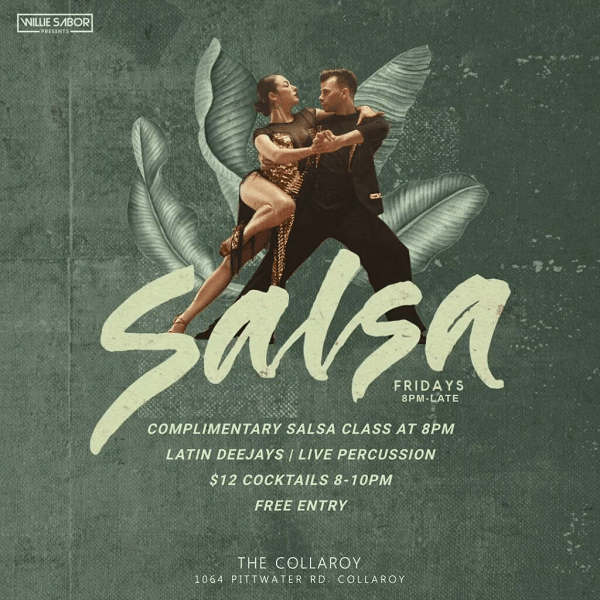
Friday nights are Salseras at The Collaroy! Located right on the beachfront at 1064 Pittwater Road, Collaroy, New South Wales, Australia, this restaurant/bar with live entertainment and DJs downstairs on weekends stays open until 3 AM.

On Fridays from 8 PM to 9 PM, they offer Salsa classes (free) and from 10 PM the Latin party starts until 3 AM with live percussion and a DJ playing Afro-Cuban melodies, urban music, and Bossa Nova.

The Collaroy has an open-air terrace with a magnificent panoramic view of the peninsula’s north.

LATIN DANCING UNDER THE SAILS – BROADBEACH

Latin Dancing Under The Sails may change its date due to weather

Salsa takes over Saturdays at The Oasis Shopping Center! Every last Saturday of the month the LatinMania team brings the Latin Social Dance event outdoors at the Oasis shopping center located in Broadbeach Gold Coast, Queensland, Australia with music provided by DJs specialized in Salsa, Timba, Bachata, Merengue, and Salsaton from 7 PM to 10 PM.

The event is free and this month the theme will be Halloween. So don’t miss this opportunity to dance Salsa in Sydney with Colombian-born instructor Alejandro Barriga next Saturday, October 29th.

PLANT 4 BOWDEN

Plant 4 Bowden was born out of a vision for a thriving community and a passion for environmental sustainability

Every first Sunday of the month is Salsero at Plant 4 Bowden! This place is 100% green and adheres to international standards for green building design earning a 5-star rating for its operations.

Plant 4 Bowden, characterized by its environmental sustainability, presents its Salsa nights every first Sunday of the month from 4:30 PM to 10:30 PM with food, drink (local craft beer from barrel), Salsa, Bachata, and Kizomba along with wonderful musical shows on the ground floor. The ticket price is $20 at the box office, and it is located at 5 Third St, Bowden SA 5008, Australia.

The magic of Salsa in this space happens surrounded by greenery with ample indoor seating and outdoor areas.

SALSA IN THE PARK

There is no better time than now. Go out dancing Salsa today in the Park (Sydney – Australia)

The second Sunday of every month is a Salsa immersion in the Park! Salsa in the Park  is a free event that offers 3 hours of Latin music and social dancing outdoors at El Pabellón del Norte, 95 Marine Parade, Broadwater Parklands, Southport next door to the revolving chapel adjacent to North/Smith Street.

The half-hour lesson starts at 3 PM, and then the Social Dance continues until 6 PM with music provided by top DJ’s mixing old and new Salsa, Bachata, Merengue, Cha Cha, and more.

Who can attend? The whole family and their pets. No experience is required. What are the benefits? Meet new friends, you’ll get fit, improve your mental health and coordination, and stay active. When? The next date is Sunday, October 9th.

The interesting story of French percussionist Dominique Patrick Noel

How his career started

All right, so we are here with French percussionist, composer and musician Dominique Patrick Noel. How are you doing, Mr. Noel? A pleasure to have you here.

Well, thank you. First of all, I want to thank you for taking the time to interview me and to greet all those who is going to read it. Thank goodness, I am in good health and it is all good.

Dominique Patrick Noel tells us about his story and beginnings

You are a self-taught musician who started playing by age seven. Did you learn everything by yourself or did you receive some kind of training?

Since I come from a family of musicians such as my father and my two grandfathers, I can say that music has always been a part of my life. I started playing the drums by listening to a lot of jazz and fell in love with this genre. That’s how I started to develop the movements and patterns of jazz and the drums.

In school, I started playing and learned solfège, percussion, drumming, among other things. When I turned 15 years old, I started playing music at a pro level because I have always had the pleasure of learning by watching musicians, who had much more experience. Thank goodness, I had my mind fresh to grasp and remember what I had seen, which helped me a lot to continue developing in percussion, different instruments, rhythms, among other things.

When I started playing Latin music, my first instrument was the bongo. I had a mentor named Alfredo Mujica Jr.,m who knew my dad and learned by playing with him. When it was my turn, he was giving the task of helping me understand the patterns and other things. He told me that the best instrument I could choose to start with was the bongo because it would help me understand a little more about how salsa works and that helped me a lot. He showed me the basic pattern and how to imitate the sounds I heard until they were similar.

After that, I also learned to play the conga, the Dominican tambora, the güira, the batá, the cajon and the timbales.

His career started at the age of 15 and his first instrument was the bongo

When you played the bongo for the first time, did you know you wanted to dedicate yourself to the Latin genres permanently?

When I was nine years old, I moved to Martinique and lived there for about four years. There I was fortunate to learn its folklore, its rhythms, its typical instruments and its dances. I also learned to perform all those genres with the drums and tried to absorb all I saw. Concurrently, the zouk era was beginning and I fell in love with the genre since I heard it for the first time.

Sometime later, my dad and I went to the United States to be with my dad, who was living in Washington at the time. It was there where I started to accompany him in several of his activities and shows with his orchestras. Then, I began listening more to salsa, cumbia and merengue, something I liked very much. Then, I told him that I would like to learn what he knew and play with him, to which he replied that it looked good, but that it was a profession that I had to take very seriously. Therefore, he advised me to listen to everything, even if it wasn’t Latin music because all genres nurture the musician in one way or another.

With whom he has worked?

You have worked with Tito Puente Jr, Tito Rojas, Izis La Enfermera de La Salsa, Frankie Vasquez, Lalo Rodriguez, among others. What have you learned from them?

I have had the opportunity to play with maestro Tito Rojas and his musical director, Celso Clemente, gave me some advice. When rehearsing, I approached him to thank him for allowing me to play the bongo with them and ask him for advice for my career, to which he replied that he liked my work very much and that I was very good for someone who was not born in this Latin music environment.

He also advised me that I had to move forward, never play down my goals, accept constructive criticism and always stay humble. I will never forget his words.

Dominique Patrick Noel next to Gloria Estefan and Emilio Estefan

We know that you are a voting member of the National Academy of Recording Arts and Sciences, which is well known for giving the Grammy Awards. What do you base to vote for a nominated candidate for an award?

There are several processes for artists to be nominated. For us the voters, it is a long process because we have the task of listening to much music and analyzing many details such as recording quality, lyrics, musicality and much more. There are many important elements to consider when choosing the person. I want to get to the point of saying that someone really deserves my vote for this or that category.

Voting takes time. It’s not something that you do in an hour or two, it takes a long time. The day of the awards ceremony, we already know who will the winners. At that point, we can say that all of them have managed to win via an arduous selection process.

Tell us about your song Mi Secreto with D’ William.

The skeleton of the song was my idea and I got together D’ William, to whom I offered to join the song. He wanted to collaborate with me in a merengue song for some time and I sent him the skeleton, which he liked and told me that something could be done with it. When he asked me if I already had the lyrics, I said no, but I wanted to base the song on an experience of mine, so I told him what it was about and the lyrics were written about that fact. Later, we made some additional arrangements and that’s how Mi Secreto was born.

Dominique Patrick Noel next to Bobby Cruz

Read also: Earl Miranda and Ric Feliciano talk about the Latin Rhythm Boys and its history

  • « Go to Previous Page
  • Page 1
  • Interim pages omitted …
  • Page 99
  • Page 100
  • Page 101
  • Page 102
  • Page 103
  • Interim pages omitted …
  • Page 137
  • Go to Next Page »

International Salsa Magazine (ISM) is a monthly publication about Salsa activities around the world, that has been publishing since 2007. It is a world network of volunteers coordinated by ISM Magazine. We are working to strengthen all the events by working together.