• Skip to primary navigation
  • Skip to main content

International Salsa Magazine

  • HOME
  • Previous editions
    • 2026
      • ISM / March 2026
      • ISM / February 2026
      • ISM / January 2026
    • 2025
      • ISM / December 2025
      • ISM / November 2025
      • ISM / October 2025
      • ISM / September 2025
      • ISM / August 2025
      • ISM / July 2025
      • ISM / June 2025
      • ISM / May2025
      • ISM / April 2025
      • ISM / March 2025
      • ISM / February 2025
      • ISM / January 2025
    • 2024
      • ISM / December 2024
      • ISM / November 2024
      • ISM / October 2024
      • ISM / September 2024
      • ISM / August 2024
      • ISM / July 2024
      • ISM / June 2024
      • ISM / May 2024
      • ISM / April 2024
      • ISM / March 2024
      • ISM / February 2024
      • ISM / January 2024
    • 2023
      • ISM / December 2023
      • ISM / November 2023
      • ISM / October 2023
      • ISM – September 2023
      • ISM – August 2023
      • ISM July 2023
      • ISM Edition June 2023
      • ISM – May 2023
      • ISM April 2023
      • ISM March 2023
      • ISM February 2023
      • ISM January 2023
    • 2022
      • ISM December 2022
      • ISM November 2022
      • ISM October 2022
      • ISM September 2022
      • ISM August 2022
      • ISM July 2022
      • ISM June 2022
      • ISM May 2022
      • ISM February 2022
      • ISM January 2022
    • 2021
      • ISM December 2021
      • ISM November 2021
      • ISM October – 2021
      • ISM September 2021
      • ISM August 2021
      • ISM July 2021
      • ISM May 2021
      • ISM April 2021
      • ISM June 2021
      • ISM March 2021
      • ISM February 2021
      • ISM January 2021
    • 2020
      • ISM December 2020
      • ISM November 2020
      • ISM October 2020
      • ISM September 2020
      • ISM August 2020
      • ISM July 2020
      • ISM June 2020
      • ISM May 2020
      • ISM April 2020
      • ISM March 2020
      • ISM February 2020
      • ISM January 2020
    • 2019
      • ISM December 2019
      • ISM November 2019
      • ISM October 2019
      • ISM Septembre 2019
      • ISM August 2019
      • ISM July 2019
      • ISM June 2019
  • Download Salsa App
    • Android
    • Apple
  • Spanish

Search Results for: Latin Dance

Dancing in Riverside

North America / USA / Chicago

Dancing in Riverside, an incredible dance academy that provides PRIVATE DANCE LESSONS as the quickest and most effective way of learning how to dance This type of learning is based in dance science and it maximizes the mind/body connection with an emphasis on the student’s personal experiences.

GROUP DANCE CLASSES consisting of a group of students that can range in numbers, from 6 students to 20 or more, and one dance instructor. In a typical group class at Dancing in Riverside, they will teach 2 to 4 patterns in whichever style that the class is learning. In addition to learning those individual patterns, also will teach you how to be able to instantly use the patterns in any social setting. We teach a variety of classes such as Ballroom, Latin, Swing, Salsa and much more.

Dancing in Riverside

The benefits of dancing

In Dancing in Riverside, you will learn all the benefits of dancing, such as:


  1. Physical Benefits

Lose Weight: A recent study that was published in Volume 8 issue #3 of the Journal of Applied Research, suggests that the combination of a proper diet and a regular dance program could be the key to shedding those extra unwanted pounds. The study was conducted by the Department of Physical Therapy at Loma Linda University in the city of Loma Linda California. The researchers combined a sensible diet with a 1 hour a day dance program, and this is what they found: 7.5 pounds lost, 3.2 inches lost from the hips and 28.6% increase in the core muscle strength.

Healthier Bones

Circular System / Stronger Muscles Brain Function


  1. Mental Benefits

According to the New England Journal of Medicine, studies have found that dancing increases cognitive activity, and subsequently decreases the risk of developing dementia. And based on a reading of these results by Stanford University, dancing frequently reduces the risk of dementia by 76% – considerably more than any other activity studied, including reading. The reason for this is that dancing requires you to make split-second, rapid-fire decisions, basically with every step you take. These kind of exercises have been shown to increase and maintain brain function in people of all ages. According to Stanford, In freestyle social dancing, both men and women are spontaneously open to the infinite possibilities of the moment, responding to one’s partner and to the music.


  1. Social Benefits

Improved social skills Connecting with community and meeting new people Providing a forum of self-expression

 

Dancing Benefit
Dancing Benefit

You can learn all of this and much more in Dancing in Riverside

http://www.dancinginriverside.com

Location: 1760 Chicago Ave J11/13, Riverside, CA 92507, EE. UU.


Types of Dancing

Beside you will learn different dances and type of application such as:


  • Social Dancing: Social dancing is designed to develop poise and confidence on the dance floor. Its primary objective is to strengthen the individual’s leading or following ability to the point that no matter who your partner is, you will feel physically and mentally confident. The patterns used are generally suitable for smaller floors and so is the arm styling. Advanced styling is not the primary objective of social dancing.


  • Showcase Dancing: Showcase dancing is a means of developing one’s ability by spending concentrated time on one or more dances. Preparing a showcase routine is very beneficial for developing confidence, style, pattern knowledge and smoothness. This type of dancing is very stylized and much of the time is spent on footwork, technique and the character of the dance as well as the personality of the dancer. Once the routine is complete, one feels they have gained a tremendous amount of knowledge and confidence in a relatively short period of time.


  • Competitive Dancing: Competitive dancing combines the skills of both the social dancer and the showcase performer. Like the social dancer, competitors must maneuver, maintain poise and adjust to the various conditions surrounding them while having all of the flare, style, technique and precision of an exhibition dancer.


 

Pete and Michelle Lakin

North America – December 2017

Social Dancer thubnails - North America - December 2017

Salome ingles thubnails - North America - December 2017

Dancing in Riverside thubnails North America - December 2017

Burju Perez thubnails - North America - December 2017

Amore Dance thubnails - Norte America - Diciembre 2017

Habana Style Dance Company thubnails ingles - Norte America - Diciembre 2017

San Tropez Dance School thubnails - Norte America - Diciembre 2017

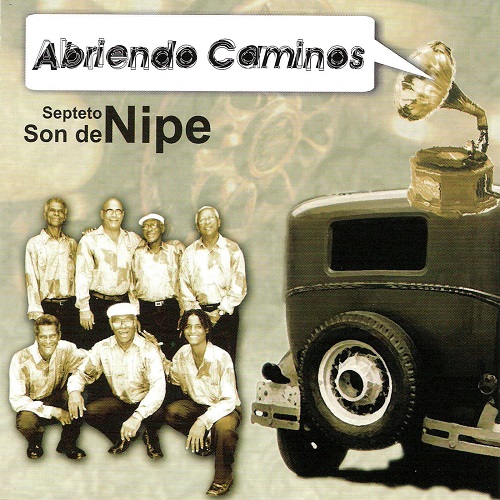
From Cuba El Septeto Son de Nipe come Abriendo Caminos (Opening Paths)

Son de Nipe. A musical septet born in the municipality of Antilla, it burst into the cultural world with an album of the In Situ label of the Colibri Record Production Company.

Antilla is the smallest municipality of the province of Holguin in Cuba and one of the smallest of Cuba, it was founded on January 21, 1925, it is famous from distant times for its beauty, legends and original aspect.

De Cuba El Septeto Son de Nipe vienen Abriendo Caminos

The group is formed by former musicians of the orchestra Brisas de Nipe of this municipality.

This project was born from the hands of Porfirio Núñez Cruz (Firo) who as Art Instructor at the Casa de Cultura Adelaida del Mármol of Antilla had experimented with other amateur groups, but not with the same results, because the members did not have the necessary musical training.

The album Abriendo Caminos includes 14 songs, 10 of which belong to Antillean authors.

“The value of Abriendo Caminos also lies in the fact that it helps Antillean composers and arrangers to open up to the recognition of their work and ways of doing things”.

From the singer and percussionist of the septet Son de Nipe, Alejandro Arencibia appears the guaracha Esa muchacha quiere bailar and the son, Honor al Guayabero; from Edalio Espinosa Alayo (Pupi), former member of the Brisas de Nipe orchestra, the son, Es caliente como el sol (It’s hot like the sun).

The songs A mi Antilla (bolero-son) and, Y no me niegues el beso (son) by José James Pinder, singer of the septet. By Oscar Fernández, former singer of the Brisas de Nipe Orchestra, the disc offers the themes Rebozo de amor (guaracha) and the son Que lástima.

Septeto Son de Nipe
Septeto Son de Nipe

From the director of the septet Son de Nipe Porfirio Núñez Cruz, Mi son tradicional.

And the guaracha Olvídate de esa nena by the Antillean composer Nemesio Palacio.

The remaining four musical numbers are; De que callada manera by Nicolás Guillén and Pablo Milanes, Culpable by Pepe Delgado, Rabo de nube by Silvio Rodríguez and Una alborada de amor by Ariel Dotres Zaldivar, these songs were arranged by Porfirio Núñez Cruz.

In the septet’s album Son de Nipe Abriendo Caminos “the guaracha, the bolero, the bolero-son and the genuine son are retaken with originality and revalued”.

The latter is due to the fact that the musical criteria followed by its director was the respect for traditional music, its deep knowledge, but imbuing it with very contemporary nuances, which results in a seal that distinguishes the septet Son de Nipe.

“We use the son, but more updated because we make innovations, harmonizing it in a more modern way, without losing its roots”.

The selection of the songs that made up the album Abriendo Caminos was in charge of the septet’s management, since the Casa Discográfica Colibrí wanted originality and the authentic exhibition of the work that has been developed with traditional music in the eastern part of the country.

Son Cubano de Nipe en Holguin

The graphic image of the disc, worked in sepia and black colors fundamentally manage to set the atmosphere that is offered to us with a vintage flavor and invites us to listen to these 14 songs full of tradition and contemporaneity.

“It will be a delight for the listener and the dancer, the good function of the tres in its solos and “entregas”, the beautiful and ingenious introductions, the exquisite mixture between text and music of the boleros, the harmonic patterns of the soneros that not for conventional reasons give up a significant finish, without neglecting, on occasions, the voices replacing wind instruments”.

The selection of the members was meticulous. Porfirio had in his favor the prestige he possessed and the convening power among his former colleagues of the Orquesta Brisas de Nipe, so much so that in the list of his group he planned to include Reyes Cástulo Urgellés Fáez, better known as Lulú as bassist and José James Pinder (Joseíto) as singer, both retired from the Orquesta Brisas de Nipe and linked to the Casa de Cultura in occasional activities.

The septet still needed to be completed with a key piece, the tres, for which the prestigious Mario Arencibia Rodríguez, one of the best tres players in Antilla, was summoned.

In the Arencibia family, musicians abound, that is why the group was completed with them: Alejandro, singer and Rafael on the tumbadora.

Alejandro and Mario had been part of an amateur group called Renovación Antillana for more than 20 years, which was very famous in its time and where a great number of aficionados were formed.

Alejandro sometimes played the tres in other groups, but in Son de Nipe he remained as a singer, he also had a work relationship that did not allow him to devote himself entirely to music; His nephew, trained at the Casa de Cultura and under the musical influence of the family, had taken over the tumbadoras, so Rafael Arencibia was the youngest of the group, he was barely 25 years old and at this young age he had already played in several amateur groups and got the Brisa de Nipe orchestra out of trouble, due to the unexpected absence of its percussionist.

Rafael Arencibia Rodríguez joined the project with enthusiasm despite the fact that the genre and style of the repertoire were not those used by the amateur groups of his contemporaries.

Iro had obtained the desired musicians, but he still had a big step to climb, his musicians were not professionals, they all had work commitments and he needed to prepare the project for the right day…(ecured).


Septeto Son De Nipe – Abriendo Caminos (2006)

Temas:

  1. Esa Muchacha Quiere Bailar (Alejandro Arencibia)
  2. Es Caliente Como El Sol (Edalio Espinosa Adayo)
  3. A Mi Antilla (José James Pinder)
  4. Rebozo De Amor (Oscar Fernández Paz)
  5. De Qué Callada Manera (N. Gillén / Pablo Milanés)
  6. Honor Al Guayabero (Alejandro Arencibia)
  7. Culpable (Pepe Delgado)
  8. Mi Son Tradicional (Porfirio Núñez Cruz)
  9. Y No Me Niegues el Beso (José James Pinder)
  10. Clodomiro (Oscar Fernández Paz)
  11. Rabo De Nube (Silvio Rodríguez)
  12. Qué Lástima (Oscar Fernández Paz)
  13. Una Alborada De Amor (Ariel Dotres Zaldívar)
  14. Olvídate De Esa Nena (Nemecio Palacio)
Septeto Son De Nipe - Abriendo Caminos (2006)
Septeto Son De Nipe – Abriendo Caminos (2006)


Research Sources:

L’Òstia Latin Jazz

Dj. Augusto Felibertt

Also Read: Virgilio Martí was an excellent rumbero and composer of the classic “Cuba Linda” where he was vocalist and percussionist in Grupo Folklorico Experimental Newyorkino

ISM presents 2 Venezuelan DJ with a great passion for Salsa

Latin America / Venezuela / Caracas

DJ Katiuska Oropeza

Katiuska Oropeza. Born in Caracas, the capital of salsa in Venezuela, currently based in the Carabobo State, Valencia – Venezuela.

DJ Katiuska Oropeza
DJ Katiuska Oropeza

He mentions “My passion for salsa began at the age of 3, influenced by my father who was a great connoisseur of this genre and at the age of 7 I already wanted to learn to play the timbal since I love percussion.

Over the years and by chance I got to know the salsa movement produced by a number of virtual collection salsa stations where a number of music lovers gather to enjoy and keep alive what is the essence and basis of salsa, I become passionate and I begin an incredible learning about everything that Venezuelan salsa is and that is when I become a programmer for the pioneering station on the Internet called www.rumbayguateque.com through this I was the representative in Venezuela of Mr. Alfredo Maleta Torres, the last singer who had the Joe Cuba sextet.

Today I try to spread the little that I have learned from this genre that has an endless history and from time to time participating as a musicalizer in different salsa events.” “Long live salsa forever.”

DJ Jaime Guanipa

During his interview on La Maceta radio conducted by me, Jaime mentioned that he was born in December 1966 in Caracas Venezuela, a native of Sarria belonging to the La Candelaria parish, where he grew up in two aspects in his early years, between Sarria and Alta Vista. in Catia parish Sucre also in Caracas.

His first tangible experience within Latin music called “SALSA” was thanks to the Venezuelan “PHIDIAS DANILO ESCALONA” who gave him this label that has immortalized the genre, and for Jaime’s memory it was in 1973 with the premiere of the movie “Nuestra Cosa Latina” and The SALSA Movie in different theaters in Caracas, and through its soundtrack I was shocked, and began to develop a definitive taste within the musical field, nurturing and wanting to be more extensive…

In this way, through the years, I achieved a broader knowledge within the Latin American culture, where it was enriched by absorbing like a sponge everything related to the environment and listening to Radio where they moderated great knowledge to which I can name our Venezuelans and connoisseurs. and moderators in different Radio stations in Modulated Amplitude for the time in Caracas such as Phidias Danilo Escalona, ​​Floro Manco, Enrique Bolívar Navas, Héctor Castillo, Rafael Rivas, among other great broadcasters, achieving a very solid understanding within the majesty of salsa , but…

DJ Jaime Guanipa
DJ Jaime Guanipa

As of 1979 he has the concern to share and listen to the coarsest of our Latin music, beginning with family parties and friends, then he made comments and selected music from the acetate discs that were in said meetings, being this a cult and from 1982 he defined himself as a DJ. Salsero, enriching the technology and the true art of the moment, which is research, the study of the genre and the credits of his albums that logically were and are in LP format.

Generating in this way a breeding ground for experimentation and musical selection, it is from this moment referring to the date in which his experience and exchange of criteria between friends who throughout these years have followed and accompanied him within this passion, having successes as Salsero Musicalizer in extinct venues in the city of Caracas for the years 1985 to 1990, was triggered.

Later, in 1993, he temporarily retired due to family responsibilities, but without ever abandoning my passion for music and genre research both here in my country Venezuela and abroad, and in 2008, he decided to resume after a reasonable time. my most significant taste for salsa musicalization, already for the moment obtaining many valuartes but with its due time within the genre, evolving distinctively in terms of its versatility and exponents, highlighting that for me it is not a challenge since due to the concept earned and maintained has given me a preferential position within the taste of the salsero and the dancer that…

I call demanding, experience experience gained due to the fact that at the time I was surrounded by great friends who love the salsa genre that many of them share today, which is why and subscribed to current technology and its ease of access, it means that in a masterly way I can give the what the dancing public really wants and desires in each meeting, event and party, without a doubt, before it I expose an interactive referential synthesis of my time in this exciting world as it is and I define “Salsa musicalization in Caracas nightlife ”.

Maite Hontele in CONCERT!

Europe / France / Utrecht

A great musician is someone who can enlighten the stage only with his/her presence, this is the case when Maite Hontele is on stage. Full-house, the stage full of colors and all the audience is ready to dance and enjoy the best rhythm: SALSA!

International Salsa Magazine had the honor to be part of the last concert of Maite Hontele, the incredible dutch trumpeter, in Caracas, Venezuela.

Maite Hontele in concert

The silence is interrupted with the beautiful sound of a characteristic trumpet playing a melody, the stage gets full of musicians and Maite comes out with the biggest smile that characterize her.

She starts with a speech where she explains how thankful she is for being there, talks a little bit about Colombia, and then the party starts! Two hours full of hits of herself, Oscar d’ Leon, and many other artists, with the performance of her Colombian band by her side.

Maite Hontele
Maite Hontele

But let’s get deeper in who is her. Maite Hontelé is a trumpeter who was born in Utrecht, Holland, and was raised with music. Her parents owned a huge collection of salsa and son Cubano, and every day she would listen to Latin music, quite unusual for a Dutch girl. After playing a few years with the local brass band, she decided to become a musician, and studied latin and jazz trumpet at the Conservatory of Rotterdam.

Her first big tour was life-changing. She went to Colombia, the country where she now lives. In 2004, Maite Hontelé toured with the world-famous Buena Vista Social Club. In 2009 Maite launched her first album, Llegó la Mona, a salsa-tribute to Colombian music. This album was made with the purpose to tour more in Colombia. Among the gigs she played was the Medellin Jazz Festival.

That year has been very important for her. Not only did Maite record her first album, she also found the place where she wanted to continue to live and make music. That’s when she decided to move to Medellin, Colombia.

Maite Hontele
Maite Hontele

In 2010, she released her second production, Mujer Sonora. The album is focused on oldschool styles such as son and charanga, but also contains some spicy salsa-tracks. This album was presented at the 2010 North Sea Jazz Festival, and on various international tours. In 2011 and 2012 Maite toured many countries with her band, and was a guest with Ruben Blades, Yuri Buenaventura, Issac Delgado, Diego Galé (DVD-recording), Juan Carlos Coronel, Oscar D’León, and many others.

Her 3rd album, Déjame Asi, was released in April 2013. She is currently touring Europe and Latin America.

“My Outlaw Loredo is the most elegant gig-bag in the universe. A perfect match for me!” Maite Hontelé

Maite Hontele in concer - Photo
Maite Hontele in concert – Photo

The show ends with the best energy. Maite Hontele is not only an amazing trumpeter, but also a great singer and composer. We are glad to be part of his musical journey.

  • « Go to Previous Page
  • Page 1
  • Interim pages omitted …
  • Page 56
  • Page 57
  • Page 58
  • Page 59
  • Page 60
  • Interim pages omitted …
  • Page 137
  • Go to Next Page »

International Salsa Magazine (ISM) is a monthly publication about Salsa activities around the world, that has been publishing since 2007. It is a world network of volunteers coordinated by ISM Magazine. We are working to strengthen all the events by working together.