• Skip to primary navigation
  • Skip to main content

International Salsa Magazine

  • HOME
  • Previous editions
    • 2026
      • ISM / March 2026
      • ISM / February 2026
      • ISM / January 2026
    • 2025
      • ISM / December 2025
      • ISM / November 2025
      • ISM / October 2025
      • ISM / September 2025
      • ISM / August 2025
      • ISM / July 2025
      • ISM / June 2025
      • ISM / May2025
      • ISM / April 2025
      • ISM / March 2025
      • ISM / February 2025
      • ISM / January 2025
    • 2024
      • ISM / December 2024
      • ISM / November 2024
      • ISM / October 2024
      • ISM / September 2024
      • ISM / August 2024
      • ISM / July 2024
      • ISM / June 2024
      • ISM / May 2024
      • ISM / April 2024
      • ISM / March 2024
      • ISM / February 2024
      • ISM / January 2024
    • 2023
      • ISM / December 2023
      • ISM / November 2023
      • ISM / October 2023
      • ISM – September 2023
      • ISM – August 2023
      • ISM July 2023
      • ISM Edition June 2023
      • ISM – May 2023
      • ISM April 2023
      • ISM March 2023
      • ISM February 2023
      • ISM January 2023
    • 2022
      • ISM December 2022
      • ISM November 2022
      • ISM October 2022
      • ISM September 2022
      • ISM August 2022
      • ISM July 2022
      • ISM June 2022
      • ISM May 2022
      • ISM February 2022
      • ISM January 2022
    • 2021
      • ISM December 2021
      • ISM November 2021
      • ISM October – 2021
      • ISM September 2021
      • ISM August 2021
      • ISM July 2021
      • ISM May 2021
      • ISM April 2021
      • ISM June 2021
      • ISM March 2021
      • ISM February 2021
      • ISM January 2021
    • 2020
      • ISM December 2020
      • ISM November 2020
      • ISM October 2020
      • ISM September 2020
      • ISM August 2020
      • ISM July 2020
      • ISM June 2020
      • ISM May 2020
      • ISM April 2020
      • ISM March 2020
      • ISM February 2020
      • ISM January 2020
    • 2019
      • ISM December 2019
      • ISM November 2019
      • ISM October 2019
      • ISM Septembre 2019
      • ISM August 2019
      • ISM July 2019
      • ISM June 2019
  • Download Salsa App
    • Android
    • Apple
  • Spanish

Search Results for: Latin Dance

Yaroldy Abreu Robles is one of the talents of the new generation present in Cuba

Yaroldy Abreu Robles was born on February 22, 1977 in Sagua de Tánamo, Holguín, Cuba.

Excellent percussionist and arranger. Among the many talents of the new generation of Cuban experts in Cuban rhythms of French-Haitian origin and knowledge of Afro-Cuban folklore, Yaroldy is an imaginative and expressive percussionist, with great technique and virtuosity, with an original style.
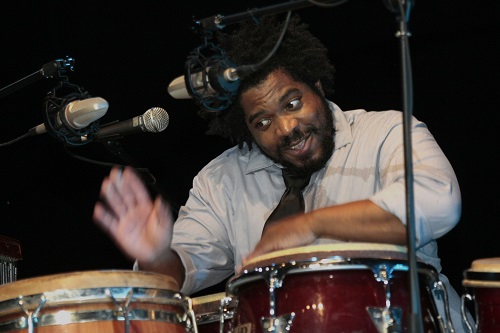
Yaroldy Abreu Robles es uno de los talentos de la nueva generación presentes en Cuba

A member of a new batch of Cuban percussionists, he stands out for his genius and mastery, to hear him play is an enjoyment for the senses.
He radiates vitality and joy, his hands seem to fly and at the same time caress the drums causing a magical and contagious effect on those who listen to him. He is currently one of the members of the Maestro Chucho Valdés Quintet.

He grew up in an environment rich in traditions and with his grandmother he learned about the activities of Tumba Francesa de Bejuco.
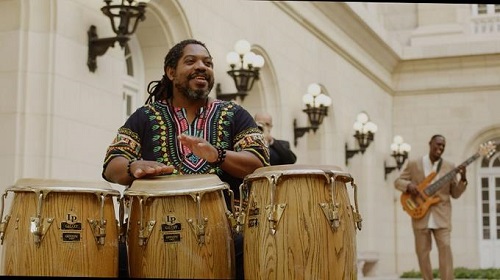
Yaroldy Abreu Robles

This is an association of solidarity that preserves and enhances the folklore of French-African-Caribbean origin through cultural recreational meetings, and especially the celebrations organized by the slaves of Haiti.
He is not a great connoisseur of the Yoruba culture, he is not a believer, but he feels attracted by the symbolism and the music of the magic Afro-Cuban religious cults.

He began studying guitar as his first instrument at the Casa de la Cultura. Then at the age of nine he began classical percussion at the Escuela Vocacional de Arte de Holguín and in 1996 he entered the ISA (Instituto Superior de Arte) in Havana, where he graduated in 2001. Sound in the whole range of percussion of academic character and those of the Afro-Cuban tradition.

Yaroldy Abreu Robles Pintura por la Artista Inés Garridos

The first band where he played was called Son de Sagua, in which he played guitar with a mixed repertoire. His debut was with percussion, bongo in several groups and then with a wider range of instruments.

He began working with the group Piapá, doing experimental percussion, and a classical percussion quintet.

Also with dance music groups such as Pupy and Los Que Son Son and others. In 1997 he became a professional with Maraca and Otra Visión internacional, in 2000 he joined Irakere and in 2001 he joined the quartet of Chucho Valdés, the great protagonist of Cuban music in the last forty years as composer, director and discoverer of talents.
Among the young Cuban percussionists who continue to renew the grammar and pronunciation of the Afrolatino tumbadora in jazz, one of the most influential names is the thirty-one Yaroldy Abreu, whose point of reference is the work of the great immortal masters such as Chano Pozo, Tata Güines, Mongo Santamaría, Jorge “El Niño” Alfonso and Miguel “Angá” Díaz.

Discography in which he has participated
Yaroldy Abreu Robles
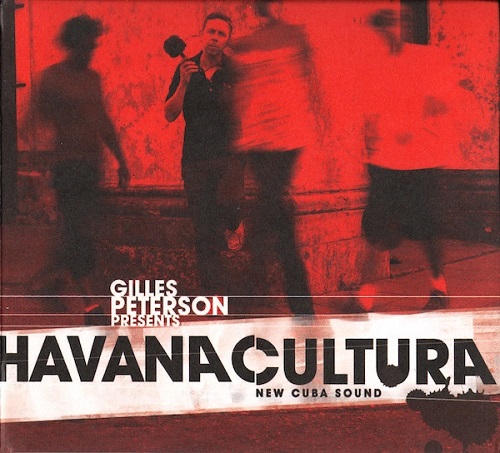
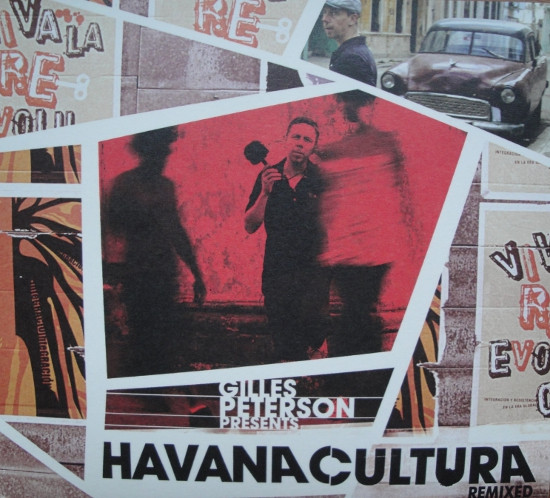
Gilles Peterson Presents Havana Cultura – New Cuba Sound Año 2009
Gilles Peterson Presents Havana Cultura 2010
Gilles Peterson Presents Havana Cultura Remixed 2010
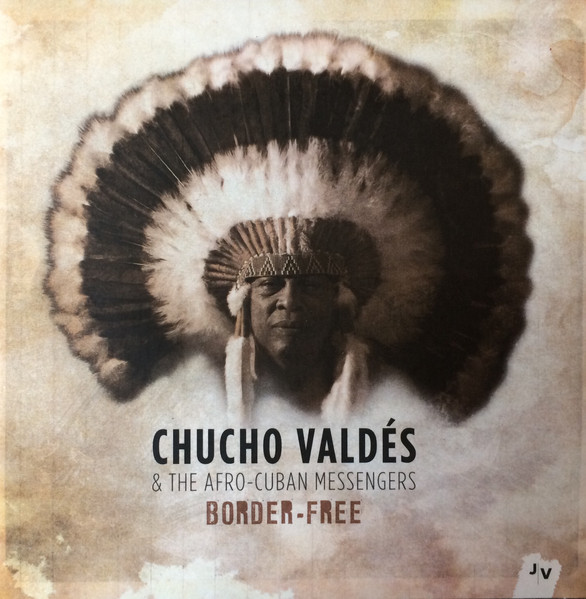
Chucho Valdés & The Afro-Cuban Messengers 2013

Tata Güines known as Manos de Oro, Cuban rumbero and percussionist

Known as Manos de Oro, he modernized the tumbadoras and played with the most important musicians of the island of Cuba.

He was born in Güines, Havana on June 30, 1930, in the bosom of a family of musicians, son of Joseíto “El tresero” and Niñita, who from a very young age used to play a boot-cleaning box in the corner of the Chapel of Santa Bárbara, in the legendary neighborhood of Leguina, where so many congas and bembés have been made and will continue to be enjoyed.

Artistic trajectory

Saying Federico Arístides Soto Alejo may not say anything to some music neophytes, but when you say Tata Güines, things change radically and everyone thinks: That is the tumbadora made soul and flavor.

Tata Güines conocido como Manos de Oro, modernizó las tumbadoras y tocó con los más relevantes músicos de la isla de Cuba

He became attached to percussion instruments, especially the tumbadora, which, as a Cuban, groaned under the effect of his prodigious hands. Under the influence of Chano Pozo, whose touches bewitched him and gave him the key to create his own style.

He was formed as a musician among the drums and the religious festivities of his neighborhood. He adopted his nickname as a child -el Tata-, and as a surname the name of the town where he grew up. Music was in his blood: his father and uncles made music with their hides.

He played double bass in the group Ases del Ritmo. He was part of the Partagás group, led by his uncle Dionisio Martínez, and later founded the Estrellas Nacientes orchestra and performed with the Swing Casino orchestra in Güines.

In 1946 he performed in his hometown with the Conjunto de Arsenio Rodríguez.

Tata Güines, rumbero y percusionista cubano

}In 1948 he moved to Havana, where he was a member of the orchestras La Nueva América, led by Pao Domini; La Habana Sport led by José Antonio Díaz, Unión, led by Orestes López, La Sensación led by Belisario López, and in 1952 he joined Fajardo y sus Estrellas, with which he traveled to New York in 1956.

He joined Los Jóvenes del Cayo, with which he appeared on the radio station La Voz del Aire; later he performed with the ensembles Camacho and Gloria Matancera.

He accompanied the trio Taicuba as a bongo player, and worked with Guillermo Portabales, Celina y Reutilio, and Ramón Veloz. He participated, along with Chano Pozo, in the comparsa Los Dandys de Belén; also, Los Mosqueteros del Rey, Los Mambises and Las Boyeras.

He recorded with Arturo O’Farrill (Chico) and with Cachao y su Ritmo Caliente, Frank Emilio, Guillermo Barreto, Gustavo Tamayo and others. He was part of the Quinteto Instrumental de Música Moderna (later Los Amigos), led by pianist Frank Emilio; Guillermo Barreto, timbal, Gustavo Tamayo, güiro, Israel López (Cachao) and Orlando Hernández (Papito), double bass.

In 1955 he travels to Caracas, Venezuela, to participate in the carnivals of that city. He traveled to New York with the Fajardo y sus Estrellas orchestra, with which he performed at the Palladium, where he coincided with Machito y sus Afro-Cubans and Benny Moré, whom he accompanied on the tumbadora; he also performed at the Waldorf Astoria Hotel, where he worked for the first time as a soloist.

Tata Güines nació en Güines, La Habana

He prepared a show and shared the stage with Josephine Baker, Frank Sinatra, Maynard Ferguson and Los Chavales de España, with whom he recorded the piece “No te puedo querer”.

In 1960 he returned to Cuba. Four years later he founded Los Tatagüinitos. He offered a concert with the National Symphony Orchestra, conducted by Manuel Duchesne Cuzán, with which he performed his work Perico no llores más. He accompanied the guitarist and composer Sergio Vitier in his work Ad Libitum, danced by Alicia Alonso and Antonio Gades.

International tours

He toured California, Chicago, Miami, Puerto Rico, Panama, Venezuela, Colombia, Mexico, Martinique, Monte Carlo, Switzerland, Bulgaria, Hungary, where he participated in the Jazz Festival; Soviet Union, Finland, Spain.

Musical Validity

Tata Güines was a master of masters of Cuban percussion. His death represents a notable loss for Cuban culture. Nobody like him in Cuba to make percussion an art.

In front of Tata Güines, the leather of the drum seemed the most delicate and expensive silk. He would place his agile hand on the tanned skin stretched by the fire, and with his fingernails he would achieve the saddest of laments as well as the most contagious smile.

Few knew him as Federico Arístides Soto Alejo, but everyone knew that he had modernized the tumbadoras, that he was a master at placing the “loose” beats in a song, as if “carelessly”, but that the piece could not survive if it lacked that imprint of someone who let himself be carried away by the rhythm of the claves, by his very fine ear and by the demands of a body accustomed, since he was almost a child, to music.

He died on February 4, 2008 in Güines, Havana.

Federico Arístides Soto Alejo Tata Güines

Awards and recognitions

National Music Award 2006

Félix Varela Order 2004

Alejo Carpentier Medal 2002

Tataguines Soto Martinez

Read also: Carlos “Patato” Valdés one of the best percussionists in the history of Latin Jazz

Alberto Beltrán “A mí me llaman el negrito del Batey” and Bailar medio apreta’o con una negra bien sabrosa

Alberto Amancio Beltrán (Palo Blanco, La Romana, May 5, 1923 – Miami, February 2, 1997) was a Dominican singer, known in the Latin American musical world as “El Negrito del Batey”.

Early years

Beltrán was born in the town of Palo Blanco, in the province of La Romana. As a child, he barely had a basic education because his family’s economic situation forced him to sell candy on the streets. At the age of fourteen he was attracted to music and debuted as an amateur singer on the radio. This first artistic incursion led him to take singing lessons.

Alberto Beltrán “A mí me llaman el negrito del Batey”

From 1946 to 1951 he belonged to several groups in his country, such as “Brisas de Oriente”. Later, he formed his own group called “Dominican Boys”.

International projection

In 1951 he emigrated to Puerto Rico. There, he recorded with “Los Diablos del Caribe”, a group led by Mario Hernández, the song “El 19”.

 He then traveled to Cuba, first to Santiago and then to Havana on July 15, 1954, to work with the Puerto Rican composer and singer Myrta Silva on Radio Mambí.

On August 16 of that same year, he was requested by the Sonora Matancera and recorded the composition Ignoro tu existencia by Rafael Pablo de la Motta and Aunque me cueste la vida by the Dominican Luis Kalaff. Both songs, in bolero rhythm, were recorded on the same 78 rpm disc.

On November 16, he recorded the merengue El negrito del batey composed by Medardo Guzmán, which catapulted him internationally as it became a sales hit.

From there came the nickname with which he became popular. That same day he also recorded the boleros Todo me gusta de Ti by Cuto Esteves, Enamorado de la inspiración by José Balcalcer and, for the second time, El 19 by Radhamés Reyes Alfau.

Beltrán nació en la localidad de Palo Blanco en Cuba

On January 18, 1955 he recorded his last pieces with the Orquesta Sonora Matancera. Then, he spent some time in Venezuela where he left phonographic records with the orchestras “Sonora Caracas”, Los Megatones de Lucho and the Orquesta de Jesús “Chucho” Sanoja.

Alberto Beltrán
Alberto Beltrán


Hired by the Dominican musician settled in Venezuela, Billo Frómeta, he participated in two albums recorded in Cuban studios: “Evocación” (1956) in which he performed as a soloist and “La Lisa-Maracaibo”, in which he shared credits with the Cuban singer Carlos Díaz.

What does El negrito del batey mean?

In the Dominican Republic the batey smells of black and the black often smells of batey. Both evoke in their generality misery and human abandonment, fruit of injustice and discrimination. This is so, although it pains us to say it


The Negrito of the Batey

They call me the little black man of the batey

Because work for me is an enemy

To work I leave everything to the ox

Because work was made by God as a punishment

I like the merengue apambicha’o

With a black woman who is a retrechera and a good girl

I like to dance de medio la’o

I like to dance half tight with a tasty black girl

Hey!

Get your ass out of here!

There!

They call me the little black guy from the batey

Because work for me is an enemy

To work I leave everything to the ox

Because God made work as a punishment

I like the merengue apambicha’o

With a black woman who is a retrechera and a good girl

I like to dance de medio la’o

I like to dance half tight with a tasty black girl

Hey, there!

And you tell me if it’s not true

Merengue much better

And you say if it’s not true

Merengue much better

Because that of working

It’s a pain for me

Because that of working

To me it causes me pain, it sounds!

The meek ox works hard

But he never gets dengue fever

The meek ox works hard

But he never gets the dengue

I’ll dance with a good black woman

I’ll dance to a good merengue

But I never get tired

To dance a good merengue, it sounds!

There, candela!

Finbroso, hey!

The gentle ox works hard

But he never gets the dengue

A lot of work the gentle ox works hard

But he never gets the dengue

But I never get tired

Of dancing a good merengue

But I never get tired

Of dancing a good merengue, it sounds!

There!

Dominicanize!

Alberto Amancio Beltrán

Sonora  Matancera

Read also: International Salsa Magazine presents Alexander Abreu and his Habana de Primera

Maelo y su Klan want to bring tropical rhythms to the whole world

Maelo y su Klan is the latest project, and one of the dreams, of the producer with more than twenty years of experience, Johnny Ysmael Salaverria Dicurú. The popular “Maelo” as his dearest friends call him, continues his career by working and pouring his heart into this project. With them the first genre fusion between Son and Kizomba is known. In the following lines we will talk about Maelo and his most beloved project.

Who is Maelo?

Johnny Ysmael Salaverria Dicurú was born in San Juan parish, in Caracas, capital city of Venezuela, where he spent his childhood surrounded by the joy of the Caribbean “soneros and salseros”. He was a child when he first expressed his interest in one of the most popular tropical Caribbean rhythms, salsa. Part of his influences came from his uncle, Héctor Bruno Dicurú.

Ysmael D´La O, is his artistic name on stage and producing, but his closest friends call him “El Tiburón de la Salsa”. He left with $80, and a luggage full of dreams, to look out for adventures abroad. His destiny was Tenerife, where he quickly earned the love and respect of the natives, and was embraced as an adopted son.

Maelo as a producer has worked with renowned soloists and groups, from all over the world. To name a few: Nicky Jam, El Binomio de Oro, Tito Rojas, Oscar D’León, Porfi Baloa, Tony Vega, La Dimensión Latina, Ray Sepúlveda, Guayacán, El Grupo Niche. As a promoter and producer of events, one of his greatest achievements was El Gran Combo De Puerto Rico who celebrated their 50th anniversary, and visited Europe hand in hand with him.

We can call Maelo, the cultural ambassador of Caribbean rhythms, making more than 30 countries listen and enjoy them. He was the first Latin American to have 100 continuous virtual conversations during the pandemic, a time when creativity was the escape of many artists.

Among his awards and recognitions is being nominated as International Producer of the Year in 2020, Producer and Promoter of the Virtual Euro Festival in the 20/21 edition. But soon more will come, since Maelo’s talent is infinite.

Defining Maelo and his Klan

The band stands out in danceable rhythms such as: Son, Charanga, Guaguancó, Salsa, Tropical, Latin Jazz and a lot of fusion with an original sound, which is inspired by African rhythms. Of course, with the influences of great masters of the old tropical school. In this way, a combination is created that generates a modern sound, worthy of the new generation. But what most characterizes this Klan is the creation of the fusion of the genres between Son and Kizomba.

The works of Maelo y su Klan have the collaboration of the renowned arranger and director of Billo’s Caracas Boys, the Venezuelan Julio Cesar Estrada. Also by Paquito Barón, ex-member of the Orquesta Bronco of Venezuela, in the musical production.

The Klan has all the merits and the support of the Anglo-Saxon and Asian public. One of his productions entitled ¡Cultura viva! Fusion is positioned as the new sound in Afro-Caribbean music. Maelo not only puts his talent for the band, but also puts all his knowledge of the tropical rhythms of Latin America, as well as its movements through Europe and Asia. Let’s hope that the journey of Maelo y su Klan will be a very long one, full of great successes, so that they can continue to please the public that loves these tropical rhythms.

Multi-Percussionist Carlos Navarro and his Son Y Clave Orchestra

Who is Carlos Navarro?

There have been many celebrities, orchestras, groups of all genres who played their part in the salsa cultural movement in the United States, but we cannot deny that bandleader Carlos Navarro and his Son Y Clave Orchestra played a very important role, since they achieved many goals in the Latin music scene in California, specifically in Los Angeles.

Carlos Navarro was a child of the couple formed by Rafael Navarro and Maria De Jesus Velasquez de Navarro, being at the same time the brother of Alexis Enrique (the famous singer Cherry Navarro), Manuel, Rene, Lelys and Audy. The whole family decided to move to Caracas, the parish of El Valle, where all the children continued their studies.

The first one to start an artistic career at a very young age was his older brother Alexis, who would later be known as Cherry Navarro in the artistic field. Carlos followed the same steps and also dedicates himself to music, but focused on salsa, mambo, merengue, and Latin jazz.

Producer, bandleader, percussionist and singer Carlos Navarro

Las Versalles

In the early 80’s, specifically in 1983, the artist served as co-founder and percussionist in one of the first and most important orchestras in Los Angeles, California, with styles of Salsa, Guaguancó, Merengue, cha cha chá, and Latin Jazz.

This group was called Las Versalles and hired many musicians based in the same city. Here you can see some of the main members and their instruments, Güiro: Carlos Navarro and Jorge Luis Balmaseda, Vocalist, Piano, Arranger: Fito Foster, Vocalist, Guitar, Flute, and Arrangements: Niño Jesús, Bass: Geraldo Zuldo and Luis López, Trumpets: Carleton Smith and Robert Hernández, Trombo: Arturo Velazco, Violin: Gene Hugo, Congas: Humberto Hernández and José “Papo” Rodríguez, Timbales: Héctor Andrade and Edwin Rolland, Backing Vocals: Fitto Foster, Niño Jesús, Bobby Rivas, Jorge Luis Balmaseda and Bass in ‘’Cama Y Mesa’’: Cuco.

Famous singer Cherry Navarro, Carlos Navarro's brother
Famous singer Cherry Navarro, Carlos Navarro’s brother

Son Y Clave

In 1999, the producer, percussionist and singer founded the Son Y Clave Orchestra and became a very important group in the nightlife of Los Angeles and surrounding areas.

One of the most attractive things for spectators of the places where they perform is the ease with which they dance and execute choreography, which are highly contagious, fast and elegant at the same time.

This diversity of performance styles is another one of the many things that has led this orchestra to the summit. In the same way, they have participated in all kinds of festivals, congresses, concerts and much more. They also had an important participation in salsa nights at venues in Los Angeles and the Bay Area such as El Floridita, where they played with Son Y Clave every Monday, until Carlos had to leave for a while and left talented musician Johnny Polanco in charge.

They have been so popular in the last few years that they have managed to open for world famous bands such as the Rolling Stones, who counted on the talent of the orchestra to grace their performances in one of their most important tours.

All members of the Son Y Clave Orchestra

God & Salsa and more

They have also been involved in major film projects such as ”Almost A Woman”, whose director has a long-standing friendship with Navarro. They participated in both the promotional trailer and various parts of the film, especially where there are parties and dancing.

Kaplan was so pleased with Carlos’ work in ”Almost A Woman” that she decided to contact him again to work hand in hand on a project titled ”UNO” which is based on one of the most famous Latin American TV hosts, the famous Renny Ottolina. Once again, Son Y Clave will join forces with the renowned filmmaker to put music to ”UNO”.

”Almost A Woman” had a lot of repercussion at the time, but the film for which they became known in recent years was ”God & Salsa”. Carlos Navarro himself was the main responsible for composing much of the original music that was part of the soundtrack of the film. In addition, they were also present at the filming, displaying their great talent and dedication to the audience.

Currently, Navarro has a lot of contacts, friendships and dealings with other figures and producers of the stature of classical guitarist Yalil Guerra, with whom he has participated in multiple musical projects both with his orchestra and at the production level.

He has also shared the stage with important talents in Los Angeles such as Tito Nieves, Luis Barbarán, Guillermo Canales, Ernie Valenzuela, Melissa Campos, Roosevelt Córdova, among many others.

Carlos Navarro, Luis Conte, Jorge Valmaceda, and the rest of the Siva Orchestra
  • « Go to Previous Page
  • Page 1
  • Interim pages omitted …
  • Page 94
  • Page 95
  • Page 96
  • Page 97
  • Page 98
  • Interim pages omitted …
  • Page 137
  • Go to Next Page »

International Salsa Magazine (ISM) is a monthly publication about Salsa activities around the world, that has been publishing since 2007. It is a world network of volunteers coordinated by ISM Magazine. We are working to strengthen all the events by working together.