

Search Results for: Latin Music
Gustavo Collazos
Latinoamerica / Colombia / Cali
Gustavo Collazos tells us. Its history and its Salsa Caleña
Did you know that in the beautiful city of Cali, Colombia, the rhythm that prevailed both musically and commercially and culturally of all the Latin rhythms that came to the country was Salsa? A musical style from the Caribbean, which over time achieved an evolution, giving rise to Salsa Caleña, a new and different style of composing and dancing Salsa that is characterized by being a very fun, cheerful, fast dance by the dancers who dance it. they dance.
Well this time we have the opportunity to meet Gustavo A. Collazos, founder and director of the Academia Fiebre Latina, who tells us his story as a dancer and lover of Salsa Caleña:
Gustavo Collazos, has been a lover of Salsa since he was 8 years old, from his 14 years he dedicated himself to teaching salsa dance to the children of the sector since it was something that he was passionate about.

With the passage of time, he formed the “Latin Fever” Academy in Colombia, thanks to the support of his brother and partners, including “Carlos Ceballo” director of “Salsa Pura”, a company dedicated to teaching foreigners in Cali, ” Francy Barahona” based in Paris, pioneer of Salsa Caleña in Europe, “Eduardo Alban” with Anfitriones, who trains new talents to give continuity to the process.
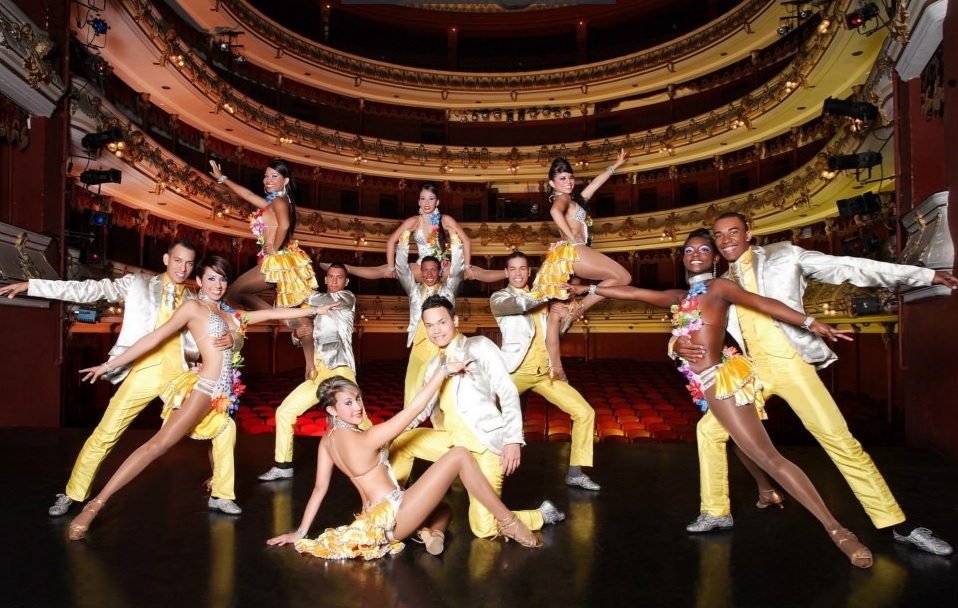
With the aim of creating a brand that would be different in the musical world, they began to merge acrobatics, rhythms and techniques from other dance disciplines of all genres but based on Salsa Caleña, placing them in a competitive and show format creating an unstoppable fever.

Currently the Fiebre Latina Academy has not had a headquarters for 3 years, so Gustavo dedicated himself to expanding Salsa in the USA as artistic director of “Cali Salsa Miami”; He is known and considered by his students and/or followers to be a teacher, due to his career and contribution to salsa. For now, he has toured Colombia, Switzerland, Miami and India (currently living there) expanding his culture as a dancer, workshop facilitator and choreographer. , letting people know how spectacular is.. Salsa

Now I start a project in “Casa Latin”, where they bring the experience of living Latin dance, especially Salsa Caleña, the festivity and joy in India, making them the pioneers in Asia and under the support of their brand and experience to position their culture there.

He had the opportunity to be a finalist in the Reality Colombia has talent version of “Got Talent” where he contributed the knowledge of recognizing salsa as a significant element in high-performance shows.
To learn with the “Casa Latin” Academy, it is not necessary to have experience, that is, you can start from scratch according to your dance goal, participating in the classes. Gustavo mentions that “Dancing is not just exercise, dancing frees you, leads you to set goals, to achieve them, to enjoy the melody of music, to meet cultures, people and make new friends”…
“dancing is a profession like any other, we are dreamers who leave everything they have learned in their life in a person, and it remains eternally in their being, we not only teach to dance we give emotions, moments, life. Once you start dancing you can’t stop. It is you, your partner, the music and the world put into a melody”.

For more information:
WebSite:
- Fiebre Latina: https://www.fiebrelatinacolombia.com/
- Casa Latín: http://casalatin.com/
Facebook:
- Gustavo A. Collazos: https://www.facebook.com/fiebrelatinacol
- Fiebre Latina: https://www.facebook.com/fiebrelatinacolombia/?timeline_context_item_type=intro_card_work&timeline_context_item_source=100000181341290
- Casa Latín: https://www.facebook.com/CasaLatin/
Instagram:
- Fiebre Latina:
- Casa Latín: https://www.instagram.com/casalatin/
Twitter:
- Fiebre Latina: https://twitter.com/fiebrelatinacol?lang=es
- Casa Latín: https://twitter.com/casalatin
YouTube:
- Fiebre Latina: https://www.youtube.com/fiebrelatina
- Casa Latín: https://www.youtube.com/channel/UCTIUEsU50MX8TT_EsXS6Inw
Teléfono:
- Casa Latín: +91 87929 23775 / +91 73491 52846
Andrea Brachfeld
North America / USA / New York
Andrea Brachfeld (Flutist), Graduated from the High School of Music and Art and Manhattan School of Music. During the last 20 years he has recorded more than a dozen CDs with many artists, including Africando, Noel Pointer, and Timbalaye. Her big break as the flutist for the popular Latin band Charanga 76 catapulted her into Salsa history and fame as the first female flutist to play this music in the United States.

While in high school he received the “Louis Armstrong Award for Outstanding Alumnus” for Jazz Interactions. Study with Hubert Laws, Jimmy Heath, and Mike Longo helped him develop his own style. Downbeat magazine referring to Andrea as “one of the best jazz flautists around”.

She has twice been the winner of the Latino Award in New York, as a flutist. He has performed with Dave Valentín, Néstor Torres, and Ray Barretto, among others. While in Venezuela, he had the honor of opening for Chick Corea and Paco de Lucía. She recently received the Chico O’Farrill Lifetime Achievement Award from Latin Jazz USA. Her first Latin jazz CD, “Remembered Dreams” combines Latin originals with contemporary jazz cuts. His second CD, “Back With Sweet Passion,” is a dynamic salsa recording featuring Grammy winner Oscar Hernández on piano, and Alfredo De La Fey on violin.

Her third CD “Beyond Standards” is a collaborative effort with Chembo Corniel, featuring jazz greats Hilton Ruiz on piano and Steve Turre on trombone.
She has appeared with the Winnepeg Jazz Orchestra as a soloist performing her own compositions as well as those of Mike Longo, Dizzy Gillespie’s longtime musical director. He is currently performing with his own group, including Phoenix Rising, with a new CD out, “Into The World: A Musical Offering” with guest artists Mike Longo, West Paul and Brian Lynch.

Chick Corea Pianist, composer, arranger, producer, teacher. Acoustic and Electric
Surrounded by music since childhood, Armando Anthony Corea walked a path in which he shone like few others, accompanied by musicians who make up an encyclopedia of jazz.
Pianist, composer, arranger, producer, teacher. Acoustic and electric. Chick Corea was one of the most influential musicians in the vast universe that is jazz and surely one of the most important figures in global music of this time. In addition to being artistically prolific, he was commercially successful. For this reason, it would also be impossible to explain the music of this time without the example of Chick Corea.

Armando Anthony “Chick” Corea was born in Chelsea, Massachusetts, on June 12, 1941, to a family of Calabrian origin. At the age of four, he began to play the piano, encouraged by his father, a jazz trumpeter who led a Dixieland band in Boston in the 1930s and 1940s.
Surrounded by music, young Armando was soon introduced to the heroes of bebop. The music of Dizzy Gillespie, Charlie Parker, Bud Powell, Horace Silver, and Lester Young would leave a notable mark on his education. At the age of eight, he began studying classical piano with Salvatore Sullo, an Italian-born concert pianist who, in addition to his love of Mozart, opened up the world of composition to him.
Always tied to a confusing timeline, the first released recording of the original configuration of Return to Forever was actually its second session.
An initial ECM studio date made in February 1972 was not released until after the band had changed in 1975.
The Polydor/Verve recording from October 1972 is actually this 1973 release, which features the same band with Chick Corea, Stanley Clarke, Airto Moreira, Joe Farrell, and Flora Purim. There is no need to make distinctions, as both are five-star albums, showcasing many of the keyboardist’s enduring, instantly recognizable and highly melodic compositions.
Farrell’s joyous flute, Purim’s wordless vocals, Airto’s electrifying percussion and Clarke’s deft electric bass lines are wrapped up in a stew of Brazilian samba and Corea’s Fender Rhodes electric piano, and certainly set the tone and the highest bar for the music of the groups that will come after. “Captain Marvel,” the seed of the Farrell- and Purim-less band that expanded into a full concept album with Stan Getz, is here as a vaporous fusion samba with Corea dancing on the keys.

By now, the beautiful “500 Miles High” has become Purim’s signature song with Neville Potter lyrics and Corea’s stabbing chords, and unfortunately became a hippie anti-drug anthem.
Perhaps Corea’s definitive song of all time, and covered ad infinitum by professional and school bands, “Spain” retains the quirky melody, clapping interlude, up-and-down dynamics, exciting improvisational section and variation in time, tempo and colourations that always spark interest despite a length of close to ten minutes.
“You’re Everything” is a romantic classic that has surely been heard at many a wedding, with another Potter lyric sung to heaven by Purim, while the title track is Purim’s lyrics in a looser musical framework, with Clarke’s graphic merging with Corea and Farrell’s piercing flute work.

As much as the others have become icons, Farrell’s extraordinary sound on this date should never be trivialised or underestimated.
The final track, “Children’s Song,” was a springboard for several of Corea’s full-length album projects, and is heard here for the first time in trio format with a slow, Christmas motif.
The expanded version of this recording includes many alternate takes of four of these selections, but also includes “Matrix,” which was not on any RTF album, and there are four versions of “What Game Shall We Play Today?”, which was only available on the ECM release.
From a historical perspective, this is the most important work of Corea’s career, very different from his earlier progressive or improvisational efforts, and the pivotal beginning of his career as the most popular contemporary jazz keyboardist in history. Michael G. Nasto.
Chick Corea And Return To Forever – Light As A Feather (1973)
Tracks:
- You’re Everything
- Light As A Feather
- Captain Marvel
- 500 Miles High
- Children’s Song
- Spain
Musicians:
Chick Corea (Fender Rhodes, electric piano)
Stanley Clarke (Double bass)
Joe Farrell (Tenor sax, soprano sax, flute)
Flora Purim (Voice, percussion)
Airto Moreira (Drums)

Information provided (February 21, 2009)
Sources:
Santiago Giordano: He is a musician, teacher and music critic
Raúl Vargas and his flamenco rumba duo Dos Bandoleros
One of the Latin genres that has been gaining more popularity in California, specifically in the Bay Area, is the Spanish flamenco rumba, so it is no coincidence that every day there are more and more exponents of this genre who have achieved a huge level of fame and respect among both their peers and the public.
One of them is Raul Vargas, who has given us the honor of talking to us about his career and the projects he is currently working on, so we cordially invite you to read in order to learn more about this talented Spanish singer.

How Raúl got started in music
Raul remembers being fascinated by music when he was still very young in his hometown, Madrid. At home, they he used to listen to what his parents played on the radio, but he does not remember anyone in his family being a musician or working it, so he was the first one to have a professional interest in this field.
He also remembers listening to his mother’s cassettes with which he could enjoy all kinds of artists such as Julio Iglesias, Raphael, Camilo Sesto, Pimpinela and many others. However, as Raul grew older, he began to listen to what he liked just like his brother.
When he was 16, he began to learn on his own to play the guitar using the songs he liked at the time. At age 17 he wrote his first song and, shortly after he went to live in Eklanda, Sweden, where he started writing many more songs and take music more seriously, but he still did not see it as his profession.
It is important to note that, while it is true that music was a very important part of Raul’s life, this was not what he did for a living, but cooking. Thanks to his career as a cook, there were many countries and cities that the young man managed to visit, although he was always accompanied by a guitar or drum he played during his free time.

Arrival in the United States
After having visited many places around the world, Raul met a group of Spaniards in Australia, who suggested him to go to a guesthouse for traveling musicians in the Latin Quarter in San Francisco to see what he felt about it. It turned out to be an excellent decision as he met many professional musicians who were able to make a living from their art, which prompted the young cook to do the same and follow the dreams he felt truly passionate about.
This is how Raul decided that San Francisco should be his final destination, so he decided to remain in that city permanently. From then on, he continued to travel to other places for work and pleasure, but always returned to what he considered his new home.
Once he settled in the United States, he started playing for several bands and focused all his time and effort on what really filled his soul and spirit: music.
First groups and bands
Despite being born in Spain, Raul had never played Spanish music before and preferred rock and pop, but contact with artists from so many countries in San Francisco made him rethink everything he had done so far. Many began asking him why he had never before sung or played flamenco rumba being Spanish, which led him to do more research on the genre from his country and start playing it.
No much time would pass before the guitarist created his own flamenco rumba band, which he named ”Mala Maña” and was conceived as a circus theater and music group composed of eight people. It had a duration of three years and all these musicians, long time later, became part of the band Makrú.
Additionally, he was also part of a duo alongside a guy from Guadalajara, Mexico called ”Fulanos”, which also contributed to the artist’s experience in terms of groups.

Dos Bandoleros
The duo Dos Bandoleros started about six or seven years ago and its creation is described by Raul as a ”very lucky accident” thanks to which he met who today is his partner in this project.
It turns out that Raúl and his Makrú bandmates were experimenting with playing in duos and trios to see how things went, which led him and his guitarist to play at a French wine bar on Monday nights. One of these days, they were approached by a young man named Alberto Gutierrez, known artistically as Muchacho Mandanga, who introduced himself and also started playing at the bar along with another Spanish percussionist.
Weeks passed before both Raul and Muchacho could not take their partners to play due to personal problems, so the venue manager proposed the to join them that day. The chemistry between them was so great that they continued playing together and never apart again.
At the beginning, they only played flamenco rumba, which was what got closer to each together in the first place. Later on, they started playing cumbia, Latin rock, salsa, Cuban son and many more.
Read also: Guatemalan group Malacates Trébol Shop enchants with its Latin rock and ska