• Skip to primary navigation
  • Skip to main content

International Salsa Magazine

  • HOME
  • Previous editions
    • 2026
      • ISM / March 2026
      • ISM / February 2026
      • ISM / January 2026
    • 2025
      • ISM / December 2025
      • ISM / November 2025
      • ISM / October 2025
      • ISM / September 2025
      • ISM / August 2025
      • ISM / July 2025
      • ISM / June 2025
      • ISM / May2025
      • ISM / April 2025
      • ISM / March 2025
      • ISM / February 2025
      • ISM / January 2025
    • 2024
      • ISM / December 2024
      • ISM / November 2024
      • ISM / October 2024
      • ISM / September 2024
      • ISM / August 2024
      • ISM / July 2024
      • ISM / June 2024
      • ISM / May 2024
      • ISM / April 2024
      • ISM / March 2024
      • ISM / February 2024
      • ISM / January 2024
    • 2023
      • ISM / December 2023
      • ISM / November 2023
      • ISM / October 2023
      • ISM – September 2023
      • ISM – August 2023
      • ISM July 2023
      • ISM Edition June 2023
      • ISM – May 2023
      • ISM April 2023
      • ISM March 2023
      • ISM February 2023
      • ISM January 2023
    • 2022
      • ISM December 2022
      • ISM November 2022
      • ISM October 2022
      • ISM September 2022
      • ISM August 2022
      • ISM July 2022
      • ISM June 2022
      • ISM May 2022
      • ISM February 2022
      • ISM January 2022
    • 2021
      • ISM December 2021
      • ISM November 2021
      • ISM October – 2021
      • ISM September 2021
      • ISM August 2021
      • ISM July 2021
      • ISM May 2021
      • ISM April 2021
      • ISM June 2021
      • ISM March 2021
      • ISM February 2021
      • ISM January 2021
    • 2020
      • ISM December 2020
      • ISM November 2020
      • ISM October 2020
      • ISM September 2020
      • ISM August 2020
      • ISM July 2020
      • ISM June 2020
      • ISM May 2020
      • ISM April 2020
      • ISM March 2020
      • ISM February 2020
      • ISM January 2020
    • 2019
      • ISM December 2019
      • ISM November 2019
      • ISM October 2019
      • ISM Septembre 2019
      • ISM August 2019
      • ISM July 2019
      • ISM June 2019
  • Spanish
  • Download Salsa App
    • Android
    • Apple

Search Results for: Latin Music

Chantel Collado: a Canadian star of Latin descent

La Princesa de La Bachata

I am talking today with La Princesa de La Bachata Chantel Collado (https://www.facebook.com/chantelcolladoficial), who is an immensely talented artist. I understand she is a resident of Canada and is of Dominican descent. Thank you so much for accepting our invitation, Chantel. We learned that you are in Italy at the moment, what are you doing there?

First of all, thank you for the invitation. The pleasure is mine. Certainly, I grew up in Canada, but I’m on tour around Italy and pleased to bring my music to this beautiful country.

Chantel Collado was born in Canada, but her parents are Latino

Wonderful! How has reception towards your music in Italy?

It was amazing! Actually,I’m proud to see how both Italians and foreigners dance to bachata and enjoy it. Bringing this music to a country like Italy makes me very proud. It is a blessing to be able to travel, come, sing my lyrics and see how the audience loves them.

The nickname people you are given caught my attention. Where does La Princesa de La Bachata come from?

People give me that name when I went to London to give a concert. In view of the lack of women in the genre, I think it was easy for the public to call me that. For me, it’s a great honour for me to represent the genre, being a woman and a Dominican, since there aren’t many women who sing bachata.

Precisely because there weren’t a lot of women in the genre, did you feel a strong competition? Did you feel like you weren’t taken seriously?

Being a woman can complicate a few things. Thank goddness, men in the genre have also given me the opportunity and supported me, such as my musical godfather Frank Reyes, who is someone I admire. He is a bachata icon in the Dominican Republic and an example of a man who has supported me in my career. I had the opportunity to record a song and a music video with him.

I have received a lot of support from my colleagues and I am very happy to receive that support.

Who have been your musical references in and out of bachata?

I really like Romeo Santo, The King of Bachata. I grew up listening to exponents of Dominican bachata like Frank Reyes, Luis Vargas, Hector Acosta and Juan Luis Guerra. Outside of bachata, I have always liked Beyonce because of her stage presence. Regarding artists in this generation, I also really like Karol G.

Chantel Collado on stage

Have you experimented with urban or more modern rhythms?

Of course! I love to experiment and change from time to time. From a very early age, when I started singing in a competition in Los Angeles, I sang a cumbia by Selena titled Como La Flor. I have an urban song called Así. I’ve also sung salsa and I have merengues. What I like most is bachata, but for my generation, I listen to much urban music.

According to your biography, you decided to pursue a career in music after a talk you with your father, who also supported you very much in this regard. Can you describe that moment?

I grew up watching my father on stage as a director, musician and singer. From a very early age, I went on stage and sang with him. My brother is also a musician, so I think it just was natural for me. I didn’t know it’d like it or take it seriously as a career, but it was when I turned 15 that we decided to focus on music.

I was also performing and participating in musical theater, so I was singing, performing and dancing at the same time. When I turned 15, we decided as a family to focus on only one thing, which would be music. That’s how I started writing songs with my brother and we’ve been going at it for the last 14 years.

Latin descent

Your father is Dominican and your mother is Uruguayan. Do you think that coming from a Latin family has pigeonholed you or on the contrary?

Quite the opposite! It expanded my horizons. I grew up in Canada, speak English and, try to incorporate this language into my music. I’m of Uruguayan stock and even if people don’t listen to bachata in that country, I chose that genre because I listened to it all the time and I love it. I think that all this mix of countries expanded my horizons and I don’t feel that singing bachata is an obligation for me because I love doing it.

Her father and brother supported her a lot during her career

What did you do during the pandemic?

The pandemic was very difficult for me and all the artists in general, but I tried to focus on writing new music. I don’t know where I got the inspiration, but I recorded a music video with my mobile, which was made for my song Contigo o sin ti that you can find on YouTube. I did my own makeup and my own hairstyle for that day, put my IPhone on a tripod and got it all. I had to find thae encouragement to move regardless the situation.

Fortunately, I returned to the stage to sing for the public after two years.

In which countries are you touring now?

I am touring only in Italy. We’ve already been to two cities and we have two more to go to complete the tour. Then I will return to Canada, rest for a week and travel to the United States to continue touring.

Do you plan to tour Latin America?

I’ll be happy to do so. In fact, we already have some tentative dates in countries such as Colombia and Mexico. Let’s just hope that everything will happen because it would be the first time I brought my music to those corners.

How is urban bachata different from traditional bachata?

I think urban bachata is a movement that is starting to develop. My generation listens to a lot of urban music and an example of this is Bad Bunny, who is killin’ it right now. If we want bachata to evolve a little bit, we have to add a little urban touch and that’s what we’re doing. I think traditional music will never die because it is our main genre in the Dominican Republic, but it can also be made enjoyable for present generations, adding a little urban touch.

Speaking of urban artists, who do you want to collaborate with someday?

At the moment, I would love to collaborate with Bad Bunny. I love Bad Bunny and his new album. I had the great honor of opening for him in Toronto, Montreal, a few years ago. I also had the honor of meeting him, but I haven’t had the chance to collaborate with him yet, though I would love to.

As for traditional genres, I would like to collaborate with Anthony Santos on a more traditional song in my genre, bachata.

A message for young girls who want to dedicate themselves to the same as you.

I’d advise them to follow their dreams. I started in the music industry at a very young age I have achieved many things in the last 10 years. As a woman, I’d tell them to keep going because we are living in a time when women have more attention than ever before. We’re strong, independent and we can do anything we want.

Chantel at a photo shoot

Bandleader Edgardo Cambón talks about the teaching of music and his strategies on stage

Here you have our interesting comversation

We are here with Uruguayan bandleader, multi-instrumentalist, and percussionist Edgardo Cambón, who currently lives in Oakland. It’s very nice to meet you, Mr. Cambón. What a pleasure to have you with us today.

Hello, Karina. It’s a pleasure to have you here too despite the distance. I also send my regards to the followers of salsagoogle.com and to salsa fans around the world because this is an international connection. Thank you for the opportunity to connect with so many people.

Uruguayan bandleader and singer Edgardo Cambón next to new MOPERC walnut, 7 & 9 inches drums

On one of your Facebook pages, one can read that the conga is your main instrument, but you also play many others. In that sense, is the conga the instrument you most enjoy playing or are there others?

That’s a very good question. I am a percussion lover in general and, being Uruguayan, I also came into Brazilian percussion. The instrument to which I always gravitated around and returned to very strongly was the tumbadora or conga (commercial name). To study that instrument and the batá (the most religious Afro-Cuban music) I went five times to Cuba from 1989 to 2006. I have a very deep connection with Cuba and with all the countries in which the tumbadora is used. This is also the instrument I play while singing, which makes me have a very special connection with it. Jokingly, I say that I feel naked if I don’t play something while singing. I always try to play a güiro, maracas or another instrument because I always have.

You also teach music and percussion. It is well known that the teacher teaches students, but also that tstudents can also teach the teacher. Could you tell us what you have learned from your students?

That’s a very important and lovely question. I could tell you many things. The first thing you learn is to be patient with yourself and your own progress because the musician never stops progressing. The human being never stops progressing. When I see a student who is very nervous and isn’t patient with himself, I always try to make him understand that performing one instrument well takes a long time.

I learn a lot about what to do and what not to do. I learn to be patient with them, to rewind the cassettetape and to get back to the basics of what I learned in Cuba when I started traveling. My students also teach me to be grateful to my own teachers and connect with the instruments. When you reach a certain level, you become overconfident and it’s harder to connect with the instruments. Classes force you to pick up an instrument without being obliged to do so, which the professional musician tends to leave out after a long career.

My students remind me of what I was doing when I was learning and force me to keep practicing despite the experience. I always learn from them.

Edgardo Cambón in front of El Floridita

You teach both in person and via Zoom. What teaching strategies do you implement at home?

The difference between one mode and the other is huge and it was hard to get used to this situation. I was receiving a lot of proposals to teach via Zoom before the pandemic. I was avoiding at all costs the use of digital platforms even though many people were interested. I have a lot of online videos with great success and positive feedback, thank goodness. This has caused many people to ask me if I can teach them on Zoom.

The pandemic forced me to build that dormant muscle, so I think I achieved a very good system for giving online classes. In person, I use some applications that allow me to play certain songs I can slow down. These apps can work like a metronome, but funnier. Some of them are Percussion Tutor, Salsa Rhythm, Amazing, Slow Downer, among others.

In the case of Zoom, I suggest my students download these apps on devices other than the one they are using to meet with me. The biggest problem with digital teaching platforms is the delay sound between the student and the teacher. Now, amazing things have been done like the fact that a symphony can play in one country, while the conductor is in another conducting them. There have been improvements.

It may also be the case that there are students with excellent quality equipment, but others who have devices with outdated operating system and low download speed. So, we have to find a way for everyone to learn as well as possible. This system consists of doing a demonstration first, getting the student to play the rhythm from his side through the metronome or the application. Many times, we can spend a whole class trying to solve technical issues, but once everything is solved, you can establish a rhythmic relationship between the student and the teacher.

There are situations in which the mismatch between the sound and image prevents errors from being corrected, so we use phone calls to counter these issues effectively. This is how I look at the video image of the student (if there are no delays) and hear the sound at the right time.

The good news is that I can have students from around the world and doors are opened me for an broad international spectrum that I never expected.

Edgardo Cambón with a Pandeiro in a studio

Strategies on stage (título 3)

Radically shifting the issue, according to your website, one of the main defining things about Edgardo & Candela is that you know how to read the crowd very well and what the audience wants at that moment. How do you do that? What techniques do you use?

That’s a very good question. That’s a technique which is a bit instinctive. I must confess that that technique does not belong to the full orchestra, but to me as the lead singer and the orchestra leader. The guys know that I ask for a set list and even send it in advance. Several of them have their iPads and the music there in digital format, but others don’t.

I have over 240 songs in the repertoire, but I don’t get them all with me. On average, you play about seven songs in each set for an hour, which means that you’re thinking of 14 to 16 songs for two hours. It also depends on how long each song lasts.

If you’re playing to an American audience, you’ll probably have to slow down, play one or two songs in English and light beats such as cha cha chá. You have to include digestible things if you’re not playing to a salsa audience.

If I’m playing for the Mexican community, I have to include cumbia and medleys of local bands and artists like Maná, which is a very important Mexican group.

I have four original score albums. The first one was called ilusiones and released on vinyl in 1989. We produced it here in the Bay Area when there were few groups making original music around here. Following a trip to Cuba the same year, I decided to go back and focus more on my melodies, my songs and my lyrics. Another thing I wanted was to keep the Uruguayan essence in salsa and add a bit of candombe, which is the Afro-Uruguayan rhythm par excellence.

Edgardo and Candela at The Seahorse

I’ve had a lot of popular songs on certain digital platforms, but I wouldn’t be honest to say that I had a big hit like Llorarás by Oscar D’ León and Yo no sé mañana by Luis Henrique. I can use these things to push my original music a bit harder in general. You can have your original music, but you also have to play music known by the public to accustom people to your style and make them learn to digest your thing a little bit.

In the 70’s in New York, the bands only played original music, but those times has disappeared. That’s why I mix original music with familiar music, but I focus on making the result digestible and danceable for people. I play at least four times a week and, if I want to maintain that rhythm of work, I need a repertoire that includes Cuban, Colombian, Venezuelan, Mexican, Dominican music, among others.

What made you get involved in Charley’s project?

No self-respecting musician can allow his career to revolve around two or three clubs because these venues can open and break.

What I liked most about Charley’s was its proposal so similar to that of the 80’s, the decade when I arrived here. They were more stable clubs that had organization and the collective participation of artists such as DJ’s, dance instructors, radio folks, among others.

Also, Charley’s is a nice place and has a size that I think appropriate. When clubs get too big, there comes a point when the vibes can get cold, something that doesn’t happen in this place due to its moderate size.

The only downside is that gas is $6.25 and it’s far away for people from San Francisco, but people from closer areas can go.

Your music reaches audiences from all over the world. Have you had the chance to play abroad?

Yes. In 1996, we were at the Benny Moré Festival in Cuba. A few years later, we were on the island of Guam on the occasion of 5 de Mayo sponsored by Budweiser.

On both occasions we were very well received by the audience.

Most recently in May this year, we just played a large concert with over 1500 people at the Fairmont Orchid Hotel in Kona, Island of Hawaii. On that occasion, everything was arranged by the Salesforce company.

This last work was impressive because of the high technical and professional level of the entire production, since in addition to our Latin music, the popular pop singer Kathy Perry closed the show…

International jobs, and simply out your city, give another angle to the career encouraging the musician to present his original music.

After playing in Cuba, Guam and Hawaii, I jokingly say that I only get booked to play on Islands (chuckles).

Traveling on my own (without the orchestra) gave the pleasure of performing in Sweden and Argentina with the support of local musicians from those countries.

Cambón at Brooklyn Basin in Oakland

Once again, maestro Bobby Valentín delivers a very daring and innovative musical theme


While it is true that salsa is very much alive, it is also true that it has been enriched through fusions and transformations.  Of course, this is not the first time we see that the salsa sound is transformed to give way to increasingly daring musical themes.   

I’ve said it before and I’ll say it again: “I’m glad there are collaborations where the wallet of other sounds invests in producing music that I enjoy.  Note that the only music I enjoy with the passion I enjoy nothing else is salsa.  This salsa I’m talking about also includes fusions and other inventions, as long as I like them.”

Well, let’s get to the mambo….

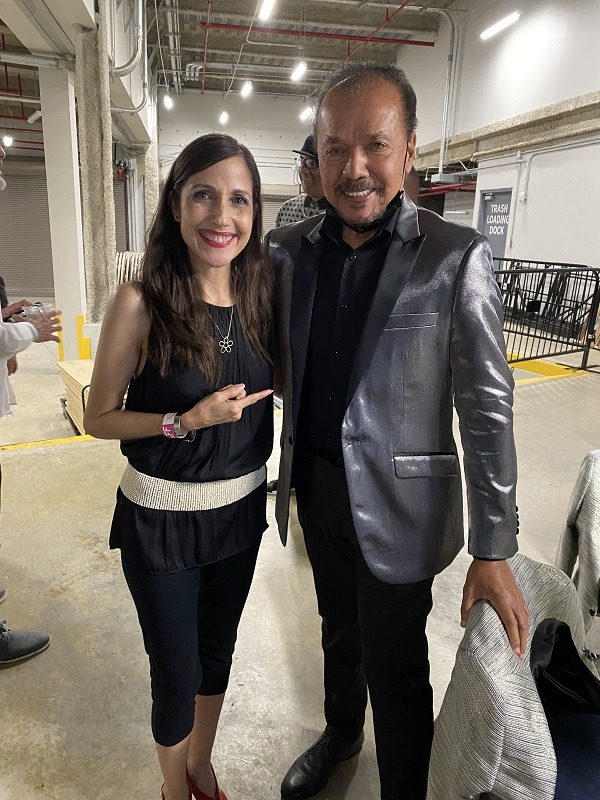
During the “Tropical Music Festival” I was backstage and was able to share with the musicians before and after their performances.  That privilege gave me the opportunity to talk to them about their projects, among other things.  On a side note, Oria Rivera graciously let me know about the release that same day of Bobby Valentin’s latest single.  As soon as I got home I listened to the song via You Tube.

Once again, maestro Valentín delivers a very daring and innovative song. I know that “chinchas” are going to fall on me as usual; but without being repetitive, you know that I am one of those who believe that Valentin is never wrong. 

Let’s establish that boogaloo or bugaloo is a Latin music and dance genre that was popular in the United States in the 1960s. It originated in New York City, mainly among Hispanic and Latin American teenagers. The style was a fusion of popular African-American rhythm and blues (R&B), in turn combining soul music with mambo and son montuno.

In the 1950s and 1960s, African Americans in the United States listened to various styles of music, including jump blues, R&B and doo-wop. Latinos in New York City shared those tastes, but also listened to genres such as mambo and cha-cha-chá. There was a mix of Puerto Ricans, Cubans and African-Americans in clubs, whose groups tried to find common musical ground. In the end, boogaloo or bugaloo was the common musical ground, a fusion of many styles cooking American son montuno, guaguancó, guajira, guaracha, mambo, R&B and soul on the same stove.  That must have been the reason why the boogaloo or bugalú allowed Spanish and English on equal terms.

As you can see, fusions are not a recent fad.

Well then.  The time has come to tell you what my salsa ears have heard, since there will be those who say that this is not a salsa song.  Well, the truth of the matter is that it is not suitable for salseros without musical appreciation skills.

From the first bars of this song, Bobby Valentín’s musical arrangement highlights the bass, accompanied by trumpets and saxophones in an arrangement that sounds great.  In the first thirty seconds of the song you can appreciate the vocal part of the composer -Bobby Valentín- ultra well accompanied by his most recent acquisition for the front of his orchestra: Leró Martínez. And for the most skeptical, Bobby and Leró sing in impeccable English.

The song is perfect, since in three minutes it opens up a range of musical possibilities in “English without barriers”.  Despite the brevity of the song, it lacks nothing.  Nor does it feel or sound like musical creativity was curtailed by trying to shorten the time.  The track flows naturally from the prelude, to the mambo, to the closing. At one and a half minutes, the saxophones provide the melody and the trumpets the breaks.  At the fiftieth minute, the trumpets play challenging the rhythm section, formed by:  Victor Roque on the tumbadoras, Kevin Vega on the timbal and Javier Oquendo on the bongo. Ceferino Cabán’s piano complements the “king’s” bass in a masterful way.

Shortly after the second minute (2.19), Victor “Yuca” Maldonado’s baritone saxophone sets the stage for Julito Alvarado and Angie Machado’s trumpets to firmly establish their presence.  This second minute also highlights the dynamism of the trombone by Eliut Cintrón. Let’s not forget that the composer, arranger, producer and bassist of this song was a trumpet player in his beginnings. At exactly 2.40 the bass takes command of the orchestra with more forcefulness, melodically allying itself with the sound of the trumpets and saxophones. Well into the second minute (2.44) the electric guitar in command of Javier Perez begins a correspondence with the bass, which is maintained until the closing of the song.

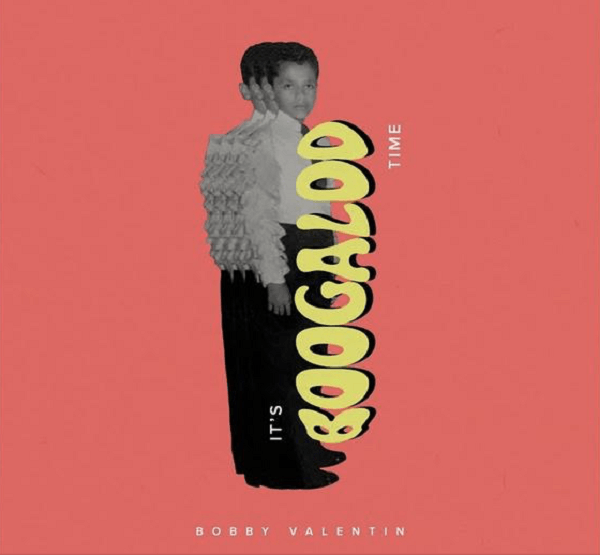
As for the cover art, it features a childish Bobby Valentine dressed as a musical celebrity.  The boy wears dark pants and a white shirt with those stylish puffed sleeves that scream mambo.  The title letters, which read It’s Boogaloo time are superimposed over the child’s image.  The style of the yellow letters that inscribe the word Boogaloo over the image described above make me imagine letters in some liquid material. The composition of the artwork rests on a rather garish salmon-colored background. According to the credits, both the graphic design and art direction were created by Orialis Valentin. Brava!

If you are one of those who say you are tired of the same old same old, I challenge you to listen to this gem, just as I recommended El Twist a while back. 

Salsa lives! I hope I have dispelled your doubts, if you had any.  If you still have any doubts, I confirm that you are not ready for this salsa conversation.

Musical Director: Bobby Valentín

Audio Recording & Mixing: Play Bach Studio

Engineer Carlitos Velázquez and Ramón Martínez

Mastering: WAVEM Acoustic LLC; Eduardo Ramos

Producer: Bobby Valentín

© 2022, Bronco Records, Inc. (Artist: Bobby Valentín)


By Bella Martinez, ISM Correspondents, San Juan, Puerto Rico


Imágenes Latinas, the new album by Spanish Harlem Orchestra

New album by Spanish Harlem Orchestra

The three-time Grammy winner Spanish Harlem Orchestra has an undeniable impact on the perception of the public towards music in general and this is no coincidence, as the work done its members has an unsurpassed quality.

These salsa veterans have always been characterized by looking for a raw and organic sound based on the past, something that does not prevent them from being focused on the future. On each album, they are very conscious that their main goal is to keep good music alive.

Spanish Harlem Orchestra members

How this started

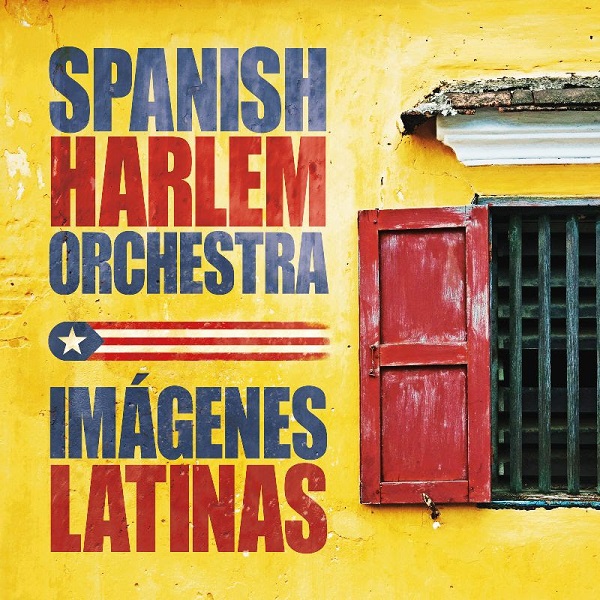
Once again, the salsa orchestra shows what they are really made of in their new album Imágenes Latinas, which will surely be a hit with the band’s fans. The record label in charge of releasing this recording is Ovation Records, whose owner is Oscar Hernández, pianist, composer and founder of SHO.

It is very interesting to note that Imágenes Latinas is the result of a funding model driven by the group’s fans in exchange an advance copy of the album and even a type of executive producer credit. The release show took place on May 20 at DROM, New York. There are multiple images from the show on the group’s official social media accounts, whose members thanked those present for their support.

Oscar Hernández commented that his mission and vision is to represent the history and legacy of this music, of which he feels very lucky to be part of. He also pointed out that his commitment to the music will never end and that the group explores new dimensions without deviating from its core belief. What Hernández means is that the concept and sounds are the same, but the arrangements and shows always seek to innovate one way or another.

The new album by Spanish Harlem Orchestra Imágenes Latinas

Inspiration

The title is inspired by group Conjunto Libre, which has always been one of the main souces of inspiration for SHO. The song Imágenes Latinas was one of Conjunto Libre’s most important pieces throughout their career and talked about the evolution of the Latin American diaspora in history. SHO seeks to give a touch of modernity to the song and introduce some contemporary arrangements while respecting its original essence.

A noteworthy aspect of Imágenes Latinas is that the group travels through various moods and styles, showing the vast experience of all its musicians in each piece. A great example of this is Mi Amor Sincero, which starts with the typical sounds of the bolero until becoming a joyful cha-cha that surprises anyone who will listen. These sorts of transitions from one style to the other can be found throughout the work and its brilliant interpretations.

The album is a true reflection of SHO’s career, which is still seen as one of the leading salsa ensembles even after all these years. The quality of their work has not decreased in the least, quite the opposite. Its members continue to risk breaking ground and experiment with the novelty of music without losing focus of who they are.

Spanish Harlem Orchestra performing on stage

        By Johnny Cruz, ISM Correspondents, New York, New York City


Directory of Salsa Clubs in Latin America

Argentina – Buenos Aires

Bolivia

Brasil

Chile


Colombia Galeria Cafe Libro Tropicana El Templo de la Salsa
Venezuela Bahia del Caribe Aquerena Cafe En Los Roques
México La Flor del Son
Chile Club Habana en Chile
 Argentina Gran Bar Danzon
Brasil Antonieta Bar & Lounge Rio de Janeiro
Trinidad y Tobago Sunday School Club en Trinidad y Tobago
Cuba 

Casa de la Música de Miramar

Casa de la Música Varadero

Café Cantante Mi Habana

Palacio de la Rumba

Cabaret Tropicana, Habana Salon Rojo del Capri


  • « Go to Previous Page
  • Page 1
  • Interim pages omitted …
  • Page 46
  • Page 47
  • Page 48
  • Page 49
  • Page 50
  • Interim pages omitted …
  • Page 241
  • Go to Next Page »

International Salsa Magazine (ISM) is a monthly publication about Salsa activities around the world, that has been publishing since 2007. It is a world network of volunteers coordinated by ISM Magazine. We are working to strengthen all the events by working together.