• Skip to primary navigation
  • Skip to main content

International Salsa Magazine

  • Home
  • Previous editions
    • 2025
      • ISM / November 2025
      • ISM / October 2025
      • ISM / September 2025
      • ISM / August 2025
      • ISM / July 2025
      • ISM / June 2025
      • ISM / May2025
      • ISM / April 2025
      • ISM / March 2025
      • ISM / February 2025
      • ISM / January 2025
    • 2024
      • ISM / December 2024
      • ISM / November 2024
      • ISM / October 2024
      • ISM / September 2024
      • ISM / August 2024
      • ISM / July 2024
      • ISM / June 2024
      • ISM / May 2024
      • ISM / April 2024
      • ISM / March 2024
      • ISM / February 2024
      • ISM / January 2024
    • 2023
      • ISM / December 2023
      • ISM / November 2023
      • ISM / October 2023
      • ISM – September 2023
      • ISM – August 2023
      • ISM July 2023
      • ISM Edition June 2023
      • ISM – May 2023
      • ISM April 2023
      • ISM March 2023
      • ISM February 2023
      • ISM January 2023
    • 2022
      • ISM December 2022
      • ISM November 2022
      • ISM October 2022
      • ISM September 2022
      • ISM August 2022
      • ISM July 2022
      • ISM June 2022
      • ISM May 2022
      • ISM February 2022
      • ISM January 2022
    • 2021
      • ISM December 2021
      • ISM November 2021
      • ISM October – 2021
      • ISM September 2021
      • ISM August 2021
      • ISM July 2021
      • ISM May 2021
      • ISM April 2021
      • ISM June 2021
      • ISM March 2021
      • ISM February 2021
      • ISM January 2021
    • 2020
      • ISM December 2020
      • ISM November 2020
      • ISM October 2020
      • ISM September 2020
      • ISM August 2020
      • ISM July 2020
      • ISM June 2020
      • ISM May 2020
      • ISM April 2020
      • ISM March 2020
      • ISM February 2020
      • ISM January 2020
    • 2019
      • ISM December 2019
      • ISM November 2019
      • ISM October 2019
      • ISM Septembre 2019
      • ISM August 2019
      • ISM July 2019
      • ISM June 2019
      • ISM May 2019
      • ISM April 2019
      • ISM March 2019
      • ISM February 2019
      • ISM January 2019
    • 2018
      • ISM December 2018
      • ISM November 2018
      • ISM October 2018
      • ISM September 2018
      • ISM August 2018
      • ISM July 2018
      • ISM June 2018
      • ISM May 2018
      • ISM April 2018
      • ISM March 2018
      • ISM February 2018
      • ISM January 2018
    • 2017
      • ISM December 2017
      • ISM November 2017
      • ISM October 2017
      • ISM September 2017
      • ISM August 2017
      • ISM July 2017
      • ISM June 2017
      • ISM May 2017
      • ISM April 2017
  • Download Salsa App
    • Android
    • Apple
  • Spanish

Search Results for: Latin dance world

Oscar D’ León. Confessions by Oswaldo Ponte by William Briceño Part II

Latin America / Venezuela / Caracas

“Continuing the musical biography of Oscar D’ León. He moved on to new horizons, new learnings, difficult experiences, and decisions, as life always holds a wide variety of surprises over time. One of those changes was his breakup with Dimensión Latina due to various internal group problems.

Photo 1: Oscar D' León
Photo 1: Oscar D’ León

Oscar’s departure caused issues for the group, as several of their scheduled performances in other countries were canceled, and over time, they lost audience, leading most of their members to split up and leave. Nevertheless, the group managed to carry on successfully but without the unique touch or ‘sazón’ that Oscar D’ León provided.

After leaving Dimensión Latina, Oscar ingeniously created La Salsa Mayor in 1976 and was able to release his first discography with his new group, thanks to the record label TH, which provided it because they were very interested in his new project, naming it ‘Con bajo y to’.’ From that moment, Oscar knew that he could consolidate himself with this group or any other, as his exceptional and unparalleled talents, so much originality, had never been witnessed”

“In any generation of Venezuelan artists. He also created another group called ‘La Crítica’ with the purpose that if any member of the Salsa Mayor Group was absent, one of them would substitute. However, the orchestra ‘La Salsa Mayor’ lasted only 4 years due to a strong disagreement Oscar had with his band on stage because the songs played during those two performances ‘were not accepted,’ leading to the closure of ‘Salsa Mayor.’ From that moment, he began to practice with his orchestra ‘La Crítica’ before his performances in Curaçao, where his songs, ‘Suavecito,’ ‘No ha pasado nada,’ served as a way to allude that everything had been overcome.”

“With this group, he achieved significant success. From that era, Oscar D’ León was known as the leading artistic figure in the country and on the American continent, with his music being heard in various homes in Venezuela and other Latin American countries. During that time, he traveled throughout the Latin American continent, the Caribbean islands, and the United States. From that moment, he leveraged his figure as he ventured into artistic promotion. He did so with Daniel Santos, Héctor Lavoe, El Gran Combo de Puerto Rico, and Celia Cruz.

If we have to mention which country Oscar liked or idolized the most, it was Cuba, because ever since he was very young, he loved the music played there, which over the years underwent various transformations in different stages, such as ‘La inmortal guaracha Celia Cruz’ which brought glory to the island; ‘la sonora Matancera’ carried the name of Martí’s land around the world; ‘Dámaso Pérez Prado,’ among other artists who contributed to the origin of Cuban music.”

“When Oscar D’ León first visited Cuba, it was an unforgettable experience and held extraordinary significance not only for the young artist but for the country itself. Its magnitude was such that, first and foremost, the ministers of culture and foreign affairs welcomed him, and every time he performed, large numbers of fans awaited to see and hear him. The respect and admiration for him were immense. In fact, this book mentions that ‘Cuban music,’ among other things, made Oscar D’ León’s existence as an artistic figure and as a person possible.”

Photo 2: Oscar D' León presenting his bibliography
cccc

“For Cubans, Oscar D’ León’s arrival had a profound effect; it was the rebirth of existing music. In short, he rescued it, causing Cuban music, ‘son,’ the central show, and entertainment venues to become their activities for relaxation and fun.

Oswaldo Ponte, in his research, mentions that when he looked for everything related to Oscar D’ León, there was immense admiration for him. Everyone he interviewed, even if they knew he was his manager and his biographer accompanied him, always said incredible things about Oscar. He not only rescued Cuban ‘son’ but also taught them to dance Cuban music, opening the minds and perspectives of Cubans, as Cuban ‘son’ continued to be known internationally. Everyone mentions what a good musician he is, that they can’t believe he isn’t Cuban and has that ‘sazón’ (flavor/charisma).

He was famous not only in Cuba but also in other countries. An example of this was Oscar’s participation in the Rome Festival when he sang a song by Adalberto. Mr. Adalberto Álvarez passed backstage and commented: ‘Cuba will never be able to repay Oscar for what he has done for Cuban music. He has kept it alive; if it hadn’t been for him, for Johnny Pacheco, for Celia Cruz, for La Sonora Ponceña and others who took it upon themselves to keep ‘son’ alive outside our country’… ‘and of all of them, the fundamental leader was Oscar D’ León because he is the most connected to authentic Cuban musical roots.'”

“In short, every time Oscar goes out to sing and dance, he is representing Cubans. For Cubans, dancing is almost a ritual. In 1950, they danced ‘son,’ ‘danzón,’ ‘mambo,’ ‘chachachá,’ ‘rumba,’ and other dances, some of which lasted a very short time, such as ‘dengue,’ ‘monzambique,’ ‘pilón,’ ‘carioca’; and others transcended time, like ‘conga’ and ‘rumba.’ Salsa is the continuation of, or the same as, ‘son,’ which can be danced with the same style or with different styles.

Photo 3: Oscar D' León in concert
Photo 3: Oscar D’ León in concert

Oswaldo Ponte began his promoter plan by hiring figures, among whom was Oscar D’ León. Becoming a serious entertainment promoter, he took the risk of doing it internationally (outside Venezuela) where he bought a contract from Guillermo Arena to present Celia Cruz with La Sonora Matancera. He also partnered with Juan Caravallo and managed to present the biggest show in Higuerote, Venezuela; with this great step, he was becoming a potential successful entrepreneur in international shows.”

“In 1983, he hired Oscar for 3 performances with ‘Roberto Blades,’ two at the Ávila Hotel and one at San Jacinto Park (both in Venezuela). At that time, Oscar was returning from Cuba, and with a new event, Oswaldo, upon seeing the show, pondered the difference between the two artists.

The Panamanian star was well-managed by his team. However, when it came to judging which was the better show, it was Oscar D’ León’s. When Ponte went to talk with him, he proposed becoming his manager on the condition that Oscar follow his instructions, as he always directed everything, which Oscar accepted. From that moment, many things changed not only artistically but also personally, offering the public not just Oscar D’ León and his orchestra, but Oscar D’ León himself, giving more charm and charisma to his audience.

One of the challenges he had to face was a stagnation in record sales. His new record productions weren’t taking off, so he decided to rely on television. Venezuela was both a recipient and a transmitter country, so his performances were broadcast on different television channels that gave great musical importance, such as ‘Siempre en Domingo,’ which covered the center and north of the American continent, and ‘Sábado Gigante,’ which covered South America, thus giving him international exposure.

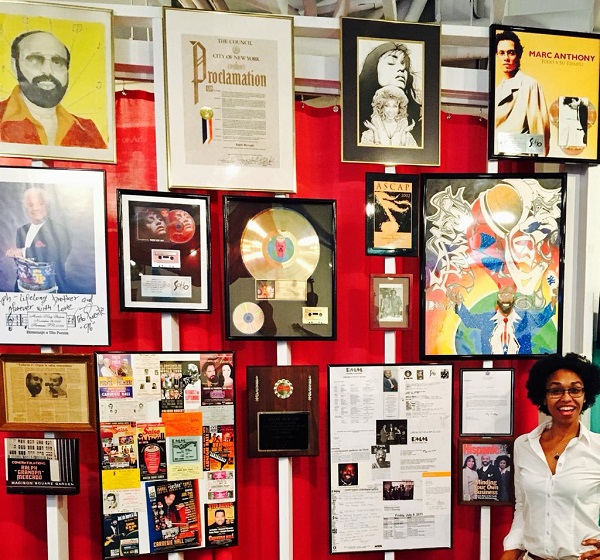
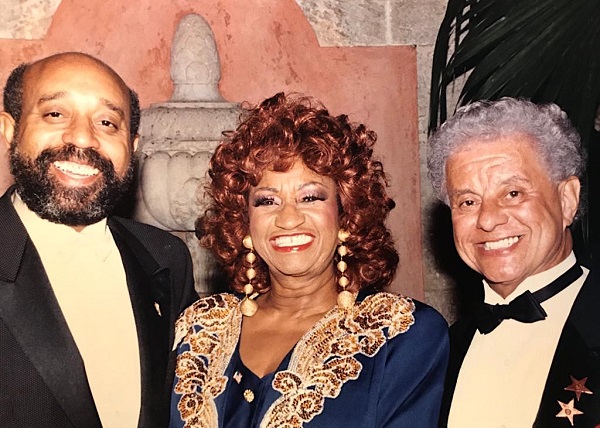
One of his best and most unforgettable collaborations was with singer Celia Cruz, who was a great friend of Oscar’s. They participated in many events, one of which was in 1993, where Ralph Mercado did what he called ‘The Perfect Combination,’ which consisted of combining stars for public performances.

Participants included Oscar D’ León, Celia Cruz, Marc Anthony, La India from New York, Tito Nieves, Tony Vega, Cheo Feliciano, José Alberto El Canario, and Domingo Quiñones, of which the most recommended songs were ‘El Son de Celia y Oscar’ and ‘Vivir lo nuestro’ by Marc Anthony and La India. At that time, Oscar had left the TH label and was now with Ralph Mercado; his colleagues were Tito Puente, Celia Cruz, Sergio George, Cheo Feliciano, Tito Nieves, La India, José Alberto El Canario, and other significant stars.

There are many other details and more events up to the present day, but it would be too much to explain in one article. What is very clear is that Oscar D’ León has conquered countless goals in his life, and we can all do the same in the different areas in which we operate, if we set our minds to it with determination and an iron will.

Photo 4: Oscar D' León and his bibliography
Photo 4: Oscar D’ León and his bibliography

To learn more about this, we recommend reading ‘Oscar D’ León, Confesiones De Oswaldo Ponte’ by William Briceño, published by Fundación Simón Bolívar.”


Dámaso Pérez Prado and the Succession of the “Mambo King”

Dámaso Pérez Prado was a Cuban musician, composer, arranger, and orchestra conductor, known worldwide as the “Mambo King.”

On December 3, 1983, Pantaleón Pérez Prado, an excellent bass player and composer, passed away in Milan, Italy. He was born on December 27, 1926, in Matanzas, Cuba.

Pantaleón’s Beginnings and Career

Pantaleón followed in the footsteps of his famous older brother, Dámaso Pérez Prado. At age 18, he formed his first orchestra, which he left in 1950 to join Dámaso’s group as a double bassist, accompanying him for several years.

He also played for a short time in Havana with the Laito Castro Orchestra. In the mid-1950s, Pantaleón Pérez Prado went independent and traveled to Europe, where he led an orchestra of Cuban musicians. This group achieved great success performing the songs that Dámaso had popularized.

Dámaso Pérez Prado and the Succession of the King of Mambo

The Legal Dispute

In 1956, a dispute between Dámaso Pérez Prado and his younger brother, Pantaleón (1926–1983), led to an unusual legal conflict. Dámaso sued his brother for $500,000, accusing him of impersonation.

In Hispanic culture, it is common for children to receive both parents’ surnames. In this case, the brothers’ birth names were Dámaso Pérez Prado and Pantaleón Pérez Prado, respectively, with Pérez being the father’s surname and Prado the mother’s.

In Portugal, the song Pantaleón performed, “Mambo del Estudiante” (Student’s Mambo), became the “official anthem” of the University of Coimbra. He also succeeded in Spain, France, and Italy, where he was introduced as “Pérez Prado, Rey del Mambo” (King of Mambo), which produced intentional confusion with his brother Dámaso.

Dámaso initiated legal action that concluded with Pantaleón being prohibited from using the title “Mambo King,” while also being required to use his full name. Some suggest that, beyond the lawsuit, there was a tacit agreement between the two brothers, based on the fact that Dámaso visited Europe infrequently, focusing his activities in the Americas, while Pantaleón permanently settled in Milan.

Name Confusion and The Conflict’s Revival

Originally, RCA credited the recordings to Dámaso Pérez Prado. However, when his records began appearing in the US, the record company shortened his name to the more alliterative Pérez Prado. In 1955, Dámaso dropped his full name and legally changed it to Pérez Prado.

Around that time, Pantaleón, who played bass with his own group, appeared at the Alhambra theater in Paris under the name “Pérez Prado, el Rey del Mambo.” Pantaleón was subsequently restricted by court order from passing himself off as Pérez.

However, hostilities resumed when an angry French visitor called the Hollywood Palladium, where Pérez Prado was performing, and yelled at the management for featuring an “imposter,” claiming he had danced with the “real” Prado (actually Pantaleón) in Deauville a few weeks prior.

Dámaso Pérez Prado fue un músico, compositor, arreglista y director de orquesta cubano, conocido mundialmente como el Rey del Mambo.

The ensuing lawsuit effectively put Pantaleón out of commission, but the younger brother had a form of posthumous revenge. When Pantaleón died in 1983, a widely circulated obituary was headlined “Mambo King Dies in Milan,” leading many people to (erroneously) believe it was Dámaso who had passed away.

Pantaleón’s Career and Legacy

Pantaleón Pérez Prado performed in Greece and traveled to Iran at the invitation of the Shah himself and his wife, Princess Soraya. He remained active until shortly before his death in 1983.

Dámaso Pérez Prado’s Notable Hits

Dámaso Pérez Prado’s best-known songs include:

  • “Mambo No. 5”
  • “Qué rico el mambo” (also known as “Mambo Jambo”)
  • “Mambo No. 8”
  • “Cherry Pink and Apple Blossom White,” which was a number one hit in the United States.
  • “Patricia,” which was a worldwide hit and was included in Federico Fellini’s film La Dolce Vita.
Dámaso Pérez Prado
Dámaso Pérez Prado

Legacy: In addition to his recordings, Dámaso Pérez Prado participated as an actor and musician in several Mexican films. His music was key to the international popularization of the mambo, and his style remains influential in Latin music and jazz.

Collaboration:

Los Mejores Salseros del Mundo 

Dj. Augusto Felibertt

Also Read: Israel “Cachao” López, a Cuban musician and composer, has been hailed as “the Inventor of Mambo

Salsa and Casino Ecuador Festival 2017

Latinoamerica / Ecuador / Quito

“Ecuador is a country located in South America, bordered to the north by Colombia, to the south by Peru, and to the west by the Pacific Ocean. Here, we can appreciate a rich cultural and natural heritage, boasting numerous rivers of unparalleled beauty.”

“‘Hecho Salsa’ is a dance community founded on April 21, 2013. In 2015, it began operating as a dance academy, and starting March 20, 2016, it expanded as an ‘event organizer,’ organizing the 1st International Flashmob for ‘World Rueda de Casino Day,’ which took place on a single day in ‘La Carolina’ park in Quito, Ecuador. As of this year (2017), it became the official organizer of the Salsa y Casino Ecuador Festival, which was the 2nd International Giant Rueda de Casino Flashmob in Ecuador.”

Salsa and Casino Ecuador Festival 2017

“It’s worth mentioning that there was a demand from those in the world of Salsa and dance in general for a dance competition, which led to the start of the 1st Ecuador Dance Contest. This was an open dance competition in the Salsa, Bachata, and Casino categories across two divisions: couples and groups.”

“The Salsa y Casino Ecuador Festival 2017 took place on March 24, 25, and 26, 2017. Its objective and intention were to promote Salsa in general, as well as dance culture, and to strengthen the bond that unites salseros within the community.”

“This interesting event was held first and primarily at the Best Western CPlaza Hotel (located at Av. De Los Shyris N37-53 and Av. Naciones Unidas) and secondarily at the same location where the event took place last year (the aerobics track in ‘La Carolina’ park).”

“We will soon be providing more details about the now-concluded event.”

For more information:

  • Website: www.festivalsalsaycasino.com
  • Facebook: festivalsalsaycasino
  • Instagram: hechosalsa
  • Twitter: hechosalsa
  • YouTube: https://www.youtube.com/channel/UC2x76mai4gCfa7QoYiF979A

Creator of Salsa Vida Takeshi Young graced us with his presence in International Salsa Magazine

In International Salsa Magazine, we have always tried to cover all types of Latin music artists, including producers, arrangers, composers, singers, musicians, dancers, and club owners. However, it is also important to talk to other platforms that promote Latin music as we do, so we contacted the creator of the website Salsa Vida, Takeshi Young, to learn a little more about this online media site and everything it has to offer the public.

Takeshi with a painting
Takeshi Young with a painting of Hector Lavoe

Takeshi’s relationship with Latin music

In view of the trouble digital marketing specialist, dance teacher, and competitor Takeshi Young went to create a site like Salsa Vida, we obviously had to ask what relationship he had with Latin music. He replied that he loves to dance and has been doing so for about 19 years. His attendance at various salsa events led him to create a calendar for the San Francisco Bay Area, where he currently resides.

The acceptance he had led him to include much more content like articles, events, guides, and much more. The main goal was to show salsa lovers all the places they could go to enjoy this genre, but over time, Salsa Vida was turning into a sort of online newspaper that provided information on many other things related to the same topic, especially dance academies. For its operation, it uses tools like WordPress, iTools, and Chat GPT as an information bank to his writings, most of which are of his authorship.

He used the name “Salsa Vida” because of the lifestyle that he associated with salsa, which he considered to be unifying, nourishing, and joyful.

Greatest challenges in creating Salsa Vida

One of the most annoying parts about creating Salsa Vida was the calendar, as Takeshi always had to keep an eye on updates, date changes, and event cancellations. Fortunately, he always received information from many of the organizers, who told him when there were any changes in their schedules.

Takeshi at the San Francisco SBK Congress
Takeshi Young dancing with the San Jose State Salsa Team at the San Francisco SBK Congress

Salsa Vida’s most important goal today

Takeshi pointed out that, at present, Salsa Vida’s most important goal is to teach and promote salsa around the world, which has led him to write all kinds of articles in which he seeks to educate his community on all kinds of topics related to Latin music, such as “what is pachanga” or “what is cha cha chá.” With this, he wants those interested in learning about dancing or knowing more about this rich world to have a starting point from the theoretical part.

In addition to that, the website still maintains the calendar to help salsa lovers find events related to their passion near their homes. 

Contacts obtained to date

Takeshi claims to have so many contacts with a lot of bands, especially in the Bay Area, which has helped him keep on growing his website. However, the people he interacts with most in this environment are dancers and instructors who give him a lot of information about their work with their academies and students.

Moreover, his work has also helped him gain invites and press passes to all kinds of events and concerts in both San Francisco and the rest of California, allowing him to cover them and bring the latest updates to his loyal readers.

Takeshi and Alyssa
Takeshi Young and dancer Alyssa Aguilar

Goals with Salsa Vida for the coming months

As for Takeshi and Salsa Vida’s goals for the coming months, the creative young man keeps searching for and publishing events from around the world for his readers to see, as well as highlighting the importance of expanding and publishing even more countries in his calendar so that many more salsa fans from other latitudes can use Salsa Vida to find what they want.

Today, the Salsa Vida calendar has events in about 80 countries, but Takeshi says it is not enough and wants to expand much more to other locations. He also wants to add more languages to make visitors to his page feel more comfortable, and new sections such as “Dancepedia” that would come to be a kind of Wikipedia, but focused on dance.

And if that were not enough, he wants to design an app through which those interested can use the same functions of the site in a much more comfortable and interactive way from any mobile device.

Takeshi’s other occupations

As well as handling Salsa Vida, Takeshi is also a digital marketing specialist and teaches salsa at San Jose State University twice a week.

Importantly, he has a BA in philosophy and a BS in software engineering, both from the aforementioned university. During those years, he was also a member of his class’s salsa and mambo clubs. 

Read also: Haitian bandleader and musician Mac Gregore Brunis fulfills his dream in Montreal

Malia The Energy That Allows The Blues To Have A Soul, A Voice

Malia (born in 1978) is a singer from Malawi. She has released seven studio albums. Her mother is Malawian and her father is from the United Kingdom. She moved to London in her teens.

After finishing school, Malia dedicated herself to music. She worked as a waitress while organizing a backing band, singing ballads and classic jazz in London bars and clubs.

During a visit to New York, she heard a pop-jazz track sung in French by vocalist Liane Foly, produced by André Manoukian. She contacted Manoukian to ask for his help, and they began working on her 2002 debut album, Yellow Daffodils. Although the release included English lyrics, it achieved recognition in France and Germany.

Malia (born in 1978) is a singer from Malawi

Her subsequent releases, Echoes of Dreams (2004) and Young Bones (2007), were highly acclaimed among jazz fans across Europe. Malia is known for her expressive voice. From the beginning, she found her way to the stage and her singing style flirted with sounds from the 1960s and 1970s.

Her role models include Billie Holiday, Sarah Vaughan, and Nina Simone. In 2013, she received the Echo Jazz Award for “International Female Vocalist of the Year.” She explored her African roots in the album Malawi Blues/Njira, released on MPS in 2016. In her 2018 release, Ripples (Echoes of Dreams), Malia offers another perspective on her previous album, Echoes of Dreams. Her latest release, The Garden of Eve, is dedicated to the blues.

Malia is the energy that allows the blues to have a soul, a voice

“My heart beats for many things. I think that is because I come from a marriage of mixed heritage. I have never felt like I am one thing or the other; I am more of a fusion of both, and my music reflects that. I feel I am evolving as a human being, and although music is simply a medium for expression, I like the idea of resonating with it, if its rhythm suits me.

The blues has always been dear to my heart: it is a cathartic, precious, and profound experience, whether playing it or hearing it on the radio. When I first heard Billie Holiday sing ‘Blue Moon,’ I could feel it in every cell of my body.

She had a very powerful effect on me. Sentimental blues, originating in tragic situations, sometimes even reflecting my own experiences… No matter how bad family, friends, politics, lovers, governments, or society may be, they can never destroy the forces of good in this world.

And as time passes, I find more and more of the truth that is rooted in my soul. And I finally feel mature enough to understand this wonderful musical tradition, because the blues means life.”

And if the blues means life, Malia is the energy that allows the blues to have a soul, a voice. It has been a long time since a contemporary artist paid such a beautiful homage to the blues—a style that, in the year 2020, deserves to have the dust shaken off.

Marshall McLuhan’s once-futuristic idea of the “global village” became a reality long ago. Only now, in pop music, are we learning and experiencing, in many ways, what the legendary media theorist formulated in the early 60s. Thanks to digital technological advancements, most pop genres have acquired a global dimension.

Her mother is Malawian and her father is from the United Kingdom. She moved to London in her teens.

Hip-hop, blues, and jazz are evolving into hundreds of regional variants, far from their original roots. Malia’s music can undoubtedly be considered an impressive testament to this worldwide fusion.

After moving from the southern African republic of Malawi to London at age fourteen, the singer spent her adolescence in the UK capital (Note: the “Big Apple” is the nickname for New York, which contradicts having spent her adolescence in London. The original text was left, but the inconsistent use of the term is corrected).

Malia recorded three albums in France with André Manoukian: Yellow Daffodils (2002), Echoes of Dreams (2004), and Young Bones (2007), all created in Manoukian’s Parisian studio.

In 2010, she met Swiss producer Boris Blank, who, since the 80s as part of the avant-garde duo Yello (The Race, Bostich) with Dieter Meyer, has garnered great success. In 2012, Malia released a tribute to Nina Simone, Black Orchid, which won that year’s ECHO Jazz Award. In 2014, Boris Blank produced the eleven electronic-style songs for her album Convergence.

Malia’s sixth studio album, Malawi Blues/Njira, sees her clear, incisive voice amplified again in a soul-jazz context. “An album I’ve always wanted to make… I feel like the time is right now… I wanted songs that reflected my consciousness and my ancestry,” she summarizes the essence of the ten tracks on Malawi Blues/Njira.

The album features thoughtful, mostly slow-tempo original tracks, with sparsely orchestrated piano, accompanied by guitar and percussion, including an almost minimalist version of the classic ‘Moon River.’ From the outset, with Malawi Blues/Njira, Malia recalls the sound of her childhood.

The local vibes of the Kwela and Kwasa-Kwasa traditions are felt not only in the moving “Love Is Holding Both Our Hands.” “I humbly consider it my duty to pass on the rich traditions and stories, just as my ancestors did, as my grandparents and parents did when we would sit around the fire in the evenings in Malawi, eating nsima with pumpkin leaves and peanut sauce.” Of course, that is only one aspect of her rich work.

Her songs are characterized by artistic experiences and experiments, an amalgam that has shaped Malia’s life and a lasting effect of her time in the London club scene, where she was able to sharpen her sense of rhythm in small bars in front of reduced audiences. Here, she could always adjust her sets live, night after night.

This musical diversity now benefits her, when, in Chipadzuwa (a southern African colloquial term for a beautiful woman), she alternates between the regional language, Chichewa, and the universal language, English, with a mellifluous ease.

With the support of the virtuoso pianist Alex Wilson, a sound that is both fresh and warm emerges. Malia has arrived in a global musical world for which she works and fights. “To all the silent warriors in this world,” Malia concludes, “Malawi Blues/Njira is for you!” (mps-music)

Malia – Malawi Blues / Njira (2016)

Malia - Malawi Blues Njira (2016)
Malia – Malawi Blues Njira (2016)

Tracks:

  1. Malawi Blues / Njira
  2. Love Is Holding Both Our Hands
  3. Chipadzuwa
  4. Let Me Breathe
  5. Disgrace
  6. The Seed
  7. Black Widow
  8. Moon River
  9. Friendship
  10. Wonder Of The World
  11. Let Me Breathe (bonus track)

Musicians:

  • Malia (Vocals)
  • Alex Wilson (Piano, Programming)
  • Dimitris Christopoulos (Double Bass)
  • Edwin Sanz (Drums, Percussion)
  • Ahmed Fofana (Guitar on track #2, Instruments on track #9)

About Malawi, The Warm Heart of Africa

Malawi, known as the “Warm Heart of Africa” for the kindness of its people, is a landlocked country located in southeastern Africa. It is famous for its stunning natural landscapes, highlands, and, above all, the vast Lake Malawi, which covers approximately 20% of its territory.

Culture and History

  • Culture: Malawi’s culture is rich and diverse, with various tribes such as the Maravi, Nyanja, and Tumbuka. Each contributes particular aspects to the traditional masks, dances, music, and clothing. The people are known for their friendly nature and relaxed pace of life.
  • History: The territory was a British protectorate called Nyasaland until its independence on July 6, 1964. Subsequently, it became a one-party state under the authoritarian rule of Dr. Hastings Kamuzu Banda for decades, until the transition to a multiparty democracy in the 1990s.

Tourism and Nature The main tourist attraction is Lake Malawi, the third-largest lake in Africa, known for harboring more fish species than any other lake in the world, including about 1,000 species of cichlids. The country offers an authentic travel experience and is considered one of the safest countries in Africa for visitors.

🎤 Personal Data on Malia

  • Birth Name: Not commonly used publicly; she is known simply as Malia.
  • Year of Birth: 1978.
  • Place of Birth: Malawi, East Africa.
  • Nationality: Malawian and British (United Kingdom).
  • Family Origin: Her mother is Malawian, and her father is from the United Kingdom.
  • Musical Career: She was exiled with her family to London when she was a teenager (around age 14) due to political reasons. It was there that she discovered jazz and was inspired by singers like Billie Holiday, Sarah Vaughan, and Nina Simone.
  • Genres: Jazz, Soul, Blues, Pop, with African influences.
  • Recognition: She won the Echo Jazz Award for “International Female Vocalist of the Year” in 2013 in Germany.
  • Notable Discography:
    • Yellow Daffodils (2002) – Her debut album.
    • Black Orchid (2012) – A tribute to Nina Simone.
    • Malawi Blues/Njira (2016) – An album where she explores her African roots.


Collaboration:

L’Òstia Latin Jazz

Dj. Augusto Felibertt.

Also Read: Dave Valentin considered one of the most important Latin Jazz flutists in history, thanks to his technique and rhythm.

  • « Go to Previous Page
  • Page 1
  • Interim pages omitted …
  • Page 20
  • Page 21
  • Page 22
  • Page 23
  • Page 24
  • Interim pages omitted …
  • Page 80
  • Go to Next Page »

International Salsa Magazine (ISM) is a monthly publication about Salsa activities around the world, that has been publishing since 2007. It is a world network of volunteers coordinated by ISM Magazine. We are working to strengthen all the events by working together.