• Skip to primary navigation
  • Skip to main content

International Salsa Magazine

  • HOME
  • Previous editions
    • 2026
      • ISM / April 2026
      • ISM / March 2026
      • ISM / February 2026
      • ISM / January 2026
    • 2025
      • ISM / December 2025
      • ISM / November 2025
      • ISM / October 2025
      • ISM / September 2025
      • ISM / August 2025
      • ISM / July 2025
      • ISM / June 2025
      • ISM / May2025
      • ISM / April 2025
      • ISM / March 2025
      • ISM / February 2025
      • ISM / January 2025
    • 2024
      • ISM / December 2024
      • ISM / November 2024
      • ISM / October 2024
      • ISM / September 2024
      • ISM / August 2024
      • ISM / July 2024
      • ISM / June 2024
      • ISM / May 2024
      • ISM / April 2024
      • ISM / March 2024
      • ISM / February 2024
      • ISM / January 2024
    • 2023
      • ISM / December 2023
      • ISM / November 2023
      • ISM / October 2023
      • ISM – September 2023
      • ISM – August 2023
      • ISM July 2023
      • ISM Edition June 2023
      • ISM – May 2023
      • ISM April 2023
      • ISM March 2023
      • ISM February 2023
      • ISM January 2023
    • 2022
      • ISM December 2022
      • ISM November 2022
      • ISM October 2022
      • ISM September 2022
      • ISM August 2022
      • ISM July 2022
      • ISM June 2022
      • ISM May 2022
      • ISM February 2022
      • ISM January 2022
    • 2021
      • ISM December 2021
      • ISM November 2021
      • ISM October – 2021
      • ISM September 2021
      • ISM August 2021
      • ISM July 2021
      • ISM May 2021
      • ISM April 2021
      • ISM June 2021
      • ISM March 2021
      • ISM February 2021
      • ISM January 2021
    • 2020
      • ISM December 2020
      • ISM November 2020
      • ISM October 2020
      • ISM September 2020
      • ISM August 2020
      • ISM July 2020
      • ISM June 2020
      • ISM May 2020
      • ISM April 2020
      • ISM March 2020
      • ISM February 2020
      • ISM January 2020
    • 2019
      • ISM December 2019
      • ISM November 2019
      • ISM October 2019
      • ISM Septembre 2019
      • ISM August 2019
      • ISM July 2019
      • ISM June 2019
    • 2016
      • ISM December 2016
  • Spanish
  • Download Salsa App
    • Android
    • Apple

Search Results for: Latin dance world

Rónald Gómez Original Venezuelan Sonero for the World

Rónald Gómez, One of the most respected young soneros of the New Generation

He belongs to the new legion of young soneros and projects himself as one of the greatest exponents of Venezuelan salsa at the national and international level; I am referring to Rónald Eduardo Gómez Ávila, known artistically as Rónald Gómez, born in Caracas on March 11, 1995, son of Sonia Ávila and Rónald Gómez; his brothers: Jesús Eduardo and Rónner Eduardo.

He completed his high school studies at the Orinoco High School and his university studies at UNEARTE in Caracas.

He has been living in Los Teques for some time and is currently living in Valencia.

The singer and sonero Rónald, started in music since he was 4 years old, when his father, also a musician, invited him to sing the song “Llorarás”, with the free orchestra of the UCV and from that moment he won people over with his charisma and his swing. At the age of 6, he joined the Chiky Salsa orchestra and due to his versatility, he later joined the Porfi Baloa Teenagers, first as a musician and then as a vocalist, and later as a member of the Porfi Klan staff.

Rónald Gómez soneros of the New Generation
Rónald Gómez One of the most respected young soneros of the New Generation

It is worth mentioning that Rónald Gómez, besides being one of the most respected young soneros in our country, has stood out as an excellent sportsman, being a member of the Miranda State Volleyball Team in various national competitions.

Gómez has had the honor of sharing the stage with salsa greats such as: Tony Vega, Maelo Ruiz, El Gran Combo de Puerto Rico, Cheo Feliciano, Ismael Miranda, Hermanos Lebrón, Frankie Vásquez, Hermán Olivera, Adalberto Santiago, Oscar D’León and was a special guest to sing along with Sonora Ponceña and La India from New York.

Rónald has worked with the orchestras La Dimensión Latina, the Dance Orchestra “La Resistencia Salsera de Venezuela”, the Cheo Navarro Tribute Orchestra and currently Los Adolescentes.

Ronald Gòmez One of the most respected young soneros of the New Generation
Orchestra los Adolescentes

Among the countries where Rónald Gómez has represented Venezuela are United States, Peru, Canada, Colombia, El Salvador, Ecuador, Mexico and Cuba.

Some of the songs he has recorded are: “No puedo vivir sin ti”, “Ya la vi” with Bailatino and “No temas al amor” and “Tengo un amor” with Los Adolescentes, which are played on radio stations and social networks.

What are your current projects, Rónald? Carlos, I am currently continuing with the Teenagers and I also have projects as a soloist; I am recording some things on the fly individually, obviously without leaving the orchestra and at the same time I have in mind to enhance the image as Rónald Gómez. Have you recorded any new songs? Indeed, professor, I have recorded some with the Teenagers and as I told you, I am going to record with some guests together with myself; that is going to be good and I hope you enjoy it; in due time I will make them known.

Ronald, where are you currently with the Teen Orchestra? At the moment I am in Miami, last week we were in Los Angeles, San Francisco and Santa Ana.

What can you tell us about your next tour? We are going to Colombia at the beginning of March, we will be alternating with Diego Galé and Maelo Ruiz, then we will be on a break there in Venezuela and then we will continue with the full tour in the United States, having concerts in: Houston, Utah, Ohio, among many other cities.

Finally, Rónald tells us that he feels satisfied by his successes at a professional level and wishes to continue to succeed inside and outside our country, with the support of all his family, musicians, friends and all the salsa musicians who enjoy his presentations.

It is important to emphasize that Rónald Gómez is characterized by his simplicity, professionalism and gift of people who will surely make him one of the greats of Latin music.

From “Salsa Escrita” and International Salsa Magazine, we wish Rónald the best performance and he always counts on us.

To contact Rónald Gómez, you can do it through the Instagram: Ronaldadolescentes.

Ronald Gomez soneros of the New Generation
The singer and sonero Rónald Gòmez


Home

Kaem and Marina. The Dynamic Duo in France

Europe / Francia

Kaem and Marina are most known as choreographers, international instructors & performers. They are the creators of the AsOne style in kizomba, and the founders of the KizAcademy Studios and the KizAcademy TEAMS worldwide.

Photo 1: Kaem and Marina

They owe their international success to the stunning emotional power of their improvisations, the huge diversity, creativity and complexity of their moves and the artistic depth of their performances.

Their workshops became among the most praised in the world thanks to their groundbreaking methods of training inspired by hip-hop, contemporary, martial arts, athletics, acting, but also Tao, zen meditation, mindfulness therapy and spiritual practice.

Their 10 hours programs aim to make the student able to connect to himself, free himself from fears and judgement, dive in his creative world, learn to see his own technical flaws, master the movements in a very deep way, fully connect to his partner emotionally, master the energy flow between the partners, and the most important: learn to train by himself and build his own tools to become independent, and therefore free.

In June 2017, after 21 months of dedicated research and preparation, they created the KizAcademy Instructors School: the world’s finest and most complete program for instructors. Kaem & Marina’s career probably had one of the fastest growths the afro-Latin dance world has ever witnessed.

Only 10 months after they started learning kizomba, they made ” THE PIANO SOLO” a kizomba video that hit 1 million views within 4 days, and got them teaching and performing in festivals and events all over the world. After only one year of international career, they decided to stop working with festivals, to work with their teams and to launch their own schools worldwide.

Photo 2: Kaem and Marina

They created the AsOne style, and reached their goal within 4 months and been able to welcome around 70 students in every class they taught. That allowed them to be totally independant from any other institution and to focus full time and with total freedom on their pedagogy, their technical mastery, and most importantly:

Their creative journey. But why is this path relevant?

Such a fast and rare evolution was only possible thanks to 9 pillars every artist has: o Vulnerability, self-acceptance, self-discovery and self-mastery.

  • Inspiration and exploration of what touches one’s heart
  • Developing one’s own style ,with sincerity and overcome the fear
  • Creating a program of training for oneself
  • Training on the deepest layer of movement : the natural motion and the biomechanics
  • Creating a program of workshop
  • Public speaking ,pedagogy and psychology of learning
  • Choreography drafting and cinematic video making
  • Expansion strategy, marketing and management

Anyone with an open and curious mind can learn all those things, The issue is that no one, so far, was teaching them.

Most of the masterclasses only focus on succeeding at making fancy moves. They totally disregard the development of the creative universe of the students, and they ignore all the other skills that make a complete creative dancer and a successful artistic entrepreneur.

Photo 3: Kaem and Marina

During their carrier, Kaem & Marina became more and more aware of this mismatch between the existing concept of masterclass and what is really important to grow as an artist and have an international career. Therefore, they decided to create a full program for instructors that would prepare for the most important journey a dancer could ever experience: Self Discovery, Technical and creative Mastery and full self-expression.

For further information and courses https://www.facebook.com/KaemMarineAsone/

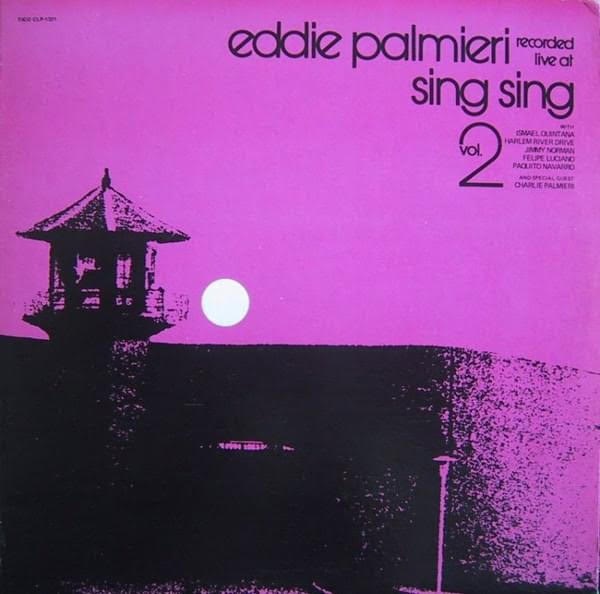
Eddie Palmieri brought salsa for the first time and live from Sing Sing Penitentiary in New York

In the early 1970s, the American social landscape was dominated by the Vietnam War and the birth of several protest movements advocating for equality, justice and the defense of human and civil rights, and from sing sing a historic concert.

In the midst of all that collective turbulence, Eddie Palmieri and his orchestra were giving free rein to their social rebellion with a sweeping musical proposal.

But Palmieri’s rebelliousness was not only reflected in his music, but also in his decision to take his group’s sound to atypical and controversial scenarios that would attract the attention of the authorities.

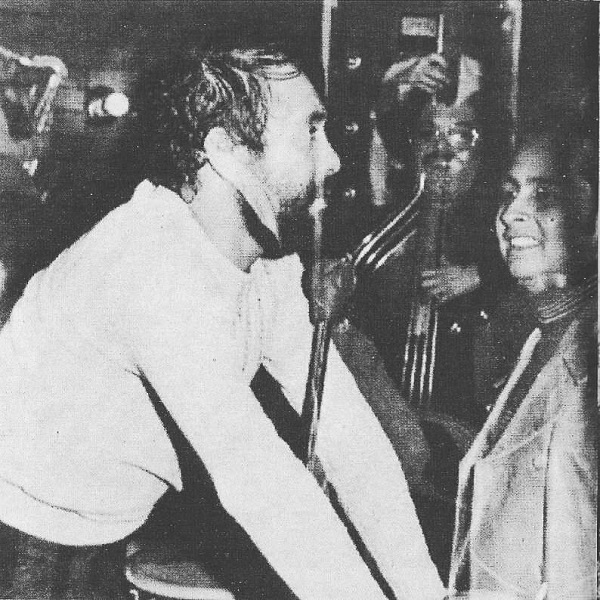
By the beginning of 1972, Eddie Palmieri had already performed in some correctional institutions, including the Louisville Correctional Facility and the Attica and Rikers Island prisons in New York, but the pianist wanted something more.

Eddie Palmieri brought salsa for the first time and live from Sing Sing Penitentiary in New York

In those days, a good friend of Eddie Palmieri was incarcerated in the sinister and historic Sing Sing Correctional Facility, also known as Sing Sing Prison, infamous for the reputation of its inmates and for its executions with electric chairs.

It was at that moment that the idea of an unprecedented performance at the facility was born.

Palmieri’s group was not only the orchestra of choice for Hispanics, it was also favored by the majority of African-Americans in the Latin dance world, and at that time the prison population at Sing Sing was composed mostly of Hispanics and African-Americans, so the stage was perfect.

However, it was not easy to perform a concert in a maximum security prison like the dreaded Sing Sing Prison.

However, at the request of Eddie Palmieri himself and with the coordination of Roulette Records and the prison administration, the performance took place on Wednesday, April 12, 1972.

By the beginning of 1972, Eddie Palmieri had already performed in some penitentiary institutions.

Sing Sing Correctional Facility is a New York State Department of Correctional Services prison in Ossining, New York State, United States. The name comes from the original name of the town of Ossining.

It was the third prison in New York State, built in 1825. The state legislature allocated $20,100 to purchase the Silver Mine farm. The prison was to be self-supporting and not require a state budget.

Elan Lynds, a jailer at Auburn Prison (New York’s second prison), brought 100 convicts from Auburn to the new prison and employed them for its construction.

Harris A. Smiler was the first person executed by electrocution at Sing Sing on July 7, 1891. From 1914 until 1971, only the electric chair at Sing Sing was used for executions.

On January 8, 1983, more than 600 inmates in B Block started a riot, taking 17 officers hostage; it ended 53 hours later.

Sing Sing in popular culture

Near the end of Herman Melville’s short story Bartleby, the Scribe, it is mentioned that Monroe Edwards died of tuberculosis in Sing Sing Prison.

There is a song called La cárcel de Sing Sing, written by Bienvenido Brens, which tells the story of a prisoner in this jail who was sentenced to death for killing his wife and her lover. The song was made famous by José Feliciano. It is also performed by Colombian singer-songwriter Alci Acosta.

Sing Sing Penitentiary in New York City

In addition, it was performed live by the band Corizonas (union of Arizona Baby and Los Coronas) in their live album “Dos bandas y un destino”.

There is a song by the salsa group Conjunto Clásico on the album El panadero released in 1986, called A los muchachos de Sing Sing, which has a message of encouragement to convicts.

There is a song by the French-Tunisian singer-songwriter (Michel) Laurent entitled Sing Sing Barbara, from 1971, which tells the story of an inmate who sends desperate messages of love to his wife from this prison.

There is a song by the Madrid group Los Nikis entitled Diez años en Sing Sing, which also gives title to the tribute album to that group.

There is a song by the Basque group Sorotan Bele titled Sing Singatiko Folk & Rolla.

In 1932 the film Twenty Thousand Years in Sing Sing was shot, directed by Michael Curtiz and starring Spencer Tracy and Bette Davis. The film is based on the book of the same name by Lewis E. Lawes.

In the film Constantine, and in the official Constantine comic book, John Constantine is seen to use the Sing Sing prison chair to connect to hell.

In the film Citizen Kane, protagonist Charles Kane threatens his political rival, Jim Gettys, to send him to Sing Sing, when Gettys informs Kane that he will publish his affair with Susan Alexander in the newspapers if he does not withdraw from the election.

In the film The Pilgrim, Charles Chaplin plays the role of a convict recently escaped from prison, who, when he is at the train station, moves his finger without looking over the board of destinations to choose one at random and falls on Sing Sing, so he repeats the process again when he realizes his unfortunate choice.

In the movie Breakfast at Tiffany’s, Holly Golightly periodically visits inmate Sally Tomato at this prison.

In the movie and musical The Producers, the main characters stop at the same prison and create a musical called Prisoners of Love.

In the video game Driver Parallel Lines, the protagonist spends 28 years in Sing Sing.

In the ABC television series Castle, Sing Sing is cited during an episode of the fourth, fifth and eighth seasons.

In the film noir movie Odds Against Tomorrow, Johnny, the character played by Harry Blafonte, says, “I know they changed his color when they rehabilitated him in Sing Sing.”

In the AMC television series Mad Men, Sing Sing is quoted during an episode of the third season.

In the series Breakout Kings, prisoners are transferred to Sing Sing for their help.

In the song Báilalo como tú quieras, by artist Tego Calderón, the phrase “If rapping was a crime, I’d be in Sing Sing!” appears.

In the horror movie saga Maniac Cop, cop Max Cortell is killed in Sing Sing prison by inmates and is resurrected in the form of a “maniac cop”.

In the Netflix series The Punisher, Arthur mentions to Billy Russo having been imprisoned 10 years in Sing Sing, in episode 4 of the second season.

In the novel “The Ppsychoanalyst” by John Katzenback published in 2002, the Sing Sing prison where a man served six months is named.

In Georges Simenon’s novel The Hound Dog starring Commissar Maigret, one of the characters spends several years in Sing Sing prison.

In the comics “Mortadelo y Filemón”, by cartoonist Francisco Ibáñez, when a character has done something barbaric, he is sentenced to Sing Sing prison and appears with the typical black and white striped prisoner’s suit, chopping stone with an iron ball chained to his leg.

In the series Law and Order the Sing Sing prison is constantly mentioned.

Also Read: Carlos “Nene” Quintero comes from a family of musical prodigies

Let’s talk about Una noche en Old Town “en vivo,” while staying true to the musical journey of “El Calvito” Reyes

“Yes, Una noche en Old Town was an event held for about 100 people at a restaurant in the area known as Old Town in Kissimmee, Florida. Old Town is a park that feels like a year-round festival, 365 days a year,” the artist explains. This marks the third musical production from the Puerto Rican singer-songwriter known in the salsa world as “El Calvito,” one of the most fervent champions of the Salsa Nueva movement.

With this release, Edwin puts his salsa and his talent at the service of his followers. His repertoire spans classic salsa, romantic salsa, and what he calls “conscious salsa.”

Edwin “El Calvito” Reyes acknowledges that while everything has already been invented, the key is to stay focused and execute the ideas swirling in his mind. The press release for the new live album, titled Una noche en Old Town, notes: “Remember in the ’90s when many artists (…) recorded live productions? That was a trend that (…) went down in salsa history.”

The Production

The final product is a “live” recording of his orchestra. The production turned what was originally planned as a birthday party at Old Town Park in Kissimmee into a full album. Sound engineer Joseph Díaz captured the session, which was later mixed and mastered by pianist and engineer Víctor Romero. The content was further polished at Harmony Recording Studios in Orlando, Florida.

The album features the collective performance of the musicians who have accompanied the singer for years, including their appearance at the 2025 Día Nacional de la Zalsa in Orlando. The lineup includes:

  • John López: Congas
  • Daniel Ortiz: Timbales
  • Manny Urbina: Bongo
  • Víctor Romero: Piano and Musical Direction
  • Yasmani Roque & Marcos Rivera: Trumpets
  • Bert Laboy: Trombone
  • José Castro Marchán: Baritone Sax
  • Una Noche en Old Town Edwin El Calvito Reyes
    Una Noche en Old Town Edwin El Calvito Reyes
  • The night at Old Town also featured guest appearances by heavyweights such as Kriptony Texeira, Harold Montañez, and José Novoa. Additionally, Richie Nieves, the well-known voice of KQ FM Radio in Orlando, handled the album’s intro.

The Origin

The stage was set specifically at El Cilantrillo restaurant within Old Town. The event celebrated the birthday of Javier Colón, owner of La Feria Salsera and Edwin’s partner for the veteran-focused dance events that Edwin has successfully led in recent years. Javier hired “El Calvito’s” orchestra, the performance was recorded, and from that session, this authentic album was born.

By chance, the date of the party coincided with one of the most important days on the Puerto Rican salsa calendar: the traditional Holy Saturday Dance (Sábado de Gloria). “Many Latinos don’t understand and ask, ‘Are you guys seriously holding a dance on Holy Saturday?’ So, unintentionally, we tapped into that tradition—and it is a tradition in every sense of the word. By trying to keep it alive, we (Puerto Ricans) have shared it with the rest of the Hispanic public.”

According to Edwin, the performance was originally recorded for promotional purposes. However, the artist felt it was such a great capture of the evening’s energy that he consulted his musical director, Víctor Romero, to see what he thought of the idea.

The Release

Coincidence dictated that the album be published and available on digital platforms exactly one year after the recording. The producer admits it was a high-risk project because it was recorded live during an organic event outside of a controlled studio environment. The classic covers Edwin included as tributes to “those who have passed” (arranged as medleys) were his biggest concern, yet they ultimately earned widespread approval.

“El Calvito” Reyes says he doesn’t fear the critics. Driven by passion, he decided to release this 10-track production—eight of which he wrote himself, plus two salsa hit medleys—aiming to win over dancers, listeners, and collectors alike.

Tracklist:

  1. ‘Medley salsa nueva’
  2. ‘Así llamaban al Conde’
  3. ‘Homenaje a los que se nos fueron I y II’
  4. ‘Dime mi Buen Señor’
  5. ‘Tú del sur, yo del norte’
  6. ‘El karma’
  7. ‘Tócame la moña’
  8. ‘Baila cha cha chá’
  9. ‘Solo tiempo pa’ rumba’
  10. ‘Orgulloso de ser latino’

Stream & Connect: The album is available digitally on YouTube Music, Spotify, and Apple Music. Each track has a corresponding video at: https://www.youtube.com/@ElCalvitoReyesOficial/. The orchestra is available for bookings. You can reach the office via phone or WhatsApp at +1-912-980-8476 or by email at [email protected].

For more on the music of Edwin “El Calvito” Reyes, visit: https://solo.to/elcalvitoreyes

Bella Martinez Puerto Rico

Read Also: Edwin “El Calvito” Reyes el Sonero de la Sangre Nueva “Amor de Actualidad”

David Frankel pursued music and created Avenida B Band to reconnect with the memory of his father

After coupling on our schedules, we were able to speak with bandleader and pianist David Frankel, whose story of how he became interested in music and eventually dedicated himself to it is truly fascinating. It also shows that not only Latinos and their descendants can fall in love with these rhythms, but also people outside our culture. This is because David has Russian and Polish heritage, which did not prevent him from falling in love with Latin music so intensely.

David and Ricky playing
David Frankel and Ricky Rosa playing live some years ago

What inspired David to pursue music

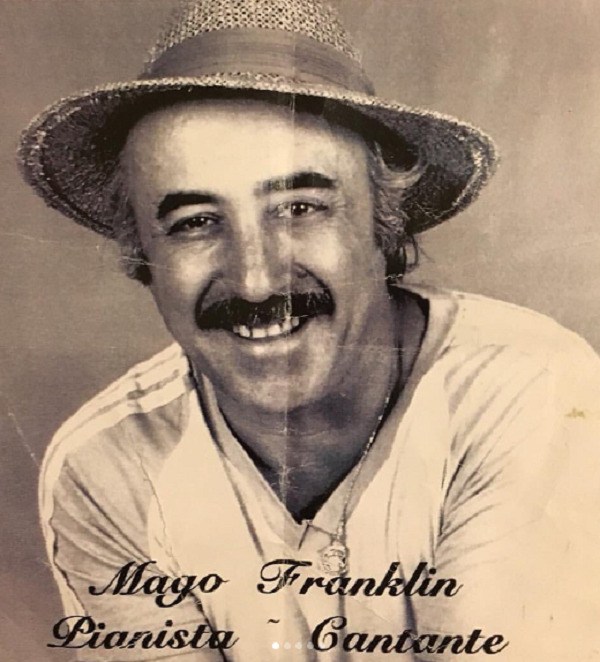
David was born in Lower Manhattan, New York, where there were many Latin families at the time. The neighborhood housed many Puerto Ricans and Dominicans. To this we must add that his father, Daniel “El Mago del Órgano” Franklin, was a musician and moved to that very place where Papote Jiménez, Ismael Miranda, Markolino, Freddy Lugo, Henry Fiol, Luis Ayala, and many others lived. Besides being a neighborhood full of artists, it was much cheaper living there, so he thought it was the ideal place for him.

It is worth noting that Daniel knew how to write music and read scores, but he had never played Latin music before in his life. He began to know it when several musicians he worked with asked for his help to read their scores, which led him to fall in love with Afro-Cuban music and develop an interest in salsa and merengue.

When David was born in 1979, Daniel had already been making music for about 15 years and had earned the nickname “The Organ Wizard” thanks to some band competitions held at a club in the Bronx. From a very young age, the boy watched bands rehearsing on the first floor of his house, so this salsa scene was natural for him. However, David had nothing to do with music until the death of his father in 2003.

David never had any interest in entering the art world, but the void left by Daniel’s death in his life drove him to study music, looking to connect with his father in some way. From there, he began taking piano and percussion classes, but he did not stop there. He also started to go out social dancing in the New York nightclubs and to know a bit more the nightlife of the city. On one occasion, a woman left him alone on the dance floor, and he was so ashamed in that moment that he decided to take classes and learn to dance.

David and the rest of Avenida B
The Avenida B Crew:
Juan Bowers – piano
Alvin Céspedes – bass
Ricky Rosa – congas/coro
Brian Pozo – bongos/coro/stage direction
Jhohan Hernandez – timbales
Demetrios Kehagias – trombone
Dan Lehner – trombone
David Frankel – lead vocals

That was when he realized that all the local bands played almost the same genres and songs, but there was no need for that because there was a world of possibilities in the Latin music he had discovered during his classes. There is a world beyond La Fania, and he learned that thanks to dance schools. All this thinking led him to create his own band with different music, to the old-school style he had always loved. 

His father had always told him salsa is for dancing, and if you are not playing dance music, you are doing it wrong.

Which teachers taught David?

After thanking us for the question, David then proceeded to explain that there was a school in New York called the Harbor Conservatory for the Performing Arts, located at 104th Street and Fifth Avenue in Manhattan. The heads of the education programmes there were Ramón Rodríguez and Louis Bauzó, who were excellent musicians and great people whom he met thanks to his father, who was a piano teacher at that institution. David used to accompany Daniel to the school and met both teachers through him.

Following his father’s death, David returned to that same conservatory to study singing with Ramón, while also studying percussion with Georgie Delgado and piano with Louis. In short, this institution was of vital importance for his career, and the many things he learned there were momentous both personally and professionally. 

As for the dance, he enrolled at the Baila Society school in New York through some friends, but later studied at others such as Santo Rico Dance and Dance On 2.

Jimmy and David
Jimmy Bosch and David Frankel

Avenida B Band

David began his career as a musician by playing boogaloo with a group called Spanglish Fly and a few other small bands. After everything he had studied and learned, already for the year 2011, the idea of creating his own group started percolating in his mind, so he posted an ad online looking for musicians and called some former classmates who might be interested in the proposal. That was how he managed to gather a decent number of people with whom he could finally put the Avenida B project together.

He chose salsa dura as his main genre because it is the kind of music that makes him want to dance, and given his background, this was very important to him.

He is also about to release an album in tribute to his father, which he has named “El Mago,” and it will feature some of his own songs; it is scheduled to be released in July 2026. 

David's father
Daniel ”El Mago del Órgano” Franklin, David’s father

Read also: Puerto Rican bandleader and musician Diana Sosa talks about her many projects in Nashville, Tennessee

  • « Go to Previous Page
  • Page 1
  • Interim pages omitted …
  • Page 20
  • Page 21
  • Page 22
  • Page 23
  • Page 24
  • Interim pages omitted …
  • Page 85
  • Go to Next Page »

International Salsa Magazine (ISM) is a monthly publication about Salsa activities around the world, that has been publishing since 2007. It is a world network of volunteers coordinated by ISM Magazine. We are working to strengthen all the events by working together.