• Skip to primary navigation
  • Skip to main content

International Salsa Magazine

  • HOME
  • Previous editions
    • 2026
      • ISM / April 2026
      • ISM / March 2026
      • ISM / February 2026
      • ISM / January 2026
    • 2025
      • ISM / December 2025
      • ISM / November 2025
      • ISM / October 2025
      • ISM / September 2025
      • ISM / August 2025
      • ISM / July 2025
      • ISM / June 2025
      • ISM / May2025
      • ISM / April 2025
      • ISM / March 2025
      • ISM / February 2025
      • ISM / January 2025
    • 2024
      • ISM / December 2024
      • ISM / November 2024
      • ISM / October 2024
      • ISM / September 2024
      • ISM / August 2024
      • ISM / July 2024
      • ISM / June 2024
      • ISM / May 2024
      • ISM / April 2024
      • ISM / March 2024
      • ISM / February 2024
      • ISM / January 2024
    • 2023
      • ISM / December 2023
      • ISM / November 2023
      • ISM / October 2023
      • ISM – September 2023
      • ISM – August 2023
      • ISM July 2023
      • ISM Edition June 2023
      • ISM – May 2023
      • ISM April 2023
      • ISM March 2023
      • ISM February 2023
      • ISM January 2023
    • 2022
      • ISM December 2022
      • ISM November 2022
      • ISM October 2022
      • ISM September 2022
      • ISM August 2022
      • ISM July 2022
      • ISM June 2022
      • ISM May 2022
      • ISM February 2022
      • ISM January 2022
    • 2021
      • ISM December 2021
      • ISM November 2021
      • ISM October – 2021
      • ISM September 2021
      • ISM August 2021
      • ISM July 2021
      • ISM May 2021
      • ISM April 2021
      • ISM June 2021
      • ISM March 2021
      • ISM February 2021
      • ISM January 2021
    • 2020
      • ISM December 2020
      • ISM November 2020
      • ISM October 2020
      • ISM September 2020
      • ISM August 2020
      • ISM July 2020
      • ISM June 2020
      • ISM May 2020
      • ISM April 2020
      • ISM March 2020
      • ISM February 2020
      • ISM January 2020
    • 2019
      • ISM December 2019
      • ISM November 2019
      • ISM October 2019
      • ISM Septembre 2019
      • ISM August 2019
      • ISM July 2019
      • ISM June 2019
  • Spanish
  • Download Salsa App
    • Android
    • Apple

Search Results for: Latin genres

Ritmo Caribe Promotions 24/7 Radio

East Coast – New York – New York

Ritmo Caribe Promotions 24/7 Radio. The New Digital Station in New York

Ritmo Caribe Promotions 24/7 Radio was launched last November in New York City and it’s an affiliation of Ritmo Caribe Promotions, a company dedicated to promoting artists of the tropical genre and Latin music in general.

In this digital station, you can listen to the themes of legendary singers and the Salsa´s New Blood 24 hours of each day, 100% guaranteed!

The musical genres that you can enjoy on http://www.ritmocaribepromotionsradio.com  range from Salsa music through Afro-Cuban rhythms to Latin and Brazilian Jazz, among many others.

Ritmo Caribe Promotions 24/7 Radio

Ritmo Caribe Promotions 24/7 Radio also includes live radio broadcasts from some of the best stations in the area, as well as the radio program “El Toque Latino” (The Latin Toca), hosted by Jimmy Castro.

Likewise and as additional information, we tell you that if you are an artist of the Tropical or Latin recording and you would like to rotate your music in this digital station, you can send it in mp3 format, including: cover image and details of the track or album to the following email: [email protected] or you can contact them through the telephone number: 845-564-5703.

Really, in Ritmo Caribe Promotions 24/7 you will have an Incredible Sensory Sensation!


For more information, please visit:

http://ritmocaribe.wix.com/ritmocaribe


Or Follow them in all their Social Channels:

  • Facebook: https://www.facebook.com/RitmoCaribePromotions
  • Instagram: https://www.instagram.com/ritmocaribe
  • Twitter: https://twitter.com/ritmocaribe42
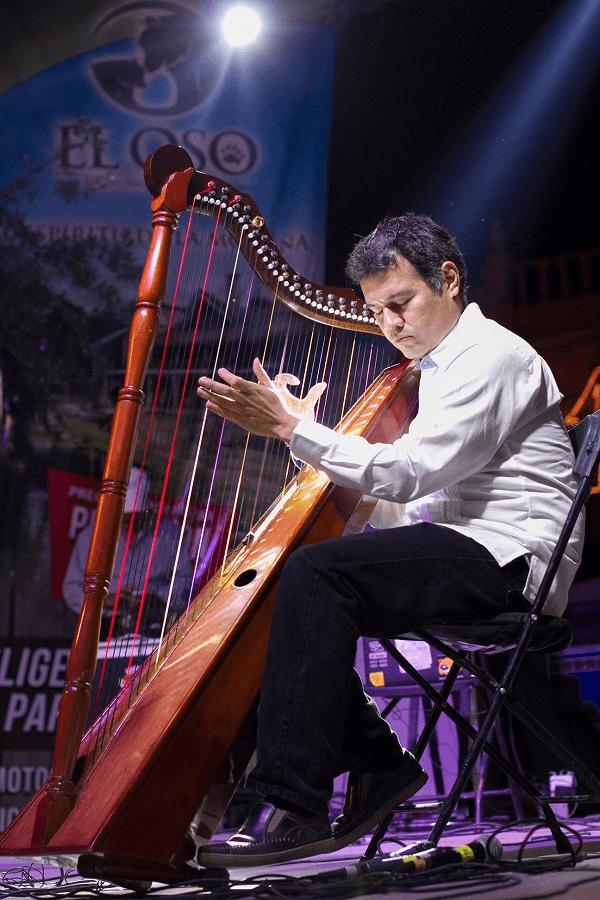
The road to success for Venezuelan harpist and cultural entrepreneur Ángel Tolosa

Thousands of Venezuelan artists have left the name of the South American nation high in recent years and today we will talk about one of the best harpists of his generation. It is great Angel Tolosa, with whom we had the joy of having a very pleasant exchange in which we touched on certain issues related to his fruitful musical career.   

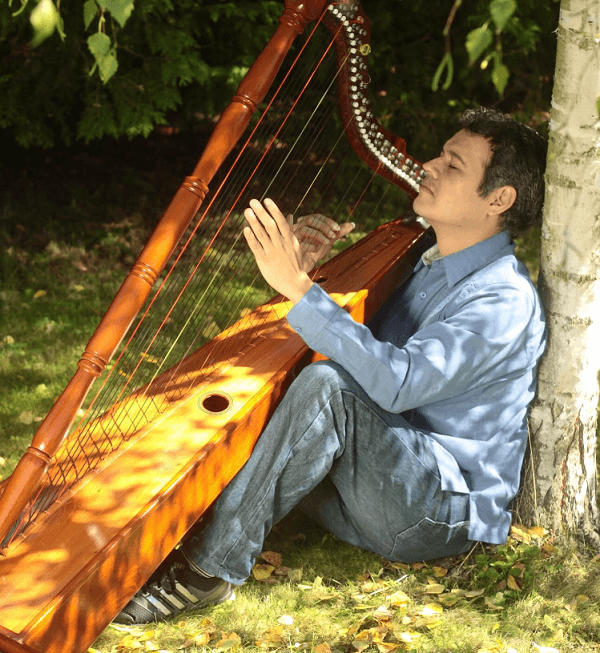
Ángel playing the harp
Venezuelan harpist Ángel Tolosa playing the harp live

Tolosa’s taste for Venezuelan popular and traditional music   

Something very important we have to mention about Angel is that he was born in the city of Caracas, Venezuela, so he managed to have a lot of contact with musical genres that were not only Venezuelan, but also from all over the world such as jazz, bossa nova, Cuban son and many others. This gave him a better understanding of music in general and a wider range of genres to choose from. 

There are many genres he likes, but without a doubt, Venezuelan music captivated him from the first time he heard it and, as he studied and analyzed it, he became much more aware of everything it had to offer at an artistic level. Ángel claims that ”no one can love what they don’t know”, so he has always been careful to learn as much as he could about Venezuelan music, so his is a knowledge-based love.   

Angel and the harp   

One advantage that Angel had is that he grew up in a profoundly musical environment, since music was always very important in his home. This led him to get started in folk singing when he was only four years old, which in turn, interested him in the piano and the Venezuelan cuatro. However, what definitely most caught his attention at so early an age until today was the harp, which according to Angel, was part of the life plan that God has for him.   

The musician even laughing says he believes that ”instruments are like their owners” since the harp interested him for being peculiar, versatile, elegant and demanding in terms of discipline to be played. These are characteristics that the artist perceives in himself when playing any piece, so he affirms that this is the instrument that most closely resembles his personality and style.   

Ángel posing with the harp
Ángel Tolosa posing for the camera with his main instrument, the harp

Ensamble A Contratiempo   

When Ángel and his brother José Luis noticed the talent they both had for music and the fabulous combination of what they made in this field, they decided they had to create something together and took the risk of creating Ensamble A Contratiempo, with which they sought to establish a platform on which they could share their musical interests with total freedom and without any restrictions. Angel defines it in short as ”a band with a universal sound, but with well-defined Venezuelan roots”.   

Ensamble A Contratiempo’s specialty is the so-called Afro-Venezuelan jazz and blends genres such as jazz, universal music, electronic elements and Afro-Venezuelan roots, resulting in a fresh and original urban sound that leaves no one who might listen to it indifferent.    

Something that characterizes this group is that it uses conventional instruments to play in unconventional ways. Ensamble A Contratiempo usually plays the harp, the cuatro, the violin, the bass and Afro-Venezuelan percussion.   

Both Ángel and his brother José Luis have enormous prestige and are seen as two of the most prolific art entrepreneurs of their generation and pioneers in the genres in which they perform, so this musical initiative was very well received in all sectors in which it has been heard.    

Together, the Tolosa brothers have even been able to design an essential vocabulary for learning to play the Latin harp and even contributed to the redesign of the Venezuelan harp as it was known before them. 

Within their extensive discography, we can mention some important titles such as ”Venezuelan Sounds”, ”Katuketi” and ”Ancien Roots”.   

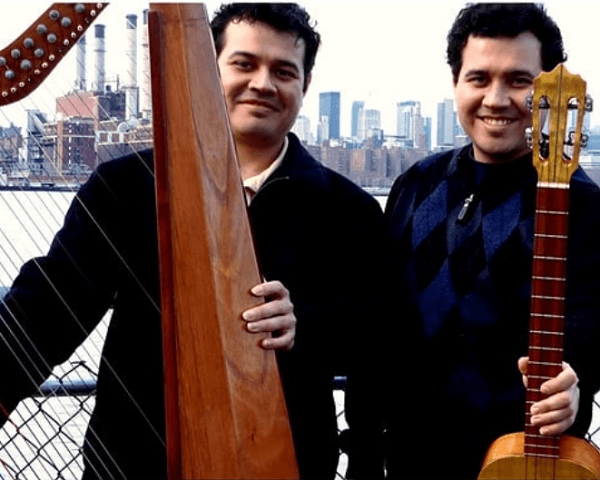
Ángel and José Luis
Ángel Tolosa next to his brother, guitarrist José Luis Tolosa

Teaching and Agrupación Oficial de Cultura de la Zona Educativa del Estado Táchira 

As if this were not enough, Angel has also worked as a teacher and an important member of the Agrupación Oficial de Cultura de la Zona Educativa del Estado Táchira. 

In this regard, Angel explained that he worked for the Venezuelan Education Ministry for more than four years, an experience that helped him to design the educational services he currently offers in his cultural company, which also creates projects for various cultural institutions, universities and art centers around the world.    

On the subject of music education, the artist also emphasized that ”this is essential for the cognitive development of each person, the benefits that music has on those who not only have contact with it, but also play it have been demonstrated. Music is so demanding that it drives to have a structured life ruled by profound ethical principles and spirituality”.   

Bachelor of arts and ethnomusicology 

Angel has said that his Bachelor of Arts has been extremely important for his career as a musician, since from his point of view, ”music is a profession in which all disciplines of the world converge”. Everything he learned during his degree has allowed him to build diverse musical and business concepts under a much more orderly system. This career has offered him the necessary structure for the projects he has started with music, which he appreciates.   

In addition to this, Angel has also studied ethnomusicology, which can be defined as an academic area that involves various approaches to the study of music, but with special emphasis on social, cultural, identity aspects and more of this kind. This way of studying and perceiving music combines details that come from folklore, psychology, cultural anthropology and musicology at their most conventional.    

On the above, the harpist pointed out that ”Venezuela has a very deep sense of identity” and that the identity of a country is like the face and fingerprint that allows us its distinguishing features and what makes its inhabitants part of a whole. Of course, the typical music of the place is an essential part of what we have said.   

Since Angel is a lover of everything about Venezuela, he takes as a starting point his own profession to understand his own country in a much broader and rational sense, which he thinks Venezuelan society should do as a whole. It is necessary to know the concept of nation and of what we are and I don’t see any other road but culture” said the artist on the subject.  

It is clear that for the entrepreneur, studying music and its genres from its purest roots is a way to pay homage to the culture which we come from, an example that we should all replicate, even those who are not dedicated to music. 

Read also: Founder of Yambu Productions and host of ”Alma Del Barrio” Guido Herrera-Yance 

Nicaraguan singer and guitarist Yelba Heaton in an exclusive interview

Yelba Heaton is a Nicaraguan-born bandleader, singer and guitarist whose strong musical heritage coming from her family has made her have close contact with music since before she could say her first words. 

The artist based in The Woodlands, Texas has been kind enough to answer a few questions for us in order to know more about her musical beginnings, the creation of her band, her projects outside of music, among other topics.    

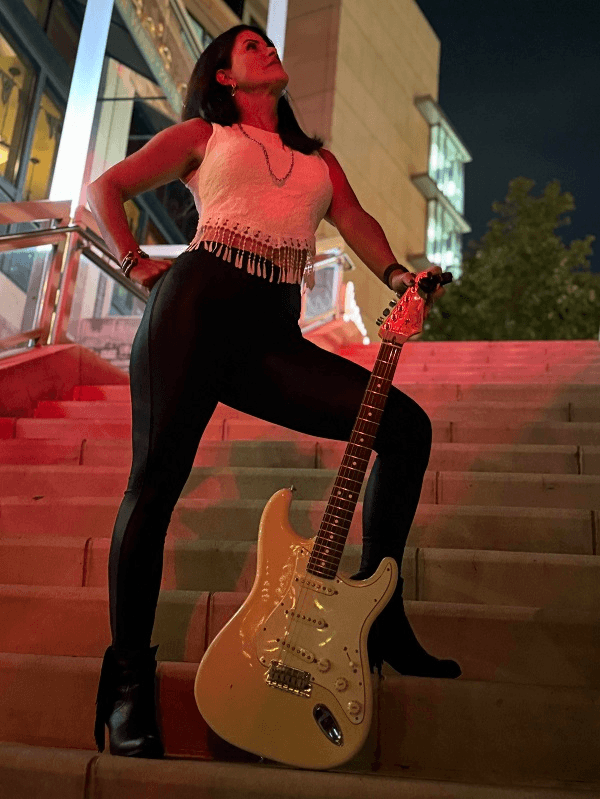
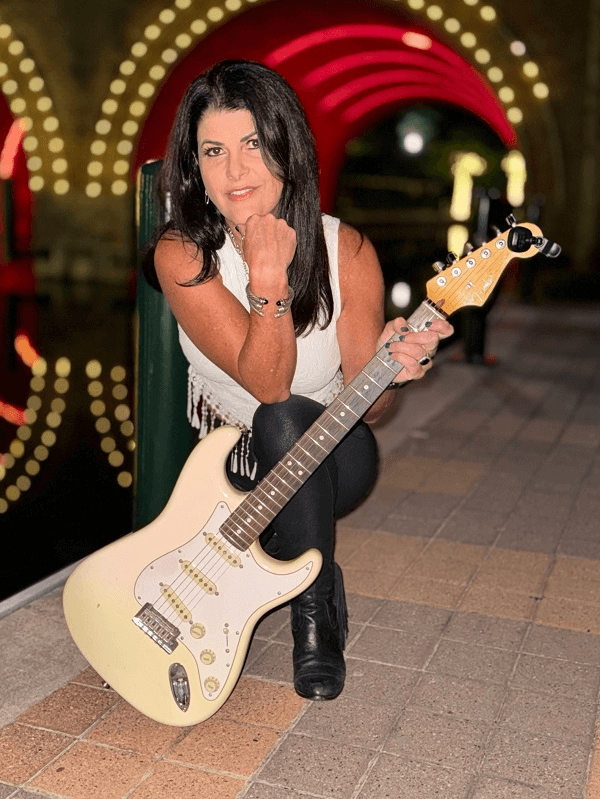
Yelba posing for pics
Singer and guitarist Yelba Heaton posing for pictures with her instrument

Yelba’s musical family   

For many generations, Yelba’s family had become very popular among her acquaintances for knowing how to carry a tune properly and having some guitarists and pianists in this melodic family tree.   

In her case, as she grew older, she and her siblings saw their father constantly serenading their mother and playing romantic boleros on his guitar, so this instrument was a day to day affair for the children. This is how the couple’s children began to experiment with music both together and separately, which little by little sparked Yelba’s interest in this branch of the arts.   

This interest reached such a point that both she and her sister Thelma began to compete in every talent show that was held at the school they attended, Yelba played the bandurria and Thelma played the guitar. Both of them were very good with each other on stage and their voices joined together in a very harmonious and pleasant way for the audience that heard them.   

When she turned nine, she participated in the tv show ”Junior Patherns”, which was very popular in her country at that time. Already at that time, she showed her great skill as an performer and the way she would follow later on.    

As she got older, she began to sing in the church she was attending at the time, but could not start her career formally until she became an adult after her divorce in the United States. This was a very stormy phase of life for Yelba, as she had recently separated from her husband and father of her five young children, leading her to suffer from depression and believe that her life was over. However, it was just beginning.    

At the same church, she met another guitarist, who when saw the bad stuff that she had gone through, decided to invite her to participate in an open mic night at a nightclub, which Yelba did not even know what it was at the time. Although she confesses to being extremely intimidated by the great artists with whom she shared that night, it was an experience that she is grateful to have had, as it gave her the opportunity to put aside her sadness for one night and experiment with music like she had never done before.   

After sitting down with her guitar and performing ”Besame mucho” to the audience that night, having heard those present applause and ask for more songs made her be truly happy and blissful. Immediately, she knew she wanted to experience that feeling again and again.   

music brought Yelba back to life
After her divorce, music brought Yelba back to life

Formal beginning of Yelba in music

That same night that Yelba performed at that venue, Jeremy Garcia, a flamenco guitarist accompanied her with his instrument and resulted in a beautiful combination of melodies that left all those present delighted, including the owner of the place, who proposed to both of them to make a paying gig for next Saturday, to which they replied ”of course”. That was how Yelba, Jeremy and bongo player Benny Rod (Yelba’s friend from church who joined later) started their paid musical careers as a trio.   

Over time, the three artists caught the attention of critically acclaimed guitarist Mark Towns, who invited Yelba to sing with him at an event in Clear Lake and also gave him some copies of their CDs. Towns was a key piece in the formal creation of the band and the trust that she was gaining to sing in public. 

Over the next few years, she was performing at larger and larger events and learning all she could about clave, song forms of various genres, stage presence and other important aspects of her nascent career.   

Creation of Yelba Variety’s Band and Latin Fire  

Although Yelba, Jeremy and Benny were already a trio, they still could not find a name that perfectly defined what they stood for, but that changed when one day they performed songs Yelba had learned to sing on her father’s knee when she was little. That night, everything went great and they received very positive feedback from the audience and the media who covered the concert.   

As a result of this performance, a reporter from the Houston Chronicle wrote an article about the band in which he was very complimentary about their show and described what he saw that day as ”Latin fire”. The first line of the article said that: ”Latino fire is what I heard last night…”. Yelba liked this opinion so much that she decided to baptize her band as ”Latin Fire”.   

Such was the impact this report had on her career that the Nicaraguan still keeps a copy of it and can be found on her website to this day. This was undoubtedly a very important event for her and her band mates.   

 Yelba and her husband
Yelba next to her husband and part of her band Roy Heaton

Yelba as a wedding planner and motivational speaker   

Just like Yelba performs very well in music, she has also found time to work as a wedding planner, a hobby for which she found out she is talented. The artist has assisted numerous marriages with minimum budget, but with her help, she was able to achieve great things with very little money. This is how she has made engaged couples ask for her help and she is always happy to collaborate with them.   

Another area in which she works on very well is motivational speaking. She found out she had a talent for this while doing her master’s degree in finance and learned to move in the corporate world, which gave her the necessary experience to address an audience properly. In addition, her career as an artist requires her to sing, play and dance in front of crowds, which also gives her the confidence she needs to speak to all kinds of audiences at a given time.   

Without a doubt, Yelba Heaton is a multifaceted Latina who leaves our culture on high and we are proud to have had her in this edition of International Salsa Magazine. 

Read also: Julio Vilchez and his orchestra conquer Miami 

Founder of Yambu Productions and host of ”Alma Del Barrio” Guido Herrera-Yance

Singers, dancers, musicians and artists in general are usually the first thing the public sees during any type of event, but very little is spoken about the companies, producers and promoters that are in charge of managing all the logistics behind these shows, so we wanted to talk to Guido Herrera-Yence, founder of Yambu Productions, which is an important music production company based in Los Angeles, so he could tell us a little about all these subjects.   

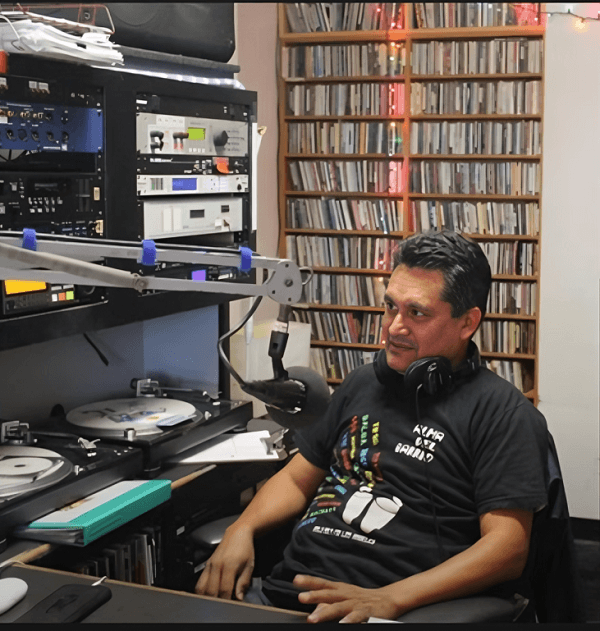
Guido working at KXLU 88.9 FM
”Alma Del Barrio” host Guido Herrera-Yance working at KXLU 88.9 FM

How Guido Herrera-Yance started in the world of music as a radio host 

Many years before Guido even thought about the idea of forming a company, he began to establish himself as a radio host on the popular public radio station KXLU 88.9 FM, specifically on the show ”Alma Del Barrio”, which is about to turn 51 years on the air in October. In Guido’s case, he has been hosting the show for more than 30 years, bringing the best Latin music and artistic news to all his listeners.   

The also producer confesses that he did not really like locution and that he was simply in the right place at the right time, resulting in the career he has built in this type of media. What it does say is that he was a frequent listener of several radio shows and a voracious music collector, which led him to meet certain personalities who saw potential in him to belong to ”Alma Del Barrio”. When a show was opened, he was the leading candidate for the job and accepted immediately. 

Guido did not have any kind of experience in radio, but his employers trained him and taught him everything he needed to know to carry out his tasks properly. 30 years later, Guido is still one of the main hosts of the show and a reference in terms of Latin music radio.    

From radio to event production   

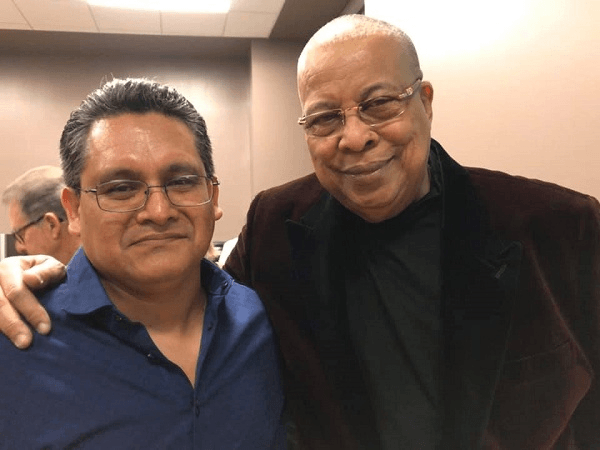
In 1995, one year after having joined ”Alma Del Barrio”, a friend told him that Chucho Valdés was going to the United States after many years and proposed him to make a show together with the artist as the main attraction. When Guido accepted, they began to look for artists to accompany the Cuban that night and some of them were Alex Acuña, Justo Almario, Luis Conte, among others.   

The results were so good that Guido was left with the desire to keep experimenting with this field of the industry, so he continued to produce events of all kinds on a small and large scale since that year. 

As the years went on, he realized that he would need a bigger and more elaborate structure if he wanted to continue to work on this, so the idea of founding a music production company began to take shape in his mind.    

Guido and Chucho Valdés
Guido Herrera-Yance next to Cuban bandleader and pianist Chucho Valdés

How Guido created Yambu Productions   

On the creation of Yambu Productions, something that Guido highlighted is that, in the United States, ”everything must be done very formally”. In light of the obligation to declare the income from his musical activities, Guido saw the need to create a company that would facilitate the procedures related to taxes and issues of this sort in order to cover his back.   

Regarding the name ”yambu”, the businessman was inspired by a song by the Cuban popular music singer Carlos Embale, who was one of his favorite artists, so he wanted to honor him in that way. Taking this detail into account, it is not surprising that Cuban music and its exponents play a fundamental role in the events and groups that Yambu Productions seeks to promote, but it is not limited to nationalities or genres.   

The company has set up events for Los Papines, El Conjunto Folklórico Nacional de Cuba, Chucho Valdés, Los Van Van, El Gran Combo de Puerto Rico, Tito Nieves, José Alberto ”El Canario” and the list goes on. Guido is very proud that Yambu Productions was the one that produced the only concert given by Los Van Van Van and El Gran Combo in the United States, which was in the year 2029. He says he is a fan of both groups, so this was a dream come true for him.   

Upcoming Yambu Productions Events    

This year, Yambu Productions was about to hold the Cuban American Music Festival on 2 June this year, but it has been suspended due to multiple factors, but the main one is that Guido feels that many things have changed in the entertainment industry after the pandemic such as demographics and the public tastes. This has caused the producer to rethink many things, as he is not quite clear  what will be the path to follow by the company, so he prefers to wait. 

In addition to the above, Guido is focused on his own restaurant that opened just six months ago and needs to dedicate all his time and effort to this new project, so it is very possible that the previously festival will be back better than ever for the year 2025, when he will be clearer about what he wants to do with this event.   

However, he said he does not want to be away from live music, to which he attaches a great deal of importance in his work, so with the support of one of the most important jazz clubs in California, Catalina Jazz Club, he rolled up his sleeves and organized the Salsa Meets Jazz Concert Series for 26 April this year (at the time of publishing this article, the concert must have taken place). In this way, Guido wants to recreate that golden era of Latin jazz and salsa in New York, but in his own way. 

The Salsa Meets Jazz Concert Series is expected to pay tribute to a different artist who has contributed to these genres each edition and this year it was the torn for Tito Puente. In addition, Catalina Jazz Club proposed Guido to hold events of this type several times a year, so tribute concerts to Ray Barreto and Andy Gonzalez are also scheduled before 2024 is up. He maintained a close friendship with both musicians, especially with Gonzalez.  

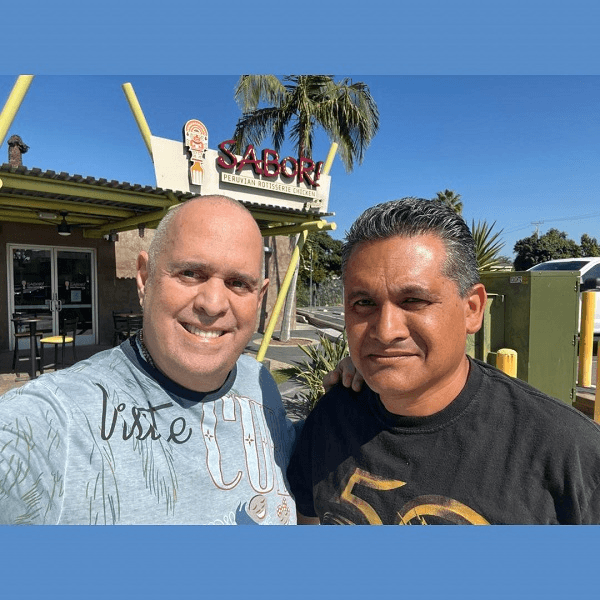
Guido and Alfredo de La Fe
Cuban violinist Alfredo de La Fé next to Guido Harrera-Yance in front of Sabor! Peruvian Rotisserie Chicken, a venue in which Alfredo would perform some hours later

How are the logistics behind a Yambu Productions event? 

When Guido plans to hold an event, the first thing he should do is to find a venue that complies with the requirements for the type of show he plans, analyze the costs involved, find the best talent for the show, hire sound engineers, recruit the people who will be in charge of the logistics part, among other things. It is an arduous work of at least six months before the event takes place.   

An example of the above is the Cuban American Music Festival, which has always been held in May, so he should start organizing and planning for it since November or December of the previous year. This in order to have every detail ready on the day of the festival and to avoid any unforeseen problems that could put those involved down.  

On this subject, Guido said he feels lucky to be able to have so many friends in the world of music, to stay on ”Alma Del Barrio” for so many years and to know people like Nelson González, Johnny ”Dandy” Rodríguez, Genaro Rivera and many others who are always ready to come to Yambu Productions events without even asking about payment, since they know that Guido and his company are very responsible about these issues.  

How talent is selected for events 

”Everything falls on me. I believe that I have the capacity, knowledge and experience to know what the public wants. It is for the very reason that we will not be making the Cuban American Music Festival this year, since the pandemic changed everything in the industry and I have to accept that what sold yesterday is not the same as what sells today” said Guido when asked how he chooses the talent he wants for his shows. He also added that ”I’m still debating with myself on which way to go with the company after quarantine”. 

What Guido will never do is let go of live music because, in his words, ”it feeds his spirit”. As long as he is dedicated to music production and Yambu Productions is still operating, live events will always have a highly important place in the activities carried out by the company. 

Guido and Poncho Sánchez
Guido Herrera-Yance next to conguero, Latin jazz band leader, and salsa singer Poncho Sánchez

Read also: What The Namm Show is and how it works 

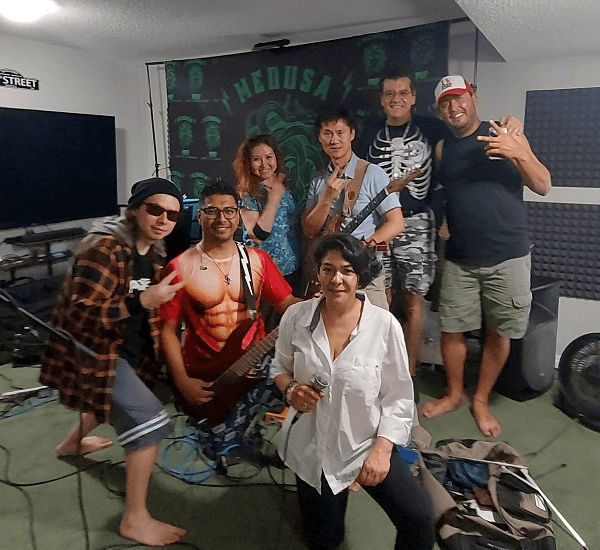
Medusa Pop Band delights its fans with a pretty interesting mix of rhythms

Medusa Pop Band is a group based in the city of Calgary, Canada, that is mainly focused on the Spanish language and Latin rhythms of the 80s and 90s, so it has some very particular characteristics that distinguish it from other bands that can be found in the aforementioned country.  

As we found everything about the Medusa Pop Band very interesting, we contacted its manager to talk to some of its members and know a little more about the band. This is how we have managed to have a wonderful conversation with Lorena Galindo, Eduardo Infante and Willy García, who talked a bit about their beginnings, styles and future projects.   

Medusa’s members
Medusa Pop Band from right to left: bass player Eduardo Infante, drummer Cristian Gonzalez, keyboardist Lee Que Long, lead singer Lorena Galindo, guitarist Kalvin Ma, and percussionist Willy Garcia

Musical backgrounds of the current members of Medusa Pop Band 

As is the case with most bands like this, its members have already been part of other groups until they met and came together to do completely new things. This is how Lorena, vocalist and founding member of the group, who has been working with versatile music for more than 40 years, explains that she had the idea to create this project just two years ago. She even worked with the famous actress and singer Lucero and belongs to the musicians’ union in Mexico City.   

In Eduardo’s case, he has more than 25 years of experience in rock in his home country Mexico, until he decided to move to Canada to try his luck. That was when he met Lorena and was invited to join Medusa Pop Band as the lead bass player.   

On the other hand, Willy has five years of experience in music, so he would be the one who has the least time in this world, which does not diminish the importance of the role he plays. He was in a group called De Cajón, but when receiving the proposal of Medusa Pop Band, he decided that this was what he was looking for and accepted to be the percussionist and be in charge of ”embellishing” the songs, as he himself describes it. 

How Medusa Pop Band was created 

Eduardo heavily emphasizes that the one who started the whole project and put together the team is Lorena, and subsequently, the rest of the team joined his idea. In his case, he saw an advertisement on the internet saying that a group was looking for new members and he was postulated to be part of Medusa. He mentions that what attracted him to this proposal was the style of pop handled by the group and the possibility of playing the bass, which he loved being able to do since he had always played the guitar and it represented a challenge for him. 

Willy commented that he lived very near to Lorena’s home and they already had a friendship for a long time. When he found out that Lorena was also a musician, he was invited to rehearse with the rest of the band and loved the kind of music he listened to and professionalism of the musicians there, so he stayed with them.  

With regard to the name of the band, Lorena explains that she had always wanted to do something with the famous figure from Greek mythology Medusa, in addition there was a nightclub called 

Medusa in Mexico City the singer liked a lot, so it all added up to being the name chosen for her band. In the end, the word ‘‘pop” was added because of the main genre on which the group bases its discography. 

Medusa Pop Band performing
Medusa Pop Band performing live in Calgary, Canada

Why choose Canada to establish Medusa Pop Band? 

‘‘We have chosen Canada to establish the band basically because we all live here and it was in this country that we all met. There was no way for Medusa Pop Band to be born in any other country but this one” said Lorena about the reasons why to establish the band in this country.  

On this, Willy added that the diversity of nationalities in the group has been a great advantage for them in Calgary, as that has allowed each member to bring their own essence to the music they are doing. ‘‘It’s very important for us to have more diversity in the rhythms we choose to make more people happy and please a wider audience. I think Canada is an excellent country for that” said the percussionist. 

Receptivity of the Canadian public towards Medusa Pop Band’s Spanish-language music  

Eduardo has said that the reception from the Canadian public towards them has been warm and has come from less to more. In fact, he commented that the amount of assistants to their shows has been growing exponentially and every day the band are gaining more and more fans at the local level.  

”Currently, we only have music in Spanish because we are focused on the Latin American and Spanish-speaking community, but we also have a musical amalgam of different countries and cultures, which makes Medusa Pop Band even more magical. We are always looking to please all types of audiences” Eduardo continued explaining. 

Lorena also added that she and her bandmates have found that many Canadians love Spanish, to the point that they have learned that many fans have started taking Spanish classes to understand their lyrics, which makes them extremely happy and motivates them to keep creating more and better music.   


Medusa Pop Band rehearsing
Medusa Pop Band rehearsing for a show

Challenges Medusa Pop Band has had to face 

Eduardo took the floor again to affirm that one of the biggest challenges facing the band has been finding Spanish-speaking musicians because there are not many in Calgary and the vast majority of them already have their own projects and bands, so getting the necessary elements for the group has not been an easy task. 

To these words, Willy adds that the hardest thing to find are singers who speak Spanish, so he is glad Lorena handles that part. Faced with these challenges, he ended up by saying that the support of their families has been fundamental in order to move forward, and like any other band, its members spend many hours rehearsing each day of the week. That is why the understanding of their partners and children has made it much easier for them to follow this difficult path to the success they have achieved. 

Nationalities in Medusa Pop Band 

One of the most interesting things about Medusa Pop Band is that its members come from very diverse countries like Mexico, Peru, Colombia, Vietnam and China. This makes the group have elements with a variety of musical cultures so diverse that it could complicate the picture when agreeing to work on their music. 

What Willy has to say about this is that the Latin musicians have a certain ”feeling” to play the music, while the Asians have a completely different one, so guitarist Kalvin Ma and keyboardist Lee Que Long have gone the extra mile to engage with the rest of the team and play their instruments as is required. 

In this regard, Lorena stressed that both Calvin and Lee have done a great job all these years and their contribution to the group has been immeasurable, since they also propose techniques and add different sounds to those already known. 

What has made things difficult for the aforementioned musicians is the language, as they do not speak Spanish and the rest of the band can only communicate with them in English, but that is no impediment to fulfill their role to the fullest. 

Lorena from Medusa Pop Band
Lorena Galindo is the founder and lead singer of Medusa Pop Band

What makes them call themselves an eighties and nineties band? 

Once again, Lorena took the floor to explain that the group describes itself as an eighties and nineties band because many fans of their work who are contemporaries with them, but that does not stop them from playing music of all kinds and all eras, either from the 80s or this same year. What they seek is to make different arrangements so that their covers sound different than their original versions. 

It can be said that the age group that most often follows them goes from 18 to 50 years old, giving Medusa Pop Band a huge range of action. Additionally, the word ”pop” is too general and gives them the possibility to choose from a large range of genres and rhythms that captivate an ever wider audience. 

Read also: Venezuelan businesswoman Joanna Torres is an example to follow 

  • « Go to Previous Page
  • Page 1
  • Interim pages omitted …
  • Page 30
  • Page 31
  • Page 32
  • Page 33
  • Page 34
  • Interim pages omitted …
  • Page 62
  • Go to Next Page »

International Salsa Magazine (ISM) is a monthly publication about Salsa activities around the world, that has been publishing since 2007. It is a world network of volunteers coordinated by ISM Magazine. We are working to strengthen all the events by working together.