• Skip to primary navigation
  • Skip to main content

International Salsa Magazine

  • HOME
  • Previous editions
    • 2026
      • ISM / March 2026
      • ISM / February 2026
      • ISM / January 2026
    • 2025
      • ISM / December 2025
      • ISM / November 2025
      • ISM / October 2025
      • ISM / September 2025
      • ISM / August 2025
      • ISM / July 2025
      • ISM / June 2025
      • ISM / May2025
      • ISM / April 2025
      • ISM / March 2025
      • ISM / February 2025
      • ISM / January 2025
    • 2024
      • ISM / December 2024
      • ISM / November 2024
      • ISM / October 2024
      • ISM / September 2024
      • ISM / August 2024
      • ISM / July 2024
      • ISM / June 2024
      • ISM / May 2024
      • ISM / April 2024
      • ISM / March 2024
      • ISM / February 2024
      • ISM / January 2024
    • 2023
      • ISM / December 2023
      • ISM / November 2023
      • ISM / October 2023
      • ISM – September 2023
      • ISM – August 2023
      • ISM July 2023
      • ISM Edition June 2023
      • ISM – May 2023
      • ISM April 2023
      • ISM March 2023
      • ISM February 2023
      • ISM January 2023
    • 2022
      • ISM December 2022
      • ISM November 2022
      • ISM October 2022
      • ISM September 2022
      • ISM August 2022
      • ISM July 2022
      • ISM June 2022
      • ISM May 2022
      • ISM February 2022
      • ISM January 2022
    • 2021
      • ISM December 2021
      • ISM November 2021
      • ISM October – 2021
      • ISM September 2021
      • ISM August 2021
      • ISM July 2021
      • ISM May 2021
      • ISM April 2021
      • ISM June 2021
      • ISM March 2021
      • ISM February 2021
      • ISM January 2021
    • 2020
      • ISM December 2020
      • ISM November 2020
      • ISM October 2020
      • ISM September 2020
      • ISM August 2020
      • ISM July 2020
      • ISM June 2020
      • ISM May 2020
      • ISM April 2020
      • ISM March 2020
      • ISM February 2020
      • ISM January 2020
    • 2019
      • ISM December 2019
      • ISM November 2019
      • ISM October 2019
      • ISM Septembre 2019
      • ISM August 2019
      • ISM July 2019
      • ISM June 2019
  • Download Salsa App
    • Android
    • Apple
  • Spanish

Search Results for: Legacy of Salsa

The unfortunate closure of Salsa Power and its great legacy

What Salsa Power did

Logotype of Salsa Power
Logo of the Salsa Power web page

There have been many groups and personalities that, despite the low level of resources they had, have made efforts to promote Latin music, especially salsa. The case to be treated today is that of a website with a great deal of contributors and much fame that came to be regarded as one of the most important internet sites for the promotion of our culture in the field of music. We talk about Salsa Power and its titanic work in favor of our cause. 

The important page dedicated to the promotion of salsa and founded in 1999 had approximately 300 local correspondents in more than 50 countries around the world, indicating the immense number of individuals who wanted to get involved in the promotion of Latin culture to rise to unexpected levels. Its co-founders, Jacira Castro and Julian Mejia were the ones who started this great initiative, which they tried to maintain through an enormous effort. However, this was not enough to avoid its definitive closure in 2021. 

Jacira Castro, founder and director of Salsa Power

Closure of Salsa Power and what has produced it 

In a statement that can still be read on its official link https://www.salsapower.com/ both in Spanish and English, Castro explains the unfortunate reasons for making the difficult decision to close the web portal. At the beginning of the short text, the also salsa instructor and web designer explains how Salsa Power started and what made it become one of the biggest salsa initiatives that could be found around the internet, whose heyday may be reflected in the large number of contributors they had in some 61 countries. 

A very important detail that the dance teacher relates in her text is that she also worked as a volunteer and never received money or advertising of any kind in exchange for doing what she was so passionate about. She highlights that she always paid all her hosting and development costs without receiving collaboration of any kind.   

She goes on to explain that time goes by and, after 22 years of the founding of Salsa Power, many correspondents made their lives, left the cities from which they reported its activities and devoted to things that had nothing to do with salsa. It was reported that this was the primary reason why they made such a drastic decision. 

Jacira next to Johnny Pacheco
Jacira Castro and Johnny Pacheco

However, Castro concludes her statement with a message of hope in which she claims she will never cease to dance, showing that the aforementioned genre remains her greatest passion and nothing and nobody will change her mind. She finished saying that she can still be found on the dance floor in Lisbon, Portugal,  where she now resides permanently. 

Even today, there are many interviews collected by various other online media that can still be read, reviews and opinion pieces that reflect the extensive knowledge and enthusiasm that the writers had for their work. There is an endless amount of material that bears evidence to many years of hard work and dedication that we know all of this will not be in vain. 

From International Salsa Magazine, we send cheers and our best wishes to each and every single one of the correspondents and workers who did their best to make Salsa Power an obligatory reference for anyone who wanted to know the latest news of Latin music. 
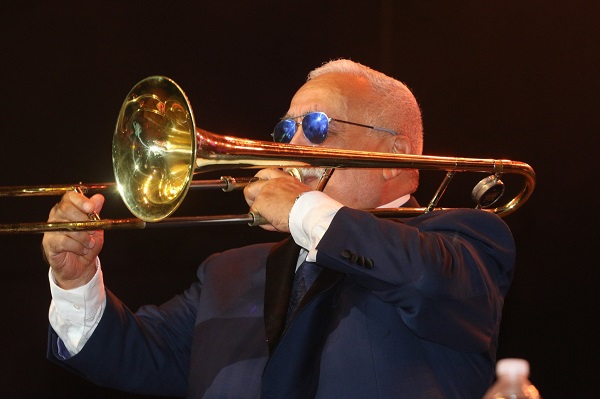
Willie Colón The “Architect of Salsa” Enters Immortality

February 21, 2026, will be etched into the history of Latin music as the day the “street trombone” fell silent to become an eternal echo.

A Sorrowful Farewell: February 2026

After several days of uncertainty and reports regarding his delicate health, the passing of William Anthony Colón Román was confirmed in New York City at the age of 75.

Willie Colón, the Architect of Salsa, Passes into Immortality

Producer, trombonist, visionary. He was the architect of a sound that broke the mold and redefined salsa from New York for the entire world.

With his aggressive trombone, his innovative musical concepts, and his leadership within the historic Fania All-Stars, he marked an era that can never be repeated.

The musician, who had already shown signs of physical frailty following his retirement from the stage in 2023, suffered severe respiratory complications that kept him hospitalized during his final days.

Iconic figures like Rubén Blades and the entire Fania family have expressed their grief, noting that we haven’t just lost a musician, but the “Malo” (The Bad Boy) who revolutionized the visual and sonic identity of Latinos in New York.

A Legacy of Rebellion and Sophistication

Unlike other bandleaders, Willie Colón didn’t just make music; he told cinematic stories. From his early days with Héctor Lavoe to his era of social consciousness with Rubén Blades, Colón transformed salsa into a vehicle for urban narrative.

With his aggressive trombone playing, innovative musical concept, and leadership within the historic Fania All-Stars
  • Innovation: He was responsible for putting the trombone at center stage, creating that “heavy,” raw sound that defined the Bronx.
  • Identity: Through his iconic album covers (emulating FBI “Wanted” posters), he constructed the mystique of the Latin anti-hero.

His Eternal Anthems

Willie Colón’s catalog is the backbone of every party and social reflection in Latin America. Among his most remembered tracks, more relevant today than ever, are:

Song Significance
El Gran Varón A milestone in social lyrics regarding identity and redemption.
Idilio The most romantic and melodic facet of his mature era.
Pedro Navaja The ultimate expression of narrative salsa produced alongside Blades.
Gitana A classic of sentiment and rhythmic fusion.

Beyond the Trombone: Activism and Service

In his later years, Willie Colón’s life was also defined by his work offstage. He served as an activist, a community leader in New York, and held positions in organizations advocating for Hispanic rights. His life was a testament to the fact that art and social commitment can walk hand-in-hand.

Producer, trombonist, visionary. Architect of a sound that broke molds and redefined salsa from New York to the world.

Producer, trombonist, visionary. Architect of a sound that broke molds and redefined salsa from New York to the world.

The Centennial on the Horizon

Though the Maestro has physically departed in 2026, his office and family have made it clear that his music will live on. Releases of unedited material and tribute concerts are expected as we pave the road toward the centennial of his birth in 2050.

“Time passes, and I am left unable to speak to you”  Willie Colón.

His music will continue to speak for him on every corner where a trombone sounds and in every heart that feels the pulse of urban salsa.

His talent was more than rhythm: it was identity, the barrio, resistance, and living history. Today, we don’t just say goodbye to a musician; we say goodbye to a pillar, a North Star, and an entire chapter of our Latin culture.

Anecdote:

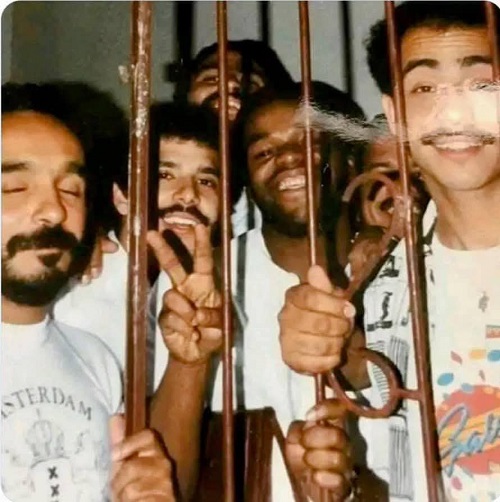
Willie Colón had a notorious incident in Medellín in 1985 when he refused to perform at the Iván de Bedout Coliseum because the promoters of “Rumba Producciones” failed to pay the agreed amount. Police arrested him along with 13 of his musicians, and they were detained for two days at the Belén neighborhood police station.

The audience, who had waited for hours, grew unruly, leading to riots that resulted in six injuries and significant property damage. This episode inspired the song “Especial No. 5,” which narrates Colón’s experience inside cell number five of that station.

Willie Colón had an incident in Medellín in 1985

Special Contribution by Julio Cesar Galindo Alarcón (Lima, Peru)

A posthumous tribute to the great Willie Colón (1950-2026): The greatest disciple of Mon Rivera by his own admission and today a legend of our passionate salsa.

Willie Colón: From “Classic Urban Salsa” to “Symphonic Salsa”

His musical production clarifies and proves that “salsa” does not only originate from Cuban and Puerto Rican rhythms, but also from American, Brazilian, and other Latin influences.

When Willie produced and recorded his 1977 instrumental-only album, El Baquiné de Angelitos Negros, he expanded the orchestral lineup to include violins, saxophone, flute, cello, and trumpet. While the work had little commercial success and went largely unnoticed during his triumphant career, it served as more than just a platform for his “salsa” fusions with Jazz, Funk, Soul, and R&B. It was the starting point for producing grander orchestral arrangements with a larger number of musicians, thus becoming the precursor to what is now known as “Symphonic Salsa.”

Four years after this beginning, in 1981, this “Symphonic Salsa” reached its peak when Willie released his second solo album, Fantasmas dedicated to and motivated by the loss of his younger sister, Cindy. The album included a track he composed, with musical arrangements by Luis Cruz, titled “Toma Mis Manos” (Take My Hands).

This piece, dealing with the somber theme of death, is considered by this author (due to the quality of the composition and the fabulous “Symphonic” orchestration) to be an authentic and grand masterpiece of “Classic Salsa.” It blends Funk, Soul, R&B, and Bossa Nova with Willie’s excellent vocals, serving as a spectacular prelude to that other legendary, yet often overlooked, symphonic track recorded in 1991 by the “Canary of Carolina,” the great Lalo Rodríguez: “El niño, el hombre, el soñador y el loco.”

To conclude, with the immense pain that his departure brings, I accompany this tribute with the aforementioned song: “Toma Mis Manos,” an unforgettable composition by the recent legend of our “salsa” the great Willie Colón, famously known as “The Bad Boy of the Bronx.”

The legendary musician and his wife Julia Colón were married for decades and share three children (

The legendary musician and his wife Julia Colón were married for decades and share three children

Also Read: The legacy of Leopoldo Pineda, the ambassador of the trombone in La Maquinaria Fania All Stars

Tito Rodríguez The Unforgettable “Gentleman of Salsa”

A journey through the life and legacy of Pablo Rodríguez Lozada, the voice that defined an era between mambo and bolero.

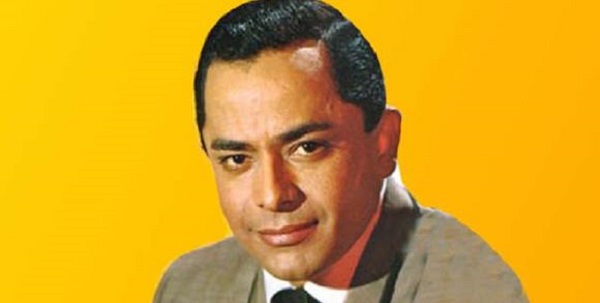
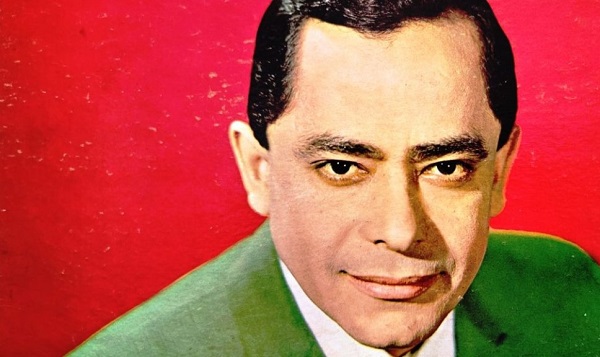
Pablo Rodríguez Lozada, known worldwide as Tito Rodríguez, was born on January 4, 1923, in Santurce, Puerto Rico. From early childhood, young Tito displayed a natural affinity for Caribbean rhythms, organizing the ensemble Sexteto Nacional alongside his lifelong friend, Mariano Artau.

Pablo Rodríguez Lozada, conocido mundialmente como Tito Rodríguez

The Early Steps of a Prodigy

At the age of 13, his professional career began to take shape when he joined Conjunto Típico Ladí (also known as Conjunto de Industrias Nativas), led by Ladislao Martínez. Shortly after, he joined the Cuarteto Mayarí under the direction of Plácido Acevedo, where he played maracas and sang second vocals. Although this stint lasted only four months and left no studio recordings, it was fundamental to his musical development.

In 1939, at just 16 years old, Tito emigrated to New York City with hopes of carving out his own musical path. His first jobs in the Big Apple included collaborations with his brother Johnny Rodríguez’s orchestra and recordings with Cuarteto Marcano.

After passing through prestigious groups like Cuarteto Caney and the orchestras of Enric Madriguera and Xavier Cugat, he had to pause his rising career in 1945 to serve in the U.S. Army.

El legado de Tito Rodríguez es analizado este domingo en el Viejo San Juan. (Foto UA Latino)

The Rise of the “Mambo Devil”

Upon his discharge, Cuban pianist José Curbelo recruited him for his band. It was at the China Doll nightclub where Tito met Japanese-American chorus girl Takeku Kunimatsu (Tobi Kei), who would become his wife and lifelong partner.

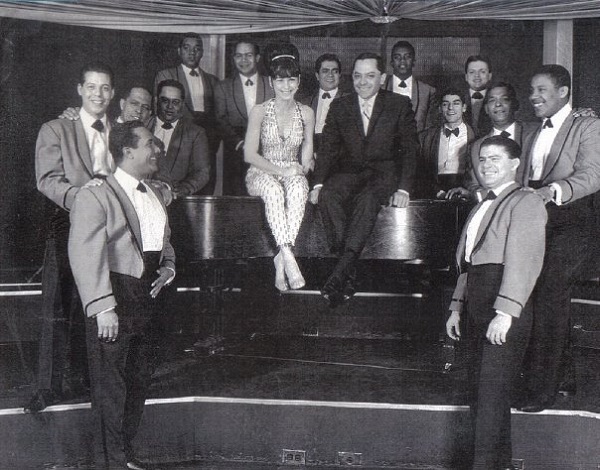
In 1948, Tito founded his own group: the Mambo Devils. During the height of the mambo craze, Rodríguez entered into a legendary musical rivalry with Tito Puente and Machito’s orchestra.

Under the Tico Records label, he renamed his group Los Lobos del Mambo. Ever conscious of the importance of formal training, he enrolled in the Juilliard School of Music, where he studied percussion, vibraphone, and xylophone.

Un recorrido por la vida y el legado de Pablo Rodríguez Lozada, la voz que definió una era entre el mambo y el bolero

Reinvention: From Mambo to Bolero

In 1953, he signed with RCA Victor, formally establishing the name Tito Rodríguez and his Orchestra. Years later, in 1960, he achieved massive mainstream success with United Artists and the album Live at the Palladium.

However, in 1963, an artistic union dispute prevented him from performing with his usual musicians. Refusing to back down, he took on the challenge of radically shifting his style: he traded the frenzy of mambo for the intimacy of boleros accompanied by a string orchestra. The result was the album From Tito Rodríguez with Love, a commercial phenomenon that established him as an unparalleled romantic crooner.

Return to Puerto Rico and the Beginning of the End

After dissolving his orchestra in 1966 due to contractual issues, he returned to Puerto Rico to star in his own television program. However, nostalgia and his enduring passion brought him back to New York for the record Estoy como nunca.

Tito Rodriguez era excelente tanto en guarachas como en boleros. Esto lo convirtió en uno de los artistas más versátiles de la época.

It was in 1967 when the first symptoms of leukemia appeared. Despite the diagnosis, Tito continued to work. In 1971, he founded his own label, TR Records, releasing the iconic album Inolvidable (Unforgettable).

A Final Farewell on Stage

In 1972, he celebrated 25 years in the industry with a show at the El Tumi club in Lima, Peru, alongside Lucho Macedo’s orchestra. This live recording would prove to be a premonition of his end.

Ignoring medical advice, he gave his final performance at Madison Square Garden on February 2, 1973, alongside Machito’s orchestra. During the show, his health failed, and he had to be hospitalized. Finally, on February 28, 1973, Tito Rodríguez passed away in New York in the arms of his wife.

Per the singer’s express wish, his remains were returned to Puerto Rico. At his funeral, legendary figures of the music world paid their respects, including his old rival, Tito Puente. Today, his ashes rest alongside those of his wife, while his voice continues to resonate as one of the most elegant and versatile pillars in the history of Latin music.

Also Read: Tito Rodríguez, Jr. “The Palladium legacy lives on”

10th Annual Salsa Festival in Cuba: A Milestone Between Stage Lights and the Shadow of Crisis

The event founded by Maykel Blanco celebrates a decade of history amidst blackouts and inflation that make access difficult for the local public.

Havana. What began in 2016 as a personal dream for musician Maykel Blanco has evolved into Cuba’s most significant cultural tourism event for the genre.

As the Salsa Festival reaches its 10th edition, it has succeeded in uniting top-tier orchestras under a single project, fostering an organic exchange between local dancers and international visitors who travel specifically for the occasion.

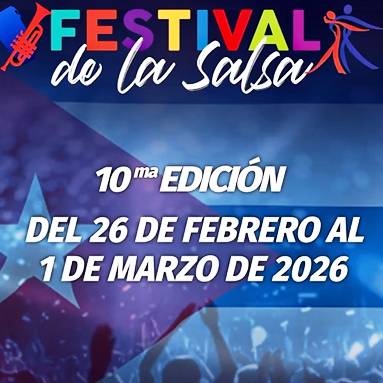
Festival de la Salsa 2026

However, the announcement of this year’s celebration scheduled for February 26 to March 1 at Club 500 comes at a time of extreme fragility for the country.

While the government promotes the festival as a showcase of “credibility and growth,” the Cuban population is grappling with a profound economic crisis characterized by daily blackouts, shortages of basic goods, and a steady decline in quality of life.

Tributes and a Star-Studded Lineup

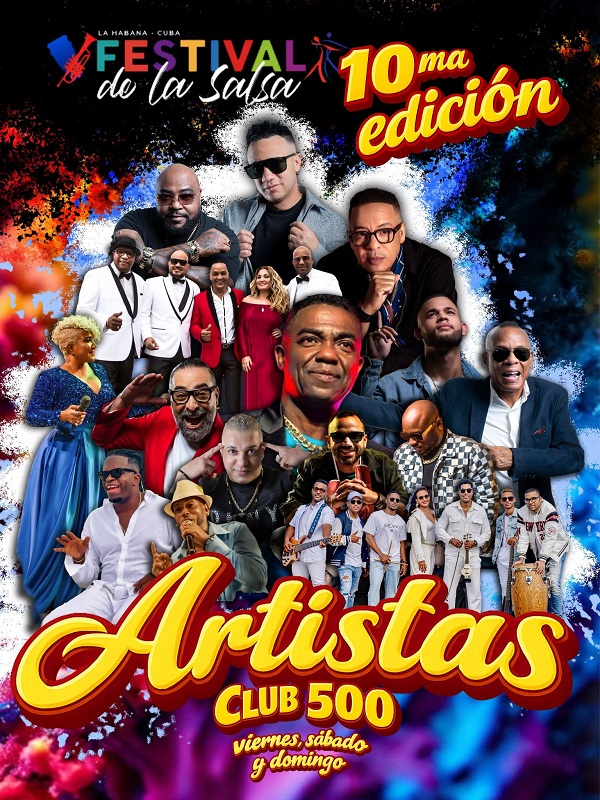
This special edition will pay tribute to the 70th anniversary of Elito Revé y su Charangón, an iconic institution of popular dance music. Organizers announced in a press conference that the event will feature a strong international presence, including foreign dance instructors and DJs.

Starting Friday, February 27, four high-caliber orchestras will perform each night. Among the confirmed headliners are:

  • Los Van Van
  • Alexander Abreu y Havana D’Primera
  • Adalberto Álvarez y su Son
  • Alain Pérez
  • Willy García (Special guest from Colombia, former vocalist of Grupo Niche).
Cartel Oficial de los Artistas que estarán en la 10ma edición de el festival de la salsa en Cuba

The Economic Barrier to Entry

Despite its cultural relevance, ticket prices have sparked debate. Presale tickets at Cine Yara were set at 800 Cuban Pesos (CUP), a price that will rise to 1,000 CUP per night at the venue.

In a context of stagnant wages and runaway inflation, these figures are out of reach for many everyday Cubans, highlighting the gap between official propaganda and daily reality.

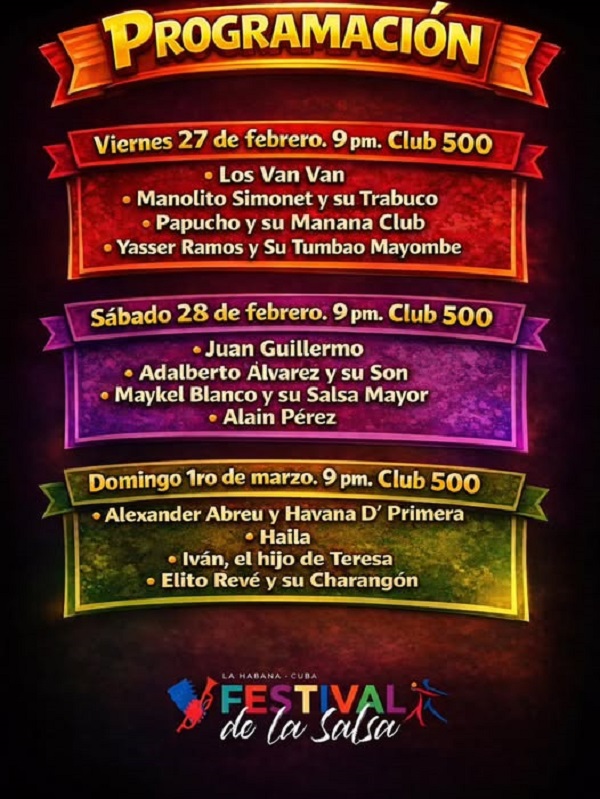
Main Concert Schedule

Date Featured Artists
Thursday, Feb 26 Opening Gala: Issac Delgado, Los Muñequitos de Matanzas, and Eduardo Sandoval.
Friday, Feb 27 Los Van Van, Manolito Simonet y su Trabuco, Papucho y Manana Club.
Saturday, Feb 28 Maykel Blanco y su Salsa Mayor, Adalberto Álvarez y su Son, Alain Pérez, and Willy García.
Sunday, March 1 Alexander Abreu y Havana D’Primera, Haila Mompié, and Elito Revé y su Charangón.
PROGRAMACIÓN OFICIAL (Horarios) de todas los conciertos que brindaremos en EL Festival dela salsa en cuba en su 10ma Edición

Beyond the Music: An Immersive Experience

The festival—driven by MB Producciones, ARTEX, and the Paradiso Agency—is not limited to evening performances (which begin at 9:00 p.m.). The agenda also includes:

  • Dance Workshops: Classes in Casino (Cuban salsa), Rumba, Son, and the popular “Reparto” genre, taught by prestigious instructors.
  • Pool Parties: Meet-and-greets with national and international DJs at the Memories Miramar Hotel.
  • Academic Forums: Lectures on the evolution of popular music and the legacy of figures like Elio Revé Matos.
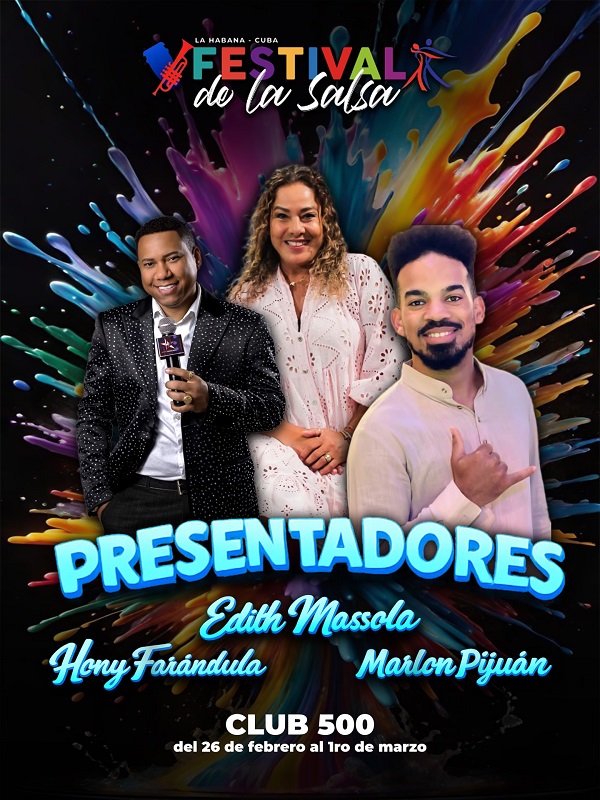
Presentadores Oficiales de la 10ma edición del Festival de Salsa en Cuba

Once again, the Salsa Festival presents itself as a musical oasis on an island mired in uncertainty, leaving open the question of whether art can truly build bridges in the midst of such a structural crisis.

Also Read: Compay Segundo The Eternal Patriarch of Cuban Son

Colombian dancer and instructor Camila Cepeda takes salsa caleña to Canada

Every day there are more Latinos who, with their talent, are gradually taking over various cities in Canada and the hearts of many of its inhabitants. Colombian instructor and dancer Camila Cepeda shows us that she and several of her compatriots have managed to break into the aforementioned North American country and shares with us a little bit of her interesting story.

Dancer and instructor Camila Cepeda
Colombian dancer and salsa caleña instructor Camila Cepeda

Camila’s interest in dance

Camila has danced through life, and since she was a little kid, dance has been very important to her. One genre in particular that caught her attention was salsa caleña, especially since she saw it for the first time with dance groups on the TV show “Colombia’s Got Talent”. From there, more specifically in 2011, she looked for a dance academy where she could learn to dance and imitate what she saw on the screen.

Almost immediately, she realized that it was a very demanding style that required stunts and movements that were not common in more classic versions of salsa. After training in dancing, she did not want to be just an expert in salsa caleña, but many more people learned how to dance it as well, which led her to create a folk dancing group with which she would take her first steps towards teaching.

In addition to salsa caleña, Camila also danced salsa choka, champeta, bachata, merengue, and Colombian folklore. 

Camila dancing at an event
Camila Cepeda dancing in one of her salsa caleña events

Moving to Canada

Initially, Camila’s plans did not include leaving Colombia, but when she knew Canada, she found it an extremely interesting country where she could start something new with dance due to the lack of salsa caleña there. So, she entered the country with a student visa and studied international business at Seneca College in Toronto, with the intention of forming her own company in her new host country.

While gaining business experience through jobs for other companies, she continued to offer classes in parallel. Finally in 2020, in the middle of the COVID-19 pandemic and when she was still a university student, she decided to register and open her dance academy, “Salsa & Sabor.”

During that time, she also validated her teaching in English so that she could give classes to both locals and people from other cultures who spoke the same language.

Camila, Aleja, and Sonia
Camila with dancers Aleja and Sonia

Salsa & Sabor today

Although the academy was started with only online classes due to the sanitary restrictions of that time, Camila was able to gather together a more or less numerous community that allowed her to stay afloat in such a difficult moment. Therefore, when government controls were relaxed, the young woman had no problem to organize dance classes and activities in parks keeping proper social distancing.

A short time later, she could finally open her dance studio, welcome students in person, and recruit other instructors such as Diana, Victoria, Mateo, and Paula. One thing to mention about these five young Colombians is that they were all Camila’s students in the past and, after all the training she offered, they also became experts in the field. Given the pitifully small number of salsa caleña instructors in Canada, when they were ready, she asked them to join her team, and they gladly accepted the opportunity.

This, in turn, helped them to open up more schedules and workshops for many more people, allowing the academy to grow even more.

Camila with her students
Camila with some of her little students

Division of teaching genres and events

As we said at the beginning of this article, Camila also teaches other genres such as salsa choke, la champeta, bachata, and merengue, but her flagship and main rhythm remains salsa caleña. An important difference between salsa caleña and the rest is that it has a well-defined continuity and academic structure, so it takes much longer to learn. The other genres are relatively simpler, so they do not require as many hours or such an elaborate program.

Differences between salsa caleña and traditional salsa

According to Camila, a very important component of salsa caleña is its speed compared to traditional salsa. The way salsa is danced in Puerto Rico, Cuba, or New York is much better known around the world due to its age, while salsa caleña is a little newer and only began internationalizing a few years ago. In addition, traditional salsa is slower and uses the hips and shoulders a lot, while salsa caleña relies heavily on the rapid movements of the feet.

In fact, an important fact to know is that salsa caleña was created from a mistake. It turns out that a group of young people in Cali were doing private parties with LPs by various artists of the time, but they accidentally raised their speed and made the songs sound faster than they should. This led them to create completely new steps and choreographies based on these fast songs, giving rise to what we now know as salsa caleña. 

These parties were called “aguelulos,” a Colombian term to refer to alcohol-free parties or gatherings for young people. 

Read also: Tito Puente Jr.: perpetuating a legacy with its own rhythm

  • Page 1
  • Page 2
  • Page 3
  • Interim pages omitted …
  • Page 30
  • Go to Next Page »

International Salsa Magazine (ISM) is a monthly publication about Salsa activities around the world, that has been publishing since 2007. It is a world network of volunteers coordinated by ISM Magazine. We are working to strengthen all the events by working together.