• Skip to primary navigation
  • Skip to main content

International Salsa Magazine

  • HOME
  • Previous editions
    • 2026
      • ISM / March 2026
      • ISM / February 2026
      • ISM / January 2026
    • 2025
      • ISM / December 2025
      • ISM / November 2025
      • ISM / October 2025
      • ISM / September 2025
      • ISM / August 2025
      • ISM / July 2025
      • ISM / June 2025
      • ISM / May2025
      • ISM / April 2025
      • ISM / March 2025
      • ISM / February 2025
      • ISM / January 2025
    • 2024
      • ISM / December 2024
      • ISM / November 2024
      • ISM / October 2024
      • ISM / September 2024
      • ISM / August 2024
      • ISM / July 2024
      • ISM / June 2024
      • ISM / May 2024
      • ISM / April 2024
      • ISM / March 2024
      • ISM / February 2024
      • ISM / January 2024
    • 2023
      • ISM / December 2023
      • ISM / November 2023
      • ISM / October 2023
      • ISM – September 2023
      • ISM – August 2023
      • ISM July 2023
      • ISM Edition June 2023
      • ISM – May 2023
      • ISM April 2023
      • ISM March 2023
      • ISM February 2023
      • ISM January 2023
    • 2022
      • ISM December 2022
      • ISM November 2022
      • ISM October 2022
      • ISM September 2022
      • ISM August 2022
      • ISM July 2022
      • ISM June 2022
      • ISM May 2022
      • ISM February 2022
      • ISM January 2022
    • 2021
      • ISM December 2021
      • ISM November 2021
      • ISM October – 2021
      • ISM September 2021
      • ISM August 2021
      • ISM July 2021
      • ISM May 2021
      • ISM April 2021
      • ISM June 2021
      • ISM March 2021
      • ISM February 2021
      • ISM January 2021
    • 2020
      • ISM December 2020
      • ISM November 2020
      • ISM October 2020
      • ISM September 2020
      • ISM August 2020
      • ISM July 2020
      • ISM June 2020
      • ISM May 2020
      • ISM April 2020
      • ISM March 2020
      • ISM February 2020
      • ISM January 2020
    • 2019
      • ISM December 2019
      • ISM November 2019
      • ISM October 2019
      • ISM Septembre 2019
      • ISM August 2019
      • ISM July 2019
      • ISM June 2019
  • Download Salsa App
    • Android
    • Apple
  • Spanish

Search Results for: Legacy of Salsa

Beatriz Márquez Castro, an exponent of romantic songs, “Feeling” and Bolero

Beatriz Márquez Castro is a singer, composer, and pianist, born on February 17, 1952, in Havana.

Beatriz Márquez Castro. Cantante, compositora y pianista

She is the daughter of the prestigious composer and performer René Márquez. She began her artistic career in 1968.

An exponent of romantic songs, “feeling,” and bolero, she gracefully delved into these genres, performing pieces by prolific authors such as René Márquez, Marta Valdés, Juanito Márquez, Silvio Rodríguez, and Germán Nogueira, among others.

Her mezzo-soprano range has enabled her popular “descents” to low tones, as well as her unexpected and no less appreciated “ascents” to much higher tessituras, without losing her defining style. This style is very appropriate for songs and boleros, genres in which she has remained one of Cuba’s leading cultivators.

She is known as “La Musicalísima.”

We are witnessing the realization of a long-cherished project with which the performer, pianist, and composer Beatriz Márquez settles a debt both on a family level and within Cuban discography.

After several years of searching through archives and old recordings, thanks to the collaboration of Cuban audiovisual producer Felipe Morfa, it was possible to prepare “Este encuentro” (Colibrí Productions, 2023). This album features a selection of known and unreleased pieces by singer and composer René Márquez Rojo (1914-1986), some of which were popularized in their time by internationally renowned figures like Antonio Machín or the Puerto Rican Daniel Santos, to name just two examples.

Beatriz Márquez Castro, an exponent of romantic songs, "Feeling" and Bolero
Beatriz Márquez Castro, an exponent of romantic songs, “Feeling” and Bolero

Given the influence René had on the career of his daughter and grandchildren, this is an album full of love and, above all, gratitude.

While he was best known for his songwriting, it is important to highlight the mark he left as a charanga singer.

Among others, we can mention his work with the charangas of violinist Cristóbal Paulín, Oscar Muñoz Bouffartique, and René Touzet.

He debuted at the Mil Diez radio station with the group led by Julio Cueva, to which he dedicated himself for ten years.

From the late 1930s onwards, the lyrics by the artist from Villa Clara quickly resonated with the public.

“El Inquieto Anacobero” recorded “El disgusto de bigote” with the Sonora Matancera in 1949 and also sang other Cuban songs such as “Soltando chispas,” “A San Lázaro,” and “El granito de maíz.”

René’s songs, among which “El quinqué” cannot be missed, speak of his natural ingenuity for storytelling.

Upon his death at 72, he left a musical legacy that has since been defended by his descendants.

In over five decades of her artistic life, Beatriz has become her father’s most faithful interpreter, having recorded songs for several albums such as “No respondo,” “Explícame por qué,” and the now famous “Espontáneamente,” initially included in the LP “Es soledad” (Egrem, 1970) and re-recorded on multiple occasions.

In “La Musicalísima”‘s discography, prior to this material, there were only two phonograms exclusively dedicated to the work of a single author: “Beatriz canta a Juan Almeida” (Egrem, 1978), followed forty years later by “Libre de pecado” (Colibrí Productions, 2018), a tribute to maestro Adolfo Guzmán, thus contributing to the rescue of the island’s musical memory.

“Este encuentro” spans traditional trova and moves from guaracha to son, without forgetting some of the composer’s most notable boleros.

It also allows us to appreciate René Márquez’s interpretive qualities by hearing his voice, rescued from old recordings.

The special participation of singers Evelyn García and Michel Maza, continuators of the family saga, is noteworthy.

Now, the 2015 National Music Award winner and the main architect of this phonogram invites us to explore René Márquez’s immense body of work, one that will by no means be forgotten, across eleven tracks._ Jaime Masó

Beatriz Márquez - Este Encuentro (2023)
Beatriz Márquez – Este Encuentro (2023)

Beatriz Márquez – Este Encuentro (2023)

Tracks:

  1. Este Encuentro
  2. La Vida Es Un Momento
  3. Muchachito Inocente
  4. No Respondo
  5. Nunca Habrá Distancia
  6. Soltando Chispas
  7. En El Cielo De Mi Vida
  8. Imposible Amor 09. Popurrit 10. Espontáneamente 11. Mi Placer

By:

L’Òstia Latin Jazz

Augusto Felibertt

Ecured

Instituto Cubano de la Música

Also Read: Enrique “Culebra” Iriarte, master of the piano and musical composition

Isadora Duncan, destined for a life of freedom and the avant-garde, of beauty and tragedy

Isadora Duncan was born in San Francisco in 1877. Her father, Joseph, abandoned the family shortly after her birth. Left in extreme poverty, her mother, Mary Isadora Gray, worked tirelessly to support her four children.

Isadora Duncan, destined for a life of freedom and the avant-garde, of beauty and tragedy

Nevertheless, she always told them, “We can do without bread, but never without Art,” and consistently encouraged her children’s artistic vocations.

From a very young age, her mother introduced her to the works of Beethoven, Schubert, Schumann, Mozart, and Chopin, and to the writings of Shakespeare, Shelley, Keats, and Whitman. She also taught her about classical Greek culture, paganism, and feminism.

The family lived like a small artistic troupe. Mary gave piano lessons, and Isadora taught dance while her mother played Mendelssohn on the piano.

Then her sister Elizabeth would recite poems by Theocritus, and their brother Raymond would conclude with a short talk about the Greeks or about dance and its effects on the society of the future.

Although she auditioned as a dancer in various theaters, she found no success. Isadora perceived dance very differently. She believed in improvisation, with movement like waves of a sea reflecting the very Soul, a concept almost mystical and spiritual, far removed from the formal technique of Classical Ballet.

As she recounted in her autobiography:

“I was born by the sea. My first idea of movement and dance surely came from the rhythm of the waves and also from nature; clouds carried by the wind, trembling trees, flying birds, whirling leaves…” This living nature is what she sought to express through dance.

Isadora Duncan was born in San Francisco in 1877.Her father, Joseph, soon after left the family.
Isadora Duncan was born in San Francisco in 1877.
Her father, Joseph, soon after left the family.

Early Struggles and European Dreams

Shortly after, a fire destroyed their home, leaving the family destitute again. Isadora secured a small role in a pantomime in New York: Madame Pygmalion. She had to borrow money for the train ticket and rehearsed unpaid for over a month. During lunchtime breaks, Isadora had no money for food and would hide in the facilities to sleep before continuing to rehearse.

Eventually, her family moved to New York, where in 1896, Isadora joined the company of playwright John Augustine Daly, taking ballet lessons with Marie Bonfanti. Due to her rejection of an academicism she considered limiting and unnatural, she managed to travel to Europe in 1898.

She arrived in England, where, always self-taught, she studied arts at the British Museum. There, she found great inspiration for her dances, which evoked ancient Greek movements and attire. She observed the movements of dancers on Greek vases, and from there adopted one of her characteristic postures: tilting her head back like the maenads. She then went to France, where she met Löis Fuller, who shared her ideas. Löis, like Isadora, was an alternative dancer whose performances incorporated elements of circus acts and variety shows.

Breakthrough and Artistic Vision

Together, they embarked on a tour of Munich and Vienna, creating new performances: “Dance Serpentine,” “Dance of Fire,” and “The Divine Shoe,” all embodying an absolutely modern concept. Finally, in Budapest, Isadora signed her first contract to dance solo on a large stage. She achieved great success, establishing herself on all European stages.

“Dance of Fire”, and ‘The Divine Shoe’, of an absolutely modern concept Isadora finally in Budapest.

After one of her shows, a great admirer came to greet hernone other than Konstantin Stanislavski, the creator of the famous acting method and one of the founders of Russian Theater. When he asked who had taught her to dance, Isadora replied, “Terpsichore.”

Nevertheless, her dance remained transgressive. She wanted to free dancers from pointe ballets, tutus, and corseted figures, to give expression to the soul through Art. The “costume” for her choreographies consisted of loose, transparent tunics, and bare feet to maintain direct contact with the earth.

A great admirer of Hellenic culture, she began constructing a Dance school in Greece, on the hill of Kopanos. Others followed in Germany and Paris. These schools often accepted girls from very humble backgrounds, charging them no fees. Over time, expenses became almost unsustainable, but Paris Singer, heir to the sewing machine empire, appeared offering financial assistance to allow them to continue.

Teaching, Tragedy, and Legacy

She embarked on tours across Europe, Russia (where she was invited by Lenin), and America, though what she loved most was teaching. She used to say, “First, we teach the children to breathe, to vibrate, to feel, and to become one with the general harmony and movement of nature. First, we are going to create a beautiful Human Being, a dancing child!”

After two marital breakups, in 1913, in a tragic accident, her children, Deirdre and Patrick, drowned in the Seine. The following year, a third child died shortly after birth. From then on, in all her choreographies, a long red scarf would appear over her white tunic, like a permanent, unclosed wound. In 1917, she adopted six of her students, “The Duncan Dancers.”

On International Dance Day, we remember the creator of the Isadora Duncan Contemporary Ballet.

While Isadora had many romantic liaisons, her most stable relationships were with Oscar Beregi, Gordon Craig, Paris Singer, and Sergei Esenin. But to maintain her Freedom, she never wanted to marry.

At the peak of her fame, on September 14, 1927, as she was about to give a concert in Nice, she greeted the public from her car: “Goodbye friends! I’m off to glory!” Shortly after, the very red scarf that never left her became entangled in the rear wheel, causing her death. Her legend began.

Ana and Irma, two of her adopted daughters, continued to disseminate the Duncan technique, which is still taught and danced today. A diva ante litteram, a rebel and pioneer of the dance revolution that erupted during the 20th century, an ultimate symbol of independence and purity: Isadora Duncan, in addition to being the mother of modern dance, is an anticipation of the free, ideal, nonconformist, and independent woman who would still have to wait decades to appear.

International Dance Day (April 29)

This date, proclaimed by UNESCO in 1982, commemorates the birth of Jean-Georges Noverre, an innovator and dance master considered the creator of modern ballet. On International Dance Day, we remember the creator of Contemporary Ballet.

Fania All Stars

Album: Crossover

Song: Isadora

Arranged By: Louie Ramirez

Arranged By: (All Strings) Vincent Montana, Jr.

Producer: Jerry Masucci

Written-By: C. Curet Alonso.


Fania All Stars Crossover 1979

By:

Angel A. Padron Hernandez

Dj. Augusto Felibertt

Also Read: Yolanda Moreno “the People’s Dancer”

Eddie Montalvo Iron Hands: “I’m in love with Venezuela”

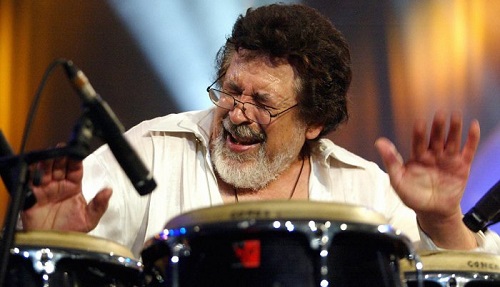
We felt an unforgivable duty to publish this interview with Eddie Montalvo “Iron Hands,” as it is Swing Latino update on the biography of a musician who is more than just a friend, a godfather; he’s family, the kind that gives you friendship, that fills you with conflicting feelings and leads you to relive wonderful and unforgettable moments.

Giogerling Mendez y Eddie Montalvo

He is a living legend of our Afro-Caribbean music.

We hadn’t seen each other for many years, so I wanted to share the time with him before he left Venezuela (he was playing on Saturday, so we met on Friday and shared some time with longtime friends starting at noon), before the show. The next day he would say goodbye to Venezuelan soil. This interview will be published in two installments, and here is the first one.

– How long has it been since Eddie Montalvo last came to Venezuela?

– Let me put it this way. The last time I came to Venezuela was with Rubén Blades and Son del Solar. I’ll call it Seis, because Son was with another keyboardist, Arturo Ortiz, Robby Ameen on drums, and two trombones, Reinaldo (Jorge) and Jimmy Bosch. That was the last time, many years ago.

I’ve always loved Venezuela, it’s the honest truth. I’m in love with Venezuela, no matter what happens. I’m always grateful for it. I’ve always had many friends here.

The School of the Street

– What was your first experience in music? Why conga?

– Well, when I was very young, my parents and I would go every weekend to a party at an aunt’s house. At that time, my goddaughter, I’m not going to lie to you. The gentlemen were always well-dressed, with ties, the ladies with their eyebrows done, their hair combed, a real formality despite their humility.

Everyone was dancing at that party, and Eddie Montalvo was banging on the tables until he could say no more. That’s how they got me two metal cookie tins, and it became my first instrument.

When I was five, I asked my parents if it was possible for Santa Claus to bring me a bongo. My parents were poor, and yet, on December 25th, a bongo appeared under the Christmas tree.

A bongo that didn’t have a key, a bongo that you had to put a fire under to get the sound out.

At ten, without lying to you, I asked them if it was possible for them to buy me a conga, and my parents bought me a conga that cost 50 US dollars.

As I grew older, I started crossing the street where there was always a party of rumba players. I went down with the conga, and they asked me, “Do you know how to play?” And I said, “No,” then they said, “Well, if you don’t know how to play, you can’t sit here with us and rumba.”

I went home frustrated with the conga line because they wouldn’t let me sit in and play at the party.

Héctor «Bucky» Andrade

It just so happened that there was a conga player who played with Héctor Lavoe, with Willie Colón, on an album called The Hustler.

His name was Héctor Andrade and he had a nickname: Bucky. He saw me every day when I came down with the conga line, and it seems he felt sorry for me and said, “Come here.” I said, “Are you talking to me?” He said, “Yes, yourself, come here!” Bucky said, “I see you here every day, and I feel sorry for you because I know you love the conga line, because you spend hours sitting on the bench watching us; I’m going to teach you the first tumbao like it’s played in rumba, street rumba.”

Because remember, my first music school was the street. My parents didn’t have the money. After Bucky taught me, he said, “Go home and practice.

When you think you’re ready, come, but I warn you, there will be about five rumberos playing the quinto. If you get tired, you’ll never play here again.”

I went to my room and practiced. When I felt God tell me to come down, that you’re ready, I went down.

Bucky looked at me and said, “How are you feeling?” And I sat down to play the tumba’o. About seven or eight rumberos played by, and I was still playing the tumba’o, tired, but I couldn’t stop playing, and that was my first experience. I learned a lot by watching the rumberos on the street. That way, I prepared myself and was able to sit with all of them, play the first part, play the second part, play the third part, and then quintate. That way, I played the grade they wanted and went down every day to sit with them.

Formal Studies

As I grew older, in my last year of school, I saw they had a Latin orchestra at a music school, but honestly, all they played was a Latin segment, but it was all American music.

The teacher was Italian. I knocked on the door of that school, and the teacher in charge looked at me and said, “Can I help you?” And I said, “I’m here because I’d like to know if it’s possible for you to let me play conga here with the Latin group.” He said, “Oh, no, no, no, look, son, I have tons of conga players here. Everyone comes here because they want to play conga. Excuse me, come see me next year.” And so I wasted all that time frustrated because I wanted to play.

Time came and school started in September. I tried again, and the teacher refused again. So I said, “No, no, no, no, wait, you promised me I could play conga here.” And seeing my insistence, the teacher asked me, “Do you really play conga?” “I think so.” Then he said, “Bring me a conga that’s in that room. I want it to play me a merengue, a cha-cha-cha, and a mambo.” I played it for him, and he said, “Wow, you have good hands, you’re starting with the Latin orchestra here,” and that’s how I graduated from hig  h school at 17.

From School to Work

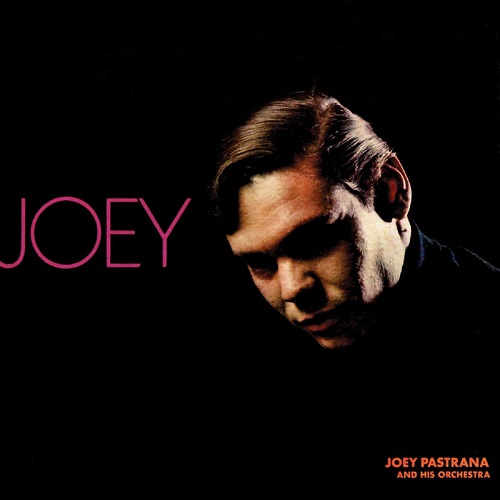
At that time, I went to work at the stock exchange in New York, and I didn’t like it, so I left. One day, I went into a New York club, and Joey Pastrana’s orchestra was playing.

It just so happened that someone said to Joey Pastrana, “Look, you see that skinny kid over there on the corner, that kid plays conga,” and he said to the kid, “Tell him to come over here.”

The kid came up to me and said, “Look, Joey wants you to go over there on stage.” I replied, “I don’t know Joey. And you’re telling me Joey wants me to go over there when I don’t even know him?” “Well, look, go, he’s calling you.”

Joe Psatrana
Joe Psatrana

I went over there, and he said, “Look, and Joey said, “Do you want to play a number with me?” And I said, “I don’t know who told you I play conga. I don’t play conga.” And he answers, “But the kids here are saying you play conga.”

And because of his insistence, I played a number. When I played the number, he said, “Do you want to play here? Because my brother, Willie Pastrana, is leaving the group.”

And when I came to see you, at 17, I was playing with Joey Pastrana. So, from then on, I went with Tony Pabón in the protest. I was with Ernie Agosto and La Conspiración, with Adalberto Santiago, Los Kimbos, even with La Diferente for a little while, just for a while; with the great Héctor Lavoe, with Pacheco, with Pete el Conde, very quickly. Then with the Estrellas Fania, and those from Puerto Rico.

– You replaced Ray Barreto in Fania, hence the nickname Manos de Hierro? Tell us a little about your experience with Fania.

– Oh, because I always had heavy hands when I played. And they called me that name: Ray Barretto, “Hard Hands,” and I, “Iron Hands.” They were the musicians, and your dad (Ángel Méndez) gave me that nickname. I’ll never forget this. I forgot to mention someone, Willie Colón, who I also played with and recorded the album “Siembra.”

Ray Barretto’s Replacement

I can’t explain how I was able to make my career in music, because, blissfully, I was in the audience at Madison Square Garden watching Fania, and I never in my life thought I’d play with the Fania Stars!

Regarding the question about whether I reviewed Barretto: before joining the Fania stars, there was Johnny Rodriguez, El Dandy.

He left, and I joined. So when I saw Barreto wanting to return, I said these words to Ray Barreto: “With all due respect to you, because you’re an icon I’ve always respected, this chair, I was just warming it up, this chair is yours.” And he said to me in English: “Eddie, we’re going to split the show. You play half the show, and I’ll play half.” And I said to him, “Ray, this seat is yours. I respect it,” and he said, “No, half and half.”

Ray Barretto
Ray Barretto

We always had a tremendous relationship. I remember when my father passed away, and Ray came and stayed with me at the funeral home for two hours. I’ll never forget it.

And I’m telling you from the bottom of my heart, one of the things I hold dear is that when Ray got sick, honestly, I wanted to go see him, and they always told me, Eddie, you can’t go because they have him in intensive care and they won’t let you in.

I was always calling mutual friends who knew if he was coming out of intensive care or not. They would tell me, “Eddie, no, hey man, don’t come because you’ll waste your time.” That’s how I couldn’t see him in his final days. It was only when he passed away that I went to the funeral home.

The same thing with your father, you know, your father for me is the friendship, and I’m not saying this because you’re interviewing me, but the relationship, the respect I have for your father, and you know, I thank your father because he was the one who made us, and I say this, of course, God made us, and with all due respect, but when it comes to the entertainment side of things, your father was the magazine that everyone bought.

When I started out in 1977, coming to Venezuela, I met your father, Ángel Méndez, Swing Latino, with Fernando, the photographer, and the truth is that the friendship was never lost.

Eddie Montalvo y Ángel Méndez

We’ll be releasing the second part of this interview soon.

Pónle Saborrrr!

By:

cafeatlantico

Swing Latino

Giogerling Mendez

Dj. Augusto Felibertt

Also Read: The legacy of Leopoldo Pineda, the ambassador of the trombone in La Maquinaria Fania All Stars

Oscar Dudamel continues to achieve dreams and presents “La Rumba Me Llama”

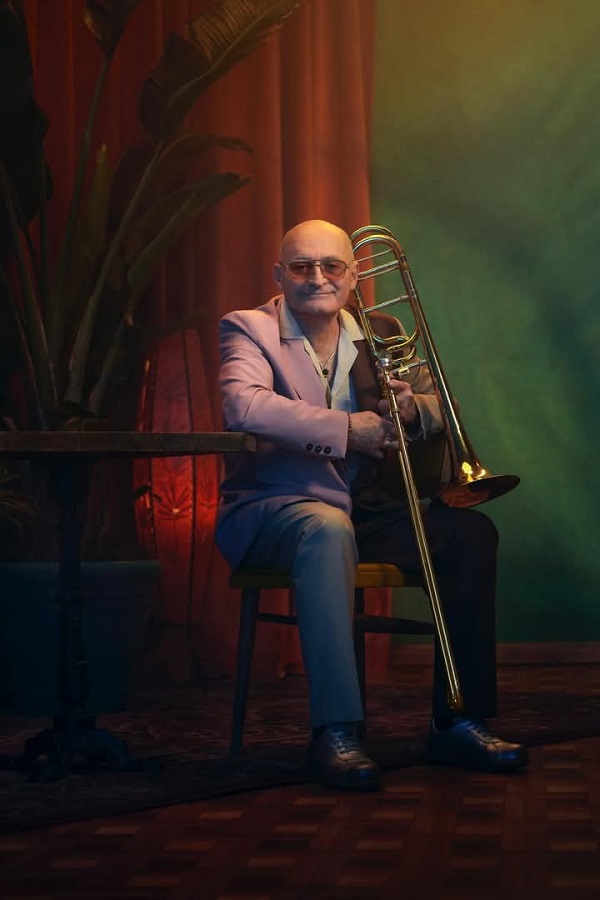
Legendary Venezuelan trombonist Oscar Dudamel expands his musical vision with a new single that fuses the essence of classic salsa with his unmistakable style, which is why he does not hesitate to express “La Rumba Me Llama”.

This song is part of his upcoming album “Sueño Alcanzado”, a production that will be released on May 30 and represents the culmination of years of musical research, fusing the classic salsa sound with jazz influences and the romantic tradition of boleros.

El legendario trombonista venezolano Oscar Dudamel

In “La Rumba Me Llama”, Dudamel brings his trombone to the forefront of a vibrant composition that captures the essence of the rumba as an inescapable call. With a musical structure that evokes the great salsa orchestras and an impeccable instrumentation.

The piece stands out for its meticulous arrangements, powerful brass and an irresistible cadence, faithful to the spirit with which Dudamel has approached his music. The track is an invitation to the dance floor and a testament to the rhythmic power that has defined his career.

The album Sueño Alcanzado not only takes its name from a personal concept of triumph, but also from one of his most significant pieces.

The title track was born in an intimate creative encounter in Caracas, Venezuela, with Maestro Alberto Crespo, composer Eliel Rivero and Solange Ramírez, mother of his son Gustavo Dudamel.

Oscar y Gustavo Dudamel

Dedicated to her son and with her special participation on violin, this piece encapsulates the spirit of a project that transcends the musical to become a testimony of life.

More than a nostalgic production, “Sueño Alcanzado”, of which the song “La Rumba Me Llama” is part, is the reflection of an evolution. The music that accompanied him since his childhood now takes a new form under his direction, in a creative process that has brought together talented musicians with whom he shares the same vision.

His orchestra, based in Madrid, has become the vehicle to continue taking his proposal to international stages, demonstrating that salsa is still alive in every note and every drum beat.

“La Rumba Me Llama” is now available on all digital platforms and is just a preview of ‘Sueño Alcanzado’, Oscar Dudamel’s new album, consolidating his legacy with authenticity and mastery.

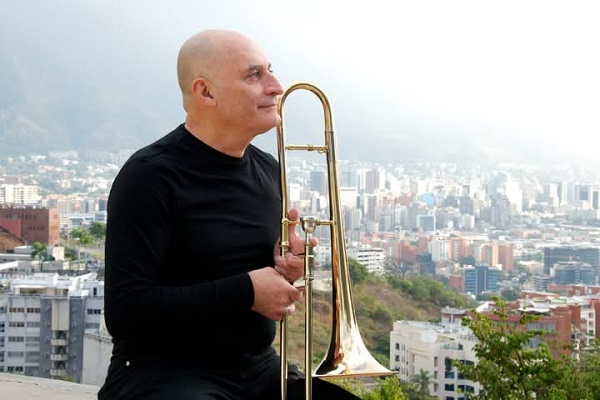
Oscar Dudamel Virtuoso Musician, Trombonist and Orchestra Conductor.

Oscar Dudamel, a Venezuelan trombonist, discovered his passion for salsa as a child when he first heard “La Murga” by Willie Colón. Although his formal musical training began with Maestro Pablo Canela and later continued within El Sistema as a classical musician, that early experience left a profound mark on him, inspiring his dream of playing the trombone and solidifying his love for salsa as his ultimate passion.

Dudamel was born on January 14, 1961, in Barquisimeto, Venezuela. He grew up in a musical family where every gathering was celebrated with music, fostering his passion for the art from a young age. His parents purchased him a trombone, and he began his studies at the Yamaha Music Academy.

Oscar Dudamel sigue alcanzando sueños

At the age of 7, he was enrolled in a music academy under the guidance of Maestro Pablo Canela, a composer and prominent figure in the music of the Lara State region of Venezuela.It was there that he started his training with the Cuatro, the traditional Venezuelan instrument, and the guitar, which became his first instruments.

In addition to his Cuatro training, Dudamel began studying and playing various percussion instruments, further broadening his musical repertoire.

His academic training took place at the Lara State Conservatory in Barquisimeto, and at the National System of Youth and Children’s Orchestras and Choirs of Venezuela, also known as El Sistema.

During his teenage years, he became a member of the Youth Orchestra of Lara State (El Sistema Lara) and the Liceo Mario Briceño Iragorry Band, where he had the opportunity to expand his musical knowledge and explore various genres.

Dudamel entered a new phase of his life when he enrolled at the Vicente Emilio Sojo Music Conservatory to study theory and solfège, continuing his trombone studies under the guidance of his maestro, Óscar Vivenes.

Over the years, he became a member of the Lara Youth Symphony Orchestra of Lara, part of the national network of Venezuela’s El Sistema orchestras, actively participating in classical music.

However, his fascination with the Caribbean rhythms of salsa never disappeared. Thus, he combined his classical training with his passion for salsa, performing with renowned artist and sharing the stage with legends of the genre, such as Héctor Lavoe, Ismael Rivera, Ismael Miranda, Celia Cruz, Justo Betancourt, Marvin Santiago, and other great artists.

In Caracas, Venezuela, he founded his own orchestra, with which he had the opportunity to share the stage with notable figures such as Rubén Blades, Gilbert Santa Rosa, Luis Enrique, Guaco, Oscar D’ León, and many others.

Dudamel’s surname is synonymous with music. He is the father of Gustavo Dudamel, one of the most acclaimed classical music conductors in the world. Gustavo’s well-known fondness for salsa stems from his father, who recently fulfilled his lifelong dream of releasing a solo album titled Sueño Alcanzado, dedicated to his son.

Dudamel currently resides in Madrid, Spain, where he leads his ensemble, Oscar Dudamel y su Orquesta, performing salsa alongside his Venezuelan musician friends and colleagues at Café Berlín Madrid.

Oscar Dudamel y Dj, Augusto Felibertt

‍Research Sources:

Contact: Katie Baloian of Radio Notas (Compartiendo Ideas)

Alberto Crespo (Pianist and Arranger)

Dj. Augusto Felibertt

Café Berlin in Madrid

Also Read: Mariana “The Sonera of Venezuela and for the world”

Latin America / February 2025

Oscarcito Rojas and his unmistakable lump.Mariana La Sonera from Venezuela and for the WorldSongoyó the perfect idea Experimental Cuban Son GroupSalsa at its best, led by the leader of La Puertorriqueña: Don PerignonThe legacy of El Palladium lives on, as demonstrated by ‘Mambo Fantasy’Calibrated maracas

DIRECTORY OF NIGHTCLUBS

Argentina flag
ARGENTINA

Aruba circular flag
ARUBA

Belize circular flag
BELIZE

Bolivia circular flag
BOLIVIA

Brazil flag
BRAZIL

Chile circular flag
CHILE

Colombia
COLOMBIA

Costa Rica circular flag
COSTA RICA

Cuba circular flag
CUBA

Dominican Republic
DOMINICAN REPUBLIC

Ecuador circular flag
ECUADOR

Guatenala circular flag
GUATEMALA

Mexico Circular flag
MEXICO

Panama circular flag
PANAMA

Peru circular flag
PERU

Puerto Rico circular flag
PUERTO RICO

Venezuela circular flag
VENEZUELA
  • « Go to Previous Page
  • Page 1
  • Interim pages omitted …
  • Page 12
  • Page 13
  • Page 14
  • Page 15
  • Page 16
  • Interim pages omitted …
  • Page 30
  • Go to Next Page »

International Salsa Magazine (ISM) is a monthly publication about Salsa activities around the world, that has been publishing since 2007. It is a world network of volunteers coordinated by ISM Magazine. We are working to strengthen all the events by working together.