• Skip to primary navigation
  • Skip to main content

International Salsa Magazine

  • HOME
  • Previous editions
    • 2026
      • ISM / March 2026
      • ISM / February 2026
      • ISM / January 2026
    • 2025
      • ISM / December 2025
      • ISM / November 2025
      • ISM / October 2025
      • ISM / September 2025
      • ISM / August 2025
      • ISM / July 2025
      • ISM / June 2025
      • ISM / May2025
      • ISM / April 2025
      • ISM / March 2025
      • ISM / February 2025
      • ISM / January 2025
    • 2024
      • ISM / December 2024
      • ISM / November 2024
      • ISM / October 2024
      • ISM / September 2024
      • ISM / August 2024
      • ISM / July 2024
      • ISM / June 2024
      • ISM / May 2024
      • ISM / April 2024
      • ISM / March 2024
      • ISM / February 2024
      • ISM / January 2024
    • 2023
      • ISM / December 2023
      • ISM / November 2023
      • ISM / October 2023
      • ISM – September 2023
      • ISM – August 2023
      • ISM July 2023
      • ISM Edition June 2023
      • ISM – May 2023
      • ISM April 2023
      • ISM March 2023
      • ISM February 2023
      • ISM January 2023
    • 2022
      • ISM December 2022
      • ISM November 2022
      • ISM October 2022
      • ISM September 2022
      • ISM August 2022
      • ISM July 2022
      • ISM June 2022
      • ISM May 2022
      • ISM February 2022
      • ISM January 2022
    • 2021
      • ISM December 2021
      • ISM November 2021
      • ISM October – 2021
      • ISM September 2021
      • ISM August 2021
      • ISM July 2021
      • ISM May 2021
      • ISM April 2021
      • ISM June 2021
      • ISM March 2021
      • ISM February 2021
      • ISM January 2021
    • 2020
      • ISM December 2020
      • ISM November 2020
      • ISM October 2020
      • ISM September 2020
      • ISM August 2020
      • ISM July 2020
      • ISM June 2020
      • ISM May 2020
      • ISM April 2020
      • ISM March 2020
      • ISM February 2020
      • ISM January 2020
    • 2019
      • ISM December 2019
      • ISM November 2019
      • ISM October 2019
      • ISM Septembre 2019
      • ISM August 2019
      • ISM July 2019
      • ISM June 2019
  • Download Salsa App
    • Android
    • Apple
  • Spanish

Search Results for: Legacy of Salsa

” Latin music “, a legacy that does not go out

Musical genres have been part of the citizen’s common life for more than fifty years. In principle, it originated to differentiate religious music from other styles. Starting the great variety of musical genres that we know today. The term “Latin music” was born in the United States to refer to the rhythms from Latin America.

This is due to the large number of groups that emerged in the 1950s. It sought to differentiate African American music from Latin American ones. From now on, different rhythms belonging to this category have come off, such as: salsa, merengue, bachata, cumbia, bossa nova, among others.

Long live Latin music!

Salsa, merengue and bachata, to name just a few, have become the flag of most Latinos; inside and outside their borders they dance, sing and teach others to move with that particular “son”. It is a rhythm that prints passion and a lot of dedication. The music industry is part of the history of this genre. Those who have managed to belong to their ranks have been immortalized through their songs. This movement has been on the rise, making those who were born in Latin American lands proud and accommodating documentaries and movies. Everyone wants to tell a story around Latin music!

5 movies you can’t miss

Films have become a window into the past and what we do not live but would like to recreate. In the case of music, there have been many themes that have been exposed. For this reason, we wanted to compile some of the best ones. You will love their content and you will want to see them immediately. Make your notes!
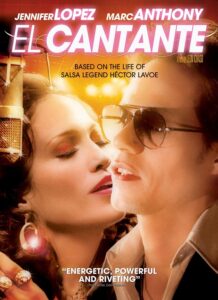
El Cantante, 2006

Movie - The Singer, 2006

The Singer, 2006

Héctor Lavoe is a Puerto Rican legend. A singer, composer and musical producer with a voice and talent what catapulted him as the greatest salsa performer in history. The film starring the also Puerto Rican Marc Anthony describes Lavoe’s life from his teenage years. The singer, as he is fondly remembered, traveled to New York City at just 16 years old.

Against his father’s will, he decided to go after his dreams. In the scenes we can see how he is part of a musical group and perform in a bar, he meets Eddie (Manny Pérez), Willie Colón (John Ortiz) and gets his first contract with a record label.

However, you will also get to know the darker side of Héctor Lavoe who went through drug and alcohol problems. Héctor meets and falls in love with Puchi (Jennifer López), mother of his son and a very important character in the film. Puchi accompanies him on this path of constant ups and downs until little by little his life begins to change.

They lose their son Tito, as a result of an accident with Héctor’s weapon, and he is definitely not the same again. A story that shows us the success of an artist, his talent and dedication, without neglecting his bad habits that led to his death.
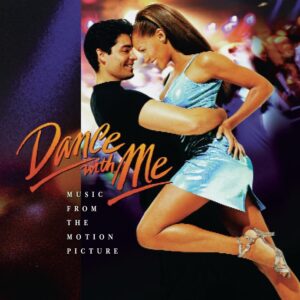
Dance with Me, 1998

Dance With me - Img

Dance With me – 1998

A film in which rhythm and romance will run through your veins. Chayanne and Vanessa Williams play a dance couple who meet in the middle of a great coincidence. Rafael Infante (Chayanne) loses his mother and decides to travel from Cuba to Texas to meet his father, the owner of a dance school.

When she gets to see him, she doesn’t know how to tell him the truth and prefers to apply for a job as a cleaning assistant. However, they realize how great a dancer he is and he begins to have participation in the academy. In the scenes we will be able to see how they get together through dance and enjoy the Latin rhythms. A fun film that should be among your weekend selection. Enjoy it!

Cuban Fury, 2014

Image of Cuban Fury 2014

Cuban Fury 2014

It tells us a story of love, self-improvement, improvement of self-esteem and, of course, salsa. Bruce Garrett (Nick Frost) is attracted to his boss Julia (Rashida Jones) and wants to conquer her through dancing. Garret had qualities for salsa but during his teens he was intimidated and put it aside.

Today, he wants to regain that rhythm, overcoming self-esteem issues and personal fears. For the character it is not easy to leave behind those events that marked his life. However, you must put aside self-pity and allow the dance to define everything. Will it have good results? Find out for yourself!
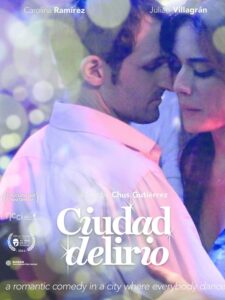
Ciudad Delirio, 2014

4- City of Delirium 2014

City of Delirium 2014

Cali, Colombia becomes the setting for an adventure full of dance and new experiences. Javier (Julian Villagrán) is a Spaniard who travels to Colombia for work and cannot help but fall in love with its people, customs and women. He meets Angie (Carolina Ramírez) a Colombian who owns a dance school. Their encounters are marked by the music and dancers that characterize this city. Javier ends up learning to dance salsa and guess what? Become an expert!

If you want to know more, find it now!

Shine, 2017

Shine 2017 - Latin music
Shine 2017 – Latin music

Shine tells us about two Puerto Rican brothers Ralphi Matas (Jorge Burgos) and Junior (Gilbert Saldivar) who have separated due to bad experiences and after a few years, they meet again. Between them, an even greater distance is created when they are on opposite sides of the fight for the gentrification of the area where they grew up.

The dance and cultural roots are present throughout the film, with Uncle Julio (Nelson Gonzales) trying to unite them again. Drama, dance and romance take sides in Shine, a very common story among Latinos in the United States who struggle not to let their principles die.

Latin music is life, it gives color, improves mood and is part of a cultural legacy that will continue to be maintained through the years. Every day new exponents of the genre appear and this will continue to happen over the years. So be it!

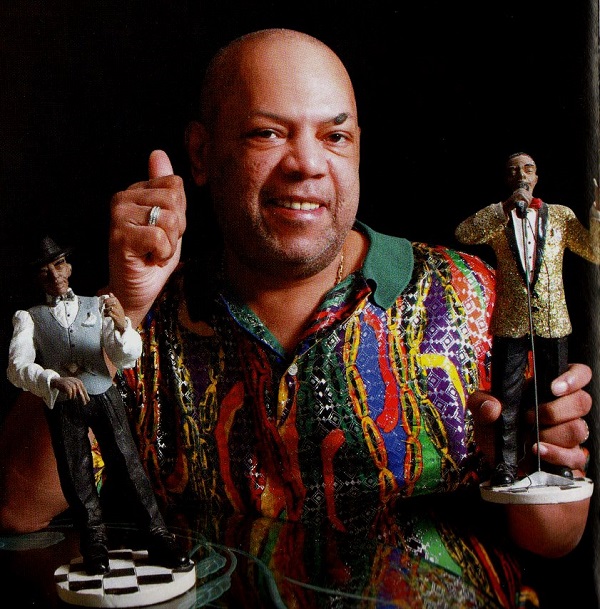
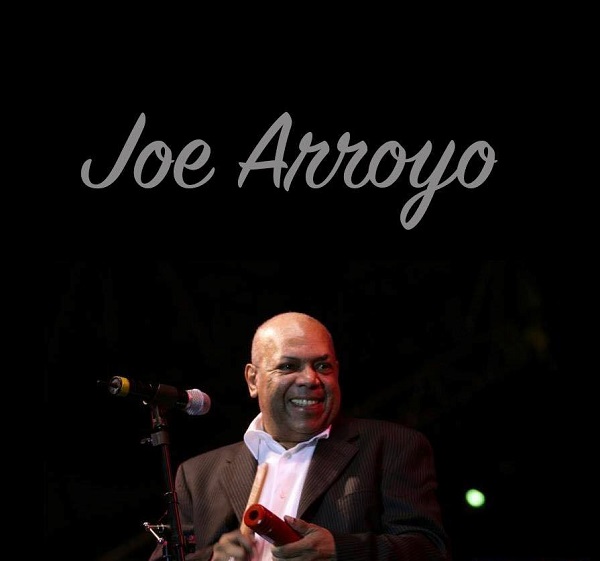
Joe Arroyo was an excellent Colombian singer and composer of salsa and tropical music

On November 1st, 1955, Alvaro José Arroyo González, better known as “Joe Arroyo”, was born in Cartagena de Indias, Colombia.

He was an excellent Colombian singer and composer of salsa and tropical music, considered one of the greatest interpreters of music in his country.

His songs were national and international hits, he won multiple Gold records throughout his career, among them, 18 Gold Congos and Super Congos won in the Festival of Orchestras of the Carnival of Barranquilla.

Among his most relevant songs are “La rebelión”, “Tania”, “Mary”, “En Barranquilla me quedo”, “El Ausente”, “Tumbatecho”, “Centurión de la Noche”, “Manyoma”, “La noche”, “La rumbera”, “La guarapera”, “El trato”, “Con Gusto y Ganas”, among others.

In November 2011, Arroyo won the Latin Grammy award for best singer/songwriter at the 2011 Latin Grammy ceremony.

Born and raised in the Nariño neighborhood of Cartagena, Arroyo began his career at a very early age, when from the age of eight he sang in bars and brothels in Tesca, the tolerance zone of his hometown.

Joe Arroyo fue un excelente cantante y compositor colombiano de música salsa y tropical

In his early days he sang with groups such as Los Caporales del Magdalena, Manuel Villanueva y su Orquesta and the Supercombo Los Diamantes (the last two in 1970); in 1971 he recorded with La Protesta.

To look back, he started with the song “Manyoma”, which is Fruko’s, but has my arrangements. That’s where that hit was born, but it really came on strong when I had been with my band for four years. It is a sound that has soka, salsa, African sounds, cumbia, sea breeze and a 50% that comes from me but I have no fucking idea what it is.

Joe Arroyo commenting on the origins of joesón.

In 1973 he got his big break when he signed for Discos Fuentes after the producer, author and artistic director of Discos Fuentes, Isaac Villanueva, in the Suri Salcedo park in Barranquilla, was struck by a “pelao” who sang with the vibe of Cuban Celia Cruz. The announcer Mike Char had recommended him to Fruko and told him that he could see him in action at the El Escorpión stand, in the Pradomar (Atlántico) beach resort, as the voice of the house orchestra, La Protesta.

On Sunday Villanueva was there. And it caused him more impact. He spoke with Leandro Boiga, director of La Protesta, and obtained permission to take him to rehearse days later to Medellín. Thus Joe Arroyo joined Fruko y sus Tesos, an orchestra with which he achieved great fame and with which he recorded uninterruptedly until 1981.

Between 1974 and 1975 he performed with Los Líderes (Los barcos en la bahía), between 1976 and 1981 with The Latin Brothers (La guarapera), in 1976 with Los Bestiales, in 1978 with Pacho Galán (Volvió Juanita) and with La Sonora Guantanamera, and in 1980 with Los Titanes.13 He also sang in other groups such as Piano Negro, Afro Son, Los Rivales, Los Bestiales, Wanda Kenya, los Hermanos Zuleta, el Binomio de Oro, Juan Piña, Mario Gareña, Gabriel “Rumba” Romero, Claudia Osuna, Claudia de Colombia, Oscar Golden, Yolandita y los Carrangueros, among others.

In 1981 he founded his own orchestra, La Verdad, with which he dedicated himself to mixing diverse musical influences, mainly salsa with coastal music (cumbia, porro, chandé, among others) and with diverse Caribbean rhythms (socca, reggae) until he created his own rhythm, the “joesón”.

Joe Arroyo
Joe Arroyo

Some of the hits recorded with La Verdad are classics of the coastal music that earned him many awards and being considered the King of the Carnival of Barranquilla, where he won 10 Gold Congos and a Gold Supercongo (created especially for him) in the Festival of Orchestras.

One of his biggest hits was “La Rebelión” (1986), a song that tells the story of an African couple, slaves of a Spaniard, in Cartagena de Indias in the 17th century.

The piano solo, played by Chelito De Castro, and Arroyo’s soneos made “La Rebelión” an immediate hit that is still danced to at parties and discotheques throughout the continent.

In Mexico the same phenomenon happened since the song was first published in the LP “Tequendama de Oro Volumen 7” by Discos Peerless in 1987 and its LP “Joe Arroyo y su Orquesta La Verdad, Grandes éxitos”, still to this date the song is very popular in the sonidero movement.

Other of Joe Arroyo’s most successful songs were “El Caminante”, “Confundido”, “Manyoma”, “Tania” (dedicated to his daughter) and “El Ausente”, all recorded with Fruko.

Álvaro José Arroyo
Álvaro José Arroyo González

The album “Fuego en mi mente” (1988) contains songs with influences from African music and contemporary salsa. With “La guerra de los callados” (1990), he made his first Spanish tour. In 1993 he released “Fuego” and played again in Spain.

Joe Arroyo recorded with Discos Tropical (1970-1971), Discos Fuentes (1973-1990) and Discos Sony (1991-2002). After an 11-year stint with Discos Sony, he returned to Discos Fuentes in Medellín in 2003, where he recorded his latest works: “Se armó la moña en carnaval” (2004), “Mosaico de trabalenguas” (2006) and “El Super Joe” (2007).

Joe Arroyo is one of the five Colombians who have appeared on the cover of Rolling Stone magazine.

Since the early 1980s, Joe Arroyo suffered multiple health problems that prevented him from touring and for which he was considered dead several times.

On September 7, 1983, he was presumed dead after suffering from a retrospective thyroid condition that kept him away from the stage. In 2000, he nearly died in Barcelona due to a diabetic coma and pneumonia.9

His medical history recorded ischemia, renal and motor problems and difficulty singing. In some concerts he even had to be helped up on stage due to weakness and disorientation.

In 1997, despite his health problems, he made a special appearance in the soap opera Perro Amor.

The singer’s health was affected on April 26, 2011 and he was hospitalized since late June 2011 in the clinic La Asunción de Barranquilla in intensive care for a clinical picture of hypertensive crisis, ischemic heart disease and diabetes mellitus with simple decompensation.

He was connected to an artificial respirator, underwent dialysis and a tracheotomy. His condition caused him to be considered dead on social networks, which was denied by both his relatives and the hospital.

All this took place in the midst of a controversy between the singer’s former family (his ex-wife Mary Luz Alonso and his children) and his friends, who considered that Joe was being exploited by his wife Jacqueline Ramón and his musical representative, who claimed that Joe Arroyo was not suffering from major health problems and announced his early return to the stage.

He died on July 26, 2011, at 7:45 (UTC -5), at La Asunción clinic in Barranquilla due to a cardiorespiratory arrest, as a result of a multiorgan failure (high blood pressure, infections, kidney problems) that had kept him in intensive care since Monday, June 27 of the same year.

He was buried on July 27, 2011 at the Jardines de la Eternidad cemetery in Puerto Colombia.

On October 19, 2011, his body was transferred to a special area for illustrious characters in the Jardines de la Eternidad cemetery.

On December 17, 2011, the Mayor’s Office of Barranquilla unveiled a statue of Joe Arroyo in the Musicians’ Park.

Arroyo had signed with Cenpro TV to produce a miniseries about his life, once Alejo, la búsqueda del amor of Caracol Televisión was finished, but in 2000 Cenpro TV went bankrupt after the crisis of public TV in Colombia.

Between June and December 2011 RCN channel aired a telenovela based on the singer’s life called El Joe “La Leyenda”. Sadly the singer passed away during the broadcast of the series.

After his death, Jacqueline Ramón and Mary Luz Alonso (two of Arroyo’s ex-wives) decided to build two museums respectively. Jacqueline’s museum will exhibit various items that stood out during her musical career, such as the 18 Golden Congos won at the Barranquilla Carnival.

Álvaro José Arroyo
Álvaro José Arroyo

In the future, the museum is expected to be moved to a more appropriate location, once the approval of the Ministry of Culture has been obtained.

A wax statue designed by an American sculptor will also be exhibited there.

The other museum, located in the home of Mary Luz Alonso Llanos and her daughters Eykol and Nayalibe Arroyo, will also feature articles, photos and other Congos de Oro, in addition to a statue.

In July 2011, the Mayor’s Office of Barranquilla decided to name one of the stations of the city’s mass transit system, Transmetro, “Estación de Retorno Joe Arroyo”, in tribute to the singer’s musical legacy. According to the then Manager of Transmetro, Manuel Fernández Ariza, the Joe Arroyo station is the most important station of the integrated transportation system.

On March 1, 2012, a Colombian scientist discovered a new species of bee on the Colombian Caribbean Coast that was named in honor of the singer, the Geotrigona Joearroyoi.

On the same day of Joe Arroyo’s death, singer Checo Acosta composed “Adiós Centurión” while on a trip from Medellín to Barranquilla.

The video and song were released months later. Another song that paid tribute to him was titled El Rey Del Carnaval, with the participation of Juan Carlos Coronel, Petrona Martínez, Checo Acosta himself, the pianist and singer Chelito de Castro, Ricardo El Pin Ojeda, who was timbalero of the orchestra La Verdad and also with Eykol Tato Arroyo, daughter of the Maestro. This song was included in the commemorative album made by Cervecería Águila.

Joe Arroyo

You can read: November 22nd International Musician Day

A new salsa talent with Latin parents and born in Boston

Why romantic salsa?

So here we have Sebastian Medina or better known as SBM. He is a promising young talent born and based in the city of Boston. How are you, Sebastián? It’s ice to meet you.

Thank you very much for the opportunity, Karina. I’m super happy and pleased to be here with you.

Salsa singer Sebastian Medina, better known as SBM

Why use the acronym SBM as your stage name?

SBM refers to my full name, which is Sebastián Medina. In the genre, there are few artists who use a short, cool and different name. So, I wanted a short and quick name by which people could identify me.

In passing, I wanted to differentiate myself from other artists with an unusual name.

Many young people like you choose urban genres to start their artistic careers. Why did you choose romantic salsa as your main genre?

As a musician I really identify with salsa because of its instruments, its harmony and everything to do with them. Although I really like romantic salsa, I also like hard dura. I like all types of salsa. I have this impulse to play the piano, get into the genre and enjoy it.

As a singer, the situation is different because I have always wanted to be on stage like the greatest artists. Being also a composer, when someone sings my music, I feel very grateful and supported by those who do it. I want to bring that music to all the young people of the world.

Reading a bit about your history, it is clear that you have always liked this genre.

Yes, I am a romantic. I always have been.

Sebastian Medina performing on stage

How was Sebastian selected for his scholarship?

You were selected for a scholarship at the Berkeley College of Music. How was the selection process and the audition? What was your reaction to being selected?

I was a little nervous during the audition. I sang a song in Spanish and very few people sing Latin music here in Boston. So, I went in and sang a beautiful song by Marc Anthony to compete for that scholarship.

Here in the city there is a program called City Music Boston, whose directors saw my talent and followed my progress in high school. I got a message from them, took some classes they had offered me about music, theory and other things and, meet the people in there. When December came, I received an email congratulating me and informing that I had been accepted to the Berkeley College of Music. That’s when I started to wonder how I was going to pay for college, but I was called from the City Music Boston program to inform me that they would offer me the scholarship that would cover my studies.

What do you think are the selection criteria of the Berkeley College of Music for choosing young talents like you? What do you think made you stand out from the rest?

I studied at the Boston Arts Academy, which is the only arts school here in Boston. I am always very dedicated to my music, my learning and what teachers do. I like to learn a lot and absorb all the energy that the music scene has. I think that the judges saw that in me. They saw my hunger and passion for music and composition.

Now that I’m at the Berkeley College of Music, I’m studying to be an arranger because I want to devote myself to arranging my own music and that of others, but always focusing on salsa.

Sebastian Medina with Colombian record producer Diego Galé

I read that you like Marc Anthony and Los Adolescentes, but you also like urban artists such as Nacho and Nicky Jam. How do you reconcile these very different tastes?

As you know, young people don’t identify strongly with salsa today. For that reason, I’m trying to combine salsa with the urban genre to create new sounds. I’m aware that people really like trap and reggaeton, so I want to use those genres to combine them with my music. My goal is to appeal to the very young.

It may happen that I ask a friend of mine if he likes salsa and he replied that his parents and grandparents were the ones who listen to it. It makes me wonder why he can’t enjoy that music too. That has led me to use other sounds and melodies that young people can identify with.

Would you dive into urban genres?

If a recognized artist gives me the opportunity to do so, I would like to try, but now I want to focus on salsa because that is my priority.

What are the age ranges of the people who listen to your music?

According to Spotify, most of the people who listen to my music are between 18 to 30 years old.

Sebastian Medina with Peruvian-American bandleader, and producer Tony Succar

Do you feel there is little unity in salsa?

I think great artists have a legacy built and now it’s up to young artists to create theirs because that’s how music should be. There are not many collaborations at the moment and that must change.

In the case of the urban genre, artists release collaborations almost every week and I don’t understand why salsa singers can’t do the same. I think that a salsa song can have a different arrangement so that it becomes a remix, but unfortunately that is not being done. There is also a part of the public that is a bit narrow-minded, which is why they don’t support new salsa talents, but rather those who already have a consolidated career.

Do you think that this union is what differentiates salsa from urban music?

I think so because there are cases such as Bad Bunny, who when he does a collaboration with a lesser known artist, the latter will automatically get all those streams, views, followers, among other things. That means that he is indirectly lending his support to that artist and his followers are going to support him as well.

You compose and play the piano. What other areas are you developing?

Right now, I’m in my third year of college and I’m learning as much as I can. At this point in my career, I’m taking a lot of music arranging classes. I’m learning how to arrange my music, how to keep two tunes going at the same time and other things. I’m also taking production classes and all kinds of programs that help me shape my ideas.

Sebastian is in his third year of college at present

Read also: Puerto Rican salsa singer Jai Ramos spoke to us of his life and projects

“Tabaco y sus Metales” the legend of Salsa made in Venezuela

On May 30, 1995, Carlos “Tabaco” Quintana died in Caracas, Venezuela, the city where he was born on September 15, 1943.

Charismatic Timbalero, Sonero and Director of “Sexteto Juventud” and “Tabaco y sus Metales” the legend of Salsa made in Venezuela”

Former member of  “Sexteto Juventud”, founder of the orchestra  “Tabaco y sus Metales”. He was born on September 15, 1943 and began his musical training in the corners of San José.

Youth took him hand in hand with the street salsa brava, the rebellion of Palmieri and Mon Rivera’s trombones and the castinglés sound of Joe Cuba’s sextet.

And it was so long that they began to call him “tabaquito”, a tabaquito who waited for the day to be over to find the musical flavor far from the chore of shoeshine boy and town crier.

He never forgot that he used to go out to 23 de Enero to listen to the rehearsals of a group that was being formed there.

Years went by and rehearsals went by while Tabaquito got to know one by one the members of that group until 1963, when he was twenty years old, his friend Elio Pacheco recommended him to Olinto Medina, the leader of that band.

Olinto was about to rehearse “Guasancó” and the singer was not in tune with him.

Elio’s recommendation took effect and “Tabaco” did its thing, very well. Thus the Sexteto Juventud had a new voice and something more, because Carlos Quintana was able to walk through all the instruments of the group.

He had an almost magical vocal timbre. His voice was astonishingly similar to Ismael Rivera’s and we already know what that meant at a time when Maelo was the obligatory reference from the ranks of Rafael Cortijo’s Combo.

With Quintana the Sexteto Juventud had moments of true glory because although it reflected the influence of Joe Cuba they created a style that continues without copy.

In addition to his vocal art, Tabaco was a good composer, with a good vibe and reciprocity in the town. Every September he would go to play for the prisoners, on the day of Las Mercedes. He felt what a captive felt and that is why he composed “La Cárcel” (Qué malo es estar/ estar entre rejas/ y qué soledad/ qué soledad se siente).

Along with this song he released “Mi Calvario”, a piece that became a classic.

(Quisiera saber/ cuál fue la causa/ de nuestro olvido.And so, between recordings and toques, Tabaco, in the Sexteto Juventud, saw the arrival of José Natividad Martínez, Naty, the flutist and friend. Naty sold the idea of the brass to Quintana and Quintana, buying, suddenly came up with “Tabaco y sus metales” and recorded Pablo Alvarez’s “Una sola bandera” which was a smash hit, “Agua de mayo” and his tribute to the rumberos, “Tuntuneco”.

In May 1984 we published a very rich interview with Tabaco in El Nacional’s Feriado. Almost immediately they called to locate him. He was invited to the Managua 84 festival. It was the first time he left the country by air.

He performed for 30,000 people with Son 14, Amaury Pérez, Pupi Legarreta and Tania Libertad, among others. On his return he told me that the Cubans were astonished because they thought that in Venezuela there was only Oscar D’ León, and that he almost fainted when Daniel Ortega approached him to ask for an autograph, and that he touched the sky when Adalberto Álvarez and Son 14 went up on stage with him to sing “Una sola bandera”.

His dreams: He had two: To record an album as a tribute to Ismael Rivera, and to make another one with boleros. Once in Macuto he sang with Ismael Rivera and for both of them it was a tremendous experience. In Guarenas, the musical and brave, specifically in “Menca de Leoni” was cooking the dream.

With Naty’s help, he began to record Maelo’s on an album that the Sonográfica label did not take care of releasing afterwards. He could not finish it because cancer took him to the hospital where Joe Ruiz was also hospitalized.

That album was vocally completed by Ángel Flores. He, who admired Cheo Feliciano and Tito Rodríguez so much, could not make the bolero album either.

Naty says that in more than one night he managed to get Tabaco out of the hospital to advance the tribute album to Maelo. She knew that Tabaco wanted to do it, and pleased the friend, who also, looking for spiritual relief to his physical pain, went to Los Teques, where he was surprised by death on May 30, 1995.

“Tabaco” Chronology of his musical life 1.943 Carlos Quintana was born on September 15 in the San José neighborhood of Caracas, Venezuela.

1.955 as a child he worked as a shoeshine boy and began to be interested in music.

1.959 in his adolescence he attended the rehearsals of a musical group in the 23 de enero neighborhood of Caracas, because of his skinny body and stature they began to call him Tabaco.

1.962 on May 13 was founded the group called Conjunto Rítmico Juventud, which eventually gave rise to the Sexteto Juventud, composed of Olinto Medina as director and bassist, Elio Pacheco on the Tumbadora, Carlos Croquer on drums, Arturo Lopez singer, Juan Medina on guitar and Isaias on bongo.

1.963 musician Elio Pacheco introduces Olinto Medina leader of the group to his friend Carlos Quintana.

1.967 “Tabaco” joins the group and in a short time he becomes the vocalist of the group in his first recording titled “Guasanco”, a 45 rpm single whose reverse side was titled “Cautivo”, this happened on February 22nd of that year.

SB1 Publications

Besides having a voice similar to that of Ismael Rivera, Carlos Quintana performed well on the bongo and other instruments.

On June 11, 1967, the first album of Sexteto Juventud was released, entitled “Guasanco”, it was recorded for the Velvet label and the name of the album was due to the success of its first single “Guasanco”, other songs on the album were “La Jibarita”, “Bógalo” and “Consejos de mamá”.

The same year 1967, this time on September 24th, their second album is announced: “Mas Guasanco”.

A new production of the sextet is called “A bailar juventud”, which contains the songs “Guasanco número 3”, “Hermanos con salsa”, “Soy el Bravo” and “Guajira Sentimental”.

The Sexteto releases the album “Mala” for the same Velvet label, where the numbers “Capricho antillano”, “La calle 10”, and “El Nuevo Guasanco” were recorded.

Two new records that were pressed for Velvet are: “Sabroso tumbao” and a work with the voices of Carlos Quintana and Oscar Mijares who was nicknamed “El chino” titled “La juventud se impone” for the Velvet label, in which they developed rites such as: Guaguancó, Jala jala, Guajira, Guaracha and Mozambique with hits such as “La cárcel” and “Jala jala Navideño” in the voices of Carlos Quintana and Oscar Mijares.

1.971 a new Sexteto album was released, entitled “La magia del sexteto”, which included songs such as: “Con todas las banderas”, “Sandra Mora” which would later be recorded by Naty y su Orquesta, “Caramelo y Chocolate” and “Virgen de los cuatro vientos”.

Also in this year they recorded an album called “A todo ritmo” in which they included “Caramelo Tumbao”, “De nuevo Borinquen” and “Comand Bógalo”, they were awarded a gold record by the Velvet music label.

1.974 On April 22nd without “Tabaco” in their ranks, Sexteto Juventud recorded an LP that we have to mention for its success at the Salsa level, the album was called “Lo espiritual del Sexteto Juventud” with rhythms like “Guaguanco”, “Guaracha”, “Bolero”, “Danzon” and “Guajira” and we highlight the numbers “Espiritualmente”, “Vestida de Blanco” and the homage to the Boricua land with the theme “A Puerto Rico”.

1.975 following the suggestion of his friend and musician the Venezuelan flutist Natividad Martinez, Carlos Quintana creates his own group “Tabaco” and his Sextet. Their first song was called “Una sola bandera” and was very well received by the public.

Also in 1969 he recorded the spectacular album titled “Agúzate”, for Tico Records, with classic songs such as: “Aguzate”, Amparo Arrebato”, in homage to a dancer from Cali, Colombia, “Vive feliz”, “Guaguancó Raro”; “Traigo de Todo” and the bolero “A mi manera”.

Carlos Quintana recorded the album titled “El Sabor de Tabaco” in the Colors studios in Caracas, the album contains songs such as “Maria lienza”, “Pegao”, “Ofrenda” and Yabirongo”.

1.975 records the albums “Tronco e’ baile Tabaco y su Sexteto” for TH records in which appear the themes “Pobre”, “Mata Ciguaraya” by Benny More and the hit “La Libertad”, in which he makes mention of the greats like Benny More, Celia Cruz and Ismael Rivera, half of the themes of the album are authored by Gabriel Carrasco and the other record production of 1. 975 was called “Tabaco y su Sexteto: Mi pueblo – Mi burrita – Nostalgia”, for the Top Hits label, with the production of Tony Montserrat and which has the themes “El Vals de Papa”, the Tango “Nostalgia” and a very salsa number titled “Ponte en Ritmo”.

1.976 his musical work is titled “Tabaco y su Sexteto” with the arrangements, production and direction of Victor Gutierrez, the record was made in Venezuela by La Discoteca CA. And contains a number of authorship of “Tabaco” entitled “Mi Celda”, and other songs like “Amor amor” and “Prefiero mí son montuno”.

1.978 Carlos Quintana changes the name of his group to “Tabaco y sus Metales” and with that title they record for the Top Hits label in the Intersonido CA studios, the album includes songs like “Tristeza y pena”; “Celda de castigo” and “Sinceridad”; both by Carlos Quintana. The orchestra was formed by Pedro Landaeta on Piano, Hector Pacheco on Bass, Pablo Álvarez on Conga, Carlos Quintana Bongo and Percussion, Gabriel Carrasco on Tres, Trumpets by “Pollo” Fuentes and Luís Arias, Natividad Martínez on Flute, Carlos Quintana Singer and the choirs of Gabriel Carrasco, Dimas Pedroza, Álvaro Serrano, Carlos Quintana and Víctor Gutiérrez.

1.979 Tabaco y sus metales publishes a new album under the title “Ni poco ni demasiado” also for the TH label with a number of the same name and other songs such as the big hit “Arrollando”, a version of the song “Todo de los metales”, a version of the song “Todo de los metales”, and a version of the song “Todo de los metales”. a version of the song “Todo el mundo escucha” by Bienvenido Granda and also a number by Markolino Dimond titled “Maraquero”.

With the production, arrangements and direction of  Victor Gutierrez, the recording was made at Intersonido CA in Caracas.

1.980 the musical work of this year was titled “Advertencia”, this work was made in Puerto Rico under TH license, it is a sample of what at that time “Tabaco” meant in Salsa, in this recording participated musicians like Luís Quevedo in the Piano, Polo Huertas in the Bass, Papo Pepín in the Conga and Yayo el Indio and Carlos Santos in the choirs.

The musical direction and arrangements were in charge of Ray Santos. Among the songs on the album are “Agua de mayo” by Pablo Álvarez, “Que ironía” by Carlos Quintana and “Alegría” by Naty Martínez. Regarding this work, Rafael Rivas, Disc Jockey of Radio Aeropuerto, wrote: “Latin music in Venezuela has had several variants, some aimed at fulfilling a certain time, others evidencing the spirit and reality, the daily life with success; precisely to this current or trend belongs Tabaco.

The commitment to sing what he carries inside, to expose with his natural style the things he feels, even his motivations, leads us to reflect on the figure of Tabaco.

It is he, and no other, in our country, who has dedicated himself to present with passion what he suffers, what he sees, what he truly feels.

Tabaco says, his naturalness allows that balance between what he sings and lives, he seems to conjugate, and perhaps that is the truth, to take for himself, what we have logically lived.

Tabaco’s life is here, and we respect his criteria: without a tenacious diffusion Tabaco has managed to sell, to surpass the best; and there is a reason for it: Tabaco has the strength.

He is interested in singing, in carrying a message, and in his own way he has exposed it with sense, with full authenticity.

Tabaco commented to me one afternoon at the Airport: “Tigre, I believe that the important thing is to define ourselves, to express our reality and denounce at the same time: that is why Rafael believes in you, because you are the message, the truth of our movement”.

Tabaco was referring to the content of the songs; he believes in the possibilities of music, in its magic to undertake behaviors and to present the rage, love and passion of our spirit.

Later Tabaco pointed out to me: “What is indispensable is to sing, the way things are felt, the way the people communicate, that is why I make Salsa”.

And that is why Tabaco has a name, a special public, that has known how to understand him, because he has reached us, with sense and commitment. He is the voice of the people aimed at interpreting their process, their experiences, their daily work. Therein lies the reason for his inspiration, the context of his themes.

When he inspires, he shows his capacity to value, his speech evidences his thoughts, his aspirations, and also his repudiation. He hides nothing and what emotion we feel, when he unloads on the timbales, when his voice rises and blends with the rhythm, telling truths, encouraging the spirit, if I understand the dancer, generating relief to the heart, living the cadences, demonstrating his skills as a sonero. He created his own style, and this has consecrated him.

Now we have the new Tabaco, with more maturity, and the experience of the arranger who at this time has a special prestige: Ray Santos.

Ray’s commitment went beyond what we originally thought; Tabaco was a challenge for Ray; he had Santos in front of a marvel, as he described him, the people turned to the figure of Tabaco, who felt he had the best time to undertake the melody.

Ray prepared the arrangements with a concentration that he had never achieved before, he understood the commitment, and Tabaco knew how to respond to the requirements.

Ray confessed that Tabaco is gifted with possibilities, so his work demanded the maximum. For the first time, Tabaco appears with a superband, with a different orchestration, and it was necessary to do it, the time demanded it, his voice has the right to sound to the four winds, it is time that our best (Tabaco) interprets reaches the Caribbean, with height.

Tigres y tigressa, with this LP we will have special music; its quality, its conception, will lead us to take it into account, not only for our rumbas but to enjoy it all our lives.

The producers knew perfectly well the intention of recording with Ray Santos, they knew that Tabaco would keep to his style, without any change or twist that could deviate his personality as an interpreter; what they were basically looking for was perfection in the orchestration, that magic touch that would allow him greater expressive freedom; that is the reason for recording in Puerto Rico.

The best thing that could have happened to Tabaco this year was to meet Ray Santos, and for us, that unity represents the most audacious and wonderful thing that has been done so far. I believe, despite the express prohibition to advertise cigarettes, that this Tabaco is the purest, most inimitable in its Venezuelan flavor, and most authentic of the Caribbean. What are you waiting for? Light it up now! Tabaco y sus metales 1.981 was his next production for Top Hits records, with arrangements by Jorge Millet and Natividad Martínez, in which the songs “Si la envidia fuera Tiña” by Jorge Millet and Carlos Quintana: “Mi Celda” and “A Millet” were recorded.

In 1982 he recorded an album called “Cosa Linda”. The themes of the album are: “Cosa linda”, “Tremendo guaguancó”, “Fiebre de ti”, “El callo”, “De mi rancho a tu casa”, “El cafetero”, “Camarera de amor”, “Consejo a las mujeres”.

(H3) 1.983 Produces the album “Homenaje a los bravos”, also for TH records, which includes “Baranda” by Justi Barreto, “El Timbalito” by Tito Puente and “La Culebra” by Obdulio Morales.

1.984 in this opportunity the album was called “El Timbalero, Tabaco y sus Metales”, which includes two numbers by Justi Barreto: “Timbalero” and “Barito”, the song “Casamiento” by Rafael “Chivirico” Dávila and a song written by Carlos Quintana: “Contestación a mi calvario”, production, direction and arrangements by Andy Duran.

  1. 988 Tabaco y su grupo futuro, recorded for the Velvet label in which they recorded songs like “El taxista” and “El Temporal”, with arrangements by Félix Suárez and Víctor Santana, the members of the group are Carlos Quintana singer, Fidel Antillano pianist, Jesús Torres on bass, Cruz Armando Quintana on bongo, Alirio Castillo on Timbal, Alberto Vergara on Vibraphone, Victor Santana on tres and guitar, Jorge Ruiz on conga, Tambora and guiro in charge of Jorge Orta and the choirs of Carlos Quintana, Felix Suarez, Victor Santana, and Pablo Alvarez.

On May 30, 1995, the Venezuelan musician, composer and singer Carlos Quintana, known in the salsa world as “Tabaco”, died in the city of Caracas, victim of cancer. His voice died, but his legacy of thirty-two years of artistic life remains for all the followers of his musical work in Venezuela, Colombia, Latin America and the world.

Jimmy Delgado’s ongoing projects and legacy of Johnny Rodríguez

Salsa news in New York

Hello everybody! As always, we have the latest in the salsa scene for our audience. Today, we will talk about Jimmy Delgado’s ongoing projects and the life and work of Johnny Rodriguez during his career.

Jimmy Delgado and his new album

This is Jimmy Delgado

Jimmy Delgado  is an artist born in New York City, United States, on July 29th who has had a very prolific career in the Latin music world. There is not a lot of information about the years in which he became interested in music, but it is known that he started in this world in 1974, that’s when he began working with various orchestras and artists of renown such as Ismael Quintana, La Tipica Novel, the Big Band of Ray Barreto, among others. With this last group, he would perform again in the 1980s and work about five and a half years.

In parallel, he continued to work as a musician for other singers and orchestras, such as Willie Colón on timbales and bongo. At the same time, it is he who replaced one of the most important members of La Típica 73. But his career does not end there, as he also worked with Eddie Palmieri, Tito Puente, Luis Perico Ortiz and many others.

With such a track record, it is not common for him to be so sucessful and for each of his projects to enchant the audience, no matter what time. Today, he has returned to back into the limelight with his most recent phonogram entitled A Mis Mentores…To My Mentors. Timbalero, conguero and bongocero has made these unreleased tracks available to his fans on all music-related digital platforms and are the following:

Si Hecho Palante / La Libertad

Algún Lugar Bajo El Sol

De Qué

Adoración

Alma Con alma

Sin Timbal

Recordando A Barreto

Qué Bonita Es Mi Tierra

Ahora Si Voy A Gozar

(Bolero Medley) La Noche De Anoche / Cada Vez / Sé que volverás

Jimmy´s Descarga

Jimmy being interviewd by Johnny Cruz and El Rubio

Life and work of Johnny Rodriguez

A particularity of Johnny Rodriguez is that he was one of the first artists to create musical trios, which was completely new in the 1930s. That has not stopped him from achieving success with his partners, being the lead voice of the group Johnny Rodríguez Y Su Trío. One of the singles that made him better known was Fichas Negras, which is still remembered by many despite the years that have elapsed since its release.

Johnny traveled throughout Hispanic America and much of Europe to offer his talent to as many fans as possible. One of the countries where he was most successful was Puerto Rico, where he performed constantly on stage and even worked with TV shows on a recurring basis.

In his last years, he hosted a radio show in which he provided advice to young artists who were starting out in the artistic world and talked about his own musical tastes, showing that he believed that past ages were better in that respect. Even after his death many years ago, his legacy is still present in the old and new generations due to the great talent that always characterized him.

Johnny Rodríguez, Manuel Jiménez, Lalo Martínez, and Celso Vega in New York in 1943

  • « Go to Previous Page
  • Page 1
  • Interim pages omitted …
  • Page 3
  • Page 4
  • Page 5
  • Page 6
  • Page 7
  • Interim pages omitted …
  • Page 30
  • Go to Next Page »

International Salsa Magazine (ISM) is a monthly publication about Salsa activities around the world, that has been publishing since 2007. It is a world network of volunteers coordinated by ISM Magazine. We are working to strengthen all the events by working together.