• Skip to primary navigation
  • Skip to main content

International Salsa Magazine

  • HOME
  • Previous editions
    • 2026
      • ISM / March 2026
      • ISM / February 2026
      • ISM / January 2026
    • 2025
      • ISM / December 2025
      • ISM / November 2025
      • ISM / October 2025
      • ISM / September 2025
      • ISM / August 2025
      • ISM / July 2025
      • ISM / June 2025
      • ISM / May2025
      • ISM / April 2025
      • ISM / March 2025
      • ISM / February 2025
      • ISM / January 2025
    • 2024
      • ISM / December 2024
      • ISM / November 2024
      • ISM / October 2024
      • ISM / September 2024
      • ISM / August 2024
      • ISM / July 2024
      • ISM / June 2024
      • ISM / May 2024
      • ISM / April 2024
      • ISM / March 2024
      • ISM / February 2024
      • ISM / January 2024
    • 2023
      • ISM / December 2023
      • ISM / November 2023
      • ISM / October 2023
      • ISM – September 2023
      • ISM – August 2023
      • ISM July 2023
      • ISM Edition June 2023
      • ISM – May 2023
      • ISM April 2023
      • ISM March 2023
      • ISM February 2023
      • ISM January 2023
    • 2022
      • ISM December 2022
      • ISM November 2022
      • ISM October 2022
      • ISM September 2022
      • ISM August 2022
      • ISM July 2022
      • ISM June 2022
      • ISM May 2022
      • ISM February 2022
      • ISM January 2022
    • 2021
      • ISM December 2021
      • ISM November 2021
      • ISM October – 2021
      • ISM September 2021
      • ISM August 2021
      • ISM July 2021
      • ISM May 2021
      • ISM April 2021
      • ISM June 2021
      • ISM March 2021
      • ISM February 2021
      • ISM January 2021
    • 2020
      • ISM December 2020
      • ISM November 2020
      • ISM October 2020
      • ISM September 2020
      • ISM August 2020
      • ISM July 2020
      • ISM June 2020
      • ISM May 2020
      • ISM April 2020
      • ISM March 2020
      • ISM February 2020
      • ISM January 2020
    • 2019
      • ISM December 2019
      • ISM November 2019
      • ISM October 2019
      • ISM Septembre 2019
      • ISM August 2019
      • ISM July 2019
      • ISM June 2019
  • Download Salsa App
    • Android
    • Apple
  • Spanish

Search Results for: Legend

Héctor Martignon has been one of the most sought-after pianists on the Latin jazz scene in New York

New York based-, Colombian born Hector Martignon has composed, orchestrated, produced, performed and recorded music in a wide spectrum of genres, from Classical and Crossover, to Jazz and World Music, to Rock and Pop.

His five albums as a leader, two as co-leader (MOZART’s BLUE FANTASIES and BACH’s SECRET FILES) as well as his work on over a hundred albums, scores for five feature films, three Broadway Musicals and multiple other projects, showcase his wide-ranging area of expertise.

At Mozart Studios recording Carlos Jimenez’ second CD, + Ruben Rodriguez + Vince Cherico. A pleasure!

After several nominations as a sideman, two of his five solo CDs were nominated for a GRAMMY Award (REFUGEE, 2008, and SECOND CHANCE, 2010).

He arranged and performed parts of the score of Ang Lee’s OSCAR-nominated movie EAT, DRINK, MAN, WOMAN.

His first professional recording was at age 18 (Mikis Theodorakis’s “Canto General”) while one of the most recent was on legendary rock band CHICAGO’s latest production, the Latin-tinged “EXITOS”.

He has written symphonic orchestrations, performed and recorded by the Russian Philharmonic Orchestra and compositions like ABRE LOS OJOS, CIERRA LOS OJOS, commissioned and premiered by the MUSICA DE CAMARA STRING ORCHESTRA at St Patrick’s Cathedral in April 2011.

Hector Martignon is currently working on a first CD with his BANDAGRANDE Big Band + String Quartet as well as an album with selections out of a series of  7 solo piano recitals at the Ludwigsburg University of Education (Germany), where he conducts a “compact seminar” on Classic Music-based improvisation every November.

Our trio in Tokyo
Our trio in Tokyo

As a requested sideman he has toured the world with such greats as Paquito D’Rivera, Ray Barretto, Gato Barbieri, Steve Turre, Don Byron, Tito Puente and was featured pianist with Max Roach’s PROJECT AMERICA at the 92 St Y.

His joy of teaching has made him a requested guest-lecturer and performance teacher in music faculties and academies in several countries of Europe, Japan, North- and South America.

Hector wrote an instructional book on Latin piano commissioned and published by Hal Leonard, the SALSA PIANO BOOK.

Martignon’s abilities as a pianist have always been enriched by his interest in varied musical genres.

He paid for his studies of classical piano and composition at the prestigious Freiburger Musikhochschule in Germany by performing with the best Afro-Cuban and Brazilian bands of Europe, backing stars like Celia Cruz and Ismael Quintana on their European tours, and recording with Tata Güiness and Arturo Sandoval.

At the same time he was attending seminars of contemporary composition with masters like Gyorgi Ligetti, Luigi Nono and Karl Heinz Stockhausen.

He also performed classical music in recitals and concerts in Germany, Italy and his native Colombia, specializing in Chopin, Bach and Debussy.

One of his latest endeavors has been a Jazz-Classical crossover  project, co-lead with star virtuoso trumpeter Joe Burgstaller, in which the music of the classics, from Bach to Ellington is re-created in a chamber-jazz setting, to be enjoyed on their two releases, “Mozart’s Blue Fantasies” and “Bach’s Secret Files”.

Living in Brazil for a one-year love affair with that country and its music, Martignon soon became a requested studio musician and worked for star producer Carlinhos Brown.

Luquillo Beach, PR
Luquillo Beach, PR

Since relocating to New York City, Martignon has been one of the most sought-after pianists on the Latin jazz scene.

He’s toured North and South America, Europe, and Asia with the bands of Mongo Santamaría, Gato Barbieri, Steve Turre and Don Byron, who had him record in his latest CD.

He was featured pianist with the bands of Tito Puente, Mario Bauzá, Chico O’Farrill, Paquito D’Rivera, and Max Roach in his “Project America.”
Most notably, Martignon was pianist for the late Ray Barretto’s various ensembles.

During his eight-year association with Barretto, his contributions as pianist, arranger, and composer were fundamental in shaping the sound of the now famous New World Spirit Sextet.

One of his last collaborations with Barretto, “My Summertime,” was a favorite nominee for a Grammy award.
Martignon’s versatility has also made him extremely active in the film and television industries.

Besides playing all piano parts, he arranged and produced many parts of the score for the Oscar-nominated film “Eat, Drink, Man, Woman” by Ang Lee and performed the piano and keyboard parts for many movie scores (i.e., “Gloria”, “Relativity”).

He is composer of the original music of two feature films, one of which, “Septimo Cielo”, won international awards. He also collaborated in the production of many Broadway musicals (“Chronicle of a Death Foretold”, Paul Simon’s “The Capeman”, “Selena Forever”) as conductor, arranger, and co-composer.
In the fall of 2003 Hector visited Slovenia and Russia to collaborate with singer-songwriter Vitaly Osmsçko’s first symphonic CD.

The Russian Philharmonic Orchestra recorded in Moscow the orchestrations written by Hector.

As a composer, producer and arranger of TV and radio music his record is no less impressive. In 2001 he landed two spots for HBO Latino, and one for Coca Cola.

HECTOR” S FOREIGN AFFAIR
In 1998 Martignon performed with his quartet “Foreign Affair”at the Brooklyn Academy of Music’s famed annual festival “The Next Wave” on a triple bill with Tito Puente’s “Top Percussion” and Don Byron’s “Music for six Musicians”.

This proved to be a turning point for him and his ensemble, which evolved from the strictly acoustic trio sound of the first two CDs to a more eclectic and electric quartet sound.

The new configuration that evolved from that memorable concert started a series of concerts and recordings, with guitarist Mark Whitfield, Cameroonian bassist Richard Bona and Cuban drummer Horacio “Negro” Hernández.

This quartet performed and recorded live during a weeklong stint at New York’s famous Birdland.

The group has also performed on BET television festivals, at jazz clubs in Manhattan, and made various appearances in clubs and open-air festivals in his native Colombia and in Europe.

Martignon’s third solo project, to be released in the fall of 2003, is not only a reflection of the group’s new musical direction but also of his interaction with other world class musicians.

Eddie Gomez, Jeff Watts, Mathew Garrison, John Benitez, Dafnis Prieto, Willard Dyson have all made their unique contribution to this, Martignon’s new sound of Jazz.

Hector In Amsterdam with daughter Leticia

Hector Martignon never fails to surprise, challenge and delight us. Stay tuned and get involved in this affair.

Site: Héctor Martignon

Also Read: “El Sol de la Música Latina” el primer premio Grammy para el histórico disco de Salsa Eddie Palmieri


North America – November 2020


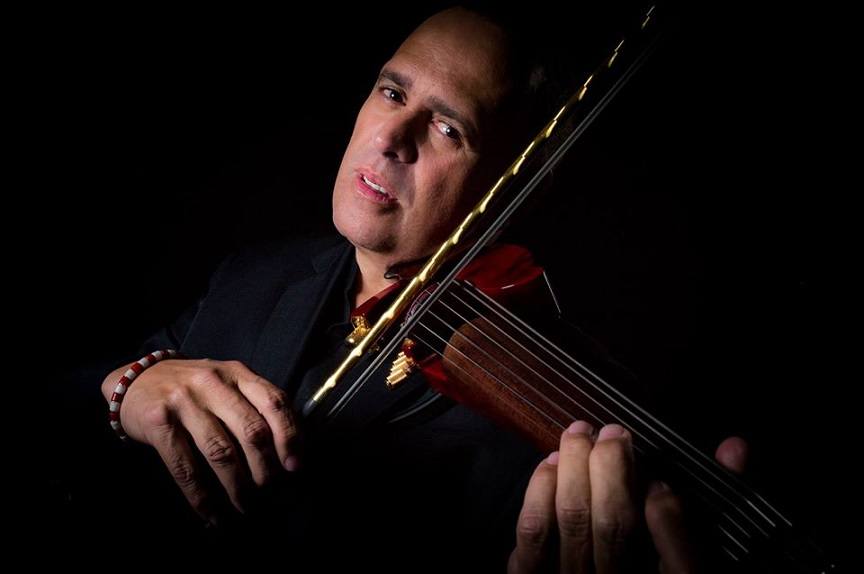
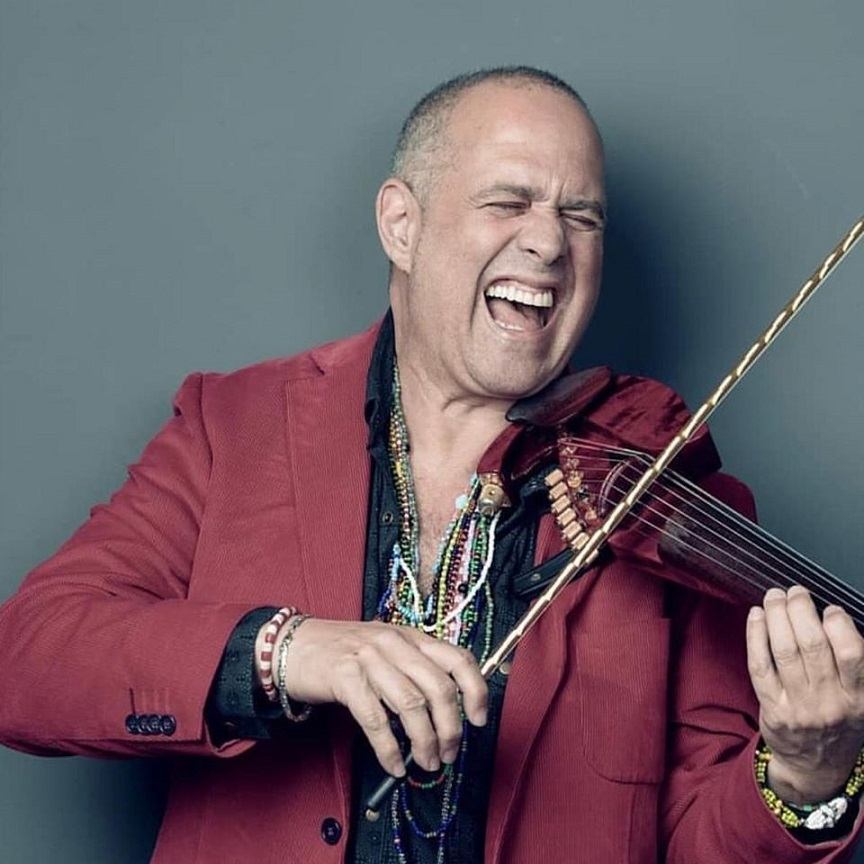
Alfredo De La Fe, is responsible for transforming the violin for Latin Music

Latin America/ Colombia/ Cali

Alfredo de la Fe is a Cuban-American violinist based in New York, who also lives in Colombia.

He is responsible for transforming the violin into a sound much more suitable for Salsa and Latin music, as well as having manufactured and patented his own violin. De la Fe began studying the violin at the Amadeo Roldán Conservatory in Havana in 1962.

Two years later, he receives a scholarship to enter the Warsaw Conservatory, in Poland.

In 1965, he soloed compositions by Mendelssohn and Tchaikovsky with the Metropolitan Opera Orchestra at Carnegie Hall.

Alfredo De La Fe playing the violin

A scholarship at Juilliard opened new doors for him. De la Fe began his professional career, at the age of twelve, when he switched from classical music to Salsa, and accepted an invitation to join charanga legend José Fajardo’s Orchestra.

In 1972, he joined the Eddie Palmieri orchestra. He was a member of the group for a very short period, temporarily moving to San Francisco, where he met Santana. Returning to New York, De la Fe joined Típica ’73 in 1977. Two years later, he released his debut solo album, Alfredo.

In 1980, De la Fe signed with the Fania All-Stars, and produced thirty-two albums for Fania Records. His second solo album, Charanga ’80, was released in the same year.

In 1981, De la Fe became musical director of Tito Puente’s Latin Percussion Jazz Ensemble.

The following year, he confirmed his solo career, signing with Taboga, for whom he recorded the album Triunfo. He settled in Colombia in 1983, and signed with Philips; As a result of this, he released three albums: Made in Colombia, Dancing in the Tropics and Alfredo de la Fe Vallenato, at the end of the 80s.

In 1989, De la Fe signed with Discos Fuentes. Although he was one of the members of the Fania All-Stars for 1995, De la Fe continued his solo career.

He signed with Sony Music in 1997. Two years later, he toured with his own orchestra, appearing at festivals in Denmark, the Netherlands, France, Turkey, and Belgium, and reuniting with Eddie Palmieri and his orchestra for a European tour.

In 2002, after several years in Europe, Alfredo moved back to New York and visited the US with his New York band, led by pianist Israel Tanenbaum.

Alfredo De La Fe
Alfredo De La Fe

Other musicians including bassist Máximo Rodríguez, percussionists Tony Escapa and Johnny Pequeño Rivero, and autistic Andrea Brachfeld.

Discography Solo albums

  • 1979 : “Alfredo”
  • 1980 : “Alfredo de la Fe y la charanga 1980”
  • 1981 : “Para África con amor”
  • 1982 : “Triunfo”
  • 1984 : “Made in Colombia”
  • 1985 : “Alfredo de la Fe Vallenato”
  • 1990 : “Salsa”
  • 1990 : “Los violines de Alfredo de la Fe”
  • 1992: “Los violines de Alfredo de la Fe vol. 2: Sentir de Cuba”.
  • 1993 : “Con toda la salsa Alfredo de la Fe”
  • 1995 : “La salsa de los dioses”
  • 2000 : “Latitudes”
  • 2006 : “Alfredo de la Fe y Fruko (La Llave de Oro)”
Alfredo De La Fe - Photo
Alfredo De La Fe – Photo

Session Artist and Collaborations:

    • 1973 : “The Sun de música latina” por Eddie Palmieri & Amigos Con Lalo Rodríguez
    • 1976 : “De ti depende” por Héctor Lavoe
    • 1977 : “Selecciones clásicas” por José Fajardo
    • 1977 : “El Baquine de Angelitos Negros” por Willie Colón
    • 1978 : “Comedia” por Héctor Lavoe
    • 1979 : “Típica 73 en Cuba – Intercambio cultural” por Típica 73
  • 1979 : ” Necesito tú” por Sylvester
  • 1980 : “Charangueando con la Típica 73” por Típica 73
  • 1980 : “Señor Charanga” por José Fajardo
  • 1982 : “Encima Broadway” por Tito Puento
  • 1997 : “Bravo” por Fania Todo-Estrellas
  • 2001 : “Diferente” por José Alberto (El Canario)


Melao
Melao

Mario Bauza

North America / United States / New York

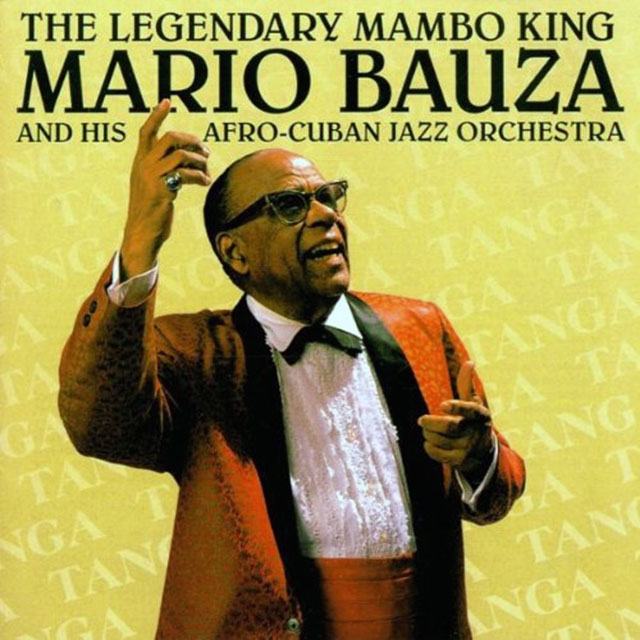
Mario Bauza, Pioneer of Afro-Cuban jazz in New York, Clarinetist, saxophonist, trumpeter and arranger

Mario Bauzá (Havana, April 28, 1911 – Manhattan, July 11, 1993) was a Cuban saxophonist, clarinetist, trumpeter, arranger and composer.

Known above all for having been the musical director of the Machito orchestra (of whom he was also a brother-in-law), he was a pioneer of what is now known as Afro-Cuban jazz.

Mario Bauza The Legendary Mambo King
Mario Bauza Pioneer of Afro-Cuban jazz in New York

Bauzá played the clarinet in the Havana Philharmonic Orchestra. However, after traveling to New York in 1927 with the Antonio María Romeu orchestra, he was so impressed by the Big Bands of Paul Whiteman, Fletcher Henderson and Tommy Dorsey, and by the Harlem music revues, that in 1930 he decided to emigrate definitively to USA.

During the trip, he became friends with Antonio Machín. Mario Bauzá would return on the same boat in which Don Aspiazu’s orchestra was travelling, who immediately began the arrangements to record El manisero.

Upon arriving in New York, Bauzá went to live in Harlem with his cousin, the trumpeter René Endreira. Bauzá began playing the saxophone at house parties with pianist Lucky Roberts and began to absorb African-American culture.

Mario Bauza
Pioneer of Afro-Cuban jazz in New York

Between 1930 and 1931, he was a trumpeter in the Antonio Machín quartet and made important recordings with this group in New York City. Anecdotally, it is said that he had learned to play the trumpet in just two weeks.

His first jobs were with the orchestras of Cass Carr, Noble Sissle and Sam Wooding.

In 1933 he entered Chick Webb’s orchestra as first trumpet, where he ended up as music director. He then worked with Don Redman and Fletcher Henderson, eventually landing Cab Calloway.

Being in that band, Mario brought the young trumpeter Dizzy Gillespie to the orchestra.

Bauzá married Estela Gutiérrez, sister of Francisco Raúl Gutiérrez Grillo, known as Machito.

On December 3, 1940, he debuted with Machito at the Park Plaza, a dance hall, with the Afro-Cubans, later working for almost four years at the La Conga club.

Bauzá works for Machito as artistic director, taking care of the arrangements and hiring the musicians.

The style of the Afro-Cubans mixes the son montuno of Cuba with features of swing bands.

Mario Bauzá Pioneer of Afro-Cuban jazz in New York

Thanks to this, musicians like Dizzy Gillespie or James Moody introduced Afro-Cuban rhythms into jazz, starting in 1947.

He became interested in jazz when he heard Frankie Trumbauer play the saxophone performing Rhapsody in blue with the Paul Whiteman orchestra.

In the forties, Mario will develop the sound of Afro-Cuban jazz. His work as a clarinetist, trumpeter, saxophonist and arranger in the Machito orchestra constitutes one of the main pillars in the emergence and development of that Cuban genre.

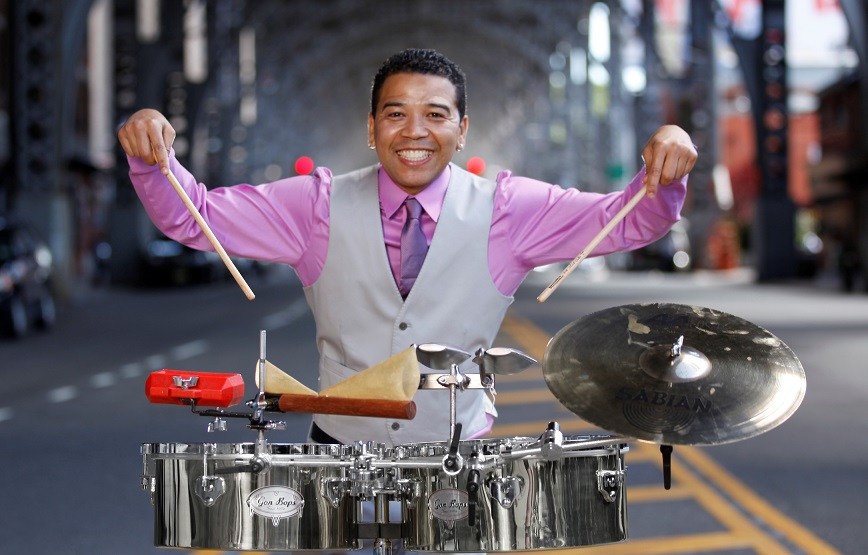
Master Timbalero Luisito Quintero

North America / United States / New Jersey

Master Timbalero Luisito Quintero hails from Caracas, Venezuela.

Where his father, a respected percussionist in his own right, tutored and encouraged his son to become one of music’s best percussionists.

Luisito comes from a long line of outstanding musicians including his uncle, Carlos Nene Quintero and cousin Robert Quintero.

He studied at the respected Orquesta Sinfonica de Venezuela (The Symphonic Orchestra of Venezuela) and his percussion technique soon garnered attention from his colleagues.

Master Timbalero Luisito Quintero
Master Timbalero Luisito Quintero – Photo

Luisito joined the popular music ensembles Grupo Guaco and Oscar D’Leon, where he enjoyed worldwide acclaim.

Luisito Quintero has worked and recorded with many of music’s legends including The Rolling Stones, Vanessa Williams, Paul Simon, Santana, Jack De Johnette, David Sanborn, George Benson, Joe Sample, Bill Cosby, the late Celia Cruz and Tito Puente, Cachao, Eddie Palmieri, Marc Anthony, Gloria Estefan, Richard Bona, Ravi Coltrane, Nathalie Cole, Diana Krall, Giovanni Hidalgo, Toshiko Akiyoshi, Spanish Harlem, Willie Colon and countless others.  One of his recent projects finds him as musical director for Louie Vega and the Elements of Life Band, as well as extensive work with Jack DeJohnette’s Latin Project.  He has also had the privilege to tour and record with the Tony & Grammy award winning Jazz artist, Dee Dee Bridgewater.

Quintero himself has earned more than thirteen Grammy certificate awards for his participation in numerous recordings.

Luisito Quintero has two solo projects under Vega Records/BBE, entitled “Percussion Maddness” and “Percussion Maddness Revisited”.

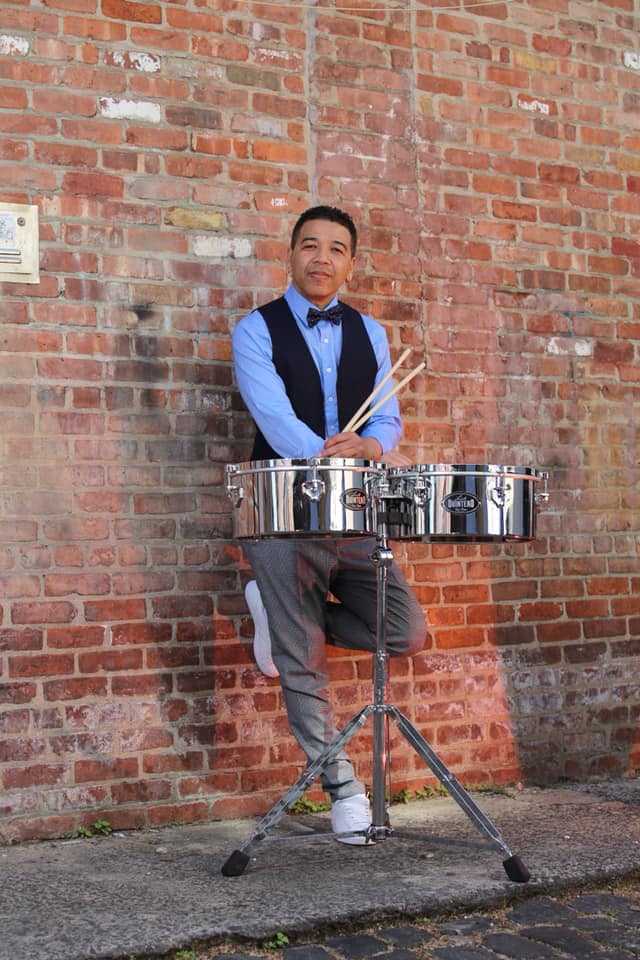
Timbalero - Luisito Quintero
Master Timbalero Luisito Quintero – Photo

Scheduled for release in the spring of 2013, his upcoming production entitled “3rd Element”, features guest artists Gato Barbieri, Oscar Hernandez, Doug Beavers, Richie Flores, Steve Khan, Reynaldo Jorge and his cousin Roberto Quintero.  Currently, Luisito is the touring & recording percussionist for the legendary jazz pianist Chick Corea and for Spanish Harlem.

  • « Go to Previous Page
  • Page 1
  • Interim pages omitted …
  • Page 25
  • Page 26
  • Page 27
  • Page 28
  • Page 29
  • Interim pages omitted …
  • Page 56
  • Go to Next Page »

International Salsa Magazine (ISM) is a monthly publication about Salsa activities around the world, that has been publishing since 2007. It is a world network of volunteers coordinated by ISM Magazine. We are working to strengthen all the events by working together.