• Skip to primary navigation
  • Skip to main content

International Salsa Magazine

  • HOME
  • Previous editions
    • 2026
      • ISM / March 2026
      • ISM / February 2026
      • ISM / January 2026
    • 2025
      • ISM / December 2025
      • ISM / November 2025
      • ISM / October 2025
      • ISM / September 2025
      • ISM / August 2025
      • ISM / July 2025
      • ISM / June 2025
      • ISM / May2025
      • ISM / April 2025
      • ISM / March 2025
      • ISM / February 2025
      • ISM / January 2025
    • 2024
      • ISM / December 2024
      • ISM / November 2024
      • ISM / October 2024
      • ISM / September 2024
      • ISM / August 2024
      • ISM / July 2024
      • ISM / June 2024
      • ISM / May 2024
      • ISM / April 2024
      • ISM / March 2024
      • ISM / February 2024
      • ISM / January 2024
    • 2023
      • ISM / December 2023
      • ISM / November 2023
      • ISM / October 2023
      • ISM – September 2023
      • ISM – August 2023
      • ISM July 2023
      • ISM Edition June 2023
      • ISM – May 2023
      • ISM April 2023
      • ISM March 2023
      • ISM February 2023
      • ISM January 2023
    • 2022
      • ISM December 2022
      • ISM November 2022
      • ISM October 2022
      • ISM September 2022
      • ISM August 2022
      • ISM July 2022
      • ISM June 2022
      • ISM May 2022
      • ISM February 2022
      • ISM January 2022
    • 2021
      • ISM December 2021
      • ISM November 2021
      • ISM October – 2021
      • ISM September 2021
      • ISM August 2021
      • ISM July 2021
      • ISM May 2021
      • ISM April 2021
      • ISM June 2021
      • ISM March 2021
      • ISM February 2021
      • ISM January 2021
    • 2020
      • ISM December 2020
      • ISM November 2020
      • ISM October 2020
      • ISM September 2020
      • ISM August 2020
      • ISM July 2020
      • ISM June 2020
      • ISM May 2020
      • ISM April 2020
      • ISM March 2020
      • ISM February 2020
      • ISM January 2020
    • 2019
      • ISM December 2019
      • ISM November 2019
      • ISM October 2019
      • ISM Septembre 2019
      • ISM August 2019
      • ISM July 2019
      • ISM June 2019
  • Download Salsa App
    • Android
    • Apple
  • Spanish

Search Results for: Merengue

Christmas salsa albums to listen to this December

Christmas albums 

Christmas is one of the best times to celebrate with family and friends and a very important element of any celebration is music, especially in Latin countries and communities.   

Because we are in December, we thought it would be a great occasion to relive some of the most iconic salsa albums of all time with which our dear readers can enjoy this wonderful month at the rhythm of the most joyful Latin music from some of the best exponents of the genre.  

Asalto Navideño Vol. 1 

This album should never miss in a list of this type and it could not be in another way, since it is part of the incredible path traveled by the New York orchestra Willie Colón & Héctor Lavoe. The material is the group’s sixth studio album and was recorded during the first week of December 1970.  

Prior to this, the boom that was taking the orchestra in those years made Jerry Masucci and Johnny Pacheco suggest to the artists that they take advantage of the fame they had harvested so far to create an album dedicated to Christmas, which they both gladly accepted.  

It is then when they got hands on and invited the talented musician Yomo Toro to participate in the album. The artist was not well known by the fans, but he ended up occupying a very important place in the final result. 

Although at first, the material was focused on honoring Puerto Rico, but ended up embracing the Latin community living in the U.S., which had been the main responsible for the strengthening of salsa in the liking of the people and the profit received the Fania Records label. 

The album was recorded in the studios of Fania Records in New York and had a total of 12 songs dedicated to the most beautiful time of the year. Aires de Navidad” and ”La Murga” are among the most successful tracks of the album and the most listened to so far. 
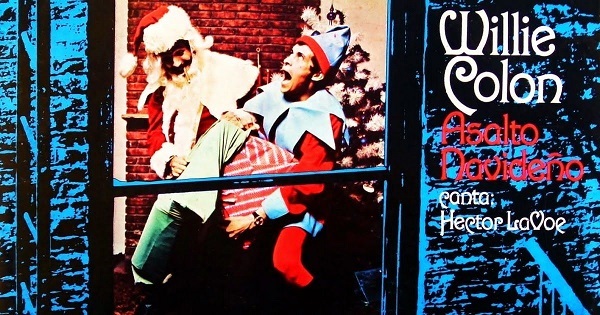
album Asalto Navideño
Cover of the album ”Asalto Navideño Vol. 1”

Nuestra Música 

El Gran Combo de Puerto Rico never disappoints and certainly did not do it with its Christmas production ”Nuestra Música”, with which it seeks to pay tribute to this wonderful time and put everyone on dance in their homes during the Christmas holidays.   

The album was released in 1985, the year in which salsa was going through a very challenging time, since merengue was gaining a lot of momentum, displacing the aforementioned genre to some extent. However, this was no impediment for the orchestra to demonstrate, contrary to what many believed, that salsa was more alive than ever.   

The album’s release was surprising as well as exciting for the fans of El Gran Combo de Puerto Rico, which managed to rescue much of the holiday spirit that was lost and gave life to hits such as ”La Fiesta de Pilito”, ”Desenfunda”, ”Arbolito” and ”No Hay Cama Pa’ Tanta Gente”. 
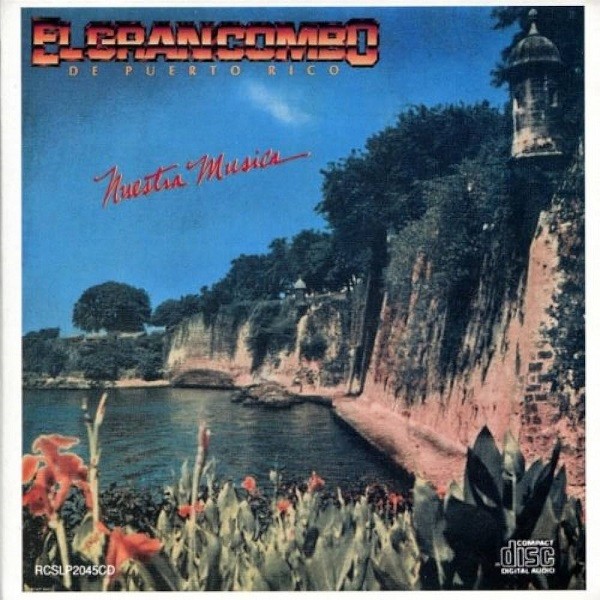
album Nuestra Música
Cover of the album ”Nuestra Música”

Navidad Criolla 

Another great recor production that could not miss in this list is ‘‘Navidad Criolla’’ by La Sonora Ponceña. A very particular and different thing about this Christmas album is that, instead of using the typical Christmas aguinaldos, salsa dura is the predominant genre. However, the vocalists and musicians do their best to maintain the essence of Christmas at all times. 

The album was released in 1978 and includes the unmistakable voices of Luigi Texidor and Tito Gómez, who add an exciting and cheerful touch to the music with the power of their vocal cords. In addition to that, Adalberto Santiago and Yayo El Indio participated on backing vocals along with the talented musicians of the group.   

The album includes songs such as ”Aguinaldo Antillano”, ”De Noche Buena”, ”Canción de Navidad”, ”Vamonos Pa’l Campo”, among others.  
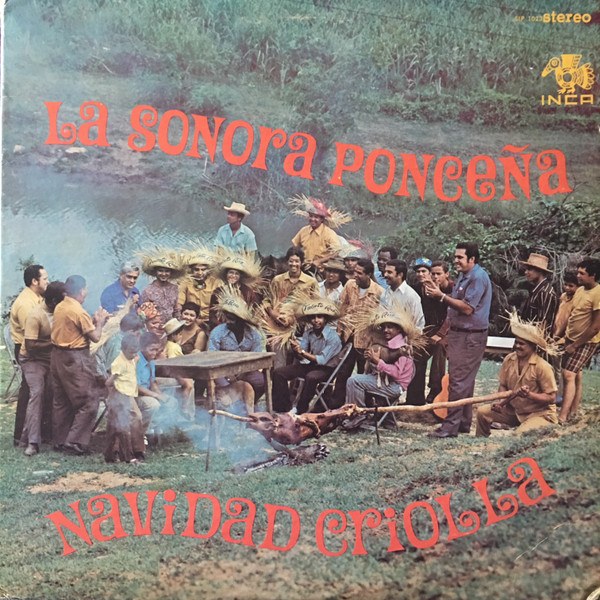
album Navidad Criolla
Cover of the album ”Navidad Criolla”

Felices Pascuas 

Ricardo Ray and Bobby Cruz delighted the public during the December holidays in 1971 with this extraordinary musical work with which they conquered the public one of those countless times they did it.  

Ricardo delighted the duo’s fans from the piano and musical arrangements, while Bobby was on voice and backing vocals. Both artists were accompanied by Miki Vimari on voice and backing vocals, Ismael Cocolia Rodríguez and Ismael Rivera on trumpet, Manolito Gonzales on bongos, José Hidalgo on conga, Charlie Cotto on timbales and Plito Huertas on bass.   

Among some of the best-known tracks of the album, we can mention ”Bomba en Navidad”, ”Mi Niñez”, ”Aguinaldo Navideño”, ”Kyrie Eleison”, ”Sinfonia To Cantata No, 29”, and so on. 
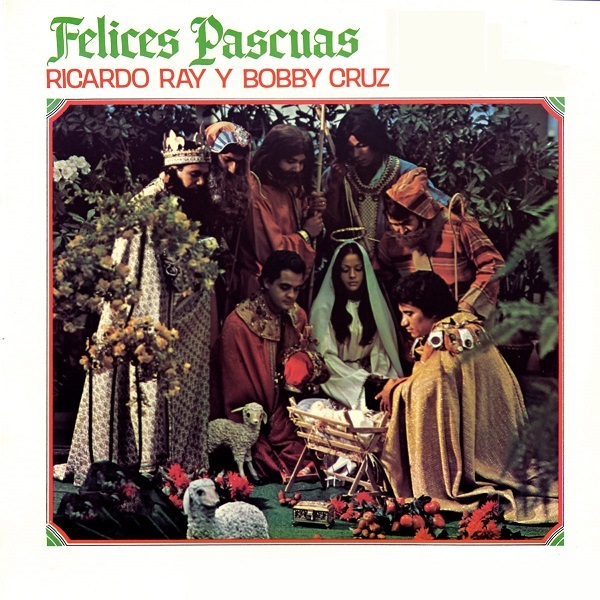
album Felices Pascuas
Cover of the album ”Felices Pascuas”

Read also: Legacy of the Cepeda family after eight generations 

The Great Pichie Pérez and his brilliant career

There have been many artists who have supported the Spaha Salsa Gallery due to the multiple contributions made to salsa since its foundation. One of them has been the great Pichie Perez, who gave a fabulous interview to the founder and president of the famous salsa museum in New York, Johnny Cruz.   

During the video on the Johnny Cruz’s Facebook account, Piche talks about some of the most important aspects of his professional life and, of course, gives his unconditional support to the Spaha Salsa Museum and the labor it has been fulfilling in recent years. Below are some of the most outstanding details of the artist’s life.   

Pichie performing live
Pichie Pérez performing live in Peñuelas, Puerto Rico

Youth   

Héctor ”Pichie” Pérez was born on September 24, 1960 in El Bronx, New York, the youngest of three brothers whose parents were Ramón Pérez Rodríguez and Haydée Casiano González, both of Puerto Rican nationality.   

After the age of seven, he moved with his family to Ponce, a place where a genre called bugalú became increasingly popular and the boy’s father enjoyed that kind of music, which made Piche begin to be interested in certain artists, especially Pete Rodríguez with his song ”I Like It Like That”.   

At the age of 10, his parents decided to move again, but this time to Cañaboa Encarnación, Peñuelas. Some time later, he became part of what would be the first band of his career, Los Metálicos Steel Band, with which the artist began to gain a lot of knowledge about merengue and calypso. When this same group became a sextet under another name, Pichie started singing and playing maracas and güiro.   

Pichie was working in several orchestras that gave him the experience he has today such as the Adolfo Grana school orchestra, Orquesta La Intelectual, Orquesta La Preferida, among others.   

Pichie and Jerry
Jerry Rivera next to Pichie Pérez

Orquesta La Terrífica and Orquesta La Primerísima 

However, his big moment would come when he was part of Orquesta La Terrífica, in which he worked as a vocalist between 1976 and 1981. Additional to this group, Pichie would be in six recordings, among them stands out ”La Terrífica. Sabor a Pueblo”. 

Some time later, he would sing in Tommy Valencia’s Orquesta La Primerísima, which would give him the opportunity to share the stage with world famous and acclaimed singer Frankie Ruíz, of whom he cherishes very good memories. Although this is one of the groups for which Pichie would be best known, it was not the last one he was in.   

For more than 30 years, he was in La Sonora Ponceña, to which he thanked for all that he achieved and learned during those years. However, there came a point when the singer wanted to make his own way and had to make the tough decision to leave the orchestra and start a solo career, which had ”El Sonero del Bailador” as its starting point in 2016. 

Pichie and Frankie
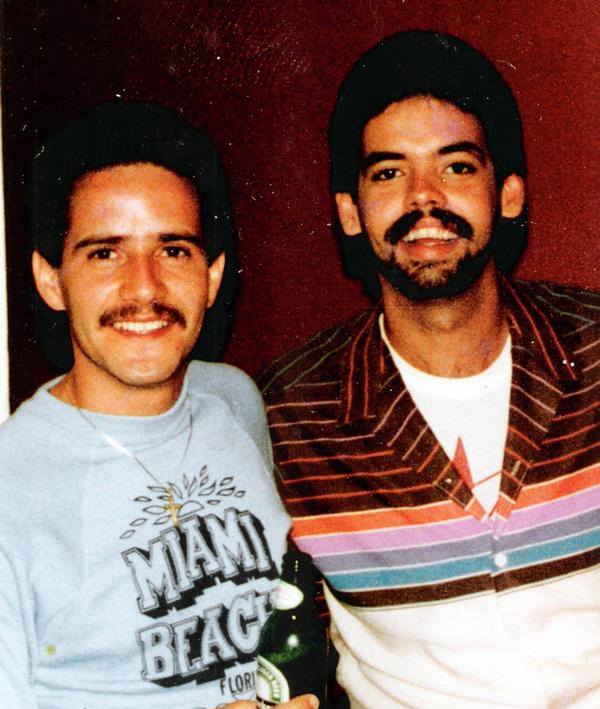
Frankie Ruiz next to Pichie Pérez when they were in La Primerísima

Pichie was expectant before the audience reaction to his solo material, but fortunately, the overall response was very positive, which motivated him to release a new album entitled ”Alegrando La Navidad”.   

Nowadays, he has an extraordinary reputation as a solo singer and in orchestral formations, but he also obtained great merits as a güirero and maraquero throughout his artistic career. He also had a great participation as a backing vocalist in many productions and recording sessions to which he added his unique touch. 

Read also: Willito and Japhet from La Sonora Ponceña 

Johnny Cru ISM corresponde in New York City

Four nationalities united in Ladama

Talent can come from the most amazing and unexpected origins and more when we are talking about music, a branch of art from which always emerges people with a lot of potential who can completely break our schemes. This leads us to introduce the topic of a group of four young musicians and singers who joined their skills despite their apparent differences. They are the musical group Ladama.

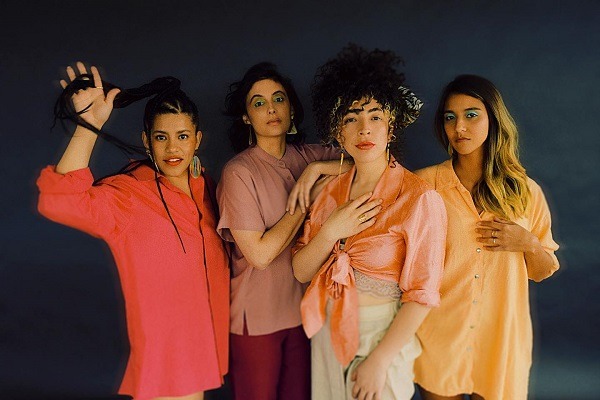
Ladama is an alternative Latin music band composed of four members of different nationalities: Venezuelan Maria Fernanda Gonzalez, Brazilian Lara Klaus, Colombian Daniela Serna and American Sara Lucas. 

Three of the four members of the group spoke exclusively with International Salsa Magazine and this report will show some of the topics covered during this pleasant conversation. 

Sara, María, Lara, and Daniela from Ladama
From right to left, Sara Lucas, María Fernanda González, Lara Klaus and Daniela Serna

Origins of Ladama as a group 

The conversation was started by Lara and Dani, who explained a bit about the rise and concept of the band. The group was created in 2014 while the girls were doing an artistic residency known as OneBeat, which was sponsored by the U.S. Department of State. They were selected to represent their respective countries, which led them to socialize with each other and discover the great chemistry between them because of the language and genres they played. 

Since OneBeat was an initiative towards cultural exchange between artists and offered the necessary technical equipment to record music, they took full advantage of this space to get to know each other’s styles and see what they could do together. 

Once the month-long residency was over, each went their way, but they kept in touch via Skype a year after having met. The motivation to create a project that would encompass a musical band and teaching classes to minority communities remains intact.

They wanted to create an initiative in which community, creativity, social impact and cultural exchange would be the fundamental pillars of Ladama. It was always clear that they not only wanted to make music, but also do something that would positively impact upon society and they think they have succeeded so far. 

As for the name Ladama, it is simply a combination of the first two letters of the names of each one: ”la” comes from Lara, ”da” comes from Dani and ”ma” comes from María Fernanda. At the same time, ”La dama” in Spanish means ”The lady”, which also refers to the fact that it is an all-women group.

Ladama in a residency called OneBeat
They first met in an artistic residency known as OneBeat

How did these different origins coexist in Ladama? 

We were very impressed by the fact that all Ladama members came from different countries, so we wanted to know how this impacted the group. Lara answered that the only thing they needed was the desire to play together and move this initiative forward, which means that the origin of each one was not a problem to found the group.  

Just like every other band, each one had her own ideas and they discussed them together to know which one to choose or not. 

Their major test was given during the Rec-Beat Festival in Brazil. They arrived only a few days before the event, so they could barely rehearse and set up the repertoire. Despite the haste, they feel that everything went very fluidly, as they spent time meeting with each other and writing some songs for an occasion like this.

Given that Lara, Dani and Maria Fernanda come from Latin and tropical countries, there are certain rhythms that sound so much alike, which they took advantage of to unify them and create completely new rhythms that sound good at the same time. Lara also pointed out that these mixes are in constant change and they always try not to get stuck in the same styles.  

In addition to that, Ladama has left traditional music behind a little bit and has focused on alternative music and other genres such as pop, soul and R&B. 

Dani addressed the topic of genres by saying that they do not follow a plan in which they have something specific to play or mix. Any of their songs can go from Dominican merengue and Colombian cumbia to trap and reggaeton without any problems. They do not like to limit themselves and always seek to reach all audiences.   

Ladama live
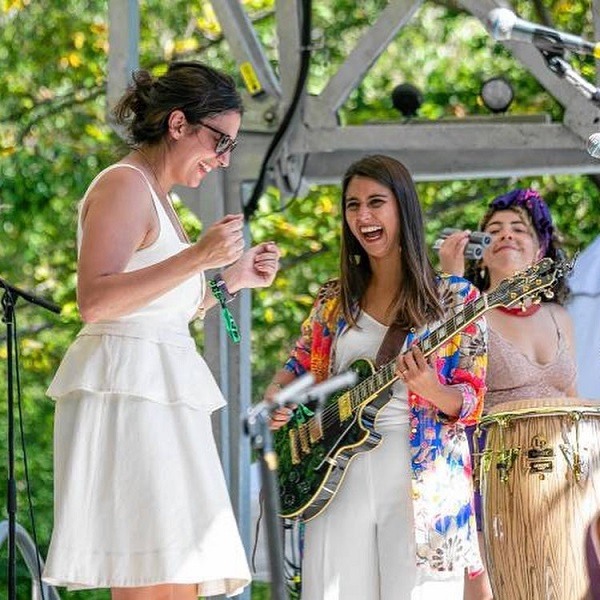
Ladama performing live

Ladama in a Tiny Desk concert series

Playing on Tiny Desk (a series of live concerts organized by the radio program All Songs Considered in the United States) is always a prestige for any artist or group that performs on that platform, which is inviting Latin singers more frequently every time.  

The girls were at a festival in Albuquerque, New Mexico, where they had the opportunity to meet the curator of Tiny Desk, who would invite Ladama to record their session in Washington D.C. shortly thereafter.

Lara considers that this was a great opportunity to spread their work due to the large number of people who always tune in to Tiny Desk, in addition to the many artists they knew after their appearance on the platform. 

For her part, María Fernanda commented that, on that same occasion, they took the opportunity to bring instruments from their own countries so that the Tiny Desk audience could get to know them. She also stressed that this session will be an important audiovisual document for history that will serve as an inspiration for other musicians in the future.

It was a great achievement after all that hard work.

Ladama on Tiny Desk
Ladama performing on Tiny Desk

Music classes for the community

The members of Ladama have also been focusing on music classes for the community at large, mostly in schools and universities. In their four countries, they have given workshops of all kinds related to music in the languages they speak, which are, English, Spanish and Portuguese. 

the artist emphasized that they always try to do this type of activities together in the very countries where they offer live performances. They have total freedom to do things separately, but they prefer to carry out these activities supporting each other.

Although they offer classes to anyone who is interested, Latino children are a very important group for Ladama, as many of them often have some problems of identity and adaptation to the United States. When they arrive at school in this country, they often disguise or even hide their Latino roots in order to fit in with their peers, so these classes are an opportunity for them to reconnect with that identity they begin to leave behind. 

These workshops and classes also serve as additional income for the group, as they can not only support themselves through tours and festivals. These educational activities are another way to diversify their earnings and have more stable inflows of money.

Read also: Juan Antón ”El Blanco” from La Clave Del Blanco

José Alberto “El Canario” and his orchestra enjoy a great international reputation in the Latin music scene.

His start in music was as a drummer, then as a bongo player, with some 48 years in Latin music and as a sonero, today in International Salsa Magazine through www.salsagoogle.com, José Alberto Justiniano Andújar, better known artistically as José Alberto El Canario, was born on December 22, 1958 in Villa Consuelo in Santo Domingo Dominican Republic.

José Alberto El Canario

El Canario began to have a passion for music from a very young age, first playing drums, bongo and timbales, at the age of 7 his mother Adalgisa, recognized dancer of the golden age of “Radio-Televisión Dominicana”, took him to live on the island of Puerto Rico, as a professional dancer she had to perform in important international theaters.

El Canario began to study in a military school in Las Antillas, then in 1970 he moved with his father to New York, where he began to sing with several orchestras, receiving international attention as the leader of the Típica 73 in October 1977, where he earned 25 dollars for each presentation and recognized it as his university in the life of art.

José Alberto credits his compadre Roberto Geronimo for his successful artistic career. Geronimo discovered him as an artist and managed him for many years. El Canario also sang merengue at the onset of his musical journey.

In 1983, José Alberto established his own band and gained fame as a major Latin star after his debut album Noches Calientes released in 1984.

Jose Alberto is a renowned singer who has recorded numerous chart-topping hits, including “Sueño Contigo”, “Hoy Quiero Confesar”, “Te Voy a Saciar de Mi”, “A Gozar”, “Es Tu Amor”, and “Quieres Ser Mi Amante”, among others, for his 1988 album Sueño Contigo and several others.

His inimitable voice and unmatched improvisational skills have earned him international acclaim. Jose Alberto has collaborated with several contemporary artists such as Johnny Rodriguez, Mario Rivera, Nicky Marrero, Oscar D’Leon, and Celia Cruz.

El Canario began to have a passion for music at a very young age, first playing drums, bongo drums and timbales.

José Alberto “El Canario” has earned multiple gold and platinum records due to his high number of album sales.

He has achieved success not only in the United States and Europe but also throughout Latin America, including his native Dominican Republic, Puerto Rico, Peru, Venezuela, Panama, Colombia, Ecuador, and Costa Rica.

The nickname “El Canario” was bestowed upon him by a New York disc jockey who christened him so in a disco due to his improvisational skills; “Canta canario” was the catchphrase he would belt out through the control microphone.

José Alberto ‘El Canario’ and his Orchestra have gained immense international recognition in the Latin music industry.

His musical prowess and captivating voice make his live shows some of the most thrilling performances.

El Canario, winner of the “Congo de oro” in 2005 – an award given to the best musical groups presented at the Festival de Orquestas del Carnaval de Barranquilla – and of three Latin Grammys in 2013, 2015 and 2018, is one of the undisputed artists of Latin music with a career spanning some 48 years.

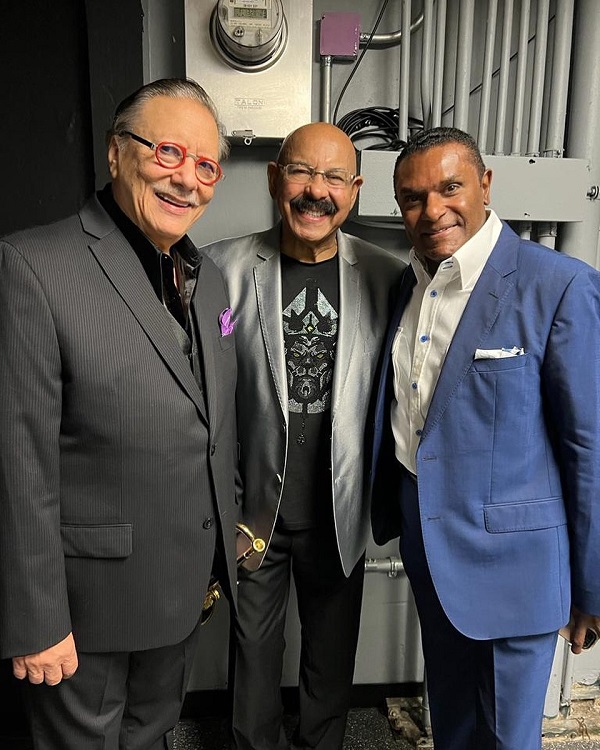
Arturo Sandoval, Oscar D' Leon y El Canario
Arturo Sandoval, Oscar D’ Leon y El Canario

Throughout his career, José Alberto El Canario has gained international recognition for his unique voice and style, but also, according to his biographies, for his improvisations on stage.

José Alberto El Canario y su Orquesta enjoys great international renown in the Latin music scene.

Also Read: Jimmie Morales a conguero for the history of Afro-Caribbean music

Dominican Republic / Directory 2023

Makumba Nightclub
Makumba
C. Caracas 12, Santo Domingo 10213, Dominican Republic
+1 809 805-0363

Merengue Club 🇩🇴 Zona Colonial
Merengue Club
C. Hostos 156, Santo Domingo 10210, Dominican Republic
  • « Go to Previous Page
  • Page 1
  • Interim pages omitted …
  • Page 15
  • Page 16
  • Page 17
  • Page 18
  • Page 19
  • Interim pages omitted …
  • Page 44
  • Go to Next Page »

International Salsa Magazine (ISM) is a monthly publication about Salsa activities around the world, that has been publishing since 2007. It is a world network of volunteers coordinated by ISM Magazine. We are working to strengthen all the events by working together.