• Skip to primary navigation
  • Skip to main content

International Salsa Magazine

  • HOME
  • Previous editions
    • 2026
      • ISM / March 2026
      • ISM / February 2026
      • ISM / January 2026
    • 2025
      • ISM / December 2025
      • ISM / November 2025
      • ISM / October 2025
      • ISM / September 2025
      • ISM / August 2025
      • ISM / July 2025
      • ISM / June 2025
      • ISM / May2025
      • ISM / April 2025
      • ISM / March 2025
      • ISM / February 2025
      • ISM / January 2025
    • 2024
      • ISM / December 2024
      • ISM / November 2024
      • ISM / October 2024
      • ISM / September 2024
      • ISM / August 2024
      • ISM / July 2024
      • ISM / June 2024
      • ISM / May 2024
      • ISM / April 2024
      • ISM / March 2024
      • ISM / February 2024
      • ISM / January 2024
    • 2023
      • ISM / December 2023
      • ISM / November 2023
      • ISM / October 2023
      • ISM – September 2023
      • ISM – August 2023
      • ISM July 2023
      • ISM Edition June 2023
      • ISM – May 2023
      • ISM April 2023
      • ISM March 2023
      • ISM February 2023
      • ISM January 2023
    • 2022
      • ISM December 2022
      • ISM November 2022
      • ISM October 2022
      • ISM September 2022
      • ISM August 2022
      • ISM July 2022
      • ISM June 2022
      • ISM May 2022
      • ISM February 2022
      • ISM January 2022
    • 2021
      • ISM December 2021
      • ISM November 2021
      • ISM October – 2021
      • ISM September 2021
      • ISM August 2021
      • ISM July 2021
      • ISM May 2021
      • ISM April 2021
      • ISM June 2021
      • ISM March 2021
      • ISM February 2021
      • ISM January 2021
    • 2020
      • ISM December 2020
      • ISM November 2020
      • ISM October 2020
      • ISM September 2020
      • ISM August 2020
      • ISM July 2020
      • ISM June 2020
      • ISM May 2020
      • ISM April 2020
      • ISM March 2020
      • ISM February 2020
      • ISM January 2020
    • 2019
      • ISM December 2019
      • ISM November 2019
      • ISM October 2019
      • ISM Septembre 2019
      • ISM August 2019
      • ISM July 2019
      • ISM June 2019
  • Download Salsa App
    • Android
    • Apple
  • Spanish

Search Results for: Merengue

Ricardo Vega and Karen Forcano

Latin America / Argentina /

Ricardo Vega and Karen Forcano. Salsa dancers and instructors of Latin dances.

Karen Forcano is originally from Argentina and took her first steps into the dance world at an early age, largely due to the influence of her mother, who was a ballet dancer. At 6 years of age, she began with ballet lessons and then at age 7 she was introduced to the exciting world of salsa and merengue, which would now be known as the start of her professional career.

Ricardo Vega is from Chile and began dancing ballet when he was only 7 years old. Although much of his influence came from his grandparents, who were tango dancers, Ricardo’s experience in dance included the styles of ballet, contemporary, jazz, as well as many others.

Karen and Ricardo met when they were 9 years old but their start in the professional/competitive world of salsa began in 2009. Since that time, they have been conquering championships as a couple, both on and off the dance floor.


Ricardo Vega and Karen Forcano

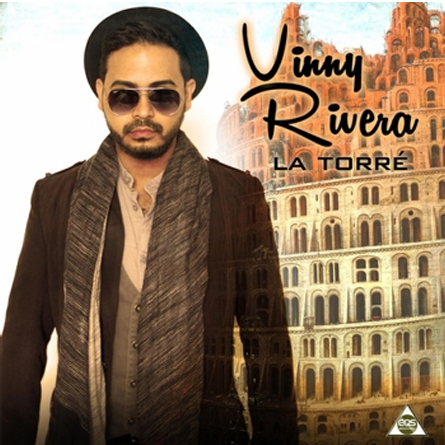
Vinny Rivera release his latest single “Mientes”

North America / USA / Boston

Vinny Rivera. The #1 Latin Kizomba Artist in the World

Vinny Rivera
Vinny Rivera

Vinny Rivera ‘s new single “Mientes” coming off of his album “La Torre” takes Kizomba to the next level. Good friend Guelo Star who is currently writing for the likes of Don Omar, Ivy Queen, Jowell y Randy, De La Ghetto just to name a few originally wrote this song with the spirit of Kizomba and Vinny Rivera was the perfect voice to compliment the writing. This love song is sure to bring The #1 Latin Kizomba singer and songwriter towards new heights of world music.

Sound off the bongos & kick in the bass, Vinny Rivera is ready to hit the stage. One of the hardest working singer/songwriters, Victor “Vinny” Rivera, continues to shine in the music entertainment scene. Surrounded by great mentors and industry leaders such as world renowned international producers M&N Pro, Jorgie Milliano, Grammy award winning producer Richy Peña (Niña Bonita), and Universal Latino’s recording artist Yunel Cruz, Vinny’s sound has captured audiences all around.

The music of Vinny Rivera is refreshing and lends a sweet tuned voice to the likes of urban bachata Superstar Prince Royce mixed in with Latin Pop Superstars Luis Fonsi & Enrique Iglesias. Genres of music are no different. His voice as well as being multilingual lends itself to Salsa, Bachata, Kizomba, Mambo, Pop, R&B and many more musical genres.

Vinny Rivera - Mientes
Vinny Rivera – Mientes

On the other hand and recognizing musical legend “Jerry Rivera”, Vinny Rivera alongside longtime friend and producer Jorgie Milliano pay tribute to a tropical classic “Amores Como El Nuestro” by giving it a tasteful Kizomba twist that audiences everywhere are sure to enjoy.

Vinny Rivera is currently working on a new Latin Kizomba album that will continue to capture the hearts and ears of all Kizomba lovers.

Besides, Vinny’s talent for capturing audiences has exponentially increased his passion for performing and entertaining. Performing in festivals and special events, the demand has been genuine and stage performances continue to impact his listeners.

Musical Trajectory 

Victor Rivera, known artistically as Vinny Rivera, was born in Boston, Massachusetts, United States. Of Puerto Rican parents under the tutelage of his Dominican stepfather, he is one of the most hard working singers / composers to shine in the musical entertainment scene. Being influenced by the Boston city melting pot, he was exposed to a variety of musical genres including Reggae, Jazz, Soca, R & B and pop and the sounds of his native island and the neighboring Dominican Republic sounds the Salsa, Merengue, Bachata.

2- Vinny Rivera
2- Vinny Rivera

Completely addicted and forced by music and the desire to share his energy and healing skills, at the age of 16 he bought his first DJ set with his best friend Okland López and began playing music of all kinds of events. In that period he realized that he wanted to take the next step, to make music. He then began to study all kinds of music and finally was able to be comfortable enough to sing.

His friends encouraged him to record music and were associated as a trio together Loco Jow to pursue a career within the music industry. Although not signed with any record label they achieved a network of relationships around the world that got them heard everywhere, which allowed them to rank No.3 in a company of radio and distribution of popular music in South America.

Vinny continued to work with the group opening shows for world-renowned acts such as Don Omar, Wisin & Yandel, Zion & Lennox, Ivy Queen, Rakim & Ken-Y, Tony Dize, Alexis & Fido.

The group split because of four years of Vinny’s enlistment in the United States Air Force. Now a veteran of the Air Force from June 2004 to December 2014 Vinny learned that “Life is too short and you have to give everything you have.”

He started working and learning with Grammy-winning Producers such as Richy Peña who produced the hit “Niña Bonita” by Chino & Nacho and Lenny Santos recognized by the Bachata group “Aventura”. To then sing and write with Universal Billboard and Cuban artist Yunel Cruz. He also wrote a final hit for Jowell and Randy “Lo Que Quiero”, which reached # 11 on the charts, being remixed with Reggaeton Super Stars Arcangel, Farruko and Divino produced by his great friend Jorgie Milliano.

Vinny Rivera collash

His work and vocal skills have captured the respect and attention of the public around the world. The formula for Vinny Rivera’s latest plan is to use his music as a tool to address problems in the world. Until then he will continue to work diligently on making good music to enjoy.

Dominican bandleader and singer Papo Ross is triumphing in Montreal

Canada continues to give us something to talk about when it comes to Latin music, and our daring guest is firm proof of this. Dominican bandleader and singer Jorge “Papo” Ross has given us the great honor of talking about his interesting career both in his native country and Montreal, where he currently resides and moves forward with his musical projects.

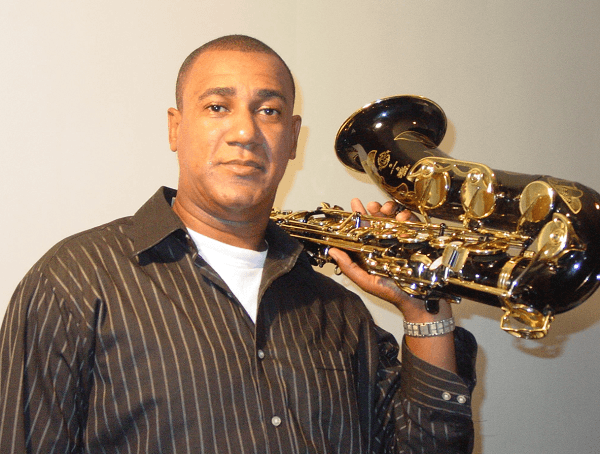
Papo Ross with his saxophone
Dominican bandleader, singer, and musician Papo Ross posing with his saxophone

Papo’s beginnings in the Dominican Republic

Papo’s musical beginnings were in his hometown of San Pedro de Macorís by playing instruments made of tin or wicker that he and his friends themselves created so they could play, which led him to learn to play percussion, albeit in a very crude manner. Among the first instruments he played were the guiro, the tambora, and the conga.

Seeing his interest in music, his late brother, who was a saxophonist and led a band at the time, took him along to play with him so he could learn the trade through practice. However, the young man did not want to stop there and also began creating his own bands, such as Grupo Enriquillo, in which he and the rest of the members used homemade instruments and a marimba, which doubled as the bass. 

He also played with La Moderna de San Pedro, with which he served as the musical director during rehearsals and earned two percent of the orchestra’s contracts. In addition, he founded the group Sui Generis, played with the late merengue musician July Mateo “Rasputín,” and, before leaving the country, played with the recently deceased Rubby Pérez in the 1990s.

Academic training prior to his trip to Canada

After having played with several orchestras, Papo realized that, while it is true that he had gained some experience and knowledge, it was not enough and he needed to train more. That is why he was admitted to study at the Escuela de Música Patria Logroño at the elementary level and the Conservatorio Nacional de Música in Santo Domingo.

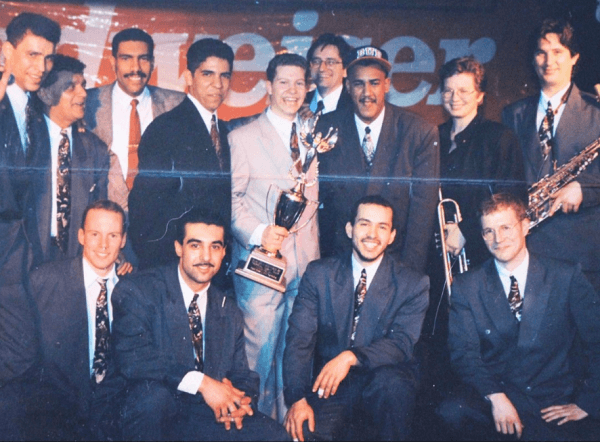
Papo Ross & Pambiche
Papo Ross & Orquesta Pambiche as a whole

At the academy, he learned spoken and sung solfeggio and took some saxophone lessons there in the same place. As for the conservatory, he studied percussion, but did not finish his training in this area, as he was also studying law at the Universidad Central del Este in San Pedro de Macorís. Then when the time came for him to choose one or the other, he obviously opted against university, although he did not get to exercise this career either because he missed a few semesters to complete it.

Moving to Canada

Before arriving in Canada, Papo had already traveled to other places such as Puerto Rico and New York as part of his work and had the opportunity to live there for a few seasons, but the Orquesta Tambora invited him to go to Canada to lead the group, which the artist accepted.

Although it was the best decision, it certainly was not easy, as he had to deal with language barriers and the process of adapting to a music scene completely different from that of his native country. 

The latter and the fact that he belonged to a minority like the Latino community, limited him a lot at first, but he says he keeps no regrets about his decisions and does not complaint about what he has already accomplished.

Rafael Ithier and Papo Ross
Rafael Ithier from El Gran Combo de Puerto Rico and Papo Ross

Papo Ross & Orquesta Pambiche

In 1992, he finally decided to break through his own and create his own orchestra, Papo Ross & Orquesta Pambiche, thanks to all the skills he had developed so far. After having learned to lead an orchestra, compose, arrange, and sing, he felt more than ready to carry out his own project consisting of 13 members, including two trumpeters, a trombonist, two saxophonists, a percussionist, and three singers, among others. None of the original group remain, and Papo practically does not use the big band, but a slightly smaller format called Papo Ross Meren Latin Jazz Approach. 

This band offers its services for private parties and drinks receptions, where Papo sometimes sings with a minus-one and even includes dancers in his shows.

Together with his orchestra, he has played at the Montreal International Jazz Festival on a few occasions, but they have also played in several other cities like Toronto, Regina, Saskatchewan, Victoria, Saint Pierre, Saint John, and many more. He has also collaborated with several other groups and musicians such as Pablo Ramos and the group Calipso.

Outside of Canada, they have played in various places in the United States such as Detroit, Wellington, and Vermont.

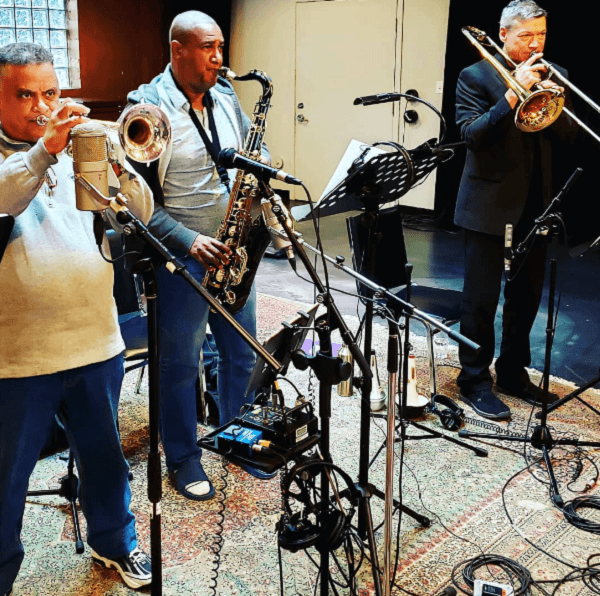
Eduardo, Papo, and Dave
Trumpeter Eduardo Sanchez, Papo Ross, and Trombonist Dave Grott

Read also: Colombian dancer and instructor Camila Cepeda takes salsa caleña to Canada

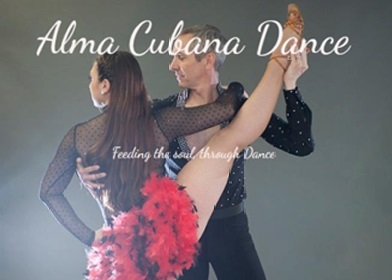
Alma Cubana Dance Academy

North America / USA / Portland

Alma Cubana Dance Academy

Alma Cubana Dance Academy

“They are a small dance group in Portland, ME. that offers Salsa and Bachata lessons and have student level teams for both those styles as well as ladies styling. Currently the lessons are on Sundays, you can find everything current on their website www.almacubanadance.com

Alma Cubana Dance was founded in the spring of 2015 by Vanessa Webber (Gutierrez). Alma Cubana means “Cuban Soul”, and being half Cuban, she wanted her group to reflect that heritage. It has been a long standing dream to offer classes, build a performance group and to help grow the Salsa and Latin dance community in Southern/Midcoast Maine. Their focus is to bring quality instruction while maintaining the social atmosphere of Salsa dance.

‘I danced Ballet and Modern growing up and helped develop a salsa company in Boston while in College which I believe is celebrating 10 years or more this year, although I am not with them anymore. I took 8 dancers to Miami last year and they competed in the first Miami Latin Dance Championships where all of them placed in at least one category.”

“They are a small dance group in Portland, ME. that offers Salsa and Bachata lessons and have student level teams for both those styles as well as ladies styling. Currently the My company is very young, only just 2 years, and it is mainly attended by those who love to dance but it is not a full time commitment. We perform locally a lot, and try to take the groups to 2-3 congresses or festivals, usually within driving distance. We have done Boston Salsa Festival twice, Connecticut Salsa Fest last year and Bachateando Miami last year, we plan to go to Connecticut and Boston again this year.” Vanessa Webber (Gutierrez), Alma Cubana Dance founder/director

They will be changing the schedule in April for Spring and Summer. Spring and Summer Schedule will have team practices on Sundays and Wednesday, classes for Salsa and Bachata before our regular latin night, which just celebrated 1 year.”

2017 Winter Schedule

Sundays

  • 3:00–4:00 pm Bachata and Body Movement
  • 4:00–5:30 pm Beginner Salsa Bootcamp
  • 4:00–5:30 pm Intermediate Salsa Bootcamp
  • 5:30–7:00 pm Open Level Salsa Team Rehearsal*

Tuesdays

  • 8:00–9:30 pm Bachata Team Rehearsal

2017 Spring/Summer Schedule

Sundays: Classes held at Aquarius Ballroom

  • 2:00–3:30 pm Ladies Choreography Class
  • 3:30–5:00 pm Bachata Performance Team*
  • 5:00–6:30 pm Salsa Performance Team*

Wednesdays: Classes held at Pearl Nightclub

7:30–8:15 pm Salsa for Social Dance 8:15–9:00 pm Bachata for Social Dance 8:00–9:00 pm Drop-in Class Salsa/Bachata (Note: There is a potential overlap/error in the Wednesday schedule near the end, listing 8:15-9:00 pm and 8:00-9:00 pm for different classes).

Esencia Latina Wednesdays at Pearl Nightclub

Esencia Latina means “Latin Essence” and that is what they want this night to embody. Start off the night with lessons to get your feet moving from 8-9pm. At 9, the lights go down and have a great mix of Salsa, Bachata, Merengue, Cha Cha and more to keep you on the dance floor. Latin dance is a social dance, its meant to be something you do with your friends and/or family. Loosen up, shake your hips and party like Latinas! Pearl Nightclub is located next to the Tap House 442 Fore St, Portland, ME

Alma Cubana Dance Academy - Flyers
Alma Cubana Dance Academy – Flyers

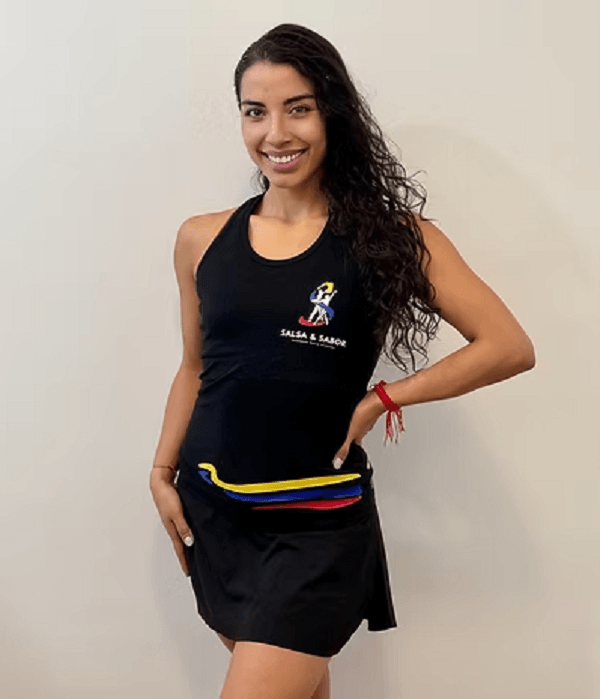
Colombian dancer and instructor Camila Cepeda takes salsa caleña to Canada

Every day there are more Latinos who, with their talent, are gradually taking over various cities in Canada and the hearts of many of its inhabitants. Colombian instructor and dancer Camila Cepeda shows us that she and several of her compatriots have managed to break into the aforementioned North American country and shares with us a little bit of her interesting story.

Dancer and instructor Camila Cepeda
Colombian dancer and salsa caleña instructor Camila Cepeda

Camila’s interest in dance

Camila has danced through life, and since she was a little kid, dance has been very important to her. One genre in particular that caught her attention was salsa caleña, especially since she saw it for the first time with dance groups on the TV show “Colombia’s Got Talent”. From there, more specifically in 2011, she looked for a dance academy where she could learn to dance and imitate what she saw on the screen.

Almost immediately, she realized that it was a very demanding style that required stunts and movements that were not common in more classic versions of salsa. After training in dancing, she did not want to be just an expert in salsa caleña, but many more people learned how to dance it as well, which led her to create a folk dancing group with which she would take her first steps towards teaching.

In addition to salsa caleña, Camila also danced salsa choka, champeta, bachata, merengue, and Colombian folklore. 

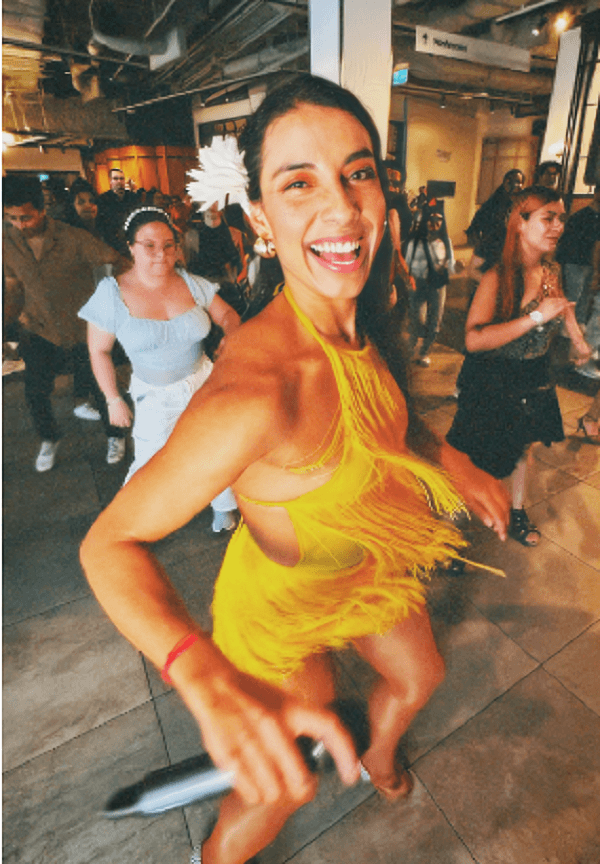
Camila dancing at an event
Camila Cepeda dancing in one of her salsa caleña events

Moving to Canada

Initially, Camila’s plans did not include leaving Colombia, but when she knew Canada, she found it an extremely interesting country where she could start something new with dance due to the lack of salsa caleña there. So, she entered the country with a student visa and studied international business at Seneca College in Toronto, with the intention of forming her own company in her new host country.

While gaining business experience through jobs for other companies, she continued to offer classes in parallel. Finally in 2020, in the middle of the COVID-19 pandemic and when she was still a university student, she decided to register and open her dance academy, “Salsa & Sabor.”

During that time, she also validated her teaching in English so that she could give classes to both locals and people from other cultures who spoke the same language.

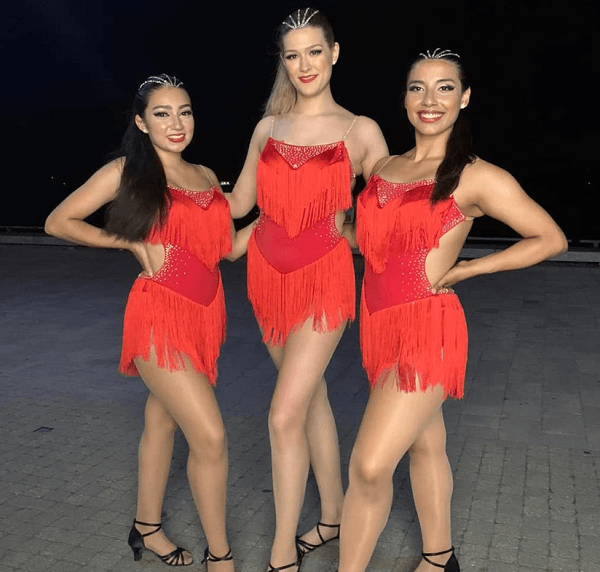
Camila, Aleja, and Sonia
Camila with dancers Aleja and Sonia

Salsa & Sabor today

Although the academy was started with only online classes due to the sanitary restrictions of that time, Camila was able to gather together a more or less numerous community that allowed her to stay afloat in such a difficult moment. Therefore, when government controls were relaxed, the young woman had no problem to organize dance classes and activities in parks keeping proper social distancing.

A short time later, she could finally open her dance studio, welcome students in person, and recruit other instructors such as Diana, Victoria, Mateo, and Paula. One thing to mention about these five young Colombians is that they were all Camila’s students in the past and, after all the training she offered, they also became experts in the field. Given the pitifully small number of salsa caleña instructors in Canada, when they were ready, she asked them to join her team, and they gladly accepted the opportunity.

This, in turn, helped them to open up more schedules and workshops for many more people, allowing the academy to grow even more.

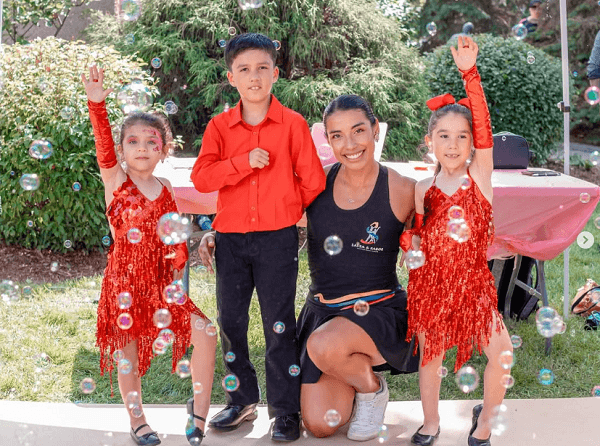
Camila with her students
Camila with some of her little students

Division of teaching genres and events

As we said at the beginning of this article, Camila also teaches other genres such as salsa choke, la champeta, bachata, and merengue, but her flagship and main rhythm remains salsa caleña. An important difference between salsa caleña and the rest is that it has a well-defined continuity and academic structure, so it takes much longer to learn. The other genres are relatively simpler, so they do not require as many hours or such an elaborate program.

Differences between salsa caleña and traditional salsa

According to Camila, a very important component of salsa caleña is its speed compared to traditional salsa. The way salsa is danced in Puerto Rico, Cuba, or New York is much better known around the world due to its age, while salsa caleña is a little newer and only began internationalizing a few years ago. In addition, traditional salsa is slower and uses the hips and shoulders a lot, while salsa caleña relies heavily on the rapid movements of the feet.

In fact, an important fact to know is that salsa caleña was created from a mistake. It turns out that a group of young people in Cali were doing private parties with LPs by various artists of the time, but they accidentally raised their speed and made the songs sound faster than they should. This led them to create completely new steps and choreographies based on these fast songs, giving rise to what we now know as salsa caleña. 

These parties were called “aguelulos,” a Colombian term to refer to alcohol-free parties or gatherings for young people. 

Read also: Tito Puente Jr.: perpetuating a legacy with its own rhythm

  • « Go to Previous Page
  • Page 1
  • Page 2
  • Page 3
  • Page 4
  • Page 5
  • Interim pages omitted …
  • Page 44
  • Go to Next Page »

International Salsa Magazine (ISM) is a monthly publication about Salsa activities around the world, that has been publishing since 2007. It is a world network of volunteers coordinated by ISM Magazine. We are working to strengthen all the events by working together.