




| April 2026 – Festivals | ||
|
|
|
International
|





| DIRECTORY OF NIGHTCLUBS | ||
|
|
|
|
|
|
|
|
|
|
|
|
|
|
|
|
|
|
|
|
|
|
|
|



| April 2026 – Festivals | ||
|
|
|
International
|
| DIRECTORY OF NIGHTCLUBS | ||
|
|
|
|
|
|
|
|
|
|
|
|
|
|
|
|
|
|
|
|
|
|
|
|
We do not often write a lot about Latin music artists in Canada, so we want to remedy that situation and provide coverage to a very talented Haitian based in Montreal. We are talking about bandleader, composer, and musician Mac Gregore Brunis, an artist with whom we have been able to talk about his interesting story and career with the musical group he currently directs, Sabor 19.

In perfect Spanish, Mac thanked International Salsa Magazine for the invitation and started by telling that music had always been more than a simple hobby for him. His first contact with this world was in his native Haiti when he was on his way to school by public transport and there were always musicians playing, so music was always part of his life.
He also played instruments with some of his classmates who formed musical groups in the classroom.
However, his professional career would not begin until his move to Canada, where he decided to go at age 21 to study electrical engineering and where he remains to this day. Some staff members of the University of Moncton, New Brunswick, where Mac would end up studying, visited some Haitian schools to promote their educational program among young students. The fact that French was spoken in Haiti, as in Canada, also helped Mac make the decision to try his luck in North America, since Haiti did not offer him the opportunities he was looking for.
It was in this country, more specifically in the city of Montreal, that he met other music lovers who introduced him to salsa and other Latin genres. Although he had already heard salsa and bachata in Haiti because of its proximity to the Dominican Republic, some Colombian friends he made in his new place of residence introduced him much more to all this culture, especially the music.

When Mac graduated and left the province of New Brunswick to move to Montreal, he began attending salsa and bachata socials to dance on Monday nights, and it was there that he met Eduardo Ramírez. They became friends and played together some of the instruments Eduardo carried, such as maracas, güira, and bongo. When Mac told his new friend that he wanted to learn to play the piano and other instruments, he and Eduardo began meeting to practice and develop the idea of creating a musical group, which they called Sabor 19 in homage to the year it was created, 2019.
Once they had finally decided to do something more formal in music, they invited other musician friends with whom they met weekly to rehearse. They ended up being a group of about 10 people, including Diego, who would be the band’s lead vocalist. For better or worse, the original members are no longer there, but the current ones from countries such as Haiti, Colombia, Mexico, Canada, Morocco, and Turkey, have kept the ship afloat for the past seven years.
Despite coming from such diverse countries and backgrounds, this has not hindered communication between the musicians in the least. In fact, all of them speak or understand Spanish very well, so they have managed to understand each other almost perfectly.

Since the foundation of the group, they have focused on covering the most popular hits such as “El Preso,” “Canoa Rancha,” “Un Verano en Nueva York,” and many others. Their repertoire consists of a total of about 70 covers, which are divided depending on the requirements of the concert or show.
However, over the past three years, Mac and the rest of the team have felt the urge to offer something of their own to the public, so they set to work to create their own music in regards to lyrics, arrangements, melodies, and everything else.
Silly D’Or Festival
Sabor 19 is well known for having reached the semifinals at the Silly d’Or Festival as part of the Nuits d’Afrique Festival, which is one of Montreal’s most popular music competitions. Although they did not win first place, Mac describes their participation as a very good experience, as this gave them the opportunity to make themselves known to a much wider audience. In addition, being evaluated gave them a good sense of which aspects to improve for the future.
Europa /
Salsa Brava es una de las compañías con más experiencia y prestigio del norte de Europa en la enseñanza de salsa, la realización de espectáculos de baile y la organización de eventos para empresas o reuniones privadas.
Son los ganadores del campeonato danés de salsa en 2004 y del campeonato de salsa de Copenhague en 2002.
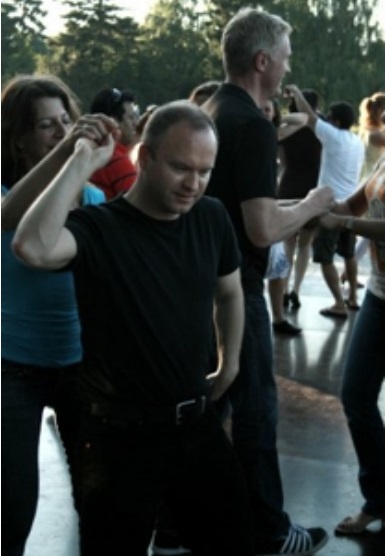
Están deseando presentarte nuestro universo de salsa sensual, enérgica y elegante. Tras más de 20 años enseñando salsa, Salsa Brava es una de las escuelas de baile con más experiencia de Dinamarca en salsa y otros bailes latinos como bachata, merengue y chachachá.
Han desarrollado un método que hace que nuestros alumnos bailen con elegancia y confianza en sí mismos después de un corto período de tiempo.
Dos elementos importantes de nuestra forma de enseñar son el énfasis en la técnica de baile y la comprensión del ritmo y la música. También nos centramos en desarrollar tu estilo personal desde el primer momento.
No importa si eres principiante o bailarín avanzado. Bailarines de todas las edades son bienvenidos a nuestras clases, y si nunca has bailado salsa, no te preocupes… ¡Con ellos bailarás con confianza muy pronto!
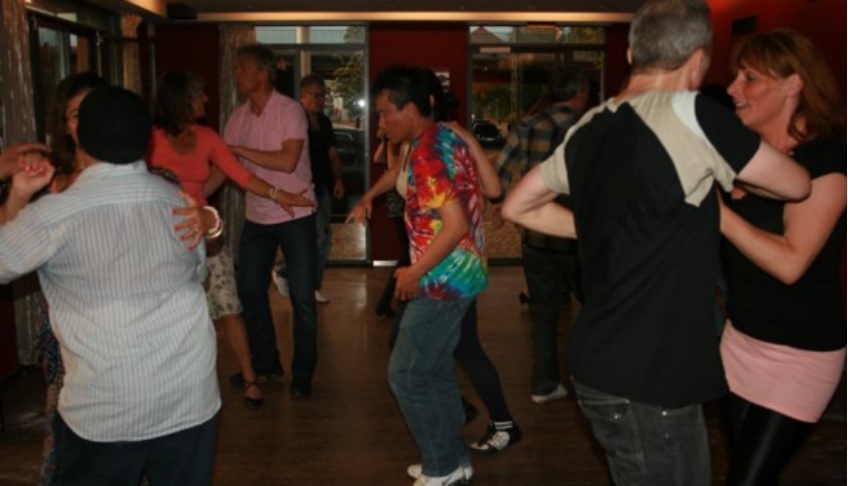
Todos los estilos de salsa
Enseñamos todos los estilos de salsa: “Nueva York”, “L.A.-style” (cross body) y “Cuba”. Al finalizar todos nuestros niveles de clase, podrás realizar combinaciones sensuales, fondos y pasos avanzados.
Desarrollarás tu estilo personal y tendrás un amplio conocimiento de la técnica de baile necesaria para ser un buen bailarín de salsa. Además, podrás improvisar con todo tipo de música de salsa.
¡Salsa Brava es Fernando Hernández!
Ima empezó a entrenar gimnasia de niña. A los 12 años, la sustituyó por jazz, ballet, bailes de salón competitivos, bailes latinos y salsa. Desde entonces, ha entrenado con algunos de los mejores bailarines de salsa del mundo, viviendo en Barcelona, Madrid y Nueva York. Tras muchos años de formación en ballet, jazz, bailes de salón latinos y salsa, Ima ha entrenado, actuado y competido en diversos estilos de baile en todo el mundo, lo que le ha proporcionado un amplio conocimiento de la danza, la interpretación y la técnica de la danza, que puede transmitir a sus alumnos.

Salsa Brava
Salsa LA & Estilo Cubano + Clases de Bachata
La próxima temporada comienza el 25/06 – 2017 con un profesor de latín real http://www.salsabrava.dk/new-classes
Dirección : Estudio de danza Salsabrava: Helgesvej 29, 2000 Frederiksberg. (Piscina Frederiksberg, arriba a la derecha, segundo piso). Estación de metro Frederiksberg. Autobús 2 A (parada Aksel Moellers Have).
Saludos, Fernando Salsabrava Hernández.


Getting to Tempo Latino is easier than ever. If you prefer convenience, the festival offers a bus service from Mont de Marsan, Agen, and Toulouse.

Tempo Latino prides itself on being an inclusive festival. If you come by car, parking spaces are available at Place du Foirail. During the festival, Rue Reynal and Avenue Edmond Bergès will be pedestrianized, facilitating access to the venue. Most importantly, all Festival stages—Scène Tempo Arena, Scène de La Conga, Scène Cap Tempo, and Concert Église—are accessible to people with reduced mobility. There is even a dedicated platform at the Tempo Arena to ensure a perfect view of the stage.

To fully immerse yourself in the experience, Tempo Latino offers various accommodation options:
A Star-Studded Lineup for 2025!

The 30th edition of Tempo Latino is packed with talent. Here’s a preview of what awaits you at the Tempo’Arena:
Additionally, on Thursday, July 24, Scène La Conga will offer a “La Electronica de Bogotá” night with DJ sets by Caribombo and SimaO, and a performance by Acido Pantera.
Get Your Tickets
You can book your tickets online at tempolatino.com/billetterie, at the physical store at 3 rue du Général Delort 32190 Vic-Fezensac, or by phone at +33 (0)5 62 06 56 66.

Antilla is the smallest municipality of the province of Holguin in Cuba and one of the smallest of Cuba, it was founded on January 21, 1925, it is famous from distant times for its beauty, legends and original aspect.

The group is formed by former musicians of the orchestra Brisas de Nipe of this municipality.
This project was born from the hands of Porfirio Núñez Cruz (Firo) who as Art Instructor at the Casa de Cultura Adelaida del Mármol of Antilla had experimented with other amateur groups, but not with the same results, because the members did not have the necessary musical training.
The album Abriendo Caminos includes 14 songs, 10 of which belong to Antillean authors.
“The value of Abriendo Caminos also lies in the fact that it helps Antillean composers and arrangers to open up to the recognition of their work and ways of doing things”.
The songs A mi Antilla (bolero-son) and, Y no me niegues el beso (son) by José James Pinder, singer of the septet. By Oscar Fernández, former singer of the Brisas de Nipe Orchestra, the disc offers the themes Rebozo de amor (guaracha) and the son Que lástima.

From the director of the septet Son de Nipe Porfirio Núñez Cruz, Mi son tradicional.
And the guaracha Olvídate de esa nena by the Antillean composer Nemesio Palacio.
The remaining four musical numbers are; De que callada manera by Nicolás Guillén and Pablo Milanes, Culpable by Pepe Delgado, Rabo de nube by Silvio Rodríguez and Una alborada de amor by Ariel Dotres Zaldivar, these songs were arranged by Porfirio Núñez Cruz.
In the septet’s album Son de Nipe Abriendo Caminos “the guaracha, the bolero, the bolero-son and the genuine son are retaken with originality and revalued”.
“We use the son, but more updated because we make innovations, harmonizing it in a more modern way, without losing its roots”.
The selection of the songs that made up the album Abriendo Caminos was in charge of the septet’s management, since the Casa Discográfica Colibrí wanted originality and the authentic exhibition of the work that has been developed with traditional music in the eastern part of the country.

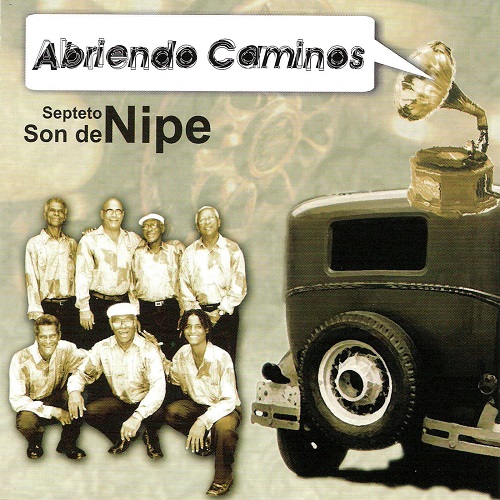
The graphic image of the disc, worked in sepia and black colors fundamentally manage to set the atmosphere that is offered to us with a vintage flavor and invites us to listen to these 14 songs full of tradition and contemporaneity.
The selection of the members was meticulous. Porfirio had in his favor the prestige he possessed and the convening power among his former colleagues of the Orquesta Brisas de Nipe, so much so that in the list of his group he planned to include Reyes Cástulo Urgellés Fáez, better known as Lulú as bassist and José James Pinder (Joseíto) as singer, both retired from the Orquesta Brisas de Nipe and linked to the Casa de Cultura in occasional activities.
The septet still needed to be completed with a key piece, the tres, for which the prestigious Mario Arencibia Rodríguez, one of the best tres players in Antilla, was summoned.
In the Arencibia family, musicians abound, that is why the group was completed with them: Alejandro, singer and Rafael on the tumbadora.
Alejandro and Mario had been part of an amateur group called Renovación Antillana for more than 20 years, which was very famous in its time and where a great number of aficionados were formed.
Alejandro sometimes played the tres in other groups, but in Son de Nipe he remained as a singer, he also had a work relationship that did not allow him to devote himself entirely to music; His nephew, trained at the Casa de Cultura and under the musical influence of the family, had taken over the tumbadoras, so Rafael Arencibia was the youngest of the group, he was barely 25 years old and at this young age he had already played in several amateur groups and got the Brisa de Nipe orchestra out of trouble, due to the unexpected absence of its percussionist.
Rafael Arencibia Rodríguez joined the project with enthusiasm despite the fact that the genre and style of the repertoire were not those used by the amateur groups of his contemporaries.
Iro had obtained the desired musicians, but he still had a big step to climb, his musicians were not professionals, they all had work commitments and he needed to prepare the project for the right day…(ecured).
Septeto Son De Nipe – Abriendo Caminos (2006)
Temas:
Research Sources: