• Skip to primary navigation
  • Skip to main content

International Salsa Magazine

  • HOME
  • Previous editions
    • 2026
      • ISM / March 2026
      • ISM / February 2026
      • ISM / January 2026
    • 2025
      • ISM / December 2025
      • ISM / November 2025
      • ISM / October 2025
      • ISM / September 2025
      • ISM / August 2025
      • ISM / July 2025
      • ISM / June 2025
      • ISM / May2025
      • ISM / April 2025
      • ISM / March 2025
      • ISM / February 2025
      • ISM / January 2025
    • 2024
      • ISM / December 2024
      • ISM / November 2024
      • ISM / October 2024
      • ISM / September 2024
      • ISM / August 2024
      • ISM / July 2024
      • ISM / June 2024
      • ISM / May 2024
      • ISM / April 2024
      • ISM / March 2024
      • ISM / February 2024
      • ISM / January 2024
    • 2023
      • ISM / December 2023
      • ISM / November 2023
      • ISM / October 2023
      • ISM – September 2023
      • ISM – August 2023
      • ISM July 2023
      • ISM Edition June 2023
      • ISM – May 2023
      • ISM April 2023
      • ISM March 2023
      • ISM February 2023
      • ISM January 2023
    • 2022
      • ISM December 2022
      • ISM November 2022
      • ISM October 2022
      • ISM September 2022
      • ISM August 2022
      • ISM July 2022
      • ISM June 2022
      • ISM May 2022
      • ISM February 2022
      • ISM January 2022
    • 2021
      • ISM December 2021
      • ISM November 2021
      • ISM October – 2021
      • ISM September 2021
      • ISM August 2021
      • ISM July 2021
      • ISM May 2021
      • ISM April 2021
      • ISM June 2021
      • ISM March 2021
      • ISM February 2021
      • ISM January 2021
    • 2020
      • ISM December 2020
      • ISM November 2020
      • ISM October 2020
      • ISM September 2020
      • ISM August 2020
      • ISM July 2020
      • ISM June 2020
      • ISM May 2020
      • ISM April 2020
      • ISM March 2020
      • ISM February 2020
      • ISM January 2020
    • 2019
      • ISM December 2019
      • ISM November 2019
      • ISM October 2019
      • ISM Septembre 2019
      • ISM August 2019
      • ISM July 2019
      • ISM June 2019
  • Download Salsa App
    • Android
    • Apple
  • Spanish

Search Results for: New York

Andy Gonzalez started as a musician at the age of 13 in the Latin Jazz Quintet in New York

Andrew “Andy” Gonzalez passed away on April 9, 2020.

Virtuoso bassist, arranger and musical director of Don Manny Oquendo’s “El Conjunto Libre” and Eddie Palmieri’s “La Perfecta”.

Andy has worked throughout his extensive artistic career that spans almost 50 years, with approximately 800 recordings, where he has had the opportunity to be as co-leader, producer, musical director or sideman.

Andy began as a musician at the age of 13 in the Latin Jazz Quintet, a group inspired by the music performed by vibraphonist Cal Tjader and in which he shared with his brother Jerry.

Although long before that, Gerardo Gonzalez, Gonzalez’s father, had already begun his son’s musical

Gerardo was the vocalist of Augie Melendez y Su Combo, an ensemble influenced by the sound of Sexteto La Playa.

Andy Gonzalez virtuoso Bajista, Arreglista y Director musical de “El Conjunto Libre” de Don Manny Oquendo y de “La Perfecta” de Eddie Palmieri

It is worth mentioning that during their time in the Latin Jazz Quintet, the Gonzalez brothers met a person who would change their lives: pianist Llewellyn Matthews, with whom they learned the discipline necessary to “graduate” as professional musicians, both were part of the big band of this decisive leader.

Later came Eddie Palmieri’s La Perfecta, his brother’s Fort Apache Band, the Grupo Folklorico Experimental Nuevayorquino and Manny Oquendo y Libre, 4 groups that changed forever the perception of the music we know today as Salsa.

He collaborated with The Fort Apache Group, Dizzy Gillespie, Tito Puente, Eddie Palmieri, Astor Piazzolla and Ray Barretto.

Andy González is a fundamental reference in the history of Caribbean music and Latin jazz. He has played with almost mythological musicians at times when they left a deep mark on both Latin jazz and dance music.

Andy González se inició como músico a los 13 años en el Latin Jazz Quintet en New York

He has been bassist for Eddie Palmieri, Ray Barreto, Conjunto Libre, Grupo Folklorico Experimental Nuevayorquino, Fort Apache Band, and on some occasions for Ismael Rivera y sus Cachimbos, Cortijo y su Combo and Sonora Matancera.

In this conversation, held in Santiago de Compostela -during the Compostela Millenium Festival in August 2000- he vibrates when talking about his record collection, he declares himself a fan of the study of the roots of the music he makes and reviews his artistic life since when with his band, at the age of 13 and together with his brother Jerry, they imitated the sound of Cal Tjader.

Passion for music      

I’m as much a music fan as I am a musician. Just like any music lover. I’m a fan of the things I appreciate that are important in the history of music. I have studied a lot and that has allowed me to notice the quality and quantity of artists that this music has produced. Great artists, people who have contributed a lot. When you have and study a collection of records like the one I have, you realize that now there are few.

Andrew “Andy” González muere El 9 de abril de 2020ººº
Andrew “Andy” González muere El 9 de abril de 2020

Inspiration

Cal Tjader was my inspiration when I started. Also for Fort Apache Band, because their music had a strong jazz component, but with Cuban rhythms. Good rhythms. We had a great interest in what Cal Tjader was doing.

When we started playing we were copying what Tjader was doing. We were little kids of 13 and 14 years old. We had a very similar repertoire with the same quintet, where Jerry played congas.

Once we even had a dance next to the place where Tjader played, doing the same music. Armando Peraza played congas for Tjader and once he saw us and congratulated us. We always had the support of musicians with more experience, veterans of other generations.

Dj. Augusto Felibertt, Andy Gonzalez, Rafael Muro y Omar Mejias. Centro Cultural La Estancia en Caracas

Main Source: Pablo Larraguibel
Also Read: Roberto Rodríguez fue un trompetista y compositor cubano, autor del éxito de Ray Barreto «Que viva la Música»

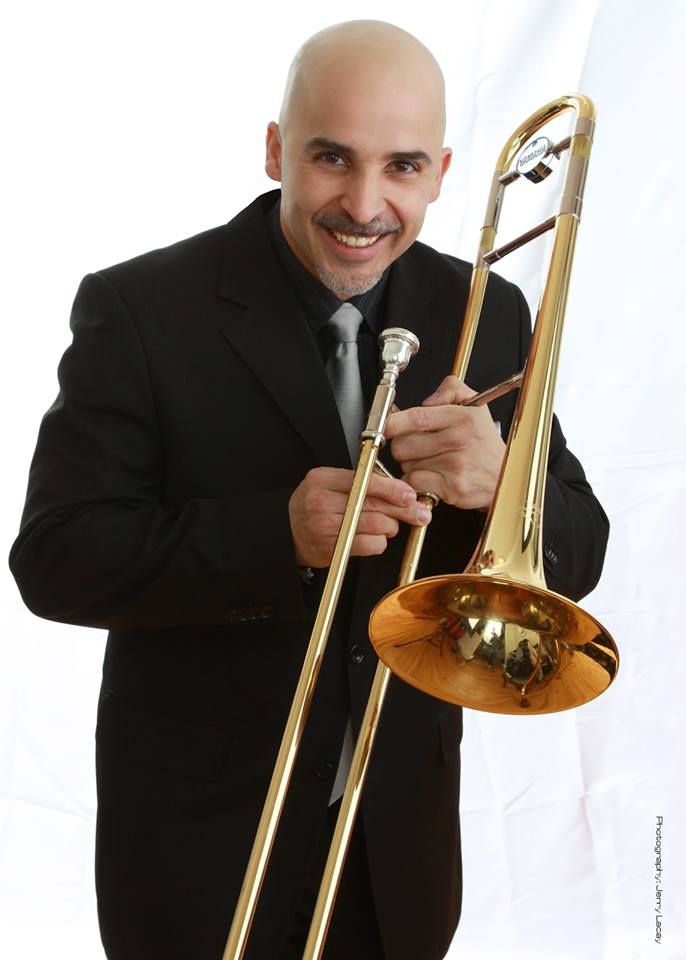
Jimmy Bosch. The Creole Trombone of New York.

Norteamerica / USA / Nueva York

Jimmy Bosch was born on October 18, 1959 to a Puerto Rican family in the city of Hoboken in the state of New Jersey.

At the elementary school of his hometown, at the age of eleven Jimmy Bosch was offered a trombone which would give the starting point in his career. According to him, that metallic, valveless, long instrument (which was taller than him) was not necessarily what a child dreamed of; Perhaps, at that time, children dreamed of traveling to the moon, or with an electric guitar that would make them look like The Beatles or, failing that, the Rolling Stones. It didn’t take long for that 11-year-old boy to transform this instrument into an expression of his already visible creativity.

Jimmy Bosch
Jimmy Bosch

At the age of 13, the talented Jimmy was rehearsing with local bands and making his first foray onto the public stage a year or two later. His determination, the Latin blood that ran through his veins and the taste for the genre that had captivated him on so many occasions, led him to play with the most recognized band in the city: Manny Oquendo & Conjunto Libre. His dexterity and ingenuity in playing “moñas” (a section of trombone solos that enrich the melody) helped him to work with them since 1978, which is why it was alongside the Mythical Free Ensemble that Jimmy experienced the freedom to express himself musically with the trombone

On March 11, 1996, Jimmy Bosch debuted with his band at the internationally known S.O.B.’s nightclub. The result was immediate: Publications in the most prestigious newspapers in the Big Apple such as the “New York Times”, praising his excellence and a house full of loyal fans began to crown the dream of this tropical music worker. In this way he becomes a remarkably respected musician and an icon of Latin culture in New York.

His compositions reflect the creativity and depth of who Jimmy Bosch is. He takes his audience on a journey from Bronx-style “funk” to “hot” guajiras, melodious cha-cha-chás, and clearly poetic lyrics awash with feeling. Thus, Jimmy pays tribute to the other teachers who share their presentations generating remembrance and posterity in each one of them.

Jimmy Bosch playing trumpet

In 1998, under the Ryko Latino label, his first solo album, “Soneando trombone”, was released. Jimmy included a “Big Band” with renowned Latin virtuoso artists, such as trumpeter Alfredo “Chocolate” Armenteros, bassist Andy González, and singers like Jimmy Sabater and Pete “El Conde” Rodríguez. They played a mix of Latin styles, including “hard sauce,” of which Bosch is one of its greatest exponents. Bosch not only played a virtuoso trombone, but was also the musical director on that recording.

With his recording debut as a solo artist, Bosch scored a definite success on the international scene. In Europe critics welcomed his musical creations. And in the United States, newspapers such as the Los Angeles Times and The New York Times were full of praise for their brilliant performances.

Jimmy Bosch in concert

At the beginning of 1999, the popular musician returns to the charts with a new production: “Salsa dura“. In this production, including musicians like Steve Turre and Chucho Valdés, it was as diverse, strong, and tough as his first production. The recording also included songs like I’m Still Changing. For the release of “Salsa dura” the Creole trombonist traveled to Europe and performed on countless stages of the Old Continent.

Persevering in his creativity, in 2004 Bosch received new applause in Puerto Rico, presenting his musical proposal at jazz festivals. His bows have accompanied such important figures in the salsa industry around the planet as the aforementioned Free Ensemble of Manny Oquendo and Andy González, Eddie Palmieri, Ray Barretto, Rubén Blades, India, the Lebron Brothers, La Combinación Perfecta, Cachao, Spanish Harlem Orchestra and Celia Cruz among others. He was the musical director of the outstanding Puerto Rican performer Marc Anthony.

The late creator of the Mambo, Israel “Cachao” López, composed for him the song “Lluvia, viento y caña”. The legendary trombone solo can be heard on the Grammy-winning recording, “Master Sessions Vol. 1” produced by Emilio Estefan and Andy García.

This talented musician stamps his signature with his particular way of playing the trombone, becoming his personal stamp in the music industry. Today, Jimmy Bosch is famous for his explosive solos, full of melody, vibration and funk.

Jimmy Bosch live
Jimmy Bosch live

Known by many as “El Trombón Criollo” for the strength of his improvisations, Jimmy radiates his energy to any musical challenge. Jimmy brings us El airplane de la salsa, his latest production, surrounded by high-voltage musicians and soneros.

Lenin Francisco Domingo Cerda, better known as Frankie Dante, the “Underground” and “Irreverent” of Salsa in New York in the 60’s and 70’s.

“Cerda If I were president, if I were a president, there would be no armed forces, wars would end, the boys would go home where they belong.”

Lenin Francisco Domingo Cerda, mejor conocido como Frankie Dante el “Underground” e “Irreverente” de la Salsa en New York

Lenin Francisco Domingo Cerda, known as Frankie Dante, was born in Santo Domingo, Dominican Republic, on September 15, 1945.

He traveled to New York City in search of the sound of the barrio, influenced by Willie Colón and Eddie Palmieri with his Orquesta La Perfecta.

Frankie Dante, always characterized for being an authentic sonero, who interpreted the stories of the Latin barrio.

In 1968 under the label Cotique he appears in the album “Los Coquetones”, where Ismael Quintana also participated, the great influence in his development as a vocalist, this album is produced by Mr. George Goldner.

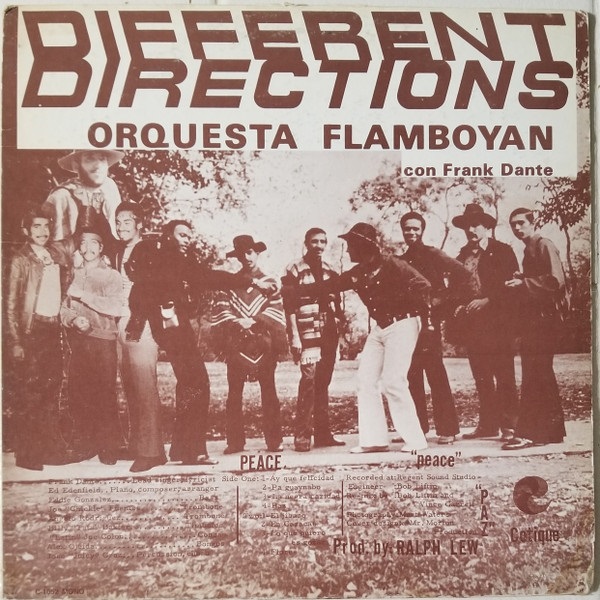
Cerda records a second production with La Orquesta Flamboyán, entitled: “Different Directions”, following the line implemented by maestro Eddie Palmieri with La Perfecta, where he continues the emphasis on social issues, raised in his first musical work, this time with the production of Ralph Lew.

Orquesta Flamboyan Con Frank Dante Different Directions1970
Orquesta Flamboyan Con Frank Dante Different Directions
1970

Launches the album: “Se Viste de Gala”. Resuming his social commitment, he includes the piece “Venceremos”, accompanied by the electric guitar played by Harry Vigianno, who also plays the tres in this production.

In 1972, Frankie Dante is invited by Larry Harlow to produce a new album entitled: “Orquesta Flamboyán Con Larry Harlow”.

Here Frankie achieved hits such as: “La Cuna del Son”, “Yo Te Seguiré”, “Vive La Vida Hoy” and “Presidente Dante”.

The album featured the participation of Larry Harlow on piano and musical production, Ray Romero and Jerry Gonzalez on Congas, Ismael “Pat” Quintana and Milton Cardona on backing vocals.

This album is considered as a recognition of Frankie Dante’s talent when he was asked by the “Wonderful Jew”, Larry Harlow to record together.

Frankie shows all his irreverence by substituting the montuno for a political speech in the manner of a candidate.

As a representative of the Underground current, Dante prefers to perform in a bohemian way in Clubs such as: El Caborrojeño and the Cheetah.

While in these clubs he meets pianist Marcolino Demond and they release the historic album: Beethoven’s V.

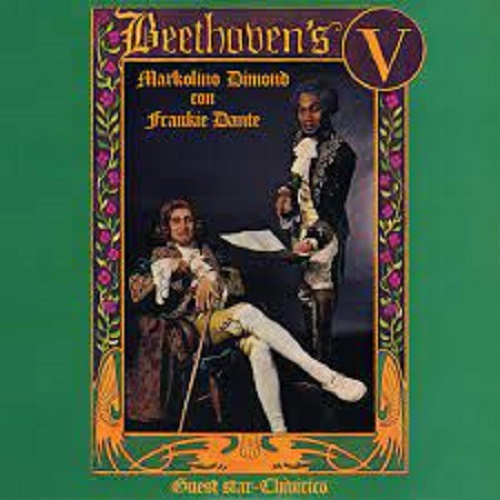
One of his best productions was with the extraordinary musician and pianist Markolino Dimond, who had played with Willie Colón, the album was titled: Markolino Dimond Con Frankie Dante Beethoven’s where in addition to his extravagances he imposed a different way of playing.

The album included five compositions by Marcolino Dimond: “Sabrosón”, “Camarones”, “El Quinto De Beethoven”, “Maraquero” and “Ahora Sí”, two songs with reserved author’s rights: “Los Rumberos” and “Yo No Tengo Amigo” and the hit “Porque Adore” by maestro Tite Curet Alonso.

Markolino Dimond Con Frankie Dante Guest Star Chivirico* Beethoven's V
Markolino Dimond Con Frankie Dante Guest Star Chivirico* Beethoven’s V

Dante and Marcolino were a duo without precedents, taking into account that both had the stigma of rebelliousness.

The album features Frankie Dante and Chivirico Davila on vocals and Yayo “El Indio”, Pete “El Conde” Rodriguez and Ismael “Pat” Quintana on backing vocals.

Other great musicians that participated in the band are Nicky Marrero – Timbales, Bongos; Pablito Rosario – Bongos; Barry Rogers – Trombone; Mike Collazo – Timbales, Eddie “Guagua” Rivera – Bass; Lewis Kahn – Trombone; Reinaldo Jorge – Trombone and Frank Malabé – Congas.

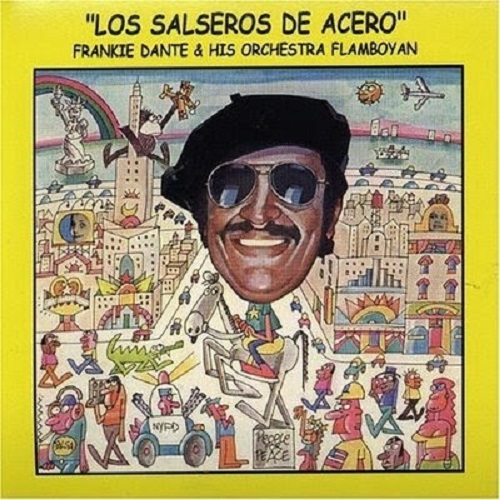
 In 1976, again with Marcolino, he released: “Los Salseros de Acero”, in an attempt to reunite the original line-up of Los Flamboyán with Joe “Chickie” Fuentes on trumpet, Ángelo Rodríguez on trombone and Alex Ojeda on timbales, plus the participation of stars of the moment such as: Charlie Palmieri, Tito Puente and Ricardo Marrero, in what was called: Flamboyán All Star Band.

Frankie Dante & His Orchestra Flamboyan Los Salseros De Acero

Among the songs on the album were “Ciencia Política” by Frankie Dante and “Chupa El Pirulí” composed by the wonderful Ciego Arsenio Rodríguez.

That year he published his seventh album “The Flamboyán All Star Band Frankie “Be Bop” Dante”, also recorded for Cotique Records, which included songs such as: “El Pipón”, “Son Retozón” and “Mumbo Jumbo”, compositions by Frankie Dante himself and a version of the song “María Cervantes” by the Puerto Rican Noro Morales.

Sonny Bravo, Norberto Cruz and Marty Sheller participated in the arrangements; Charlie Palmieri – Arrangements and Director and Mr. Ralph Lew as Producer.

The album also counted with the participation of other great musicians of the salsa movement such as: Leopoldo Pineda – Trombone, Ray Maldonado – Trumpet, Frankie Malabé – Congas, Orestes Vilató – Timbales, Ronnie Cuber – Sax and Flute, Willie Colón – Chorus and Tito Allen – Chorus.

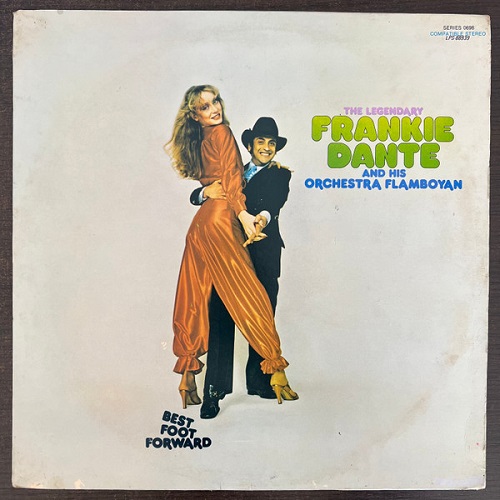
One of Cotique’s recordings was entitled “Frankie Dante and his Orquesta Flamboyán Best Foot Forward”, a compilation album with Frankie’s hits such as: “Paz”, “Los Rumberos”, “Presidente Dante”, “Venceremos” and the well known song “Yo Te Seguiré” written by the great Catalino Tite Curet Alonso.

The Legendary Frankie Dante And His Orchestra Flamboyan Best Foot Forward

His last recording appearance would happen in 1979 with the release of “Los Rebeldes”, where he decided to name his group: Frankie Dante Y Los Rebeldes.

This album has songs such as: “Los Congresistas” by Frankie Dante, a version of the song “Semilla De Caña Brava” by Cuban Luis Martinez Griñan “Lily” and “Vuelve El Rumbero” by Puerto Rican Johnny Ortiz.

Also participating in the recording were: Sal Cuevas – Bass, Louie Cruz, Marty Sheller, and Louie Ramirez in the Arrangements, Alberta Dering – Artistic Director, Ralph Lew as Producer and Milton Cardona as Musical Director.

Dominican Frankie Dante developed his musical career in New York City, where he died of cancer on March 1, 1993.

Dante, emulating his compatriot Johnny Pacheco, settles in the city of skyscrapers and takes with his “precursor” lyrical talent in terms of social conscience in salsa. With good artistic sense he perceives that the sound of the neighborhood and its hurtful musical style will be the main axis of the new concept that is born in the land of Uncle Sam.

“He recognizes in the almost adolescent Willie Colón a style to follow, he is enormously attracted to that “sour” way of arranging the songs, the maestro Eddie Palmieri and his Orquesta La Perfecta (already in full swing) also influence the young Dante as well as Ismael “Pat” Quintana’s way of interpreting, a style that Frankie incorporates immediately in his first production in 1968 under the Cotique label (Ref. CS-1043) titled Los Coquetones”.

Sources and Bibliography:

  • http://www.megaupload.com/pt/?d=FR6AAPU0
    • http://ww.malianteo.com
    • http://www.salsajazz.com/i
    • http://apostolsalsero.soy.es/frankie-dante-la-orquesta-flamboyan/
    • Latinastereo 100.9 FM nuestra música

Also Read: Nicky Marrero is an innovator, timbalero and bongo player, living legend of our Afro-Latin and Caribbean music.

New York Directory 2024


Taj Lounge
Taj Restaurant & Lounge
48 W 21st St
New York, NY 10010
+1 212 620-3033

Gonzalez y Gonzalez
Gonzalez y Gonzalez
192 Mercer St
New York, NY 10012
+1 212 473-7878

Sound Of Brazil
Sound Of Brazil
204 Varick St
New York, NY 10014
+1 212 243-4940

Copacabana Nightclub
625 W 51st St
New York, NY 10019
+1 917 559-1779

Birdland
Birdland
315 W 44th St #5402
New York, NY 10036
+1 917 559-1779

Havana Café
Havana Café
3151 E Tremont Ave
The Bronx, NY 10461
+1 718 301-8323

Salsa Fuego
Salsa Con Fuego
2297 Cedar Ave
The Bronx, NY 10468
+1 718 561-6161

Kiss
Kiss Entertainment
130-35 91st ave
Richmond Hill, NY 11418
+1 917-232-7098


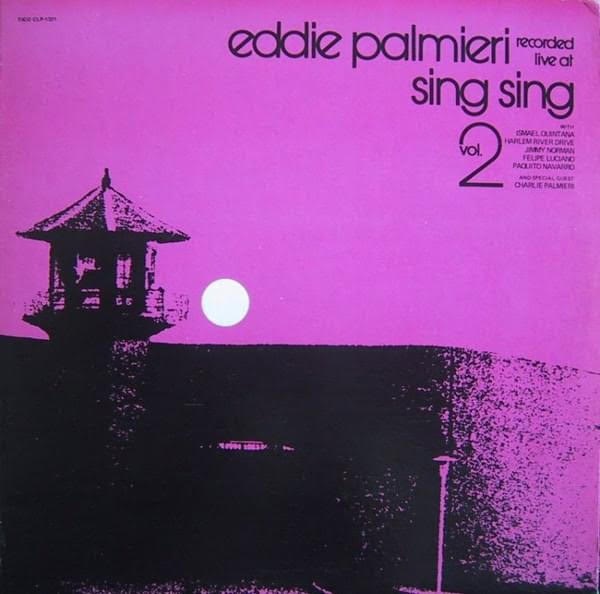
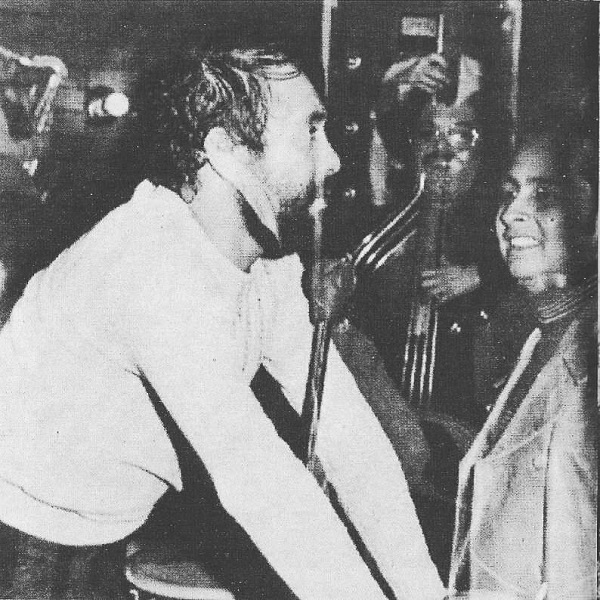
Eddie Palmieri brought salsa for the first time and live from Sing Sing Penitentiary in New York

In the early 1970s, the American social landscape was dominated by the Vietnam War and the birth of several protest movements advocating for equality, justice and the defense of human and civil rights, and from sing sing a historic concert.

In the midst of all that collective turbulence, Eddie Palmieri and his orchestra were giving free rein to their social rebellion with a sweeping musical proposal.

But Palmieri’s rebelliousness was not only reflected in his music, but also in his decision to take his group’s sound to atypical and controversial scenarios that would attract the attention of the authorities.

By the beginning of 1972, Eddie Palmieri had already performed in some correctional institutions, including the Louisville Correctional Facility and the Attica and Rikers Island prisons in New York, but the pianist wanted something more.

Eddie Palmieri brought salsa for the first time and live from Sing Sing Penitentiary in New York

In those days, a good friend of Eddie Palmieri was incarcerated in the sinister and historic Sing Sing Correctional Facility, also known as Sing Sing Prison, infamous for the reputation of its inmates and for its executions with electric chairs.

It was at that moment that the idea of an unprecedented performance at the facility was born.

Palmieri’s group was not only the orchestra of choice for Hispanics, it was also favored by the majority of African-Americans in the Latin dance world, and at that time the prison population at Sing Sing was composed mostly of Hispanics and African-Americans, so the stage was perfect.

However, it was not easy to perform a concert in a maximum security prison like the dreaded Sing Sing Prison.

However, at the request of Eddie Palmieri himself and with the coordination of Roulette Records and the prison administration, the performance took place on Wednesday, April 12, 1972.

By the beginning of 1972, Eddie Palmieri had already performed in some penitentiary institutions.

Sing Sing Correctional Facility is a New York State Department of Correctional Services prison in Ossining, New York State, United States. The name comes from the original name of the town of Ossining.

It was the third prison in New York State, built in 1825. The state legislature allocated $20,100 to purchase the Silver Mine farm. The prison was to be self-supporting and not require a state budget.

Elan Lynds, a jailer at Auburn Prison (New York’s second prison), brought 100 convicts from Auburn to the new prison and employed them for its construction.

Harris A. Smiler was the first person executed by electrocution at Sing Sing on July 7, 1891. From 1914 until 1971, only the electric chair at Sing Sing was used for executions.

On January 8, 1983, more than 600 inmates in B Block started a riot, taking 17 officers hostage; it ended 53 hours later.

Sing Sing in popular culture

Near the end of Herman Melville’s short story Bartleby, the Scribe, it is mentioned that Monroe Edwards died of tuberculosis in Sing Sing Prison.

There is a song called La cárcel de Sing Sing, written by Bienvenido Brens, which tells the story of a prisoner in this jail who was sentenced to death for killing his wife and her lover. The song was made famous by José Feliciano. It is also performed by Colombian singer-songwriter Alci Acosta.

Sing Sing Penitentiary in New York City

In addition, it was performed live by the band Corizonas (union of Arizona Baby and Los Coronas) in their live album “Dos bandas y un destino”.

There is a song by the salsa group Conjunto Clásico on the album El panadero released in 1986, called A los muchachos de Sing Sing, which has a message of encouragement to convicts.

There is a song by the French-Tunisian singer-songwriter (Michel) Laurent entitled Sing Sing Barbara, from 1971, which tells the story of an inmate who sends desperate messages of love to his wife from this prison.

There is a song by the Madrid group Los Nikis entitled Diez años en Sing Sing, which also gives title to the tribute album to that group.

There is a song by the Basque group Sorotan Bele titled Sing Singatiko Folk & Rolla.

In 1932 the film Twenty Thousand Years in Sing Sing was shot, directed by Michael Curtiz and starring Spencer Tracy and Bette Davis. The film is based on the book of the same name by Lewis E. Lawes.

In the film Constantine, and in the official Constantine comic book, John Constantine is seen to use the Sing Sing prison chair to connect to hell.

In the film Citizen Kane, protagonist Charles Kane threatens his political rival, Jim Gettys, to send him to Sing Sing, when Gettys informs Kane that he will publish his affair with Susan Alexander in the newspapers if he does not withdraw from the election.

In the film The Pilgrim, Charles Chaplin plays the role of a convict recently escaped from prison, who, when he is at the train station, moves his finger without looking over the board of destinations to choose one at random and falls on Sing Sing, so he repeats the process again when he realizes his unfortunate choice.

In the movie Breakfast at Tiffany’s, Holly Golightly periodically visits inmate Sally Tomato at this prison.

In the movie and musical The Producers, the main characters stop at the same prison and create a musical called Prisoners of Love.

In the video game Driver Parallel Lines, the protagonist spends 28 years in Sing Sing.

In the ABC television series Castle, Sing Sing is cited during an episode of the fourth, fifth and eighth seasons.

In the film noir movie Odds Against Tomorrow, Johnny, the character played by Harry Blafonte, says, “I know they changed his color when they rehabilitated him in Sing Sing.”

In the AMC television series Mad Men, Sing Sing is quoted during an episode of the third season.

In the series Breakout Kings, prisoners are transferred to Sing Sing for their help.

In the song Báilalo como tú quieras, by artist Tego Calderón, the phrase “If rapping was a crime, I’d be in Sing Sing!” appears.

In the horror movie saga Maniac Cop, cop Max Cortell is killed in Sing Sing prison by inmates and is resurrected in the form of a “maniac cop”.

In the Netflix series The Punisher, Arthur mentions to Billy Russo having been imprisoned 10 years in Sing Sing, in episode 4 of the second season.

In the novel “The Ppsychoanalyst” by John Katzenback published in 2002, the Sing Sing prison where a man served six months is named.

In Georges Simenon’s novel The Hound Dog starring Commissar Maigret, one of the characters spends several years in Sing Sing prison.

In the comics “Mortadelo y Filemón”, by cartoonist Francisco Ibáñez, when a character has done something barbaric, he is sentenced to Sing Sing prison and appears with the typical black and white striped prisoner’s suit, chopping stone with an iron ball chained to his leg.

In the series Law and Order the Sing Sing prison is constantly mentioned.

Also Read: Carlos “Nene” Quintero comes from a family of musical prodigies

  • « Go to Previous Page
  • Page 1
  • Page 2
  • Page 3
  • Page 4
  • Interim pages omitted …
  • Page 116
  • Go to Next Page »

International Salsa Magazine (ISM) is a monthly publication about Salsa activities around the world, that has been publishing since 2007. It is a world network of volunteers coordinated by ISM Magazine. We are working to strengthen all the events by working together.