|
|
|
|
|
|
|
|
|
|
|








|
|
|
|
|
|
|
|
|
|
|
In the early 1970s, the American social landscape was dominated by the Vietnam War and the birth of several protest movements advocating for equality, justice and the defense of human and civil rights, and from sing sing a historic concert.
In the midst of all that collective turbulence, Eddie Palmieri and his orchestra were giving free rein to their social rebellion with a sweeping musical proposal.
But Palmieri’s rebelliousness was not only reflected in his music, but also in his decision to take his group’s sound to atypical and controversial scenarios that would attract the attention of the authorities.
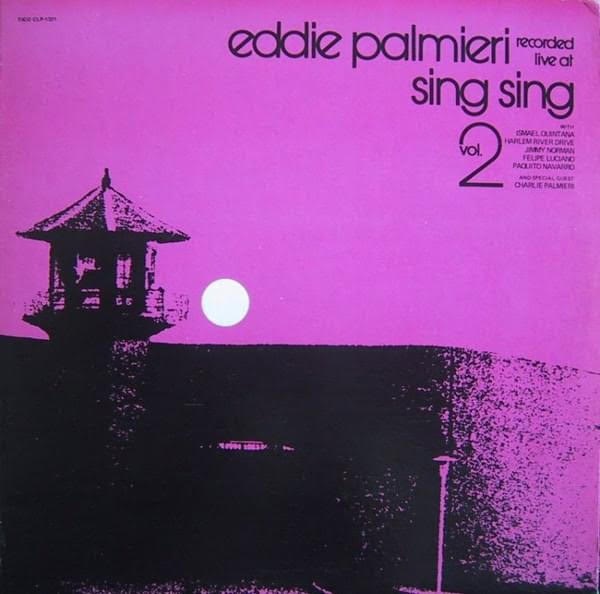
In those days, a good friend of Eddie Palmieri was incarcerated in the sinister and historic Sing Sing Correctional Facility, also known as Sing Sing Prison, infamous for the reputation of its inmates and for its executions with electric chairs.
It was at that moment that the idea of an unprecedented performance at the facility was born.
Palmieri’s group was not only the orchestra of choice for Hispanics, it was also favored by the majority of African-Americans in the Latin dance world, and at that time the prison population at Sing Sing was composed mostly of Hispanics and African-Americans, so the stage was perfect.
However, it was not easy to perform a concert in a maximum security prison like the dreaded Sing Sing Prison.
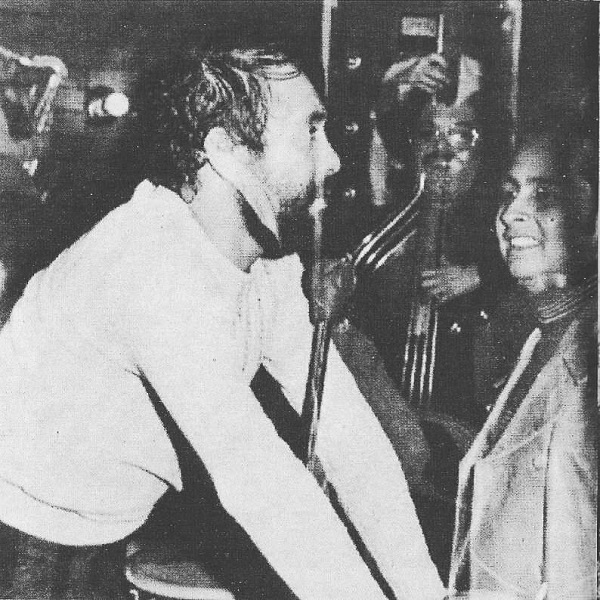
However, at the request of Eddie Palmieri himself and with the coordination of Roulette Records and the prison administration, the performance took place on Wednesday, April 12, 1972.
It was the third prison in New York State, built in 1825. The state legislature allocated $20,100 to purchase the Silver Mine farm. The prison was to be self-supporting and not require a state budget.
Elan Lynds, a jailer at Auburn Prison (New York’s second prison), brought 100 convicts from Auburn to the new prison and employed them for its construction.
Harris A. Smiler was the first person executed by electrocution at Sing Sing on July 7, 1891. From 1914 until 1971, only the electric chair at Sing Sing was used for executions.
On January 8, 1983, more than 600 inmates in B Block started a riot, taking 17 officers hostage; it ended 53 hours later.
Sing Sing in popular culture
Near the end of Herman Melville’s short story Bartleby, the Scribe, it is mentioned that Monroe Edwards died of tuberculosis in Sing Sing Prison.

In addition, it was performed live by the band Corizonas (union of Arizona Baby and Los Coronas) in their live album “Dos bandas y un destino”.
There is a song by the salsa group Conjunto Clásico on the album El panadero released in 1986, called A los muchachos de Sing Sing, which has a message of encouragement to convicts.
There is a song by the French-Tunisian singer-songwriter (Michel) Laurent entitled Sing Sing Barbara, from 1971, which tells the story of an inmate who sends desperate messages of love to his wife from this prison.
There is a song by the Madrid group Los Nikis entitled Diez años en Sing Sing, which also gives title to the tribute album to that group.
There is a song by the Basque group Sorotan Bele titled Sing Singatiko Folk & Rolla.
In 1932 the film Twenty Thousand Years in Sing Sing was shot, directed by Michael Curtiz and starring Spencer Tracy and Bette Davis. The film is based on the book of the same name by Lewis E. Lawes.
In the film Constantine, and in the official Constantine comic book, John Constantine is seen to use the Sing Sing prison chair to connect to hell.
In the film Citizen Kane, protagonist Charles Kane threatens his political rival, Jim Gettys, to send him to Sing Sing, when Gettys informs Kane that he will publish his affair with Susan Alexander in the newspapers if he does not withdraw from the election.
In the film The Pilgrim, Charles Chaplin plays the role of a convict recently escaped from prison, who, when he is at the train station, moves his finger without looking over the board of destinations to choose one at random and falls on Sing Sing, so he repeats the process again when he realizes his unfortunate choice.
In the movie Breakfast at Tiffany’s, Holly Golightly periodically visits inmate Sally Tomato at this prison.
In the movie and musical The Producers, the main characters stop at the same prison and create a musical called Prisoners of Love.
In the video game Driver Parallel Lines, the protagonist spends 28 years in Sing Sing.
In the ABC television series Castle, Sing Sing is cited during an episode of the fourth, fifth and eighth seasons.
In the film noir movie Odds Against Tomorrow, Johnny, the character played by Harry Blafonte, says, “I know they changed his color when they rehabilitated him in Sing Sing.”
In the AMC television series Mad Men, Sing Sing is quoted during an episode of the third season.
In the series Breakout Kings, prisoners are transferred to Sing Sing for their help.
In the song Báilalo como tú quieras, by artist Tego Calderón, the phrase “If rapping was a crime, I’d be in Sing Sing!” appears.
In the horror movie saga Maniac Cop, cop Max Cortell is killed in Sing Sing prison by inmates and is resurrected in the form of a “maniac cop”.
In the Netflix series The Punisher, Arthur mentions to Billy Russo having been imprisoned 10 years in Sing Sing, in episode 4 of the second season.
In the novel “The Ppsychoanalyst” by John Katzenback published in 2002, the Sing Sing prison where a man served six months is named.
In Georges Simenon’s novel The Hound Dog starring Commissar Maigret, one of the characters spends several years in Sing Sing prison.
In the comics “Mortadelo y Filemón”, by cartoonist Francisco Ibáñez, when a character has done something barbaric, he is sentenced to Sing Sing prison and appears with the typical black and white striped prisoner’s suit, chopping stone with an iron ball chained to his leg.
In the series Law and Order the Sing Sing prison is constantly mentioned.
Also Read: Carlos “Nene” Quintero comes from a family of musical prodigies
His five albums as a leader, two as co-leader (MOZART’s BLUE FANTASIES and BACH’s SECRET FILES) as well as his work on over a hundred albums, scores for five feature films, three Broadway Musicals and multiple other projects, showcase his wide-ranging area of expertise.
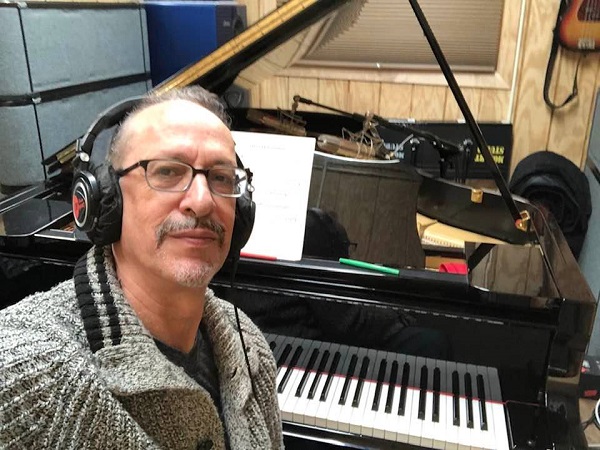
After several nominations as a sideman, two of his five solo CDs were nominated for a GRAMMY Award (REFUGEE, 2008, and SECOND CHANCE, 2010).
He arranged and performed parts of the score of Ang Lee’s OSCAR-nominated movie EAT, DRINK, MAN, WOMAN.
His first professional recording was at age 18 (Mikis Theodorakis’s “Canto General”) while one of the most recent was on legendary rock band CHICAGO’s latest production, the Latin-tinged “EXITOS”.
He has written symphonic orchestrations, performed and recorded by the Russian Philharmonic Orchestra and compositions like ABRE LOS OJOS, CIERRA LOS OJOS, commissioned and premiered by the MUSICA DE CAMARA STRING ORCHESTRA at St Patrick’s Cathedral in April 2011.
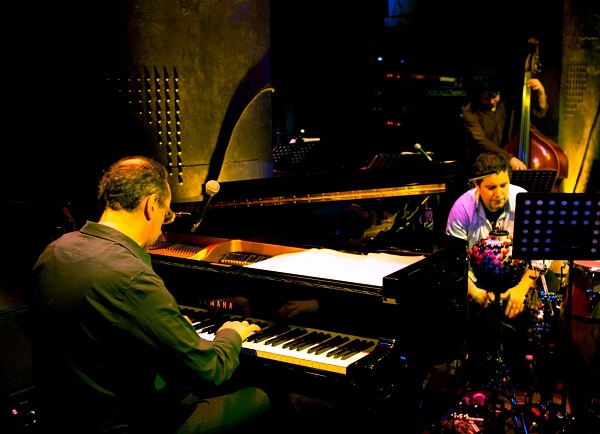
As a requested sideman he has toured the world with such greats as Paquito D’Rivera, Ray Barretto, Gato Barbieri, Steve Turre, Don Byron, Tito Puente and was featured pianist with Max Roach’s PROJECT AMERICA at the 92 St Y.
His joy of teaching has made him a requested guest-lecturer and performance teacher in music faculties and academies in several countries of Europe, Japan, North- and South America.
Hector wrote an instructional book on Latin piano commissioned and published by Hal Leonard, the SALSA PIANO BOOK.
Martignon’s abilities as a pianist have always been enriched by his interest in varied musical genres.
He paid for his studies of classical piano and composition at the prestigious Freiburger Musikhochschule in Germany by performing with the best Afro-Cuban and Brazilian bands of Europe, backing stars like Celia Cruz and Ismael Quintana on their European tours, and recording with Tata Güiness and Arturo Sandoval.
At the same time he was attending seminars of contemporary composition with masters like Gyorgi Ligetti, Luigi Nono and Karl Heinz Stockhausen.
He also performed classical music in recitals and concerts in Germany, Italy and his native Colombia, specializing in Chopin, Bach and Debussy.
Living in Brazil for a one-year love affair with that country and its music, Martignon soon became a requested studio musician and worked for star producer Carlinhos Brown.

Since relocating to New York City, Martignon has been one of the most sought-after pianists on the Latin jazz scene.
He’s toured North and South America, Europe, and Asia with the bands of Mongo Santamaría, Gato Barbieri, Steve Turre and Don Byron, who had him record in his latest CD.
He was featured pianist with the bands of Tito Puente, Mario Bauzá, Chico O’Farrill, Paquito D’Rivera, and Max Roach in his “Project America.” Most notably, Martignon was pianist for the late Ray Barretto’s various ensembles.
During his eight-year association with Barretto, his contributions as pianist, arranger, and composer were fundamental in shaping the sound of the now famous New World Spirit Sextet.
One of his last collaborations with Barretto, “My Summertime,” was a favorite nominee for a Grammy award. Martignon’s versatility has also made him extremely active in the film and television industries.
He is composer of the original music of two feature films, one of which, “Septimo Cielo”, won international awards. He also collaborated in the production of many Broadway musicals (“Chronicle of a Death Foretold”, Paul Simon’s “The Capeman”, “Selena Forever”) as conductor, arranger, and co-composer. In the fall of 2003 Hector visited Slovenia and Russia to collaborate with singer-songwriter Vitaly Osmsçko’s first symphonic CD.
The Russian Philharmonic Orchestra recorded in Moscow the orchestrations written by Hector.
As a composer, producer and arranger of TV and radio music his record is no less impressive. In 2001 he landed two spots for HBO Latino, and one for Coca Cola.
HECTOR” S FOREIGN AFFAIR In 1998 Martignon performed with his quartet “Foreign Affair”at the Brooklyn Academy of Music’s famed annual festival “The Next Wave” on a triple bill with Tito Puente’s “Top Percussion” and Don Byron’s “Music for six Musicians”.
This proved to be a turning point for him and his ensemble, which evolved from the strictly acoustic trio sound of the first two CDs to a more eclectic and electric quartet sound.
The new configuration that evolved from that memorable concert started a series of concerts and recordings, with guitarist Mark Whitfield, Cameroonian bassist Richard Bona and Cuban drummer Horacio “Negro” Hernández.
This quartet performed and recorded live during a weeklong stint at New York’s famous Birdland.
The group has also performed on BET television festivals, at jazz clubs in Manhattan, and made various appearances in clubs and open-air festivals in his native Colombia and in Europe.
Martignon’s third solo project, to be released in the fall of 2003, is not only a reflection of the group’s new musical direction but also of his interaction with other world class musicians.
Eddie Gomez, Jeff Watts, Mathew Garrison, John Benitez, Dafnis Prieto, Willard Dyson have all made their unique contribution to this, Martignon’s new sound of Jazz.
Hector Martignon never fails to surprise, challenge and delight us. Stay tuned and get involved in this affair.
Site: Héctor Martignon
Also Read: “El Sol de la Música Latina” el primer premio Grammy para el histórico disco de Salsa Eddie Palmieri
|
|
|
|
|
|
|
|
|
|
|
North America / United States / New York
I was born in Manhattan, New York on December 1, 1969. My parents Pablo and Haydee Padin moved from Puerto Rico to New York in 1968. My father played Timbales with local salsa groups at the time, so I grew up with a pair of Timbales at home.
My father started teaching me how to play at a very young age. We moved to LA. , California in 1978 and I started playing drums in the school band and in the community drill teams as well.
I (Pablo Padin) got my first private drum set lesson at the age of 9 at a music school in Hollywood California.

At the age of 15, I (Pablo Padin) started playing my first steady gig in a salsa band with my father at a nightclub in Marina Del Rey, California.
In 1989 we moved to Puerto Rico so I started studying music at the Interamerican University in San German, PR. At the university I studied with the musicians that were playing with all the big salsa and merengue groups of that time.
So at that point in time I started playing with famous salsa singers such as Roberto Lugo, Nino Segarra, Hector Tricoche, Domingo Quiñones and Johnny Rivera.
At the same time I started doing studio work as well. In 1996 I got the call to play with Gilberto SantaRosa and did that gig for 15 years. It was with Gilberto that I hooked up with piano player, arranger and producer Jose Lugo.
Jose started using me on all of his studio productions. I have won 6 Latin Grammys and 2 American Grammys on recordings and productions of artists such as: Millie Quezada, Elvis Crespo, Grupo Mania, Gilberto SantaRosa and Tito El Bambino.

At that point in my career I started recording and playing concerts with artist such as Puerto Rican Power, Pedro Brull, Yomo Toro & Willie Colón, Andy Montañez, Ismael Miranda, Tito Nieves, Cheo Feliciano, Rafael De Jesus, Richie Ray & Bobby Cruz, Bobby Valentín, Marvin Santiago, Cano Estremera, Victor Manuelle, Ruben Blades, Ray De La Paz, Jose Alberto ”El Canario” Lalo Rodriguez, Truko Y Zaperoko, DLG, Isaac Delgado, Herman Oliveras, Edwin Colón Zayas and many others.
To this date I’ve been working with Jose Lugo’s Guasabara Combo, in which our first cd was nominated for the Latin Grammy.
We are working on our third cd now that will include two original compositions of mine. I’m super exited, humbled and thankful for all the great experiences that I’ve lived and for the ones that are yet to come, Thank You God!!!!!