• Skip to primary navigation
  • Skip to main content

International Salsa Magazine

  • HOME
  • Previous editions
    • 2026
      • ISM / March 2026
      • ISM / February 2026
      • ISM / January 2026
    • 2025
      • ISM / December 2025
      • ISM / November 2025
      • ISM / October 2025
      • ISM / September 2025
      • ISM / August 2025
      • ISM / July 2025
      • ISM / June 2025
      • ISM / May2025
      • ISM / April 2025
      • ISM / March 2025
      • ISM / February 2025
      • ISM / January 2025
    • 2024
      • ISM / December 2024
      • ISM / November 2024
      • ISM / October 2024
      • ISM / September 2024
      • ISM / August 2024
      • ISM / July 2024
      • ISM / June 2024
      • ISM / May 2024
      • ISM / April 2024
      • ISM / March 2024
      • ISM / February 2024
      • ISM / January 2024
    • 2023
      • ISM / December 2023
      • ISM / November 2023
      • ISM / October 2023
      • ISM – September 2023
      • ISM – August 2023
      • ISM July 2023
      • ISM Edition June 2023
      • ISM – May 2023
      • ISM April 2023
      • ISM March 2023
      • ISM February 2023
      • ISM January 2023
    • 2022
      • ISM December 2022
      • ISM November 2022
      • ISM October 2022
      • ISM September 2022
      • ISM August 2022
      • ISM July 2022
      • ISM June 2022
      • ISM May 2022
      • ISM February 2022
      • ISM January 2022
    • 2021
      • ISM December 2021
      • ISM November 2021
      • ISM October – 2021
      • ISM September 2021
      • ISM August 2021
      • ISM July 2021
      • ISM May 2021
      • ISM April 2021
      • ISM June 2021
      • ISM March 2021
      • ISM February 2021
      • ISM January 2021
    • 2020
      • ISM December 2020
      • ISM November 2020
      • ISM October 2020
      • ISM September 2020
      • ISM August 2020
      • ISM July 2020
      • ISM June 2020
      • ISM May 2020
      • ISM April 2020
      • ISM March 2020
      • ISM February 2020
      • ISM January 2020
    • 2019
      • ISM December 2019
      • ISM November 2019
      • ISM October 2019
      • ISM Septembre 2019
      • ISM August 2019
      • ISM July 2019
      • ISM June 2019
  • Download Salsa App
    • Android
    • Apple
  • Spanish

Search Results for: New York

Roberto “Bobby” Rodríguez was a master of the Baby Bass and was instrumental in its popularization within Latin music

Roberto “Bobby” Rodríguez “Big Daddy” (1927-2002) was a renowned bassist and a key figure in Latin jazz and salsa. He was known for playing both the upright bass and electric bass.
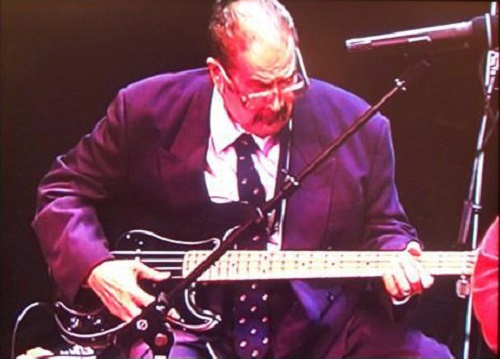
Roberto Bobby Rodriguez was a master of Baby Bass and played a decisive role in its popularization within Latin music

He worked with legendary artists and bands such as Charlie Parker, Dizzy Gillespie, Machito, Tito Puente, and The Alegre All Stars. Born in Tampa, Florida, to Cuban parents, he is often associated with the Baby Bass, a type of electric upright bass.

The Baby Bass is a specific type of electric upright bass developed by the Ampeg company. It has a distinctive sound and is very popular in Latin music, especially salsa.

Many famous bassists in the genre, including Roberto “Bobby” Rodríguez “Big Daddy,” are known for playing this instrument. With its deep, percussive tone, the Baby Bass helped define the sound of salsa music.

In summary, the connection between Roberto “Bobby” Rodríguez and the Baby Bass is that the famous bassist, Roberto “Bobby” Rodríguez “Big Daddy,” was a master of the instrument and was instrumental in its popularization within Latin music.

“Big Daddy’s” Career and Legacy.

The son of Cuban and Puerto Rican parents, Roberto “Bobby” Rodríguez “Big Daddy” was born in Tampa, Florida, on May 2, 1927. His talent left a lasting mark on the performance of both the upright bass and the electric bass.

He began his career in New York at the age of 17 with Machito and His Afro-Cubans, where he replaced Julio Andino. He participated in recordings with Chico O’Farrill, Dizzy Gillespie, Cal Tjader, Eddie Palmieri, Willie Bobo, Mongo Santamaría, Joe Cuba, Eric Dolphy, the Alegre All Stars, and Tito Rodríguez. His most important and enduring collaboration, however, was with Tito Puente.

Rodríguez’s involvement with Puente’s band resulted in a catalog of countless tumbao basslines. He occasionally had the opportunity to lead the band with a solo, loaded with highly creative melodic improvisations.

On the 1990 album, Goza mi Timbal, the track “Ode to Cachao” features a large number of Bobby Rodríguez’s solos. In addition to being a tribute to Israel López, this track is a showcase of “Big Daddy’s” immense virtues and is considered one of the most unforgettable solos in Latin jazz. This partnership remained active from the 1950s to the 1990s.
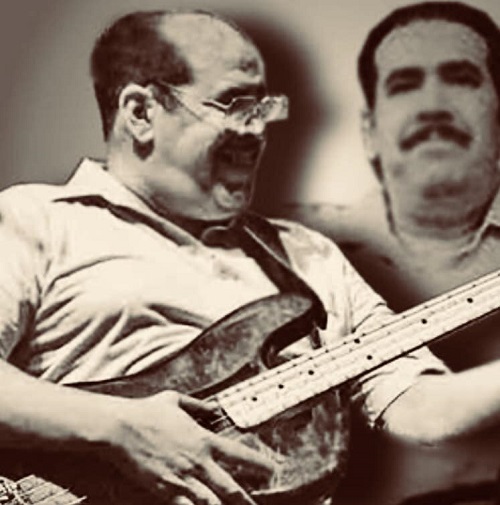
Roberto Bobby Rodriguez Big Daddy was born in Tampa, Florida, on May 2, 1927

The nickname “Dedo Gordo” (Fat Finger) was given to him for his way of playing the electric bass, with a thick sound—something that in American musical circles is called a “groove.” According to experts, his technique was meant to emulate the sound of the Ampeg Baby Bass.

One characteristic he was always recognized for was his unique ability to play the clave rhythm with his foot while performing on the bass. His musical experience always made him seem like a contributor with a jazzy style.

On July 29, 2002, after a life full of resounding successes and an impressive legacy, Bobby Rodríguez passed away in New York.

Ambiguities with the Name Roberto “Bobby” Rodríguez.

The name “Bobby Rodríguez” has been used by several artists within the universe of Caribbean music.

One common source of confusion is the flutist, clarinetist, and saxophonist from Manhattan, Robert “Bobby” Rodríguez, who founded the group “La Compañía.” His date of birth has not been confirmed.

Another point of confusion is the common misconception that “Big Daddy” began his career with the Marcano Quartet. The truth is that the quartet featured Félix Manuel Rodríguez, who, in the early stages of his career at age 17, also went by the name “Bobby Rodríguez.” He would later adopt his famous stage name, Bobby Capó.

A third artistic namesake is Dr. Bobby Rodríguez, a trumpet player born in Los Angeles, California, who is also a teacher and author of the book, ABC’s of Brass Warm-Up. He has been nominated for a Grammy and has received awards as an educator.
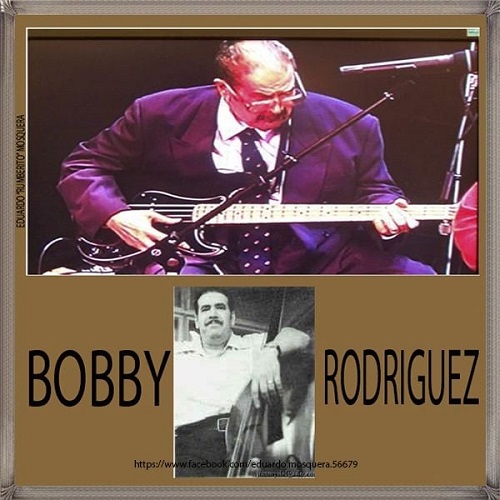
Roberto Bobby Rodríguez Big Daddy (1927-2002)

The list of names similar to Roberto “Bobby” Rodríguez becomes much longer if you search for homonyms of his given name. For example, there is Roberto (Reimundo) Rodríguez, a trumpet player from Cienfuegos, Cuba. He co-founded the orchestra Los Jóvenes Estrellas de Cuba and became a member of the Fania All Stars. He also appears in the documentary Nuestra Cosa Latina. In 1982, he founded the group Los Rodríguez with his sons, Roberto Jr. and Willie.

His son, Roberto Rodríguez Jr., is another homonym we encounter in these musical paths.

Continuing with more homonyms, there’s the Cuban trumpet player Roberto Luis Rodríguez, who is the father of the currently famous trumpet player Roberto Juan Rodríguez, also Cuban, but who moved with his Jewish family to Miami at the age of nine. He has played with top artists such as Joe Jackson, Julio Iglesias, and Paul Simon.

 By: Diego Aranda (Audiokat)

Dj. Augusto Felibertt

Los Mejores Salseros del Mundo

Also Read: Bobby Valentín, the King of the Bass in the Fania All-Stars Machine – The Mind of a Master
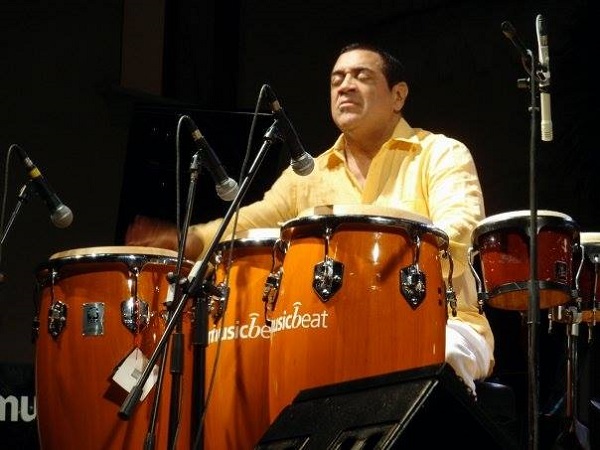
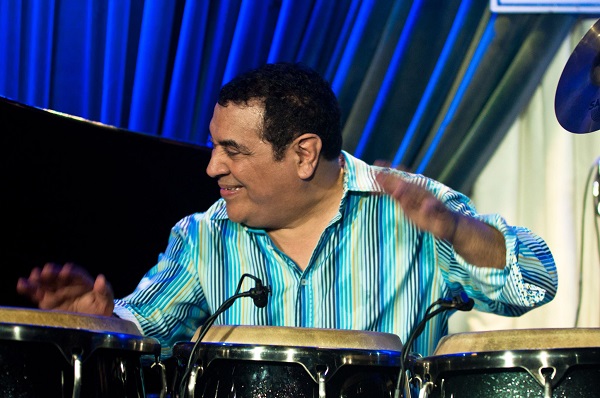
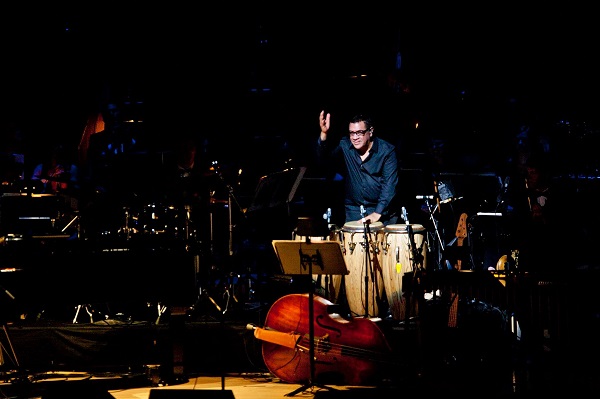
Sammy Figueroa is an exceptional percussionist known for his versatility and for playing in a multitude of musical styles

Sammy Figueroa, a percussionist with an excellent career.

Sammy Figueroa was born in the Bronx, New York, in 1948. He is the son of bolero singer Charlie Figueroa, whom he never knew, as his father passed away at the age of 32.

Sammy moved to Puerto Rico as a child to live with his grandparents and escape the Bronx’s gang violence.

Sammy Figueroa is an excellent percussionist who has stood out for his versatility, playing in a multitude of musical styles

At 18, he started his professional career with bassist Bobby Valentín’s band. Throughout his career, he has stood out for his versatility, playing in a multitude of musical styles and contributing to nearly 400 albums, ten of which are platinum.

He has collaborated with major pop artists like David Bowie, Chaka Khan, and Mariah Carey, as well as with distinguished jazz musicians such as Miles Davis, Sonny Rollins, Quincy Jones, and George Benson. In 1977, he became a founding member of the Latin rock fusion group Raíces.

In 2001, Sammy Figueroa moved to South Florida and formed his own group, Sammy Figueroa and His Latin Jazz Explosion. His albums And Sammy Walked In and The Magician were nominated for a Grammy for Best Latin Jazz Album.

Sammy Figueroa, a percussionist with an excellent career

Sammy Figueroa, a percussionist with an excellent career

His 2023 album, Searching for a Memory / Busco Tu Recuerdo, is a tribute to his father. The project, produced by his wife, Rachel Faro, with whom he has also co-produced other albums, allowed Sammy to reconcile with his father’s legacy. On this album,

Sammy sings on a record for the first time and transforms his father’s classic boleros into modern Latin jazz arrangements. The album was nominated for a Latin Grammy in the “Best Jazz/Latin Jazz Album” category.

Sammy Figueroa has received numerous awards, including two Percussionist of the Year awards from the National Academy of Recording Arts and Sciences (NARAS), two Drummie Awards for Best Hand Percussion, and a Best Percussionist award from the Jazz Journalists Association.

Discovered by jazz flutist Herbie Mann, Figueroa became a well-known session and studio musician, touring and recording with The Brecker Brothers, Average White Band, Morrissey – Mullen, The Mahavishnu Orchestra John McLaughlin, and Miles Davis.

He has also appeared with Blondie, Sonny Rollins, David Sanborn, Quincy Jones, Dave Grusin, George Benson, Chet Baker, Stanley Clarke, Grover Washington Jr., Al Jarreau, Lena Horne, Joe Williams, Mark Murphy, Mike Mainieri, Néstor Torres, Chico O’Farrill, Mike Stern, Chuck Loeb, Bobby Watson, Dave Valentin, Arturo Sandoval, Paquito D’Rivera, Rubén Blades, Eddie Palmieri, Bobby Valentín, Tania Maria, Mariah Carey, James Taylor, Dr. John, Mick Jagger, David Bowie, Celine Dion, Blues Traveler, Natalie Merchant, David Lee Roth, Hall & Oates, Joe Cocker, Rickie Lee Jones, Annie Lennox, Whitney Houston, Anita Baker, Grace Jones, James Ingram, Diana Ross, Roberta Flack, Aretha Franklin, and many others.

Some of the R&B hits he is featured on include Sister Sledge’s “We Are Family,” Luther Vandross’s “The Night I Fell In Love,” and Ashford & Simpson’s “Solid (as a rock),” as well as most of Nile Rodgers and Bernard Edwards’ hits on the Chic and Sister Sledge record labels.

Michel Camilo wrote the song “And Sammy Walked In” in his honor, and it was also recorded by Giovanni Hidalgo. Two of his CDs, And Sammy Walked In and The Magician, have been nominated for Grammy Awards in the “Best Latin Jazz Album” category. Figueroa hosts a Latin jazz show on WDNA-FM in Miami, Florida.

Sammy Figueroa was born in the Bronx, New York, in 1948

If you’re not very familiar with Sammy Figueroa’s work, you can try an experiment with this album: listen closely to see if you can guess what his instrument is. In a medium-sized combo, what instrument seems to take center stage? The answer: it’s impossible to guess, which says something about Figueroa’s maturity as a leader.

It’s also surprising to see how pared down his forces really are this sextet sounds like a big band. (Spoiler alert: he’s a percussionist.) It also says something about him that the term “Explosion” is a misnomer for his band. There are no pyrotechnics, no crazy tempos, and no wildly layered rhythms here.

But there are some very impressive horn arrangements (check out “Cha Cha Pa’ Ti” and the lovely “Cuco y Olga”), along with some of the sweetest, most tender ballads to appear on a jazz album of any genre in recent years (“Queen from the South” and “Zuliana” are the best examples).

For a percussionist acting as a bandleader, giving this kind of sustained, loving attention to compositions that only make a tenuous use of his talent is further proof of Figueroa’s taste and maturity. Let’s hope Figueroa keeps going in this vein. Rick Anderson.

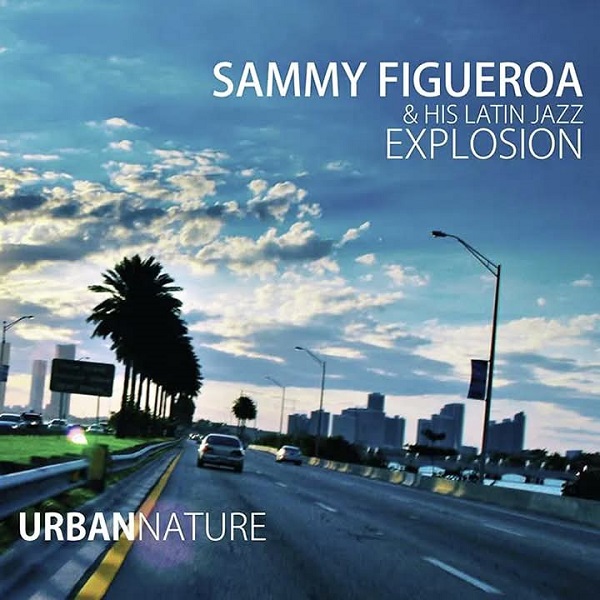
Sammy Figueroa & His Latin Jazz Explosion – Urban Nature (2011).

Sammy Figueroa & His Latin Jazz Explosion - Urban Nature (2011)
Sammy Figueroa & His Latin Jazz Explosion – Urban Nature (2011)

Tracks:

  1. Gufillo (Silvano Monasterios)
  2. Urban Nature (Gabriel Vivas)
  3. Latin What? (Michael Orta)
  4. Zuliana (Silvano Monasterios)
  5. 7th Door From The Left (Silvano Monasterios)
  6. Cuco y Olga (Nicholas Martines)
  7. Cha Cha Pa’ Ti (Gabriel Vivas)
  8. Queen From The South (Silvano Monasterios)
  9. Funny Talk (Gabriel Vivas)

Musicians:

  • Sammy Figueroa (Percussion)
  • Silvano Monasterios (Piano)
  • Gabriel Vivas (Acoustic bass)
  • John Michalak (Sax)
  • Alexander Pope Norris (Trumpet)
  • Nomar Negroni (Drums)

Guest Musicians:

  • Ed Calle (Sax)
  • Mike Orta (Piano)
  • José Gregorio Hernández (Percussion)

Website: Sammy Figueroa

By:

Dj. Augusto Felibertt

L’Òstia Latin Jazz

Also Read: Carlos “Nene” Quintero comes from a family of musical prodigie

Ania Bartelmus from La Candela Flamenco talks about her performance at the Hispanic Heritage Celebration

For some time, Hispanic genres have attracted people from all over the world, who have been captivated by the rhythms and colors of our music and traditions. Such was the case of professional dancer and director of La Candela Flamenco Company, Ania Bartelmus, who despite her Polish roots, could not help but fall in love with these artistic expressions, prompting her to become one of the leading figures of flamenco in Atlanta, Georgia.

Ania was kind enough to take a few minutes out of her busy schedule to talk exclusively with International Salsa Magazine and treat some issues related to her beginnings and current career. 

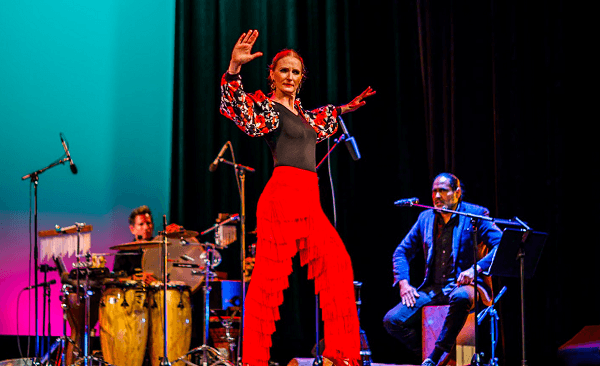
Dancer Ania Bartelmus performing live
Dancer Ania Bartelmus ”La Candela” performing live with Dave Holland and Juan Solas Machado in the background

How Ania’s interest in flamenco and Latin jazz was born

Although Ania was not born into a family of musicians or dancers, she has always been drawn to art and wanted to pursue one of its many branches as an adult. She started taking dance classes in different styles, including ballet, ballroom dancing, contemporary dance, and a little flamenco. 

At that time, at 18 years old, the young woman recalls attending a flamenco show by Spanish composer and guitarist Paco Peña in her hometown. She was so fascinated by the musician’s performance that she wanted to focus a little more on that genre and, if possible, manage to professionalize.

Then, her dance classes began to fully focus on flamenco and at much more advanced levels than before. This appeared insufficient to her, so she decided to live in Seville, Spain, for a few years to learn directly from the source.

La Rubia de La Candela

Ania was fortunate enough to have great teachers who turned her into the professional she is today and one of them was Curro Fernández, who affectionately nicknamed her “La Rubia de La Candela” when she was his student. During her first year in Seville, the dancer enrolled in the school of Esperanza Fernández and Miguel Vargas, the first being her singing teacher. 

Esperanza was originally Ania’s teacher, but she was constantly touring and could not always attend the scheduled classes. Therefore, it was her father, Curro Fernández, who took her place and taught the classes instead of her, which made him some kind of father and mentor for Ania and the rest of her classmates. His knowledge and good humor made him one of the best references for the girl on the way she had to go.

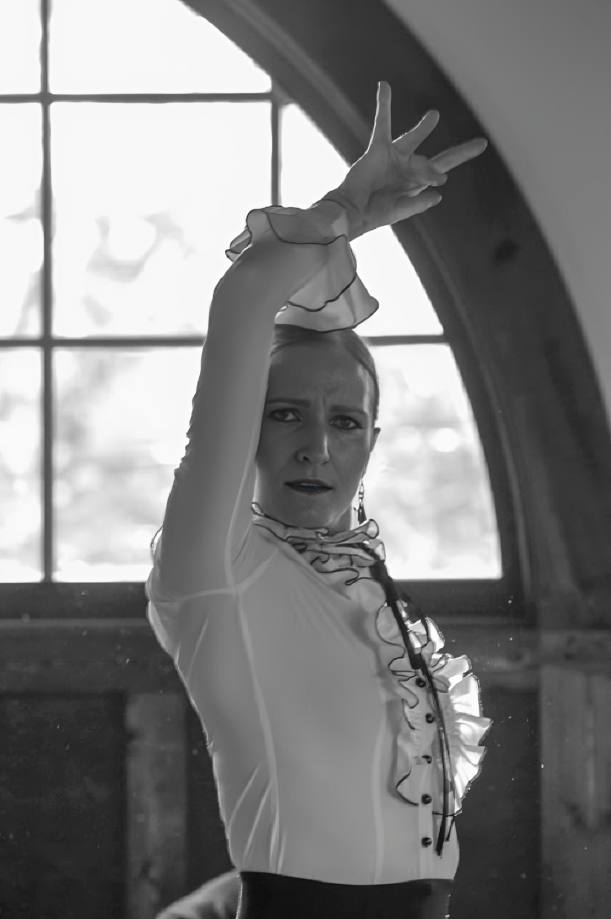
Ania posing
Dancer Ania Bartelmus posing for the camera

Creation of La Candela Flamenco

In 2014, Ania officially started her company, which initially received the name Ania Flamenco, but she later renamed it La Candela Flamenco in order to give more importance to Ania’s stage name. 

At the beginning, the company was seeking to present Spain’s traditional flamenco, but this became a tough task to pull off in the United States, as many of the best flamenco singers are not based there. So Ania decided to change her strategy and opted for a more Latinized flamenco, since most of her musicians come from Latin countries and a large part of the public feels a much stronger connection to Latin genres than to traditional flamenco.

On this subject, he also said: “We continue to respect the main rules of traditional flamenco, but we do not include flamenco singers because of the difficulty in finding them in the city. Our shows focus on other flamenco elements where we can best showcase the tradition’s richness.”

Current members of La Candela Flamenco Latin Band

La Candela Flamenco Latin Band is the company’s main group and is made up of a wide variety of famous musicians, one of them being Venezuelan guitarist José Chirinos, who joined the band in 2018 and contributed greatly to expanding the company’s horizons thanks to his background and the rhythms he brought from his homeland.

Thanks to Jose, Ania met Cuban percussionist Juan Pablo Solas Machado, who brought a lot of experience in flamenco, having been part of a company that toured the world with a Cuba’s flamencoised repertoire. The other percussionist who more recently joined is American Dave Holland, providing great knowledge about rhythms from around the world and serving as a connection between the Latin and the Anglo-Saxon souls for the rest of his bandmates.

We also cannot fail to mention Venezuelan pianist José Manuel García, one of last year’s great additions to the team along with fellow pianist Tony Castillo.

Finally, we also have Bulgarian flutist Teodora Stoyanova, whom Ania met through Jerry Fields, the percussionist with whom she started the company in 2014.

Ania and the rest of the musicians
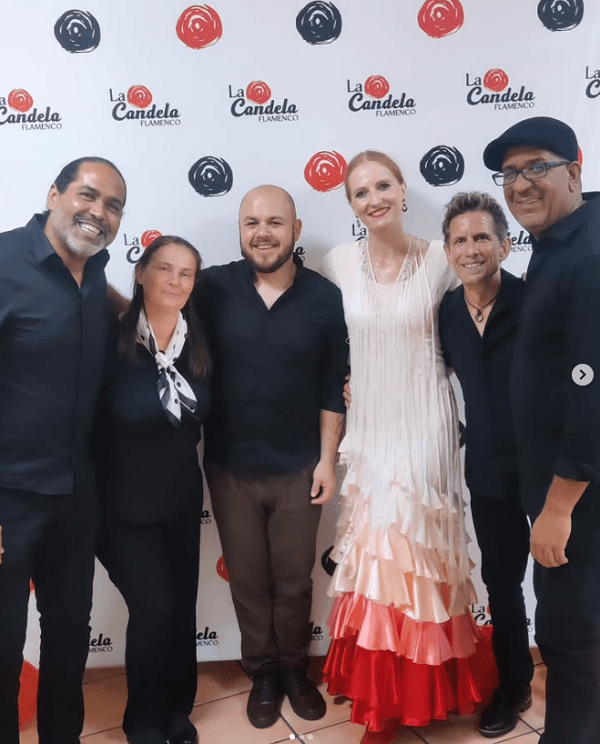
From left to right: Cuban percussionist Juan Solas Machado, Bulgarian flutist Teodora Stoyanova, Mexican guitarist Ricardo Sánchez “Ricardito”, dancer Ania Bartelmus, American multi-percussionist Dave Holland, and pianist Tony Castillo

Hispanic Heritage Celebration

One of the major events in which La Candela Flamenco Latin Band usually participates annually is the Hispanic Heritage Celebration, to be held on October 25 at the Emory Performing Arts Studio in New York. This will be the third time they have presented this show in Atlanta, although in previous years, the concerts were held at the Roswell Cultural Arts Center.

Ania was first contacted to participate in the event in 2023, as its organizers wanted a show that reflected flamenco in the context of Hispanic heritage. On that occasion, Jose Chirinos played a leading role in the concert, while for the second edition, La Candela Flamenco Band featured the great talent of Mexican composer and guitarist Ricardito Sánchez and the aforementioned Tony Castillo. All of these musicians helped La Candela Flamenco to become more diverse and expand much more into Latin jazz and other rhythms of this type.

Thanks to the great job done by the team, for the second edition of the Hispanic Heritage Celebration, Ania noticed much more interest in the band’s performance than the previous year, and thanks to past experience, the next show worked best. 

For the third edition, in which the talented dancer and her group will perform once again, International Salsa Magazine wishes them all the best and we have no doubt that everything will turn out in the best possible way. 

Read also: Cuban singer-songwriter Osmay Calvo shows his versatility in the New Jersey music scene

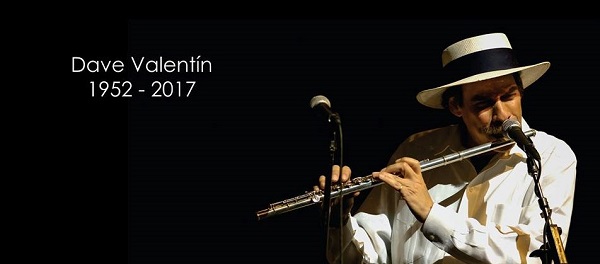
Dave Valentín is considered one of the most important Latin jazz flautists in history, thanks to his technique and rhythm

Valentín: The Master of the Flute in Latin Jazz.

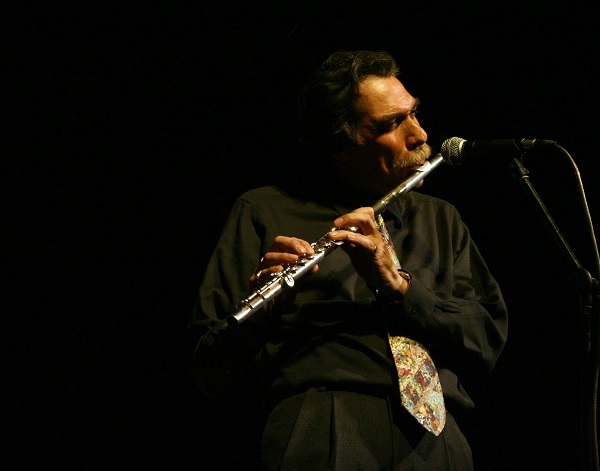
Dave Valentín is considered one of the most important flutists in the history of Latin jazz, thanks to his technique, rhythm, and vast musical knowledge.

Dave Valentín is considered one of the most important Latin jazz flutists in history, thanks to his technique and rhythm

Born in the Bronx, New York, on April 29, 1952, to Puerto Rican parents from Mayagüez, Valentín grew up in a home filled with music. From the sounds of Tito Rodríguez and Tito Puente to Machito, the musical culture that surrounded him as a child was a major influence. Although he loved the bongos and congas, he joined a Latin group as a timbalero during his teenage years. He played in the “cuchifrito” circuit and in working-class dance halls in New York.

Dave Valentín’s life largely reflects the story of the children of Puerto Rican immigrants in New York who forged their own destiny through hard work, dedication, talent, and family support. In fact, the musician, composer, and arranger himself liked to say that “each person creates their own reality.”

A Legacy-Filled Career

  • GRP Records Pioneer: Valentín was the first artist to sign with the influential GRP record label, which allowed him to consolidate his career and spread jazz fusion and Latin jazz to a wider audience. He recorded 16 albums with the label, including titles like Legends, The Hawk, Land of the Third Eye, Pied Piper, In Love’s Time, Flute Juice, Kalahari, and Red Sun, among others. These works combine the intensity of Latin cadences with influences from pop, R&B, Brazilian music, and smooth jazz. For the musician, being signed by this multinational company represented “the opportunity of a lifetime.”
  • Notable Collaborations: Throughout his career, he worked with major figures in jazz and Latin music such as Tito Puente, Manny Oquendo, Cano Estremera, Eddie Palmieri, Ricardo Marrero, Dave Grusin, and Patti Austin.
  • Awards and Recognitions:
    • He earned a Grammy nomination in 1985.
    • He won a Grammy Award in 2003 for his work on the album Caribbean Jazz Project, alongside vibraphonist Dave Samuels.
    • He was chosen as the top jazz flutist by readers of Jazziz magazine for seven consecutive years.

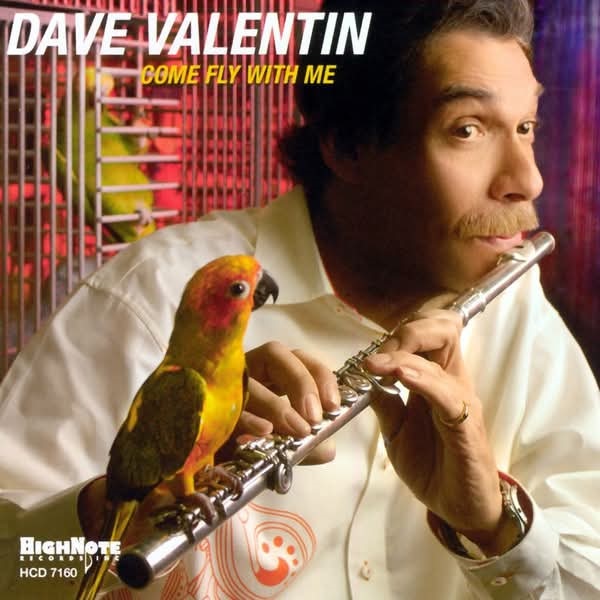
Come Fly with Me (2006)

Dave Valentin - Come Fly With Me
Dave Valentin – Come Fly With Me

Dave Valentín always moved in the realm of fusion. His incorporation of smooth jazz elements, Latin influences, and the sensitivity of modern jazz made him a difficult artist to pigeonhole. Come Fly with Me is one of his most notable albums, as it focuses on a direct approach to Latin jazz. The majority of the songs are Afro-Cuban with a New York flair, without including funk or samba rhythms.

Driven by a formidable rhythm section that includes Robert Ameen on drums, Milton Cardona and Richie Flores on percussion, Luques Curtis on bass, and his friend Bill O’Connell on piano, the album overflows with power and elegance. Trombonist and arranger Papo Vázquez also participates on several tracks. The group’s rhythm is profound and the solos are filled with inspiration. Despite some less successful moments, Valentín’s innate sense of taste and melody shines brightly.

Album Credits

Musicians:

  • Dave Valentín (Flute)
  • Bill O’Connell (Piano)
  • Luques Curtis (Acoustic Bass)
  • Papo Vázquez (Trombone)
  • Chris Barretto (Tenor Sax #1)
  • Robert Ameen (Drums)
  • Milton Cardona (Percussion)
  • Richie Flores (Percussion)

Tracks:

  • Come Fly with Me
  • Twinkle Toes
  • Enciendido
  • Mind Games
  • If You Could See Me Now
  • Easy Street
  • Tu Pañuelo
  • House of the Sun
  • Song for My Brothers

Sadly, Dave Valentín suffered a stroke in 2012 that forced him to step away from music. He passed away in 2017. Despite his passing, his musical legacy remains a fundamental reference for flutists and lovers of Latin jazz.

Valentín El maestro de la flauta en el jazz latino

By:

L’Òstia Latin Jazz

Rafael Vega Curry for the National Foundation for Popular Culture

Dj. Augusto Felibertt

Also Read: Pamir Guánchez, brilliant Venezuelan singer, flutist, saxophonist and arranger.

Salsa Fever On2 Dance Academy

North America / USA /  New York

At Salsa Fever On2, they take great pride in being the only licensed Adult and Children Salsa / Mambo dance academy in the state of New Jersey! Salsa Fever On2 has been in business for 12 years.

Members of the Salsa Fever On2 Dance Academy

Here, we have a reputation throughout the dance community for providing our students with an Award-Winning, structured curriculum that is conducive to all different levels of dancers while maintaining a fun and stress-free environment.

Whether you want to take your dance to the next level, support your exercise regimen, work on social skills or scape the daily stressors in your life, you can rest assure that you will be surrounded by a supportive staff in a non-intimidating environment.

The instructors at Salsa Fever take pride knowing that their students are held to the highest calibre and it’s evident on the dance floor. Under the artistic direction of Mario J. Gonzalez and his staf, SFOn2 Dance Academy aims to create true “On2” dancers – trained equally in dance and musicality.

Mario Justo Gonzalez a.k.a Mario B Founder & Director Salsa Fever On2 Dance Academy

Professional Dancer, Instructor, Choreographer, Actor, MC, DJ Date of Birth: April 23, 1976 Birthplace: Hoboken, NJ EthnicBackground: Puerto Rican/Cuban [email protected]

Mario has had an interesting start to what is now a SALSA / MAMBO lifestyle!

Mario was very athletic throughout his grammar and high school years. In 1999, a really good friend and high School teammate, Danny Useche, introduced Mario B. to the “Salsa Scene”. This, in turn, inspired Mario to sign up for his first dance class. It did not quite work out as well as he expected, as the class was slightly more advanced than he predicted. This left Mario even more determined to prove his point, size, shape and color was irrelevant when it comes to MAMBO!

Photo 1: Members of the Salsa Fever On2 Dance Academy

Mario was down, but definitely not out. He then came across one of the smoothest and most humble instructors in the Mambo scene, Greg Taylor, a prodigy of Delille Thomas and Original Eddie Torres dancer. After a few days with Greg Taylor, Mario was in Mambo Heaven. Took classes with Greg for approximately 6 months and was eternally grateful to Greg for this time, patience and expertise. Mario knew it was time to move forward and take on more of a challenge; he began taking more advanced classes with other established instructors.

Mario was immediately sought out and asked to become “The Papa” to Abbey Plotkins “The Mambo Mamas & The Papa”. Mario was now the Mambo Papa! By joining The Mambo Mama & The Papa, Mario was gice the opportunity to perform for what would become an instant hit LATIN MADNESS, an off-Broadway Dancical / Musical depicting the evolution of latin dance from past to present. The director and producer agreed that Mario would be a great addition to their all-star cast. Mario was now dancing alongside the BEST Mambo Dancers in the world! Latin Madness gave Mario the opportunity to dance, work and share the stage with the most sought out professionals in the world.

With stage experience and help from an acting coach, Mario earned the respect to appear in the movies “Empire” and “Kal-ho-naho”. Mario acted for the NY International Independent Film & Video Festival at Madison Square Garden, which then opened the doors for Mario to perform in two latin concerts at MSG… the largest stage in the world! In a short amount of time, Mario has come a long away to become a Professional Dancer, Choreographer, Instructor and Actor.

What’s most amazing I that he achieved all of these goals with NO background in dance!

It’s true what they say “Hard work does” pay off! “Hard work does pay off!” Who would have thought that Mario would transition from a full – time athlete to becoming a future Mambo Legend? In addition, his love for music and dance was Mario’s motivation to name his youngest daughter Jazzlyn.

Cycle Classes

Members of the Salsa Fever On2 Dance Academy - Dancers
Members of the Salsa Fever On2 Dance Academy – Dancers

Mambo On2 Partner & Floor Shine

  • Beginner Level 1: Beginner Students learn from a syllabus to help track their progress & pinpoint problem areas in floor shines & turn patterns in a 6 week cycle.
  • Advanced Beginner Level 2: students learn from a syllabus reflecting from Beginner Level 1 to help track their progress & pinpoint problem areas in floor shines & turn patterns with more of a challenge in a 6 week cycle.
  • Pre Intermediate Level 3: students learn from a syllabus reflecting from Beginner Level 2 to help track their progress & pinpoint problem areas in more complex floor shines & turn patterns in a 6 week cycle
  • Intermediate 4 Level: Students learn from a syllabus reflecting from Advanced Beginner Level 2 to help track their progress & pinpoint problem areas in more complex floor shines & turn patterns. Advanced beginner Level 2 will also prepare you for Advanced classes

What to bring to class

Please bring comfortable shoes with a leather or suede bottom. The best investment you can make as a dancer is a pair of quality dance shoes.

Do NOT recommend rubber soles or thick soled shoes as it will be difficult to find your balance, spin, and do the other exercises that to do in class. Bottled Poland Springs water is sold at the studio for a dollar.

Members of the Salsa Fever On2 Dance Academy - Photo 1
Members of the Salsa Fever On2 Dance Academy – Photo 1

Come dressed to dance. A short sleeved shirt and comfortable pants, tight & wind breakers are recommended. This class is a workout, you will sweat & enjoy it. There is a changing are at the studio, as well as restrooms.

The school is also equipped with state of the art central air conditioning & heating for both the summer & winter.

What to expect

Every class begins with a warm-up as a group, with introductory footwork drills for the first hour.

This gives students a chance to review the material that they know, and also gives them opportunity to assess new students and makes sure that they are in the appropriate group. For the second hour you split into partner work & continue with turn patterns & instruction. At the end of the class students have time to practice the moves that they learned, as well as ask question & clarify things that may have been missed.

Members of the Salsa Fever On2 Dance Academy - Photo 2
Members of the Salsa Fever On2 Dance Academy – Photo 2

Location: 83 Franklin Street

Jersey City, NJ 07307

Phone: (201) 792-116

[email protected]

  • « Go to Previous Page
  • Page 1
  • Interim pages omitted …
  • Page 18
  • Page 19
  • Page 20
  • Page 21
  • Page 22
  • Interim pages omitted …
  • Page 116
  • Go to Next Page »

International Salsa Magazine (ISM) is a monthly publication about Salsa activities around the world, that has been publishing since 2007. It is a world network of volunteers coordinated by ISM Magazine. We are working to strengthen all the events by working together.