• Skip to primary navigation
  • Skip to main content

International Salsa Magazine

  • HOME
  • Previous editions
    • 2026
      • ISM / March 2026
      • ISM / February 2026
      • ISM / January 2026
    • 2025
      • ISM / December 2025
      • ISM / November 2025
      • ISM / October 2025
      • ISM / September 2025
      • ISM / August 2025
      • ISM / July 2025
      • ISM / June 2025
      • ISM / May2025
      • ISM / April 2025
      • ISM / March 2025
      • ISM / February 2025
      • ISM / January 2025
    • 2024
      • ISM / December 2024
      • ISM / November 2024
      • ISM / October 2024
      • ISM / September 2024
      • ISM / August 2024
      • ISM / July 2024
      • ISM / June 2024
      • ISM / May 2024
      • ISM / April 2024
      • ISM / March 2024
      • ISM / February 2024
      • ISM / January 2024
    • 2023
      • ISM / December 2023
      • ISM / November 2023
      • ISM / October 2023
      • ISM – September 2023
      • ISM – August 2023
      • ISM July 2023
      • ISM Edition June 2023
      • ISM – May 2023
      • ISM April 2023
      • ISM March 2023
      • ISM February 2023
      • ISM January 2023
    • 2022
      • ISM December 2022
      • ISM November 2022
      • ISM October 2022
      • ISM September 2022
      • ISM August 2022
      • ISM July 2022
      • ISM June 2022
      • ISM May 2022
      • ISM February 2022
      • ISM January 2022
    • 2021
      • ISM December 2021
      • ISM November 2021
      • ISM October – 2021
      • ISM September 2021
      • ISM August 2021
      • ISM July 2021
      • ISM May 2021
      • ISM April 2021
      • ISM June 2021
      • ISM March 2021
      • ISM February 2021
      • ISM January 2021
    • 2020
      • ISM December 2020
      • ISM November 2020
      • ISM October 2020
      • ISM September 2020
      • ISM August 2020
      • ISM July 2020
      • ISM June 2020
      • ISM May 2020
      • ISM April 2020
      • ISM March 2020
      • ISM February 2020
      • ISM January 2020
    • 2019
      • ISM December 2019
      • ISM November 2019
      • ISM October 2019
      • ISM Septembre 2019
      • ISM August 2019
      • ISM July 2019
      • ISM June 2019
  • Spanish
  • Download Salsa App
    • Android
    • Apple

Search Results for: New York

Poncho Sanchez visited us at the Salsa Museum

Like every month, we are going to dedicate this edition to a very special name in the Latin music scene and it is about the extraordinary percussionist and conguero Poncho Sanchez, who has given us the honor of donating some of his congas and the suit he wore during the Grammy Awards to the Spaha Salsa Gallery Museum.   

In gratitude to such a generous act, we want to dedicate the following lines to his brilliant career and everything he has contributed to Latin music with his work and talent.    

Poncho playing the congas
Poncho Sánchez playing the congas live

Poncho’s beginnings in music 

Pablo Sanchez, better known as Poncho Sanchez, is currently a percussionist and salsa singer who leads a renowned Latin jazz and Cuban music band. He became such a talented artist after a long journey in the difficult and competitive music industry. 

Poncho is the son of two Mexicans from different cities who had eleven children, the musician being the youngest of them all. From a very young age, he developed an intense love for music, which led him to learn to play instruments on his own.   

Although Poncho was born in Laredo, Texas, he spent all his childhood in Los Angeles with his family. In that place, he began to have a lot of contact with American jazz, Latin jazz and soul. During his adolescent years, his musical tastes were dominated by artists such as Mongo Santamaría, James Brown, John Coltraine, Miles Davis, among many others.   

Poncho at Catalina Bar
Poncho Sánchez performing at Catalina Bar and Grill in Hollywood

When he decided he wanted to take music up professionally, he began to teach himself to play the congas, guitar, drums, timbales and flute. This is how he was preparing for what was to come in his professional life later on.   

When he reached adulthood in his twenties, he was playing in various dance clubs for a while, until finally he got Cal Tjader and his group to notice his talent and invite him to join them.   

Today, Poncho is very grateful to Cal and said that he learned a lot from him during the time he was in the group. In fact, he even recalled in an interview that he gave him some lessons just as he was a teacher and Poncho was a student. This, in order to be on par with his bandmates and be able to put on a good show to the public.   
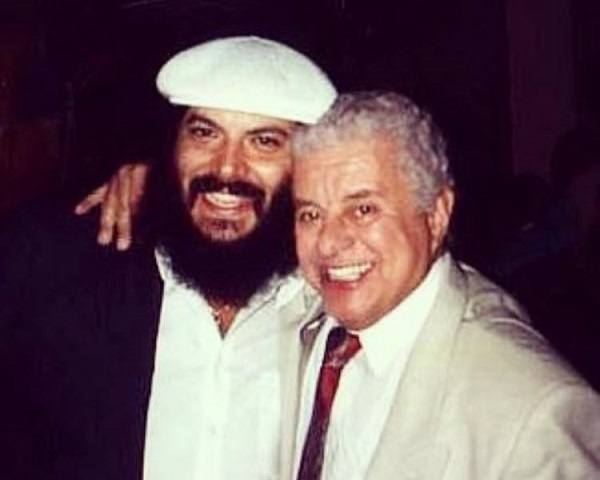
Poncho and Tito Puente
Poncho Sánchez and Tito Puente ”The King of Timbales”

Poncho as a soloist  

In 1980, Poncho finally managed to form his own group with which he began to carry out certain projects, although he had not completely departed from Cal’s band. In fact, the conguero worked with the musical director till the end of his days in 1982.   

Just a few months later, he signed with the Concord Records label to release his first official solo album, which he titled ”Sonando”, marking the beginning of a partnership that remains intact to this day. So far, Poncho has some two dozen recordings with Concord.  

Following decades of starting his career, Poncho saw his dreams become a reality when he won a Grammy for ”Best Latin Album” in 1999 thanks to the Latin soul album he had recorded at the time. That’s when the artist finally felt that everything he had worked for in the previous years had paid off.   

As for his latest album called ”Trane’s Delight”, Poncho seeks to pay homage to the artists who have inspired him and helped him develop his own art, as he considers that these personalities have been a fundamental basis for his growth as a music professional. 

Johnny Cru ISM corresponde in New York City

Read also: The Great Pichie Pérez and his brilliant career 

Juan Valdez Byte Dominican musician, arranger, composer and singer-songwriter.

Juan Valdez Born in San Juan de la Maguana on June 24, 1962. Son of Mrs. Martha Ramona Ybert and Mr. Jose Ignacio Valdez (Kiko), he is the eldest of 6 siblings (all musicians).

Juan Valdez Byte Dominican musician, arranger, composer and singer-songwriter

He started in his father’s band (also a musician) La Gran Dimensión, he was the first saxophonist of the municipal music band of his town where he studied solfeggio and saxophone with maestro Plinio Feliz. Later he studied piano at the school of fine arts of the same town.

Juan Valdez Ybet at the age of 19 he moved to Santo Domingo, capital of the Dominican Republic, where he became a pianist and arranger for the Rosario Brothers Orchestra, Aramis Camilo, Alex Bueno, Sergio Vargas, Alex Mansilla and Canaveral, pianist for Juan Luis Guerra and 440, then director and arranger for Luis Diaz, Michel El Buenon, Asdrubar, Felix Manuel, Big Bang Congreso del Bolero, Felix De Oleo, Jaqueline Estevez, Anthony Rios, Camboy Estevez, Homenaje a Felix del Rosario, among others.

He was also Director of the Television Programs: Buen Provecho with Yaqui Nuñez, Viceversa with Mariela Encarnación and Georgina Duluc, En Resumidas Cuentas and Sábado de Corporan.

Juan Valdez Ybet he has participated as a pianist in concerts and studio recordings with Aramis Camilo, Alex Bueno, Sergio Vargas, Luis Diaz, Michel El Buenon, Asdrubar, Felix Manuel, Felix De Oleo, popular concerts, Orquesta Sinfónica Nacional conductor Jose A. Molina, Grupo Cañaveral, Wilfrido Vargas, Fernando Villalona, Sandy Reyes, Henry Garcia, Grupo Licuado de Crispin Fernandez, Maridalia Hernandez, Milly Quezada, Juan Luis Guerra, Andy Montañez, Paquito Guzman, Tito Gomez, Zacarias Ferreira, Eddy Herrera, Hermanos Rosario, Kaki Vargas, Hector Acosta y Toros Band, The New York Band, Grupo Ilegales, Manuel Tejada, Jorge Taveras, Rasputin, Pablo Martinez, Marcos Hernandez, Luis Miguel del Amargue, Aniversario Telemicro, among others.

He has made Musical Arrangements (Orchestrator) for: Aramis Camilo, Alex Bueno, Sergio Vargas, Luis Diaz, Michel El Buenon, Asdrubar, Felix Manuel, Felix De Oleo, National Symphony Orchestra, Placido Domingo Jr, Grupo Canaveral, Wilfrido Vargas, Fernando Villalona, Sandy Reyes, Henry Garcia, Milly Quezada, Zacarias Ferreira, Olga Tañon, Manny Manuel, Mayra y Celines, Placido Domingo Hijo, Hermanos Rosario, Kaki Vargas, Hector Acosta y Toros Band, The New York Band, La Coco Band, Grupo Ilegales, Rasputin, Pablo Martinez, Jailine Cintron, Grupo La Linea, Premios Casandra, Primera y Segunda del Merengue, Que Viva El Merengue, Dimanchy, Conjunto Quisqueya, Giselle, Isha, Pakole, Manolé, Yanfourd, David Kada, Shadow Blow, Vakero, Gingers for Brugal, Coca Cola and Pastas La Famosa.

Juan he is also a professor of Piano and Popular Latin Orchestration at the National Conservatory of Music (CNM) since 2001 to date. He has been nominated for the Cassandra Awards since 1987 until the last Sovereign Awards.

Juan Valdez ByteBorn in San Juan de la Maguana on June 24, 1962.

Recognized by the green valley foundation in his town, by the city council and the syndic.

Recognized by the Grammy awards as an arranger and musician.

Arranger:

The Rosario Brothers: El Chicharron, Buena Suerte.

Aramis Camilo: Nena, Si la Ven, El Alicate, Hellow, Al Maestro Con Cariño, La india, A La Talalala, I Will Always Love You, Si Yo Pudiera (Salsa), Ya Te Digo Adiós.

Alex Bueno: Como Nadie (lyrics, composition and arrangement), Soy Rebelde, Una Lagrima Por tu Amor, Nuestro Juramento, Quien Soy Yo Sin Ella, Número C.

Quien Soy Yo Sin Ella, Número Cero.

Sergio Vargas: Marola, La Ventanita, La Pastilla, Bamboleo, Perla Negra, Se Acabo, Me Muero, El Merengue Se Baila Pegao, Dias de

Junio, Yo Soy, Muele, Maquina Olandera, Dudas, Por H o por R (Composicion y Arreglo), Perfume de Rosas, En Esta Casa Humilde, A Dar Amor, Tu Vacilandome, Tu Ausencia, Causas y Azares, Lejos, Ciclon, Que No Halla, Mas Fronteras, Amor De A Ratos, Que Linda, Mujeres, Dile Mas, Baile ae, Si Volvieras, Palo Palo, Eres Tu, Ramona, Musica para la fiesta, Soy Sergio, Ay Ombe, El Dolorcito, Jugue sin saber, Aunque mal paguen ellas, Magia, Sin Ella Sufro, Llore Llore, Lucerito.

Benny Sadel: Que pasará, Te He Prometido, Mis manos en tu cintura (Arrangement and Chorus), Homenaje a Wilfrido, Rompamos El Contrato, Quiero Ser, Por Que Yo Quiero, En Esta Navidad, Por Ti, Un Mal Sueño, Así Es La Vida, Yo Te Daba Amor.

Juan Valdez Byte
Juan Valdez Byte

Wilfrido Vargas: El Baile Del Perrito, Por La Plata Baila El Mono.

Fernando Villalona: Yo Soy Aquel, Sin Ti, Que Chuleria, Hoy Le Pido Al Señor, No Te Rindas (Bachata).

Rubby Perez: I Must Do It.

Eddy Herrera: Carolina, Callejón Sin Salida, Vete, Dueno De Nada, Desde Que Te Conoci, Lo Tiene Todo.

Hector Acosta (El Torito): Menos Que Nada, Sin Tu No Me Quieres, Déjala, Si Me Recuerdas (Salsa).

New York Band: Quien Piensas Tu Que Soy, Me Quedé Con Las Ganas.

Pochi y La CocoBand: Olvida Las Penas.

Diomedes: Balsie, Las Estrellas Brillaran, El Negro Chombo, Locos De Amor (Karen Records).

Kaki Vargas: Los Mosquitos Puyan (Complete Album), No Cojas Sola Pa Allá, El Hombre De Mamá, Muchachita De Los Limones, Arisleyda, Mampote, among others.

Juan Valdez Ybet

Also Read: Betsy Colombian Salsa, Bolero and Son Cubano Singer

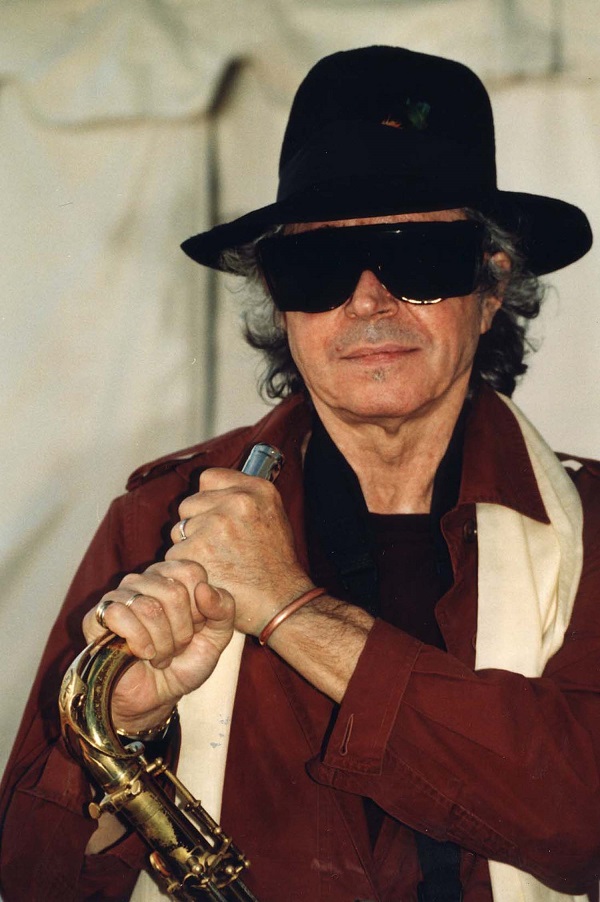
Gato Barbieri was an excellent and virtuoso Argentine saxophonist par excellence

The Argentine musician takes us on a journey through his illustrious career.

Gato Barbieri

Editor’s note: Famed saxophonist Leandro “Gato” Barbieri passed away on Saturday, April 2, 2016, in New York City. He was 83 years old.

In 2015, the Latin Grammy Award for Musical Excellence was presented to Argentine composer Gato Barbieri, one of the most deserving musicians to be honored for his extensive career, throughout which he created a bridge between Latin music and an international audience.

In love with jazz since his formative years in the city of Rosario, Barbieri trained playing with great figures of American jazz during the 1960s.

The eternal radiance of Gato Barbieri

But his heart never left his Latin American sensibility. When he came to fame as a soloist and leader of his own group, he sold millions of records, forging a personal language that draws inspiration from tango, Brazilian cadences, the sounds of the Andes and South American folklore.

Over the past few years, Barbieri, who turns 83 on November 28, has suffered several health complications. From his home in New York, the musician spoke with remarkable sincerity about this new stage of his life, now far from his youth, but full of acceptance and hope.

You recently performed at the Blue Note club in New York and sold out. How does it feel to be a jazz legend at the age of 80-something?

When I play here at the Blue Note, people come from Russia, from Europe, from everywhere, because people identify with what Gato has done.

Now, I’m a little sick and it’s hard for me to walk. I don’t like that. I have to do exercises and things like that. I’m going to be 83 years old and it’s necessary to do these things that put me in a horrendous mood [laughs].

Life is like that, it has nice things and ugly things, and you have to keep walking, walking, walking…It’s like a tango. If you pay attention, tango talks about beautiful things: people, siblings, loves, the sweet details of existence. To this day, there are some tango songs that I find incredible.

What memories do you cherish from the beginning of your career?

When I started playing with the Casablanca orchestra, when I was 17. We played bebop music, which for me was something incredible. We used to perform at carnivals in the provinces of Argentina.

He is the most influential Argentine saxophonist in the global jazz scene.

I also have fond memories of playing in Europe with trumpeter Don Cherry, because I learned so much. He never said anything; he didn’t talk to us or explain anything about the music we were going to play. When we played together, we improvised, and he never stopped changing his compositions. It was a great thing.

And then, in 1972, came the music for Last Tango in Paris, which brought you international fame. What was it like to write the soundtrack for such a controversial film?

It was a magical thing, because Bernardo [Italian director Bernardo Bertolucci] is an incredible guy, an incredibly talented director. I was in good spirits, but it wasn’t an easy job because there were 50 moments in the film that needed music.

I remember we took a piano up to Pepito Pignatelli’s [owner of a legendary jazz club in Rome] house, which was on the fifth floor. Doing something like that 50 years ago was not easy, but when we recorded it, it was a beautiful thing. Sometimes the difficult things are the most beautiful.

And that unforgettable main theme, which is repeated throughout the film, how did it come about?

Bernardo called me and asked me to present him with several melodies, and that they should be as beautiful as possible. We had just gone to Italy to play some concerts, and we met Bernardo. I played him three or four tunes, and he immediately chose one and said: “This is the theme from The Last Tango in Paris”.

What do you think has been the secret of your success?

Gato Barbieri
Gato Barbieri

From 1970 onwards, I recorded about 45 records. That’s a lot. I was a guy who was always doing something, for me that lifestyle was a great satisfaction. As for the sax, I never knew much about chords. I make up my own chords, put one thing on top of them… and that’s it.

It’s hard to explain why I made the artistic choices I did. I wanted to do a little bit of everything, play an Argentine chacarera, or record with an Italian singer like Antonello Venditti [the hit ballad “Modena”, in 1979]. I always chose to play music from many different countries, and people identify with that.

Undoubtedly, you have lived a privileged life….

Yes, in a certain way, yes. Michelle [his first wife, who died in 1995] helped me a lot. She’s always in my heart, because she was incredible. She knew about film, art, so many things. In that sense, I learned a lot from her. And now I am living with Laura, my wife, who is a great person.

She has given me my only son, who is now 17 years old. He is tall and very intelligent, although a bit lazy, as I was myself at his age. It must be hereditary [laughs].

EL PAMPERO (1971)

After El Gato left his native Argentina, but before becoming a Latin jazz star, Gato Barbieri spent the second half of the 1960s collaborating with great, avant-garde musicians: trumpeter Don Cherry, vibraphonist Gary Burton and bassist Charlie Haden, among others. Capping a career for Barbieri as the leader of his own group, El pampero is an album recorded live at the Montreux Jazz Festival. Four tracks with extensive improvisations, steeped in South American nostalgia.

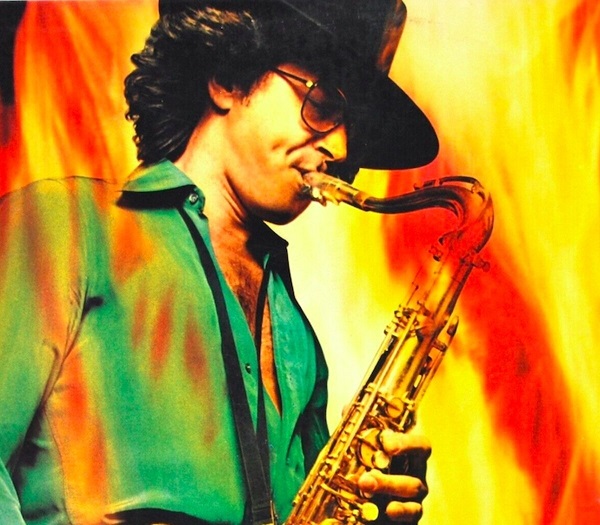
Gato Barbieri Album Caliente 1976

Gato Barbieri: Latin ‘jazz’ with a touch of pop and South American folklore.

By: Ernesto Lechner

Also Read: Irakere was a Cuban group that developed an important work in Cuban popular music and Latin Jazz under the direction of Chucho Valdés

North America / December 2023

Félix O. RodríguezMartin FrancoThe Rumba Madre and David VilaChristmas salsa albumsPoncho Sanchez

A Night in Paris December 2023

Thumbnail about the salsa museumMartin Franco

Martinez attorney

Canada December flag

CANADA

DIRECTORY OF NIGHTCLUBS

Merry Christmas and Happy New Year

Dirty Martini
2075 Winston Park Dr Oakville, ON, Canada L6H 6P5

El Rancho
430 College St Toronto, ON, Canada M5T 1T3

LULA LOUNGE
1585 Dundas West Toronto, ON, Canada M6K1T9

Marlowe Restaurant and Bar
155 York Blvd Richmond Hill, ON, Canada L4B 3B4

Sahara Restaurant
1855 Dundas St E, Mississauga ON L4X 1M1

Smokeshow BBQ & Brew
744 Mt Pleasant Rd Toronto, ON, Canada M4S 2N6

Mangos Kitchen Bar
744 Mt Pleasant Rd Toronto, ON, Canada M4S 2N6

Baza
Baza Dance Studios
1304 Seymour Street Vancouver
BC, Canada V6B 3P3
+1 778-379-2292

Studio Nightclub
919 Granville street Vancouver, BC, Canada V6Z 1L3


US December flag

UNITED STATES

 DIRECTORY OF NIGHTCLUBS

Merry Christmas and Happy New Year
CALIFORNIA FLORIDA  ILLINOIS
MICHIGAN NEW JERSEY NEW YORK
 OHIO PENNSYLVANIA TEXAS
VIRGINIA WASHINGTON


Producer and saxophonist Martin Franco talks about his passion for music

Martin Franco is a talented New York’s producer, sound engineer, composer, vocalist, percussionist and saxophonist who has had a big trajectory in music, which he shared with us in a half-hour conversation we had.   

The artist of Colombian parents has been kind enough to reveal some of the most important details of his artistic career and the process by which he has managed to become the professional in the music field he is today, so we hope the information revealed here will be liked by those who usually follow our publications.  

Martin, founder of Mambo Soul Band
This is Martin Franco, saxophonist and founder of Mambo Soul Band

Martin’s interest in music while still a child 

Something important we did not know about Martín is that, although both his parents are Colombian, they moved to Mexico when he was little and he spent the first eight years of his childhood in that country, before moving to Laredo, Texas.   

At his new school in the US, he and his classmates were allowed to choose the instrument they liked most to learn to play it and the boy chose the saxophone, as he thought it was ”the most beautiful” at the time.   

When Martin began his training, he discovered that he had a real taste for music and began to see it as a pleasant pastime and not an obligation, which led his mother to buy him his own saxophone and tell him to ”throw forward to music” if that was what he liked. 

When he turned 12, the family moved back to New York, where Martin started to take music more seriously and meet people related to the industry. That was when percussion and tropical music also caught his attention, as Texas was packed with Mexican cumbia and other such rhythms.   

On the other hand, New York had an immense Puerto Rican community and even his own aunts had married Puerto Ricans. Since this was the dominant community in the city in those years, Martin began hearing the conga, the keyboard, the trombone, the timbales and all the music made by the Fania. It was then when his musical tastes and plans began to change.   

Martin and the rest of the group
Martin Franco and the rest of his orchestra Mambo Soul Band

Martín’s beginnings in music in New York City 

When he arrived in New York, Martin was not old enough to start a professional career, so he was engaged to play with friends in the streets, houses, apartments and private parties. However, this time helped him a lot to gain experience and his family was a great support in all this.   

Martín, his family and some of his friends used to go to see live Latin artists and orchestras such as Celia Cruz, Héctor Lavoe, Tito Puente, Eddie Palmieri, Ray Barretto, Mongo Santamaría, among others. This also represented part of his motivation to do salsa in the future, although he also liked American jazz, which features the saxophone, his favorite instrument.   

The mix of Latin and American genres resulted in the music that became popular in those years, and the music Martin makes today has much of what he learned back then. It was a mix of Caribbean tropical rhythms, jazz and American funk.   

The musician considers that American and Latin rhythms have complimented each other over the years and he always tries to unite them in his performances, just like English and Spanish.  

Mambo Soul Band 

The name ”Mambo Soul Band” is a mixture of ”mambo”, which means ”to greet someone” or ”to communicate” in some African dialects, and ”soul” in English. This resulted in something like ”to communicate from the soul”, a concept that fascinated Martin. At the same time, both are the names for well-known musical genres, the one Latino and the other American. 

He selected these genres as the name of his band because they contain what influenced him musically speaking. Latin jazz, soul and funk were the genres on which Martin based his songwriting for the band he was creating and he hired musicians who had experience with these rhythms. And in case they do not master any of them, he teaches them.   

According to Martín, guitarists and bassists are the ones who usually have more problems when playing or learning to play these genres, while a percussionist usually has a greater dominion over these areas. 

Another variant of the same project also led by Martín is Mambo Soul Jazz, which offers music and songs much more inclined to the American way. Mambo Soul Jazz is more aimed at quiet events where people do not usually dance much and just want background music to enjoy the evening. 

The choose of one or the another will vary depending on the public of the day, although the basis of everything is always Latin music.  

Martin performing live
Martin Franco and Mambo Soul Band performing live

The most challenging aspects of the Latin music scene 

In the view of Martin based on his experience, one of the most challenging things for him and his musicians is the economic issue. At the level where they are, they do not make big profits from their work, which contrasts to the high cost of living in California.  

This situation has led many of the musicians to have parallel jobs that allow them subsistence since it is very difficult to make a living from music. The only alternative is to constantly tour with famous groups, but not everyone is willing to do that, so they prefer to work on other things. 

In his particular case, he can afford to live only from music because he is the leader of the orchestra and the one who is in charge of getting contracts and shows for the group.  

What we took from the conversation 

From the beginning, we have noticed that Martin is a man absolutely passionate about his Latin roots and all that comes with them, especially the musical part. He always stressed that everything he does is for his love of music.   

It is our pleasure to have the opportunity to talk with this great exponent of Latin and Afro-Caribbean music and we offer him our best wishes for success from now on. 

Read also: Lengaïa Salsa Brava is killing it in Montréal 

  • « Go to Previous Page
  • Page 1
  • Interim pages omitted …
  • Page 51
  • Page 52
  • Page 53
  • Page 54
  • Page 55
  • Interim pages omitted …
  • Page 116
  • Go to Next Page »

International Salsa Magazine (ISM) is a monthly publication about Salsa activities around the world, that has been publishing since 2007. It is a world network of volunteers coordinated by ISM Magazine. We are working to strengthen all the events by working together.