• Skip to primary navigation
  • Skip to main content

International Salsa Magazine

  • HOME
  • Previous editions
    • 2026
      • ISM / March 2026
      • ISM / February 2026
      • ISM / January 2026
    • 2025
      • ISM / December 2025
      • ISM / November 2025
      • ISM / October 2025
      • ISM / September 2025
      • ISM / August 2025
      • ISM / July 2025
      • ISM / June 2025
      • ISM / May2025
      • ISM / April 2025
      • ISM / March 2025
      • ISM / February 2025
      • ISM / January 2025
    • 2024
      • ISM / December 2024
      • ISM / November 2024
      • ISM / October 2024
      • ISM / September 2024
      • ISM / August 2024
      • ISM / July 2024
      • ISM / June 2024
      • ISM / May 2024
      • ISM / April 2024
      • ISM / March 2024
      • ISM / February 2024
      • ISM / January 2024
    • 2023
      • ISM / December 2023
      • ISM / November 2023
      • ISM / October 2023
      • ISM – September 2023
      • ISM – August 2023
      • ISM July 2023
      • ISM Edition June 2023
      • ISM – May 2023
      • ISM April 2023
      • ISM March 2023
      • ISM February 2023
      • ISM January 2023
    • 2022
      • ISM December 2022
      • ISM November 2022
      • ISM October 2022
      • ISM September 2022
      • ISM August 2022
      • ISM July 2022
      • ISM June 2022
      • ISM May 2022
      • ISM February 2022
      • ISM January 2022
    • 2021
      • ISM December 2021
      • ISM November 2021
      • ISM October – 2021
      • ISM September 2021
      • ISM August 2021
      • ISM July 2021
      • ISM May 2021
      • ISM April 2021
      • ISM June 2021
      • ISM March 2021
      • ISM February 2021
      • ISM January 2021
    • 2020
      • ISM December 2020
      • ISM November 2020
      • ISM October 2020
      • ISM September 2020
      • ISM August 2020
      • ISM July 2020
      • ISM June 2020
      • ISM May 2020
      • ISM April 2020
      • ISM March 2020
      • ISM February 2020
      • ISM January 2020
    • 2019
      • ISM December 2019
      • ISM November 2019
      • ISM October 2019
      • ISM Septembre 2019
      • ISM August 2019
      • ISM July 2019
      • ISM June 2019
  • Spanish
  • Download Salsa App
    • Android
    • Apple

Search Results for: New York

Juan Antón ”El Blanco” from La Clave Del Blanco

Everything started in Peru for Juan

There is always a pool of new talents to be known and analyzed, since our Latin countries are the cradle of great artists of all kinds, especially in the area of music. Today it was the turn of the talented Peruvian Juan Antón.  

We have taken the audacity to contact the leader of the orchestra La Clave Del Blanco, Juan Antón, to know the most important details of his professional life and his current group. We are very pleased to present to our readers the most important details of this pleasant and enlightening conversation, which lasted for almost half an hour.   
Peruvian singer Juan Antón
Peruvian singer Juan Antón, Leader of La Clave Del Blanco

First contacts with music 

Juan Antón was born in Peru, specifically in El Callao, a port city near Lima which is well known to all salsa lovers. Like most of the salseros who have passed through International Salsa Magazine, Juan started getting interested in music since he was a child and enjoyed La Sonora Matancera and, later on, the salsa music that came from New York. 

However, although he was always a lover of the aforementioned musical genre, his career began with Peruvian Creole music, which is composed of waltzes, jarana, black music, among other variants. 

When he leaned towards this kind of music, he sang with guitar, cajón and bass at parties in a bohemian way. He had some proposals to work with Creole music in a more professional way, but he accepted due to the pile of responsibilities he had with his work and studies. He was doing well at the time, but admits that he regrets that decision today because it would have been a good start.  

United States 

While it is true that his first steps in the world of music were taken in Peru, it was in the United States that he finally began to be part of more professional groups. 

Juan’s first opportunity in that respect came when he was at a Peruvian party where his compadre was given a Creole music ensemble. Knowing those present that he sang, they invited him to accompany the ensemble and perform with them, which Juan accepted and did. 

The musicians of the group liked his work so much that they asked him for his number and later called him to sing with them. At that time, he met Jorge Del Castillo, a well-known guitarist from the San Francisco Bay Area, who invited him to join a group he was forming and gave him a CD, asking him to learn those songs. The group would be called Kokos Band.   

When Juan was listening to the CD in his car, he found out that it was salsa and not Creole music. When he went to tell Jorge that he gave me the wrong CD, he said it was the correct one and the future group would be singing salsa. 

Since Creole music and salsa are very different, Juan had to learn a number of details such as the clave, the signals to the musicians, the way of singing, among other things. 

Some time later, the story repeated itself. The conguero of Kokos Band proposed him to join the orchestra he was creating, with which he became much more successful and went to more renowned events such as the inauguration of a museum for Puerto Rican and Cuban baseball players. Its name was Orquesta Liberazión. 

Being Peruvian, Juan was really proud that attendees mostly from Puerto Rico and Cuba complimented his work the way they did. Considering that both countries have been the cradles of the main exponents of salsa, the congratulations from this group were very important to him.   

The third and last orchestra he played with was Saboriche. His time with this group made him realize that he had what it took to become independent and create his own project.   
Juan Antón at The Cigar Bar
Juan Antón and La Clave del Blanco performing at The Cigar Bar & Grill

La Clave Del Blanco 

One of Juan’s greatest inspirations to devote himself to music was La Clave Del Callao, since the music of this band influenced him and he liked it very much. In addition to that, the name by which many began to know Juan in the San Francisco Bay Area was ”El Blanco”.  

Both of these things led him to name his own orchestra ”La Clave Del Blanco”. 

Salsa Con Caché  

In addition to his facet as a singer, Juan also had a radio show at La Grande 1010 AM and its name was ”Salsa Con Caché”, which was on the air for only one year. Its cancellation was due precisely to the professional commitments the artist had with his music.   

He decided to call ”Salsa Con Caché” to this space because ”caché” in many countries means ”elegant” and ”refined”. This is precisely the salsa style he has always liked. 

One of the things that set this program apart from others of their kind in the San Francisco Bay Area is that Juan always talked about the history of the artists and the orchestras playing on the air so that listeners would know all this information. Other programs only played background music and did not add more elements to the programming. 

Juan was so successful that he received hundreds of phone calls daily and was even appeared in the now defunct San Francisco Chronicles as one of the best salsa shows at the time. 

This success was due to the enormous constancy and important information the announcer had. Although Juan does not regard himself as a scholar in the matter, he assures us that he had what it took to keep listeners hooked to his knowledge. He even commented that he had a private collection of more than 600 original CDs in all languages, which he bought gradually.   

This extensive music collection helped him a lot to offer a varied repertoire during the time when ”Salsa Con Caché” was on the air.   
Juan Antón as an announcer
Juan Antón was also an announcer and his show was called ”Salsa Con Caché”

Recruiting talent for La Clave del Blanco 

During his journey through the orchestras where he played, Juan got to know a lot of musicians, especially during his time with Orquesta Liberazión. He became friends with many of them and, when he started forming his own orchestra, he asked them to be part of it. 

Since he managed to establish his group, the singer has always made sure to deliver what he promises. This means that, if he makes an offer for the work done, he always honors the full amount. For Juan, ”The most important thing in this business is the given word”, so you always have to deliver what you promise at the beginning. 

With respect to the above, Juan has lived this same situation with orchestras he has worked with, so he does not want to have debts with the musicians he hires. This is how he has gained their trust and, whenever he needs them, they are there for him. 

Read also: Guantanamo music director, arranger and composer Julio Avila 
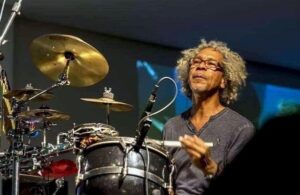
Carlos “Nene” Quintero comes from a family of musical prodigies

Carlos Vicente Quintero De Jesús, better known as Nene Quintero, was born on October 21, 1946 in the Caracas neighborhood of Marín (a neighborhood of percussionists par excellence), in San Agustín del Sur.

In a family that has produced several musicians, among them his brothers the former “Madera”, Ricardo and Jesús “Chu” Quintero, who died in the Orinoco tragedy; Rafael who lives in Marseille or his nephews Luisito (the “chamo Candela” of Daiquirí), Robert and Chuíto, who live in New York.

During his adolescence he was in several groups and then he played with Los Dementes, the Venezuelan group Pan suerte de Santana with César Monge (Dimensión Latina) and Alfredo Padilla (La Salsa Mayor), Porfi Jiménez, Frank Quintero and Los Balzehaguaos, Yordano and many others.

Carlos "Nene" Quintero comes from a family of musical prodigies
Carlos “Nene” Quintero comes from a family of musical prodigies

-What would be the five main moments of his career?

Nené lists them:

1- Having worked with people I went to see at a radio station and then I got to play with them. That was in the 70’s, in a place called Playboy in Altamira, with their bunnies and everything.

I worked with Lewis Vargas and Rafael “Gallo” Velásquez on trumpets; Moscatt was the saxophonist; Willy Pérez, pianist; Jorge Romero, bassist of Aldemaro Romero’s Onda Nueva; and Marcelo Planchart on drums.

2- When I heard on the radio a song I recorded with Los Dementes: “Rómpelo”, which was very popular. I saw myself as a very famous person, I was heard on the radio for the first time.

3- When Eumir Deodato came and proposed me to go with him to the United States.

I was not in conditions to go because I was working very well, I was doing a lot of jingles, I had two children who were starting to study.

I was sacrificing something that was taking shape: my family. I told him I could go, work and come back. The surprise was when a letter arrived for a tour of Mexico and the United States.

Deodato is a very kind person, he gives you freedom to work, we communicated in “Spanglish” and “portuñol” and he loved beer.

Carlos Nene Quintero

4- Seeing Celia Cruz when I was a kid in Marin, going to visit friends like Johnny Perez, from Sonora Caracas, and some time later working with her, even in her last shows, in Montreal.

Celia’s birthday was the same day as mine, and she looked older, but as soon as she started the music and said “sugar!” she was different, she was transformed.

5- Working lately with my nephews Robert and Luisito gave me a lot of emotion: The three of us on the same stage in New York with Celia Cruz.

But there are more experiences. Eros Ramazzotti, for example. “I chose to go to New York and Miami when things got tough here. I worked with Gato Barbieri and with salsa people.

I would go back and forth, two months out and back. I was recording with a saxophonist who worked with Eros and, the following year while I was in Miami he called me for a six-month tour.

I said yes, they called me the following year again and I spent three years with Ramazzotti touring all over Europe, Brazil, Puerto Rico, Central America, Mexico and Miami.

-Any anecdotes with Ramazzotti? –

Once on his birthday he rented a track where they raced cars. We were drinking, driving, talking, talking, listening to music and they brought a cream cake for Eros.

At one point when he was very close to me with the cake in his hand, I put it in his face. It was a mess with everyone throwing things and pieces of cake at each other.

But I got the impression that he was upset and I went over to apologize and explain to him that it was something that could happen on any South American birthday, especially with a cream cake. He told me not to worry, that it was fine.

Other jobs came through Ramazzotti, such as with Jovanotti and Lucio Dalla.

-And how was it with Little Louie Vega, one of the producers and DJs of the moment?

-I met him through Luisito. We have been touring Europe, the United States and Japan for the last three years, and we recorded with Pushim, a Japanese woman, a song that was in the Japanese top ten.

Meanwhile, “Nené’s” routine continues to be more international than ever between the United States, Europe and especially France, where he has been working with a group that bears his name: Nequin Group, with whom he recorded an upcoming album.

“Working abroad is like working here, but in another language”, he reflects on the matter and says that he is preparing a method for percussionists to work with their feet as well as with their hands.

Carlos Nené Quintero con mi Signature congas (Roberto Quintero)

-What has seemed new to you lately in Europe or in these parts?

-Those jazz works in which there is no conventional group with drums or bass, like what I did with Gerry Weil and Pablo Gil at the Corp Group Cultural Center.

THE BATICONGA AND THE “MCGIVER SET”.

The baticonga is a hybrid: drums with conga. I use bass drum, hi-hat, cimbals, toms, snare and cymbals of various thicknesses.

It has a special redoblante with a rim that does not protrude from the leather so that it does not bother when hitting it like a tumbadora.

It is an idea that I have been maturing. It was born because of Yordano’s album that made him famous, Manantial de corazón, there I recorded all the percussion and when it was time to play it live we needed a drummer and two percussionists. We got the drummer, but things were missing and I started to add electronic pedals, electronic drums, octapads and to use feet and hands.

Then we did an unplugged set and it had to be acoustic with congas, bass drum, snare drum, hi-hat, cymbals.

The McGiver set is a djembe with brushes, cymbals with rivets, a conga that is just like a lid, like a tambourine, and I mount it on top of a snare drum stand and a cowbell. A set that does it all.

SIX INFLUENTIAL PERCUSSIONISTS

Alejandro Blanco Uribe and Airto Moreira: “I saw a lot of Gerry Weil with La Banda Municipal in the 70s and Alejandro as a multi-percussionist with effects and accessories.

That led me to look at Airto’s proposal and to fall in love with percussion at a time when I was playing guitar”.

Trilok Gurtu: “For his fusion of oriental music with rock and jazz. I’ve been hearing him since Oregon, and when I heard him with John McLaughlin on the live album in London my jaw dropped.”

Jack DeJohnette: “As a drummer he has a very floaty groove, he can do with the beats what he wants and the rhythm is always there.”

Tony Williams: “Another drummer. I saw a video that aroused my interest because his technique is like the one I use with the baticonga”.

Carlos Nené Quintero con mi Signature congas (Roberto Quintero).

Giovanni “Mañenguito” Hidalgo: “Since he came out the thing changed, he gave another level to the congas or tumbadoras, with him there has been a ‘before and after'”. – with Roberto Quintero and Luisito Quintero.

Also read: Argenis Carruyo is known in the music scene as “El Volcán de América” (The Volcano of America) due to the power of his voice

North America – October 2023

Yani Borrell

Thumbnail Juan Antón en inglés

Thumbnail John Narvaez and Elizabeth Rojas

René Latin Soul

Willito and JaphetThumbnail about the salsa museum

Las Maracas promo

Canada flag

CANADA

DIRECTORY OF NIGHTCLUBS

Dirty Martini
2075 Winston Park Dr Oakville, ON, Canada L6H 6P5

El Rancho
430 College St Toronto, ON, Canada M5T 1T3

LULA LOUNGE
1585 Dundas West Toronto, ON, Canada M6K1T9

Marlowe Restaurant and Bar
155 York Blvd Richmond Hill, ON, Canada L4B 3B4

Sahara Restaurant
1855 Dundas St E, Mississauga ON L4X 1M1

Smokeshow BBQ & Brew
744 Mt Pleasant Rd Toronto, ON, Canada M4S 2N6

Mangos Kitchen Bar
744 Mt Pleasant Rd Toronto, ON, Canada M4S 2N6

Studio Nightclub
919 Granville street Vancouver, BC, Canada V6Z 1L3
OCTOBER 2023 FESTIVALS

Canada Salsa and Bachata Congress
Oct 05 / 09 2023
Canada Fairmont Royal York Hotel100 Front St. W., Toronto, ON, Canada, M5J 1E3
United States flag

UNITED STATES

DIRECTORY OF NIGHTCLUBS

CALIFORNIA FLORIDA  ILLINOIS
MICHIGAN NEW JERSEY NEW YORK
 OHIO PENNSYLVANIA TEXAS
VIRGINIA WASHINGTON
OCTOBER 2023 FESTIVALS

NEW JERSEY BACHATA FESTIVAL
October 05 / 09, 2023
CoCo Key Water Resort at The Hotel ML915 NJ-73, Mount Laurel, NJ, United States, 08054

Seattle International Salsa & Bachata Fest
October 12 / 15, 2023
Hilton Seattle Airport & Conference Center17620 International Blvd, Seattle, WA, United States, 98188

Dallas Bachata Fusion Festival
October 19 / 23, 2023
Dallas/Fort Worth Airport Marriott 8440 Freeport Parkway, Irving, TX, United States, 75063

St. Louis International Salsa Congress
October 20 / 22, 2023
Holiday Inn St. Louis – Downtown Conv Ctr 811 North Ninth St, St Louis, MO, United States, 63101

West Palm SBK Fest
Oct 20 / 23 2023
Holiday Inn St. Louis – Downtown Conv Ctr Address: 811 North Ninth St, St Louis, MO, United States, 63101

Bailame Dance Festival
October 26 / 30, 2023
Sheraton Minneapolis West Hotel12201 Ridgedale Dr, Minnetonka, MN 55305


Son del Monte

North America / United Stated / New York

Son del Monte, Something more than a “Charanga”

It was one of those nights of meeting with friends, those friends with whom you share the same musical preferences among other things, you know, of those gatherings where only you and your friends can spend hours discussing the best songs of Héctor Lavoe or remembering the best hits of the Fania, and in which there is no other way to end the evening than with the deities that brings the good Salsa music from a live band to close the night with a flourish.

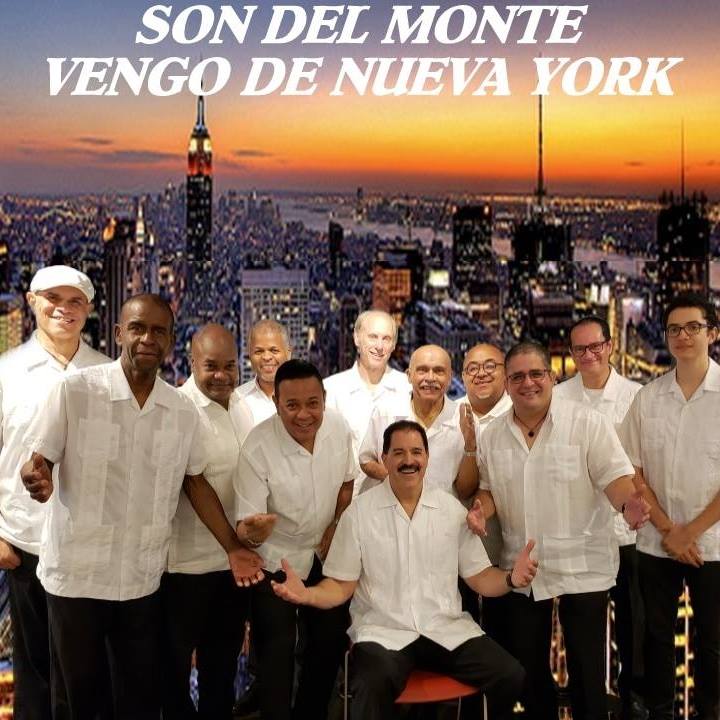
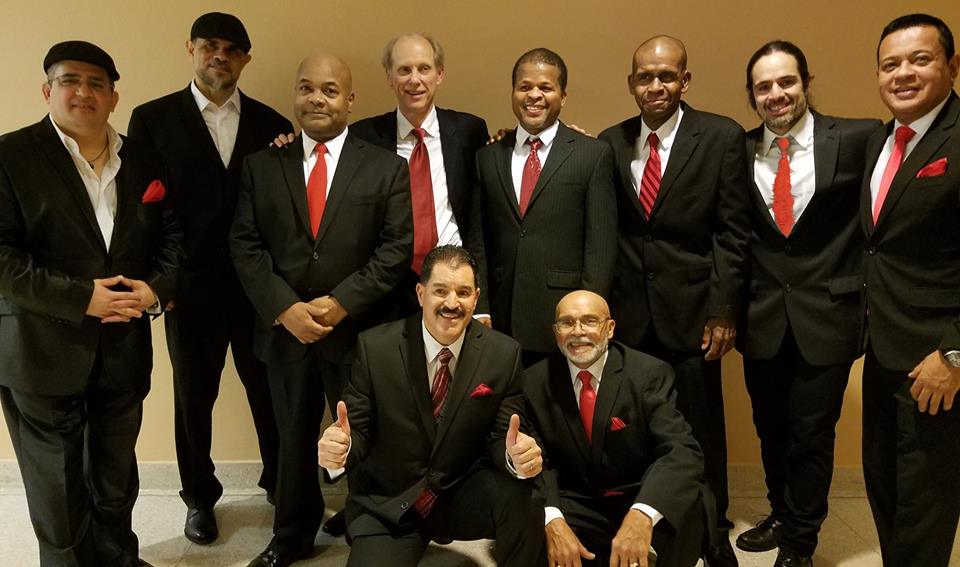
Son del Monte
Son del Monte from New York

And so that was, when with the hours passed we came across one of these charming Latin clubs that fill the streets  and every day prevail more in the city of New York, where, of course, they offered Live Salsa. Eureka! If you allow me to say it … It was the perfect place to “Echarnos un Pie” (colloquial term that we usually give in some Latin countries when we refer to dance).

Upon entering, the characteristic sound of the band wrapped up the entire venue, no doubt, captivated us. It was the harmony of an orchestra that played the typical Cuban music: “La Charanga“, which had its maximum exposure in the 20th century. We were all enthralled or if you want to say “delighted”, it was the mixture of wind instruments with percussion instruments but especially with the string instrument that most caught our attention, the Violin.

When we asked for the name of the orchestra, they told us: “Son del Monte”. It’s the ideal name for an orchestra of 12 Latin musicians who project their virtuosity before an audience eager for Caribbean Music that bathes the senses and awakens the joy of living.

Son del Monte
Son del Monte

Son Del Monte is a band based in New York City that presents unique tunes from various artists. This orchestra was born from the musical director and timbalero, Manny Rivera whose aspiration was to create a Charanga band with a hard New York sound that paid homage to the orchestras of the 60s, 70s and 80s. “Our music is captivating for the listeners and dancers. Fans from all over the world have come to love Son Del Monte: Una Charanga Con Algo Más and our incredible musical swing”, said Manny Rivera.

This band that combines the typical sound of Cuba with the mixture of flute, violins and trombones with three singers that create a distinctive harmony of three parts, have performed in so popular Salsa venues, such as: Maryland Live Casino, the Baltimore´s Latino Festival, the boardwalk of Coney Island, SOB’s, Empire City Casino in Yonkers, Gonzalez y Gonzalez, La Marqueta, the Latina Hats Society, Industry City, Harlem Mist, among other recognized Salsa venues.

The members of this Charanga orchestra with “Sabor” and electrifying sound are: Mauricio Smith Jr. (Flute), Eric Roberto Salazar and David Rimelis (Violins), Michael Pallas, Juanga Lakunza and Charlie Garcia (Trombones), Eli Rivera (Piano), Bert Castro (Bass), Joe Gonzalez (Conga), Manuel Rivera (Timbales / Musical Director / Leader) and Luis Ayala, Armando Jiménez Sonji and Luis Soto (Singers).

Since the beginning of this year (2019), Son del Monte has been working on their record proposal for the Latin market with unpublished themes, rhythmic and unique sound – contemporary. To date they already have two singles: “Rumba Omelenko” and “Vengo de Nueva York” availables in: CD Baby, Deezer, iTunes, Apple Music, and Spotify. Likewise, the song “Herman” is in the process of recording. So, get ready because this Charanga orchestra promises their CD ended with great compositions for the public later this year.

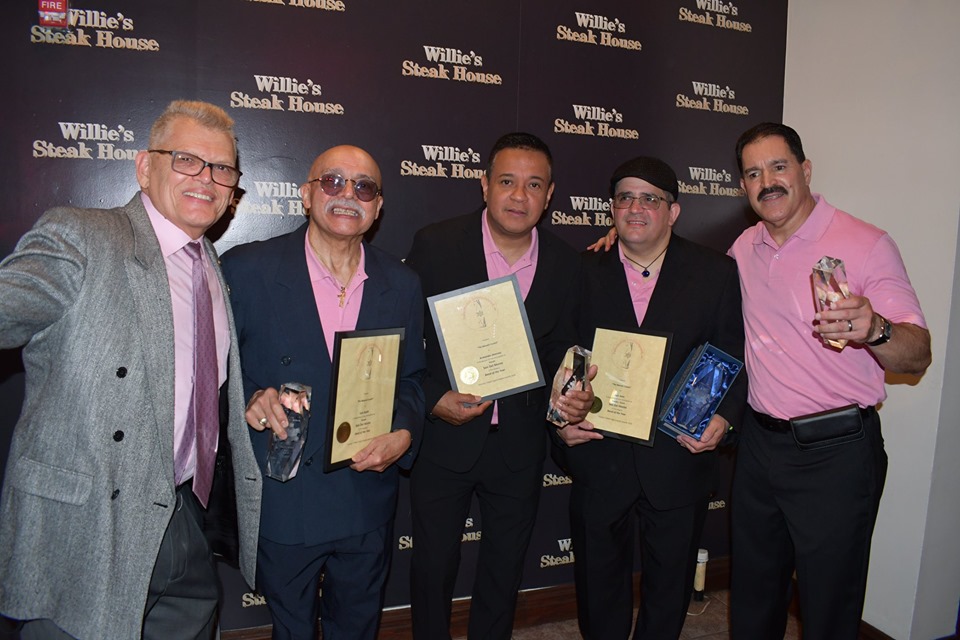
Undeniable, the acceptance of Son del Monte has been so extensive on the part of New Yorkers and all who are Salsa lovers that they were recently awarded with the TANAE Digital Media Award for Band of the Year 2018, giving recognition to an arduous musical performance, but above all of great cultural value that keeps alive our Latin idiosyncrasy.

Son del monte - Premios Tanae
Son del monte – Premios Tanae

Manuel Rivera (Musical Director / Manager/  Timbales):

Manuel Rivera, have been a professional musician for more than 40 years and now Son Del Monte’s Leader/ Musical Director.  His musical career started playing Bongo in a Latin Workshop band which eventually became Orchestra Yambu.  Yambu was known for its Latin Jazz style and Disco Hit “Sunny”, his first recording.  Subsequently, I joined the original Charanga Orchestra Sublime of New York City, doubling up on Bongo and Timbales. He recorded on Sublime’s first two albums in 1977 and 1979.

In 2001, he rejoined Orchestra Sublime now known as “Sonsublime”. Manuel recorded on Sonsublime’s Gran Reserva and Bailando Con Sonsublime, their latest CDs. He studied various folkloric rhythms, Bata drums and sight reading at the Harbor’s Conservatory of Music in El Barrio in New York City under the guidance of the Master Louie Bauzo.

Manuel Rivera has performed with the Bassist: William Millan, of the original Conjunto Saoco, singers: Henry Fiol, Ray Ramos, and Luis Ayala.  Also, he performed with Yerason and the MTG All Stars Orchestra under the direction of Hector Leguillow, Joe Quijano at Lincoln Center and other various artists throughout his musical career.


Next Shows:

Monday, Jult 15TH   

Venue: Cunanele Restaurant and Lounge. 1 Route 46 W, Totowa, NJ 07512

Saturday, August 17TH   

Venue: La Placita de la Marqueta.  North trains between 111th and 112th Streets in East Harlem, “El Barrio” and uptown Manhattan, NY.


For more information, please visit:

https://www.SONDELMONTE.com

Or Follow them for their Social Channel:

https://www.facebook.com/MRSONDELMONTE/

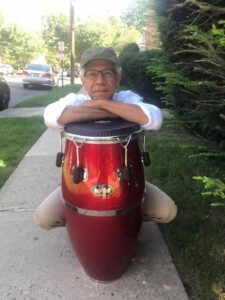
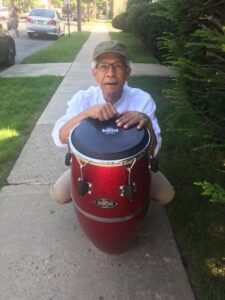
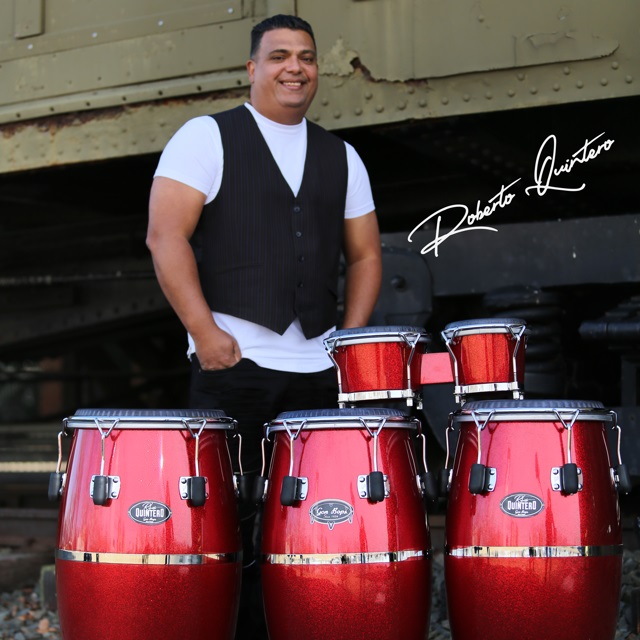
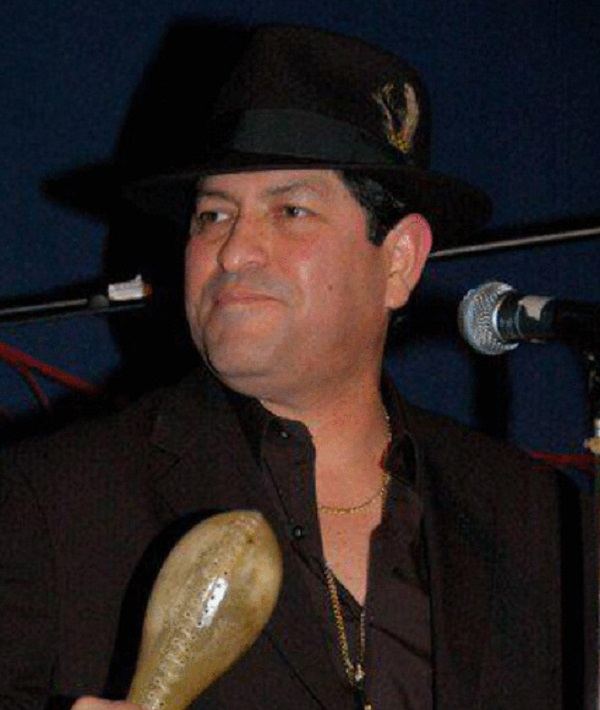
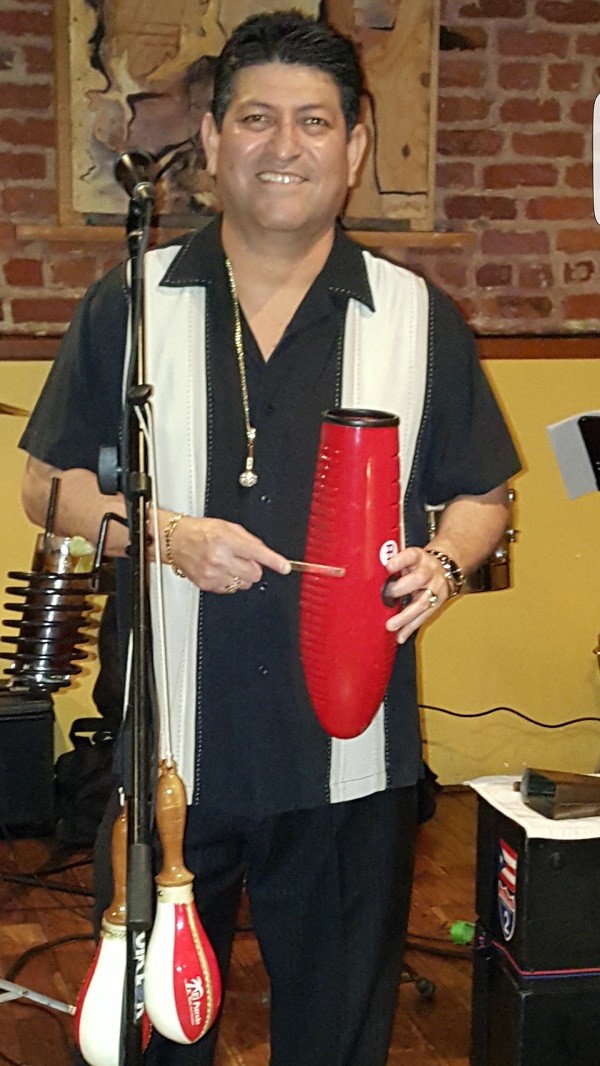
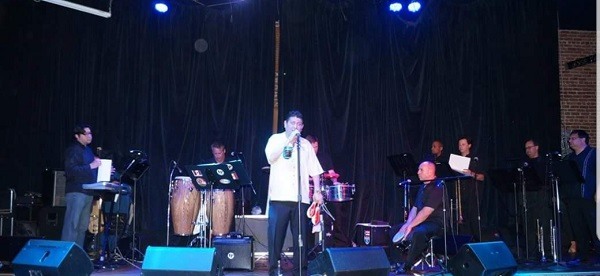
Roberto Quintero

North America / United Stated / New York

Roberto Quintero, The Master in the Congas, Bongo & Timbales NY

Roberto Quintero was born in Caracas, Venezuela, surrounded by Afro-Venezuelan and Afro-Cuban rhythms and music.

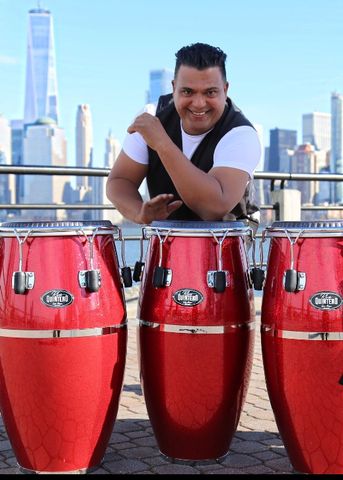
Roberto Quintero
Roberto Quintero – New York

His father, a respected composer, singer and percussionist, tutored and encouraged Roberto Quintero on percussion throughout his adolescent years.

Roberto Quintero comes from a long line of outstanding musicians, including his Uncle Carlos Nene Quintero and cousin Luisito Quintero.

Roberto Quintero and his congas

Roberto Quintero studied at the Conservatory of Music in Caracas, Venezuela and Sinfonica Orchestra Juvenil from Venezuela.

Besides his skillful Congas work, Roberto is also well known for his work on Bongos, Drum set, Djembe, Timbales and a wide variety of assorted percussion instruments.

He (Roberto Quintero) has played with Dave Samuels, Dave Weckl, Chicago, Gato Barbieri, David Sanchez, Roy Hargrove, David Sancious, Eddie Palmieri, Jack DeJohnette, Roy Haney, Marc Anthony, Timbalaye, Celia Cruz and countless other high-profile music acts in all genres, from symphonic to Jazz, Latin Jazz and Latin House.

Roberto Quintero
Roberto Quintero
  • « Go to Previous Page
  • Page 1
  • Interim pages omitted …
  • Page 54
  • Page 55
  • Page 56
  • Page 57
  • Page 58
  • Interim pages omitted …
  • Page 116
  • Go to Next Page »

International Salsa Magazine (ISM) is a monthly publication about Salsa activities around the world, that has been publishing since 2007. It is a world network of volunteers coordinated by ISM Magazine. We are working to strengthen all the events by working together.