• Skip to primary navigation
  • Skip to main content

International Salsa Magazine

  • HOME
  • Previous editions
    • 2026
      • ISM / March 2026
      • ISM / February 2026
      • ISM / January 2026
    • 2025
      • ISM / December 2025
      • ISM / November 2025
      • ISM / October 2025
      • ISM / September 2025
      • ISM / August 2025
      • ISM / July 2025
      • ISM / June 2025
      • ISM / May2025
      • ISM / April 2025
      • ISM / March 2025
      • ISM / February 2025
      • ISM / January 2025
    • 2024
      • ISM / December 2024
      • ISM / November 2024
      • ISM / October 2024
      • ISM / September 2024
      • ISM / August 2024
      • ISM / July 2024
      • ISM / June 2024
      • ISM / May 2024
      • ISM / April 2024
      • ISM / March 2024
      • ISM / February 2024
      • ISM / January 2024
    • 2023
      • ISM / December 2023
      • ISM / November 2023
      • ISM / October 2023
      • ISM – September 2023
      • ISM – August 2023
      • ISM July 2023
      • ISM Edition June 2023
      • ISM – May 2023
      • ISM April 2023
      • ISM March 2023
      • ISM February 2023
      • ISM January 2023
    • 2022
      • ISM December 2022
      • ISM November 2022
      • ISM October 2022
      • ISM September 2022
      • ISM August 2022
      • ISM July 2022
      • ISM June 2022
      • ISM May 2022
      • ISM February 2022
      • ISM January 2022
    • 2021
      • ISM December 2021
      • ISM November 2021
      • ISM October – 2021
      • ISM September 2021
      • ISM August 2021
      • ISM July 2021
      • ISM May 2021
      • ISM April 2021
      • ISM June 2021
      • ISM March 2021
      • ISM February 2021
      • ISM January 2021
    • 2020
      • ISM December 2020
      • ISM November 2020
      • ISM October 2020
      • ISM September 2020
      • ISM August 2020
      • ISM July 2020
      • ISM June 2020
      • ISM May 2020
      • ISM April 2020
      • ISM March 2020
      • ISM February 2020
      • ISM January 2020
    • 2019
      • ISM December 2019
      • ISM November 2019
      • ISM October 2019
      • ISM Septembre 2019
      • ISM August 2019
      • ISM July 2019
      • ISM June 2019
  • Spanish
  • Download Salsa App
    • Android
    • Apple

Search Results for: New York

Mimi Ibarra singer-songwriter from Colombia to the world

Latin America / Colombia / Bogota

Mimi Ibarra Colombian singer-songwriter. Her talent makes Latin American women proud

Elizabeth “Mimi” Ibarra was born in Colombia in the department of Choco. Since she was a child she dreamed of being able to venture into music as a performer, but “Mimi” was far from imagining that she would first become known internationally as a composer.

It all started when “Mimi” Ibarra dedicated herself to writing melodies, she felt happy doing it and as she describes it “it was definitely a gift from God” she kept the songs she wrote. She composed some songs for a record label in her native Colombia.

Mimi Ibarra - Tu no me mandas
Mimi Ibarra – Tu no me mandas

Her first song as a composer “Amor ingrato” was recorded in Puerto Rico by Milly, Jocelin y los Vecinos for the Musical Productions label.

“Mimi” Ibarra wrote songs that were definitely hits such as: “Señora”, “Nobody’s Toy”, “Déjala”, “Morena Linda”, “Tell him” and “Te Propongo” in the voices of well-known salsa performers like Tito Rojas, La Puerto Rican Power, Tito Gómez, Anthony Cruz, Maelo Ruiz among others.

“Mimi” Ibarra, romantic par excellence… a woman who has the virtue of writing beautiful songs dedicated to love, but who in turn considered that it was time to offer the public songs with romantic lyrics that were also danceable.

After becoming known as a composer “Mimi” Ibarra, she makes her most cherished dream come true… to become a performer. In the first production, the eight songs are of his inspiration, among them “así”, “que tiene ella”, “Para Quererte” and “No puede ser” in duet with Anthony Cruz.

In the second production the themes “hurts” (a duet with Tito Rojas), “I love you like this”, “Private Property” were heard.

These productions have taken her with her music to different places such as Panama, Colombia, the Dominican Republic, Puerto Rico; and cities like New York, Houston and Los Angeles, among others.

Now, he presents us with his fourth record production, with a very varied repertoire to satisfy all his followers.

The bachata “because I loved you so much” stands out, a theme that in turn was recorded as a ballad, in addition to “the Tun Tun dance, which is an indigenous rhythm of Colombia.

All songs are authored by Mimi Ibarra, arranged by Rafael “Bodo” ​​Torres, Ramón Sánchez and Julio “Gunda” Merced.

Mimi Ibarra singer-songwriter
Mimi Ibarra singer-songwriter – Colombia

Hit compositions by Mimi Ibarra

  • Nobody’s Toy – Puerto Rican Power
  • Déjala – Tito Rojas in duet with Tito Gómez
  • I propose – Hector Rey
  • I need you my love – Maelo Ruiz
  • Why do I love you so much – Tito Rojas
  • For that woman – Tito Rojas
  • Lady – Tito Rojas
  • It also hurts us – Tito Rojas
  • I will cry – Tito Rojas
  • Why do you refuse – Roberto Roena
  • Compare me – Roberto Lugo
  • If you let me love you – Roberto Lugo
  • I couldn’t help it – La Mulenze Orchestra
  • Blame Me – Luisito Carrion
  • Your way of loving – Pedro Conga
  • You are the only one – Nino Segarra
  • Win – Tito Gomez
  • Never let you down – Anthony Cruz
  • Tell Him – Anthony Cruz

Eddie Ortiz & Son Caribe here in ISM

Eddie and his story 

Latin talent has expanded all over the world to the point that there is a significant presence of these groups in Hawaii. Today we have talked to Eddie Ortiz, one of its leaders, who tells us his interesting story. 

Eddie Ortiz, a New Yorker of Puerto Rican descent, began his journey through music when still a child, which led him to become the musical director of one of the main Latin orchestras in Honolulu.  

The following are the most salient aspects of his life and musical career.   

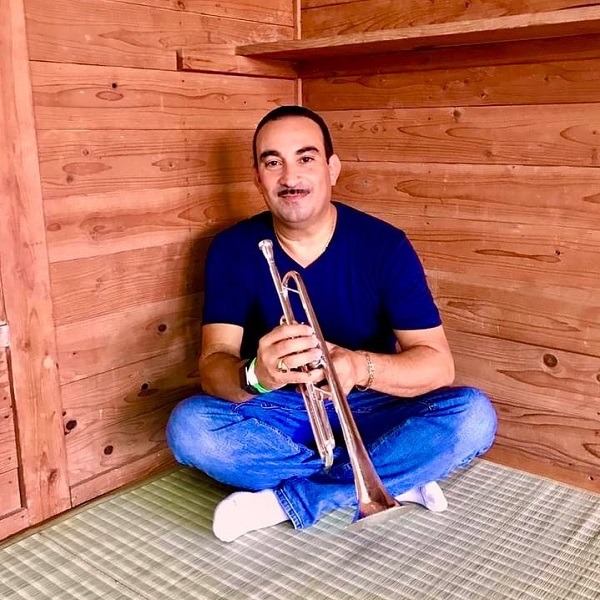
Eddie and his trumpet
Eddie Ortiz with his trumpet

The Armed Forces and moving to Hawaii   

Eddie’s first contact with music was in school, when he began taking trumpet lessons for a few years until he moved with his family to Tampa, Florida, where his life would change radically.   

While there, he joined the Navy and served for more than 20 years, time in which the artist took the opportunity to join the Marine band and hone his skills as a musician. 

It was in those years he served as a trumpet player and played for several military bands being in the armed forces.   

During his military career, he was forced to visit many countries and Hawaii was his last stop. About three years before retiring, he decided to create Eddie Ortiz & Son Caribe, a group he still plays with today.    

As for Hawaii, he liked the place, the weather and the people so much that he did not want to return to the United States. That was over 27 years in total. He still thinks it was the best decision he could have made personally and professionally.    

Eddie Ortiz & Son Caribe 

Something very interesting about Eddie Ortiz & Son Caribe is that they play Latin music, but most of the members are not Latino. The group has people from Japan, China, Portugal and Hawaii. In fact, some of them were with Eddie in the navy and, today, support him in this great project.   

A very particular case is that of Cynthia Romero, the band’s vocalist, who was born in Manila, Philippines, and speaks six languages, but Spanish is not one of them. However, she is perfectly capable of singing in that language without any problem, since she practices a lot the songs at the phonic level to avoid mistakes.   

Whenever there are original songs, Cynthia usually asks Eddie what a song is about and he explains it to her in detail so she can perform it and live out it properly. She also takes the trouble to translate all the content and learn it to avoid any failure in the studio or on stage.    

In the case of the genres, a different level of preparation for each one is always required, so Eddie and Cynthia always rehearse alone at first, while the musicians prepare themselves separately. It is then that they all join together to see how the band sounds as a whole.    

Eddie in a studio
Eddie Ortiz playing his trumpet in a studio

Learning from other artists on stage 

The members of Eddie Ortiz & Son Caribe have had the opportunity to share the stage with Ismael Miranda, Celia Cruz, Johnny Polanco, Tito Puente Jr, Luisito Rosario, and many more. When asked what he and his musicians have learned from these great artists, Eddie replied that the opportunity to accompany these personalities and open their shows have been a blessing and an immense honor.   

”Each one of these artists has a very unique style and, whenever we accompany one of them, there are always new things to learn in order to be able to interpret those styles in the future. All of these things that we see in others are incorporated into our own music as we see fit” said Eddie.   

The media’s role in his career   

With respect to the media, Eddie Ortiz & Son Caribe has had a presence in various magazines and channels such as Honolulu Magazine, KS TV, 88 Tee, University of Hawaii Sports Television, among others.    

Eddie said they did not expect this media exposure, but it has been very well received. They have been asked to make music for one or two radio stations or channels, which has given them the opportunity to demonstrate their talent and be known among a wider audience.   

The best thing is that this gave them the opportunity to explore other genres, as the aforementioned media have asked for pop, traditional Hawaiian music and other genres requested at that time.    

Original music and covers 

Eddie also told us that his band usually performs live on various entertainment places about four times a week, so they should try to have a repertoire as different as possible every night so as not to bore the audience. 

Regarding covers, there are always certain songs that people usually ask for, so the band always takes them into account to satisfy those attending. 

They also try to make a balance of all the genres they play such as salsa, bachata, merengue, cha cha chá, cumbia, Latin pop and many more.   

Eddie and his band
This is Eddie Ortiz & Son Caribe, the whole band

Tours 

Although the band’s strength is in Hawaii, their audience is not centred on the island and they have also managed to tour Asian countries such as Japan, Korea and the Philippines. In those places, the reception of the public towards Eddie Ortiz & Son Caribe has been phenomenal because there are many lovers of Latin music and culture in general there.   

Because of this, these countries usually have relatively large salsa events and festivals where they always take this band and other groups of this kind into account. Of course, they are also supported by dancers and DJs in order to liven up the atmosphere even more.   

Eddie remembers attending an event called ”Isla De Salsa”, which featured El Gran Combo De Puerto Rico, Juan Luis Guerra, Havana De Cuba and many others. This shows how much Latin music is valued in those places and the large number of followers it gathered. 

To end the conversation, Eddie pointed out that they have a large audience in Colombia, Ecuador and Mexico, so they also have plans and are making the appropriate arrangements to go there soon and meet their fans. They will also perform an anniversary concert to celebrate the 25th anniversary of the foundation of the orchestra and will have Luisito Rosario as a guest. 

Read also: Jimmy Rodríguez ”El Salsero Mexicano” talked to ISM about his career 

Leo Pacheco Sonero del barrio and beloved example of father and friend was lead vocalist of the Orquesta Renovación under the direction of the tumbador Nico Monterola.

On May 17, 1948, Alejo Veliz Pacheco was born in Las González, Miranda State.

Under the musical influence of his father, an outstanding Afro-Venezuelan drummer, his debut as a professional took place in 1973, when he became the lead vocalist of the Renovación, after the departure of Orlando Castillo “Watussi” to the orchestra of Porfi Jiménez.

Leo Pacheco Sonero del barrio and beloved example of a father and friend

An advanced group, which emerged on February 6, 1973, under the musical influence of Harlow y la Perfecta, became the ideal competition to the “Galician” Dimensión Latina.

Under the direction of tumbador Nico Monterola, La Renovación, despite not having much luck, presented in its ranks timbalero Alfredo Cutuflá, (great Venezuelan timbalero, with a brilliant career in France), then Cheo Navarro (Director of Bailatino), the future trombonists of Oscar D’ León, the Piñango brothers: Nené and Taito.

This is the first recording for the album of La Renovación, one of the best Venezuelan salsa groups of the 70s. La Renovación since its foundation had in its ranks a select group of musicians that in the future would make a brilliant career in our salsa, needless to say that this group in its different stages has always tried to maintain a very fat and hard sound in the style of the good bands of New York”.

Orquesta Renovación under the direction of the tumbador Nico Monterola

This LP gathers many good songs but there is one in particular that I like very much and it is “Guaguancó a Barlovento”, authored by Orlando Watussi, who was also founder of this group, but he left before the recording of this first album.

Rafael García on bass, Félix Suárez “Shakaito” (future director of the Bronko), Hungria Rojas (later Oscar D’ León’s bongos player) and the vocalization of Leo Pacheco, who recorded with them, (5) Cinco Producciones: Echa Pa’ lante (1974); Llegó la Renovación (1975); Pare Cochero (1975); Lo máximo es Renovación (1976) and A todo el mundo le gusta (1976).

Due to some problems he left La Renovación and went on tour to Colombia with Nelson Henríquez, commitments that prevented him from joining the newly formed orchestra of Oscar D’ León, who observed in Leo his great conditions to do the chorus and second voice, (as a substitute for the work done by Wladimir Lozano in Dimensión Latina), and in a nightclub, Oscar told him: “Leo was looking for you, because the two of us, for whatever comes out …”, “here there is nothing else…”, “here we are going to bust everybody…”.

In fact, after Rodrigo Mendoza’s departure in March 1977, the band replaced him thanks to Leo Pacheco’s very special timbre to do the chorus and second voice, with some songs that served as witnesses, such as the unforgettable: Juramento, Fuego de Amor, Capullito de Azucena, Cruel Desilusión (Con la Crítica de Oscar), among others.

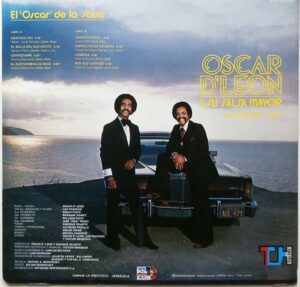
Oscar D'Leon Y Su Salsa Mayor El Oscar De La Salsa
Oscar D’Leon Y Su Salsa Mayor El Oscar De La Salsa

The last days of May 1977, the breakup of Oscar D’ León’s Salsa Mayor is announced, where the bassist-singer in record time reassembles his orchestra dismantling the Renovación itself, while Leo Pacheco, together with the timbalero Alfredo Padilla, Henry Camba, William Puchi, Miguel Pacheco, José “Pipo” Pérez form: “Nuestra Orquesta La Salsa Mayor”, with whom he recorded three anthological albums: De frente y luchando (1978); Strong & Hots (1979); Sello de garantía (1979).

He continued his musical activity in the following years with La Crítica, Combo Venezuela and other groups.

“There was a lot of history left to tell, impossible to tell in this opportunity for reasons of space, although we hope it will be the beginning of a series of works on Venezuelan Salsa, which unfortunately we begin with the sad news of the death of Leo Pacheco, who left us with the fullness of his vocal cords and strength, which impressed the doctors on the day of his death when he resisted 8 hours with a heart attack while driving home in Ocumare del Tuy in his native Miranda state”.

For July 2023 the Lutier, Percussionist and friend Maestro Nico Monterola made a well-deserved tribute with a single titled:

“Tribute to Leo Pacheco”.

Sonero of the neighborhood and beloved example of father and friend.

Leo Pacheco Sonero del barrio and beloved example of a father and friend


Source: Jose “Cheo” Guevara of Asocosalsa 74

Also Read: “Canelita Medina” Caribbean popular music loses one of its best exponents

Argenis Carruyo is known in the music scene as “El Volcán de América” (The Volcano of America) due to the power of his voice

Carruyo He was born in Maracaibo on August 22, 1953 at the Chiquinquira Hospital in Maracaibo, located in the same sector where he grew up.

Argenis Carruyo he had the good fortune of being a neighbor of Los Blanco, who 12 years after his birth hired him as an instrument picker, an experience that served to awaken in him the love for music, a feeling that was nurtured when he discovered in him an unmistakable talent to make singing his life support.

“The Volcano of America” because the power of his voice makes the senses of those who have the opportunity to listen to him rumble; so sings Argenis Carruyo, from Zulia, who from a very young age began to demonstrate the vocal quality that characterizes him.

Argenis Carruyo is known in the music scene as "El Volcán de América" (The Volcano of America) due to the power of his voice
Argenis Carruyo is known in the music scene as “El Volcán de América” (The Volcano of America) due to the power of his voice

He has stood out as an interpreter of the gaita zuliana and during the 1970s and 1980s belonged to the Dimensión Latina.

The 80’s was a very busy decade for this multifaceted character; he sang with Orlando y su Combo, and did a duet with Ender Carruyo in the orchestra “Los Hermanos Carruyo” and then again with the Super Combo Los Tropicales, until 1985 when he decided to found his own group called “Argenis Carruyo y su Orquesta”.

He began his musical career with the youth group Los Larkings. Later, he was part of Los Juglares and Los Casinos.

In 1973, he joined the ranks of Súper Combo Los Tropicales and in 1977 he was recruited by Dimensión Latina, with whom he sang until 1981. Later he joined the group Los Melódicos.

During the 1980s he had an intense artistic activity in which he sang with Orlando y su Combo, duetted with Ender Carruyo in the orchestra Los Hermanos Carruyo, worked again with the Súper Combo Los Tropicales and, in 1985, formed his own group: Argenis Carruyo y su Orquesta.

Argenis Carruyo and his Orchestra

Sabor a Gaita:

Apart from his work with rhythms such as guaracha and salsa, Carruyo has also performed the gaita zuliana.

The Volcano of America has not only stood out among the great interpreters of the Caribbean for playing rhythms such as the guaracha, he has also honored his land by making famous great gaita compositions.

During his time in the genre he worked with groups such as El Número Uno, Rincón Morales, Guaco, Los Morillo and Gaiteros de Pillopo.

He owes part of his fame to the gaita, because the Zulian melody accompanied him on stages and still accompanies him in his veins as it does to anyone who appreciates being a worthy Maracaibero.

During his artistic life he has received numerous recognitions, as well as the publication of a book with his biography.

In 1975 he won the Festival de Cantantes y Compositores Zulianos and has received the Mara de Oro (1993, 1994, 1995) and Gran Cacique de Oro awards as best singer, the Gran Aguila de Venezuela as best singer and dance orchestra (1995, 1996, 1997, 1998, 1999, 2001), and the Catatumbo de Oro as best popular singer (1993) among others.

"The Volcano of America"
“The Volcano of America”

His orchestra received the Orden Ciudad de Maracaibo in its first class as best dance group.

He has performed in the most important nightclubs in Maracaibo, the country and abroad, alternating with the most recognized figures of the song, which is why he is considered one of the most genuine interpreters of tropical Caribbean genres in the Zulian region, such as salsa, guaracha, cumbia, merengue and bolero.

With a prolific career of more than twenty-five years that has served to demonstrate his talents as a vocalist and his own characteristic style, which gives him his most authentic identity.

Argenis Carruyo, with pride from Maracaibo, proclaims that he owes to Zulia the success and fortune that always accompanied him since he discovered the enormous talent he carried in his blood, his homeland became his main fan, to Maracaibo he owes his life and to its inhabitants the affection and the memory that will always keep him alive through his songs.

For 2023 Argenis was specially invited to participate in the excellent group Quintero’s Salsa Project – Tributo A La Dimension Latina directed by New York based percussionists Luisito Quintero and Robert Quintero.

Luisito Quintero grew up in the Latin and African percussion tradition. His father is as percussive as his uncle Carlos Nene Quintero and cousin Roberto Quintero. He became a member of the Venezuelan Symphony Orchestra, but soon joined ensembles such as Grupo Guaco and El Trabuco Venezolano and toured with Oscar D’León.

He then moved to New York, where he met Latin jazz musicians like Willie Colon, Eddie Palmieri, Tito Puente and Celia Cruz worked. He then turned to the fusion of jazz, funk, salsa and African music and played with George Benson, Herbie Hancock, Ravi Coltrane and Toshiko Akiyoshi, but also with pop musicians such as Gloria Estefan and Marc Anthony. Louie Vega produced his first album with him.

Quintero’s Salsa Project – Tribute To The Latin Dimension

Tracks: Ya Tu Lo Véras; Sin Tu Cariño; Cara de Guabina; Sigue Tu Camino; Irimo; Dulce Cantar; De Quintero a Dimensión; Ahi Nama; Te Conocí; Parampampam; Arroz Con Manteca; Frutas del Caney.

Musicians: Argenis Carruyo; Jimmy Bosch; Marcial Istúriz; Roberto Quintero, Luisito Quintero.

Record labels in which Argenis Carruyo has participated.

Top-Hit (TH), Maracaibo Record’s, Argenis Carruyo, Discos VRZ, SonoVen Records, L. G. Record’s C. A; iMusician | EDGARSARMIENTO, Palacio, among others.

Argenis Carruyo y Dj. Augusto Felibertt

Sources:

La Buena Musica: Argenis Carruyo

La Salsa es mi vida: Quintero´s Salsa Project – Tributo A La Dimension Latina

Also Read: Víctor Porfirio Baloa Díaz, more commonly known as Porfi Baloa

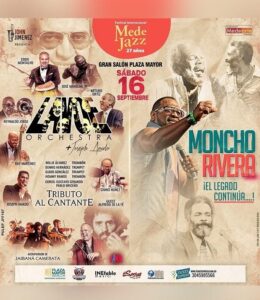
Medejazz from September 6 to 16 will be held the 27th version of the “International Festival of Jazz and World Music”

Medejazz 2023, to delight the ears, Music and Art in Medellin.

In 1996 the Medellin Jazz “Medejazz” Corporation was founded, which in 2006 changed its name to Medearte Corporation, continuing with the same cultural vision and objectives.  With the work of these years, Medearte Corporation has made it possible that musicians who were once only idols heard on records, today are part of the musical history of Colombia and Medellin specifically.

The Medearte Corporation has developed projects where the main objective is the dissemination and promotion of the arts in its various manifestations, the institution is recognized nationally and internationally for its business management in favor of culture in Colombia and to support projects of young musicians and artists in the cultural work of the city of Medellin.

Medejazz, the 27th version of the International Jazz and World Music Festival will be held from September 6 to 16.

The 27th version of the “International Jazz and World Music Festival” will be held from September 6 to 16. Continuing with the tradition that the Festival has consolidated over the years, our city will host a wide range of artists, performers and groups, who thanks to their talent and creativity, will radiate their music and sounds on the public of Medellin.

The breadth of artistic genres, nationalities, cultures and staging that this Festival “Medejazz” has prepared for everyone will make Medellín the center of a rich diversity and cultural and human plurality, embodied in the multiple sounds that, we are sure, will not disappoint.

The MedeJazz 2023 program, with the support of the Ministry of Culture, the Mayor’s Office of Medellín and La Fiesta del Libro y la Cultura, will offer six in-person concerts, five of which will be free admission. In addition, the Festival will offer four free master classes, as a contribution to the academic-musical training of young musicians.

The Festival will also offer four free master classes as a contribution to academic-musical education, and young people from music schools will have the opportunity to nurture this knowledge. The Festival will be held from September 8 to 17

– Eleven concerts in Medejazz 2023

– Ten concerts with free admission

– Groups and members from France, Holland, Cuba, Brazil, Colombia, the United States, Puerto Rico and Venezuela.

– Four master classes with free admission.

Groups from France, Holland, Brazil, Cuba, Colombia, the United States, New York, Venezuela and Puerto Rico will grace the nights of Medellín.

“Medejazz” From France will be Samy Thiebaut, from Holland Nueva Manteca, from Brazil the female duo of Eloudie Bouny and Iara Ferreira, from the island of Cuba the pianist Ernán López Nussa with his project Havana in The Grand Manner, from New York – Puerto Rico – Venezuela and Cuba the tributes to Héctor Lavoe and Ismael Rivera.

For Colombia, the six winning groups of the 2023 calls: Sara Elisa Villa, Geografías, Mulatas, Groovato, Luis Bernardo Jazz Project and Tomate’s.

Three large stages will witness these great nights: Tarima Carabobo within the Festival of Books and Culture, Plazoleta del Museo de Arte de Medellín MAMM and the Great Hall of Plaza Mayor.

Starting Friday, August 25, you can visit the updated website with all the information about Medejazz 2023.

MEDEJAZZ 2023 PROGRAM

Sara Elisa Villa (Colombia). Friday, September 8 – 6:30 pm – Tarima Carabobo Fiesta del Libro y la Cultura. FREE ENTRANCE.

Geografías (Colombia). Saturday, September 9 – 6:30 pm. – Tarima Carabobo Fiesta del Libro y la Cultura. FREE ENTRANCE.

Mulatas (Cuba-Colombia). Saturday, September 9- 8:00 pm- Tarima Carabobo Fiesta del Libro y la Cultura. FREE ENTRANCE.

Groovato (Colombia). Sunday September 10 – 6:30 pm- Tarima Carabobo Book and Culture Festival. FREE ENTRANCE.

Luis Bernardo Jazz Project (Colombia). Tuesday, September 12- 8:00 p.m. Tarima Carabobo- Book and Culture Festival. FREE ENTRANCE.

Tomate’s (Colombia). Thursday, September 14- 7:30 pm. Plazoleta Museo de Arte Moderno de Medellín- MAMM. FREE ENTRANCE.

Samy Thiébault (France). Friday, September 15- 8:00 pm. Tarima Carabobo- Book and Culture Festival. FREE ENTRANCE.

New Manteca (Holland). Friday, September 15 – 7:30 p.m. Plazoleta Museo de Arte Moderno de Medellín- MAMM. FREE ENTRANCE.

Eloudie Bouny and Iara Ferreira (Brazil). Saturday, September 16- 6:30 p.m. Tarima Carabobo- Book and Culture Festival. FREE ENTRANCE

Lavoe Orquesta + Joseph Amado, Moncho Rivera y Mulatas (New York, Puerto Rico, Venezuela, Cuba and Colombia). Saturday, September 16 -8:00 p.m. Gran Salón de Plaza Mayor. Information: Ticket Express.

Lavoe Orquesta + Joseph Amado, Moncho Rivera

Havana in the Grand Manner with Ernán López Nussa (Cuba). Sunday, September 17- 5:00 p.m. Plazoleta del Museo de Arte Moderno de Medellín- MAMM. FREE ENTRANCE


INFORMATION

www.corporacionmedearte.com

Social Networks

Facebook: (Medearte- Festival Internacional Medejazz) 

YouTube: Festival Medejazz

Twitter: (@MedeJazz) https://twitter.com/MedeJazz

Instagram: (@MedeJazz)

Lavoe Orquesta + Joseph Amado

Also Read: Henry Benavides surprises with “Por Cuenta Propia,” his new project

  • « Go to Previous Page
  • Page 1
  • Interim pages omitted …
  • Page 55
  • Page 56
  • Page 57
  • Page 58
  • Page 59
  • Interim pages omitted …
  • Page 116
  • Go to Next Page »

International Salsa Magazine (ISM) is a monthly publication about Salsa activities around the world, that has been publishing since 2007. It is a world network of volunteers coordinated by ISM Magazine. We are working to strengthen all the events by working together.