• Skip to primary navigation
  • Skip to main content

International Salsa Magazine

  • HOME
  • Previous editions
    • 2026
      • ISM / March 2026
      • ISM / February 2026
      • ISM / January 2026
    • 2025
      • ISM / December 2025
      • ISM / November 2025
      • ISM / October 2025
      • ISM / September 2025
      • ISM / August 2025
      • ISM / July 2025
      • ISM / June 2025
      • ISM / May2025
      • ISM / April 2025
      • ISM / March 2025
      • ISM / February 2025
      • ISM / January 2025
    • 2024
      • ISM / December 2024
      • ISM / November 2024
      • ISM / October 2024
      • ISM / September 2024
      • ISM / August 2024
      • ISM / July 2024
      • ISM / June 2024
      • ISM / May 2024
      • ISM / April 2024
      • ISM / March 2024
      • ISM / February 2024
      • ISM / January 2024
    • 2023
      • ISM / December 2023
      • ISM / November 2023
      • ISM / October 2023
      • ISM – September 2023
      • ISM – August 2023
      • ISM July 2023
      • ISM Edition June 2023
      • ISM – May 2023
      • ISM April 2023
      • ISM March 2023
      • ISM February 2023
      • ISM January 2023
    • 2022
      • ISM December 2022
      • ISM November 2022
      • ISM October 2022
      • ISM September 2022
      • ISM August 2022
      • ISM July 2022
      • ISM June 2022
      • ISM May 2022
      • ISM February 2022
      • ISM January 2022
    • 2021
      • ISM December 2021
      • ISM November 2021
      • ISM October – 2021
      • ISM September 2021
      • ISM August 2021
      • ISM July 2021
      • ISM May 2021
      • ISM April 2021
      • ISM June 2021
      • ISM March 2021
      • ISM February 2021
      • ISM January 2021
    • 2020
      • ISM December 2020
      • ISM November 2020
      • ISM October 2020
      • ISM September 2020
      • ISM August 2020
      • ISM July 2020
      • ISM June 2020
      • ISM May 2020
      • ISM April 2020
      • ISM March 2020
      • ISM February 2020
      • ISM January 2020
    • 2019
      • ISM December 2019
      • ISM November 2019
      • ISM October 2019
      • ISM Septembre 2019
      • ISM August 2019
      • ISM July 2019
      • ISM June 2019
  • Spanish
  • Download Salsa App
    • Android
    • Apple

Search Results for: New York

Antonio Cartagena is an acclaimed artist, leaving the name of Peru on high all over the world

Antonio Cartagena is one of our best bastions who was born artistically in 1990 from a humble family with Afro-Peruvian roots.

Born in the Constitutional province of Callao (Bellavista) and having studied higher education in the National Police of Peru and half of career in the course of Psychology at the University San Martin.

Being able more the art is consecrated presenting his first success “Sin Ti” belonging in that instant to the Orchestra Peru Salsa All Star at the same time is invited to record songs like Niña and Tengo Todo Execto a Ti by the Orchestra of the Prestigious Oscar “Pitín” Sanchez La Sensual 990 achieving a greater acceptance the demands of work.

Antonio Cartagena
Antonio Cartagena is an acclaimed artist, leaving the name of Peru on high all over the world.

They were not made to wait in all the Peruvian literal for such reason is that Antonio Cartagena is traced important goals as the conquest of other countries reason others so that in 1991 produces his first album as a soloist with 10 songs where they highlighted songs like; Sedúceme and Necesito un Amor.

Becoming known in countries such as Colombia, Venezuela and part of the United States.

In 1992 he launches to the market a fresh and romantic Salsa where he highlights songs like Y que Tiene el and M Dueña; from there he reaffirms the internationalization being hired for a tour in the United States with all his group visiting places like New York, Los Angeles, Atlanta, Virginia, Dallas, Texas, San Diego, among others.

Then in 1993 he is hired by the prestigious international record company RMM of Mr. Ralph Mercado, one of the biggest salsa producers in the world; recording his first international album entitled Dime Que Si, where the most outstanding songs are Apaga La Luz and Perdone Querida.
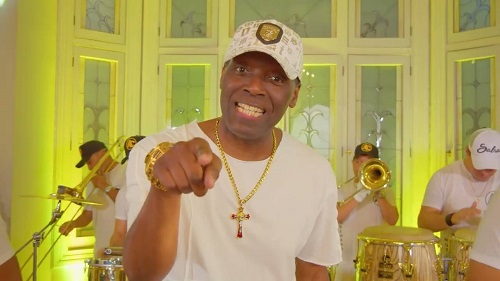
Antonio Cartagena
Antonio Cartagena, is one of our best bastions.

To perform in dream stages such as Carnegie Hall, Madison Square Garden and Miami Arenas, alternating with many stars such as Oscar Leon, Van Lester, India, Marc Anthony, Tito Puente, Cheo Feliciano, Ismael Miranda, Celia Cruz, Domingo Quiñonez, Ray de la Paz, Tony Vega, Ray Sepulveda, Johnny Rivera, Tito Nieves, Jose Alberto el Canario, Luis “Perico” Ortiz, Giovanni Hidalgo, and an innumerable list of the greats of the firmament of the salsa market. The tour continued to include Canada, Panama, Venezuela, Colombia, Santo Domingo, Puerto Rico and Argentina.

These were events that marked a milestone in the vertiginous career of the artist; who arrives in his country after three years of coming and going; with a production titled Punto de Vista (1996), where he consecrates himself with the songs Si Tu No Estas and Pídele Perdón, successfully placing himself at the threshold of his career in his own country.

Already in 1997 he wants to impose the criollismo converting famous and traditional waltzes of our country in salsa; Disc that made him known all over the world even in Europe, presenting himself in stages of Germany, France, Holland, Italy, Switzerland, Spain among others.

In the year 2000 and without stopping touring nationally and internationally, Antonio Cartagena produced a new album which highlights the theme Nadie Quien te Quiera como Yo.

Then in 2001 he travels to New York to produce an album titled Volveré, with songs such as Ni Siquiera, giving much to talk about in that country and in Latin America, visiting countries such as the United States, Colombia, Venezuela, Ecuador, etc.

Antonio Cartegega
Cartagena y Baloa

In 2005 he presents a renewed and updated product imposing themes such as Salsa Regaee, titled No Me Digas Que No, placing himself in the first places of our musical environment.

Antonio Cartagena, is one of our best internationally recognized bastions, who is going through his best moment, considered in salsa as the best exponent of music in his genre and winner for this year of a number of awards such as: Nominated for Best Interpreter of the year in the salsa music genre.

Cartagena is an acclaimed artist, leaving the name of Peru on high all over the world.

Antonio Cartagena

Read Also: Fanny Almenara better known in the salsa environment as “La Sonera del Callao”
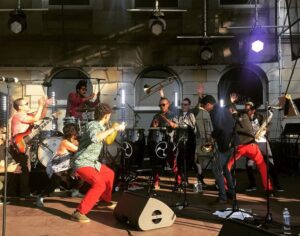
Get to know the “ La Malamaña ” Orchestra

On this occasion we have the opportunity to meet the “La Malamaña” Orchestra

La Malamaña, a salsa orchestra that was born in 2008 as a band that paid tributes to the greats of salsa such as: Rubén Blades, Héctor Lavoe, stars of La Fania and the Cuban music and timba. They have a neighborhood band spirit, heirs to the sound of the New York neighborhood orchestras of the 70s and 80s, fused with elements of the timba sound and concepts of street music.

La Malamaña Orchestra playing
La Malamaña Orchestra Live

The name of the band was baptized by the former member – founder of the band, “Mauricio Ochoa” who founded and is leader of the orchestra “La Sonora Libre de Barcelona”. The name alludes to the Rubén Blades theme “they are looking for you” and that in addition to that also reflects our way of interpreting, writing and arranging the master genre: Salsa.

The Orchestras are based in Quito-Ecuador, with members from different latitudes, they build a proposal of Quito sauce, also called “high altitude Salsa”, for the 2800 meters above sea level where the city of Quito is located.

His main concerts were:

·   Emerald Carnival ·   Foro Mundial de la Bicicleta MINGAMOS
·   Music Festival in Quito and Cuenca ·   Festival – Engine of Change (Ambato 2019)
·   Festival in Defense of the Yasuní National Park ·   LATIN GROOVE EC (Independent Salsa Festival 2019)
·   Libertarian Days ·   CUMANDA Parque Urbano (Agenda Cultural – 2019)
·   Festival Cota 70, FIL Q (sharing stage with La 33) ·  Quito Fest-Fiestas (sharing stage with Rubén Blades)
·   Canoe Fest ·   Festival del Chocó Andino, Pacto 2019


Photo of the keyboardist of the La Malamaña Orchestra
Member of the La Malamaña Orchestra

But internationally, among the most important are:

  • 2012: Presentations in Beijing and Tianjin, in the People’s Republic of China.
  • 2015: First Tour in Europe (Genoa, Barcelona, ​​Madrid, Lyon, Paris and Tours).
  • 2018: Second Tour in Europe:
    • Festival des musiques métisses in the city of Colmar
    • FIMU de Belfort Festival “3 presentations”
    • Festival La Javelle-Guinguette “1 presentation”


During their time in the world of music they created several albums with a very characteristic sound of them. His first album was called “manual of urbanity and good customs” released in December 2011, which was followed by his single “El Kikuyo” in 2014, a song that was included in the international independent salsa compilation “Salsa de Hoy ”; In 2017 they released their song “Ya Llegó”. As of 2018 they released their latest album released which they baptized “SALSA DE ALTURA”; the members of the orchestra named it that way since Quito is 2800 meters above sea level. This new album has 6 songs by the band, among which are live versions and new material.

Photo of La Malamaña Orchestra
La Malamaña Orchestra at Club Lavoe

Did you know that there is a wide variety of topics that your audience likes, for example, the population of Cali, Colombia likes “What counts the braids” and “How to say” a lot; and in their homeland (Ecuador) they he quite liked his songs: “El kikuyo” and “Para armar”.

The members of the orchestra:

·       Grecia Albán – Voices

·       Edgar Granda – Voices

·       Javier Toro – Piano

·       Jamshid Gordón – Electric bass

·       Fidel Minda – Drums and timpani

·       Diego Minda – Conga Drums

·       Sebastián Segovia – Saxo Tenor

·       Carlos Quilumba – Saxo Alto

·       Yony Muñoz – Trombone

·       Francisco Rangél – Trombone


All the members like the strength that “salsa” has, as a music of resistance in the sense of maintaining African and mountain roots in Latin America. They have a lot of new songs and not so new ones that haven’t been recorded yet, we’re in a moment of creation. Soon they will record their new material for the enjoyment of our public.

Soon they will have an event in the month of January 2020 in the city of Quito, Ecuador for the anniversary of a hotel located in the Historic Center

They mentioned to us that their goal is: “We are interested in expanding the musical panorama of Quito salsa towards an alternative platform and generating more audiences at a local, national and international level”

They also sent a message to all their fans and new talents “To our fans we want to say that thank you for enjoying our music and our “sui generis” proposal of salsa and to the new talents simply that they believe in what they say and sing… .this is not about doing something to stick….but rather about being consistent with what is thought and with what we want to contribute in this world that so much lacks good art”

La Malamaña Orchestra photo
La Malamaña Orchestra finishing its presentation at the Club

For more information:

  • Facebook: https://www.facebook.com/lamala.mana/
  • Phone: +593 99 801 9775
  • Email: [email protected] / Edgar Granda/ Manager: [email protected] /     Press contact: Diego Minda, [email protected]

José Mangual Jr.

The son of the master and pioneer of Bongó, José Mangual “Buyú”

The son of the innovative and pioneering bongo musician, José Mangual Sr., aka “Buyú”, José Mangual Jr. was born and raised in East Harlem, the Spanish Quarter of New York City   known as “El Barrio”. By the age of fifteen, José Jr. was already playing in local groups.

In 1968, Mangual Jr. was invited to play bongos and sing background vocals for a fledgling orchestra led by a young man named Willie Colón.

The lead vocalist for this group was also a young singer named Hector Lavoe.

Along with his perennial rhythm section “compadre”, legendary percussionist Milton Cardona, Mangual would become a part of history, as they made some of the most important recordings in the annals of salsa music.

Mangual Jr. showed his skill as a composer, author, and lead vocalist with Colón’s orchestra.

José Mangual "Buyú"
Photo of José Mangual Jr in concert

With Kent Gomez in 1973, Mangual co-authored the song “San Miguel” for Tony Pabón y la Protesta. This song featured him as a lead vocalist.

After Willie Colón and Hector Lavoe parted ways to pursue different ventures, it was José Mangual Jr. who took over the musical direction of Lavoe’s band.

Shortly after this in 1977, Mangual formed his own record label, True Ventures Inc., and released A Tribute to Chano Pozo.

This album features the classic recordings, “Campanero” and “Cuero ‘Na Ma”. It also established Mangual as a lead vocalist to be reckoned with, and a serious record producer.

Live Jose Mangual Jr
Photo of José Mangual Jr on stage

The 1980’s saw José Mangual Jr.’s fame grow even more, as he became a premier artist for Velvet Records, and further solidified his fan base in South America, Europe and the Orient.

His skills as a percussionist, vocalist, composer, and musical director were sought out by many including Juan Luis Guerra, Rubén Blades, Herb Alpert, Dizzy Gillespie, David Byrne, Celia Cruz, Ramon Orlando, Mario Bauza, Mongo Santamaria, The Fania All-Stars, Junior Gonzalez, Ismael Miranda, Louie Ramirez and many others.

Perhaps the most fascinating aspect of Mangual’s career is his ability to evolve and refine the sounds of his music.

The 1990’s saw him forming and leading his band Sarabanda, while still pursuing the projects he always wanted to do.

In 1995, Mangual released his long-awaited Tribute to Chano Pozo Volume II. This album ranks among his finest, and gives listeners a glimpse into the mind of a master musician who grew up during the golden age of modern Latin music.

In 1998, Mangual produced and musically directed Caiman Records new salsa and Latin jazz release, “Son Boricua”, by his band of the same name.

This session features his original composition, “El Jibarito”, which pays homage to the island of Puerto Rico, and his Boricua heritage. The album and group was the recipient of the New York Latin Critics’ ACE Award as Best New Latin Release for 1998-1999.

Mangual’s recent new release with “Son Boricua”, entitled Homenaje a Cortijo y Rivera is a moving, swinging homage to the music of Rafael Cortijo and “El Sonero Mayor” Ismael Rivera.

What makes this work so noteworthy is that it marks an even deeper trip, not only into Latin jazz, but into the panorama of what the sounds of a Latin New York are: the sounds of the streets of  “El Barrio”.

Photo by Jose Mangual Jr
José Mangual Jr on stage

Here, Mangual displays all of the attributes of his professional career, from being the musical director and a lead vocalist, along with the “Smooth One”, Jimmy Sabater, to being a composer with his original composition, “Boricua Blues”.

With this release, Mangual, Sabater, and “Son Boricua” captured their second ACE Award in 2002.

A third ACE Award would follow in 2003 for “Son Boricua’s” 2002 release, Mo!

His most recent participation as a vocal leader in the production of the Quinteros, Quintero’s Salsa Project entitled Our Home, nominated for the Latin Grammy 2019.

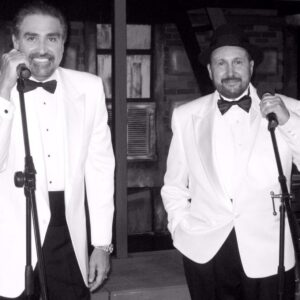
Hansel and Raúl, The Charanga Legend duo

Hansel and Raúl, The Charanga Legend duo

Hansel and Raúl is a charismatic and transgressive Charanga duo of the line of romantic lyrics of the time. They positioned the Cuban “Charanga” rhythm on the top of global popularity, a danceable genre that they imposed on each stage they were invited to and which incorporated their unique Caribbean essence.

This particular duo with three decades of trajectory was born in Miami in 1984 after breaking from the orchestra “Charanga 76”, where they were co-founder members and their main vocalists. With this New York orchestra, born in Brooklyn, they won international recognition and their first Grammy for the album “Encore” in 1978.

Photo of Hansel and Raúl
Hansel and Raúl – The Charanga Legend duo

“Many of the artists who recorded with them during their stay in “Charanga 76” include the renowned pianist – for many years – by Héctor Lavoe, Gilbert Colón and the first Jewish-American flutist woman, Andrea Brachfeld.”

Very pleasant memories come to Hansel‘s mind during this interview, especially his first composition “Si no te encuentras tú” for Charanga 76, his voice took a turn and he showed nostalgia as well as pride in remembering it: “I don’t sit to write a song with a guitar or piano. The Inspiration comes to me alone, there is nothing personal”.

Each anecdote that he tells us is remembered as facts that have led to their musical maturity. Each fun fact has been defined as part of their career, such was the case of the great master, Israel “Cachao” López, who with all his musical wisdom and mastery of his instrument, the Double Bass, taught the rhythmic base to the orchestra. “The conguero and the timbalero even the güirero he taught them to play well. He was a teacher of all, including us who learned a lot from him. R.I.P, he was a glory of music”, Hansel said to us.

But that wasn’t all he told us about the legend of Cuban music, “Cachao”, who was the Double Bassist of the “Charanga 76” orchestra for 12 years, also he told us that every time they wen a tour the “Inventor of Mambo” had them buy a plane seat to his Double Bass, he sat it next to him and even put the belt on the string instrument, as is dictated by airline regulations.

The funniest thing would come later when the Double Bass received the same attention as each member of the orchestra. Amazing! The Double Bass also had its portion of food during each trip as each musician of the orchestra, and when the flight attendant brought it was when the offer was presented by each musician for that fabulous portion, although the end was always the same, the trumpeter won!

Hansel y Raúl - Photo
Hansel y Raúl concert
Photo in concert - Hansel and Raúl
Hansel and Raúl – Photo behind the scenes

Each experience with Charanga 76 made them evolve in music and although with this orchestra they made themselves renowned professionally, as a duo they flew the fence. They have received multiple musical awards, their sympathetic lyrics, and in some cases, satirical or burlesque have won the applause, admiration, and respect of colleagues in the music industry and the general public on three continents: America, Europe, and Asia.

“The Jersey Boys” was their first youth musical group with only 5 members and although the musical instruments they played were the basics of Rock, their rhythmic concept was Cuban music.

“María Teresa y Danilo” was one of the compositions that brought many satisfactions to this duo. Nowadays it’s still preferred by the fanatical public of the genre. Many debates and speculations were made about this song, but here we tell you the true story. “María Teresa y Danilo” dates its beginnings to the 80s when soap operas like “Dallas” were in fashion.

Hansel came up with the idea of diving and writing on this topic. He magically composed the lyric during the plane trip with San Francisco – Miami trajectory and the rest we already know, multiple copies sold, and hundreds of awards granted to them for the feeling that caused this popular theme.

Photo of Hansel and Raúl

Photo of Hansel and Raúl in their beginnings

After such overwhelming success as a duo, Hansel and Raúl decides to separate in 1988. What was the reason?

Everyone wanted to make another kind of music. Each one followed a different path, for his part, Hansel recorded five solo albums including metals, more trumpets and trombones, and in three of these albums, he included neither the violin nor the flute, assuming almost completely the end of the Charanga rhythm in his music. However, a short time later he realized that this Caribbean rhythm was what identified with his audience and two years later he joined Raúl again to continue their successful career.

Hansel and Raúl has a total of 330 songs recorded and on December 31 this Charanga duo will have a performance in Los Angeles, CA and you may be lucky and they play your favorite single and if don’t you can ask for it. Classics such as “Soy”, “Se me nota”, “El ayer”, “María Teresa y Danilo”, “Kukucha kucha”, “Balancea mi corazón” (Yordano), “Ojos Verdes” (Alfredo Gutiérrez), among many others, will be present at this 1: 45min show.

Hansel and Raúl
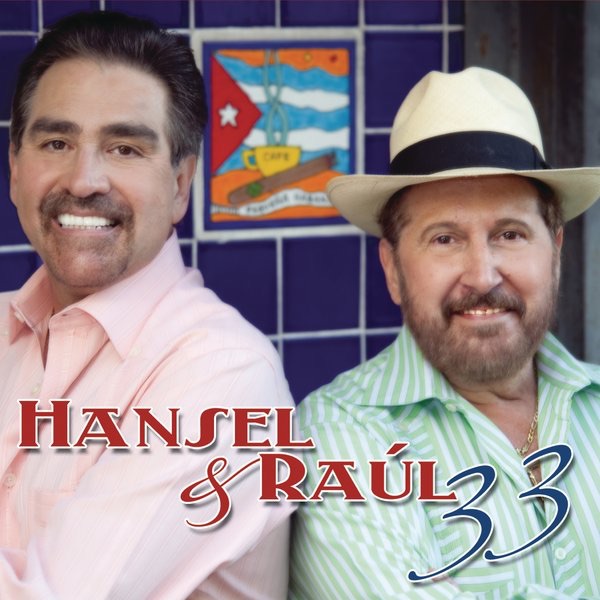
Cover of Hansel and Raúl, Discography 33

Purchase your Tickets quickly before it´s sold out

https://www.facebook.com/events/crown-plaza-hotel-and-casino/new-years-eve-2020-the-great-gatsby-presents-hansel-raul/271515257093512/

We hope to see them there singing each of their hits and if you later travel to New York, don’t be surprised to see Hansel in that city because he and his family will be celebrating their daughter’s sweet sixteen, on the second day of January 2020.

Is Hansel a stage name?

Although some may consider that Hansel is a characteristic name of the children’s story “Hansel and Gretel”, this name comes from Germany and it’s of Jewish origin. Hansel Enrique is the name of this singer and songwriter “Charanguero” and he is named so to differentiate himself from Hansel Horacio (father). In Cuba, the tradition is maintained that every male child must bear the name of his grandfather; this is the reason for all his cousins are called Hansel.


More Details visiting:

http://www.HANSELYRAUL.com

Social Channel:

https://www.facebook.com/pg/HANSELYRAUL/

Life, Career, and death of Juan Carlos Formell

Juan Carlos Formell

Latin entertainment is in mourning the departure of one of its most talented figures, who leaves a very big void in all his followers and fans. We are talking about former composer, bassist, guitarist and member of Los Van Van Juan Carlos Formell, who sadly departed from this world on Friday, May 26th after a live performance in New York City.

In view of such an unfortunate loss for those of us who have spent years of experience promoting Latin music in all four corners of the world, we consider it appropriate to recall the most important moments in the life and career of this extraordinary artist and all that he contributed to the salsa movement during his lifetime.

Juan Carlos Formell died on May 26th
Juan Carlos Formell died on Friday, May 26th after a live performance in New York City

Story of Juan Carlos Formell

Juan Carlos Formell was born in the city of Havana on February 18, 1964 and was the son of Juan Formell and Natalia Alfonso. He was the oldest of three brothers who would also dedicate themselves to music.

Contrary to what people might think, the fact of belonging to the fourth generation of a musical family and being the son of world famous bassist Juan Formell did not make things easier for him on the path with music. When he was barely three weeks old, he was sent to live with his grandparents in the outskirts of the Havana city.

They were through many financial needs and Juan Carlos himself would admit in an interview years later that other children used to make fun of him for having holes in his shoes, but that did not make him desist from his dreams, far from it. He became interested in music at a very young age, which led him to train professionally at the Alejandro García Cartula Conservatory and the Amadeo Roldán Conservatory. 

In the 1990s, he concluded his studies at the National School of Arts in Cuba with almost three decades of life, so he made the decision to move to New York City to fully exercise his career as a musician. Before this, Juan Carlos had already accompanied several jazz orchestras on stage, but Cuban authorities banned him from traveling due to his regular yoga practice (considered subversive in his native country).

Since he could not leave Cuba directly, he had to use a tour with the Rumbavana orchestra in Mexico to cross the Rio Grande in Texas and later settle in New York. His process of adapting to this new country was not easy from any point of view, but it was all so worth it.

From then on, what came was success for the artist. During the course of his solo career, he recorded some five solo albums, one of which earned him a Grammy nomination in the category of Best Traditional Tropical Latin Performance in 2000.

Juan Carlos Formell at PiPiKi Studios
Juan Carlos Formell recording at PiPiKi Studios

Entry into Los Van Van

Los Van Van is one of the most important Cuban musical groups of recent times, which was founded by Cuban bassist Juan Formell, Juan Carlos Formell’s father. After having participated in several son and jazz groups, the musician decided it was time to innovate and change the style he was using until now.

It was then that he decided to incorporate new instruments and voices, which gave rise to a completely different concept baptized as Los Van Van and that gave much to talk about among critics of the time, and for the better.

After a very successful career in the group, Juan Formell died on May 1, 2014 at the age of 71 as a result of a heart attack during a concert in his hometown, Havana.

This unfortunate event is what led his son, Juan Carlos Formell, to join Los Van Van as a bassist. His brother Samuel was on the drum kit and his sister Vanessa was on backing vocals, so it can be said that this was a bit of a family business.

Since that moment, the intense activity that he had together with the rest of the group in performances, concerts and new songs earned him the recognition of the public in a very short time.

In spite of carrying the fame of his father on his shoulders, he did not let this stop him or be a limiting factor for him. On the contrary, he always left his family name and his father’s legacy high.

Unfortunately, 10 years passed before the artist left a huge void among those who respected and loved him.

Juan Carlos Formell on stage
Juan Carlos Formell performing on stage

Death

On May 26 of this year, Los Van Van was performing at the Lehman Center for the Performing Arts in New York. About 40 minutes after the start of the concert, Juan collapsed on stage in front of all the attendants.

Minutes later, he was aided by ambulances and a fire truck. He was then taken to the nearest health-care center, but unfortunately the doctors could do nothing for him. This is how his bandmates announced the sad news through their social networks.

At the end of the concert, Eduardo Livia himself confirmed the death when he walked off the stage and greatly regretted what happened. The cause of death was determined to be a heart attack and his life came to an end at the age of 59.

After this, the group continued with the rest of the tour they had planned and the performances they had outstanding were in honor of the great Juan Carlos Formell and all that he gave to music during his life.

Read also: Khary Rios and Mayra Rivera from La Poderosa 360

  • « Go to Previous Page
  • Page 1
  • Interim pages omitted …
  • Page 60
  • Page 61
  • Page 62
  • Page 63
  • Page 64
  • Interim pages omitted …
  • Page 116
  • Go to Next Page »

International Salsa Magazine (ISM) is a monthly publication about Salsa activities around the world, that has been publishing since 2007. It is a world network of volunteers coordinated by ISM Magazine. We are working to strengthen all the events by working together.