• Skip to primary navigation
  • Skip to main content

International Salsa Magazine

  • HOME
  • Previous editions
    • 2026
      • ISM / March 2026
      • ISM / February 2026
      • ISM / January 2026
    • 2025
      • ISM / December 2025
      • ISM / November 2025
      • ISM / October 2025
      • ISM / September 2025
      • ISM / August 2025
      • ISM / July 2025
      • ISM / June 2025
      • ISM / May2025
      • ISM / April 2025
      • ISM / March 2025
      • ISM / February 2025
      • ISM / January 2025
    • 2024
      • ISM / December 2024
      • ISM / November 2024
      • ISM / October 2024
      • ISM / September 2024
      • ISM / August 2024
      • ISM / July 2024
      • ISM / June 2024
      • ISM / May 2024
      • ISM / April 2024
      • ISM / March 2024
      • ISM / February 2024
      • ISM / January 2024
    • 2023
      • ISM / December 2023
      • ISM / November 2023
      • ISM / October 2023
      • ISM – September 2023
      • ISM – August 2023
      • ISM July 2023
      • ISM Edition June 2023
      • ISM – May 2023
      • ISM April 2023
      • ISM March 2023
      • ISM February 2023
      • ISM January 2023
    • 2022
      • ISM December 2022
      • ISM November 2022
      • ISM October 2022
      • ISM September 2022
      • ISM August 2022
      • ISM July 2022
      • ISM June 2022
      • ISM May 2022
      • ISM February 2022
      • ISM January 2022
    • 2021
      • ISM December 2021
      • ISM November 2021
      • ISM October – 2021
      • ISM September 2021
      • ISM August 2021
      • ISM July 2021
      • ISM May 2021
      • ISM April 2021
      • ISM June 2021
      • ISM March 2021
      • ISM February 2021
      • ISM January 2021
    • 2020
      • ISM December 2020
      • ISM November 2020
      • ISM October 2020
      • ISM September 2020
      • ISM August 2020
      • ISM July 2020
      • ISM June 2020
      • ISM May 2020
      • ISM April 2020
      • ISM March 2020
      • ISM February 2020
      • ISM January 2020
    • 2019
      • ISM December 2019
      • ISM November 2019
      • ISM October 2019
      • ISM Septembre 2019
      • ISM August 2019
      • ISM July 2019
      • ISM June 2019
  • Spanish
  • Download Salsa App
    • Android
    • Apple

Search Results for: New York

Tommy Olivencia Jr’s career and support for the salsa museum

Inherited talent

The salsa museum has received several of the greatest artists and their families, who have donated valuable objects related to their careers. Today, it was the turn of Ángel Tomás Olivencia Rodríguez, who is artistically known as Tommy Olivencia Jr. 

Tommy Olivencia Jr. is a percussionist and timbalero born on March 19, 1969 and is the son of the famous Puerto Rican musical icon and director of the Primerísima Orchestra Tommy Olivencia, from whom he inherited his great talent and has left his family’s name very high.
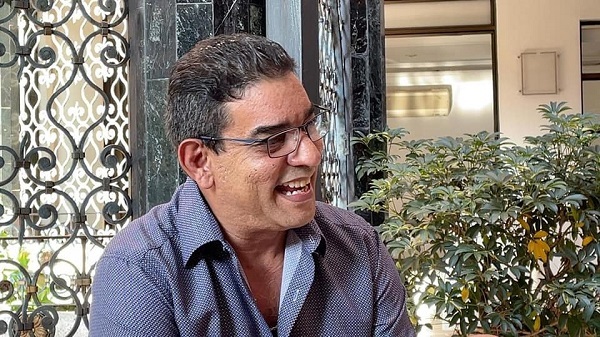
Tommy Olivencia Jr., son of maestro Tommy Olivencia

Planté bandera de nuevo

Eager to find his own way and make his own name in the industry, the artist made his debut with the recording ”Planté bandera de nuevo”, which was carried out in his native country and presents a total of nine tracks, some of them created by composer and percussionist Jerry Ferrao.  

A very important fact during this period is that the timbalero made his official debut for AJ Records, Inc. in the framework of the 40th anniversary of Tommy Olivencia Y Su Orquesta at the beginning of this millennium, making this event even more special.

It is also important to highlight that this colorful musical work included the participation of figures such as Luis ”Perico” Ortiz. Máximo Torres, Tito Rivera, Pedro Bermúdez and many others. All these big talents made it possible for Tommy Olivencia Jr.’s first step as an artist to be on the right foot.

After Tommy Olivencia’s death

Once the incomparable Tommy Olivencia passed away, his son took the lead on the  Primerísima Orchestra, which represented a great professional challenge for his career considering that many of his father’s hits are already salsa classics worldwide.
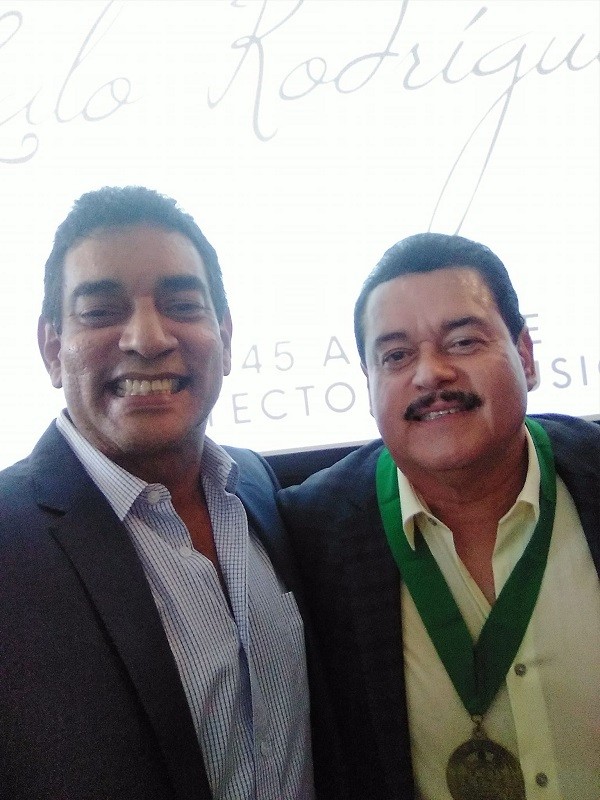
Tommy Olivencia Jr. next to Lalo Rodríguez

At the beginning, ”Tomito”, as he is also affectionately known, wanted to keep alive his father’s legacy with his most famous songs such as ”El Son Cubano”, ”Trucutú” or ”Doroteo”. However, there came a point where Olivencia and the rest of the members of La Primerísima had to get to work with new songs to join the previous hits.

When asked about these changes he had to make, he said that he has always worked on his father’s original repertoire, since the audience always asks for those songs in his performances. However, he says he is very happy to be able to contribute his grain of sand with the song ”Mi Querido Viejo”, which was dedicated to Tommy Olivencia senior and of which he is proud for the strng impact that it has had.

Something that made him very happy is that he was finally able to record his first video clip with the orchestra and other great artists such as Gilberto Santa Rosa, Lalo Rodriguez, Sammy Gonzalez, among others.

Although he feels quite pleased to be able to continue with the steps taken his father, he is very proud to offer completely new songs to join the already prolific repertoire of La Primerísima. Among the new songs are ”Un Legendario de Pueblo” and ”Evelio”.
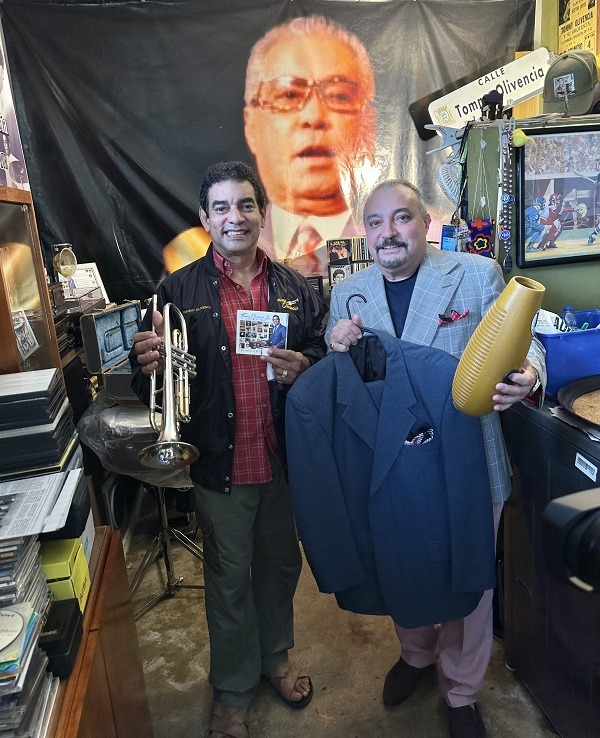
Tommy Olivencia Jr. with Johnny Cruz

Tommy Olivencia Jr. at the Spanish Harlem Salsa Museum

As well as a good number of other stars and their families, we were fortunate to enjoy the pleasant presence of Tommy Olivencia Jr. at the Spanish Harlem Salsa Museum, where he and the president of the institution, Johnny Cruz, had a nice chat and walk around the facilities of the place.

At these visits, it is very common for visitors to make donations to contribute to the extensive collection that the museum has to present and this was no exception. ”Tomito” donated a suit and the güiro of maestro Tommy Olivencia that whosoever visits the museum has the opportunity to appreciate some of the elements that his father used during his career.

From this space, we really thank his visit and his contributions and we wish him the greatest success in all the projects he undertakes both professionally and personally, especially what has to do with music.

Read also: Joe Bataan’s music remains in force


By Johnny Cruz, ISM Correspondent, New York, New York City


The legacy of Leopoldo Pineda, the ambassador of the trombone in La Maquinaria Fania All Stars

The Dominican trombonist was part of Las Estrellas de Fania and stood out for his virtuosity on his instrument, as commented by musicians Joe de Jesús and Willie Álvarez.

Leopoldo Pineda, “Palma Sola” was born on May 8, 1939 in a small batey called Palma Sola, in Barahona, southern province, Dominican Republic.

El legado de Leopoldo Pineda, el embajador del trombón en La Maquinaria Fania All Stars

He passed away on June 27, 2019 in New York City. Due to his solvency on the instrument, Leopoldo was a participant in hundreds of salsa recordings for more than three decades.

At 80 years of age, Leopoldo Pineda, the Dominican trombonist who earned the respect of his colleagues in the most courageous years of salsa, has passed away.

A case of diabetes had undermined his health in recent years and the fatal outcome came on Thursday, June 27 in New York City.

In recent years, Pineda had been retired from musical activity, due to health problems and diabetes.

Willie Álvarez y Leopoldo Pineda (Foto Willie Álvarez)

He began at a very young age to seek out musical instruments. In his hometown, Pineda would often visit a neighbor’s house to watch him rehearse different instruments.

There he began his first lessons, learning to play trumpet and tambora.

He studied music at school for compulsory education and there he developed certain tropical rhythms.

In Barahona, there was a music school where Leopoldo graduated and later, because of his talent, he was referred to the National Conservatory of Music in Santo Domingo.

As he grew in knowledge, musically speaking, he learned to play several instruments, among them, the Saxophone and the Trombone, the latter being his weapon of choice for the rest of his life.

Leopoldo Pineda
Leopoldo Pineda

In his native Barahona, he was known as “Chanchito”, but it was at the Conservatory where the nickname “Palma Sola” was born, identifying him to his classmates by the name of the town where he was born.

After participating in various groups in the Republic, Leopoldo went to New York City and there he started playing with Tito Rodriguez’s orchestra in the 60’s.

He also recorded with Los Cachimbimbitos and Los Cachimbales.

He also recorded with Ismael Rivera’s Los Cachimbos and was producer of one of Milly Quesada’s first albums.

Musician Jimmy Bosch used to include Leopoldo Pineda in the select group of trombonists from whom he learned. Willie Colón, el Malo del Bronx, had emotional words for don Leo. Indeed, the Dominican Pineda is part of the glorious history of the best salsa, the one that was born in the neighborhood and that has deeply penetrated in this part of South America.

Alfredo de la Fe posted on his Facebook account: “Leopoldo Pineda, great musician, we played together with Típica 73 and Fania All Stars.

Lepoldo Pineda Trombonita de la Típica 73 y Fania All Stars

Then he began to walk the best paths of Salsa, being part of orchestras such as Típica 73, Orquesta Harlow, Willie Colón, Fania All Stars, Sar All Stars, Jose Mangual Jr, La Conquistadora, Jose Alberto “El Canario”, Rubén Blades, Orlando Watussi, Laba Sosseh, Monguito El Único and Héctor Lavoe, among others.

Fania Records

Read Also: Orestes Vilató is one of the most influential figures in the world of Latin percussion.

Fausto Cuevas Y La Moderna in International Salsa Magazine

Who is Fausto Cuevas

Fausto Cuevas is a bandleader and percussionist from the state of Texas who is currently leading the orchestra Fausto Cuevas Y La Moderna, which has been playing in a large number of nightclubs located in the state of California, where Fausto currently resides.

For its part, Fausto Cuevas Y La Moderna is a salsa group whose purpose is to take the old Latin genres and provide a modern twist to them. While it is true that their main genre is and has been salsa, its members also experiment a lot with Cuban guaguancó, yambú, cumbia, son, cha cha chá, among others.

We are proud to have such an artist in our June edition and hope that this conversation will grace all our readers.

Fausto Cuevas next to a drum

Fausto’s beginnings in music

Fausto grew up in Brownsville, a village in Texas very close to the southern border with Matamoros, Tamaulipas, where his father is from. Due to this territorial proximity to Mexico, the artist was always exposed to ranchera instruments and, in particular, drums. The latter would be very important in what would become his professional future.

At the age of 11, he entered the public school system and was assigned to play a snare drum in a symphonic style. It can be said that this is when his fascination for this type of instrument began and continues till this very day.

In fact, Fausto claimed to have not been interested in guitar, piano or bass. He was always very clear that his aspirations were focused on drums, and percussion.

These first steps led him to specialize in playing American music, rock and jazz. Until then, he had not had any contact with Latin or Afro-Cuban music, but that would eventually change.

Moving from Boston to California

Fausto tells us that his biggest dream was always to go to New York, since the music scene was vibrant there at that time, but he could never do it due to some personal issues he encountered, such as the birth of his daughter. This is what made him move to Los Angeles and give up on that dream.

Fausto Cuevas performing on stage

When we asked him if he still wanted to live in ”The Big Apple”, he told us that he had already found his place in California and his career had already taken root in this part of the United States.

Fausto Cuevas Y La Moderna

Fausto Cuevas Y La Moderna was created in a very particular way. One day, Fausto received a call from the department at Berkeley that does concerts for the Boston community and was asked if he had a salsa band to play at the Tito Puente Latin Music Series. He said yes to everything, although he had nothing prepared at the time.

What he did have was a group of friends who were related to music and happened to live in Boston. They were all so well-suited and had so many plans that things worked out in an extraordinary way. That was 25 years ago and they have stayed together to this day despite the obstacles.

Relationships with other artists and genres

Fausto Cuevas Y La Moderna have performed and toured with stars such as Marc Anthony, Jose Alberto ”El Canario”, Celia Cruz, Julio Iglesias, Santana, Tito Nieves, Tito Puente Jr., Stavie Wonder Jennifer Lopez, Britney Spears, among others.

Fausto Cuevas and Tito Puente Jr.

One thing that Fausto feels he has learned from these artists is to be identifiable as a Latino in American genres. He says it is very interesting to create things, always identifying with Latin rhythms when playing soul, R&B or pop.

Having had so much contact with all these musical luminaries has helped him to rediscover himself and be much more creative when mixing Latin and American elements. In this sense, knowing the roots of the genres he plays has helped him a lot to know how to link both worlds.

It is precisely the knowledge of these roots which has made Fausto Y la Moderna stand out among other Californian groups.

Future projects

As to future projects, Fausto Y la Moderna plans to release a few singles this year and record the rest of the album in order to release the whole album in 2024.

He also pointed out that he is about to release an album with Gonzalo Grau Y La Clave Secreta, another group in which he is also involved, so he invites everyone to listen to his music through networks and digital platforms.

Read also: Great conversation with New York singer Ralphy Ray

Allyson Briggs ”La Rubia de La Salsa”

A little of her story

Allyson Briggs ”La Rubia de La Salsa” is a bandleader and singer who has earned a lot of recognition in recent years. Currently, this talented woman leads the Fleur Seule orchestra, whose main musical genres are salsa, jazz, swing and ballroom dancing.

Also known as ”The Glamorous Girl of Jazz” is able to sing in seven different languages and several of her covers have been written by artists such as Edith Piaf, Ella Fitzgerald, Louis Armstrong, Frank Sinatra, Marc Anthony, Héctor Lavoe, among others.

We feel very fortunate to have been able to interview Allyson, who has kindly agreed to tell us about her life and career so that readers of International Salsa Magazine can get to know her better.

Allyson Briggs ''La Rubia de La Salsa'' performing on stage
Allyson Briggs ”La Rubia de La Salsa” performing on stage

How she became interested in music

When we hit the subject of her childhood, Allyson told us that her parents always played classical music. ”We listened to a lot of the classics, big bands, swing, blues, rock and roll, jazz, opera, among other genres,” she said. That’s how her love for these styles began, but the case of Latin music was different.

Her taste for Latin music is because she is married to a Puerto Rican, so she feels her husband and her in-laws have influenced her to end up falling in love with salsa, Puerto Rican music and its culture in general.

This inclusion of Latin rhythms has made her Fleur Seule orchestra collect a lot of fans who simply want to dance to these genres and, some of them, remember their roots.

How she learned to sing in Spanish

Long before she learned Spanish, Allyson began to learn German, which she considers her second language. This interest came from the German roots in her family, whose past always seemed very interesting to her. The same happened with French, as the artist also has French ancestors.

In the case of Spanish, she had some kind of contact with the language at school, but its actual use began when she got married and had to communicate in that way at home. In addition to that, Allyson has a lot of friends in New York, who have helped her a lot to understand certain things about the language.

Allyson learned Spanish thanks to her Puerto Rican husband

Hispanic artists she likes the most are Héctor Lavoe, Rubén Blades, Celia Cruz and Javier Solis. As for covers, she commented that she always tries very hard to understand what a composer wants to say with his lyrics in order to make the interpretation as faithful as possible.

Why is she called ”La Rubia de La Salsa”?

The name ”La Rubia de La Salsa” was not invented by Allyson herself, but by some concertgoers when she sang at La Marqueta, Spanish Harlem. The point is that no one could pronounce Fleur Seule, so they opted for something that everyone could pronounce with no problem.

Upon hearing it for the first time, she realized that this nickname captured her essence perfectly due to her physique, her costumes and the type of music she makes. For the same reason, she is still called by that name to this day.

Fleur Seule

Allyson revealed that she chose the name ”Fleur Seule” for her orchestra in honor of the French language. In addition to that, it sounds unique and elegant to anyone who hears it.

As for the beginning of her orchestra, she told that she met a guitarist with whom she started doing some musical projects. This same person provided her with certain recommendations in terms of singing and even language, which were taken into account until she was able to assemble a complete group.

She chose the name ''Fleur Seule'' for her orchestra because it sounds elegant and unique
She chose the name ”Fleur Seule” for her orchestra because it sounds elegant and unique

Activity during and after the pandemic

Allyson told us that the pandemic gave her the opportunity to meet multiple people through social networks due to online concerts she offered twice a week. When things began to return to normal, there were many fans who told her that they got to know her music through digital platforms like Instagram and Facebook.

At the moment, she has some performances planned in Puerto Rico and the state of Florida after the success he had the last time she went to those places. He also mentioned that she would like to go to Colombia and Japan, as both countries are big salsa fans.

Read also: Producer, film director and actor Jess Thomas

Caroline Cohen

Latin America / Buenos Aires / Argentina

Carolina Cohen, Singer and percussionist

Carolina Cohen
Carolina Cohen

Percussionist and singer Carolina Cohen was born on November 8, 1982 in Buenos Aires, Argentina.

He began his studies in the year 2000 and traveled to Cuba, Peru and New York to perfect himself.

Throughout his career he has accompanied great artists such as Mayito Rivera, Eva Ayllón, Luis Salinas, Nahuel Peennisi, Bomba de Tiempo and prestigious artists at the Teatro Colón in the city of Buenos Aires.

Cohen has participated in highly relevant international festivals; Jazz Festival in Peru and Uruguay, International Cajon Festival in Peru, International Percussion Festivals in Argentina and the Great National Folklore Festival of Cosquín.

Carolina Cohen and her drums

Carolina is frequently invited to give percussion master classes, workshops and clinics at universities, colleges and schools in countries such as Colombia, Peru, Chile, Uruguay and the United States.

In 2016, she was invited to appear in a video on CongaHead, a popular YouTube with over 100,000 subscribers.

He currently directs his group “Caro Cohen Cuarteto”, created in 2017.

In the short period of existence, this group was already the opening act for Grupo Pedrito Martínez at Trastienda Club and accompanied Maestro Tito Manrique from Peru.

Highly in demand on recording sessions, she has recorded with many different artists.

Carolina Cohen on stage

Carolina has been a member of the “Grupo De Tal Palo de Música Latinoamericana” for eleven years with two albums released, Música Latinoamericana and La Luna Está Roja.

She is currently an exclusive artist for Gon Bops Percussion in Los Angeles-California.

  • « Go to Previous Page
  • Page 1
  • Interim pages omitted …
  • Page 61
  • Page 62
  • Page 63
  • Page 64
  • Page 65
  • Interim pages omitted …
  • Page 116
  • Go to Next Page »

International Salsa Magazine (ISM) is a monthly publication about Salsa activities around the world, that has been publishing since 2007. It is a world network of volunteers coordinated by ISM Magazine. We are working to strengthen all the events by working together.