• Skip to primary navigation
  • Skip to main content

International Salsa Magazine

  • HOME
  • Previous editions
    • 2026
      • ISM / March 2026
      • ISM / February 2026
      • ISM / January 2026
    • 2025
      • ISM / December 2025
      • ISM / November 2025
      • ISM / October 2025
      • ISM / September 2025
      • ISM / August 2025
      • ISM / July 2025
      • ISM / June 2025
      • ISM / May2025
      • ISM / April 2025
      • ISM / March 2025
      • ISM / February 2025
      • ISM / January 2025
    • 2024
      • ISM / December 2024
      • ISM / November 2024
      • ISM / October 2024
      • ISM / September 2024
      • ISM / August 2024
      • ISM / July 2024
      • ISM / June 2024
      • ISM / May 2024
      • ISM / April 2024
      • ISM / March 2024
      • ISM / February 2024
      • ISM / January 2024
    • 2023
      • ISM / December 2023
      • ISM / November 2023
      • ISM / October 2023
      • ISM – September 2023
      • ISM – August 2023
      • ISM July 2023
      • ISM Edition June 2023
      • ISM – May 2023
      • ISM April 2023
      • ISM March 2023
      • ISM February 2023
      • ISM January 2023
    • 2022
      • ISM December 2022
      • ISM November 2022
      • ISM October 2022
      • ISM September 2022
      • ISM August 2022
      • ISM July 2022
      • ISM June 2022
      • ISM May 2022
      • ISM February 2022
      • ISM January 2022
    • 2021
      • ISM December 2021
      • ISM November 2021
      • ISM October – 2021
      • ISM September 2021
      • ISM August 2021
      • ISM July 2021
      • ISM May 2021
      • ISM April 2021
      • ISM June 2021
      • ISM March 2021
      • ISM February 2021
      • ISM January 2021
    • 2020
      • ISM December 2020
      • ISM November 2020
      • ISM October 2020
      • ISM September 2020
      • ISM August 2020
      • ISM July 2020
      • ISM June 2020
      • ISM May 2020
      • ISM April 2020
      • ISM March 2020
      • ISM February 2020
      • ISM January 2020
    • 2019
      • ISM December 2019
      • ISM November 2019
      • ISM October 2019
      • ISM Septembre 2019
      • ISM August 2019
      • ISM July 2019
      • ISM June 2019
  • Spanish
  • Download Salsa App
    • Android
    • Apple

Search Results for: New York

Joe Bataan’s music remains in force

Joe Bataan in the Spaha Salsa Gallery

There are many artists of international stature have been in the Salsa Museum and left some valuable object in our facilities, and this month, it was the turn of American singer and musician Joe Bataan, who was kind enough to share with producer Johnny Cruz and his show partner Boris Calderón. 

Joe Bataan and Johnny Cruz in the Spaha Salsa Gallery

In one of the videos taken during the visit, the artist mentioned that the place was awesome and had expanded so much that another building would have to be made soon for so many valuable acquisitions. Let’s remember that both the artists and their families have been donating all kinds of garments, instruments and things related to their careers to be exhibited in the museum with the purpose of showing the public this valuable part of our culture.

After such an extraordinary exchange, we believe it believe to talk a little about the story of this talented man and how he has reaped all the success obtained at the time.

Story of Joe Battan

Bataan Nitollano is a New York singer of African-American and Filipino origin from his parents, but he grew up in the neighborhood of Harlem, where he got in trouble with the law and was trained in music.

Joe Bataan signing a jacket in the Spaha Salsa Gallery

While he spent a short time in prison, he studied music, and trained in playing the piano, something that would be extremely important for his artistic career. Once he was released, he formally began his career as a singer and formed his first group, which he named ”Joe Bataan and the Latin Swingers”. At that time, the young man was heavily influenced by two genres that were very fashionable at the time, which are boogaloo and Afro-American Doo-wop.

Although Bataan was not the first to enter the aforementioned genres, his very particular talent made him worthy of the attention of the newly created record label Fania Records, which signed the artist in 1966 and released his first single ”Gypsy Woman” the following year. The song ended up being a huge hit in the Latin community in New York City and laid the foundation for what would end up becoming what we know today as Latin Soul.

During the time Joe worked with Fania, he recorded about eight albums, which became a true sensation due to their mix of Doo-wop in Latin rhythms with English soul, which was quite new at the time. Everything was going well until he had some frictions with the label manager Jerry Masucci concerning the economic issue, so the singer ended up leaving the company to launch his own label Ghetto Records.

The artist's signature
The artist’s signature

In the 1980s, he spent a long time away from music to devote himself to teaching at the same center where he was held and experienced some health declines that kept him silent for quite some time until he ws back in play in 2005, when he released his album ”Call My Name” whose rhythms were based on Latin soul and got many positive reviews. This album proved that Bataan was still a talented artist even though his genres are no longer the most popular.

Today, he is a person with extensive experience in the world of music who is always willing to give his everything to any fan who wants to listen to him. The Spaha Salsa Gallery team is pleased to have had his presence in recent days, so we hope that meetings like this one can be repeated.

Read also: Life and career of Ernie Acevedo

Contact: Johnny Cruz. 917-747-8505. [email protected].


By Johnny Cruz, ISM Correspondent, New York, New York City


Quinteto D’Amore

Latin America / Cuba / Havana

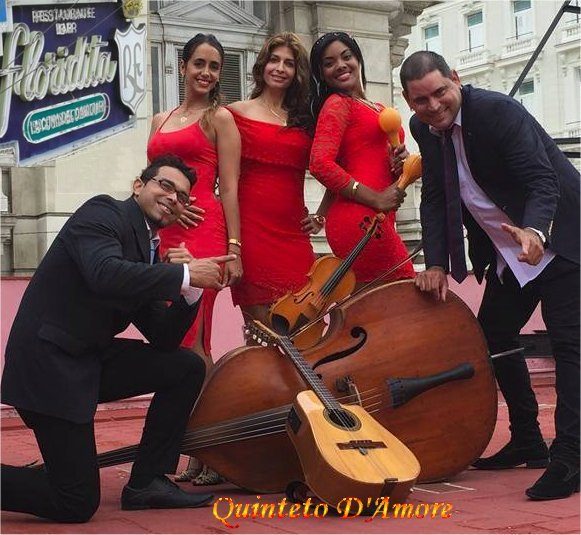
Quinteto D’Amore, cultivating traditional Cuban music throughout the world

Quinteto D'Amore - floridita
Quinteto D’Amore – floridita

Quinteto D’Amore was founded in 2000 with an acoustic format, cultivating traditional Cuban music, although its repertoire includes international themes, it has made various national and international presentations.

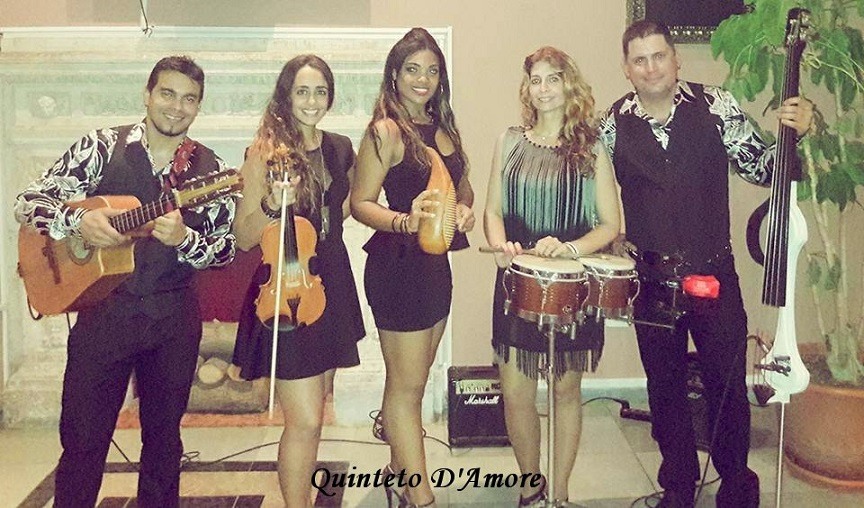
In all these years different musicians have integrated the group, currently two years ago the group has been renewed and is composed of Bass, Tres, Violin, bongo, minor percussion and soloist.

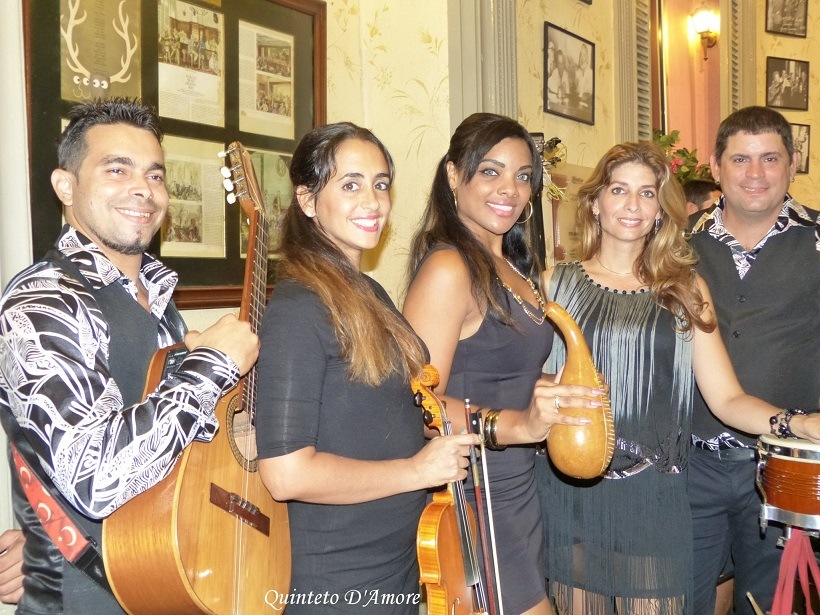
Quinteto D'Amore & integrants
Quinteto D’Amore & integrants

They are characterized by combining music, voices and choreography in some of their songs, filling those who can enjoy their show with joy and energy.

Yasney (violin): Graduated from the Higher Institute of Art in the specialty of Violin (ISA). Member of the UNEAC, he was a member of the National Symphony Orchestra of Cuba, has participated in record recordings of outstanding groups and soundtracks, as well as in the CD “Mi Querido Pablo II” with Pablo Milanés and his guests: Milton Nacimiento, Lucecita Benítez,

Fito Páez, Joaquín Sabina, Alberto Cortes, and in the concert offered at the National Auditorium of Mexico.

He has made numerous artistic tours and concerts with the band “Mambo Así”, the group “Sol y Arena”, “Piel Morena” among others in various countries such as: Moscow, Spain, Thailand, Hong Kong, Isla San Martín and Guadalupe, Italy. , Angola. yasney joined D’Amore in May 2014.

Quinteto D'Amore & integrants - Photos
Quinteto D’Amore & integrants – Photos

Yonel (three/four Cuban guitar) I started in music at the age of 6 when I learned to play the guitar since then I sang some songs and accompanied others like my brother. At the age of 7 I started at the art school of Sgt.

From Cuba to study the violin for more or less three years, over time I got to know other instruments such as the piano, percussion until I got to the bass with which I spent several years with the group Son Chévere de Matanzas.

Then I came to Havana and started playing the tres until I transformed it into a CUATRO, adding a couple more strings and it is the instrument I currently work with in Quinteto D’Amore.

Quinteto D'Amore & integrants
Quinteto D’Amore & integrants

Evelyn (soloist), began studying music when she was little, receiving piano and music theory lessons at age 11, she received her first prize as a solo singer awarded by the pioneer organization, she also received dance classes at the National Ballet School of the Havana and contemporary dance workshops, integrating several dance companies and performing in the 2nd Tropicana Show. She is a mid-level micro operator graduate. I study at the school of art instructors.

As a singer, he began his professional career integrating several groups such as: Lady Salsa Mix, Cuban Salsa Orchestra, Las Canelas, Ketlman Ferrer and his orchestra, etc. She is currently the solo singer of the Quinteto D’Amore.

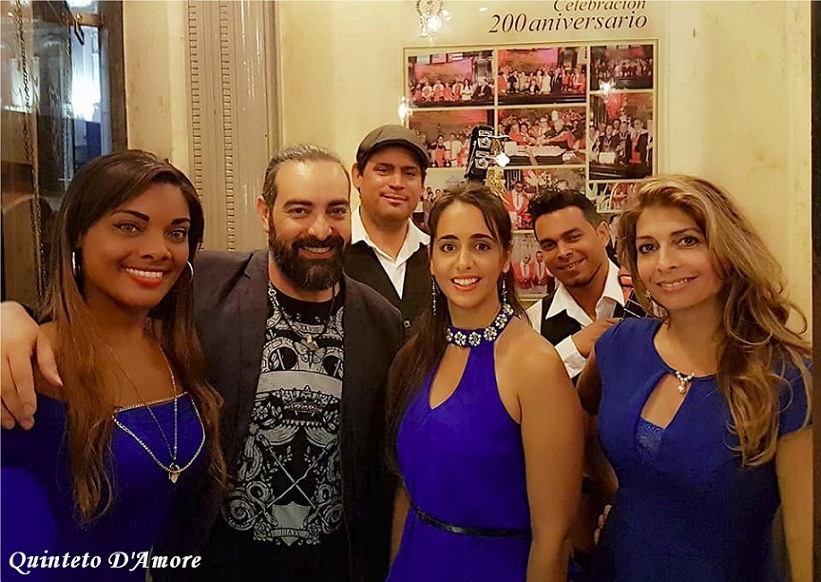
Photo of Quinteto D'Amore & integrants
Photo of Quinteto D’Amore & integrants

Orley (Bass): He studied Bass and Double Bass, he began his musical career in Ciego de Ávila as part of different groups of small and large format such as: Orquesta Eclipse, Conjunto Campesino “Campo Lindo”, among others, later he joined groups in Havana as the Tradition Septet, the group of the singer Leyanis López traveling to France (Paris) under the record label “Luz Africa”, from 2007 to 2011 in the Maykel Blanco Orchestra and its Salsa Mayor making several international tours by Italy, Sweden, Denmark, Germany, Poland, Switzerland, Belgium and Peru, thus participating in the recording of their 2 albums.

From 2011 to 2013 he was a member of the groups “Amor y el Son”, Pepitín y su CumBachá”, and Habana Midic, performing in Egypt, Jordan, Tunisia and Lebanon. Orey joined D’Amore in May 2014.

Daymé (Director, tres and bongó): Graduated in Telecommunications and Electronics Engineering at ISPJAE, and in intermediate level in music in the specialty of “Tres”, she belonged to the movement of amateur artists for 14 years, participating in international festivals, more Later as a professional, he joined several small-format groups performing in Cuba at the “Dos Gardenias” complex, La Bodeguita del Medio, at the Floridita Restaurant and in various hotels, abroad he has fulfilled various contracts in Jamaica, Qatar, United Arab Emirates (Abu Dhabi, Dubai and Al Ain), Jordan, Egypt, Japan, Spain, Turkey and China, she is currently the bongo player and director of the DÁmore Quintet.

Maria Carla (2nd violin) She began her music studies at the “Alejandro García Caturla Conservatory” where she reached the level of Junior High School and the 7th year of violin.

In 2006 he entered the “Amadeo Roldán Conservatory” to continue his studies up to the upper middle level of violin. During his student stage he was part of the orchestras of the respective schools participating in meetings, competitions and concerts both as an instrumentalist and as a vocalist in choirs.

Upon graduation, he taught in the province of Pinar del Río and for two years taught at the Vocational School of Art in the city of Pinar del Río.

Since 2010 he has been part of the National Symphony Orchestra of Cuba, collaborating simultaneously with various groups of both classical music and popular music with groups such as “La Camerata del Son”, “Ensemble Alternativo”, “Quinteto D Amore”, “Orquesta Panorama”, “Quinteto Doble Sabor”.

María Carla also participated in several events and festivals: National Meeting of Symphony Orchestras, International Fair

Cubadisco, Encounter of Choirs, -Festival América Canta, Festival of Contemporary Music, Festival of Young Pianists,

Danzón Festival, International Book Fair of Havana as well as in various recordings of phonograms with artists such as José María and Sergio Vitier, Toni Pinelli, Rafael Guedes, Aldo López-Gavilán.

He has also accompanied renowned soloists such as pianists Lang Lang, Chucho Valdés, Frank Fernández, Aldo López Gavilán, singer Omara Portuondo, violinists Ryu Goto, Francesco Manara, clarinetist Keisuke Wakao, guitarist Joaquín Clerch.

I work under the baton of directors such as Yoshikazu Fukumura, Marin Alsop, Francesco Belli.

Photo of Quinteto D'Amore & integrants
Photo of Quinteto D’Amore & integrants

Quintet D’Amore Repertoire

Latin/English Recent Hits

Havana – Camila Cabello

Someone Like You ‐ Adele

Don’t You Remember ‐ Adele

Unbreak My Heart ‐ Tony Braxton

Rehab ‐ Amy Winehouse

Whenever Whatever ‐ Shakira

Dancing – Enrique Iglesias,

Lambada‐Kapma,

Macarena ‐ Those of the River,

Mambo No 5 ‐ Lou Bega,

Nossa Nossa ‐ Miechl Telo

I Have Your Love ‐ Si7e

I just want to give you a kiss – Prince Royce

Despacito – Luis Fonsi & Daddy Yankee

English Pop, Rock, Blues, Jazz, R&B

Stand By Me ‐ Ben E. King

Yesterday ‐ The Beatles

Only You (And You Alone) ‐ The Platters

New York New York ‐ Frank Sinatra, Liza Minelli

Misty ‐ Errol Garner & Johnny Burke / Johnny Mathis

Girl From Ipanema ‐ Pery Ribeiro, Frank Sinatra

Flying To The Moon ‐ Frank Sinatra, Doris Day, Tony Bennett, Diana Krall

Summertime ‐ Ella Fitzgerald, Janis Joplin, Billie Holiday …

Autumn Leaves ‐ Nat King Cole, Andrea Bocleli, Eric Clapton …

My Way – Jacques Revaux, Paul Anka / Claude Francois, Frank Sinatra, Elvis Presley

I Just Called To Say I Love You ‐ Stevie Wonder

Somewhere Over the Rainbown ‐ Harold Arlen and Yip Harburg / Judy Garland, Israel

For Ever And Ever ‐ Demis Roussos

Hotel California – Eagles …

Cuban/Latin Salsa, Son, Rumba, Cumbia, Bolero

The Modern Yerbero ‐ Celia Cruz,

Quimbara ‐ Celia Cruz

Life is a Carnival – Celia Cruz

Idyll ‐ Wilie Colon

El Cartero ‐ Buena Vista Social Club

Tula Room ‐ Buena Vista Social Club

Discreet Kisses ‐ Compay Segundo

Chan chan ‐ Compay Segundo

Goodbye, Commander ‐ Carlos Puebla

Husbands Majaderos ‐ Perdro Luis Ferrer

Yolanda ‐ Pablo Milanes

I’ll be back – Diego Verdaguer

Pile of Stars ‐ Polo Montañez

Cariñito ‐ The Children of the Sun

Hey How It Goes ‐ Tito Puente / Carlos Santana

Nel blu dipinto di blu (Volare) ‐ Dean Martin …

Cocoon of Aleli ‐ Catean Veloso

Dos Gardenias ‐ Daniel Santos, Buena Vista Social Club

The Pale Flower ‐ Polo Montanez / Marc Anthony

Perfidia ‐ Alberto Domínguez / Los Panchos, Perez Prado, Nat King Cole, Ben E. King,

Luis Miguel

Guantanamera ‐ Celia Cruz, Compay Segundo, Tito Puente, Joan Baez

Black Tears ‐ Trio Matamorros, Omara Portuondo, Celia Cruz, Compay

Segundo/Cesaria Evora

Grinding Coffee ‐ Jose Manzo Perroni / Mario Suárez, Xiomara Alfaro, Ricardo

Montaner

El Manisero ‐ Rita Montaner, Antonio Machin, Mistinguett, Louis Armstrong

Story of a love ‐ Carlos Eleta Almaran, Guadalupe Pineda

Besame Mucho ‐ Consuelo Velasquez / Los Panchos, Pedro Infante, Louis Arnstrong,

Andrea Bocelli

Maybe Maybe Maybe ‐ Osvaldo Farres / Bobby Capo, Celia Cruz, Nat King Cole

The cumbanchero ‐ Rafael Hernandez / Tito Puente

Que Sera, Sera ‐ Jay Livingston and Ray Evans / Connie Francis, Natalie Cole

Pink Cherry ‐ Los Tecolines

Photo of Quinteto D'Amore & integrants
Photo of Quinteto D’Amore & integrants

www.quintetodamore.com

www.facebook.com/QuintetoDAmore

Youtube Quinteto D’Amore

Contact us at [email protected]


Néstor Galan “El Buho” – SAFERRRROOOO!!!

Latin America / Puerto Rico / San Juan

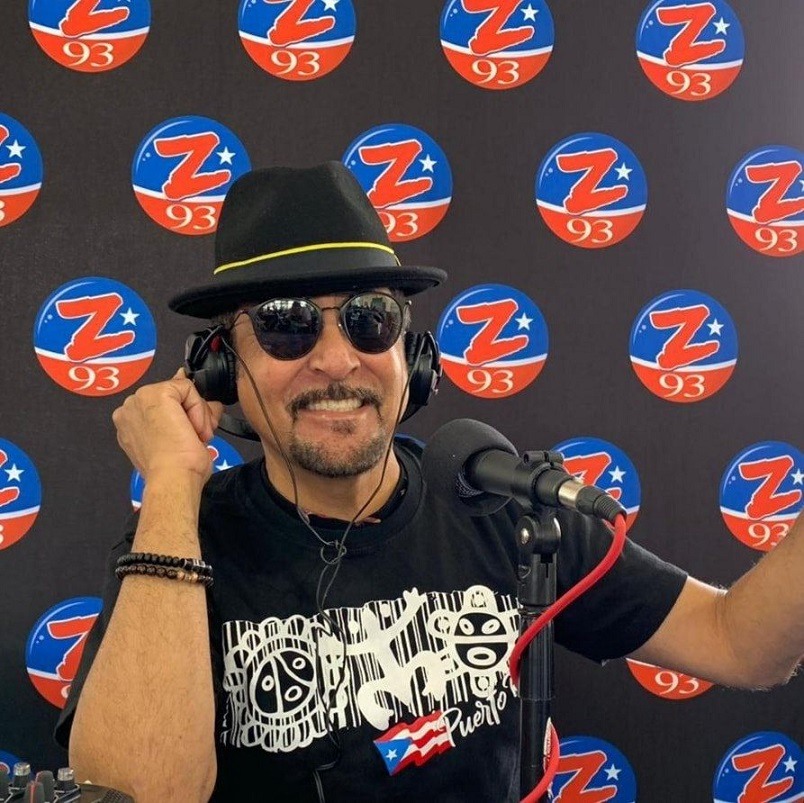
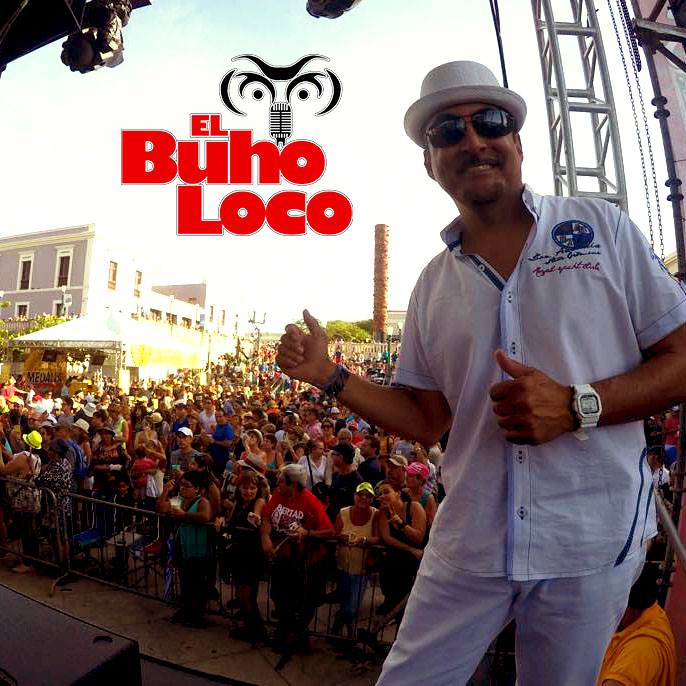
Néstor Rodríguez Búonomo better known as Néstor Galán “El Búho Loco” was born on January 6, 1958, in the state of New York.

Néstor Galan "El Buho"
Néstor Galan “El Buho”

His parents are Mrs. Eufemia Búonomo and Mr. Julio Rodríguez. He is the eldest of three (3) brothers and father of Julixa Rodríguez Ramírez, who they have heard on the radio with his father.

At the early age of five (5) years, he moved with his parents to Cayey, Puerto Rico.

He studied at Benigno Carrión Elementary School, Benigno F. García Middle School, where he studied music and was part of the School Band as a trumpeter.

Néstor Galan "El Buho Loco"
Néstor Galan “El Buho Loco”

Then he goes to the Miguel Meléndez Muñoz High School and the opportunity arises to be part of one of the most important groups of popular music; The Student Tuna of Cayey, in which she remained for five years as a singer, participating in 4 long-playing albums and in trips abroad.

He was part of the dramatic art group participating in several plays as an actor.

Upon graduating in 1976, he went on to study at the Rio Piedras Commercial Technical Institute and then at the Universidad del Sagrado Corazón.

In 1979 the Super 97 radio station specialized in the salsa genre began to work at Radio Musical under the name of Néstor Galán, they called him “Galán” because he always liked to dress well. This is his first experience as a broadcaster.

Néstor Galan
Néstor Galan

In 1981 he went to work at the radio station Z-93 as a technician, operator and in its promotions.

In 1982 he worked as a production assistant on the program “Viva la Salsa” (WAPA-TV) together with Marianito Artau.

In 1983 he began as a night time announcer in this important radio station and that is when the announcers decide to give themselves nicknames after animals, being in the night time they decide to call him “El Búho”.

Logo de Néstor Galan "El Buho Loco"
Logo de Néstor Galan “El Buho Loco”

In 1985 he began to work during the day and since the owls do not go out during the day, the name “El Búho Loco” emerged. He has worked in all the National Salsa days.

Facebook: https://www.facebook.com/NestorGalanZ93/


Good initiatives must be shared!

North America - United States - New York

We were taking the Salsa exhibition to Puerto Rico for the I Encuentro de Coleccionistas de Salsa, we made an exhibition of the clothing, records and instruments used by the Fania All Star orchestra, Tito Puente, Héctor Lavoe, Adalberto Santiago, the Gran Combo and others. For the first time, the last “tuxedo” that Tito Puente used in his participation with the Orquesta Sinfónica de Puerto Rico was exhibited.

Spanish Harlem Salsa Music Gallery, offered an exhibition and Master Class on the history of Salsa at the Escuela Especializada en Música Jesús T. Piñero in Cidra, Puerto Rico. We transported ourselves to Puerto Rico in search of an opportunity to publicize the Salsa Museum-Gallery in New York.

This is part of the efforts being made for the participation and dedication that is made to the people of Cidra in the Desfile Nacional Puertorriqueño 2020 and that is locally coordinated by the Patronato Cidreño along with other civic and professional organizations.

We were able to benefit hundreds of students at this school who are precisely focused on music. The knowledge offered in the three conferences and being able to closely observe the exhibition helped to foster the enthusiasm of the students who make up the campus, unique in the mountains of Puerto Rico, dedicated to the creation of good musicians and knowledgeable in musical art.

We are dedicated to enhancing Latin music and offering spaces focused on arts education, accessible and friendly to the community as a strategic partner.

I thank valuable people such as Laura Torres, Silkia Vázquez, Wilson Nazario and Wilfrido Torres “Puruco” for all the attention and teamwork that we were able to develop during our visit. I cannot stop also thanking my assistant in Puerto Rico, Carmen Cruz; and to Joseph Cruz for his magnificent and beautiful work with me during this pleasant experience.

I also take advantage of this space in International Salsa Magazine because I want to tell you about an artist and a great friend who is doing his best for music and Salsa. Without a doubt, Yova Rodríguez is a long-standing professional who has developed countless projects and initiatives to support those who need it most. With his music, his work and his human quality, he has reached many hearts from New York.


Geovanni “Yova” Rodríguez Ruiz, born in Puerto Rico, had a musical inspiration since he was a child, his uncle Antonio “Toño” Ruiz – his mother’s uncle who played the cuatro – was his first music teacher (melody) and his uncle José Antonio “Pipo” Ruiz Crespo -mama’s younger brother- taught him how to sing aguinaldos (lyrics); and with this they formed the solid foundations that encouraged little Yova to prepare himself accordingly for his foray into the musical world.

The celebration of the Promesa de Reyes, a celebration in which he participated with his mother at his short seven years, leads him to worry about creating and recreating aguinaldos to be interpreted each year, which in some way becomes the seed of composer that we know today.

At the age of 14, he attended the Escuela Libre de Música Ernesto Ramos Antonini in Mayagüez, hand in hand with piano teacher César Toro, rising as vocal leader of the Orchestra after a year.

Years later he gave himself the task of forming his own musical concept, and thus Sakao Aká was born. This orchestra was in charge of accompanying singers such as Camilo Azuquita, Ray de la Paz, Pupy Cantor and Herman Olivera in their presentations in Puerto Rico; and the cover letter for some of these singers to integrate Yova as a chorus girl in their presentations in various countries in Central and South America.


At the end of the 90s, on a trip to Cuba, he was impacted by the music of Fernando Borrego Linares, better known as Polo Montañez, to the point that, some years later upon learning of his death, he had the idea of ​​paying tribute to him, his musical reference, thus giving birth to the idea for her debut feature Homenaje a Polo Montañez (2005), a production of 10 songs by Montañez, and covered by Yova Rodríguez with the participation of renowned musicians from the patio such as Herman Olivera, Héctor “Pichie ”Pérez, Papo Lucca, Edwin“ Caneca ”Rosas, Edwin Colón Zayas, among others.

In 2008, like many of her compatriots, Yova prepares her luggage and heads to the southern United States, where she stays for two years and then moves to New York, a city that has become her center of operations and from where He has extended his working ties as a composer and where he records his next two productions.

The album Letras, canciones y sueños, musical work of 8 songs all written by Yova, comes to light after some years of having published his first production and of having worked silently composing and waiting for his opportunity. This possibility is materialized in 2013.

Already in 2015, the album Mi musa en las voces de mis amigos is released.

Salsa with Yova Rodriguez

Recently, Yova Rodríguez has created more than 420 songs, and many of them have been duly registered with the American Society of Composers, Authors and Editors (ASCAP) under the registry “El Negrito De Delia Music” . “Exceso de amor” is the first composition he has interpreted and recorded; like the song “No me odies”, it is the first recording of a song by him made by a third party.

Now they are going to hear more from Yova, as some productions that will include her compositions are in the process of recording / publishing. Attentive to the upcoming releases of the young Puerto Rican percussionist José Jomar Marcano, the master trumpeter Luis González, the young trombonist, arranger musician and also singer Leo Morales; the renowned DJ Andy Rodríguez, better known as DJ ANDY and the Venezuelan sonero Marcial Isturiz .

As always, remember that Spanish Harlem Salsa Gallery is in 1708 Lexington ave New York N.Y. 10029. Open free to the public all Thursdays & Fridays from 4 to 7 pm and Saturdays from 1 to 8 pm. Check the updates in our website: spahasalsagallery.com.

Also, The Johnny Cruz Show, the # 1 Salsa Show on television on all 5 Boroughs of New York on CH67. Saturdays from 3:30 to 4:30 pm.

Contact: Johnny Cruz. 917-747-8505. [email protected]

By Johnny Cruz, ISM Correspondent, New York, New York


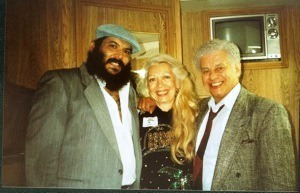
“Tito Puente: When the drums are dreaming” A biography of the King of Latin Percussion by Josephine Powell

North America – USA –CaliTifornia

This month we are sure that you will have time to enjoy an excellent reading at home. So we recommend this book by Josephine Powell. An interesting biography about the legendary Tito Puente, that takes us on a journey through the more than 60 years in which he performed.

Further the life of Tito Puente, you can know his insight into the Latin music industry. With many anecdotes of his encounters, racial discrimination while touring and how that impacted his relationship with other band members. There are also numerous insights into his personality, his temperament, and the many obstacles he had to overcome to achieve legendary status.

Josephine Powell’s book on Tito Puente and his contributions to Latin music and dance is a treasure trove of people, places, facts and history. Because of the author’s place in the history of Latin dance, she takes the reader with her through that fascinating maze of how artists like Puente changed the exposure and tastes of the American public and the world.

The Latin Ballroom world today reflects how we adore – and then neglect and forgets – the people who made us who we are. She mentioned many fascinating dance-related characters in this story that takes place in New York, Los Angeles, Miami, the Catskills and Havana.

It is also a much-needed history of great nightclubs and ballrooms, which are only dim memories for the young – but in their time, were the breeding grounds of Latin music and dance. Tito Puente’s percussion and passion are finally brought to life in a fascinating book.

To remember Tito Puente’s career as accurately as Josephine Powell has done makes this biography a worthwhile read. Tito Puente the man and Tito Puente the musician are blended into the tempo of the times during which the musical man lived. For young musicians seeking success Josephine Powell’s well-written commentary provides a glimpse of what can lie ahead in one’s career; so do read Powell’s take on Tito Puente’s life and perhaps capture a taste of how you too can climb the charts with a dash of spice in your style.

With over 100 albums, several Grammy nominations, 7 Grammys and posthumously awarded The Grammy Lifetime Achievement Award in 2003, his footprint in the world of music will forever be the standard of excellence that others will look to emulate.

Josephine Powell took on the monumental task of writing about his life, the forward was written by Tito Puente 2 months before he died.

Because of their lifelong friendship of many decades, Josephine was the one person who could create this book. Her talent and passion will pulled this off to perfection. He was a man who brought his music to the world, and put the Mambo on the map.

This book never could have been written without her dedication and perseverance and the personal moments she shares. From the very first chapter, the quality of her writing can be seen as she starts with the moments leading up to his death and continues for 16 more, giving you the history of Latin music from its inception to the music of today. Throughout her many archives of pictures from her private collection, your eyes will wide with wonder.

Josie Powell traces the evolution of Afro-Cuban, Puerto Rican and jazz forms from their generally recognized origins through the end of the twentieth century, focusing on Puente’s interactions with professional allies and constant rivals.

Powell documents musical events as an aficionado of the Latin genres, almost religiously avoiding disclosure of Puente’s family life. Those not yet born during the Big Band decades or Mambo mania can imagine the atmosphere from descriptive passages of Manhattan ballrooms, Havana dance halls, LA nightclubs.

About Tito Puente

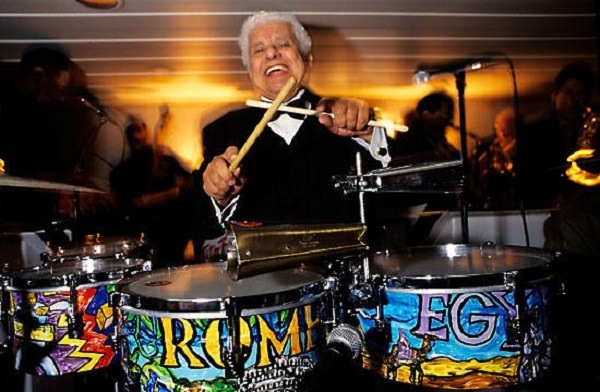
Ernesto “Tito” Puente was born in 1923 in Spanish Harlem and grew up with the advent of radio and American swing bands. At 10 years old he aspired to be a dancer, like Fred Astaire. An ankle injury gave him the opportunity to explore his talent as a musician. At fourteen he won the coveted Benny Goodman, Gene Krupa drum contest. Tito became a master percussionist. His instrument was the timbales, a pair of cylindrical drums beat upon with sticks. When he joined the dynamic Machito Orchestra at seventeen he saw a promising future, but the Japanese attack on Pearl Harbor December 7, 1941 took him off to war.

He led a makeshift orchestra delivering lovable American wartime tunes when he was not fighting. He returned home wounded, weary and jobless. Puente’s tale should have been the story of every returning American GI, who went off to war, came home to his sweetheart, attended college, raised a family and settled down in an adorable house. Things were not that way.

After the war his obsession for Cuban music drove him to Havana. He attended secret meetings of Santería, an Afro-Cuban religious cult with its roots steeped in mysticism often referred to as black magic. With the lure of the sacred batá drum he discovered a world of rhythms never heard by a white man’s ear. He found himself inside the beat, and thoroughly possessed. Soon Tito became a devotee of Santería and used those drum patterns and calls, which were the mainstay and backbone of his music. Today this hot hypnotic music is known worldwide as Salsa.

About Josephine Powell

Author Josephine Powell – a music historian, lecturer, and consultant on ballroom music and dancing and Latin American music – was a consultant (music, history, and dance) on the motion pictures Salsa, Havana, and The Mambo Kings, and their soundtracks; The Mambo Kings track received a Grammy Nomination. She also consulted on two Golden Eagle television shows; two television documentaries, one Presidential Inaugural Ball, and two Grammy-winning record albums by her mentor Tito Puente.

In 1990, she obtained a star for her mentor on Hollywood’s Walk of Fame, orchestrated his associated live concert on the Boulevard, and organized a gala event at the Hollywood Roosevelt Hotel, with music industry executives, film producers, and celebrities.

Powell’s dance career took her to the South Pacific, the Philippines, Guam, Hong Kong, Thailand – where she performed for the Royal Family – and Vietnam, where she introduced mambo to the troops in a revue she wrote herself. A Gold Medal ballroom dancer, Powell was Tito Puente’s West coast mambo dance partner, and a cast member of the Broadway show Sketchbook in Las Vegas.

Through touring the country for over a decade with stage and lounge shows, along with work in the recording, television, and movie industries, Powell learned wardrobe design, writing, comedy, and choreography. Appeared at the Tropicana, El Rancho Vegas, Flamingo, and Nevada Club in Las Vegas; The Golden Hotel and Mapes Hotel in Reno; The Wagon Wheel in Lake Tahoe, and The President Hotel in Atlantic City, among others.

After an injury forced her to retire from dance, Powell became a real estate agent in Beverly Hills, where she became actively involved in political work with celebrities and later joined Connie Stevens’s organization Les Girls. Powell’s work and charitable activities afforded many opportunities to work with Hollywood producers, directors, writers, and luminaries.

Powell studied the history of ballroom music and dance, ethnomusicology, journalism, and Spanish at UCLA. A regularly featured musicologist on radio stations KXLU and KPFK, Powell receives many requests for lectures and consultations. She has been a presenter and judge at numerous dance competitions, including the Feather Awards and the U.S. Open National Swing Dance Competition. The Mormon Temple Genealogical Library in Los Angeles has made her its expert lecturer on French Colonial Maritime records. Since 1986, she has conducted ten research and study trips to Havana, where she is a curatorial consultant for El Museo Nacional de la Música Cubana.

With information from: https://josephinepowell.com
You can buy this wonderful book in Amazon: https://www.amazon.com/Tito-Puente-When-Drums-Dreaming/dp/1425981585

  • « Go to Previous Page
  • Page 1
  • Interim pages omitted …
  • Page 63
  • Page 64
  • Page 65
  • Page 66
  • Page 67
  • Interim pages omitted …
  • Page 116
  • Go to Next Page »

International Salsa Magazine (ISM) is a monthly publication about Salsa activities around the world, that has been publishing since 2007. It is a world network of volunteers coordinated by ISM Magazine. We are working to strengthen all the events by working together.