• Skip to primary navigation
  • Skip to main content

International Salsa Magazine

  • HOME
  • Previous editions
    • 2026
      • ISM / March 2026
      • ISM / February 2026
      • ISM / January 2026
    • 2025
      • ISM / December 2025
      • ISM / November 2025
      • ISM / October 2025
      • ISM / September 2025
      • ISM / August 2025
      • ISM / July 2025
      • ISM / June 2025
      • ISM / May2025
      • ISM / April 2025
      • ISM / March 2025
      • ISM / February 2025
      • ISM / January 2025
    • 2024
      • ISM / December 2024
      • ISM / November 2024
      • ISM / October 2024
      • ISM / September 2024
      • ISM / August 2024
      • ISM / July 2024
      • ISM / June 2024
      • ISM / May 2024
      • ISM / April 2024
      • ISM / March 2024
      • ISM / February 2024
      • ISM / January 2024
    • 2023
      • ISM / December 2023
      • ISM / November 2023
      • ISM / October 2023
      • ISM – September 2023
      • ISM – August 2023
      • ISM July 2023
      • ISM Edition June 2023
      • ISM – May 2023
      • ISM April 2023
      • ISM March 2023
      • ISM February 2023
      • ISM January 2023
    • 2022
      • ISM December 2022
      • ISM November 2022
      • ISM October 2022
      • ISM September 2022
      • ISM August 2022
      • ISM July 2022
      • ISM June 2022
      • ISM May 2022
      • ISM February 2022
      • ISM January 2022
    • 2021
      • ISM December 2021
      • ISM November 2021
      • ISM October – 2021
      • ISM September 2021
      • ISM August 2021
      • ISM July 2021
      • ISM May 2021
      • ISM April 2021
      • ISM June 2021
      • ISM March 2021
      • ISM February 2021
      • ISM January 2021
    • 2020
      • ISM December 2020
      • ISM November 2020
      • ISM October 2020
      • ISM September 2020
      • ISM August 2020
      • ISM July 2020
      • ISM June 2020
      • ISM May 2020
      • ISM April 2020
      • ISM March 2020
      • ISM February 2020
      • ISM January 2020
    • 2019
      • ISM December 2019
      • ISM November 2019
      • ISM October 2019
      • ISM Septembre 2019
      • ISM August 2019
      • ISM July 2019
      • ISM June 2019
  • Download Salsa App
    • Android
    • Apple
  • Spanish

Search Results for: Orchestra

Los Van Van Orchestra

European Union

Los Van Van Orchestra. The Flavor in Zurich

1960-1969

Vital to the success and peculiar sound of Van Van, was the career of its director Juan Formell. Before founding it on December 4, 1969, ventures as bassist in several groups, from the Orchestra of the Cuban Institute of Radio and Television, to several groups are and jazz, these multiple experiences conditioned their future.

Its passage by the Orquesta Reve marked a turning point in the search for the style I wanted to achieve. He tested his innovative spirit giving it some sound and format solutions.

It incorporates bass, organeta, electric guitar, violins and flute replaced the five by the system. The vocal work was replaced by mounting quartets own voices. This experiment served as a starting point for, once created the VAN VAN, their contagious rhythm patterns sit in popular dance music.

Los Van Van Orchestra

1970-1979

Earlier this decade important critics and connoisseurs of the subject could notice the successful future of the Van Van. Juan Formell maintaining the contributions made to the previous group (The Revé), enriched the set with other instruments such as percussion, that an exceptional and unique way, were weaving what would define as the SONGO.

This mode of address are elements taken from jazz and rock, it consists of a rhythmic design combined with a figurative percussion piano and bass. Then creating harmonic and melodic different timbres.

José Luis Quintana (Changuito), Raul Cardenas (the Yulo), Cesar Pedroso (Pupi), Fernando Leyva, Jesus Linares, Orlando Canto, José Luis Cortés (The rough), Julio Noronha, Gerardo Miró, William Sanchez, Jose Luis Martinez Miguel angel Rasalps (Lele), together with its director, explored all possible ways and then came to this rhythm that becomes the basis of its sound.

It is for these years that begin recording their first five albums and debuted on several international stages.

1980-1989

This represents an important period for the orchestra. They break their own style incorporating the bronco and cracking of the trombones sound. Turn introduced synthesizers, keyboards with multiple sound possibilities. The use of synthesized saxophone and electric violins draw much attention at the time. In addition to his recording material have new triumphs as: Báilalo eh! Ah! (1982), Come, see and move (1984), Havana itself (1985), Eso que anda (1986), We the Caribbean (1987), wanting (1988) is over, and finally Songo gives way to a new stage.

Van Van Orchestra collash 1980-1989

A hallmark of the group is the use of the picaresque, irony, manners in their songs. Becoming a sort of chronicle of the Cuban reality, his writings offer a social circumstance, themes that recreate the jocular of everyday life.

In these years his music transcends borders and Latin American venues like the Empire in London, England, Austria, Switzerland and Germany are witnessing a pace capable of passing the most skeptical of the dancers.

1990-1999

90 start with a tour around the country celebrating its 20 years, evolving into the contemporary timbre and go in search of more complex and preciosistas as the father expressions.

Their latest results leave no doubt that reach maturity. Pieces like “Give him cadela” and “That’s my problem” Disco Sugar (1993), “I am normal, natural” and “What a surprise” the latest in vivo (1994), “Let anger” and “De equals “Ay ampárame god (1995) and” This puts you bad head “and” Take her to your vacilón “Te puts the bad head (1997) are some of the records that predate came VAN VAN ( 1999) containing “Van Van arrived Permit”, “the black is cooking” and “Temba tomb timba”, works that have ravaged mercilessly in the context of salsa, for their contagious rhythm, joy and good taste. All retain the seal of the group even when using other orchestral resources.

Los Van Van Orchestra collash 1990-1999

2000

Thanks a work of more than thirty years with the Grammy award with Disco Van Van is here or Llego Van Van. Award for best salsa album recorded by soloists, duos and vocal and Instrumentalist groups. (It’s worth noting that the award received is not the Anglophone Grammy Latino) Such award is the result of its continued making magic for over thirty years.

Los Van Van Orchestra in concierto

Son 14 The History of the Orchestra and the Success of “A Bayamo en Coche”

The Son 14 orchestra was founded in Santiago de Cuba in 1977 by vocalist Eduardo “El Tiburón” Morales (born in Cuba in 1935) and pianist and musical director Adalberto Álvarez.

As the name suggests, it is a 14-member ensemble dedicated to performing son, the national musical genre of Cuba. In 1978, Lázaro Rosabal (born in Santiago de Cuba in 1953) joined the group.

They quickly recorded several albums for the local EGREM label, many of which became bestsellers throughout Latin America, allowing them to undertake extensive tours across the Americas and Europe.

In 1992, co-founder Álvarez left the band to form his own group. Nevertheless, Son 14 continued its journey under the musical direction of Rosabal.

In addition to their continued success in the Latin market, the band began to gain international recognition, first with the song “El Son De La Madrugada,” included on the compilation Cuba – Fully Charged (Earthworks Records, 1993), and later with the release of Son – The BIG SOUND (Tumi Records, 1995), a compilation of their material from the Álvarez era.

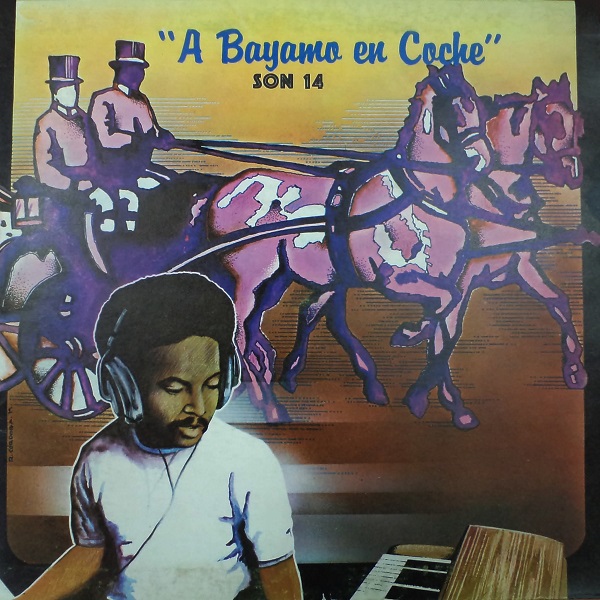
Son 14 de «A Bayamo en Coche»

After introducing a modern, vibrant version of son and its variations (son montuno, bolero son, etc.) to non-Latin audiences, Tumi Records commissioned a new recording at Cuba’s EGREM studios. Released in 1996 as part of the Cuba Explosion series, the album Cubanía proved that the band had not lost an ounce of its musical talent and energy under Rosabal’s direction. Three years later, the group released La Máquina Musical, which incorporated Colombian tropical rhythms into their sound, promoting the album with a European tour that included a performance at the Cuba Presente Festival at the Barbican Centre in London. (Source: AllMusic)

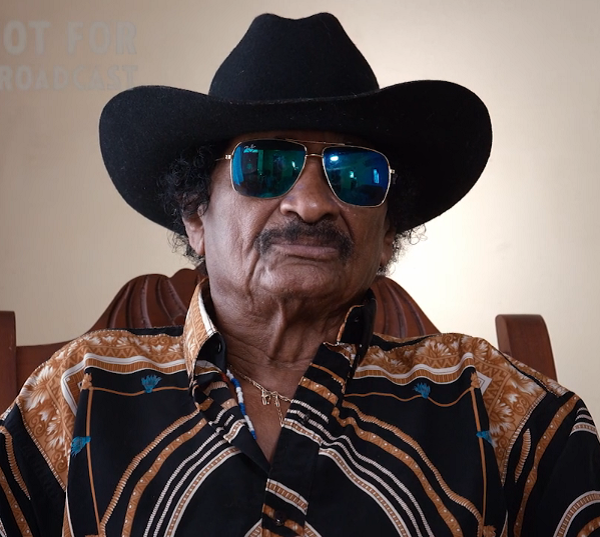
Eduardo Morales Orozco Tiburón

 The Milestone of “A Bayamo en Coche”

The album A Bayamo en Coche (A Bayamo by Carriage) was released in 1979, with its biggest hit being the title track itself. The album’s opening song, composed and arranged by Adalberto Álvarez from Camagüey, instantly transformed him into one of the leading figures in popular Cuban dance music from that year on.

The song “A Bayamo en coche” not only revives traditional son and enriches it with new sounds but also artistically recreates a cherished tradition rooted in Bayamo, the cradle of Cuban nationality. In this city, coches (horse-drawn carriages) are used for pleasure rides and recreation, and the song’s lyrics narrate these moments.

The album contained other tracks that were hugely popular in Cuba between 1978 and 1980, such as “Calle Enramada” (a son elegy to that main Santiago street), “El Son De La Madrugada” (with a beautiful later version by Omara Portuondo), “Se quema la trocha,” and “Elena la cumbanchera,” which turned the record into a landmark within this genre of Cuban music. Most of the tracks were performed by Tiburón Morales, the group’s lead vocalist.

Tribute to The Gentleman of Son

Recently, Son 14 founder Adalberto Álvarez, known as “El Caballero del Son” (The Gentleman of Son), was honored with a concert at the Karl Marx Theatre. This event celebrated his 46 years in music and the 35th anniversary of his later orchestra, Adalberto Álvarez y su Son.

The concert was a memorable tribute to the work of the composer of “A Bayamo en coche.” Some of his best songs were performed by notable Cuban musicians:

  • Septeto Santiaguero (Son para un sonero)
  • Pancho Amat and Alain Pérez (Tu fiel trovador)
  • Alexander Abreu (Pura imagen)
  • Paulo F. G. (Fin de semana)

At other points, Frank Fernández performed a duet accompaniment with the voices of Adalberto Álvarez and Jorge Luis Rojas, “Rojitas,” on Santa Cecilia.

Additionally, Rojitas sang with Tania Pantoja (Vivir lo nuestro) and solo (Y qué tú quieres que te den). Robertón and Lele, vocalists from Van Van, performed Agua que cae del cielo, while the orchestra Adalberto Álvarez y su Son took on De Cuba pa’l mundo entero, Son de la madrugada, and Los caminos de Ifá.

En La Sala Show “El Saraito” Adalberto Álvarez (R.I.P) Fundador, Director. Arreglista y Pianista del Son 14 de Cuba, Dj. Augusto Felibertt y Vicente López

That night, Maestro José Luis Cortés highlighted Álvarez’s musical quality, focusing specifically on “A Bayamo en coche,” the song that, in 1979, announced the existence of a great artist to the public. Álvarez was capable of bringing son to Cuban art schools and has defended Cuban son with grace and artistry, all while staying true to the essence of one of the dance music genres that best represents Cuban identity. (Source: Joel del Río, Cibercuba)

“A Bayamo En Coche” Album Details (1980)

No. Track Genre Composer
01. A Bayamo En Coche Son Adalberto Álvarez
02. El Son De La Madrugada Son guaguancó Adalberto Álvarez
03. Se Fue Mi Amor Y No Lo Vi Partir Bolero son Adalberto Álvarez
04. Calle Enramada Son Pedro Gómez
05. Elena La Cumbanchera Son Gerardo Martínez
06. Se Quema La Trocha Bachata-Son Adalberto Álvarez
07. Tal Vez Vuelvas A Llamarme Son montuno Adalberto Álvarez
08. Gimen Las Rosas Por Una Triste Ilusión Bolero Adalberto Álvarez
09. Vamos, Háblame Ahora Bachata-son Adalberto Álvarez

Musicians who participated in the recording (1979):

  • Director, Acoustic Piano, Keyboards: Adalberto Álvarez
  • Vocals, Minor Percussion: Eduardo “El Tiburón” Morales, Héctor Wedderbron, Daniel Carmenates
  • Bass: Jorge Machado
  • Guitar: Efisio Barroso
  • Trumpet: Eduardo Sánchez, Guillermo Femández, José Fernández, Dagoberto Rodríguez
  • Trombone: Lázaro Rosabal
  • Tumbadora (Conga Drum): Ubaldo Canes
  • Bongó, Cowbell: Guillermo Viera

Recorded at: EGREM Studios (1979)

Collaborators:

L’Òstia Latin Jazz

Dj. Augusto Felibertt

Also Read: Luis Conte: The Cuban-American percussionist who fuses Cuban son with global music

The Williamsburg Salsa Orchestra: electrifying fusion and salsa flavored with indie rock

The Williamsburg Salsa Orchestra is an 11-member musical group that, as the name suggests, uses salsa as its foundation but also mixes it with other genres such as funk and indie rock to make its music distinct. This combination of beats has led the orchestra to be internationally recognized for its explosive arrangements, modern touches, and repertoire inspired by Anglo-Saxon artists.

Today we are here with arranger and percussionist Gianni Mano (founder) and Argentine singer Solange Prat (vocalist) to find out about their beginnings, the current situation of the orchestra, their roles in the project, and much more. 

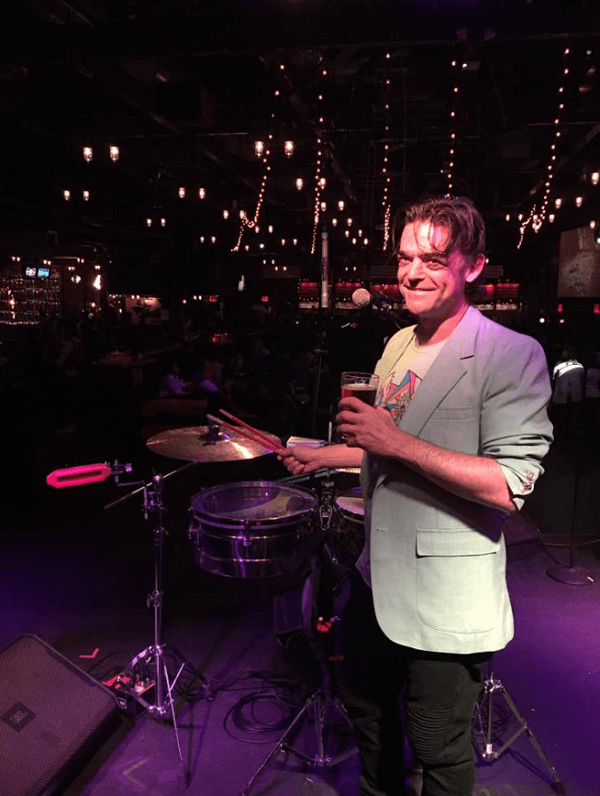
Solange Prat and Gianni Mano
Argentine singer Solange Prat and American bandleader Gianni Mano

Gianni and Solange’s musical awakening

Gianni began his first address by sharing that his family had some musicians back several generations, but his own interest in music aroused in his childhood. It was then that his parents enrolled him in piano lessons, but his taste for Afro-Cuban and Afro-Caribbean music settled in when he was a teenager, recently moved to Miami to attend college.

In the late 1980s, he got a job at a nightclub, where he discovered hits from great artists who would inspire him in the future, such as Cuban musician and percussionist Carlos “Patato” Valdés. When he listened to the artist, Gianni could hardly credit how wonderful and different it was what captivated his ears.

By the time, the young man was studying percussion focused mainly on classical music, but the impact of those rhythms he had heard was such that he wanted to know much more about them. This led him to move to New York and hire private teachers to know more about salsa, Afro-Cuban, and Nuyorican music, because when heard them, he discovered that this was what he wanted to dedicate himself on an artistic level. He assured us that it is always best to learn music directly from those who play it, so it was the best decision he could take.

The musician assured us that, at that moment, he could not believe the world he was missing, but when he found it, he did not let it slide.

At this point, Solange joined us and said her interest in music began in her native Argentina, where her parents always listened to Gloria Estefan, Juan Luis Guerra, and other artists of this type. On her mother’s side of the family, some relatives played the guitar and a lot of Argentine folk music such as sambas and chacareras, so she had a lot of contact with that music and eventually started singing at a very young age.

Gianni playing live
Gianni Mano playing live at Brooklyn Bowl

Since the girl used to sing all the time, her mother enrolled her in singing lessons until she got her first opportunity in a band at the age of 15. Added to that she spent about six months on a cruise in the Caribbean, and when she came back, she wanted to continue training on an artistic level, but with a focus on the music she had been listening to during her trip. 

Sometime later, she went to visit a friend in New York, and it was there that she met Gianni, who asked her to join The Williamsburg Salsa Orchestra, which was already founded. It was something very new for her, as she had never sung salsa before, but she accepted the challenge anyway, and Gianni served as a mentor for her at all times.

Gianni as an arranger

As for his role as an arranger, Gianni told us that, when he left his previous job to devote himself entirely to music, he spent oceans of time transcribing arrangements of other artists’ songs to see how they worked. He remembers that the first song with which he tried this was one by Tito Puente, but then he did the same thing with hundreds more.

For a long time, he listened to all these pieces hundreds of times to understand the form of a salsa-based song and how it needs to be structured for the enjoyment of the dancer on the dance floor. That is how he began to write his own arrangements, although acknowledging that they were not all that good at first, so he had to practice a lot.

His coexistence with groups of different genres and practice with various types of instruments helped him greatly to master this area in all styles.

Solange Prat singing
Solange Prat singing at the Sofar Sounds New York

The Williamsburg Salsa Orchestra

In 2009, Gianni was making some demos and garnered rave reviews, so he felt ready to start his own musical project, but obviously he could not do everything alone. He began to place ads in online newspapers to recruit artists to join his band, although there was a subject which worried him: language. He told us that he was looking for musicians who mastered both English and Spanish, and in that sense, Solange pleasantly surprised him with her singing ability in both languages. 

The orchestra’s first show was in 2010, which let it to gaining some popularity in the public of the city.

From Solange’s point of view, she describes her arrival in the orchestra as an unexpected event for her career, since in Argentina she had experienced a lot with soul, R&B, and funk. However, this would change with her move to New York, which is when she met Gianni and discovered a whole new world for her until then, but she loved it a lot.

So, she did his best to learn everything she could about this new music and keep up with required level. Gianni played a big role in this, as he taught her how to play certain instruments and gave him CDs from some of the great salsa legends to take them as a guide. 

She closed the subject by saying that moving to New York, meeting these musicians, and becoming part of this new music scene was great and inspiring.

Gianni, Solange, and the rest of the orchestra
From left to right: Angela Ortiz (piano), Rafael Gomez (bass), Jhohan Hernandez (congas), Felipe Fornier (bongo). Solange Prat (voice), Gianni Mano (Percussion), Alex Asher (trombone), John Challoner (trumpet), Jason Prover (trumpet), and Dimitri Modebacher (baritone sax)

How to maintain an 11-piece orchestra alive

Currently, the Williamsburg Salsa Orchestra has 11 members in total. At a time when bands and musical groups are getting smaller and smaller, we wanted to know what Gianni and his artists do to stay together in an environment that pushes them in the opposite direction. 

The percussionist says that one of his greatest dreams was to have a large salsa orchestra, and he has succeeded, but he admits that things were simpler before COVID-19. After that, far fewer people attended salsa dances or were willing to pay for such an event. Still, they have done everything humanly possible to keep the group together, since in the words of Gianni, an orchestra composed of six or seven people does not sound as good or as complete as one with nine or more musicians.

However, he does not deny that they have had some issues with certain venues due to the orchestra’s size, such as small stages or low ability to pay everyone, but in general, club owners and promoters just want a good show and for people to enjoy it. For this reason, they make an effort to hire bands like the Williamsburg Salsa Orchestra because they know what they have to offer.

Read also: Ania Bartelmus from La Candela Flamenco talks about her performance at the Hispanic Heritage Celebration

Trombone player Lindsey McMurray from the women’s orchestra Las Chikas

Lindsey McMurray, bandleader of the group Las Chikas, has graciously accepted our invitation to talk about the women’s orchestra she is leading, which makes us very happy and pleased, so we invite our readers to enjoy this interview from beginning to end and learn about the musical journey of this young artist.

Lindsay from Las Chikas singing
Lindsey McMurray singing during a concert with Las Chikas

How Lindsey got started in music

Lindsey’s journey to become an artist began very soon at school, when she was just 10 years old and started learning to play the trombone. Prior to this, she had already studied other instruments such as the keyboard and the recorder, but she ended up trying the trombone.

Soon after, at the age of 11, she joined the school jazz band, but it was not until college that she began experimenting with salsa in orchestras that played this genre. Until then, Lindsey had had virtually no contact with Latin music, as she had only listened to typical U.S. rhythms. However, once she discovered Latin American music, she could not escape her love for it and continues to play it to this very day.

It should be noted that the musician does not have any family member who is too. So she would be the first one to make music her profession and, of course, one of the most important areas of her life.

Professional experiences prior to Las Chikas

Before even getting to know of the existence of Las Chikas, Lindsey was on a TV show called ‘’Noches Con Platanito’’ in the musical side, but she did not really lead anything until the bandleaders of the groups who were there left. Her big break came in 2017, when she finally managed to become a bandleader herself and, in turn, started two groups at the same time. 

This is because Lindsey did not want to depend on anyone be called whenever she was required, but, on the contrary, she wanted to go on developing her autonomy to the point of being the one to create jobs for others instead of looking for them somewhere else.

Whitney and Gabby from Las Chikas
Singers Whitney Hernández and Gabby Tamez from Las Chikas in Carson City

Las Chikas

It is important to clarify that Lindsey is not the founder of Las Chikas, but that the group already existed before she joined during the pandemic. The idea of Las Chikas was born during “Noches Con Platanito” as part of the show, but Lindsey and the other members wanted to have activities outside of the show and what the production asked them to do. At that time, the leader and founder of the group was Eliana Rose who during the pandemic wanted to settle in Southern California, so she asked the artist to take her place, which she accepted.

This posed a significant challenge for her, as she had never led a Latin music orchestra in her life. However, the novelty did not make him get cold feet, but on the contrary, it was an experience she wanted to live in order to learn from it.

The current members joined the group thanks to recommendations from friends and other people in the industry. Already at this point, it can be said that they all are her friends, to the extent that they have shared all kinds of special occasions such as birthdays, trips, and much more. 

Why only women in the orchestra

What catches the attention about Las Chikas is that, as its name suggests, it is only composed of women. One of the reasons is that the industry, despite of the recent social changes, continues to be dominated by men, so these young female talents find support between themselves.

What the original founder wanted was to promote the idea that a group of girls could play Latin music without it being perceived as strange. Lindsey shares this vision with hundred percent and hopes new generations of women never think for a moment that their gender is a limitation to achieve what they want in music.

Las Chikas with its certificate
Marina Panzetta, Shirly Ace, Lindsey Murray, Whitney Hernadez, Gabby Tamez, Maria Vega, Mayelin Vazquez, Alisha Ard Vazquez, Dolores Duran-Cefalu, and Anitta Garay from Las Chikas posing for the camera with its certificate from the City of Los Angeles. Photo taken by Craig Cochrane

While acknowledging that there have been positive changes in recent decades, she thinks there are areas that do not have enough female representation such as percussion, bass, production, arranging, among others. It is very common for women to be vocalists in a band, but it is still unusual to see them in other areas of the project.

Las Chikas as a mix of cultures and ethnicities

On the band’s website, it can be read that the group is a mix of diverse cultures and ethnicities. In this regard, Lindsey pointed out that, while it is true that she is not a Latina, she has always sought to create something as authentic as possible that is rooted in Latin culture, of course with great respect. “Latin music is so joyful, intelligent, and capable of being beautiful to the eyes of any human being who hears it. I also want in a certain way to make non-Latinos enjoy this beautiful music as much as I do,” Lindsey added on the subject.

She also said that diversity plays a very important role, as non-Latino audiences tend to feel that they have permission to be part of the joy emanating from this music. In addition to that, the fact that the members have diverse backgrounds helps the band have different perspectives on what they want to do.

Today, Las Chikas is composed of Cuban singer Mayelin Vázquez, Cuban singer Whitney Hernández, American pianist Dolores Duran-Cefalu, bassist María Vega, Mexican timbalera Anita Garay, Mexican conga player Diana Teixeira, American trumpet player Anne King, Mexican saxophonist Marina Panzetta, and Lindsay herself on trombone.

Read also: The best of Cuban music in Tampa with Cuband Son Band

Cache Orchestra in United Kingdom

Europe / United Kingdom / Holanda

Cache Orchestra in United Kingdom. The Best Mix for Salsa!

Cache Orchestra it’s known for its Salsa sound and is considered to be one of the finest bands of its kind in the UK. Their passion for the music is infectious and gets both Salsa enthusiasts and those new to the sensuous Latin American rhythms straight on the dance floor.

Cache Orchestra has thrilled audiences throughout the UK and internationally, playing authentic Latino rhythms that come straight from the streets of San Juan and Havana. The band is a lively and accessible mix that brings a vibrant spark to all the different rhythms that make up Salsa – mambo, rumba, chacha, bomba, merengue, bolero.

Cache Orchestra in United Kingdom- Integrans

Cache Orchestra has thrilled audiences throughout the UK and internationally, playing authentic Latino rhythms that come straight from the streets of San Juan and Havana. The band is a lively and accessible mix that brings a vibrant spark to all the different rhythms that make up Salsa – mambo, rumba, cha-cha, bomba, merengue, bolero.

“UK’s very own Buena Vista band….absolutely tremendous…. music like that and we’re all feeling terrific. If you don’t start to move to this there is no hope for you. Extraordinary music.” Sean Rafferty, BBC Radio 3

“Most of the band members hail from Santiago De Cuba, the birthplace of Cuban son…. and have the effortless musicianship that comes from being to the manor born…..a set infused with rhythm changes and infectious melodies and grooves. ….the best band playing Cuban son.” Jane Cornwell, Songlines (Homegrown)

“Band were great, intoxicating music and a great crowd – all of which made for a fabulous vibe. Thank you!”Cecile Jackson “Please pass on my thanks to the band who were brilliant at our event and were just what was needed to get the party going. My only regret was that I did not have more time to enjoy the band myself!” Anne Davis, Asylum Productions

“….the acoustic septet with the real sound of Santiago De Cuba.” Simon Broughton, CD of the week, Evening Standard.

“A big thank you to the band for an exceptional wedding party. Everyone was very impressed with the sound and impeccable musicianship and is still talking about the band.” Jessica Garland Communications & Events Manager .

Cache Orchestra in United Kingdom

“Thank you to you, the band and dancers for a fantastic evening at the Chanel Conference. Everyone had a great time and they were still talking about it when they left the next day!” Emma Stoker – World Event Management Ltd

“I just wanted to let you know how much we enjoyed the band on Saturday. The music was superb and everyone was so complimentary about the group. So, thank you for helping to make our day so memorable.” Linda Marks – Harrison Parrott Ltd, Project Management.

“Please pass on my thanks to the whole band who were great on Friday and really got everyone going in the Vodafone Village. I look forward to working with you again.” Dee Goldstraw – Business Development Manager, Liz Hobbs Group

For tours and more stay tuned with us and check their website

https://www.facebook.com/OrquestaCach%C3%A9-320982197917226/

  • Page 1
  • Page 2
  • Page 3
  • Interim pages omitted …
  • Page 155
  • Go to Next Page »

International Salsa Magazine (ISM) is a monthly publication about Salsa activities around the world, that has been publishing since 2007. It is a world network of volunteers coordinated by ISM Magazine. We are working to strengthen all the events by working together.