• Skip to primary navigation
  • Skip to main content

International Salsa Magazine

  • HOME
  • Previous editions
    • 2026
      • ISM / March 2026
      • ISM / February 2026
      • ISM / January 2026
    • 2025
      • ISM / December 2025
      • ISM / November 2025
      • ISM / October 2025
      • ISM / September 2025
      • ISM / August 2025
      • ISM / July 2025
      • ISM / June 2025
      • ISM / May2025
      • ISM / April 2025
      • ISM / March 2025
      • ISM / February 2025
      • ISM / January 2025
    • 2024
      • ISM / December 2024
      • ISM / November 2024
      • ISM / October 2024
      • ISM / September 2024
      • ISM / August 2024
      • ISM / July 2024
      • ISM / June 2024
      • ISM / May 2024
      • ISM / April 2024
      • ISM / March 2024
      • ISM / February 2024
      • ISM / January 2024
    • 2023
      • ISM / December 2023
      • ISM / November 2023
      • ISM / October 2023
      • ISM – September 2023
      • ISM – August 2023
      • ISM July 2023
      • ISM Edition June 2023
      • ISM – May 2023
      • ISM April 2023
      • ISM March 2023
      • ISM February 2023
      • ISM January 2023
    • 2022
      • ISM December 2022
      • ISM November 2022
      • ISM October 2022
      • ISM September 2022
      • ISM August 2022
      • ISM July 2022
      • ISM June 2022
      • ISM May 2022
      • ISM February 2022
      • ISM January 2022
    • 2021
      • ISM December 2021
      • ISM November 2021
      • ISM October – 2021
      • ISM September 2021
      • ISM August 2021
      • ISM July 2021
      • ISM May 2021
      • ISM April 2021
      • ISM June 2021
      • ISM March 2021
      • ISM February 2021
      • ISM January 2021
    • 2020
      • ISM December 2020
      • ISM November 2020
      • ISM October 2020
      • ISM September 2020
      • ISM August 2020
      • ISM July 2020
      • ISM June 2020
      • ISM May 2020
      • ISM April 2020
      • ISM March 2020
      • ISM February 2020
      • ISM January 2020
    • 2019
      • ISM December 2019
      • ISM November 2019
      • ISM October 2019
      • ISM Septembre 2019
      • ISM August 2019
      • ISM July 2019
      • ISM June 2019
  • Spanish
  • Download Salsa App
    • Android
    • Apple

Search Results for: Orchestra

Carlos Peluzza Del Carpio, the versatile Peruvian musician, was in San Juan Puerto Rico

One of Puerto Rico’s salsa anthems is, without a doubt, ‘Borinquen’. Below, Papo Lucca, leader of the famous salsa group, tells us why he included the Peruvian percussionist in that song.

Papo Lucca needed an expert percussionist in Puerto Rican dance for the song ‘Borinquen’, written by Johnny Ortiz, which he would include in the LP ‘Unchained Force’.

It was 1980 and in those days Carlos Peluzza Del Carpio, the versatile Peruvian musician, was in San Juan.

Papo did not hesitate to summon him. “He lived here in Puerto Rico for a long time,” the Sonora Ponceña leader tells us over the phone. “It’s just that in the Sonora I don’t have a redoblante.
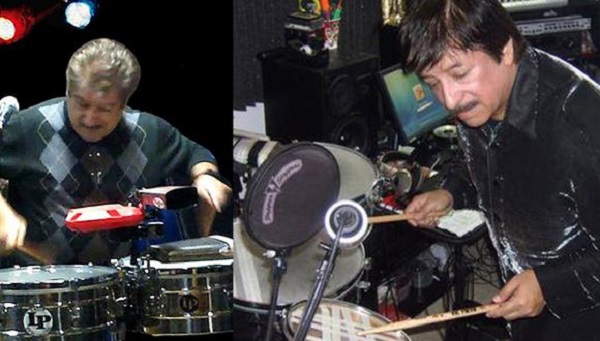
Carlos Peluzza Del Carpio

And since Peluzza was here and shared his musical journeys with many artists from Puerto Rico, he did know those secrets of Puerto Rican dance. It was for that reason that I invited him to be on that recording, recalls Papo, 37 years later.

Wison Torres Jr. was in charge of finding the Peruvian musician, who incidentally was in charge of the arrangements of the song (together with Papo). Peluzza’ was only informed that he was needed in a recording room. When he arrived he saw the percussion ready, a bass and a piano.

A few minutes later Papo arrived, greeted him and the memorable session began. The percussionist remembers it as one of the most beautiful moments of his life. Borinquen’, in its 6.56 seconds, was a hit.

The vocals were provided by Yolandita Rivera, one of the greatest soneras ever born on the Island of Enchantment. The choruses were provided by Toñito Ledee, Miguelito Ortiz and Edwin ‘Caneca’ Rosas. Papo was satisfied. And Carlos ‘Peluzza’ treasures the story fondly.

Sonora Ponceña Unchained Force 1980

That is just one of the many anecdotes that the famous pianist has with Peruvians. He remembers that one day on television in his country a girl and her father were singing the song ‘Fina estampa’. He liked it.

That’s why, in 1979, in the album ‘La Ceiba’, in which Celia Cruz sings, he decided to include that famous waltz by Chabuca Granda. “From that moment on, I got to know other pieces of Peruvian Creole music,” he says.

Papo has visited Lima many times. He has already lost count. He has friendships. For example, he is a friend of Carlos Aparicio, the volleyball coach. He assures us that once they even participated in a game of Alianza Lima’s girls. In addition, he reminds us that Edwin Caneca Rosas is also a referee of that sport. So everything was conspiring.

It is a June morning in La Perla, Callao, and the conversation continues under the gaze of Juan Núñez, a Peruvian singer who a few weeks ago was in Ponce, Puerto Rico, fulfilling a dream: rehearsing with the Sonora Ponceña. Papo is generous with Juan, highlights his singing qualities and underlines the friendship that has grown between them.
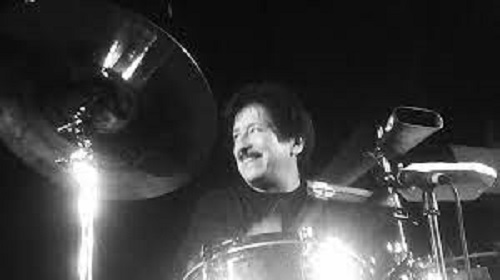
Carlos Peluzza Del Carpio, el versátil músico peruano

Precisely, we took the opportunity to ask him about the orchestra’s recent hit entitled ‘Canción a mis amigos’. This salsa was born after the terrible natural disasters that Peru and Colombia faced at the beginning of this year with the El Niño Costero phenomenon.

The composition is by Francisco Alvarado, who wrote it in two days. The voices were provided by Jorge Nicolai and Darvel García. What happened to you identified us a lot,” says Papo.

The musician adds that he felt that La Ponceña should make itself felt with a song of solidarity. Now it is time for it to be played on Lima’s radio stations. Will it become popular?

The twenty minutes of chatting come to an end and Papo has many topics left in the pipeline. He is very grateful and Juan Núñez tells us that behind his solemn appearance there is a human being who enjoys, who is passionate about music and who is always observing how to amalgamate sonorities. La Sonora Ponceña is still going strong and hopefully soon we will be able to see it unload in Lima.

We need to chant ‘Canción a mis amigos’. And that Carlos Peluzza, in one of those, returns to redoblar in ‘Borinquen’. Also that Yolandita Rivera sings? Hopefully.

Sources:

Martín Gómez V.

Papo Lucca

Carlos Peluzza

You can read: September 22, 2022 marked the 48th anniversary of the Fania All-Stars concert in Zaire, Africa

Edgar “Balín” Ocando Venezuelan percussionist musician based in Mexico

Edgar “Balín” Ocando, Venezuelan musician born in Caracas in the parish of El Recreo, specifically in block 7 and 8 of Simón Rodríguez.

He studied music at the José Reyna school located behind the same building where he lived, he also studied at the Conac de Sarria with maestro Orlando Poleo.

In his childhood he met with friends who had the same restlessness and passion for music, getting together every weekend to make noise as the neighbor said to the one who had to endure the music end after end.

As a result of these rehearsals he ended up in a group with which he began his music career and received his first professional payment at the age of 14 with the group Ases de la Gaita, a group formed by childhood friends in order to get away from drugs, which for the 80s was very strong.

Edgar “Balín” Ocando músico percusionista venezolano radicado en México

In high school he joined the ranks of the Venezuelan Children’s Choir under the direction of maestro Raul Cabrera. During his time in the choir, the son of Professor Cabrera, known as Raulito, formed the salsa group Sabor Latino and became part of it.

Coming from a musical family, he always looked for a way to be close to his uncles Rafael and Yelitza Sivira, who were singers of the Polifónico Rafael Suarez and always looked for a way to be present in the rehearsals.

Yelitza Sivira was the one who took the responsibility to take him and he only sat and watched how they vocalized with the piano with the help of the director Maria Cabrera. It was then when they created the Polifónico Infantil Rafael Suarez and he became a baritone.

Already in adolescence at the age of 17 years old, he started working in a bank through a scholarship granted by the institution Insbanca, and while working, the Coral del Banco Italo Venezolano was created, thus participating in bank choral meetings, it was then that he returned to music as an instrumentalist when he saw in a newspaper advertisement that they requested a drummer to be part of a group of bagpipes, for which he went to the audition where there were countless drummers and of which he was left with the position thus becoming part of Estrellas de la Gaita.

The following year he was invited by a friend to join the group Santoral of Freddy Rangel, arriving to record for the first time in Requena Studios, the following year in full rehearsal with Santoral I was called to join the group Los Caracuchos of Joseito Rodriguez, forming part as a drummer for 2 years and recording in Manoca Studios, it was then where he enters the percussion workshops of the Biggot Foundation with the teachers Alexander Livinali and Williams Troconis.

He was in the ranks of important Venezuelan groups and orchestras such as Los Caracuchos, Catatumbo, Los Casanovas, Melody Gaita, Sabor Latino, Orquesta La Moderna, etc.

Edgar “Balín” Ocando

In 1999 he changed course and moved to Mexico where he has participated as a percussionist and backing vocalist in groups such as Cokodrilos, Kumbia Kings,

Sonora 100% Dinamita, Alicia Villarreal and today he has his own orchestra called Rumba Latina de Venezuela, which he formed in 2005 and has opened concerts for great international figures such as: Oscar D’ León, Willie Colon, Víctor Manuelle, Porfi Baloa y sus Adolescentes, Nigga, etc.

As well as Mexican artists such as Julión Álvarez, Los Tucanes de Tijuana, Mariana Seoane, El Grupo Pesado, Germán Montero, El Poder del Norte, Emilio Navaira among others.

Integrated by musicians of different nationalities from Venezuela, Cuba, Dominican Republic, Mexico and hand in hand with our representation office and record label Indepe Music, we will continue to bring our music to more and more people in every corner of the country.

Edgar Ocando Manager

Phone (52)-8132179324

Email: [email protected]

Edgar Balin Ocando

You can read: Anacaona The Cuban Female Orchestra

North America – December 2022

Chevy El Pitirre De La Salsa and his interesting career

José Flores Pérez

Jose Flores Perez, better known as Chevy El Pitirre De La Salsa, is a salsa singer who was born in the town of Cidra, Puerto Rico, but currently resides in Georgia. We have had a very pleasant conversation with the salsa exponent, in which we have touched on certain various professional and personal tissues never mentioned before. It is a real pleasure for us that he has agreed to talk with us and tell a little more of his personal story on this platform, which is International Salsa Magazine.

Chevy El Pitirre De La Salsa was born in Puerto Rico, but now lives in Georgia, United States

Origin of his artistic name

”Chevy” is a nickname his parents and friends always gave him and ”pitirre” refers to a Puerto Rican bird with very short dize, but a very strong character. Maestro Felix Ortiz name him ”El Pitirre” because of the way he sings and improvise in the stage and the trust between them was such that he even became the music director of his orchestra. This combination of nicknames was what made Flores start to become known by that way during the last four years of his career.

Influences and predilection for salsa music

The reason Chevy opted for salsa was the great influence from his family. His father was a salsa singer for local orchestras in Chicago, which made him listen to various Puerto Rican genres such as salsa, bolero, jibaro music and trova throughout his childhood.

There were years when he really enjoyed listening to hip hop and rap in the late 80’s and early 90’s, but it didn’t take long for him to reconnect with salsa when he started listening to Héctor Lavoe, Ismael Rivera, Sammy Marrero, Bobby Valentín, Cano Estremera, among others. Listening to all these idols and what they achieved led him to take salsa much more seriously.

Chevy El Pitirre De La Salsa performing on stage

His time in the military and formal beginnings in music

During his time in the military, he performed in different orchestras and accompanied various artists throughout Atlanta. Although this was a demanding career, he organized himself to pursue his interest in music. When he leaves the armed forces, he went to Puerto Rico, where he lived for a great deal of time until he moved to Georgia in 2016.

His current residence is still in this state for professional reasons totally unrelated to music, but he had been there around the time he served in the army, so this part of the United States was not unknown to him. It is there that he resumesd his musical career after so many years.

In 2017, he began to compose, but it was not until two years later when he decided to launch as a soloist, make his first single ”Instrumento de amor” and carry out his first independent musical project entitled ”Entre el amor y el vacilón”.

In this same year 2019, he took advantage of the internet and social networks to become known at an international level and released his second record production during the pandemic, but the singer does not think this situation has hurt his carrer. On the contrary, he believes that social media and digital platforms gave him the push he needed to promote his artistic proposal.

Chevy El Pitirre De La Salsa recording in the studio

Recent projects

One of his most recent projects was carried out in 2019, is titled ”Atacando en Navidad” and was born from the songs ”Arbolito de Navidad” and ”Compay no se me raje”. The first is written by Chevy, but the latter was composed by the legend Johnny Vega. At some point, the artist decided that these two singles were not enough, so he created a full album based on the Puerto Rican parranda he always enjoyed as a child. The result is a mix of nostalgia, sadness, love and joy. He tells how Christmas was celebrated at home, his childhood dreams, what this time meant to his family and the sadness when a loved one dies that year.

One of the most significant songs is ”Navidad Sin Parranda”, which was written a year before Chevy’s mother died. She was so ill at the time that the whole family thought she suddenly would lose her life, but fortunately she did not. Back then, the salsero was beginning to imagine a life and a Christmas without his mother, as she kept the family together and her house was the meeting place for all the important dates.

It just so happens that Venezuelan musical arranger Willy Melo lost his father within a few days of receiving the song, so he was very connected to that same pain around the same time.

Read also: Isaac and Esteban Hernández, two brothers making history

3 Reasons To Stay In Paris This Season

We show you the different places to visit with authentic Salsera fun

Paris (France) has always been a popular tourist destination with musical tradition, and the rhythm of Salsa is no exception. There are plenty of places to dance if you like this Afro-Caribbean tune, but what makes it especially appealing this season? We show you three reasons why you will want to spend more time in the capital of this beautiful Western European country during December 2022.

Latin New Year’s At Cabaret Sauvage

Cuarteto Cubano has toured France’s stages for four years

The biggest Latin New Year’s Eve in Paris will be at Cabaret Sauvage with the live presentation of Cuarteto Cubano playing the great classics of Cuban and French music that will make you travel through old Havana and give French hits an air of partying and joy. The Cuban Quartet www.cuartetocubano.com has toured the stages of France since 2018, always with the same goal of “making people dance and smile”.

Then, the wild mixes by DJ El Dany, DJ Hot Rod, and DJ El Cuco will begin with the best of Salsa, Merengue, Bachata, Guaracha, Reggaeton, Dembow, Funk, and Cumbia together with the magical voice of Cuban singer Denis Mora.

All of this is accompanied by the show of the Latin Cabaret and intelligent Pitshow that will take you into the idyllic atmospheres of the Latin American carnivals with the performances of the divine Cuban dancers Roima and Diane Alcalá who form the duo “Las Mulatas del Sabor” that will transport you to a paradise of the burning party of Havana, Cuba.

Cabaret Sauvage will open its magical doors on Saturday, December 31st, 2022, from 10 PM to 5:30 AM on Sunday, January 1st, 2023. Tickets are already available for reservation, but if you want to purchase them at the box office, they will have a value of €50 all night. Cabaret Sauvage is located at 59, bd MacDonald – Parc de La Villette – Paris 19 M° Porte de La Villette.

¡Vamos Pa’ La Rumba!

Cabaret Sauvage starts Christmas on December 3rd

If you like to dance Salsa, then you can go to Cabaret Sauvage https://www.cabaretsauvage.com/agenda throughout this season. Yes, we continue with the Latin party in this magnificent place.

The ingredients are assembled on the table to make La Rumba an unmissable event for all lovers of Latin music and Latin American culture in a unique party experience in Paris.

The Salsa Concerts will present the best current and classic pieces from the orchestras that make life in the capital of this country, renowned for its wines and haute couture brands.

On the stage of Cabaret Sauvage on Saturday, December 3rd, you will satisfy your Salsa cravings with Salsa Caleña classes with Calisabor instructors, a performance by the Jim López & La Nueva Edición orchestra, and tonight will be enlivened by the Show Super Heroes of Salsa and the mixes of DJ El Dany, DJ Dominicano, and DJ El Cuco de la Salsa.

On the second Saturday of the month (December 10th), the Rumba continues with the second edition of El Perreo de Navidad: Mega Reggaeton Party with the opening of its doors at midnight. Here, you will find until 6 AM the best selection of this urban rhythm that has guaranteed its permanence at the top of popularity among the youngest in France and the world. The DJs present will be DJ El Dany, DJ Ortega Dogo, DJ Lina, and DJ Driver MC. The ticket price at the box office is €20.

France’s  Clubs

Le Balajo nightclub
Le Balajo nightclub

This season you can have fun in Paris with its landscapes, winter climate, cultural offer, sophisticated gastronomy, and above all in the various clubs that offer a palette of Afro-Caribbean colors and Salsa enjoyment, among which the Le Balajo nightclub stands out https://www.balajo.fr/ open since 1936. Every Tuesday there are Salsa and Bachata classes for beginners and intermediate level dancers followed by a Latin party hosted by DJ Karim until 2 AM.

The Parisian Restaurant/ Bar/ Nightclub Pachamama https://www.pachamama-paris.com/index.php/en/home-alt-2/ is located at 46-48 rue du Faubourg Saint Antoine, 75012, in a historic building from the 19th century designed by Gustave Eiffel in the neo-vintage colonial style. It has three levels and is open from Thursday to Saturday from 8 PM to 5 AM with resident DJs lighting up the dance floor (Ground Floor) with harmonious mixes between Latin Music, Soul, Pop, and Deep House.

Finally we bring you the Bar/ Restaurant/ Club La Pachanga https://www.lapachanga.fr/, a place of reference for lovers of Salsa, it is located near the Eiffel Tower at 8, rue vandamme 75014.

At La Pachanga you can attend two-hour Cuban Salsa and Puerto Rican Salsa dance classes from Tuesday to Thursday from 7:30 PM to 9:30 PM, continuing with social dancing and a DJ set until 2 AM. On Saturdays La Pachanga closes its doors at 5 AM.

You Can Also Read: Where To Go Dancing Salsa In Paris?

  • « Go to Previous Page
  • Page 1
  • Interim pages omitted …
  • Page 101
  • Page 102
  • Page 103
  • Page 104
  • Page 105
  • Interim pages omitted …
  • Page 155
  • Go to Next Page »

International Salsa Magazine (ISM) is a monthly publication about Salsa activities around the world, that has been publishing since 2007. It is a world network of volunteers coordinated by ISM Magazine. We are working to strengthen all the events by working together.