• Skip to primary navigation
  • Skip to main content

International Salsa Magazine

  • HOME
  • Previous editions
    • 2026
      • ISM / March 2026
      • ISM / February 2026
      • ISM / January 2026
    • 2025
      • ISM / December 2025
      • ISM / November 2025
      • ISM / October 2025
      • ISM / September 2025
      • ISM / August 2025
      • ISM / July 2025
      • ISM / June 2025
      • ISM / May2025
      • ISM / April 2025
      • ISM / March 2025
      • ISM / February 2025
      • ISM / January 2025
    • 2024
      • ISM / December 2024
      • ISM / November 2024
      • ISM / October 2024
      • ISM / September 2024
      • ISM / August 2024
      • ISM / July 2024
      • ISM / June 2024
      • ISM / May 2024
      • ISM / April 2024
      • ISM / March 2024
      • ISM / February 2024
      • ISM / January 2024
    • 2023
      • ISM / December 2023
      • ISM / November 2023
      • ISM / October 2023
      • ISM – September 2023
      • ISM – August 2023
      • ISM July 2023
      • ISM Edition June 2023
      • ISM – May 2023
      • ISM April 2023
      • ISM March 2023
      • ISM February 2023
      • ISM January 2023
    • 2022
      • ISM December 2022
      • ISM November 2022
      • ISM October 2022
      • ISM September 2022
      • ISM August 2022
      • ISM July 2022
      • ISM June 2022
      • ISM May 2022
      • ISM February 2022
      • ISM January 2022
    • 2021
      • ISM December 2021
      • ISM November 2021
      • ISM October – 2021
      • ISM September 2021
      • ISM August 2021
      • ISM July 2021
      • ISM May 2021
      • ISM April 2021
      • ISM June 2021
      • ISM March 2021
      • ISM February 2021
      • ISM January 2021
    • 2020
      • ISM December 2020
      • ISM November 2020
      • ISM October 2020
      • ISM September 2020
      • ISM August 2020
      • ISM July 2020
      • ISM June 2020
      • ISM May 2020
      • ISM April 2020
      • ISM March 2020
      • ISM February 2020
      • ISM January 2020
    • 2019
      • ISM December 2019
      • ISM November 2019
      • ISM October 2019
      • ISM Septembre 2019
      • ISM August 2019
      • ISM July 2019
      • ISM June 2019
  • Spanish
  • Download Salsa App
    • Android
    • Apple

Search Results for: Orchestra

Digital voice effects processors

logo

Although the technology of voice processors is not new and has been used for decades, first in recording studios when refining vocals and instruments, it is now available to anyone, be it vocalist, instrumentalist or both, now we are presented with the question, is a performer using it a good vocalist or not, in fact only if we have an “unplug event”, can we realise the vocal range actually, as I said before, it has been used for years in recording studios, as I said before, it has been used for years in recording studios, maybe they have given it another name but they “tweak” the voice on the tracks and you could notice it, only in live events you could perceive some differences and they said it was the “acoustics” or some other excuse.

Nowadays we can no longer distinguish it as it has been used and popularised in performances in front of the audience, whether they accept it as part of the show or just don’t care about the real voice. But don’t misunderstand this, because there are excellent singers who have used it or use it to have a virtual backing vocal with their own voice, special effects as required by the song and it is totally valid.

Courtesy of: Roz Firth

What is really unacceptable, or at least it is to me, is that I am a lousy “shower singer” who uses it to modify my voice to such an extent that it is a deception to “my audience”.

Technology has digitised the equipment by reducing its size and power consumption, adding extra functions to just processing the voice like in a recording studio, it has integrated the voice through a microphone to musical instruments, whether the vocalist is playing a guitar or other musical instrument while performing in front of an audience or accompanying himself in the recent “if the music inspires me to vocalise, it’s perfectly valid” home studios.

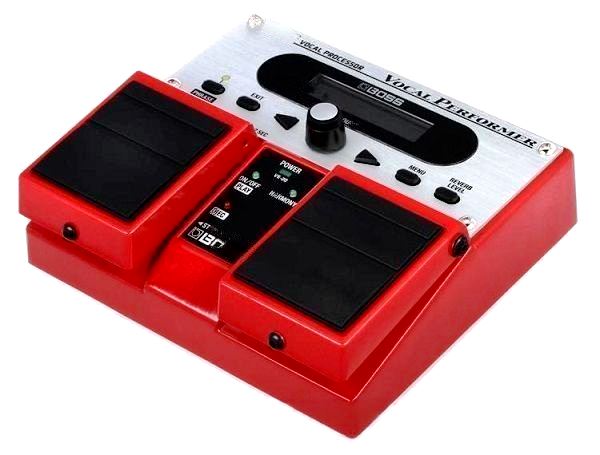
Digital Voice Effects Processors

Pedal digital Voice Effects Processors

However, these very small pieces of equipment have their detractors, be they purists or bandleaders, the latter may argue that it “takes away the work of the extra musicians” but the current reality indicates that if you want to make a live performance you must take care of the economy of all and not only favour the orchestra or the producer of the event, what must prevail is the excellence of the music in front of the audience, and for that you need good vocalists and excellent musicians.

The technology of voice processors accompanied by digitised effects is already with us, there is no turning back, nor should there be, everything changes for the better and that leads us to have better vocalists and more qualified musicians, it gives the opportunity to emerging musical groups that do not have a large budget for extra musicians, recording studios … if you are good with little, you will be evaluated by those who really matter, your audience.

Now let’s talk about these vocal effects processors, what they do, what they look like, costs, etc.


What do they do?

They are electronic devices that allow echo effects, reverb, voice multiplication (to be and make your own chorus), enhance the vocalist’s singing in real time, pitch, depth, volume, add pre-recorded harmonies and loops, change tempo, gender, age and distort the voice, something you could never do on your own, all while performing in front of your audience, something unthinkable between how the artist sounds in studio and “live” and in addition to this we can integrate via MIDI connection a guitar, piano, synthesizer or simply next to the microphone, a harmonica, to the audio output.

What are they like?

They are small, portable and not expensive musical equipment digitized or purity of sound that emanates from them, are placed between the microphone, either dynamic, condenser … the main thing is its connection is XLR, these capture the voice processing it, mixing it to achieve and deliver a very refined voice (such as that of a recording studio operated by a sound engineer), directly to the audio system to the public, and are presented as desktop models or pedal, both do wonders.

Variety and cost

At this point we must remember that like all equipment, they are constantly updated, improving their quality and variety of effects and interfaces to other equipment, so there is a wide variety of prices according to their characteristics, currently we can indicate six really efficient voice processors, I established the order according to the price range and not preferences, in the links you can see videos of artists using them, their use and more.

  1. TC-Helicon VoiceLive 3 https://www.tc-helicon.com/product.html?modelCode=P0CDY ($ 740)
  2. Boss VE-20 Vocal Performer https://www.boss.info/global/products/ve-20/ ($ 360)
  3. Zoom v3 https://zoomcorp.com/en/us/vocal-processors/vocal-processors/v3/ ($ 285)
  4. Roland VT-3 Vocal Transformer https://www.roland.com/global/products/vt-3/ ($276)
  5. EHX Voice Box Vocal Harmony Machine and Vocoder https://www.ehx.com/products/voice-box/ ($ 262)
  6. TC Helicon VoiceTone Harmony-G XT https://www.tc-helicon.com/product.html?modelCode=P0CMT ($ 229)
  7. Behringer Virtualizer 3D FX2000 https://www.behringer.com/product.html?modelCode=P0A3P ($ 160)

The Caribbean joined the party with Billo Frómeta

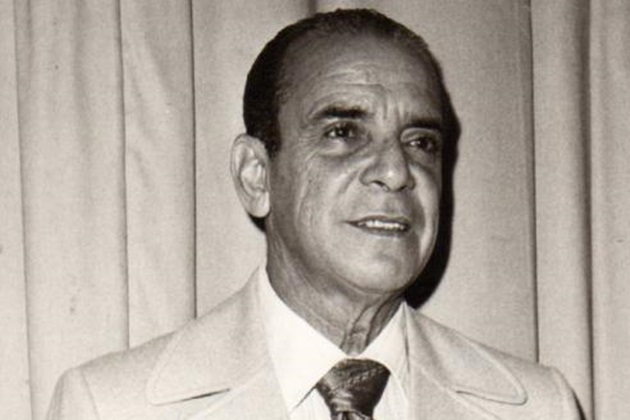
Luis María Frómeta Pereira, better known as Billo Frómeta, was born on November 15, 1915 in Santo Domingo, the capital of the Dominican Republic. However, this Caribbean man has more of a Venezuelan feeling than other compatriots, since he was very grateful to Caracas, that is where he made his life, both professionally and personally.

Despite his love for the Venezuelan lands, he never lost his Cibao smile, specifically from Quisqueya. But his gestures, his affection and tenderness, the details with which he acted, and his musical stamp are very Venezuelan. Perhaps we say goodbye to Billo very soon and he could not see his tribute in his lifetime, that only adds more strength to his career. Read all about his life with the following lines .

The beginnings of Billo Frómeta as Luis María

Although he was born in Santo Domingo, the Frómeta family moved to San Francisco de Macorís, where Billo spent his childhood and met the friends with whom he would embark on the musical adventure of his life: Rafael Minaya and Francisco Simó Damirón. As Billo recounted in his last interview before losing him to a brain stroke in 1988:

“There couldn’t be a birthday that we knew about because the three of us from San Francisco de Macorís were there playing and brightening up the evening. I always keep that in mind when I go to a special event”.

It can never be denied that Luis María was born with an innate talent for music, which he polished during his basic education, since rhythms and sounds were a compulsory subject in the Dominican Republic. As he already said, it was something he continued to do during his adolescence, although this was already in Santo Domingo where he moved back in 1933. There he is part of the firefighters, where with the rank of captain he founded and became director of the Band of the Fire Department of the capital.

Here he also gives guitar lessons, which leads him to meet the young saxophonist and violinist Freddy Coronado, through him Billo enters the world of dance orchestras, forming a group and working on the radio. Some time later, when they are already university students, Billo meets up with his childhood friends and introduces them to Freddy. They form the Santo Domingo Jazz Band, whose activities and presentations are carried out along with their studies.

However, Damirón moved to Puerto Rico, leaving Billo in charge of the management, but his medical studies were interrupted since at first it was difficult for him to comply with both things, then in his third year he began an internship at the military hospital but his ideas collide with those of the regime of Rafael Leonidas Trujillo, so he abandons his studies and decides to devote himself entirely to music.

Arrival in Venezuela and its success in Caracas

The Santo Domingo Jazz Band received the opportunity to play on December 31, 1937, at the Roof Garden, an important local in Caracas. The journey to reach those Venezuelan lands was an adventure full of many sacrifices. However, on the day of the presentation, without the teacher Billo being consulted, the name of the band was changed to Billo’s Happy Boys, which generated discontent in the Dominican Republic, especially from Trujillo’s regime.

Due to this discontent and the growing popularity of the band in Caracas, the boys were forced to stay in the capital of Venezuela. This was the point that would change Billo’s life forever, since this city is the one that sees him grow as a person and as a professional. As he himself relates:

“My forever girlfriend, the city with which I owe a debt of gratitude and affection…”

This is shown in the number of songs by the band that speak in one way or another of the city. Despite the great affection he has for Caracas and Venezuela as a whole, Billo never renounced his Dominican nationality:

“It is the least I can do for the land where I was born. Venezuela is my life. Here I have planted. So as a feeling of gratitude to the Dominican Republic, I keep that nationalist umbilical cord. It is like the case of two mothers, one brings you into the world but the other raises and educates you. You will not stop loving the first and you will show your affection in something even if all your tenderness arrives at the second…”

Two years later in 1939, Billo faces a tough stage, he falls ill with typhus and the doctors give him no hope, but the teacher shows them that his time had not yet come. He returns to the stage ready to consolidate the popularity of the band more than ever, to which he gives a new name: Billo’s Caracas Boys, which the band maintains to this day.

From that moment the career of Billo and the band goes through ups and downs, from having a radio program where he can even produce and edit his own records, to spending days in jail for marriage demands. Speaking of love, Billo got married 3 times, being Morella Peraza his last wife and the greatest love of his life:

“… the one that Morella inspires me and I don’t know what is the miracle by which I see her prettier every day… I think it is the miracle of love, of that feeling that creates the need for one with the other, that transforms what is impossible into possible, that gives life to life… Sometimes it scares me… I am getting old and when one is old one no longer inspires appetites or desires, but Morella loves me and that is the triumph of love over the years. Isn’t it wonderful?”

Billo Frómeta dark days

By 1957 Billo’s career was on the ground, in addition to jail he also faced vetoes due to having contacts with important figures of Marcos Perez Jimenez’s regime, which caused him to be banned “for life” from performing in Venezuela. However, this did not prevent him from continuing to work as an arranger and producer, not only in Caracas but also in other countries such as Mexico and the United States.

In 1958 he met and befriended Renato Capriles, who was a businessman at the time, but wanted to replicate the success of dance bands like Billo’s. The unusual thing about this friendship is that it began precisely with Renato asking Billo to help him in the composition and production of various works for his band “Los Melodicos”. The friendship was maintained over the years but always with a touch of enmity.

A phrase that sums up these fateful years is: “What hurts me the most in life is ingratitude, and I have cried for it.”

Last years of Billo and his mark in the musical history of Venezuela

Between the 1960s and 1980s, Billo focused on his career and his band, brought Billo’s Caracas Boys together again, thanks to the lifting of the veto, and from that moment embarked on the search for those little-known talents who by passing through the band would be taken to stardom, as is the case of Felipe Pirela, José Luís “El Puma” Rodríguez, Guillermo “Memo” Morales, among others.

In addition to presenting new and unpublished works, they also continue to present the old ones. Also, Billo embarks on the business adventure of founding his own record label called Fonograma, although this does not last long and after several problems he decides to close the record company, and sell the catalog to his son-in-law.

For the 80s, the band continued with a success that rose like foam, not only in Venezuela but in the rest of the continent, they even performed alongside great artists like Celia Cruz. For 1988 a tribute to the master in life was planned, which he himself was going to direct, and had him very moved and excited. How well the words of Lil Rodríguez portray him, to whom he granted his last interview:

“The Master would arrive with the minutes, loaded with thoughts and concerns which he had no qualms about spilling on his way home, as if he thought out loud and with affection. Here I have, finally, more or less the order of the concert. Almost everything is ready and only the last rehearsal is missing. It would not be the first time that Billo would conduct a Symphony, but he was excited as in a debut.”

But this tribute never happened and in his place a slow procession was held to say goodbye to the master. Billo Frómeta, out of emotion, nerves and his perfectionist mania, suffered a brain accident that led him to fall into a coma, just one day before his concert and tribute. He died on May 5, 1988, that day Caracas lost an adoptive son, that it made its own and it saw his development as a musician.

Many people said goodbye to the master at the Caracas Municipal Council, while others accompanied the coffin to the Eastern Cemetery. This way, a great chapter in the history of dance music in Venezuela and the Caribbean was closed, but leaving an incredible legacy that continues to this day, since who has not danced with the Billo’s Caracas Boys?

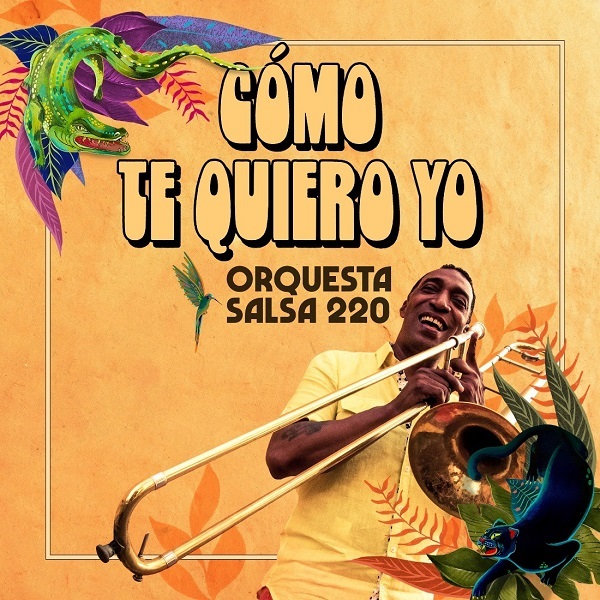
The recently released single “Cómo te quiero yo” is the preview of what will be the album, Sabrosura y Tradición, soon to be released also in acetate.

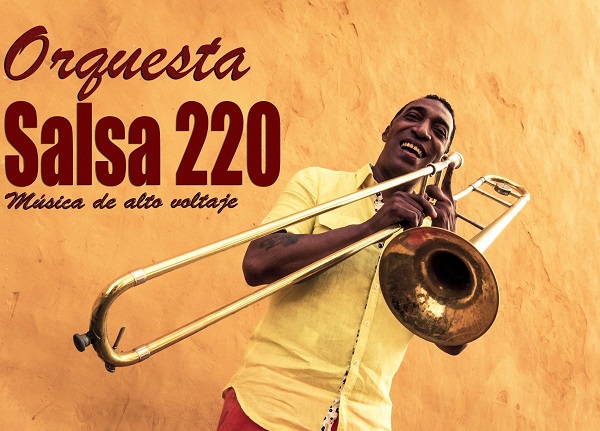
With a fifty-year career in music, the leader of the Salsa 220 Orchestra, Colombian trombonist Oscar “El Gato” Urueta releases the second song of the musical concept he now directs.

“El Gato” delivers his latest single “Cómo te quiero yo”, composition and arrangement by Venezuelan pianist Alberto Crespo; this time with Rodrigo Mendoza, remembered for his time with Dimensión Latina de Venezuela, on vocals. Urueta got in touch with Alberto Crespo after seeing his work in social networks.

This single, in my opinion, deserves international diffusion because of the Afro-Caribbean interpretation in this concept described by Urueta himself as high-voltage salsa.  I listened to the track and I feel obliged to highlight it for bringing us a classic salsa concept, without being more of the same; so let’s go to the mambo, here is what you hear:

During the first 10 seconds, Rodrigo Mendoza leads the vocal part opening the theme as if opening a door; inviting the listener to go on a musical journey that merges various cultural influences.

At the first minute mark it is already known that the trombones of Oscar “El Gato” Urueta and Eliel Rivero are in charge of the musicalization.  At minute 1:45, Alberto Crespo’s piano solo delights us without making it dense.

This piano solo, from which the salsa dancer who dances in tune can benefit, seems to embrace in perfect synchrony the sound of José Soto “Mortadelo”‘s bass.

At minute 2:30 the trombones take over the song, and melodically give way to the tumbadora, in the hands of Carlos Padrón; meeting with the sound of the same in a tasty instrumental correspondence full of cadence and Caribbean flavor.

At minute 2:36, the bass of José Soto embraces again the sound of the tumbadora.

At minute 2:40 the tumbadora turns on the mambo. At minute 2:42 the tumbadora leads the percussion, opening the way for a bell that plays with the coros of Luisito Cabrera, Rodrigo Mendoza and Edgar “Dolor” Quijada, as well as interweaving with the trombones.

The trombones persist and sustain a mambo of those that bring “more salsa than pesca’o”, as we say in Puerto Rico; until around minute 2:55 the conga, the timbal and the bell execute a forceful cut and in unison, to return the arrangement to the trombones.

At minute 4:00, the leader’s trombone seems to be in sync with the percussion and vocalist to close the track; shortly after the trombones enter into a brief correspondence with the tumbadora, just before Padrón’s campaneo concludes the track at minute 4:25.

Urueta has a healthy musical trajectory, surrounded by the greats of the salsa sound.  “El Gato” was part of the Colombian orchestra La Protesta, when Joe Arroyo was the group’s vocalist. Urueta was also part of the now world renowned Grupo Niche, replacing Alexis Lozano on trombone. Urueta traveled to New York City with Grupo Niche as part of the first international tour of the group founded by the late Jairo Varela. He later settled in Miami where he was part of the orchestras that accompanied stars such as Frankie Ruiz, Hansel y Raúl and Santos Colón, to name a few.

Coincidentally, “El Gato” Urueta joined Hansel y Raul’s orchestra when the song ‘Maria Teresa y Danilo’ had become a hit throughout Latin America. Urueta shared the stage with musicians of the stature of Israel López “Cachao”.

In the 1990s, Urueta was a musician with Joe Arroyo’s Orquesta La Verdad, with whom he traveled around the world.

After participating in several concerts accompanying Richie Ray and Bobby Cruz, about five years ago, Urueta took on the task of forming the Orquesta Salsa 220 with which he presented the single “Guaguancó sabroso”, which featured Puerto Rican Rico Walker as guest artist on vocals.

“Cómo te quiero yo” is the preview of what will be the album: Sabrosura y Tradición, soon to be released also on acetate.

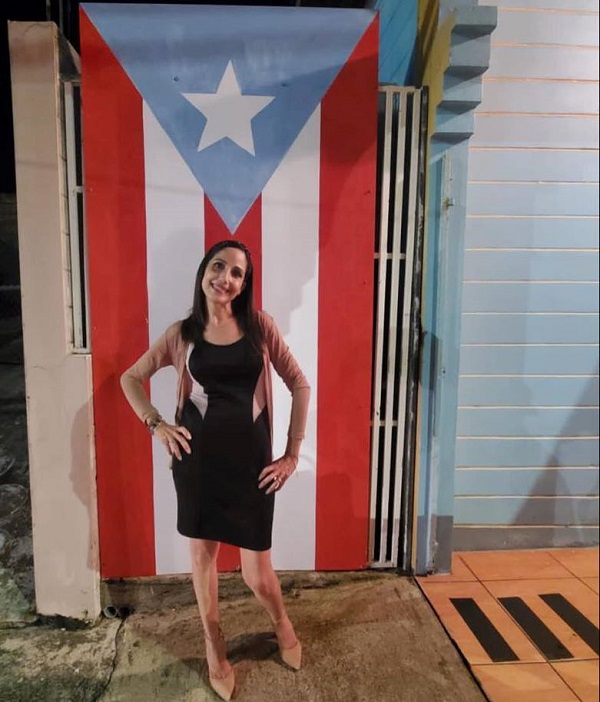
Bella Martínez

You can read: Sigo entre amigos de Luis “Perico” Ortiz


By Bella Martinez, ISM Correspondents, San Juan, Puerto Rico

Michel “El Buenon” is a singer, composer and considered the most sought-after salsa singer in the Dominican Republic

On September 7th in the province of Baharona in Batey 7, Dominican Republic, Michel Batista or better known as Michel “El Buenon” was born, he is a singer and composer.

Considered the most sought after salsa singer, he is a man with a big heart and a story worth admiring, because despite all the vicissitudes he went through during his childhood and youth, he became great, as his grandmother Dona Crisiana instilled in him.

From a very young age he attended Sunday school at the Baptist church with his mother Crisiana Abraham, with whom he attended the evangelical church shepherded by herself, where he also sang in the church choir on Sundays.

In elementary school she participated in a music festival where she won first place at only 8 years of age.

Later she competed in a regional festival in the town of Barahona in the radio station Radio Barahona, winning first place at the age of 12.

He then migrated from the south to the city of Santo Domingo, where he began singing in bars, nightclubs and hotels like the Sheratton, Napolitano, El Embajador.

In addition to the resorts Talanquera, Casa de Campo Sosua, Puerto Plata, among others.

At the beginning he was part of the Tabú Combo, a group from Puerto Príncipe based in New York City, recording hits such as “Inflaciones General”, “La Llave”, “Relimen” and composing the song “Apipi”, known in French and in Spanish as “El Jardinero”, which he recorded with his friend Wilfrido Vargas.

He would later be part of Johnny Ventura’s orchestra for 5 years, from 1982 to 1987.

He recorded the song “Tuyo Más Que Tuyo” by Bienvenido Fabián, then he joined again the Tabú Combo Superstar orchestra with Adolfo Chanci, its director.

In 1995 he went solo and recorded his first salsa CD titled “Amigo De Qué”, which was played all over Latin America, occupying for 12 weeks the first place of the radio station La Mega in the city of New York.

Later he released his second album “Brujería”, and seven others: “De Ahí Nadie Como Él” (2001), “100% Sabroso” (2002), “Llego Michel El Buenon” (2005), “Víveme” (2005) and “Extrañándote” (2005), which contained ballads interpreted in the rhythm of salsa in the style of “El Buenon”, this production has unpublished songs of Michel himself such as “Que Te Vaya Bonito” and “Yo Que Me Lo Creo”.

Throughout his career he has been winner of the Casandra Awards 2005-2006-2007 and nominated in 2008 and 2011.

Among his languages interpreting songs are English, Portuguese, Italian, Papiamiento, Creole, Spanish and French as he did in the song “Se Finit” by Charles Asnabul and the song Wonderful World in tribute to Mr. Luis Armstrong.

In his repertoire of the most outstanding songs in 2008 are “La Primavera”, “Cuando Los Sapos Bailan Flamenco”, “La Playa”, “Víveme”, “Tú Ni Te Lo Imaginas”, “Hoy Daría Yo La Vida”, “Me Has Echado Al Olvido”, “A La Primer Persona” and “Wonderful World”, all with hits and diffusion in all the radios and discotheques of his country.

Among his most outstanding albums in the last ten years are “Extrañándote”, “Todo Terreno”, “Estilo Y Conciencia”, “Arriba Siempre De Pura Sangre”, “Reserva Especial Impecable”, “El Insuperable De La Salsa” and “Claro, Fino, Nítido, Control Total”.

Throughout his career he has traveled to all of Europe, the United States, the Lesser Antilles, Switzerland, England, Colombia, Panama, Costa Rica, Venezuela, Mexico, Curacao, La Reunion, Tahiti, Africa, Japan, Dubai and Colombia, the latter was where he recorded the video clip of his song “Maldito El Tiempo” written by Alexander Pires.

Michel “El Buenon”

You can read: Génesis de la Salsa, su esencia, características, ritmo, historia y expansión

International Salsa Magazine presents Alexander Abreu and his Habana de Primera

International Salsa Magazine presents a Cuban musician today considered by critics as one of the best trumpet players of the moment in Cuba and probably in the whole world.

He is Alexander Abreu Manresa, born on September 6, 1976 in Cienfuegos.

Owner of innate conditions and a unique talent to play the trumpet in a wonderful way.

Alexander Abreu, in spite of his youth, equals greats of the instrument such as El Guajiro Mirabal, Arturo Sandoval or Dizzy Gillespie, without ignoring that as a singer he has a melodious voice and, as if that were not enough, he also works as a composer and musical director.

He began playing trumpet at the age of ten, he studied music at the conservatory of music in his hometown Cienfuegos and at the National School of Art where he graduated in 1994 and in that same institution has served as a teacher, the impeccable way of playing his instrument allowed him to reach the top in Cuban music with only twenty years of age; he was part of the Cuban jazz group Irakere, worked with exponents of Cuban Timba Paulo FG and Issac Delgado and his Orchestra.

On the other hand, he has made recordings in other genres with musicians, composers and singers such as:

Armando Anthony Corea, known as Chick Corea, is an American jazz pianist, keyboardist and composer.

Arnaldo Rodríguez, young talented arranger, composer, singer and director of the Cuban Musical Group Arnaldo y su talismán, born in Ciego de Avila, Cuba.

Baby Lores, musician, singer and arranger from the city of Cienfuegos, the Pearl of the South.

Hugh Ramopolo Masekela, trumpeter, flugelhornist, cornetist, composer and South African jazz singer from South Africa.

James Morrison Catchpole, English soul and pop rock singer, songwriter and guitarist.

Luís Represas, Portuguese singer and composer.

Ron Sexsmith, Canadian singer-songwriter.

Alexander Abreu created, in 2007, his own group, which he called Havana D’ Primera, with several of the most talented Cuban musicians, the first presentation of the band took place on October 4, 2008 at the Cabaret Turquino of the Habana Libre Hotel in Havana.

With Havana D’ Primera, he has made three albums, they are: Haciendo Historia in 2011, Pasaporte in 2013 and La Vuelta al Mundo in 2015.

He has also released the singles: Rosa la Peligrosa, Me Dicen Cuba and Prohibido. Alexander Abreu Manresa is trumpet and lead vocalist of Havana D’ Primera, as well as composer, arranger and musical director of the group.

This work aims to highlight the enormous and excellent musical career of one of the best musicians of the island of Cuba in the new generation, with just thirty-eight years of age, the music of Alexander Abreu has transcended borders, his recordings exceed one hundred albums in different countries and in multiple musical genres.

From our website, we want to highlight the magnificent musical career of Alexander Abreu Manresa.

Despite his youth, Alexander Abreu’s musical gifts and excellence have allowed him to play and record with a great number of musicians and groups, not only in his native Cuba, but also in other countries of the world, to mention a few, we have then, as far as our music is concerned: Adalberto Álvarez, Amaury Pérez, Andy Montañez, Irakere, Juan Manuel Ceruto, Klimax, Mayito Rivera, Orquesta Sinfónica Nacional, Pablo Milanés, Pachito Alonso, Team Cuba, Teresa García Cataurla, Van Van and Yurumí y sus Hermanos.

Havana D’Primera nominated to the Latin Grammy Awards 2022

“We are nominated once again for the Latin Grammy Awards, this time with the album Será que se Acabó. But it’s not just me. Cuban music is nominated, which is reflected in this album with all the energy. I think it’s the most powerful album I’m going to make in the history of my life.” This is how Alexander Abreu announced the magnificent news.

Será que se Acabó, Havana D’Primera’s latest album, was nominated for the 2022 Latin Grammy Awards in the category of Best Salsa Album.

“At The Latin Recording Academy, we continually strive to support and encourage Latin music creators, and these nominees epitomize musical excellence and represent the great moment our music is going through,” said Manuel Abud, CEO of The Latin Recording Academy.

Alexander Abreu & Habana de Primera

You can read: Yissy García Calzadilla, former member of the Anacaona Orchestra, plays drums, timbal and bongo

  • « Go to Previous Page
  • Page 1
  • Interim pages omitted …
  • Page 104
  • Page 105
  • Page 106
  • Page 107
  • Page 108
  • Interim pages omitted …
  • Page 155
  • Go to Next Page »

International Salsa Magazine (ISM) is a monthly publication about Salsa activities around the world, that has been publishing since 2007. It is a world network of volunteers coordinated by ISM Magazine. We are working to strengthen all the events by working together.