• Skip to primary navigation
  • Skip to main content

International Salsa Magazine

  • HOME
  • Previous editions
    • 2026
      • ISM / March 2026
      • ISM / February 2026
      • ISM / January 2026
    • 2025
      • ISM / December 2025
      • ISM / November 2025
      • ISM / October 2025
      • ISM / September 2025
      • ISM / August 2025
      • ISM / July 2025
      • ISM / June 2025
      • ISM / May2025
      • ISM / April 2025
      • ISM / March 2025
      • ISM / February 2025
      • ISM / January 2025
    • 2024
      • ISM / December 2024
      • ISM / November 2024
      • ISM / October 2024
      • ISM / September 2024
      • ISM / August 2024
      • ISM / July 2024
      • ISM / June 2024
      • ISM / May 2024
      • ISM / April 2024
      • ISM / March 2024
      • ISM / February 2024
      • ISM / January 2024
    • 2023
      • ISM / December 2023
      • ISM / November 2023
      • ISM / October 2023
      • ISM – September 2023
      • ISM – August 2023
      • ISM July 2023
      • ISM Edition June 2023
      • ISM – May 2023
      • ISM April 2023
      • ISM March 2023
      • ISM February 2023
      • ISM January 2023
    • 2022
      • ISM December 2022
      • ISM November 2022
      • ISM October 2022
      • ISM September 2022
      • ISM August 2022
      • ISM July 2022
      • ISM June 2022
      • ISM May 2022
      • ISM February 2022
      • ISM January 2022
    • 2021
      • ISM December 2021
      • ISM November 2021
      • ISM October – 2021
      • ISM September 2021
      • ISM August 2021
      • ISM July 2021
      • ISM May 2021
      • ISM April 2021
      • ISM June 2021
      • ISM March 2021
      • ISM February 2021
      • ISM January 2021
    • 2020
      • ISM December 2020
      • ISM November 2020
      • ISM October 2020
      • ISM September 2020
      • ISM August 2020
      • ISM July 2020
      • ISM June 2020
      • ISM May 2020
      • ISM April 2020
      • ISM March 2020
      • ISM February 2020
      • ISM January 2020
    • 2019
      • ISM December 2019
      • ISM November 2019
      • ISM October 2019
      • ISM Septembre 2019
      • ISM August 2019
      • ISM July 2019
      • ISM June 2019
  • Download Salsa App
    • Android
    • Apple
  • Spanish

Search Results for: Orchestra

Toña La Negra The Unequaled Velvet Voice of Tropical Song

On November 19, 1982, in Mexico City, Antonia del Carmen Peregrino Álvarez, better known as “Toña La

Toña la Negra, passed away. She was a prominent Mexican singer and actress of African descent, famous for her interpretations of boleros and tropical songs by the composer Agustín Lara, who considered her “the greatest female singer of all time” due to her “highly personal style,” “the power of her expression, and the velvet of her privileged throat.”
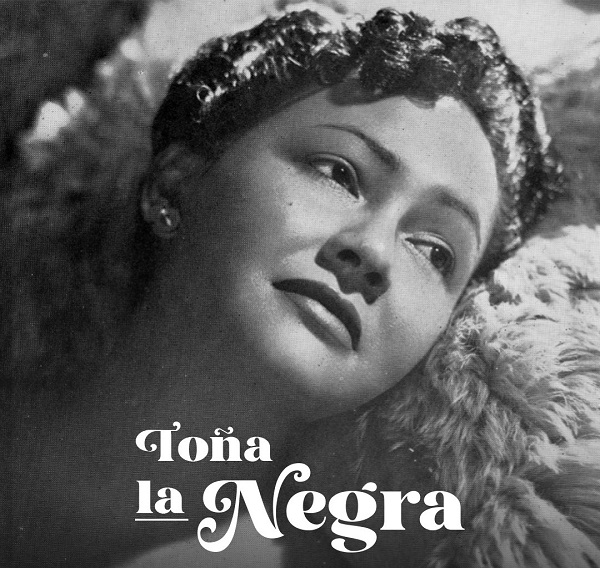
Toña La Negra The Unequaled Velvet Voice of Tropical Song

Antonia Peregrino was born in the city of Veracruz, in the La Huaca neighborhood, on November 2, 1912.

Her father, Don Timoteo Peregrino Reyes, played the guitar and worked as a freight opener for the crates arriving at the port; he was also one of the founders of the Veracruz Port Commercial Loaders and Openers Guild.

Her mother, Doña Daría Álvarez Campos, sang at family gatherings.

Her paternal grandfather, Don Severo Peregrino, was Haitian and had emigrated to Mexico in the 19th century.

By 1927, she had married Guillermo Cházaro Ahumada, who took her to Mexico City with their first child, who was only forty days old.

On July 16, 1929, she debuted at the cabaret El Retiro. While performing there, where she was known as La Peregrina, she met Don Emilio Azcárraga Vidaurreta. It was Azcárraga, along with Enrique Contel, who christened her “Toña La Negra.”
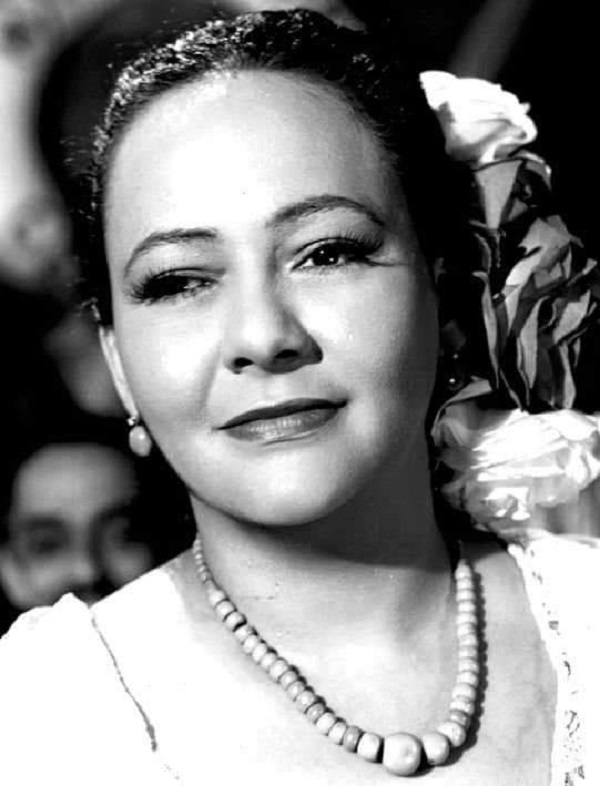
On November 19, 1982, in Mexico City, Antonia del Carmen Peregrino Álvarez, better known as “Toña La Negra”, passed away.

She began to gain recognition with her interpretation of the song “Enamorada” (In Love) by Agustín Lara. Lara also produced tracks for her such as “Lamento Jarocho,” “Veracruz,” “Noche Criolla” (Creole Night), “Oración Caribe” (Caribbean Prayer), “Palmera” (Palm Tree), “La Clave Azul” (The Blue Key), and “La Cumbancha.” They presented these together in a musical revue at the Teatro Esperanza in December 1932, achieving such success that they had to extend their performances for a long time.

Her voice tone was rather deep, with a velvety and rounded sound, and impeccable vocal techniquecharacteristics that became her interpretive signature.

Azcárraga added her to the cast of the XEW radio station, where she sometimes performed accompanied by Lara and other times by the Alfredo Girón orchestra.

Shortly thereafter, her spectacular performances began at the Teatro Politeama, across from Las Vizcaínas and next to San Juan de Letrán street.

Her recordings for the RCA Victor label constitute one of the most precious musical legacies in the history of the bolero.

One of the first records she cut for this label contained the song «El Cacahuatero» (The Peanut Vendor); this recording dates back to the 1930s. For RCA Victor, she recorded several long-play albums, including Caleidoscopio musical con Toña la Negra (Musical Kaleidoscope with Toña la Negra), Noche Criolla, vol. II, and La Sensación Jarocha, vol. III (The Jarocha Sensation, vol. III).

In the mid-sixties, she signed an exclusive contract with Discos Orfeón, where she recorded the last albums of her career.

“Este amor salvaje” (This Wild Love), “Por qué negar” (Why Deny It), “Obsesión,” “Mentiras tuyas” (Your Lies), “Y sin embargo te quiero” (And Yet I Love You), “Noche criolla,” “Pesar” (Grief), “Vereda tropical” (Tropical Path), “Cada noche un amor” (A Love Every Night), “Angelitos negros” (Little Black Angels), “Lágrimas de sangre” (Tears of Blood), “Estás equivocado” (You Are Wrong), “De mujer a mujer” (From Woman to Woman), “Como golondrinas” (Like Swallows), “Diez años” (Ten Years), and “Cenizas” (Ashes) are some of her successful titles recorded on over 75 LP records, some of them for the Peerless label. Already famous for many years, she recorded two songs with the legendary Sonora Matancera in 1974.
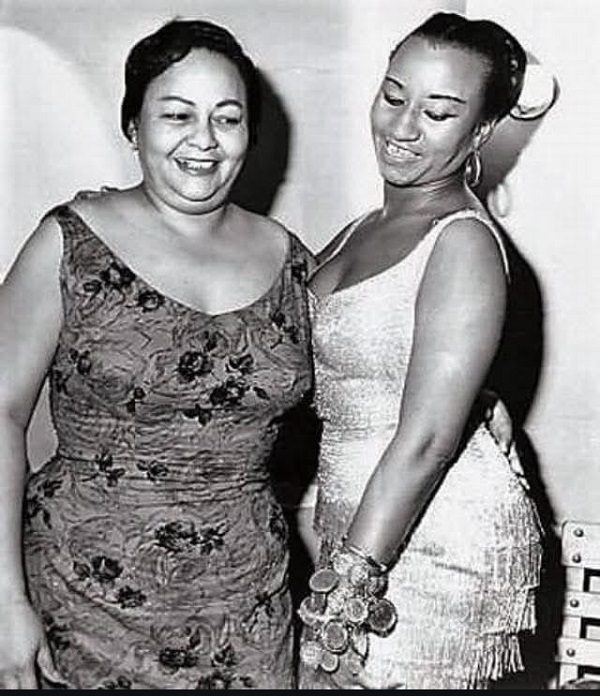
Toña La Negra y La Reyna Celia Cruz

In her final years, due to some health issues, she gradually withdrew from the stage and recording.

Toña La Negra always maintained a very reserved personal life. With her first husband, the musician Guillermo Cházaro Ahumada, she had three children: Ramón (b. 1932), Guillermo (b. 1933), and Ernesto (1935–1979). Toña and Cházaro Ahumada separated in 1945.

Later, in 1955, she remarried the Veracruz-born bassist Víctor Ruiz Pazos, known as “Vitillo.” This marriage lasted until 1963. In an interview, Ruiz Pazos spoke about Toña’s artistic qualities:

Her commitment, her feeling when she sang, her style, the way she did it, how she expressed things musically; I have lived a long time, I have heard many fabulous singers, but none of them come close to Doña Toña.

The German filmmaker Christian Baudissin made a documentary about Toña La Negra for television in 1993, featuring interviews with her ex-husband, the musician Vitillo (Víctor Ruiz Pazos), and other artists who knew her during her lifetime.

Collaborators:

Los Mejores Salseros del Mundo

Dj. Augusto Felibertt

Also Read: Santa La Salsera and Diva of Mexico with her unique voice and style will continue to conquer us all
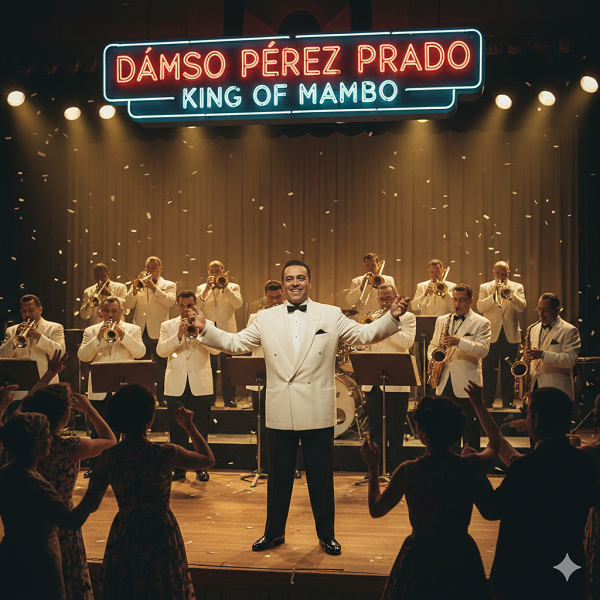
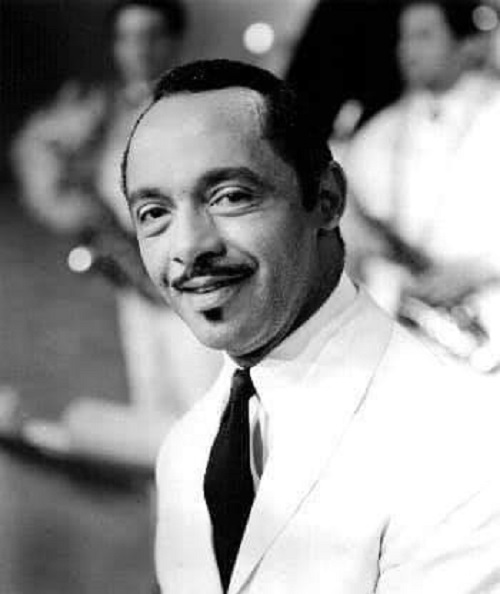
Dámaso Pérez Prado and the Succession of the “Mambo King”

Dámaso Pérez Prado was a Cuban musician, composer, arranger, and orchestra conductor, known worldwide as the “Mambo King.”

On December 3, 1983, Pantaleón Pérez Prado, an excellent bass player and composer, passed away in Milan, Italy. He was born on December 27, 1926, in Matanzas, Cuba.

Pantaleón’s Beginnings and Career

Pantaleón followed in the footsteps of his famous older brother, Dámaso Pérez Prado. At age 18, he formed his first orchestra, which he left in 1950 to join Dámaso’s group as a double bassist, accompanying him for several years.

He also played for a short time in Havana with the Laito Castro Orchestra. In the mid-1950s, Pantaleón Pérez Prado went independent and traveled to Europe, where he led an orchestra of Cuban musicians. This group achieved great success performing the songs that Dámaso had popularized.

Dámaso Pérez Prado and the Succession of the King of Mambo

The Legal Dispute

In 1956, a dispute between Dámaso Pérez Prado and his younger brother, Pantaleón (1926–1983), led to an unusual legal conflict. Dámaso sued his brother for $500,000, accusing him of impersonation.

In Hispanic culture, it is common for children to receive both parents’ surnames. In this case, the brothers’ birth names were Dámaso Pérez Prado and Pantaleón Pérez Prado, respectively, with Pérez being the father’s surname and Prado the mother’s.

In Portugal, the song Pantaleón performed, “Mambo del Estudiante” (Student’s Mambo), became the “official anthem” of the University of Coimbra. He also succeeded in Spain, France, and Italy, where he was introduced as “Pérez Prado, Rey del Mambo” (King of Mambo), which produced intentional confusion with his brother Dámaso.

Dámaso initiated legal action that concluded with Pantaleón being prohibited from using the title “Mambo King,” while also being required to use his full name. Some suggest that, beyond the lawsuit, there was a tacit agreement between the two brothers, based on the fact that Dámaso visited Europe infrequently, focusing his activities in the Americas, while Pantaleón permanently settled in Milan.

Name Confusion and The Conflict’s Revival

Originally, RCA credited the recordings to Dámaso Pérez Prado. However, when his records began appearing in the US, the record company shortened his name to the more alliterative Pérez Prado. In 1955, Dámaso dropped his full name and legally changed it to Pérez Prado.

Around that time, Pantaleón, who played bass with his own group, appeared at the Alhambra theater in Paris under the name “Pérez Prado, el Rey del Mambo.” Pantaleón was subsequently restricted by court order from passing himself off as Pérez.

However, hostilities resumed when an angry French visitor called the Hollywood Palladium, where Pérez Prado was performing, and yelled at the management for featuring an “imposter,” claiming he had danced with the “real” Prado (actually Pantaleón) in Deauville a few weeks prior.

Dámaso Pérez Prado fue un músico, compositor, arreglista y director de orquesta cubano, conocido mundialmente como el Rey del Mambo.

The ensuing lawsuit effectively put Pantaleón out of commission, but the younger brother had a form of posthumous revenge. When Pantaleón died in 1983, a widely circulated obituary was headlined “Mambo King Dies in Milan,” leading many people to (erroneously) believe it was Dámaso who had passed away.

Pantaleón’s Career and Legacy

Pantaleón Pérez Prado performed in Greece and traveled to Iran at the invitation of the Shah himself and his wife, Princess Soraya. He remained active until shortly before his death in 1983.

Dámaso Pérez Prado’s Notable Hits

Dámaso Pérez Prado’s best-known songs include:

  • “Mambo No. 5”
  • “Qué rico el mambo” (also known as “Mambo Jambo”)
  • “Mambo No. 8”
  • “Cherry Pink and Apple Blossom White,” which was a number one hit in the United States.
  • “Patricia,” which was a worldwide hit and was included in Federico Fellini’s film La Dolce Vita.
Dámaso Pérez Prado
Dámaso Pérez Prado

Legacy: In addition to his recordings, Dámaso Pérez Prado participated as an actor and musician in several Mexican films. His music was key to the international popularization of the mambo, and his style remains influential in Latin music and jazz.

Collaboration:

Los Mejores Salseros del Mundo 

Dj. Augusto Felibertt

Also Read: Israel “Cachao” López, a Cuban musician and composer, has been hailed as “the Inventor of Mambo

Raúl Eliza: from the army barracks to the stage and recording studios

It is increasingly common to find Puerto Rican artists who have had something to do with the United States Army, and our guest today is yet another example of how the music scene is not entirely separate from the military world. Bandleader and drummer Raúl Eliza has told us his fascinating story, focusing on his most important facets: military and art.

Raúl Eliza playing live
Puerto Rican bandleader and drummer Raúl Eliza playing live at Christmas

Adolescent musical tastes and the beginning of military life

In the 1980s, Raúl was a young resident of the Fairview neighborhood, located between the city of San Juan and Trujillo Alto, who was an obsessive fan of rock music. Of course, that was until he turned 19, when he enlisted in the U.S. Army in search of his purpose in life. 

According to his own tale, his poor academic performance and lack of interest in other disciplines led him to join the navy, where he would love his profession shortly after. At first, he and a group of friends joined up to opt for a different alternative to the one they had, move forward from the stalemate, and be able to travel the world, but in his case, he ended up in love with this world.

In fact, a short time after entering military service, he was involved in the Gulf War, which consisted of the Iraqi occupation of Kuwait and its subsequent liberation by a US military coalition. During those days, Raúl realized that he was into something greater than himself and that the shallowing mindset with which he chose that life could turn into something bigger.

So, the then-soldier dedicated himself to doing his work as good as possible, bringing with it rewards like the opportunity to go to college, become an officer, receive medals, and much more. 

Introduction to salsa

After three or four months of enlisting, he started to feel a wave of nostalgia for his country. He wanted to see his family and missed the music and food of his homeland. Then his sister sent him a package with two cassettes, one by Frankie Ruiz and the other by Eddie Santiago, which he says changed his life completely. He used to listen to them on old-fashioned players with headsets while cleaning the boat or doing the rest of his other assigned tasks.

Raúl Eliza in his uniform
Raúl Eliza in his service dress uniform

Subsequently, his brothers sent him cassettes by La Fania, Alex D’ Castro, Gilberto Santa Rosa, Cano Estremera, and many others. This made him reconnect with his roots and realize that he wanted a career in music at some point, which he would end up doing years later.

Raúl’s role as the United States representative for the Supreme Headquarters Allied Powers Europe

As the end of his military career approached, Raúl was designated as the United States representative for the Supreme Headquarters Allied Powers Europe (military wing of NATO) during President Donald Trump’s first term.

This was a tough stage of his service, as the president had a lot of run-ins with other member countries due to the excessive economic and armament burden borne solely by the United States. For this reason, every time he made some sort of announcement about that, Raúl received thousand calls from representatives of other countries asking him for explanations. He had his own office and received orders directly from the Pentagon. 

Thanks to his position, he had a lot of freedom, so he always played salsa music in the background, and when his officers got into his office, they laughed and danced along with the tunes Raúl was listening to at that moment. Everyone knew that when he was in charge, there was always salsa music playing in the room.

Raúl in front of a tank
Raúl Eliza in front of an army tank while on duty

The beginning of his musical career

Finally in 2018, Raúl retired from military service, but already in 2017, he was making arrangements to devote himself to music once his duty with the army had been fulfilled. Specifically, he was in talks with Puerto Rican artists who were sending him samples and demos based on original songs that he had previously sent them. He was also writing his own lyrics and taking bass lessons to get ready for the future.

Once in Puerto Rico in 2018, he released his first single with his orchestra Conciencia Clásica, which is so named because his music was intended to raise awareness to his fans on social issues such as war, the injury suffered by the civilian population during periods of armed conflict, post-traumatic stress in soldiers, and racism, to name a few.

Artists he has collaborated with

Throughout his short career, Raúl has been blessed to count on the support and collaboration of music greats like Andy Montañez, Willito Otero, Jerry Medina, Carlos Esteban Fonseca, Medina Carrión, among others. While it is true that they all had much to contribute to the Puerto Rican artist at the level of knowledge, Montañez wrote him a song he dedicated to his Dominican wife called “Quisquellana,” which he is enormously thankful for.

He also has songs with Choco Orta and those already mentioned above. Raúl came into contact with these figures thanks to his music producer Manolo Navarro, who was the guy who introduced them to the project and managed to get them to collaborate.

Conciencia Clásica's third album
Cover of Conciencia Clásica’s third album ”Conciencia Clásica 3”

Read also: Cristobal Verdecia and his quartet Son Qba in Miami

Cache Live Music puts Miami to dance to traditional Latin music

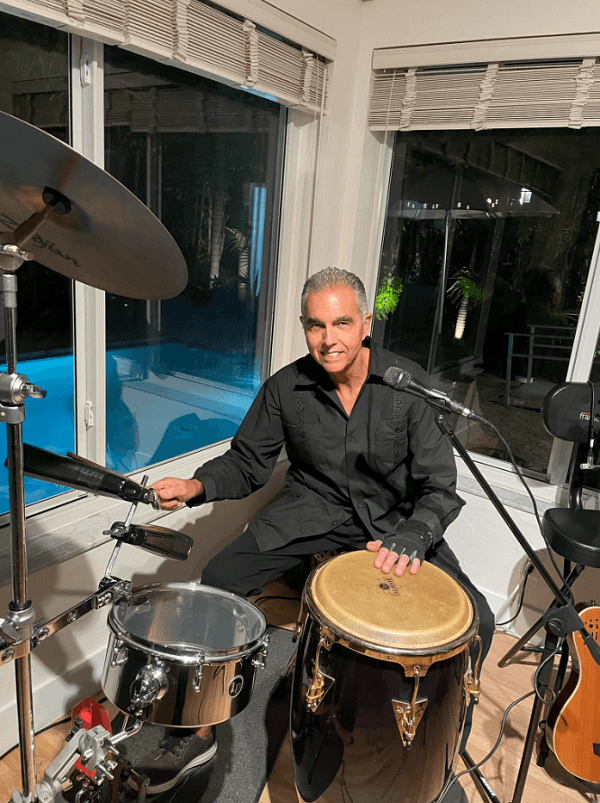
Roland Cache graced this edition with his presence to tell us about his beginnings, the subsequent creation of his band Cache Live Music, and his current career. The American of Cuban descent honors his roots with the music he and his collaborators play to delight their fans at any event they are hired, indicating the pride he feels in representing his parents’ country and how passionate he is about his craft.

Roland shared many interesting details about his musical life, and we are more than happy to share them with our readers in the following lines.

Roland Cache playing
Roland Cache playing drums live at an event

Roland’s musical beginnings as a teenager

As a child, Roland lived in Elizabeth, New Jersey, where some high school friends convinced him to play drums with them. Their favorite genre was the rock of the day, which was the 1960s. A few years later, specifically in 1973, another friend took him to a salsa concert at Madison Square Garden, and he liked what he heard so much that he became more involved in Latin music and left American music aside. 

Seeing great artists such as Tito Puente, Ray Barretto, and other artists of Puerto Rican descent, he learned to play timbales, tumbadora, and bongos, which allows him to play a combination of conga, timbales, and clave at the same time. 

Orchestras prior to Cache Live Music

Before creating his own band, Roland was part of other projects that were training him for what was to come in his career later. One of them was a band from New Jersey, whose members formed La Charanga Casino, which became very popular in that city.

Some time later, Roland could not play for a while, so he has been throwing himself into selling cars and other area businesses. Then, in 1998, he returned to music and created an American band that played rock and jazz with a touch of Latin music.

Roland Cache and the rest of the band
Roland Cache and the rest of Cache Live Music

Creation of Cache Live Music 

Eventually, he left the American band and founded a Latin band called Cache Live Music with a group of musicians, some of whom remain alongside Roland to this day. He met most of them through another musician friend who introduced them so he was knowing other artists who joined his project.

Cache Live Music was officially started in 1999, and according to its founder, the hardest thing about keeping a band like this together for so long was the search of opportunities in clubs and other kinds of places. However, Roland says that his experience as a salesman and negotiator has helped him a lot in winning contracts and the best conditions for him and his bandmates.

Current status of Cache Live Music

Today, the core of the band consists are three of its members: the guitarist, the bassist, and Roland, who is a multi-instrumentalist. More recently, Cache included a flutist, a trombonist, and sometimes a singer. This is how, depending on the requirements for a particular event, the group’s leader decides which members and instruments to include for every occasion in order to offer something different.

Cache at an Amazon event
Cache Live Music at an Amazon corporate event

Regarding the repertoire, they only perform covers, but they ensure that each and every song has their personal touch so that they resemble as little as possible to the original versions.

Anyone who wants to hire Cache Live Music can do so through its profile on The Bash by making a deposit and sending a contract to agree on the conditions of the event. However, it is important to note that they are already booked for December and January with corporate parties and weddings, for which we wish them every possible success because they already have the talent.

Tomas Pedro Regalado and Roland
Former Mayor of Miami Tomas Pedro Regalado and Roland Cache

Read also: The Williamsburg Salsa Orchestra: electrifying fusion and salsa flavored with indie rock

Ángel Luis Canales is a renowned Puerto Rican singer and composer known as “El Diferente” (The Different One) for his particular and irreverent style

Angel Canales was born on June 29, 1950, in Santurce, Puerto Rico.

During his childhood, around the age of 8 or 10, he moved with his family to New York City, where he lived in East Harlem (Upper Manhattan). Musical influences indicate that from a young age, he was strongly influenced by the music of Cortijo y su Combo and Ismael Rivera.

Before or concurrently with his musical career, he worked in the jewelry business; he was a messenger and later learned to cut and polish diamonds, a skill that allowed him to self-finance his musical career and pay high salaries to his musicians.

Ángel Luis Canales is a renowned Puerto Rican singer and songwriter known as El Diferente for his unique and irreverent style.

Musical Career

His Beginnings: He started as a timbalero in Ray Jay’s orchestra, where he debuted as a singer, replacing the lead vocalist.

His first album (1970), titled “Brujería,” was released in 1970 and recorded under the Alegre Records label, with musical direction by Mark Dimond. Hits from this production include “El Barrio,” “Yo No Tengo Pena,” and the title track.

Notable Hits: Among his most popular songs are: “Nostalgia,” “Sol de Mi Vida,” “Perico Macoña,” “Lejos de Ti,” “Hace Tiempo,” “El Cantante y la Orquesta,” “Sabor de los Rumberos Nuevos,” “Bomba Carambomba,” and his celebrated rendition of the bolero “Dos Gardenias.”

His Unique Style is recognized for its unorthodox approach and distinctive vocal timbre, which earned him the nickname “El Diferente” (The Different One).

He was a highly independent artist who self-financed his albums and founded his own record label, Celanac Records.

Tours and Retirement

International Tours: He toured internationally, visiting countries such as Panama (his first), Venezuela (where he performed at the Poliedro de Caracas in 1982), Colombia, and Peru. It is said that he never performed with his orchestra in his native Puerto Rico.

He retired in the late 1990s, deciding to leave the stage.

Currently, he is reportedly battling Parkinson’s disease, which has limited him and led him to choose silence and retirement, although he occasionally attends private events. He is currently 75 years old.

Àngel Luis Canales, y el pianista, compositor y arreglista Gilberto el pulpo Colòn

50 Years Since the Launch of “Sabor” (1975)

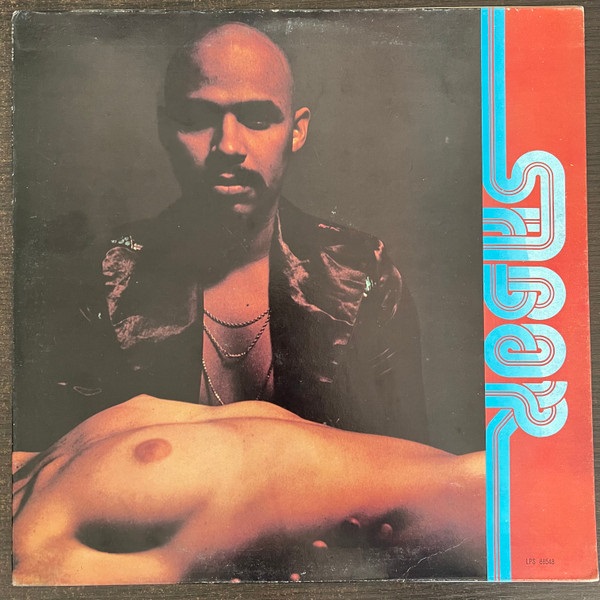
The Album: The album titled “Sabor” by Angel Canales was released under the Alegre Records label in 1975.

Only a boricua (Puerto Rican) who has been absent from their homeland knows what it’s like to be away from Puerto Rico when winter arrives in New York City. Or when you’re inside a taxi or walking the congested streets of the Bronx or the Latino barrio, and all you see around you are skyscrapers and more skyscrapers. The anxiety and sense of helplessness that overwhelm your spirit in the concrete jungle can only be calmed by memories.

50 years ago, on Monday, November 10, 1975, the unique voice of Puerto Rican singer Ángel Luis Canales consoled the thousands of boricuas oppressed by nostalgia with his composition “Lejos De Ti” (Far From You). It was a confession and affirmation of his Puerto Rican identity, in which he asserts that his love for his homeland will never die, even though he was raised in New York.

The song is a guaguancó with lyrics that evoke images of old San Juan, Villa Palmeras and its rich bomba heritage, Boca de Cangrejos, fried fritters on the grill, and the river that crosses through the old Ancón de Loíza Aldea, where his grandmother lived. “Lejos De Ti” remains the most remembered track from “Sabor,” an album produced by Joe Cain, recorded in late 1974, and released by Alegre Records on Monday, November 10, 1975.

Angle Canales Sabor 1975 Photography By Dominique

This album is considered one of the best salsa releases of the 1970s.

Canales’ Style: Canales favored a different style of interpreting Afro-Caribbean rhythms, combining elements from Héctor Lavoe, Ismael Rivera, Vicentico Valdés, and Paquito Pérez (the singer of the Orquesta Zodiac of Loíza). He extended the melodies with his nasal voice, challenging the poetry of the montunos, but going off-key and mispronouncing some words. His diction was far from perfect.

Production: The architect of Canales’ success was Colombian pianist Edy Martínez, who arranged seven of the eight tracks on this session, from cut #2 to #8. Due to a prior commitment with Mongo Santamaría’s band, he left his compatriot José Madrid in charge of the piano performance on this record.

Under Martínez’s direction, Canales embraced fame. “Sabor” was his second album between 1970 and 1971, he had recorded the “Brujería” session with pianist Mark Alexander “Markolino” Dimond, who founded Conjunto Sabor after spending several years with Willie Colón’s band.

Canales reappeared four years later with the Orquesta Sabor los Rumberos Nuevos with an arrangement by Louie Cruz. That same year, 1975, Larry Harlow produced Mark Dimond’s classic “Beethoven’s V” featuring vocalists Frankie Dante and Chivirico Dávila. “Sabor” was a huge hit.

Tours and Artistic Choices: The singer toured Europe, the United States, and South America, where Colombians, Panamanians, and Peruvians remember him fondly to this day, despite health issues forcing him to retire from the stage.

During the golden age of salsa, singers were expected to master all genres, and boleros were no exception. His vocalization on “La Hiedra” (a track written by Saverio Saratini and Vincenzo D’Acquisto) and “No Te Acostumbres” (a track belonging to Doris Aghian’s catalog) is notable for its theatricality, a trick Canales employed to mask the limitations of his voice.

Salsa dancers who thrive on piano, trombone, and percussion solos will be delighted with “Sabor Los Rumberos Nuevos,” “Sol De Mi Vida” (dedicated to his wife Brunilda), “El Cantante y La Orquesta,” and the hit “Hace Tiempo” (with its memorable chorus: ay, ay, ay, no me hagas padecer así – oh, oh, oh, don’t make me suffer like this).

Legacy: Before becoming a professional singer, Canales worked as a jeweler. A look at the covers of his first two albums is enough to conclude that he was a pioneer in the use of bling-bling in salsa. As a composer, Canales was a solid chronicler of barrio life. The story told in “Perico Macoña” is a good example: a man who smokes a joint and loses all self-control, insulting his own friends with his abrupt comments.

The re-issue of “Sabor” is a fitting tribute to the memory of the late Joe Cain.

Credits

  • Trombone: Juan Torres, Ricardo Montañez
  • Trumpet: Tom Malone
  • Baritone Saxophone, Flute: Emérito Benítez
  • Piano: José Madrid
  • Bass: Eddie Testo
  • Congas: Antonio Tapia
  • Timbales: Gadier Quiñones
  • Bongo: Aldemaro Luis Rivera
  • Producer: Joe Cain
  • Musical Director: Juan Torres
  • Recorded at: LE Studio NYC, December 1974
  • Engineer: Sandy Sina
  • Arrangements: Edy Martínez (except “Sabor Los Rumberos Nuevos” by Louie Cruz)

Torres, Montañez, Tapia, and Quiñones had previously collaborated with Canales on Markolino Dimond’s “Brujería” album.

Collaboration:

  • GonZalsa
  • L’Òstia Latin Jazz
  • Dj. Augusto Felibertt
  • Jaime Torres Torres
  • Fania Record
Angel Canales «El Diferente» recibiendo la produccion de Danilo Cajiao Titulada»Mi Perdicion» año 2020

Also Read: Angel Canales «El Diferente» receiving the production from Danilo Cajiao titled »Mi Perdicion» year 2020.

  • « Go to Previous Page
  • Page 1
  • Interim pages omitted …
  • Page 18
  • Page 19
  • Page 20
  • Page 21
  • Page 22
  • Interim pages omitted …
  • Page 155
  • Go to Next Page »

International Salsa Magazine (ISM) is a monthly publication about Salsa activities around the world, that has been publishing since 2007. It is a world network of volunteers coordinated by ISM Magazine. We are working to strengthen all the events by working together.