• Skip to primary navigation
  • Skip to main content

International Salsa Magazine

  • HOME
  • Previous editions
    • 2026
      • ISM / March 2026
      • ISM / February 2026
      • ISM / January 2026
    • 2025
      • ISM / December 2025
      • ISM / November 2025
      • ISM / October 2025
      • ISM / September 2025
      • ISM / August 2025
      • ISM / July 2025
      • ISM / June 2025
      • ISM / May2025
      • ISM / April 2025
      • ISM / March 2025
      • ISM / February 2025
      • ISM / January 2025
    • 2024
      • ISM / December 2024
      • ISM / November 2024
      • ISM / October 2024
      • ISM / September 2024
      • ISM / August 2024
      • ISM / July 2024
      • ISM / June 2024
      • ISM / May 2024
      • ISM / April 2024
      • ISM / March 2024
      • ISM / February 2024
      • ISM / January 2024
    • 2023
      • ISM / December 2023
      • ISM / November 2023
      • ISM / October 2023
      • ISM – September 2023
      • ISM – August 2023
      • ISM July 2023
      • ISM Edition June 2023
      • ISM – May 2023
      • ISM April 2023
      • ISM March 2023
      • ISM February 2023
      • ISM January 2023
    • 2022
      • ISM December 2022
      • ISM November 2022
      • ISM October 2022
      • ISM September 2022
      • ISM August 2022
      • ISM July 2022
      • ISM June 2022
      • ISM May 2022
      • ISM February 2022
      • ISM January 2022
    • 2021
      • ISM December 2021
      • ISM November 2021
      • ISM October – 2021
      • ISM September 2021
      • ISM August 2021
      • ISM July 2021
      • ISM May 2021
      • ISM April 2021
      • ISM June 2021
      • ISM March 2021
      • ISM February 2021
      • ISM January 2021
    • 2020
      • ISM December 2020
      • ISM November 2020
      • ISM October 2020
      • ISM September 2020
      • ISM August 2020
      • ISM July 2020
      • ISM June 2020
      • ISM May 2020
      • ISM April 2020
      • ISM March 2020
      • ISM February 2020
      • ISM January 2020
    • 2019
      • ISM December 2019
      • ISM November 2019
      • ISM October 2019
      • ISM Septembre 2019
      • ISM August 2019
      • ISM July 2019
      • ISM June 2019
  • Download Salsa App
    • Android
    • Apple
  • Spanish

Search Results for: Orchestra

5 years to the Son of La Salsoteca of the moment, Lavoe

Latin America / Ecuador / Quito

On April 14, 5 years ago, a trend arrived in Quito. We will talk about a space that came to fill the great void in the salsa dancers of this beautiful capital, an alternative that became fashionable, a fashion that became customary and customary has become culture, how not to refer to Lavoe the site of meeting of Salsa in Ecuador.

This great Salsoteca has the perfect environment for lovers of good salsa and bachata, a context armed with paintings of the most important figures of Latin Caribbean music in the world, many of them autographed during their visit to this palace of dance, Well attenuated colors for an incredible freshness, a first class service that makes you the main artist of the night, we are talking about a 100% safe environment full of friendly people and ready to give you a fascinating moment.

Lavoe opens its doors from Tuesday to Saturday to offer you a week full of options, Tuesdays with romantic salsa, Wednesdays with the best of salsa brava with tributes to those great salsa singers of all time, Thursdays and Saturdays with Salsa and Bachata and Fridays with concerts by national and international orchestras, every day from 9:00 p.m. to 12:00 a.m. with access only for adults.

In this same order of ideas, Lavoe maintains an annual festive calendar where we can count on special events during the year, concerts, talks, great festivals of orchestras and dance schools for 3 months of the year, closing with the great anniversary party where we can delight in the best rumba of the year.

Salsoteca Lavoe
Salsoteca Lavoe

This Salsoteca has earned the affection and appreciation of all of Quito not only for its excellent services and large spaces, but also for being an icon of contribution to the professional growth of all schools in the city, generating support activities for trips and participation in festivals. and congresses in the world where they manage to position Ecuadorian talent, already demonstrated by reviewing the trajectory of this beautiful country in congresses and salsa world championships.

Lavoe makes donations and imparts a culture of union and joint work among all these academic entities dedicated to the dissemination of Latin music in the capital, all guided by its main objective, to make the visitor enjoy a space dedicated to dance.

It is incredible to see how hundreds of people can enjoy good music, share and enjoy an environment adapted to this great discipline, from a professional dance floor made of eucalyptus wood with an air chamber to protect the dancers, to the perfect selection and location of furniture, tables and chairs, leaving the entire center of the premises for the main goal to be covered day by day, to ensure that visitors enjoy an ideal space to move their bodies.

Upon entering the venue, friendly staff who are happy to be part of this project welcome you, locate you and serve you from early in the evening. impossible to take risks in a family environment and friends who already have this night space as their great dance house, you can see adults from all walks of life, dancers, dancers, relatives of dancers, parents, grandparents, families themselves complete that can easily enjoy dance shows and night shows without having to have special conditions for it.

Our friend Diego, owner and main helmsman of this festive boat, tells us “… Lavoe was created with the concept of family, of a given space for sharing and dancing for all sectors of the city, we are inclusive, everyone has a place in this my house, your house…” and boy, do they take it seriously, there are no special conditions in clothing, nor preferences of color, creed or social race, everyone is welcome, yes, the only condition is to come wanting to dance, do it well, do it wrong, whether you know it or not, don’t worry the space is ready for it.

The surprises are present throughout the night, we can see the Barthender and waiters dance with the attendees, well yes, here every human being must participate in the atmosphere, how not to do it if even the staff that works is obliged to accept their invitation to dance, and beware, accept theirs, they know how to do it, they are great characters in this space, in a moment they receive you or serve you a cocktail and in a few minutes they could be enjoying a good piece of music with you.

Attend and join the great choreography that can be performed when listening to Salsa Choque, or enjoy listening to the crowd chant a good song or the show that is put together at the bar, it is an environment for the enjoyment of all generations, grandparents , parents, children and grandchildren, all together in a space of enjoyment, that is how Cristian Pérez, the founder dancer of Lavoe, told us, he has been attending for 5 years and does not stop doing so, he says ”

… during his 5 years he refers to a meeting space of the salsero of the city, I attend up to 3 times a week since there is no cost to enter, I can come with any of my friends, we all had a great time.”

Iñaquito and United Nations is located next to the Primax gas station, you can find it on Facebook as SalsotecaLavoeQuito, website www.salsotecalavoe.com and by Phone +593 993210464 do not stop attending, join the fashion of the capital of the center of the world, be part of this beautiful experience, there are two floors of pure enjoyment Lavoe awaits you.

For more information:

  • WedSite: https://www.salsotecalavoe.com/
  • Facebook: SalsotecaLavoeQuito Twitter: salsotecalavoe

Eduardo Ron and his Fondo Blanco Band liven up great events in Miami

Once again, the Venezuelan talent in the United States is a source of inspiration for the subject of these lines and it is the turn of Venezuelan musician, sound engineer and DJ Eduardo Ron. The artist has kindly taken a few minutes of his time to answer our questions about his career and group, so here are the most important topics of our conversation.

Eduardo playing the keyboard
Eduardo Ron playing the keyboard during an event

How Eduardo started in music in his native country

Since Eduardo was just a five-year-old boy, he proved to have a very capable hearing at home and already liked music very much, so his parents decided to enroll him in piano lessons, although he confessed that the instrument was not his thing. At school, he became part of bands with which he gradually found his preferred style and genres.

With these groups, he even competed in school band contests in Caracas, which are very common in the city. Over time, the only one of his close friends who ended up devoting himself to music was him, to the point that he became a ‘’one-man band’’ who took care of almost everything in his own musical project.

It was until 20 years ago where he began to include singers, percussionists and other musicians to be part of his group. That is when he changed the name to ‘’Fondo Blanco’‘, taking Eduardo’s last name, which is Ron (rum in Spanish), as inspiration.

What things Eduardo learned besides the piano

From a very young, Eduardo always liked to have contact with the part of the audio and equipment, which led him to study sound engineering at the Taller de Arte Sonoro. In addition to that, although he loves percussion and masters it to some extent, he was a keyboardist and singer for many years. He is no longer doing either at the moment, as he has decided to devote himself entirely to music production, mixing and mastering.

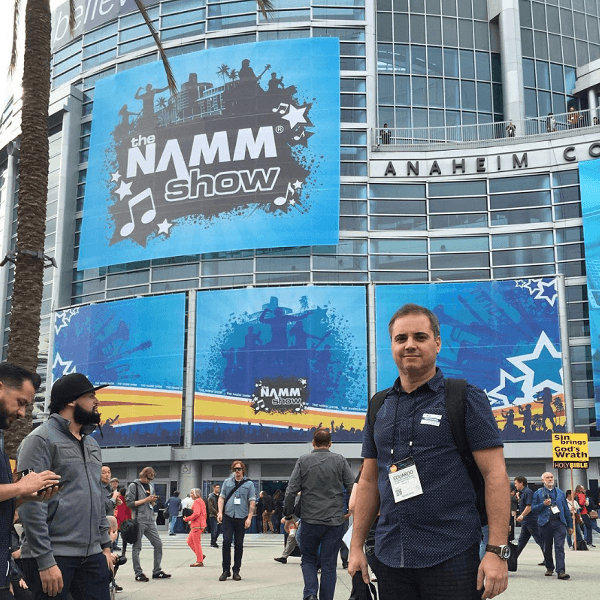
Eduardo at The NAMM Show
Eduardo Ron at The NAMM Show in 2016

When Eduardo decided to move to the United States

About 14 or 15 years ago, Eduardo decided to move to the city of Miami due to the political and economic situation in Venezuela at that time. For the same reason, he had no choice but to start from scratch with the project in these new lands and return to play, something he had not done for years, but the situation warranted.

The artist describes the Miami music market as complicated, since the competition is fierce. A huge advantage he had was that he studied English since he was very young, so the language issue was not a problem for him, but that did not make the other drawbacks easier to solve. 

One of the first surprises Eduardo got was that, in Miami, he has done no more than 50 events a year, while in Venezuela he had as many as 140 in a year. This is because the market is gigantic and it is difficult to make a big name in it, not to mention that live orchestras do not have as many bookings as before due to cost reductions.

Two years later, he had already got new artists working with him and his situation had stabilized successfully, although the process was not easy. Moreover, even today, he cannot demand exclusivity from those who work with him because he does not have the economic muscle for that, so he has a long list of musicians whom he calls for certain events. One of the first ones he always calls is Army Zerpa, whom he described as one of the best bassists and arrangers he knows, which is why he has become a key person for his project. 

Artists with whom Fondo Blanco has shared the stage 

Fondo Blanco has been fortunate to share the stage with great artists such as Oscar D’ León, Ricky Martin, Gilberto Santa Rosa, Marc Anthony, among others. Of course, the contact with these luminaries taught Eduardo many things and he assures that one of the best shows he offered was during a Santa Rosa concert, where there were more than 12,000 people. He assures that this is one of those days he will never forget.

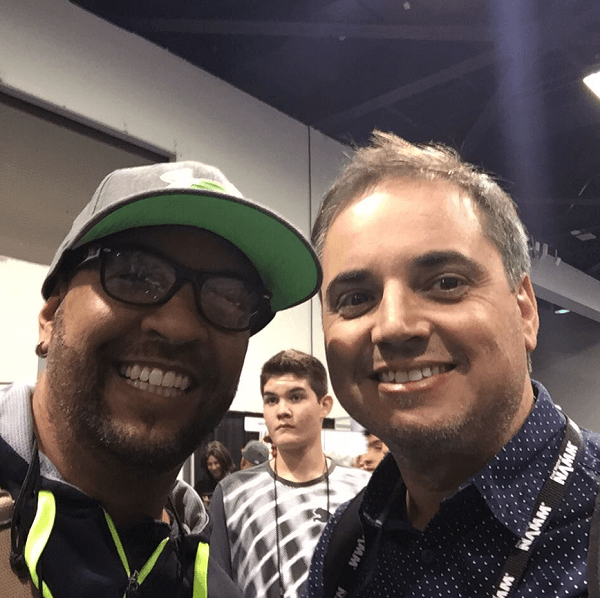
Eduardo and Omar
Eduardo Ron next to Omar Ledezma Jr. at The NAMM Show in 2016

However, just as he has had very positive experiences as the previous one, obviously not everything is rosy. The Venezuelan told us that one of those not so good days was during a Ricky Martin concert, an event he had to open that day. It turns out that his equipment was damaged two hours before his turn and he had to try to fix it in front of the crowd of 30,000 people who came to see the Puerto Rican superstar, but nothing he did worked and the audience began to hiss.

That same day, Ricky Martin’s keyboardist asked him to borrow his keyboard because his was damaged and, when returning it, it was totally messed up and what Eduardo had there had been deleted.

Today, although he remembers this with humor, the experience was so unpleasant that it led him not to accept other proposals due to fear that the same thing could happen again. However, once these fears were overcome, he continued to play with his band and has managed to adapt to what the Miami market required both locally and internationally, which shows that the goals and targets should not be disregarded no matter however difficult the circumstances become and Eduardo Ron is a great example of that.

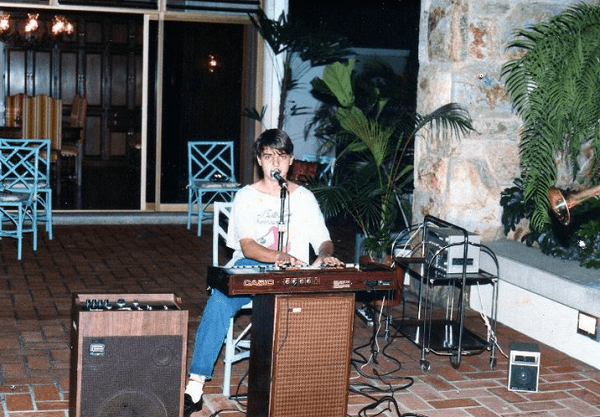
Eduardo rehearsing
Eduardo rehearsing for the gaitas contest at Claret School, Caracas

Read also: What a pleasure to talk to Pablo Pérez ‘‘El Alcalde de La Salsa’’

Oscar Dudamel continues to achieve dreams and presents “La Rumba Me Llama”

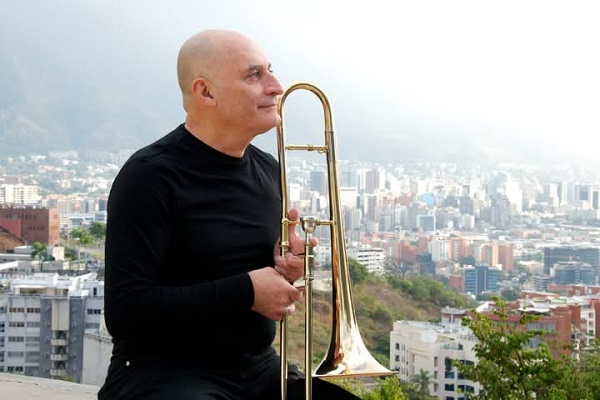
Legendary Venezuelan trombonist Oscar Dudamel expands his musical vision with a new single that fuses the essence of classic salsa with his unmistakable style, which is why he does not hesitate to express “La Rumba Me Llama”.

This song is part of his upcoming album “Sueño Alcanzado”, a production that will be released on May 30 and represents the culmination of years of musical research, fusing the classic salsa sound with jazz influences and the romantic tradition of boleros.

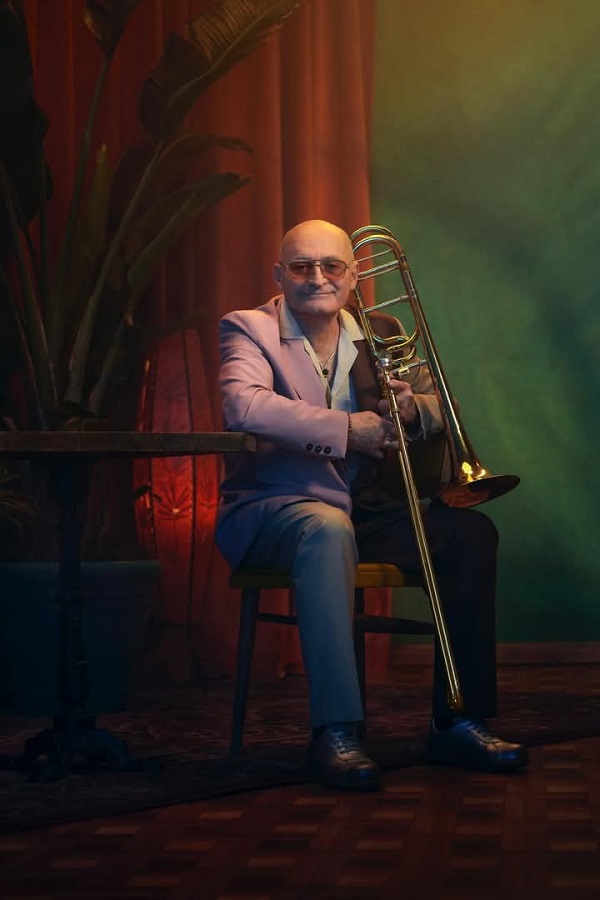
El legendario trombonista venezolano Oscar Dudamel

In “La Rumba Me Llama”, Dudamel brings his trombone to the forefront of a vibrant composition that captures the essence of the rumba as an inescapable call. With a musical structure that evokes the great salsa orchestras and an impeccable instrumentation.

The piece stands out for its meticulous arrangements, powerful brass and an irresistible cadence, faithful to the spirit with which Dudamel has approached his music. The track is an invitation to the dance floor and a testament to the rhythmic power that has defined his career.

The album Sueño Alcanzado not only takes its name from a personal concept of triumph, but also from one of his most significant pieces.

The title track was born in an intimate creative encounter in Caracas, Venezuela, with Maestro Alberto Crespo, composer Eliel Rivero and Solange Ramírez, mother of his son Gustavo Dudamel.

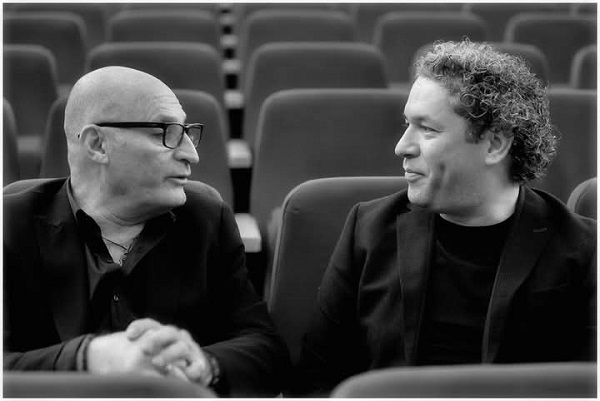
Oscar y Gustavo Dudamel

Dedicated to her son and with her special participation on violin, this piece encapsulates the spirit of a project that transcends the musical to become a testimony of life.

More than a nostalgic production, “Sueño Alcanzado”, of which the song “La Rumba Me Llama” is part, is the reflection of an evolution. The music that accompanied him since his childhood now takes a new form under his direction, in a creative process that has brought together talented musicians with whom he shares the same vision.

His orchestra, based in Madrid, has become the vehicle to continue taking his proposal to international stages, demonstrating that salsa is still alive in every note and every drum beat.

“La Rumba Me Llama” is now available on all digital platforms and is just a preview of ‘Sueño Alcanzado’, Oscar Dudamel’s new album, consolidating his legacy with authenticity and mastery.

Oscar Dudamel Virtuoso Musician, Trombonist and Orchestra Conductor.

Oscar Dudamel, a Venezuelan trombonist, discovered his passion for salsa as a child when he first heard “La Murga” by Willie Colón. Although his formal musical training began with Maestro Pablo Canela and later continued within El Sistema as a classical musician, that early experience left a profound mark on him, inspiring his dream of playing the trombone and solidifying his love for salsa as his ultimate passion.

Dudamel was born on January 14, 1961, in Barquisimeto, Venezuela. He grew up in a musical family where every gathering was celebrated with music, fostering his passion for the art from a young age. His parents purchased him a trombone, and he began his studies at the Yamaha Music Academy.

Oscar Dudamel sigue alcanzando sueños

At the age of 7, he was enrolled in a music academy under the guidance of Maestro Pablo Canela, a composer and prominent figure in the music of the Lara State region of Venezuela.It was there that he started his training with the Cuatro, the traditional Venezuelan instrument, and the guitar, which became his first instruments.

In addition to his Cuatro training, Dudamel began studying and playing various percussion instruments, further broadening his musical repertoire.

His academic training took place at the Lara State Conservatory in Barquisimeto, and at the National System of Youth and Children’s Orchestras and Choirs of Venezuela, also known as El Sistema.

During his teenage years, he became a member of the Youth Orchestra of Lara State (El Sistema Lara) and the Liceo Mario Briceño Iragorry Band, where he had the opportunity to expand his musical knowledge and explore various genres.

Dudamel entered a new phase of his life when he enrolled at the Vicente Emilio Sojo Music Conservatory to study theory and solfège, continuing his trombone studies under the guidance of his maestro, Óscar Vivenes.

Over the years, he became a member of the Lara Youth Symphony Orchestra of Lara, part of the national network of Venezuela’s El Sistema orchestras, actively participating in classical music.

However, his fascination with the Caribbean rhythms of salsa never disappeared. Thus, he combined his classical training with his passion for salsa, performing with renowned artist and sharing the stage with legends of the genre, such as Héctor Lavoe, Ismael Rivera, Ismael Miranda, Celia Cruz, Justo Betancourt, Marvin Santiago, and other great artists.

In Caracas, Venezuela, he founded his own orchestra, with which he had the opportunity to share the stage with notable figures such as Rubén Blades, Gilbert Santa Rosa, Luis Enrique, Guaco, Oscar D’ León, and many others.

Dudamel’s surname is synonymous with music. He is the father of Gustavo Dudamel, one of the most acclaimed classical music conductors in the world. Gustavo’s well-known fondness for salsa stems from his father, who recently fulfilled his lifelong dream of releasing a solo album titled Sueño Alcanzado, dedicated to his son.

Dudamel currently resides in Madrid, Spain, where he leads his ensemble, Oscar Dudamel y su Orquesta, performing salsa alongside his Venezuelan musician friends and colleagues at Café Berlín Madrid.

Oscar Dudamel y Dj, Augusto Felibertt

‍Research Sources:

Contact: Katie Baloian of Radio Notas (Compartiendo Ideas)

Alberto Crespo (Pianist and Arranger)

Dj. Augusto Felibertt

Café Berlin in Madrid

Also Read: Mariana “The Sonera of Venezuela and for the world”

The multifaceted Aymée Nuviola delivers her ‘Corazón Sonero’ to Puerto Rico, at the historic Tapia Theater in Old San Juan

Pete Perignon’s orchestra kicked off Aymée Nuviola’s concert, entitled Corazón Sonero, with a powerful Latin jazz introduction. During the first minute, the instrumental melody settled into a salsa key, giving way to the voices of Lorna Marcano and Ricely Colón, who chanted: “Yo te invito a bailar y a gozar con Aymée, la sonera del mundo” (I invite you to dance and enjoy with Aymée, the sonera of the world). The chorus duo of Marcano and Colón prepared the theater for the triumphant entrance of the voice of La Sonera del Mundo.

La multifacética Aymée Nuviola Imágenes Conrado Pastrano

As the curtain rose at the historic Alejandro Tapia y Rivera Theater in Old San Juan, the stage design by José “Quenepo” Ramos Vega, which revealed two transparent fabric borders held in the middle by an imposing white star, caught the attention of the audience. The red of the triangle of the Cuban flag was represented by the pendant unfurled to the left of the star, while the cloth representing the Puerto Rican flag was held on the right hand side of the same star. The inspiration of the design demonstrates that the Cuban and Puerto Rican flags are fraternal twins.

The opening lyric that resounded in the theater, which was filled to capacity, with the vocal power of Aymée Nuviola read: “A little bit of good salsa, a little bit of pure salsa, so that new people, get to know our culture”. From then on, the music obeyed Nuviola’s command, singing: “Let the clave get into your body, let the conga and the bongo move the floor”. Sure enough, three hours later we were still letting the stage delivery of the musical team continue to move the floor. Pete masterfully directed: Jean Carlos Camuñas on tumbadoras, Carlos Pagán on bongó, campana, güiro and maracas, Miguel Camilo on piano, Jorge Rivera on bass, Pedro Marcano and Víctor Ambert on trumpets, César Ayala and Léster Pérez on trombones and Saviel Cartagena on tenor and soprano saxophones.

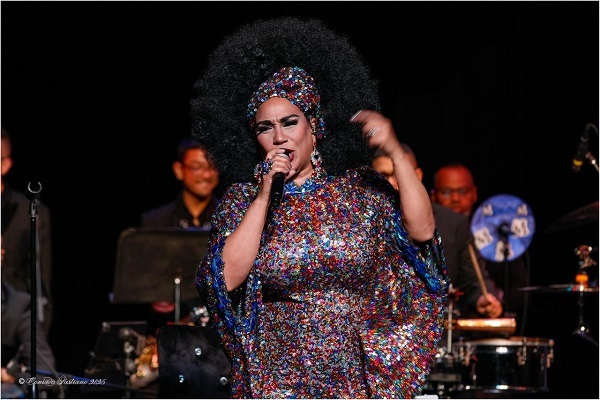
Ten minutes into the music under the direction of the leader of the generation of the present, as timbalero Pete Perignon is known on Puerto Rican soil, Aymée greeted the audience with a heartfelt, “¡Buenas noches, Puerto Rico!” She thanked the attendees in a candid manner for joining her, while making jokes about how heavy her dress was as she elegantly adjusted the flounce and wings of her sleeves. She also commented on the design of the theater, inaugurated in 1832.

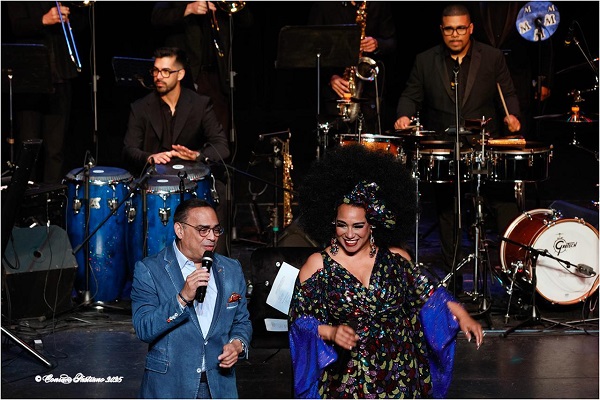
Gilberto SantaRosa y Aymée Nuviola Imágenes Conrado Pastrano

That first conversation with the audience served to connect with a: “we are survivors”, in clear reference to the COVID-19 pandemic, shortly before quoting Celia Cruz saying: “As Celia said so well: ‘Thank you Puerto Rico, for lending me your flag’. She also recognized actor Willy Denton, who played Pedro Knight when Aymée impersonated Celia Cruz in the soap opera Celia and who was among those present.

Nuviola boasted of having reached the fifth floor, as she recounted that she was going to record her version of ‘El ratón’ with Cheo Feliciano, whose unexpected death thwarted the long-awaited collaboration. However, Aymée decided to record it anyway, in order to pay tribute to Señor Sentimiento. The evening’s repertoire included: ‘Un poco de salsa’, ‘Salsa con timba’, ‘Yo sé que es mentira’, ‘El ratón’, ‘La tierra del olvido’ and ‘La gota fría’.

Many remember Aymée for her character of Celia Cruz in an acting performance that marked “a before and after” in the singer’s career. This was acknowledged by the actress, shortly before paying tribute to Celia, with her versions of ‘Cúcala’ and ‘Quimbara’, in addition to performing a medley of some of the songs with which Celia was crowned the Queen of Salsa. The medley included ‘Toro mata’ and ‘Bemba colorá’, among others.

The concert included a bohemian part during which Aymée accompanied herself on the classical piano to share with us her passion for the filin. The selected repertoire was: ‘Obsesión’, ‘Bésame mucho’, ‘Me faltabas tú’, ‘Perfidia’ and ‘Lágrimas negras’.

Before performing ‘El espacio’, of her own composition, and accompanied by Miguel Camilo on piano, Aymée said that the song was inspired by “someone else’s skeleton”, as the composer described it. Aymée emphasized that ‘El espacio’ is not dedicated to her husband. Between jokes and laughter, the sonera shared with those present her love story with Paulo Simeón, while acknowledging the presence of Fabio Díaz Vilela, who was the owner of the place where the couple met more than 14 years ago. Aymée expressed her gratitude to Fabio, for also having been a great support for the career of the producer, “from day one”.

Aymée Nuviola Imágenes Conrado Pastrano

The climax of the concert came as the sonera took off ‘El cuarto de Tula’, Gilberto Santa Rosa -who was among the attendees- went up on stage to duet with Aymée, between each soneo to describe the scope of the talent of the Cuban who gave her sonero heart to Puerto Rico. El Caballero de la Salsa was also able to tell La Sonera del Mundo the fascination that the Puerto Rican public has for her. For their part, Aymée’s soneos expressed to Gilberto the admiration she has for him for being “a great maestro”.

The repertoire of this last section included the songs ‘Fiesta’ and ‘El manisero’, which incorporated correspondences between the singer and the pianist. The coda of ‘El manisero’ coincided with the closing of the curtain, while the audience shouted “another, another, another”. The ñapa corresponded to ‘Chan chan’, a song included in the album that won Nuviola a Grammy for his production A Journey through Cuban Music. The interpretation was sprinkled with the strength brought by the trumpets of Pedro Marcano and Víctor Ambert, along with the trombones of César Javier Ayala and Léster Pérez. Chan Chan’ announced the farewell with which Aymée Nuviola’s energetic “God bless Puerto Rico” resounded as the curtain came down on her first solo concert on Puerto Rican soil. For my part, I reciprocate: “God bless Aymée Nuviola and her team (including Paulo Simeón and Luis Solís)”.

Here in the Island of Enchantment we are pleased to know that Corazón Sonero has consolidated this high-end artist, whom we already consider our own.

Bella Martinez Puerto Rico

Images: Conrado Pastrano

Also Read: Mel Martinez I come from Puerto Rico and Puerto Rico is Salsero

Our friend Tito Allen supports the Salsa Museum

From the Salsa Museum, we can boast of having a long list of important artists who have supported us since the project started or over the course of all these years. One of them is Roberto Romero Caballero, better known as Tito Allen, who is called ”El Elegante de La Salsa” by his most loyal fans as a result of the book ”Swing Latino” by Angel Mendez.

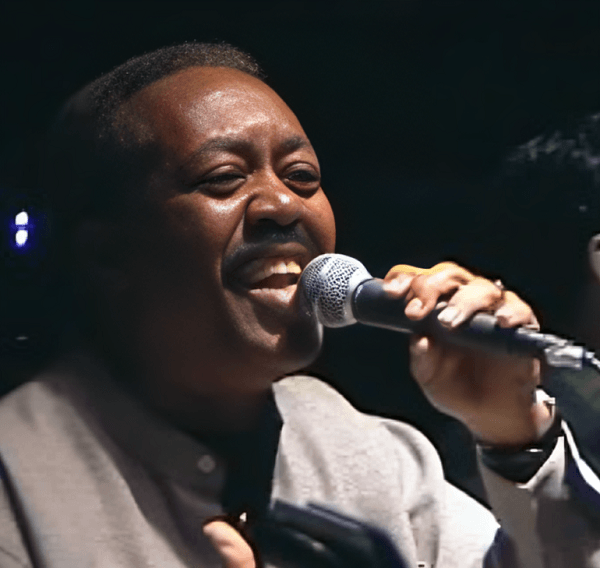
Tito singing
Tito Allen singing live

A little bit of Tito Allen’s biography

Tito Allen was born in the neighborhood of Santurce, municipality of San Juan, Puerto Rico, in 1946. He began his professional career in music as a 16-year-old teenager, when he was already part of groups in which he played the guitar and even performed on Puerto Rico’s Channel 4.

Although it is true that, initially, he was much more inclined to rock and roll and also used to play the bass, he changed his mind as time went by and decided to become a salsa singer, to the delight of all fans of the genre who gained forever one of their greatest Puerto Rican references. The best thing is that he turned out to have an incredible voice, so it was a very wise decision.

Obviously, Tito had his own inspirations to become what he is. In interviews with Tito, from his point of view, Cheo Feliciano is one of the best salseros of all and he has been listening to him since he was with Joe Cuba Sextet. As for the orchestras, he has also revealed that his favorite is that of Bobby Valentín and the song with which he identifies the most is ”Contento”. Another artist for whom he also expressed his admiration and desire to collaborate is the legendary pianist Eddie Palmieri.

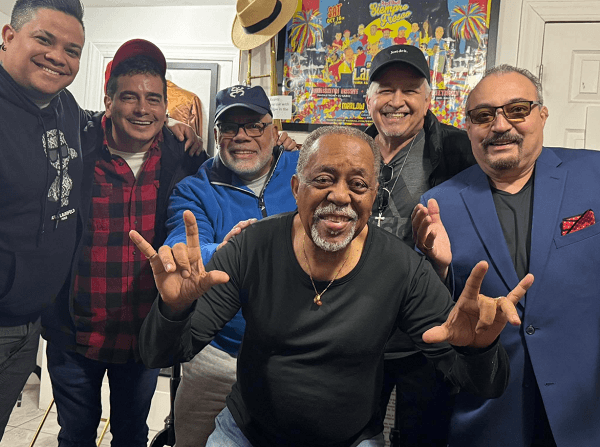
Tito and Johnny
Johnny Cruz, Tito Allen, Viti Ruiz, Jorge Leureyro, Christopher Rey and Ray Sepulveda

Tito Allen’s career

This talented man’s career is so wide that it is impossible to list everything he has done since he started in music, but it is possible to highlight that he has always tried to collaborate with as many groups and artists as possible and the list of recordings he has with other great names proves it. Tito Allen has sung along with Cheo Feliciano, Ray Barreto, La Típica 73, Adalberto Santiago, Papo Lucca, Willie Rosario, Fania All Stars, Pupi Legarreta, among many others.

It should also be noted that the singer traveled to New York in 1972 in order to attend Tito Puente’s shows and try to sing with him, but unfortunately he had no vacancies at that time. In view of this refusal, he decided to meet with pianist Edite Martínez, which resulted in a quintet that used to play in nightclubs.

He went back to Puerto Rico, but traveled again to New York very soon after, since he got a chance to play at ”El Corzo” with Ray Barretto’s orchestra, which was in need of a singer after the departure of Adalberto Santiago. After that, he finally managed to sing with Tito Puente for a few months and then went on to join La Típica 73 and La Puerto Rico All Stars.

All this without counting the large number of productions and recordings in which Tito sang and delivered backing vocals with many other big names in the industry.

Supporting the Salsa Museum 

Recently, Tito visited us at the Salsa Museum to give us his support and promote the institution as so many of his colleagues have done. In our social networks, you can see two pictures of the artist with our president Johnny Cruz, Viti Ruiz, Jorge Leureyro, Christopher Rey and Ray Sepulveda. 

Johnny Cru ISM corresponde in New York City

Read also: Puerto Rican singer Max Rosado and what he had achieved in Washington DC

  • « Go to Previous Page
  • Page 1
  • Interim pages omitted …
  • Page 30
  • Page 31
  • Page 32
  • Page 33
  • Page 34
  • Interim pages omitted …
  • Page 155
  • Go to Next Page »

International Salsa Magazine (ISM) is a monthly publication about Salsa activities around the world, that has been publishing since 2007. It is a world network of volunteers coordinated by ISM Magazine. We are working to strengthen all the events by working together.