• Skip to primary navigation
  • Skip to main content

International Salsa Magazine

  • HOME
  • Previous editions
    • 2026
      • ISM / March 2026
      • ISM / February 2026
      • ISM / January 2026
    • 2025
      • ISM / December 2025
      • ISM / November 2025
      • ISM / October 2025
      • ISM / September 2025
      • ISM / August 2025
      • ISM / July 2025
      • ISM / June 2025
      • ISM / May2025
      • ISM / April 2025
      • ISM / March 2025
      • ISM / February 2025
      • ISM / January 2025
    • 2024
      • ISM / December 2024
      • ISM / November 2024
      • ISM / October 2024
      • ISM / September 2024
      • ISM / August 2024
      • ISM / July 2024
      • ISM / June 2024
      • ISM / May 2024
      • ISM / April 2024
      • ISM / March 2024
      • ISM / February 2024
      • ISM / January 2024
    • 2023
      • ISM / December 2023
      • ISM / November 2023
      • ISM / October 2023
      • ISM – September 2023
      • ISM – August 2023
      • ISM July 2023
      • ISM Edition June 2023
      • ISM – May 2023
      • ISM April 2023
      • ISM March 2023
      • ISM February 2023
      • ISM January 2023
    • 2022
      • ISM December 2022
      • ISM November 2022
      • ISM October 2022
      • ISM September 2022
      • ISM August 2022
      • ISM July 2022
      • ISM June 2022
      • ISM May 2022
      • ISM February 2022
      • ISM January 2022
    • 2021
      • ISM December 2021
      • ISM November 2021
      • ISM October – 2021
      • ISM September 2021
      • ISM August 2021
      • ISM July 2021
      • ISM May 2021
      • ISM April 2021
      • ISM June 2021
      • ISM March 2021
      • ISM February 2021
      • ISM January 2021
    • 2020
      • ISM December 2020
      • ISM November 2020
      • ISM October 2020
      • ISM September 2020
      • ISM August 2020
      • ISM July 2020
      • ISM June 2020
      • ISM May 2020
      • ISM April 2020
      • ISM March 2020
      • ISM February 2020
      • ISM January 2020
    • 2019
      • ISM December 2019
      • ISM November 2019
      • ISM October 2019
      • ISM Septembre 2019
      • ISM August 2019
      • ISM July 2019
      • ISM June 2019
  • Download Salsa App
    • Android
    • Apple
  • Spanish

Search Results for: Orchestra

Flora Purim has earned her two Grammy nominations for Best Female Jazz Performance

Flora Purim (born March 6, 1942 in Rio de Janeiro) is a Brazilian jazz singer known primarily for her work in the jazz fusion style.

Airto Moreira, Flora Purim y Carlinhos Noronha

She was featured for her part on Chick Corea’s landmark album Back to Eternity.

She has recorded and performed with many artists, including Stanley Clarke, Dizzy Gillespie, Gil Evans, Stan Getz, the Grateful Dead, Santana, Jaco Pastorius, and her husband Airto Moreira.

Flora Purim’s voice has earned her two Grammy nominations for Best Female Jazz Performance and Down Beat magazine’s Best Female Singer award four times.

Her musical partners include Gil Evans, Stan Getz, Chick Corea, Dizzy Gillespie and Airto Moreira, with whom she has collaborated on more than 30 albums since moving with him from her native Rio to New York in 1967.

In New York, she and Airto became the center of the period of musical expression and creativity that produced the first commercially successful “Electric Jazz” groups of the 1970s.

Blue Note artist Duke Pearson was the first American musician to invite Flora to sing with him on stage and on record.

She then toured with Gil Evans, about whom she says, “This guy changed my life. He gave us a lot of support to do the craziest things.

This was the beginning for me. Her reputation as an outstanding performer earned her work with Chick Corea and Stan Getz as part of the New Jazz movement that also contained the nurturing influence of saxophonist Cannonball Adderley.
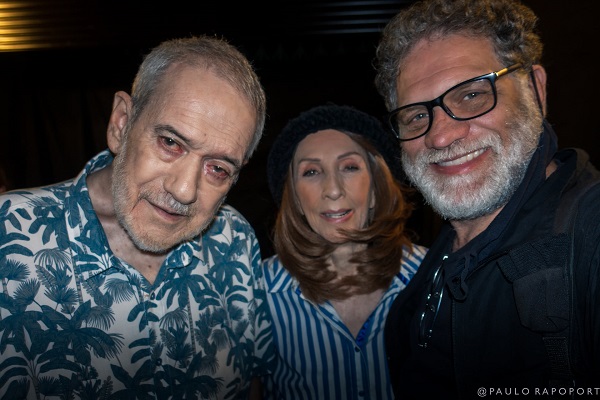
Airto Moreira, Flora Purim e Paulo Rapoport Popó

Soon after, Flora began to seriously re-educate discriminating musical minds after joining with Chick Corea, Stanley Clarke and Joe Farrell to form Return To Forever in late 1971.

Two classic albums resulted – Return to Forever and Light as a Feather nodal points in the development of jazz fusion.

Flora’s first solo album in the United States, Butterfly Dreams, released in 1973, immediately placed her among the top five jazz singers in Down Beat magazine’s jazz poll.

In the mid-1980s, Flora and Airto resumed their musical collaboration to record two albums for Concord – Humble People and The Magicians – for which she received Grammy nominations.

In 1992 she went further by singing on two Grammy winning albums – Planet Drum with Grateful Dead drummer Mickey Hart (Best World Music Album) and the Dizzy Gillespie United Nations Orchestra (Best Jazz Album).
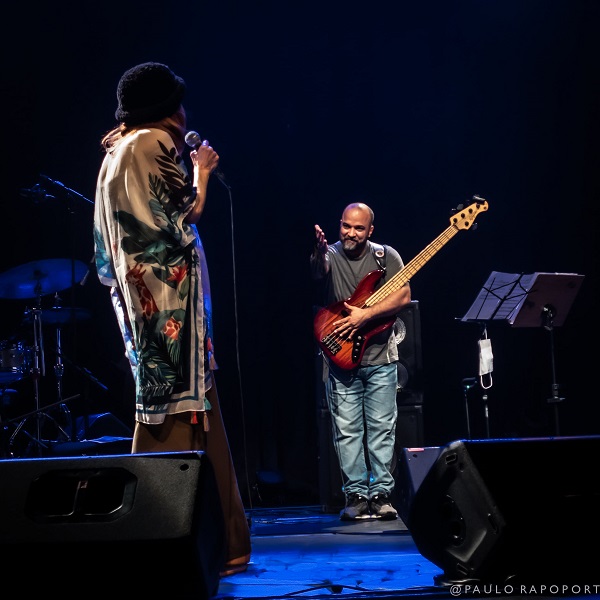
Flora Purim y Carlinhos Noronha

The launch of the Latin jazz band Fourth World in 1991, featuring Airto, new guitar hero Jose Neto, and keyboard and reeds leader Gary Meek, marked a new era in Flora’s career.

The band was signed to the British jazz label B&W Music, and Flora consciously set out to win over the next wave of listeners.

Flora’s 1995 album Speed of Light, with major writing and performance contributions from Chill Factor and Flora’s daughter Diana Purim Moreira, makes the connection between her experimental beginnings with Chick Corea and Gil Evans and the new “head” music being produced by jazz musicians in the London and New York hip hop scenes.

Flora Purim Open Your Eyes You Can Fly (1976)

Flora Purim Open Your Eyes You Can Fly (1976)

1- Open Your Eyes, You Can Fly (Chick Corea-Neville Potter)

2-Time’s Lie (Chick Corea-Neville Potter)

3- Sometime Ago (Chick Corea-Neville Potter)

4-San Francisco River (Airto Moreira-Purim Purim)

5-Andei “I Walked” (Hermeto Pascoal)

6-Ina’s Song “Trip to Bahia” (Flora Purim)

7-Conversation (Hermeto Pascoal)

8-Medley: White Wing/Blank Wing (Hermeto Pascoal-Flora Purim).

arrangements:

Hermeto Pascoal (4.5.7.

Egberto Gismonti (4)

Flora Purim (6)

The whole group (1.2.3)

01-David Amaro – electric guitar

George Duke – electric piano

Alfonso Johnson – electric bass

Ndugu (Leon Chancler) – drums

Background vocals: Flora, David Amaro, George Duke, Hermeto Pascoal

Instrumental solo: David Amaro (electric guitar)

02-Hermeto Pascoal – flute

David Amaro – acoustic guitar

George Duke – electric piano, ARP sequence,

ensemble synthesizer

Alfonso Johnson – electric and acoustic bass – Alfonso Johnson – electric and acoustic bass

Ndugu – drums

Airto Moreira – percussion

Instrumental solo: Hermeto Pascoal (flute), Nudgu (drums)

03-Hermeto Pascoal – flute

David Amaro – electric guitar

George Duke – electric piano, ARP sequence,

ensemble synthesizer

Alfonso Johnson – electric bass

Ndugu – drums

Airto Moreira – percussion

Laudir de Oliveira – congas

Instrumental soloist: Hermeto Pascoal (flute), David Amaro

(electric guitar)

04-Hermeto Pascoal – flute, electric piano

Egberto Gismonti – acoustic guitar

David Amaro – electric guitar

George Duke – moog synthesizer

Alfonso Johnson – electric bass

Ron Carretero – acoustic bass

Robertinho Silva – drums

Instrumental duet: Hermeto Pascoal (flute) and George Duke

(synthesizer

05-Hermeto Pascoal – flute, electric piano

David Amaro – electric guitar

George Duke – moog synthesizer, clavinet

Alfonso Johnson – electric bass

Airto Moreira – percussion

Robertinho Silva – drums, berimbauduet

vocal: Flora Purim and Airto Moreira

Instrumental duet: Hermeto Pascoal (flute), George Duke (flute), George Duke

(synthesizer), David Amaro (electric guitar)

06 -Hermeto Pascoal – electric piano

David Amaro – electric guitar

George Duke – moog, ARP Odyssey and ARP Odyssey sequences, ARP synthesizer

ARP, ensemble synthesizer

Alfonso Johnson – electric and acoustic bass – Alfonso Johnson – electric bass and acoustic bass

Robertinho Silva – drums, percussion

Laudir de Oliveira -congas

Instrumental solo: Georrge Duke (ARP synthesizer)

Odyssey)

07-Hermeto Pascoal – electric piano

David Amaro – electric guitar

George Duke – ARP sequences ensemble and moog synthesizer

moog synthesizer

Alfonso Johnson – acoustic bass

Airto Moreira – percussion

08-Hermeto Pascoal – electric piano, pipe, harpsichord,

whistling, percussion (seven-up bottles)

Egberto Gismonti – acoustic guitar

Ron Carretero – acoustic bass

Alfonso Johnson – electric bass

Airto Moreira – percussion, drums, berimbau

Robertinho Silva – percussion, berimbauduet

vocal: Flora Purim and Airto Moreira

Instrumental solo: Hermeto Pascoal (harpsichord and whistle)

Information realized (March 28, 2008)

Sources:

L’Òstia Latin Jazz 

Flora Purim

Also Read: Samuel Quinto Feitosa is a Brazilian virtuoso jazz and classical pianist
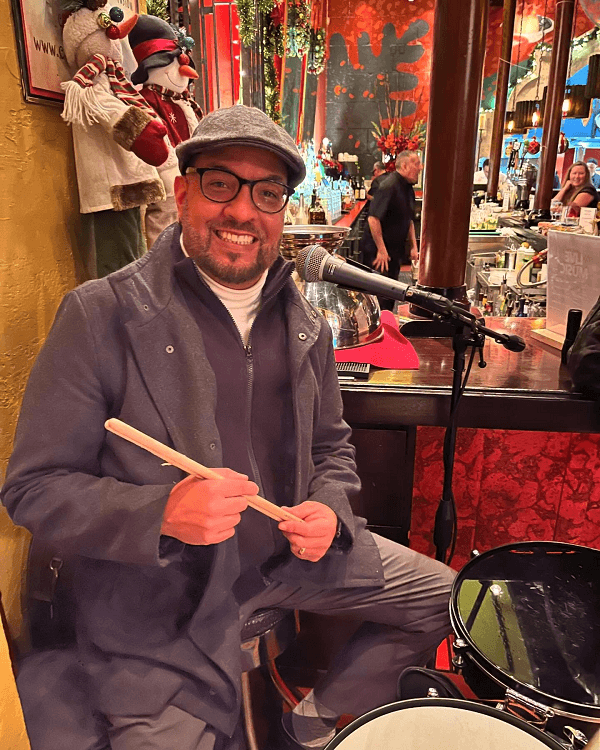
Career and interesting facts about Venezuelan singer and musician Omar Ledezma Jr.

Venezuelan singer, percussionist and music teacher Omar Ledezma Jr. has already talked to us in the past and has revealed important details regarding his life and career, but this time, our editor Eduardo Guilarte has been in charge of interviewing him and revealing some unknown details about his different facets professionally and personally.  

Is such a pleasure to have the chance to talk to one of the most talented Latin musicians who currently lives in the San Francisco Bay Area and know so many things that the artist had not previously revealed.   

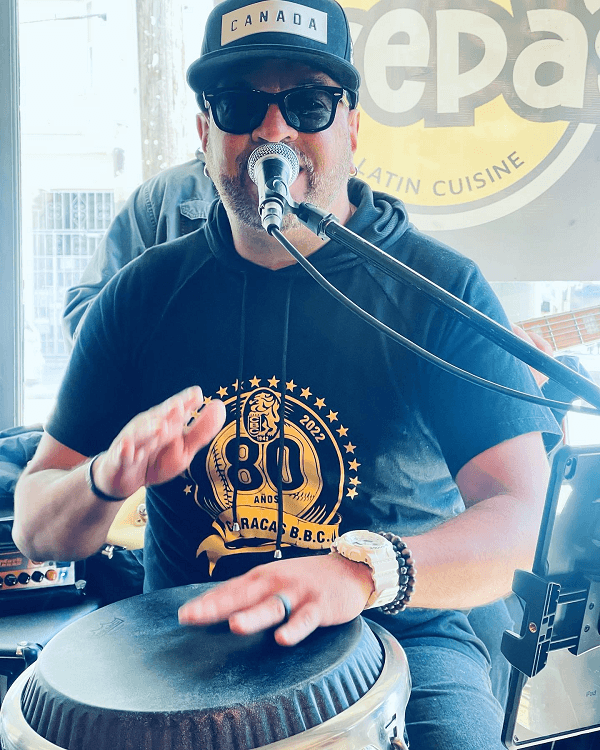
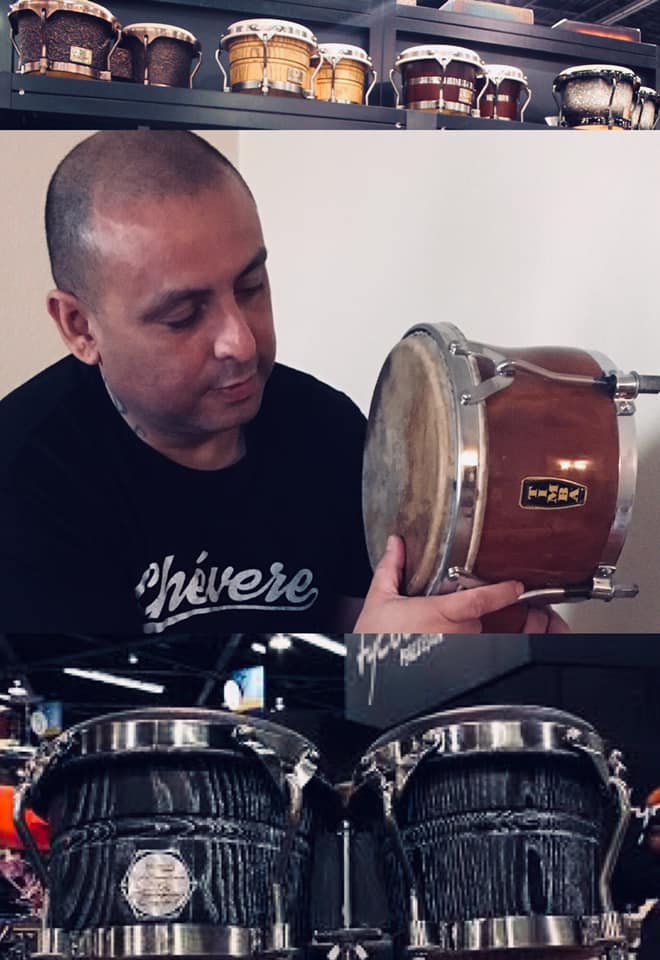
Venezuelan percussionist Omar Ledezma
This is Omar Ledezma Jr., Venezuelan singer, percussionist and music teacher

Omar Ledezma’s beginnings in music and childhood 

Omar Ledezma Jr. was born on February 17, 1972 in Caracas, Venezuela, and was raised in a very close family that gave him a lot of love and care since he was a child. Both the Ledezma and López families were very important in his growth, but it was from the Ledezma’s that he got his musical vein.   

His mother and cousin José Vicente Rodríguez López decided to enroll him in the marching band at the Claret School, where he had his first contact with music by playing the snare drum, an instrument he was first assigned to play. It is also in the band where he started making friends with other teens who were already forming gaitas groups to compete in contests related to this traditional Venezuelan genre.   

When he turned 16, he began to participate in these gaitas inter-school competitions in 1987 and 1988. In 1989, he participated in his first big musical event at the nightclub Mata de Coco. Omar assures that this was the official start of his career in a more professional way. A few years later, going hand-in-hand with his father, he began to take a deeper interest in music as a profession and wanted to experiment with other genres such as Afro-Cuban music and Latin jazz.   

This path led him to join the orchestra La Charanga Clásica led by Mr. Frank Luzón. While playing there, he met several inspiration timbaleros such as Daniel Cádiz (from the Andy Durán Orchestra). 

In parallel with all of the above, Omar was admitted to study in law school at the Santa María University, so he shared his time between his university studies and his professional musical activities. In his spare time outside the university, he played Latin jazz and was formed as a percussionist with his orchestra.   

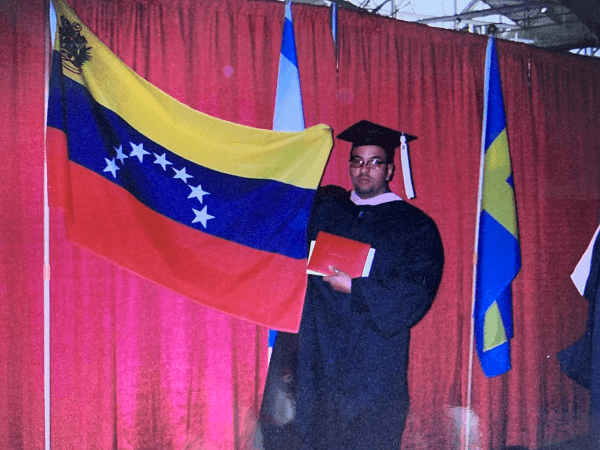
In 1995, Omar graduated as a lawyer as part of the class ”Honor a Venezuela” ranked in 12th place among his classmates. Although today he is not engage in law at all, he considers that having continued his studies was very important to him as a person because he would have a base on which to stand on in case his plans with music fell through.   

However, the artist never thought about practicing law, since he was very clear that it would be difficult to do so due to the legal situation in Venezuela, so he continued to focus on his great passion, which was music. Besides, after analyzing it, he decided that he did not have a natural talent for that career. 

In parallel, during those years as a law student, he made a trip to Cuba, which he claims changed his life completely. Some friends he made there, when seeing his skills as a musician, told him that he could be studying law, but that his life was and would be music forever.  

Omar graduating as a lawyer
Omar Ledezma Jr. graduating from Berkee College of Music

The United States and Berklee College of Music 

Just a few years after graduating, specifically in 1998, Omar made the decision to move to the United States looking for new opportunities and describes this trip as an exploring experience because many of his friends, orchestra fellows and acquaintances from the musical environment in general started taking new directions in the mid 90’s. The young man knew he wanted to do the same and chose the city of Boston to settle in at first.   

Although he finally moved to Boston in 1998, already in 1997, his mother gave him the idea of going to the United States with an open ticket so he could decide whether to stay permanently or return. In the end, he opted not to use the return ticket and stayed in Boston to try to enter any music school through a scholarship.   

After checking several options, he chose Berklee College of Music because it was the only college that allowed him to study composition and arranging as hand percussionist, so he auditioned to be admitted and was selected in the fall of 1999. He obtained a 70% scholarship, but he had to work hard to get the remaining 30%. In that sense, Omar assures that the same school helped him to obtain the corresponding permits to work legally in the country and thus be able to pay the percentage that is not covered by the scholarship. 

Omar also told us that it was his friend Gonzalo Grau who helped him do the demo with which he auditioned to enter Berklee and it was a song of his own titled ”Cacao”. Today, he assures that that recording gave him one of the greatest opportunities he has ever had in life, which was to study there. He spent a total of four years studying in that institution and graduated in 2003. 

During his undergraduate studies at Berklee, Omar had the option to study business and intellectual property and his lawyer’s training made it easier for him, but he defines himself as a ”natural born performer” and his life was the stage, so he did not see himself stuck in an office solving cases.   

One of the first jobs Omar had in Los Angeles was replacing the singer from Johnny Polanco’s prestigious orchestra and that one that helped him take that place was Ray Barreto’s flautist, the late Artie Webb. The concert was held at the Mayan.  

Omar playing the conga
Omar Ledezma Jr. playing the conga in a live performance

Family 

As to the family part, Omar told us that he had married his wife Jennifer Radakovich about seven or eight years ago, but they have no children for the moment. This is because they are still analyzing their opportunities to settle permanently in the state of California, so he assures us that they are still building their future as a couple and as a family. 

Jennifer’s family comes from Serbia and settled in Detroit, Michigan. They had to leave their country, which was then the former Yugoslavia because of the war that went on in the territory at the time. In fact, at a family reunion, his in-laws told him that his wife’s father arrived in the country on the boat anchored in Long Beach, California, The Queen Mary.  

Pacific Mambo Orchestra 

Omar Ledezma started his journey with Pacific Mambo Orquesta practically since its foundation in October 2010, when he started playing at Café Cocomo. Santana’s timbalero Karl Perazzo, who was already included in the lineup of the venue, proposed him to go to this place to play as a percussionist on Monday nights. The problem was that there was no money to pay him for the moment. 

That’s when the directors of Pacific Mambo, Christian Tumalan and Steffen Kuehn, proposed to the owners of Cafe Cocomo to give them some space to have band practice. These Monday meetings ended up being paid rehearsals open to the public in exchange for 10 dollars a night. This lasted some years in which the 20 members of the orchestra were in charge of developing much of the repertoire that has made them famous internationally. 

About this time, Omar said that, on several occasions, he and his orchestra fellows sat down to talk about the continuity of the band owing to the lack of money. The wonderful thing is that everyone always voted in favor of their stay in the group despite the adversities. According to the Venezuelan musician, it was this hunger and desire to succeed that made the orchestra what it is today.   

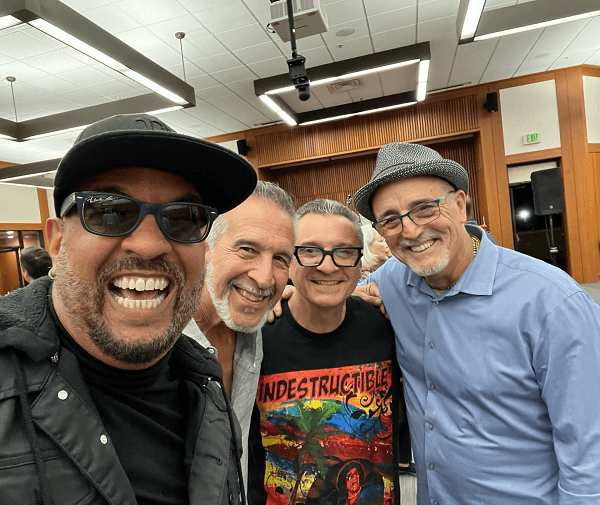
Omar, Eric, Karl, and Edgardo
Omar Ledezma Jr., percussionist Eric Rangel, music producer Karl Perazzo, and bandleader Edgardo Cambon

These efforts worked and Pacific Mambo Orquestra managed to win their first and only Grammy so far in 2014. That year began with the orchestra’s appearance in one of the main banners of the iTunes page for a little over a week, which gave them a lot of popularity at that time and was not common for Latin artists and groups. 

That same year, the group began touring with Tito Puente Jr. in August and were so successful that Omar and five other members of the group decided to begin campaigning for that year’s Grammys via e-mails to all the members of the jury promoting their latest album. Then, on tour, they received the news of their nomination (the second of Omar’s career), but they did not think they would win. 

Much to the surprise of Omar, in January 2014, he received word that Pacific Mambo Orquesta won its first Grammy in the category of Latin Tropical Album of the Year. This event changed the lives of everyone in the group to the extent that large media outlets started looking at them. One of them was world-famous Billboard magazine, which published a piece talking about the band and its talents. 

It is important to stress that, although it was an experience the musician will never forget in his life, he is aware that this is in the past and has to look ahead and focus on his future successes. At this moment, Omar and his companions are focused on making up for time lost during the pandemic and performing all the activities that confinement prevented them from doing. 

Read also: Arranger, composer and pianist Carlos Ordiano 

Los Adolescentes Giving The Swing The World Needs

Latin America / Venezuela / Caracas

Los Adolescentes  “We are premiering our most recent video clips “Close your eyes””

When talking about the great salsa orchestras of Venezuela, there are many names that come to the fore, either because of history, the great successes of the golden years of Salsa in Venezuela or because of their great distinguished voices of so many successes that the world well-known from this land of southern salsa, but if there is something impossible not to mention, it is one of the most important orchestras of this movement of the nineties.

The Adolescents, a group that marked a before and after of the new salsa era in this beautiful country. House of great youth voices, teenagers have made millions of people dance around the world, revealing the talent that this group has managed to nurture in more than 20 years of artistic journey.

Los Adolescentes in USA

Claiming Our Space, a record production with which they went on the market in 1995 with great songs like “Hoy aprendí”, “I can’t be your friend” and “Anhelo”, six songs from this CD; occupied the first place as hits throughout Venezuela and other countries of the Latin American continent, they started a sequence of successes for more than 20 years that have made this great group distribute Salsa and flavor throughout the world, it is that even the pope John Paul II had the honor of listening to this great musical event at Jubilee 2000, which brought together two million five hundred thousand people outside the University of Bergata, an event that lasted four years to prepare for this event.

In conversations with Carlos Mendoza, manager and main helmsman, we found out about the group’s latest projects for this 2019, great things continue to happen for these young salseros.

Los Adolescentes
Los Adolescentes

This new year started with great things for our young salseros, during the month of March and April they will be giving rhythm in Colombia with a tour of more than 5 cities, Mendoza tells us “We will be visiting Armenia, Bogotá, Medellin among other cities of the beautiful Colombia, we take a train that does not stop, we offer a list of unforgettable concerts”.

On the 23rd they will be in Armenia at the Fonda, the local forest that has received great national and international artists, they will continue in the capital of this southern country Bogotá on the 30th in Sutton club of the best clubs in the city, they will pass through Medellin in Emporium on April 05, 06 for Cartagena and closing on 06 in Marseille, they have dates for hiring, contact that we will leave at the end of this review for your contact, in the voices of Arnaldo Quintero, Renzo Romero, Ronald Gómez, Josep Palacios and Leonardo Leal we will be able to listen to the successes of these almost three decades of rhythms.

Los Adolescentes
Los Adolescentes

“For the month of June we will be part of the great experience that will be lived in the Adventure Dance Cruise, together with greats like Torito Acosta” Mendoza told us that the great company Royal Caribbean presents what they call: World’s Largest Latin Dance Cruise, from June 6 to 10 from Miami passing through the beautiful island of son and rumba Cuba and arriving in the Bahamas, full of dance classes, attractions, distractions and the best concerts on the high seas.

For the last semester of the year they are already preparing a concert in Tampa, Miami, presentations of variable types in North America, to close the projects for this 2019 an important tour of Europe with the great Maelo Ruiz is being prepared, a detail that we will have better reviewed in future editions.

For bookings on the tour of Colombia, contact the number +57 310 3293158, don’t miss out on living this great experience of dancing alongside one of the best salsa orchestras in the world.

Los Adolescentes in NY

Jimena Verano present Orquesta de Camino al Barrio

Latin America / Colombia / Bogotá

This time we have Miss Jimena Verano, the director of “VERANOPRODUCCIONES”, who gave us the opportunity to meet the Venezuelan Colombo Orchestra “De Camino al Barrio”, which was born in the city of Bogotá, Capital of Colombia.

Through Jimena Verano, a Colombian artist entrepreneur and promoter, she presents it to us, giving us the opportunity to make them known and emerge them in this great world of music at an international level.

The Orchestra emerged as a tribute to the singer of the singers Héctor Pérez Lavoe; and she tells us that it has been easy for her to lead (as a woman) this working group; her musicians have been willing and ready to meet any request made by her, to get this musical project off the ground.

Soon they are ready to record their first single in the city of Cali Colombia, for which they are making the necessary adjustments for said musical production.

So if you want to meet or contact the orchestra, or find out more about their new recording, you can contact them through [email protected] or through Facebook, known as Jime Verano (La Chica Fitness de la Salsa).

Jimena Verano
Jimena Verano

Bobby Escoto

North America / USA / California

Bobby Escoto, a percussionist, was born in East Los Angeles, from Mexican & Puerto Rican descent. Bobby Escoto III is the nephew to the great vocalist Bobby Escoto, who performed and recorded, with the great percussionist, Tito Puente.  Bobby Escoto III has been playing music, since the age of eight. Today, Bobby is considered one of the most prominent percussionists in the salsa genre, here in his hometown of Los Angeles.

Bobby Escoto has performed with many salsa icons in Los Angeles, New York, Europe, and Asia.  Such as Celia Cruz, La India, Jose Alberto “El Canario,”Lalo Rodriguez, Domingo Quinonez, Menique, Camilo Azuquita, Yolanda Rivera, “Fania All Star” violinist Pupi Legarreta, trombonist Jimmy Bosh, and legendary vocalist Tito Allen who performed and recorded, with the legendary ‘conguero’, Ray Barretto.  Bobby also takes pride in performing and directing his band to back up Frankie Vasquez, Herman Olivera, Pupy Cantor, Jorge Maldonado, and  Hector Tempo Alomar, vocalists to his favorite band, from NYC, Conjunto Libre.

Bobby Escoto
Bobby Escoto

Bobby Escoto is the band leader, director and bongo player to his band, Conjunto Afro Son. They have performed at prominent salsa venues, as a back-up band, to salsa icons, due to their extensive educational background, training, and authenticity.  Bobby is also the band director and bongo player to The Granada All-Star Orchestra and The Salsa Divas (an all-female Orchestra) in the city of Alhambra, CA

Bobby’s goal is to increase awareness of the new generation, about the Afro Cuban and Puerto Rican music. Every Saturday you will find Bobby teaching percussion to underprivileged children in East Los Angeles. Bobby states: “it hasn’t been easy growing up in the streets of East Los Angeles, but my vision as a kid was to perform with great salsa icons.” Bobby Escoto believes that dreams do come true if you put your heart and effort into your talent.  No doubt, Bobby’s talent, passion for his art, leadership, and vision have no barriers.

  • « Go to Previous Page
  • Page 1
  • Interim pages omitted …
  • Page 60
  • Page 61
  • Page 62
  • Page 63
  • Page 64
  • Interim pages omitted …
  • Page 155
  • Go to Next Page »

International Salsa Magazine (ISM) is a monthly publication about Salsa activities around the world, that has been publishing since 2007. It is a world network of volunteers coordinated by ISM Magazine. We are working to strengthen all the events by working together.