• Skip to primary navigation
  • Skip to main content

International Salsa Magazine

  • Home
  • Previous editions
    • 2026
      • ISM / January 2026
      • ISM / February 2026
    • 2025
      • ISM / December 2025
      • ISM / November 2025
      • ISM / October 2025
      • ISM / September 2025
      • ISM / August 2025
      • ISM / July 2025
      • ISM / June 2025
      • ISM / May2025
      • ISM / April 2025
      • ISM / March 2025
      • ISM / February 2025
      • ISM / January 2025
    • 2024
      • ISM / December 2024
      • ISM / November 2024
      • ISM / October 2024
      • ISM / September 2024
      • ISM / August 2024
      • ISM / July 2024
      • ISM / June 2024
      • ISM / May 2024
      • ISM / April 2024
      • ISM / March 2024
      • ISM / February 2024
      • ISM / January 2024
    • 2023
      • ISM / December 2023
      • ISM / November 2023
      • ISM / October 2023
      • ISM – September 2023
      • ISM – August 2023
      • ISM July 2023
      • ISM Edition June 2023
      • ISM – May 2023
      • ISM April 2023
      • ISM March 2023
      • ISM February 2023
      • ISM January 2023
    • 2022
      • ISM December 2022
      • ISM November 2022
      • ISM October 2022
      • ISM September 2022
      • ISM August 2022
      • ISM July 2022
      • ISM June 2022
      • ISM May 2022
      • ISM February 2022
      • ISM January 2022
    • 2021
      • ISM December 2021
      • ISM November 2021
      • ISM October – 2021
      • ISM September 2021
      • ISM August 2021
      • ISM July 2021
      • ISM May 2021
      • ISM April 2021
      • ISM June 2021
      • ISM March 2021
      • ISM February 2021
      • ISM January 2021
    • 2020
      • ISM December 2020
      • ISM November 2020
      • ISM October 2020
      • ISM September 2020
      • ISM August 2020
      • ISM July 2020
      • ISM June 2020
      • ISM May 2020
      • ISM April 2020
      • ISM March 2020
      • ISM February 2020
      • ISM January 2020
    • 2019
      • ISM December 2019
      • ISM November 2019
      • ISM October 2019
      • ISM Septembre 2019
      • ISM August 2019
      • ISM July 2019
      • ISM June 2019
      • ISM May 2019
      • ISM April 2019
      • ISM March 2019
      • ISM February 2019
      • ISM January 2019
    • 2018
      • ISM December 2018
      • ISM November 2018
      • ISM October 2018
      • ISM September 2018
      • ISM August 2018
      • ISM July 2018
      • ISM June 2018
      • ISM May 2018
      • ISM April 2018
      • ISM March 2018
      • ISM February 2018
      • ISM January 2018
    • 2017
      • ISM December 2017
      • ISM November 2017
      • ISM October 2017
      • ISM September 2017
      • ISM August 2017
      • ISM July 2017
      • ISM June 2017
      • ISM May 2017
      • ISM April 2017
      • ISM March 2017
      • ISM February 2017
  • Download Salsa App
    • Android
    • Apple
  • Spanish

Search Results for: Radio

Mexican announcer Jesse ‘‘Chuy’’ Varela and the radio today

‘‘Chuy’’

Jesse ”Chuy” Varela is a famous radio host from the San Francisco Bay Area who currently works at KCSM Jazz 91 and constantly interviews all kinds of important figures of the present day such as artists, singers and musicians of all genres, but especially jazz. We had the opportunity to talk with the well-respected communicator to learn about his transition from musician to announcer and his history in general.
Jesse ''Chuy'' Torrealba airing on KCSM Jazz 91
Jesse ”Chuy” Torrealba airing on KCSM Jazz 91

His career as a musician

He began his career as a musician in the entertainment world when he was just in high school in his native Mexico. He started playing the guitar at a very young age and his uncles taught him to play ”La Bamba” and other very famous songs in those years, which led him to continuing on this path. That’s why it did not take long for him to start playing grupera music in Mexican groups in Oakland.
However, a great passion for jazz came over him, which made him learn to play this genre with the guitar. One of his greatest inspirations during those years was Carlos Santana and the great work he was doing in the Bay Area. Varela did imitations of Santana and played his songs, which generated a great deal of interest in the circle in which he developed and helped him to get much work in groups that saw potential in his talent. About these years, he commented that, on one occasion, the singer’s father, Don José Santana, went see him play, which was a source of great pride for Jesse and his budding career.
Although the Mexican artist was one of his major influences, there were other big names from other genres that helped him expand his horizons, such as Eddie Palmieri and other salsa singers who already had a recognized career.
As he pursued his professional career, he began to be part of jazz groups at Diablo Valley College and other schools, until he realized that this set of activities was financially unprofitable, so he began working as a volunteer at KPFA in Berkeley and later at KJAZZ. ”I managed to show my qualities as a volunteer and intern, so they decided to give me a part-time job and I became a reporter at KPFA. At KJAZZ, I started doing shows and I was given The Latin Jazz Show, which continues to air.
His first big break came during the promotion of some shows by Tito Puente, whose tickets were not selling well, so the artist needed all possible support to arouse public interested in his shows. That made the owners of the club where the shows were being held decide to use this station to broadcast commercials to publicize them. It was then when the programming manager wanted Varela to interview Puente, who gladly accepted.
After interviewing the artist and putting the material on the air, many listeners contacted the station because they were fascinated by the work done by the announcer, to the point that the timbalero himself asked the programming manager to give a chance to this young communicator, since he saw great potential in him. That is when he was given the space dedicated to Latin Jazz, something for which Varela will always be grateful to Tito Puente.

Cuban composer, arreglist, and pianist Chucho Valdés and Jesse ''Varela'' Varela
Cuban composer, arreglist, and pianist Chucho Valdés and Jesse ”Varela” Varela

Announcer of the first bilingual program in the U.S.

Jesse told us that he began working as a volunteer in a bilingual program called ”La Onda Bajita”, which was entirely focused on a young audience. What it is looking to do with that program was to make young people see that violence and gangs were very negative for their lives and that difficulties overcame with education and effort. He also liked to play ”oldies”, Chicano music, salsa, Latin rock, among other genres.

Throughout his career, most programs hosted by him were in English, although he also served as public affairs director and reporter at KPFA in Berkeley, where he did a lot of bilingual work. At the same time, he worked for Radio Bilingüe in Fresno, which led him to use both languages in his reports and expand his audience. At that time, he covered controversial topics such as discrimination towards Latinos, farm worker leader Cesar Chavez, the situation with crime and guerrillas in Central America, among others.

These reports took him to visit these countries and many other places where he discovered typical music and rhythms. This interest he has always had in music led him to become the music director of KPFA for a while until he moved to KCSM, where he has been working for 22 years.

Multifaceted

Although today he works as an announcer, he says he always wanted to be a sound engineer to have his own salsa groups, but ended up learning a lot about mixing, editing and much more. What he liked most in this world of radio was the possibility to interview artists and he considers this to be one of the best talents he has to offer. Getting the story or report from interviewees is a pleasure for him and helps him understand this business better.

Many veteran announcers adviced him and helped him a lot to perfect his skills and improve his work as much as he could. Some of them even gave him their record collections so he could learn more about music and soak up more the topics he had to cover in his programs.

Jesse is also dedicated along with other colleagues to give classes to young people who wish to train for this career and be part of the new generations of announcers with all the knowledge of the old school.
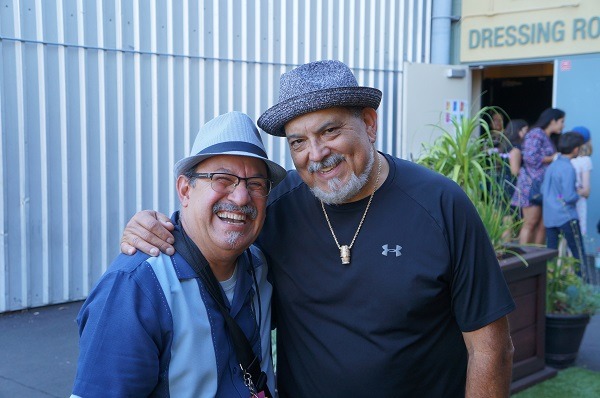
Jesse ''Chuy'' Varela and bandleader, percussionist and singer Poncho Sánchez
Jesse ”Chuy” Varela and bandleader, percussionist and singer Poncho Sánchez

What does a radio station need to work properly?

To tell you the truth, a radio station needs money to function properly. In the case of public and college radio stations, we are forced to ask our listeners to support us with their donations and subscribe as supporters. We have been fortunate to have a very generous audience in that regard,” said the announcer. He also added that the pandemic was to some extent beneficial for shows like his, as they got a great amount f audience due to the quarantine.

Varela mentions that one of the biggest problems facing most public broadcasters is communication. ”There is a division between the administrations and workers. The boards do not have the best ideas regarding the use of available resources. Many times, they start spending in an uncontrolled way without notifying the public about how they invest that money” said the communicator.

In the opinion of Varela, the most important thing for a station to maintain is public trust and to let people know that their money will be used in the best interests of the station. When administrators use those economic resources for trips, dinners and luxury hotels, listeners will consider it an abuse. I have seen this unfortunate situation on every station where I have worked,” the announcer continues.

Read also: Steffen Kuehn and Christian Tumalan talk about their musical roots and orchestra

Pacifica Radio, history, shows and controversy

This is Pacifica Radio

Pacifica Radio has been one of the largest radio networks in the United States in recent decades and its importance remains enormous today despite the time elapsed. It has given voice to figures of all kinds of political and ideological trends and artists from all genres who sought a platform in order to be heard. However, such popularity does not make this organization to be free from controversy that, like its history and shows, we would also like to explore with the greatest possible respect.

Next, we will talk about the most outstanding to observe about this radio station since its beginnings from 1946 to this day, since talking about Pacifica Radio is also talking about communication in the United States and the role played played by Latino culture and music in all of this.

Logo of Pacifica Foundation

Beginnings of Pacifica Radio

Pacifica Foundation is a non-profit organization that owns five independent radio stations financed from listener contributions. It is widely known for its progressive and liberal tendencies and is located next to KPFK in Los Angeles, California.

This organization is also responsible for managing everything related to Pacifica Network, which, in turn, runs much more than a hundred affiliated stations with all kinds of shows and content, although it specializes on political and social issues to varying degrees. It is the oldest radio network in the country and the oldest non-profit network in the world, which speaks of Pacifica’s relevance compared to other media.

It was founded in 1946 by E. John Lewis and Lewis Hill after the Second World War. Both men were totally anti-war and refused to perform military service as conscientious objectors. They joined other pacifists to create Pacifica Foundation, whose first station started to air on April 15, 1949 in Berkeley, California.

Being true to the beliefs with which they started this project, the founders gave voice to all those who were against the Korean War the following year along with many other minorities who could not find means of communication to express their views contrary to the majority position of the time.

The station started operating in several cities over the years due to its enormous success and the following radio stations were created in several cities: KPFA/94.1 and KPFB/89.3 in Berkeley, California (San Francisco Bay Area), KPFK/90.7 in Los Angeles, WBAI/99.5 in New York, KPFT/90.1 in Houston and WPFW/89.3 in Washington, DC.

Lewis Hill, co-founder of KPFA and Pacifica Radio

Operation

Pacifica is governed by a board of directors that sets out the policies that determine the organization and oversees the network operations. The board is comprised of representatives from each of the stations that comprise the foundation, as well as directors elected by the Pacifica community.

The members of this board are elected and replaced every three years and have regular meetings to discuss issues related to the operation of the foundation and decision-making regarding the management of the network. It is from there that the use of resources donated by the audience is being decided.

The board members are as follows:

Lydia Brazon (Chair), representing KPFT in Houston, Texas

Sabrina Jacobs (Vice-Chair), representing KPFA in Berkeley, California

Alex Steinberg (Secretary), representing WBAI in New York City, New York

Donald Goldmacher (Treasurer), representing KPFA in Berkeley, California

Christina Huggins, representing WPFW in Washington, D.C.

T.M. Scruggs, representing WBAI in New York City, New York

Janet Coleman, representing WBAI in New York City, New York

Cerene Roberts, representing KPFA in Berkeley

Pacifica Foundation’s Latino shows

If there is something Pacifica Radio has stood out is for the enormous space provided to the Latino community to spread its music and culture in general. That is why there have been many shows entirely dedicated to these topics and whose hosts have been Latinos or children of Latinos.

KPFA has Luis Medina and Emiliano Echeverría, who are in charge of hosting the show ”Con Sabor”, which specializes in artists and news related to salsa, Latin jazz, Afro-Cuban and Afro-Caribbean music, among other genres. In addition, they also interview these artists, provide the audience with the musical calendar and offer concert tickets.

Broadcasters Luis Medina, Chata Rodríguez, and Emiliano Echeverria

In the case of KPFK, the Latin community has the well-known show ”Canto Tropical” hosted by Kathy Diaz and Hector Resendez, whose work is focused on promoting the main Latin music genres such as Latin jazz, Afro-Cuban music and salsa. They also focus on interviewing and giving space to both local and foreign artists to promote their talent and be made known to the widest possible audience.

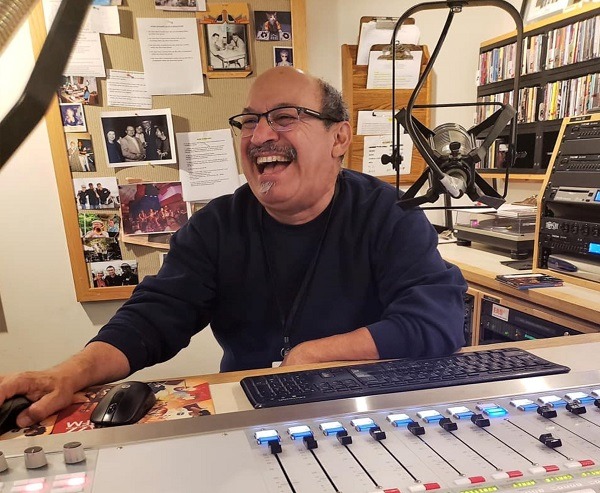
Host of ''Canto Tropical'' Kathy Díaz and host of ''Alma Del Barrio'' Eddie López
Host of ”Canto Tropical” Kathy Díaz and host of ”Alma Del Barrio” Eddie López

On WBAI, ”Salsa Con Candela” is a weekly celebration of the rich history and diversity of the salsa music genre. The show hosted by DJ Candela includes a mix of classic and contemporary songs, as well as interesting and enlightening interviews with artists and important figures in Latin music culture.

Another noteworthy Latin program is ”Salsa y más” on KPFT, which explores in detail the world of salsa and other important Latin genres. The program hosted by DJ Leonard Trujillo, as well as ”Salsa Con Candela” also offers a mix of Latin and contemporary songs along with interviews with local and international artists.

And finally, WPFW has ”Latin Flavor”, a program dedicated to the most important Latin genres such as salsa, Latin jazz and many others. The show hosted by DJ Jim Byers explores the cultural and historical roots of Latin music and provides a platform to present new artists from around the world.

Locutor Jim Byers
Locutor Jim Byers

Controversy

Since the beginning of this foundation, its stations have been embroiled in a series of scandals that have not gone unnoticed by telecommunications and the community at large, especially political and ideological. Among the many events suffered by Pacifica, we cannot fail to mention the requests from the government to obtain the recordings of some shows, controversial interviews such as the one with Che Guevara, reports about embezzlement of funds, financial crisis, among many other things.

In 2020, it was learned that some Pacifica listeners, volunteers and donors have created an organization called Pacifica Safety Net with which they seek to expose mishandling and attitudes of Pacifica’s board members, whom they accuse of compromising the main mission of the station network. The members of this group have filed a lawsuit against this board for prevarication and mismanagement, assuring that the board’s lack of leadership resulted in the loss of many revenues in the station network and, therefore, caused a serious problem of solvency in the organization.

KPFA's building
KPFA’s building

A great example of this mismanagement is the reduction from 120,000 to 40,000 members the network has today, as was the case in just a few years. There are also many complaints about the type of programmes broadcast by the network in recent years due to their high content of hate, conspiracy theories, racism and a lot of things that did not represent the values upon which Pacifica Foundation was based.  

In that sense, the members of the aforementioned committee make an urgent call to all members of the radio network to recover these spaces to go back to the main mission of the foundation, which unfortunately has been taken by other interests completely unrelated to those of the donors, workers and listeners.

In 2019, the network was able to get a $3 million loan that would allow it to pay part of the debt accumulated up to that date, but the possibility of the foundation achieving long-term financial stability is not even close to being a fact. Due to mismanagement, the foundation is not able to pay this amount back, so it is forced to cut costs. This reduction in income is causing the board of directors to seek to sell the building where WBAI operates, which had been given by the Empire State Realty Trust (ESRT) in exchange for a rental agreement that is quite detrimental to the foundation from the point of view of current and former workers.

The Empire State Building, where WBAI FM is located now

Wit regard to this issue, Mexican broadcaster Jesse ”Chuy” Varela, who worked for several years at KPFA, told us a little about the irregularities presented both there and at other stations where he worked. The radio professional points out that there have always been serious communication problems between administrations and workers. ”The board always thinks they can do something better with the money raised and spend a lot of resources without notifying the audience about what they are doing. When you ask for money from the listeners, they have to trust that when they give it to you, you are going to put it to good use” declared Varela.

”I knew of many cases where executives who had meetings in different cities, stayed in expensive hotels and ate in exclusive restaurants. I consider this is an abuse and a lack of respect for those who donate their money. I have seen this in all the stations where I worked unfortunately. In this sense, trade unions play a fundamental role to avoid these kinds of problems” the broadcaster continued.

Announcer Jesse ''Chuy'' Varela at KCSM Jazz 91
Announcer Jesse ”Chuy” Varela at KCSM Jazz 91

As for other announcers and former Pacifica Radio employees or managers, they did not want to make comments in this respect. We presume that this could be because of possible reprisals due to the power accumulated by the largest radio network in the United States.

It should be noted that everything written here is based on testimonies of others that have not yet been confirmed, so we neither confirm nor deny any of the facts as presented here.

Read also: Two radio programs of the salsa movement in California

Two radio programs of the salsa movement in California

Introduction

After the entire journey, the cultural salsa movement in the state of California is well established, which includes a good number of media outlets that focus on this and other Latin music genres. In this article, we are going to talk a little about two very important radio shows in Los Angeles, which play a very important role in the spread of salsa and its greatest exponents today.

They are the radio shows ”Alma Del Barrio” and ”Canto Tropical”, whose work has provided an immense contribution to the world of music and gained a huge audience both in Los Angeles and in the rest of the world.

Five of the six Alma Del Barrio DJs Steve Lopez, founder Enrique Kiki Soto, Gustavo Aragon, Eddie Lopez, and Hector La Voz Resendez

Alma Del Barrio

In the autumn of 1973, what would become one of the most important Latin radio shows in Los Angeles started to go on the air, which is known as ”Alma Del Barrio” to this day and its main founders were Enrique Soto and Raul Villa, who were still university students at the time. What Raul and Enrique were looking for with this show was to educate the audience musically speaking and ensure that listeners to learn much more about their favorite artists.

A key part of this show is to interview the greatest exponents of the salsa genre and some of these have been Celia Cruz, Chucho Valdes, Manny Oquendo, Tito Puente, Roberto Roena and many more. Thanks to these conversations, fans of these artists have managed to learn more about their favorite artists and their future projects.

From the day of its founding, the show has been broadcast through the radio waves of KXLU, which is one of the largest radio stations in Los Angeles and offers all kinds of variety and musical genres in its programming.

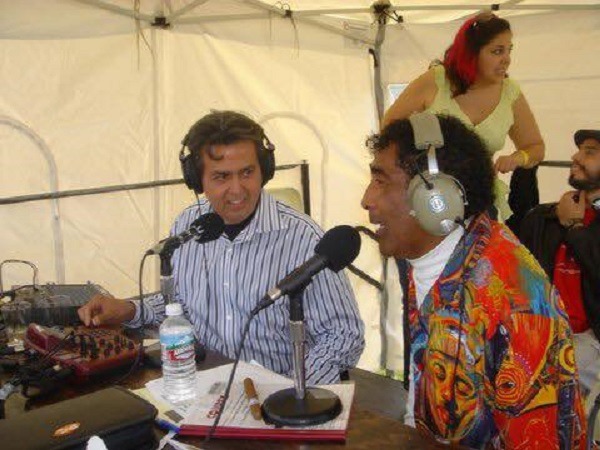
Host Eddie López and Venezuelan Latin music bandleader Rudy Regalado

Canto Tropical

”Canto Tropical” is a radio show created with the firm intention of serving as a bridge to unite generations, cultures and countries that appear to not have anything to do with each other. The main musical genres on which the programming is based are salsa, Latin jazz, merengue, Afro-Cuban rhythms, among others. The music comes from all over the world, but most of the material comes from South and Central America and the Caribbean.

In addition to being always aware of the latest Latin music, hosts Kathy Diaz and Hector Resendez always make sure to get the best interviews with the most famous local and foreign artists so that their fans can get to know them better both personally and professionally. Likewise, listeners have the possibility to participate in contests and sweeptakes to win free tickets to concerts and events that are of their interest.

One of the requirements to be met by the show is to always invite local artists and singers to help them promote their music, new albums and concerts. In this way, the audience is aware of what local talent is currently doing. In fact, there are many figures who are still thankful for the exposure given the program, thanks to which they have achieved the popularity they were seeking.

Another detail that cannot be overlooked is that several social and community organizations have publicly thanked the show for its voluntary work and its hosts Kathy and Hector, who have even written for major publications such as Hispanic, Bilboard Magazine CASHBOX, among others.

Alma Del Barrio's logo
Alma Del Barrio’s logo

Read also: Son Del Monte’s musical director and timbalero Manuel Rivera

Businessman, producer and broadcaster Jimmy Castro promotes his Ritmo Caribe Promotions Radio

Jimmy Castro and his radio station Ritmo Caribe Promotions Radio

We had the pleasure of interviewing businessman, producer and broadcaster Jimmy Castro, who started his radio show “El Toque Latino” on radio station WTCY 1400 AM from 1998 to 2002 in Harrisburg, Pennsylvania. He then worked as a producer on “The Latin Jazz & Salsa Show” in Richmond, Virginia on station WCLM 1340 AM between the years 2008-2014. He eventually launched his own online Radio station Ritmo Caribe Promotions Radio in 2018 through the link www.ritmocaribepromotionsradio.com. Here, listeners can find salsa, Latin jazz and Afro-Cuban music.

Producer, promoter, and broadcaster Jimmy Castro

Here is our conversation:

You founded Ritmo Caribe Promotions in 1998. What made you found this company and why focus on setting up festivals and concerts?

I started the company as a DJ Record Pool called Caribbean Rhythms Record Pool in 1996 in Harrisburg Pennsylvania. I began meeting many of the artists that I was receiving music from, who began asking me if I would bring them to Harrisburg, Pennsylvania to perform. That’s when I changed the company name to Ritmo Caribe Promotions, and produced many concerts and festivals there featuring artists to include Larry Harlow, Tito Puente, Cano Estremera, Hector Tricoche, Van Lester, Miosotis, Edgar Joel, Yomo Toro, Eddie Palmieri, and more.

Why focus specifically on salsa, Latin jazz and Afro-Cuban music?

I used to promote more genres when I began such as Merengue, Bachata, Reggaeton, and Mexican but as the years went on it began getting more difficult because I was receiving so much music but I had a limited staff to and wouldn’t be able to focus on so many artists. I decided to limit it to the genres I had the most experience in.

Jimmy Castro while leading his old show “El Toque Latino”

I knew that Ritmo Caribe Promotions has co-produced songs by several well-known artists. Let’s talk a bit about your role as producer and record label.

Throughout the years, I have always dreamed of producing a Salsa song with my company. In 2020, I had the opportunity to co-produce my first Salsa song with JA Creations entitled “Mariana” by Colombian Salsa vocalist Jaime Andres featuring Frankie Vazquez “El Sonero del Barrio!” Since then I have co-produced 3 more Salsa tunes, “Nuestro Camino” by Leonardo Garcia featuring country vocalist Cat Beach, Max Rosado, and special guest Nestor Torres, “Mi Motivo” by Leonardo Garcia featuring Grammy nominated Miss YaYa, and “Lo Afortunado Que Soy” by William Mendoza’s Latin Heartbeat Orchestra featuring Cuban vocalist Amauri Menocal. Finally, on August 15, 2022 I will be releasing my first Salsa tune as Executive Producer entitled “Historia de Un Amor” featuring a vocalist from The Netherlands, Julie Huard.

What leads you to launch your own online radio station in 2018?

I started in radio broadcasting in 1997 with my own radio show called “El Toque Latino” on a commercial radio station, WTCY 1400 AM in Harrisburg, Pennsylvania. I was on the air for 5 years. I then moved to Richmond, Virginia where I worked as a producer on The Latin Jazz & Salsa Show on WCLM 1450 AM / WHAP 1340 AM for 8 years. I was also the entertainment producer for 10 years for the annual Latin Jazz & Salsa Festival, with The 15th Annual Latin Jazz & Salsa Festival scheduled this year on August 27th, in which I will be bringing headline artist Herman Olivera.

Finally, in 2018, I no longer was interested in working on everybody else’s radio station, and decided to launch my own 24/7 internet radio station, Ritmo Caribe Promotions Radio, where I am able to program exactly the way I want to. www.ritmocaribepromotionsradio.com.

Jimmy Castro with the “King of Timbales” Tito Puente

You have also produced theatrical plays and film productions. Give us more details about that.

The play I am most proud of was produced by my company Ritmo Caribe Promotions and Yamile Music (Los Angeles) entitled “Melena: A Cultural & Musical Journey into my Afro-Cuban Roots” which was the true story of Afro-Cuban latina percussionist Melena, and her journey from Cuba and becoming one of the best female percussionist in the world. You could check out the play in 3 parts on YouTube by searching for “Melena: A Cultural & Musical Journey into my Afro-Cuban Roots (Part 1, 2, and 3).”

You also receive music in mp3 format from the audience to place on the station. What basis do you have for choosing between the tracks you receive?

I accept music from artists from around the world, again Salsa, Latin Jazz, and Afro-Cuban music, and I listen to all the music I receive and focus on the quality of the production, ensuring I receive mp3/wave along with the album cover image, and last but not least the music has to be GOOD! I also send it to many Salsa dancers who I am connected with to get their opinion on the tune.

What you can say about your show “El Toque Latino”? How has this show changed with the passage of time?

I mentioned “El Toque Latino” in a question above, however, this show is no longer on the air. Now, it is only “Ritmo Caribe Promotions Radio” 24/7 at www.ritmocaribepromotionsradio.com.

Jimmy Castro with Puerto Rican salsa singer Cano Estremera


Home

Lino Roldán “Taino” and his amazing station Radio Brisa Tropical

How Radio Brisa Tropical Started

We meet today with Taino Roldan from the fabulous station Radio Brisa Tropical. Good morning Mr. Roldan, hope you are well.  

Quite well, thanks to God. Warm greetings to you from our radio station Radio Brisa Tropical.  

How did you start liking broadcasting and how did you know you wanted to get into this? 

Whilst resident in Italy, I began my career as a DJ there and in Germany. When I returned to the United States, I started going to all the local stations to have a salsa show. At first, they always replied that they were not interested and the doors were closed to me, but that never caused me a problem. I have always believed that if a door has closed, you have to find a way to enter that world, no matter what. At last, I started working at an AM station where I spent three years and then at a FM station for almost 10 years.

During this whole period, I was studying broadcasting at the local university and playing with the internet. It was by that time that streaming and webcasting, which was in 2005 if I got it right. A friend of mine who was a computer programmer told me that I could broadcast my shows in this manner. I asked him for help, given he was the expert, so we did this and connected. At that time, Facebook or any of those things did not yet exist, but MySpace did. Then we managed to webcast until the streaming service came out from the hand of YouTube and other platforms, and that’s when I opened my accounts in those social networks and created my website.

While I was on FM, we continued webcasting until 2012, which was when I officially left that station. I was on about four FM stations, but on different days in the area where I was. After I stopped working in those places, I decided to keep right here in my own studio and do my show solely and exclusively on the internet and it has been the case until today. It has been 31 years of happiness and here I am still standing.

Lino in his studio
Taino Roldán in his studio, where he webcasts his show Radio Brisa Tropical

We understand that this Radio Brisa Tropical project started in 1991. How was this idea conceived?  

While I was on AM, my show was not called Brisa Tropical, but rather “¿Qué pasa?” There we included all kinds of music and gave cultural news about all countries, since I am in an area represented by all Latin American countries, the Caribbean Centre, South America and Spain. Having such a diverse audience, I decided to talk about all countries and not just mine, which is Puerto Rico. I talk about the important days of all the countries such as independence days and other historical events. I want to make content to entertain and educate the audience.

When I switched to FM, the station where I did my show is called “The Brise” and it played contemporary music in English. So, I sat with a friend who was helping me and it was there when I called my own program “Brisa Tropical”, as it is during that time that we included salsa, merengue, bachata, vallenato and much more.

Thank the Lord and the audience we have, we are more dedicated to salsa, and when I say “salsa”, I am including Cuban son and all these Afro-Cuban rhythms that were called salsa since the 70’s till present. However, we like to include all tropical music, classic as well as contemporary. So, it is at the point now where we have created an international audience, and that’s why it is so important to identify and mention the names of the artists, the orchestras, the composers, the arrangers, the members of the groups. Let us remember that there is plenty of time on the Internet. This is nothing like an AM or FM station that are commercial and you only have to reduce the amount of time. Here, I am the programmer and the announcer.

Radio Brisa Tropical is streamed exclusively on the Internet

You have already told us about the role played by the internet and social networks in implementing your project. So much so that networks have become the main transmission channels of the station. Is the internet the main broadcasting channel or are you still on the radio?  

My show is streamed exclusively on the internet. Commercial broadcasters were my beginning, but I am absolutely sure that the future is the internet and I am not just talking about Facebook because this social network is not a music platform. I have my YouTube channel, my Facebook page and my Twitter account, but webcasting has opened the door to all musicians, performers and composers from anywhere in the world. The internet is the future of music. I am dedicated to salsa and Latin jazz, but I usually include other genres that listeners often ask me for, such as cumbia, tropical music, vallenato, etcetera.   

In addition to salsa, your station plays other genres such as Latin jazz, vallenato, cumbia and plena. Why did you start this project with salsa as a base?  

I grew up with salsa and developed myself as a DJ for many years both in Italy and Germany. Although I used to play everything, when I saw the love of Europeans for salsa on the dance floor, I always decided on it. Salsa has always been my life. I like all positive music, but I will always prefer to broadcast salsa and Latin jazz. Now, if a listener asks me to play a good song that does not have high-flown words or anything, I have no problem with it. Here I have been asked to play even rancheras because I have learned that you never say no to that loyal audience. 

You currently broadcast live on YouTube, Facebook and your website. Do you know which transmission channel has a bigger audience?   

Most of my audience listens to me through the link to my server and website. Remember that the website has the links to the channel and the other social networks. Through TuneIn, I receive a lot of audience around the world. I also use Live365 because the station pays royalties and I have the license to broadcast legally. The problem is that this platform is not heard in some places in South America or Europe, which is precisely why I also use TuneIn. When I check my content every day, I realize that we have a lot of audience coming from the Caribbean, South America, Central America, Europe and the United States.

Taino with a Wito Rodríguez album
Taino Roldán holding a Wito Rodríguez album

Age ranges of Radio Brisa Tropical

Many would say that the genres played on your station are to the taste of an older audience that enjoyed the salsa of the 70’s, 80’s and 90’s. What is the age range of your station?  

According to the demographic information and the comments I am getting, I have seen that we have people from 10 or 11 years old and up. Once, a lady sent me a comment saying that her 100-year-old dad stayed in bed listening to the station and even sent me a picture of him smiling. I’ve also received messages from young people. I would say my demographic ranges from 20 years old and up.

I include classic salsa because many of those performers and bands remain relevant with their legacy despite having passed away, but there are also many salseros from that golden era in the 70’s and 80’s who are still active like Willie Rosario or La Sonora Ponceña. I have a lot of Venezuelan and Colombian friends from Venezuela who always send me music.

 I like to balance my way to program. I like to take people back to the 70’s and even beyond, bring them back to the present and explain the ins and outs of a song or album. One of the most important things a broadcaster must do is to mention the artist, the composer, the arranger, the musicians, among others. You have to talk about the piece that is playing and what is behind it.

Tarino next to Willie Rosario
Taino Roldán and Willie Rosario

What you are saying is very important because many times people only focus on the vocalist or leader of a group, but they do not wonder about all the behind-the-scenes work or even talk about the rest of the members, such as the guitarists, the pianists, the arrangers or the musical directors. In that sense, what do you do to disseminate all this information? 

I like reading a lot. If I am going to talk about a specific artist, I will look for who he is, what his trajectory is, how his beginnings were, what he did, what he is doing now. Of course, I have never included any personal data. This is very important to me because this helps the artist to sell his stuff. When there were a lot of record sales, I had the habit of checking the back to read the liner notes of that artist. That information is very valuable to me because that is what I use to  inform the audience unequivocally.

From what you have told me, you have been working exclusively on the Internet for many years. Did you do it before or after the pandemic?  

I had already been webcasting my program on the Internet for many years. In fact, I have been doing it since 2012. Thank goodness, the pandemic has not affected me in any way. My wife and I have taken care of ourselves and followed the sanitary rules, but this situation has not affected our work. On the contrary, I am here before the microphone in my studio while I speak and play music every day in the morning. It may also happen that I bring my laptop to a remote location and air the show from there or through my cell phone. I have done a lot of interviews during all this time because I like it so much.    

What other projects or shows are you carrying out?  

I have discovered that I can do a show about music, but without playing music. Sometimes I do it, but this is not my usual due to the issue of copyright with Facebook. I have a show called “Hablando de Salsa” and I am proud of it because it has been very successful. I am doing this project with Eduardo Saya. The show is entirely about salsa and we broadcast it every Wednesday at 6 PM CST. There, we always choose a different subject to be tackled every day.

Lino and his wife
Taino Roldán and his wife Carmen Roldán

Link to the Facebook page of Taino Roldán: Taino Roldán

  • « Go to Previous Page
  • Page 1
  • Page 2
  • Page 3
  • Page 4
  • Interim pages omitted …
  • Page 63
  • Go to Next Page »

International Salsa Magazine (ISM) is a monthly publication about Salsa activities around the world, that has been publishing since 2007. It is a world network of volunteers coordinated by ISM Magazine. We are working to strengthen all the events by working together.