• Skip to primary navigation
  • Skip to main content

International Salsa Magazine

  • Home
  • Previous editions
    • 2026
      • ISM / January 2026
      • ISM / February 2026
    • 2025
      • ISM / December 2025
      • ISM / November 2025
      • ISM / October 2025
      • ISM / September 2025
      • ISM / August 2025
      • ISM / July 2025
      • ISM / June 2025
      • ISM / May2025
      • ISM / April 2025
      • ISM / March 2025
      • ISM / February 2025
      • ISM / January 2025
    • 2024
      • ISM / December 2024
      • ISM / November 2024
      • ISM / October 2024
      • ISM / September 2024
      • ISM / August 2024
      • ISM / July 2024
      • ISM / June 2024
      • ISM / May 2024
      • ISM / April 2024
      • ISM / March 2024
      • ISM / February 2024
      • ISM / January 2024
    • 2023
      • ISM / December 2023
      • ISM / November 2023
      • ISM / October 2023
      • ISM – September 2023
      • ISM – August 2023
      • ISM July 2023
      • ISM Edition June 2023
      • ISM – May 2023
      • ISM April 2023
      • ISM March 2023
      • ISM February 2023
      • ISM January 2023
    • 2022
      • ISM December 2022
      • ISM November 2022
      • ISM October 2022
      • ISM September 2022
      • ISM August 2022
      • ISM July 2022
      • ISM June 2022
      • ISM May 2022
      • ISM February 2022
      • ISM January 2022
    • 2021
      • ISM December 2021
      • ISM November 2021
      • ISM October – 2021
      • ISM September 2021
      • ISM August 2021
      • ISM July 2021
      • ISM May 2021
      • ISM April 2021
      • ISM June 2021
      • ISM March 2021
      • ISM February 2021
      • ISM January 2021
    • 2020
      • ISM December 2020
      • ISM November 2020
      • ISM October 2020
      • ISM September 2020
      • ISM August 2020
      • ISM July 2020
      • ISM June 2020
      • ISM May 2020
      • ISM April 2020
      • ISM March 2020
      • ISM February 2020
      • ISM January 2020
    • 2019
      • ISM December 2019
      • ISM November 2019
      • ISM October 2019
      • ISM Septembre 2019
      • ISM August 2019
      • ISM July 2019
      • ISM June 2019
      • ISM May 2019
      • ISM April 2019
      • ISM March 2019
      • ISM February 2019
      • ISM January 2019
    • 2018
      • ISM December 2018
      • ISM November 2018
      • ISM October 2018
      • ISM September 2018
      • ISM August 2018
      • ISM July 2018
      • ISM June 2018
      • ISM May 2018
      • ISM April 2018
      • ISM March 2018
      • ISM February 2018
      • ISM January 2018
    • 2017
      • ISM December 2017
      • ISM November 2017
      • ISM October 2017
      • ISM September 2017
      • ISM August 2017
      • ISM July 2017
      • ISM June 2017
      • ISM May 2017
      • ISM April 2017
      • ISM March 2017
      • ISM February 2017
  • Download Salsa App
    • Android
    • Apple
  • Spanish

Search Results for: Radio

Israel Tanenbaum from The Latinbaum Jazz Ensemble in ISM

The Island of Enchantment never ceases to amaze us and we continue to marvel at the fact that this small territory has been able to give the world so much talent, especially in music. Today, it is up to talk about Puerto Rican producer, arranger, composer and pianist Israel Tanenbaum and the enormous contribution that this great artist has made to Latin music over the last few decades.   

Israel Tanenbaum is also a bandleader who has produced more than 50 albums and participated in over a hundred recordings throughout his career, so his experience in this field is more than proven. We were fortunate to talk to him in just over half an hour and we will proceed to cover the most important issues in the following lines.   

Producer Israel Tanenbaum
This is Puerto Rican producer, arranger, composer and pianist Israel Tanenbaum

Israel and his passion for the piano 

Although Israel is widely known for his piano skills, this was not the first instrument he started playing, but the organ. As a child, he was given a toy organ and that was how he made up his mind and train his ear for music.   

In addition to that, he told us an anecdote about how one day he went to a music store with his parents and they left him alone for a while, time that little Israel used to play a huge object that caught his attention: an organ much bigger than the one he used to play at home. It was by watching the organist that he decided to position himself in front of the instrument and started imitating what the musician was doing with his little hands. 

He waited until the organist moved away from the instrument to sell it to a customer and Israel took the opportunity to get into the seat and start playing the instrument’s keys and foot pedal. After playing the five or six songs he knew, he noticed that he had a silent multitude watching what he was doing and once he finished playing, people started clapping their hands furiously at such a waste of talent in a child this small.  

That was when his parents decided to buy him an organ and a piano. A few years later, namely when he was 12 years old, Israel was already playing on the streets in a more professional way.  

Israel’s self-taught formation in music 

Israel’s initial training as a musician was entirely self-taught for the first few years. In fact, he says that when he started studying the craft for real when he had already been earning a living as a musician for more than 10 years.   

With regard to sound engineering, Israel says he had to become professional in this area ”in self-defense”, as he had problems with several sound engineers who did not have a good musical ear, so they ended up damaging some of his recordings unintentionally. This led him to learn to work on the engineering himself so that this kind of thing would not happen again.   

On the other hand, the arrangements and production process had to do with some experiences he had had. One of them happened when, at the age of 16, a friend’s father, an important person in the industry, on one occasion, introduced him to Machito, who very kindly invited Israel to go on stage and sit next to him to learn from what he saw that night. This experience marked the pianist so much that he said to himself: ”this is what I definitely want to do for the rest of my life”. 

Israel playing the piano
Israel Tanenbaum playing the piano during a performance

Colombia’s role in Israel’s career 

Colombia has been key to Israel’s career for several reasons and one of them is that his most productive time of life was spent in the coffee-growing country. The artist had already traveled to that country to accompany artists such as Pete ”El Conde”, Marvin Santiago and Arabella, but the situation was different when he had to tour with the group Batacumbele. This tour was scheduled to last about 10 days, but it was prolonged for 10 years. 

In those days, it turns out that he met by chance with Alexis Lozano, director of Orquesta Guayacán, who proposed him to stay in Colombia a longer time to produce the orchestra’s second album and he accepted. After this, he continued to receive proposals of this style and, almost without realizing it, he already had 10 years living in Colombia and more than 80 albums produced. In addition to Orquesta Guayacán, he worked with Grupo Niche, Cheo Acosta, Alfredito de La Fé and many more.    

”My real professional growth took place in Colombia, but my love for production began in Puerto Rico from the hand of percussionist Roberto Roena, whose orchestra was led by me for about two years. When we were recrding the album ‘El Regreso’, I spent many hours with Roberto in the studio and, seeing how dedicated, detail-oriented and precise he was with every chord and note, I was inspired to do the same at some point. That’s how I accepted all the opportunities to produce that arose in Colombia some time later. I owe all of that to Roberto” Israel said about his time as a producer in the South American country.    

In addition to his work side, Israel also says that Colombia means a lot to him on a personal level, since this country makes him feel at home and he has many friends there. Not to mention that his own wife is Colombian and one of his children was born there, so he is more than attached to that land for life. 
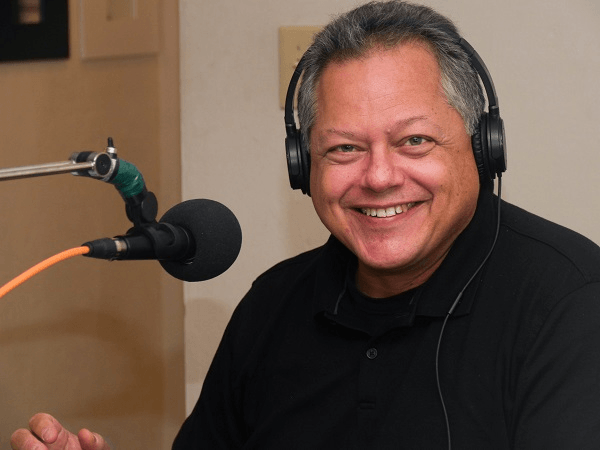
Israel during an interview
Israel Tanenbaum during an interview on the radio

Life in Puerto Rico and Hawaii    

In addition to Colombia, Israel also lived in Puerto Rico and Hawaii. He assures that from each of the places he has been, he has extracted something from their folklore and roots to add to his musical work. He says it is the best way to understand that country and the taste of its people.    

”If you want to understand the people of a country, you have to go back to their folklore and assimilate it. I lived in Venezuela for about six months and, being there, I became familiar with the quitiplás (a typical percussion instrument of Venezuela), the sangueo, the llanera music and many other elements of the musical culture of that country” Israel said on this issue.   

”I lived in Hawaii for almost three years, during which time I founded my first salsa orchestra. I served in the army with Quique Peña, a nephew of maestro Lito Peña, an eminence in Puerto Rico. The young man, whose classical training was extremely intense, taught me to transcribe what each instrument plays in detail. This was an invaluable lesson that served me well for what came later in my career. I also had the opportunity to study with maestro Eddie Palmieri, Papo Luca, José Milé, Jorge Milé, José Febles, among others. I transcribed music for all of them” Israel added on the issue.   

Israel Tanenbaum & The Latinbaum Jazz Ensemble   

”Impressions”, Latinbaum’s most recent album, was the result of an extensive musical stry that tells a wide experience with genres, styles and musicians of all kinds. Israel started this recording nine years ago, but he was always very busy with the rest of the recordings he was producing, so he always ended up abandoning this project.   

Once he had the album ready, but one day Israel had a catastrophic loss of equipment and recordings that led him to practically start the album from scratch, from which he could only save a single song. In the end, he opted to tear up and throw away the arrangements he had in order to start all over again. It took about eight more months to have the album ready again, and today, the musician is grateful that things went down like this, since this material represents the artist he is today for being more current.   

It is then when he sought out the artists and musicians who would accompany him in this new production, which would be his first solo album after having produced more than 100 other people’s albums.    

From now on, he wants to release a Latin Jazz production with his own orchestra every year and all of them under his new label, Latinbaum Records.    

Read also: Grupo Batachá, Houston’s Premier Latin band 

Unstoppable Hollywood Salsa Fest focuses on the importance of Salsa

In the midst of the release of the single in which she collaborated with Edwin “El Calvito” Reyes ‘Dos pa’ lante’, on April 13, 2024; Melina Almodovar performed at the most important salsa festival in South Florida in the U.S. Melina also serves as an entrepreneur, along with her partner Cristina Moinelo, for the past nine years.

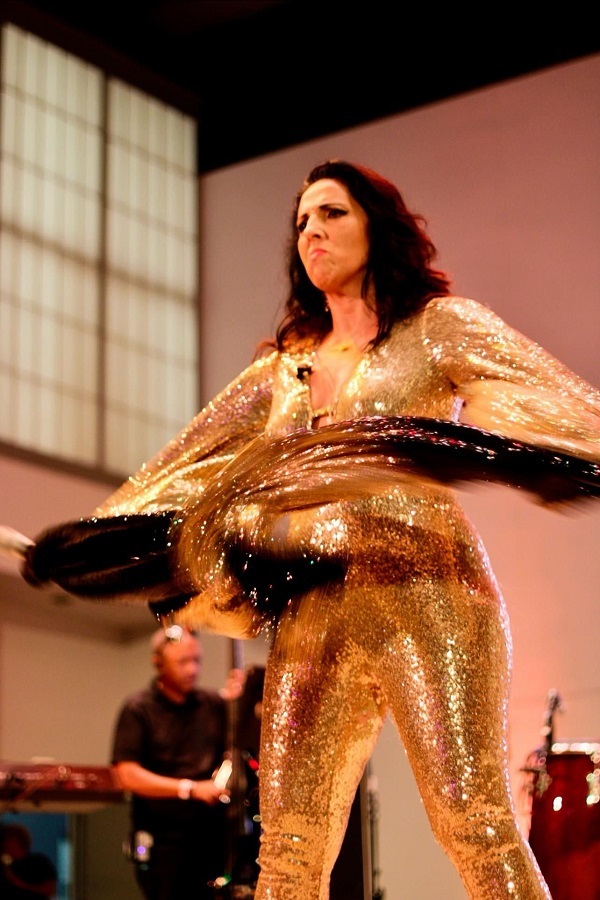
“La muñeca de la salsa”, Melina Almodóvar

Each year, the Hollywood Salsa Fest focuses on the importance of salsa music, recognizing that Afro-Latin music fuses us into a culture that draws from diverse roots. This year’s festival – sponsored by the city in a public-private partnership with various businesses – was held at the Artspark at Young Circle.

As masters of ceremony, the festival featured the winning team of “Meca” from Salseo Radio and “El Cacique” from Zeta 93 FM, Puerto Rico’s leading salsa radio station.  On the decks was DJ “Boricua loco” with a tremendous selection of salsa, in addition to coordinating from his musical corner the dance exhibitions by the salsa dancers of YC Dance Studios.

The first orchestra in charge of starting the concert, Latin All Stars, counted with the vocal and scenic mastery of Marlon Mendioroz, Yorman Clay, Adrián Marchant, Yomil Rivas and Frank Cróquer, backed by a musical team that did not fall short of the expectations of those who waited patiently for the stage to light up with good salsa. Latin All Stars was followed by “Juano, tu cantante” from Cali, Colombia. The team of musicians of the orchestra with the second shift shined accompanying who for 16 years was part of Orquesta Guayacán.

The trumpet player also performed in the mid-afternoon block, preceding the arrival of the Hollywood Salsa Fest Orchestra in a segment in which they accompanied Hilda Naranjo from Cuba, Fabián Rosales from Chile and Joey Hernández from Puerto Rico.

“La muñeca de la salsa”, Melina Almodóvar

At around 6:00 p.m., it was the turn of the Cuban sound known as timba, with the Julio Montalvo Orchestra and Miami’s Huracán. Once the hurricane winds that accompanied Julio Montalvo ceased, tribute was paid to the late Venezuelan percussionist Robert Vilera thanks to the staging of Vilera Son. The tribute to Vilera’s legacy featured the talents of Los Gaitanes from Panama, Avelino Romero from Venezuela, El Mola and Braidsman from Cuba, as well as Robert Vilera’s first singer, Felix Argenis.

“La muñeca de la salsa”, Melina Almodovar, was backed by Luigi Flores from Costa Rica on piano and musical direction, Johnny Fortunato from Dominican Republic on bass, Pablo Molina from Venezuela on timbales, Juan Pablo Camacho from Venezuela on tumbadoras, Carlos Molina from Venezuela on bongo, Carlos Perez from Cuba on first trombone, Ramon Benitez from Colombia on second trombone, Carlos Frank from Cuba on first trumpet and Julian Cifuentes from Colombia on second trumpet.

On backing vocals, Melina was backed by: Joe Arroyo from Puerto Rico and Freddy Lugo from Cuba. Melina gave us a first class show. As part of Melina’s performance, “El Calvito Reyes” joined her for the first time to perform the recently released single ‘Dos pa`lante’ as a live duet.

During the afternoon, the festival took place under a beautiful blue sky that kept the crowd’s enthusiasm positive. During the night, the clear Floridian skies kept the attendees dancing at full steam. Of course, to that end, the aforementioned talents kept the stage in salsa.

The festival closed with the always remembered for the classic ‘De barrio obrero a la 15’, Chamaco Rivera, who with a stellar salsa career to his credit, not only kept the audience engrossed in his impeccable staging, but also introduced us to his guest artist, his son: Christian Ray.

Melina contó con el respaldo vocal de Joe Arroyo de Puerto Rico y Freddy Lugo de Cuba

Christian delighted us with his repertoire shortly before inviting us to listen to his recently released CD entitled El legado continúa. To bid farewell to the musical day, which lasted nearly ten hours, the grand finale invited the group of singers who had paraded on stage during the day and part of the night to come in and jam with the “papa de los pollitos” (father of the chicks).

We are waiting to enjoy the next ‘Hollywood Salsa Fest’, for which the businesswomen in charge promise to throw the house out of the window. Melina and Cristina have delivered nine festivals in a row. So see you in April 2025 to dance in the tenth edition of the same.

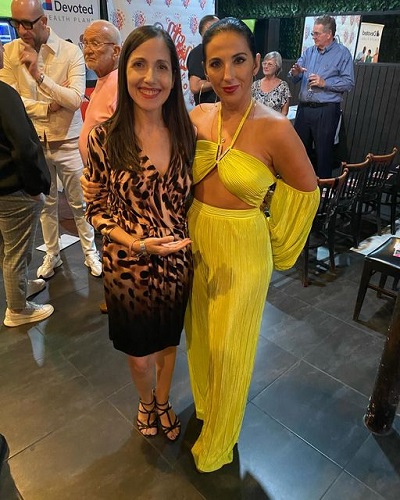
Bella y Melina
Bella y Melina

Bella Martinez Puerto Rico

Also Read: A party of dancers at the concert to celebrate Willie Rosario’s 100th birthday

Willie Rosario, El Rey del ritmo by journalist and music researcher Robert Téllez M.

Puerto Rico Date Be more by Bella Martínez writes announces the release in Puerto Rico of the second edition of the authorized biography of Míster Afinque, Willie Rosario, El Rey del ritmo by music journalist and researcher Robert Téllez M.

Willie Rosario, El Rey del ritmo by journalist and music researcher Robert Téllez M

This second edition, which has been revised, expanded and updated, has 62 more pages, every time master Willie Rosario has remained active since the publication of the first edition in 2019 to date.  It also contains photographs that were not included in the first edition, images from Willie Rosario’s own archive and from the archive of the most important salsa collector, Robert Padilla.

The book, which has a preface signed by musician “Bobby” Valentín and a foreword by researcher José Arteaga, also compiles significant accounts from composers, musicians, instrumentalists, arrangers and vocalists who have been part of Rosario’s orchestra throughout different periods.

The new cover photo is by photojournalist Conrado Pastrano, the cover design is by graphic artist Felix Disla and the illustrations are by artist Frank Rosado.

The content of the back cover of the first edition, which includes the praises of Edwin Clemente, Edwin Morales, Elmer González, Hiram Guadalupe Pérez and Néstor Galán, was moved to the inside of the text, adding the recently captured praise in the voice of Ricardo Padilla, programming director of Salsoul radio station.

The back cover text is by the prodigious arranger, composer and music producer, who was exalted to the Hall of Fame of the U.S. East Coast and who, like Willie Rosario, is a timbalero and orchestra leader: Tito Rodríguez, Jr.  Tito tells us about “El Inolvidable’s” friendship with Willie Rosario, as well as the way in which Mister Afinque received from Tito Rodríguez the first songs that Rosario would record with his orchestra, including the classic ‘Changó ta vení’ (composition by “Justi” Barreto), arranged by René Hernández.  He also shares with us the closeness between Willie Rosario and Tito Rodríguez since they were neighbors in the Bronx, NY until they became colleagues and developed a friendship based on companionship and mutual admiration.  In a nostalgic way, he highlights the golden years of El Palladium. As if all this were not enough, Tito candidly offers his opinion on Willie’s contribution to the salsa sound, which he reinvented by adding the baritone saxophone to his orchestral format, which at the time was thought to be an experiment, and on the permanence of that contribution within Latin music.

The publication of this second edition of Willie Rosario, El Rey del Ritmo comes just in time to add to the centennial celebration of the musical leader, who has managed to keep his orchestra active and alive for more than six decades. The book is now available in physical format and can be purchased through Amazon.

Book cover Willie Rosario Second Edition

About the author:

The author, Robert Téllez M, is a music journalist, broadcaster and audiovisual media producer. He is a member of the Círculo de Periodistas de Bogotá (CPB) and since 1998 he has worked as a programmer for different music radio stations. For nine years he directed and hosted the program Conversando La Salsa on Radio Nacional de Colombia. He was also founder and general director of Revista Sonfonía. Robert Téllez M stands out as a researcher dedicated to Afro-Antillean music. His in-depth research has led him to serve as a consultant and lecturer, specializing in the appreciation of salsa music.

Published books:

* Ray Barretto, Fuerza Gigante (2016).

* Willie Rosario, el Rey del ritmo [Authorized Biography] (2019, 2024).

* Ray Barretto, Giant Force (2021), the translation by Ronald Vazquez of Ray Barretto, Fuerza Gigante, is the silver medal winning literary work for best Spanish to English translation at the International Latino Book Awards, 2021 edition.

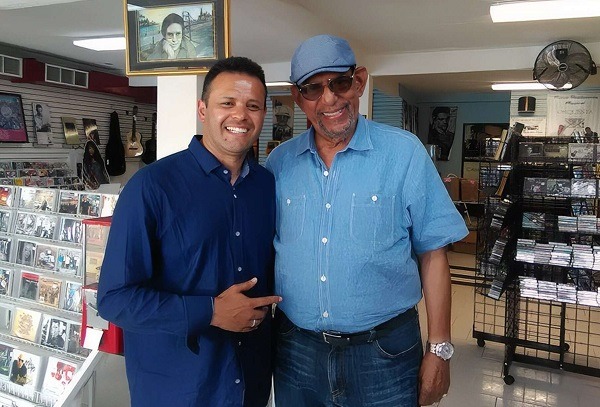
Robert Téllez y Willie Rosario.

Bella Martinez Puerto Rico

Also Read: Metamorphosis: from music to photojournalism, a reinvention without limits

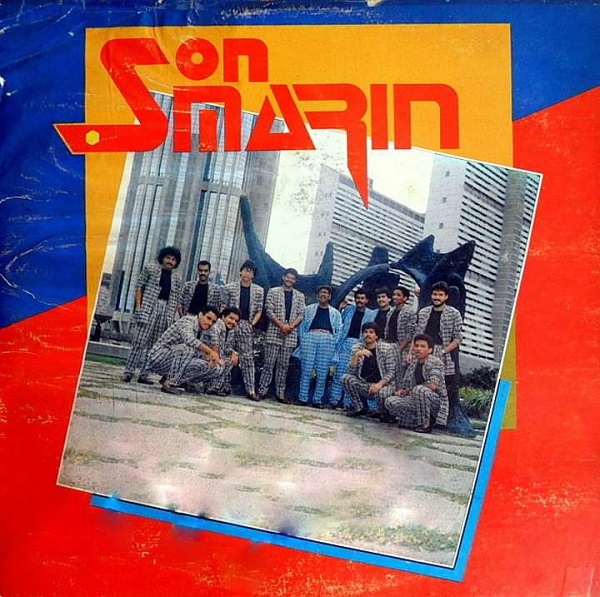
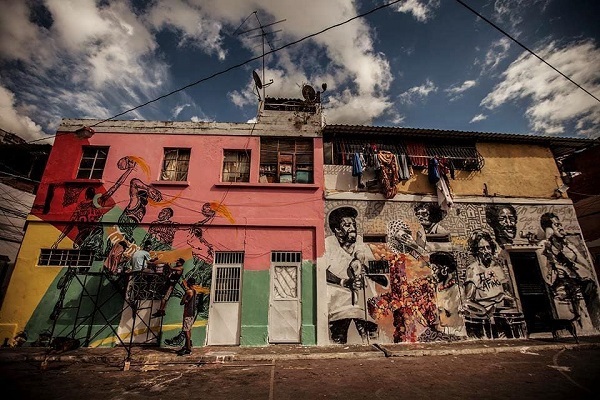
From Parroquia San Agustín del Sur is Son Marín ¡Aquí Empezó la Cosa…!

In order to delve a little into what the group Son Marín was, we must necessarily refer to the late musician Jesús Blanco or “El Pure” as everyone called him.

Jesús Giselo Blanco was his first name, born in Mirandino, but settled in Caracas when he was still a child.

To talk about his musical beginnings is to evoke part of the history of the Son in our country, since “El Pure” before arriving to the San Agustin Parish had already participated with old groups such as Conjunto Rex and the well remembered Sonora Caracas.

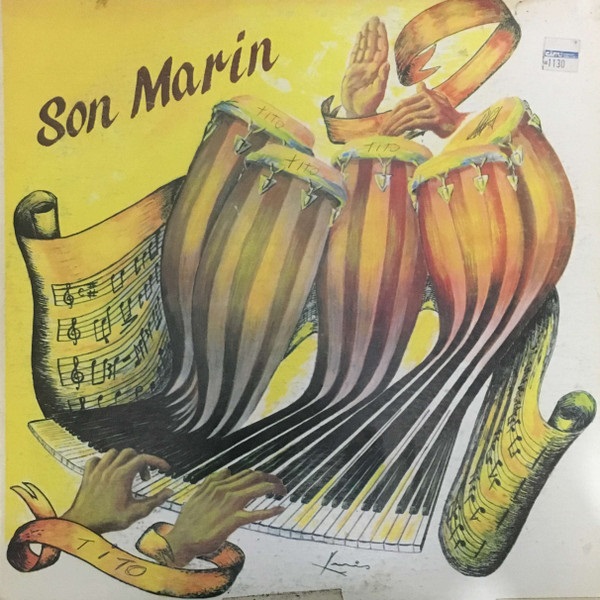
Son Marín ¡Aquí Empezó la Cosa...!!
Son Marín ¡Aquí Empezó la Cosa…!!

El Pure Blanco was recognized in San Agustin Marin as a true builder of musicians since, with his work as a musical artisan, besides having created the first music school in Marin, many young people were nurtured and formed with his teachings.

Jesús “el Pure” Blanco was a key character in the formation and integration of several groups in Barrio Marín, among them we remember the aguinaldo group Los Juveniles, Los Gaitetricos, Los Super Cremas, La Nueva Generación and of course his biggest dream, the “Son Marín”.

The group Son Marín had several stages, starting in 1981 when in Barrio Marín an improvised musical group was organized to receive at the International Airport of Maiquetía the Grupo Madera that was arriving from an important presentation in an International Festival in the city of Avignon, France.

That small group was formed by: Eliel Rivero (trombone), Jorge Rondón(flute), Enrique Palacio (Bass), Arnaldo Blanco(tres), Renny Mendoza (Bongó), José Luis Mendoza (Tumbadora) Luciano Reyes (singer), Pablo” Pabloco” Martínez (singer) and Jesús “Pure” Blanco was the director.

As fate would have it, that group, which was only a provisional “vente tú” organized by Pure, later became another of the emblematic groups of San Agustín, SON MARÍN.

In particular we remember pleasantly the participation of Son Marin as a representation of the San Agustin del Sur Parish, in the Afro-Caribbean Music Festival “La 5ta Esencia de la Salsa” held on June 17, 1983 at the Nuevo Circo de Caracas, by then the group had not yet recorded their first album, but we had already had the opportunity to listen to a demo with a couple of numbers that came to promote the announcer Hector Castillo in his radio program on the now defunct Radio Aeropuerto.

Son Marin
Son Marin

Over time the group grew and new instruments were added; and of course the inclusion of other musicians, such is the case of Jesus Guzman the popular “Paicosa” who enters as guitarist to later become the bassist and musical director of the group, it was the idea of “Paicosa” with the support of “Pabloco“, to expand the group’s equipment incorporating Hugo Olivero’s sax, Josue Silva’s trumpet, Randal Monasterio’s piano, while the percussion was reinforced with Juber Ramirez.

Already with a more solid group and with a view to a greater projection within the Venezuelan salsa music scene, the only thing missing was the recording of the album, which began in September 1986, with the collaboration of Mauricio Silva in the arrangements and the inclusion of several guest musicians.

Unfortunately, a month after the recording began and without being finalized, Jesús “el Pure” Blanco died, however his voice and feeling were reflected in this album that was finally released in 1987, quickly gaining strength and penetrating the taste of the music lover public after the composition of Pablo Martínez, AQUÍ EMPEZO LA COSA, a tribute to this neighborhood that has given so many important musicians, a cradle of soneros as Gonzalo Martínez says in the song.

The voice of Pure Blanco was recorded in the song LA CAÑA; all the numbers were original pieces except for the song “Sin Compromiso” by the Brazilian Chico Buarque, but with an excellent adaptation of the lyrics by Pablo Martínez and Joseito Romero.

To end this biographical sketch, I leave here part of the thanks contained in the back cover of the album from Son Marín.

San Agustin del Sur
San Agustin del Sur

JESUS BLANCO “Pure” every joy lived with this work, makes us feel you more.

SON MARIN… This is where it all began!!! (1987) Mucer International DL-7140

SIDE A

1.- HERE I STARTED THE THING (Pablo Martínez)

2.- SIN COMPROMISO (Chico Buarque) Lyrics Adaptation: Pablo Martínez/Joseito Romero

3.- YOUR HOLY BLESSING (Pablo Martínez)

4.- EL BUHONERO (Pablo Martínez)

SIDE B

1.- LA CAÑA (Rafael Quintero/Pablo Martínez)

2.- RECUERDOS (Rafael Quintero/Pablo Martínez)

3.- VOLVAMOS A EMPEZAR (Rafael Quintero/Pablo Martínez)

4.- BENITO EL CHICHERO (Jorge Rondón)

Members:

Randal Monasterio (Piano)

Arnaldo Blanco (Tres)

Jesús Guzmán (Bass, Conductor)

Josue Silva (Trumpet)

Hugo Salinas (Trombone)

Hugo Olivero (Saxophone)

Jorge Rondón (Flute)

Jimmy Fariñas (Congas)

Fidel Martínez (Bongo/Campana)

Juber Luis Ramírez (Timbales, bongo, bell)

Gonzalo Martínez (Vocal)

Pablo Martínez (Vocal)

Jesús Blanco (Vocal)

Pablo Martínez/Gonzalo Martínez/Arnaldo Blanco/Mauricio Silva/Daniel Silva (Backing Vocals).

Guest Musicians:

José Pepe Vera (Saxophone)

Raúl Agras (Trumpet)

Mauricio Silva (Piano/Trombone)

Felipe Blanco (Conga/Güiro)

José “Cheo” Escobar (Conga)

Douglas Guevara (Tumbadora)

Daniel Silva (Bass)

Other Credits:

Arrangements and Musical Direction: Mauricio Silva

Recording Technician: Fernando Hernández

Sound Engineer: Fernando Hernández and Mauricio Silva

Executive Production: Wolfgang Roldan

General Direction: Mauricio Silva (Cortesía Sonográfica)/Son Marín (Mucer Internacional)

Recording Studio: Sonomatrix

Photos: Pedro Hernández.

Also Read: If you want to listen to Tasty Salsa tune in to Ritmo Sabor y Salsa with Nesmary J. Gómez

Pedro ”Pocholo” Segundo supports the Spaha Harlem Salsa Museum

At the Spanish Harlem Spaha Museum we always welcome the best of Latin music and, on this occasion, we could not stay behind, so we are glad to have had the opportunity to share with one of the best percussionists of the moment, Pedro Pocholo, who has a very interesting career that we will review below.   

Pocholo signing his album
Pedro ”Pocholo” Segundo signing a copy of his album ”A Guapetear” in 2022

Who is Pedro ”Pocholo” Segundo? How were his beginnings in music like?   

Pedro ”Pocholo” Segundo is an important producer and percussionist who has made a recognizable name in the Latin music industry thanks to his participation in some of the most critically acclaimed salsa and jazz orchestras.   

In music, it all started for him at the young age of 13, which is when he began playing with Ismael Miranda, representing the formal beginning of his professional career as a teenager. His efforts fortunately paid off, since a few years later, he was playing with Andy Montañez.   

In 1988, he joined Johnny and Ray’s group, causing him move to New York City, a place that gave him the greatest opportunities he would ever have in the artistic area. He became so well known for his skills as a percussionist that he was sought after by many artists to play with them such as Celia Cruz, Héctor Lavoe, Andy Montañez, Tito Rojas, Tito Nieves, José Alberto ”El Canario”, David Pabón, among many others.  

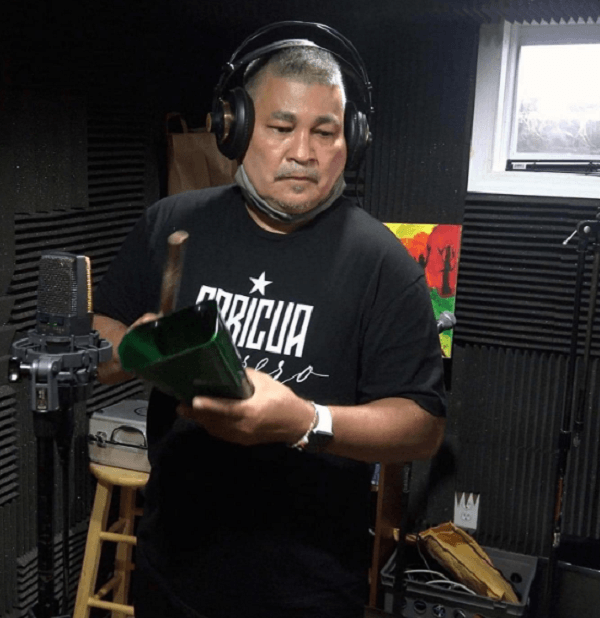
Pocholo playing the cowbell
Pedro ”Pocholo” Segundo playing the cowbell in his studio

Important things Pedro ”Pocholo” Segundo has done in his career 

Pedro ”Pocholo” lived many peak moments in the musical aspect, but without a doubt, the possibility to play to former presidents Bill Clinton and Al Gore with Celia Cruz and ”El Rey de Los Timbales” Tito Puente has been extremely important to his prestige as an artist, so he just went for more and more.    

This performance would not be the only collaboration he would have with Puente, as he also joined his talent to that of the timbalero in the DVD entitled ”Live at Manhattan Center” and traveled with him, The Big 3 Orchestra and Jimmy Bosch’s group to several countries in South America, Central America and Europe.   

Sometime later, in partnership with vocalists Carlos Santos and José Peña, Pocholo formed the group Madera Fina, with which he and his two fellow musicians managed to place some hits such as ”Guarimbo”, ”Palo de Son”, ”Desde Que Te Casaste”in very good places on the charts. They also went to Puerto Rico to promote the group and seek the support of local media such as La Mega 97.9 FM, being this radio station very important in the dissemination of these musicians’ work.   

Thanks to the experience gained from belonging to Madera Fina, Pocholo was more than ready to face bigger musical challenges, which led him to take on the creation, production and percussion of Boricua Legends, which has become one of the most popular New York orchestras of the moment.   

One of the best years of Boricua Legends was undoubtedly 2015, which was when it released its own version of ”Si Por Mi Llueve”, a song that was part of the world-renowned Cheo Feliciano’s repertory.  He also took second place in the GenGenSalsa Top 70 chart and eighth in the LatinosUnidosOnline chart.   

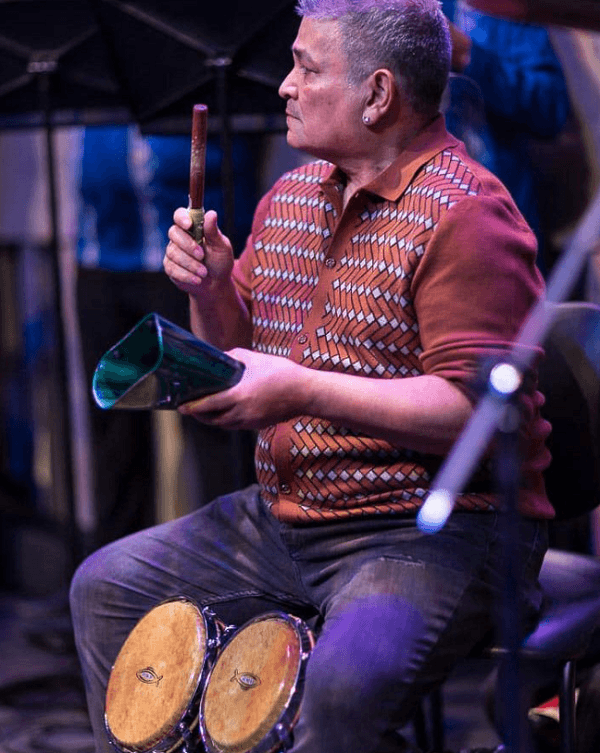
Pocholo performing live
Pedro ”Pocholo” Segundo during a live performance

Pocholo supports the Salsa Museum   

As many other Latin artists, Pocholo also supported the Spaha Harlem Salsa Museum and was a special guest on The Johnny Cruz Show to talk with the host and director of the museum, who was very pleased to welcome him on his show.   

In a video uploaded to Johnny Cruz’s social networks, the host can be seen introducing his guest and saying that they would talk about a number of very interesting topics, such as the beginning of his career, the founding of Boricua Legends and much more. Then, Cruz asks Pocholo to greet the audience and the musician, who was decked in a grayish suit and pink shirt, invites people to tune in to the show and assures them that they will talk about important things such as Latin music in New York and Puerto Rico.   

Finally, Johnny closes by saying that viewers can enjoy the show from 3:30pm to 4:30 every Saturday on channel 67 and says goodbye with the song ”La Fama” by Héctor Lavoe playing in the background. 

Johnny Cru ISM corresponde in New York City

Read also: Here we have Brazilian bandleader and composer Paula Maya 

  • « Go to Previous Page
  • Page 1
  • Interim pages omitted …
  • Page 18
  • Page 19
  • Page 20
  • Page 21
  • Page 22
  • Interim pages omitted …
  • Page 63
  • Go to Next Page »

International Salsa Magazine (ISM) is a monthly publication about Salsa activities around the world, that has been publishing since 2007. It is a world network of volunteers coordinated by ISM Magazine. We are working to strengthen all the events by working together.